Macro
vs.
Micro
Economics
By edu CBA
What is Economics?
•

Economics is omnipresent and form an integral part of our lives.

•

Economics influences the prices of the goods and services we buy, as well as the
income we earn at our jobs. The economic condition of the country whether may it be
inflation or unemployment directly affects our finances, growth, and many other
areas that permit us to be self-sufficient in our lives.

•

Economics is derived from a Greek word ‘Oikonomikos’. If we break the word up,
‘Oikos’, means ‘Home’, and Nomos’, means ‘Management’.

•

Hence economics is the study of how the available resources are managed and
organized to deal with the needs and wants of the society.
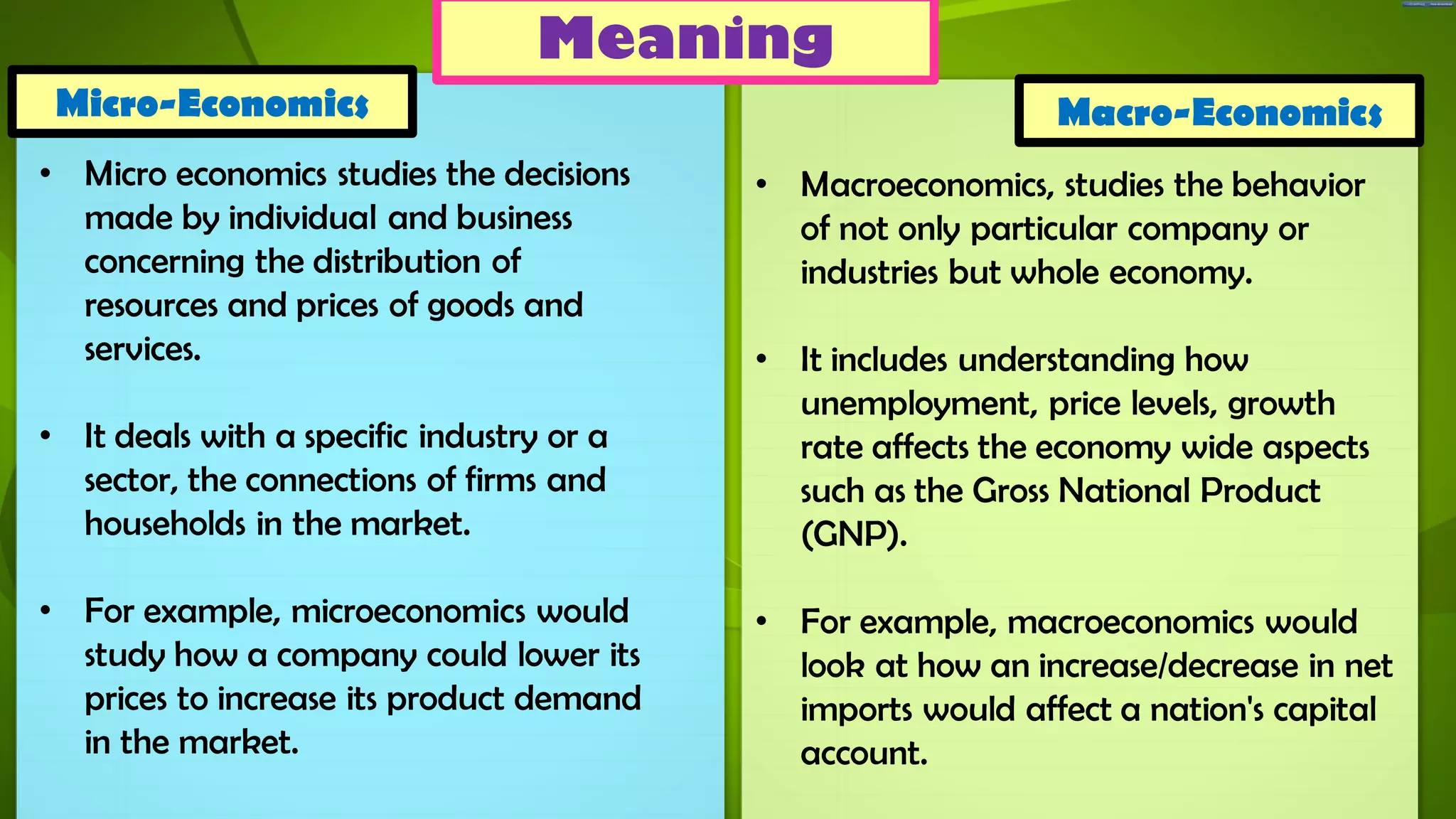
Meaning
Micro-Economics
• Micro economics studies the decisions
made by individual and business
concerning the distribution of
resources and prices of goods and
services.

Macro-Economics
• Macroeconomics, studies the behavior
of not only particular company or
industries but whole economy.

• It deals with a specific industry or a
sector, the connections of firms and
households in the market.

• It includes understanding how
unemployment, price levels, growth
rate affects the economy wide aspects
such as the Gross National Product
(GNP).

• For example, microeconomics would
study how a company could lower its
prices to increase its product demand
in the market.

• For example, macroeconomics would
look at how an increase/decrease in net
imports would affect a nation's capital
account.
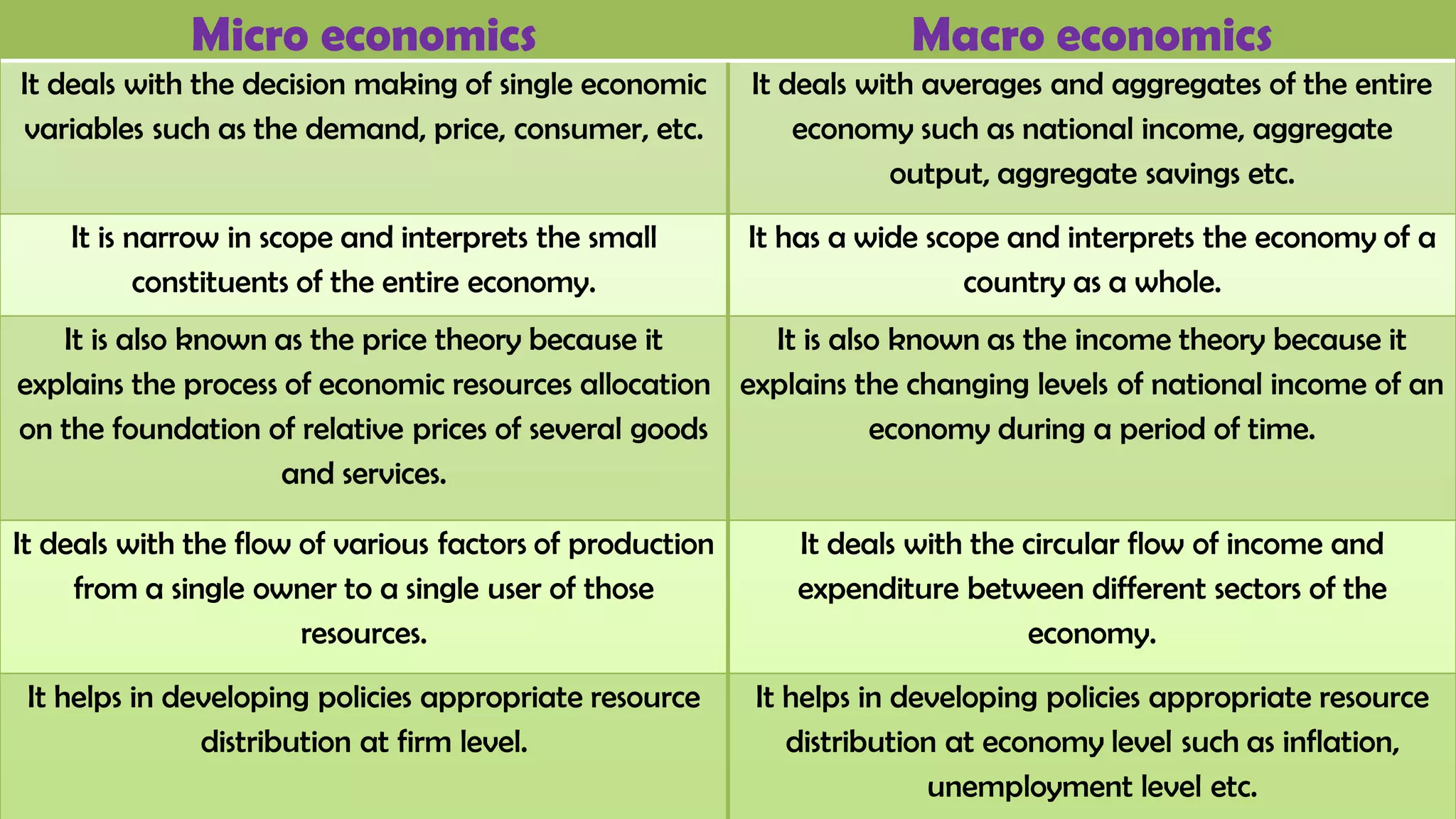
Micro economics

Macro economics

It deals with the decision making of single economic
variables such as the demand, price, consumer, etc.

It deals with averages and aggregates of the entire
economy such as national income, aggregate
output, aggregate savings etc.

It is narrow in scope and interprets the small
constituents of the entire economy.

It has a wide scope and interprets the economy of a
country as a whole.

It is also known as the price theory because it
It is also known as the income theory because it
explains the process of economic resources allocation explains the changing levels of national income of an
on the foundation of relative prices of several goods
economy during a period of time.
and services.
It deals with the flow of various factors of production
from a single owner to a single user of those
resources.

It deals with the circular flow of income and
expenditure between different sectors of the
economy.

It helps in developing policies appropriate resource
distribution at firm level.

It helps in developing policies appropriate resource
distribution at economy level such as inflation,
unemployment level etc.
Micro and Macroeconomics Interaction
• Looking at the above mentioned differences it appears that these two studies
of economics are different but in reality they are inter-related and
complement each other since the issues that they address are overlapping.

For example, increased inflation (a macroeconomic effect) would increase the
prices of raw materials required by the companies to manufacture products which
would in turn also affect the price for the final product charged to the public.
• When we talk about macroeconomics while studying the constituents of
output in nations economy we also have to understand the demand of single
households and firms, which are micro economic concepts.

• Similarly when we study the investment policies of businesses- a micro
economic concept we cannot do it without learning about the effect of
macroeconomic trends in economic growth, taxation policies etc.
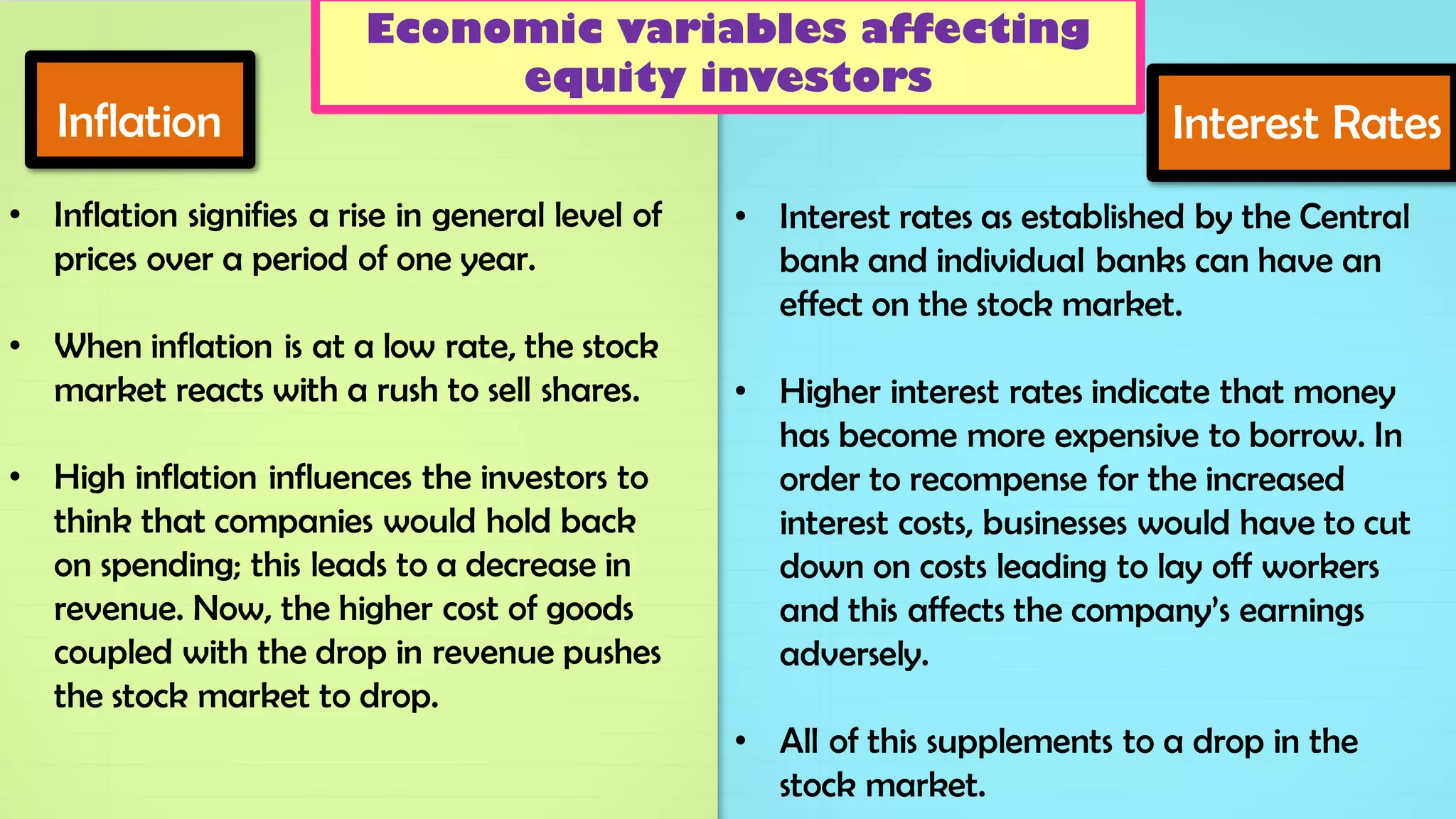
Inflation

Economic variables affecting
equity investors

• Inflation signifies a rise in general level of
prices over a period of one year.

• When inflation is at a low rate, the stock
market reacts with a rush to sell shares.
• High inflation influences the investors to
think that companies would hold back
on spending; this leads to a decrease in
revenue. Now, the higher cost of goods
coupled with the drop in revenue pushes
the stock market to drop.

Interest Rates

• Interest rates as established by the Central
bank and individual banks can have an
effect on the stock market.
• Higher interest rates indicate that money
has become more expensive to borrow. In
order to recompense for the increased
interest costs, businesses would have to cut
down on costs leading to lay off workers
and this affects the company’s earnings
adversely.
• All of this supplements to a drop in the
stock market.
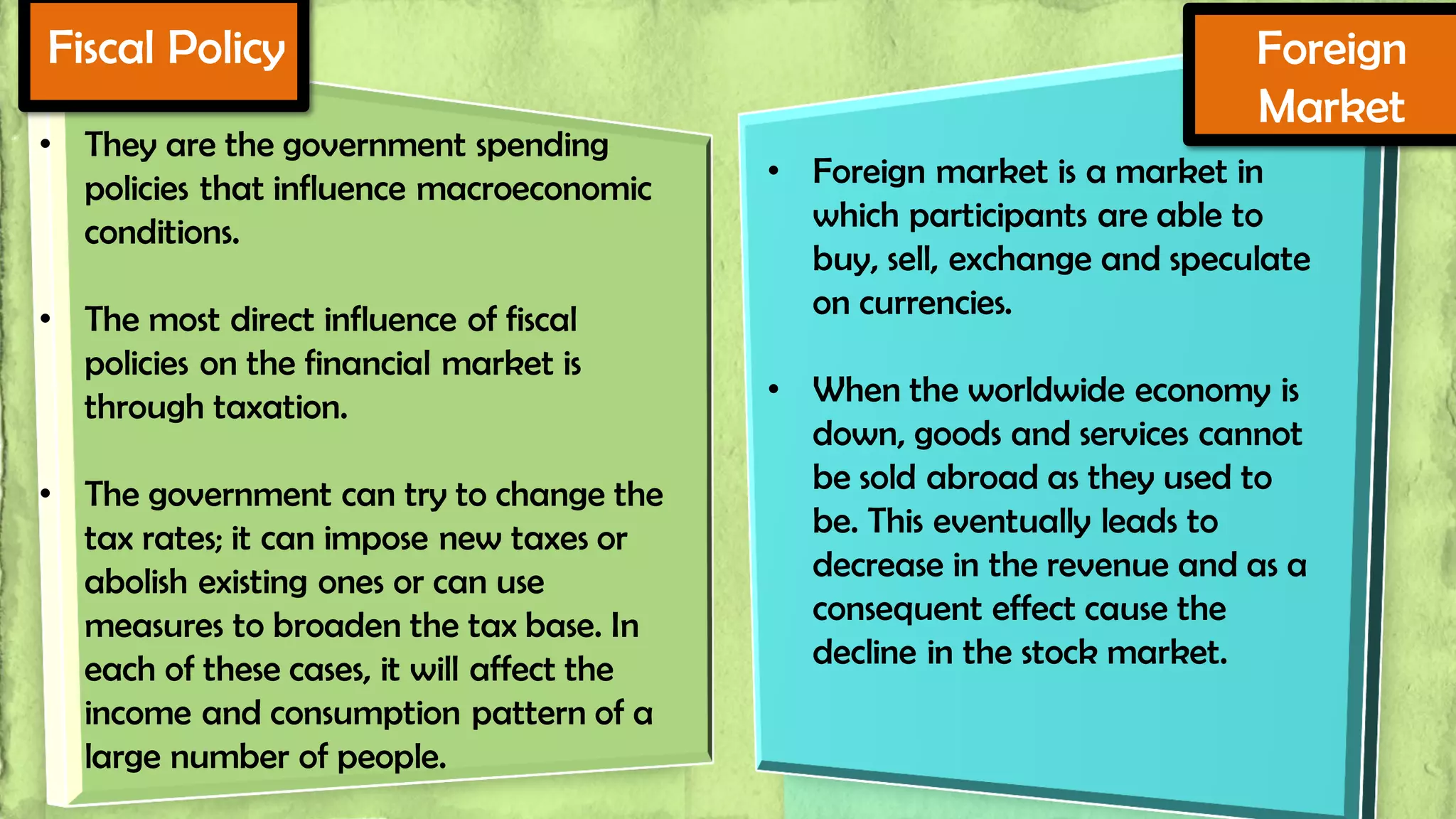
Fiscal Policy
• They are the government spending
policies that influence macroeconomic
conditions.
• The most direct influence of fiscal
policies on the financial market is
through taxation.

• The government can try to change the
tax rates; it can impose new taxes or
abolish existing ones or can use
measures to broaden the tax base. In
each of these cases, it will affect the
income and consumption pattern of a
large number of people.

Foreign
Market
• Foreign market is a market in
which participants are able to
buy, sell, exchange and speculate
on currencies.

• When the worldwide economy is
down, goods and services cannot
be sold abroad as they used to
be. This eventually leads to
decrease in the revenue and as a
consequent effect cause the
decline in the stock market.
Knowledge is like a line
with no ends…
To know more on this topic click on the
link below
https://www.educorporatebridge.com/econ
omics/macro-vs-micro-economics/
For more information visit us at
Visit our website :
https://www.educorporatebridge.com/

Free Resources :
https://www.educorporatebridge.com/free-courses/

Like us on :
https://www.facebook.com/CorporateBridgeGroup

Follow us on :
https://twitter.com/corporatebridge
If you have found this Presentation
to be useful, kindly

Like
Share

+

Follow us!!!

Thank
You!!!

Macro vs Microeconomics

  • 1.
  • 2.
    What is Economics? • Economicsis omnipresent and form an integral part of our lives. • Economics influences the prices of the goods and services we buy, as well as the income we earn at our jobs. The economic condition of the country whether may it be inflation or unemployment directly affects our finances, growth, and many other areas that permit us to be self-sufficient in our lives. • Economics is derived from a Greek word ‘Oikonomikos’. If we break the word up, ‘Oikos’, means ‘Home’, and Nomos’, means ‘Management’. • Hence economics is the study of how the available resources are managed and organized to deal with the needs and wants of the society.
  • 3.
    Meaning Micro-Economics • Micro economicsstudies the decisions made by individual and business concerning the distribution of resources and prices of goods and services. Macro-Economics • Macroeconomics, studies the behavior of not only particular company or industries but whole economy. • It deals with a specific industry or a sector, the connections of firms and households in the market. • It includes understanding how unemployment, price levels, growth rate affects the economy wide aspects such as the Gross National Product (GNP). • For example, microeconomics would study how a company could lower its prices to increase its product demand in the market. • For example, macroeconomics would look at how an increase/decrease in net imports would affect a nation's capital account.
  • 4.
    Micro economics Macro economics Itdeals with the decision making of single economic variables such as the demand, price, consumer, etc. It deals with averages and aggregates of the entire economy such as national income, aggregate output, aggregate savings etc. It is narrow in scope and interprets the small constituents of the entire economy. It has a wide scope and interprets the economy of a country as a whole. It is also known as the price theory because it It is also known as the income theory because it explains the process of economic resources allocation explains the changing levels of national income of an on the foundation of relative prices of several goods economy during a period of time. and services. It deals with the flow of various factors of production from a single owner to a single user of those resources. It deals with the circular flow of income and expenditure between different sectors of the economy. It helps in developing policies appropriate resource distribution at firm level. It helps in developing policies appropriate resource distribution at economy level such as inflation, unemployment level etc.
  • 5.
    Micro and MacroeconomicsInteraction • Looking at the above mentioned differences it appears that these two studies of economics are different but in reality they are inter-related and complement each other since the issues that they address are overlapping. For example, increased inflation (a macroeconomic effect) would increase the prices of raw materials required by the companies to manufacture products which would in turn also affect the price for the final product charged to the public. • When we talk about macroeconomics while studying the constituents of output in nations economy we also have to understand the demand of single households and firms, which are micro economic concepts. • Similarly when we study the investment policies of businesses- a micro economic concept we cannot do it without learning about the effect of macroeconomic trends in economic growth, taxation policies etc.
  • 6.
    Inflation Economic variables affecting equityinvestors • Inflation signifies a rise in general level of prices over a period of one year. • When inflation is at a low rate, the stock market reacts with a rush to sell shares. • High inflation influences the investors to think that companies would hold back on spending; this leads to a decrease in revenue. Now, the higher cost of goods coupled with the drop in revenue pushes the stock market to drop. Interest Rates • Interest rates as established by the Central bank and individual banks can have an effect on the stock market. • Higher interest rates indicate that money has become more expensive to borrow. In order to recompense for the increased interest costs, businesses would have to cut down on costs leading to lay off workers and this affects the company’s earnings adversely. • All of this supplements to a drop in the stock market.
  • 7.
    Fiscal Policy • Theyare the government spending policies that influence macroeconomic conditions. • The most direct influence of fiscal policies on the financial market is through taxation. • The government can try to change the tax rates; it can impose new taxes or abolish existing ones or can use measures to broaden the tax base. In each of these cases, it will affect the income and consumption pattern of a large number of people. Foreign Market • Foreign market is a market in which participants are able to buy, sell, exchange and speculate on currencies. • When the worldwide economy is down, goods and services cannot be sold abroad as they used to be. This eventually leads to decrease in the revenue and as a consequent effect cause the decline in the stock market.
  • 8.
    Knowledge is likea line with no ends… To know more on this topic click on the link below https://www.educorporatebridge.com/econ omics/macro-vs-micro-economics/
  • 9.
    For more informationvisit us at Visit our website : https://www.educorporatebridge.com/ Free Resources : https://www.educorporatebridge.com/free-courses/ Like us on : https://www.facebook.com/CorporateBridgeGroup Follow us on : https://twitter.com/corporatebridge
  • 10.
    If you havefound this Presentation to be useful, kindly Like Share + Follow us!!! Thank You!!!