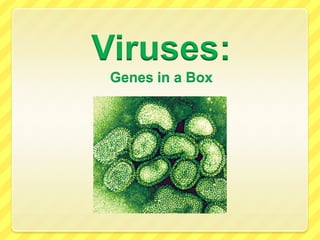
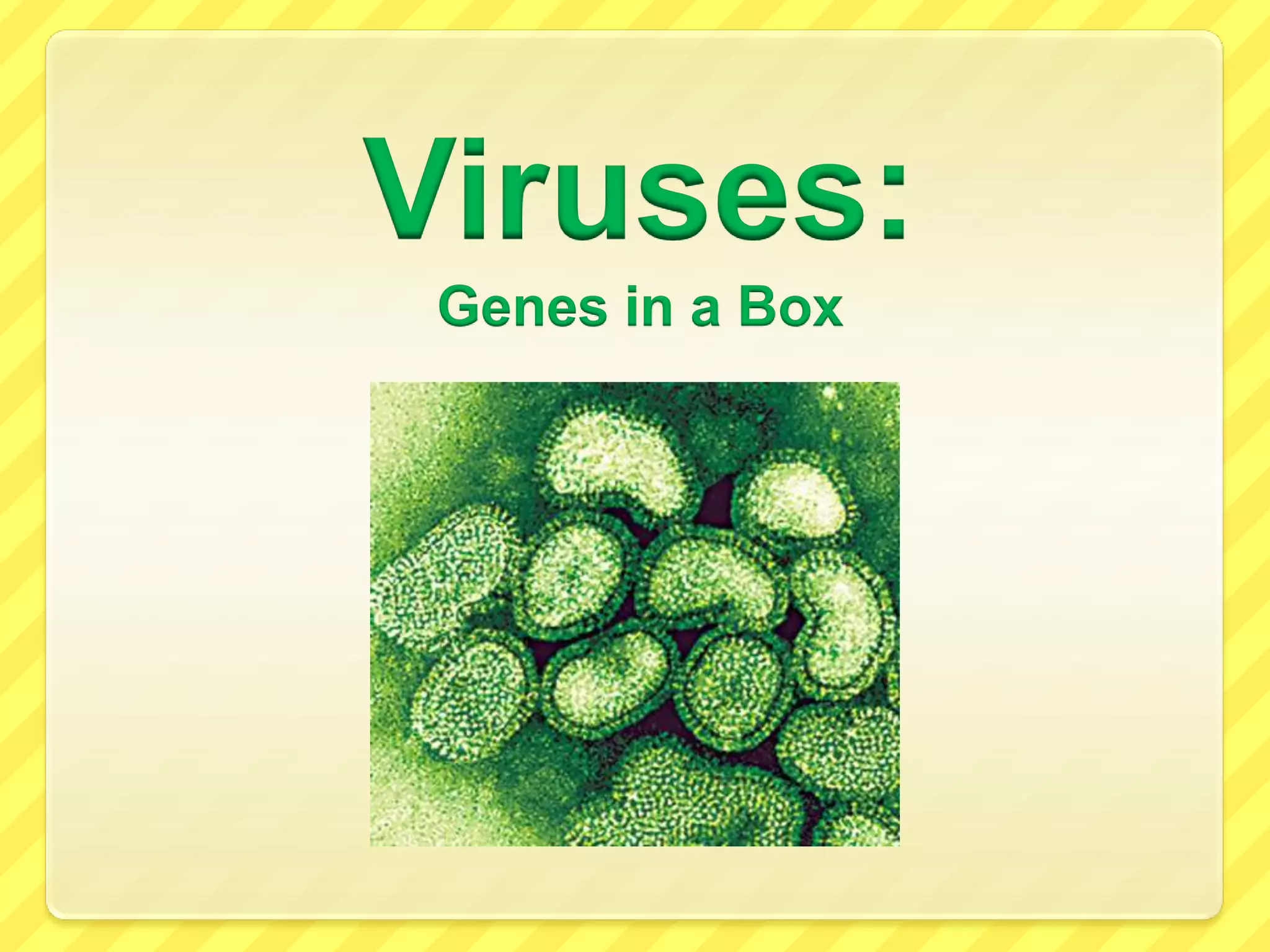
Viruses:Genes in a Box
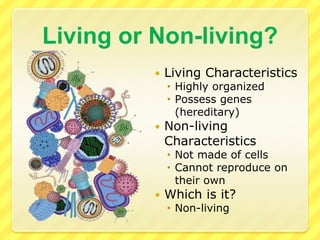
Living or Non-living?Living CharacteristicsHighly organizedPossess genes (hereditary)Non-living CharacteristicsNot made of cellsCannot reproduce on their ownWhich is it?Non-living
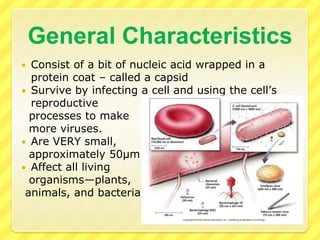
General CharacteristicsConsist of a bit of nucleic acid wrapped in a protein coat – called a capsidSurvive by infecting a cell and using the cell’s reproductive   processes to make   more viruses.Are VERY small,   approximately 50µmAffect all living   organisms—plants,  animals, and bacteria.
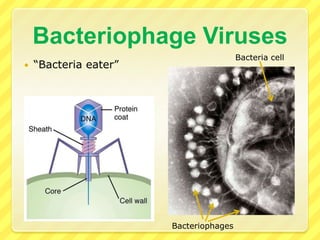
Bacteriophage Viruses“Bacteria eater”Bacteria cellBacteriophages
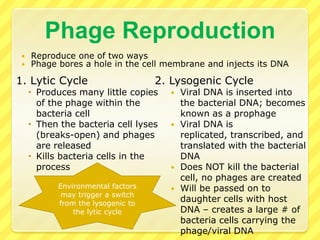
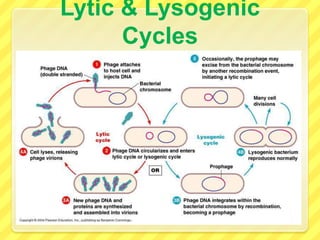
Phage ReproductionReproduce one of two waysPhage bores a hole in the cell membrane and injects its DNA1. Lytic CycleProduces many little copies of the phage within the bacteria cellThen the bacteria cell lyses (breaks-open) and phages are releasedKills bacteria cells in the process2. Lysogenic CycleViral DNA is inserted into the bacterial DNA; becomes known as a prophage
Viral DNA is replicated, transcribed, and translated with the bacterial DNA
Does NOT kill the bacterial cell, no phages are created
Will be passed on to daughter cells with host DNA – creates a large # of bacteria cells carrying the phage/viral DNAEnvironmental factors may trigger a switch from the lysogenic to the lytic cycle
Lytic & Lysogenic Cycles
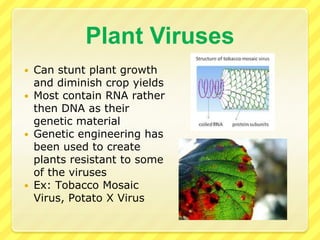
Plant VirusesCan stunt plant growth  and diminish crop yieldsMost contain RNA rather then DNA as their genetic materialGenetic engineering has been used to create plants resistant to some of the virusesEx: Tobacco Mosaic Virus, Potato X Virus
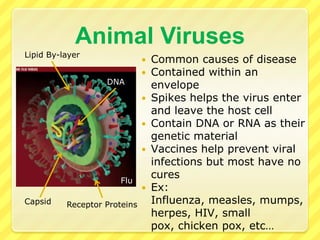
Animal VirusesLipid By-layerCommon causes of diseaseContained within an envelopeSpikes helps the virus enter and leave the host cellContain DNA or RNA as their genetic materialVaccines help prevent viral infections but most have no curesEx: Influenza, measles, mumps, herpes, HIV, small pox, chicken pox, etc…DNAFluCapsidReceptor Proteins
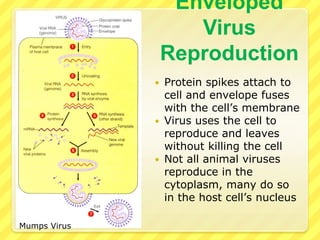
Enveloped Virus ReproductionProtein spikes attach to cell and envelope fuses with the cell’s membraneVirus uses the cell to reproduce and leaves without killing the cellNot all animal viruses reproduce in the cytoplasm, many do so in the host cell’s nucleusMumps Virus
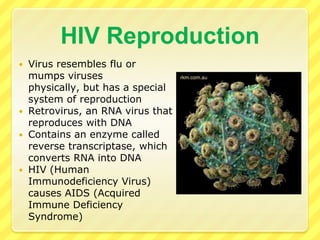
HIV ReproductionVirus resembles flu or mumps viruses physically, but has a special system of reproductionRetrovirus, an RNA virus that reproduces with DNAContains an enzyme called reverse transcriptase, which converts RNA into DNAHIV (Human Immunodeficiency Virus) causes AIDS (Acquired Immune Deficiency Syndrome)
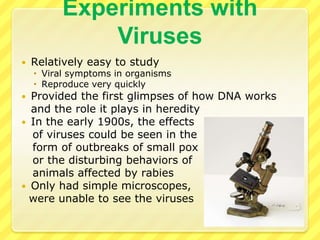
Experiments with VirusesRelatively easy to studyViral symptoms in organismsReproduce very quicklyProvided the first glimpses of how DNA works and the role it plays in heredityIn the early 1900s, the effects    of viruses could be seen in the    form of outbreaks of small pox    or the disturbing behaviors of    animals affected by rabiesOnly had simple microscopes,   were unable to see the viruses
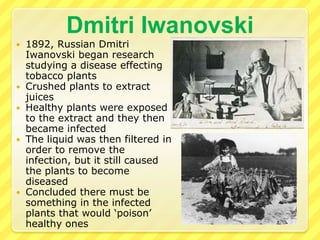
Dmitri Iwanovski1892, Russian Dmitri Iwanovski began research studying a disease effecting tobacco plantsCrushed plants to extract juicesHealthy plants were exposed to the extract and they then became infectedThe liquid was then filtered in order to remove the infection, but it still caused the plants to become diseasedConcluded there must be something in the infected plants that would ‘poison’ healthy ones
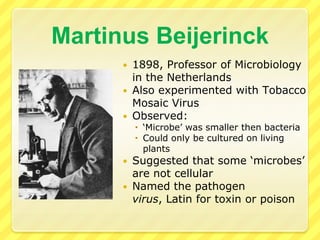
MartinusBeijerinck1898, Professor of Microbiology in the NetherlandsAlso experimented with Tobacco Mosaic VirusObserved:‘Microbe’ was smaller then bacteriaCould only be cultured on living plantsSuggested that some ‘microbes’ are not cellularNamed the pathogen virus, Latin for toxin or poison
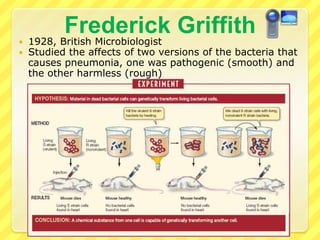
Frederick Griffith1928, British MicrobiologistStudied the affects of two versions of the bacteria that causes pneumonia, one was pathogenic (smooth) and the other harmless (rough)
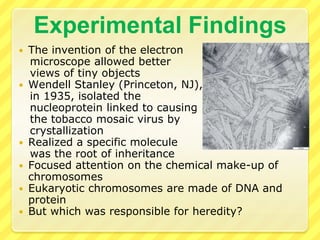
Experimental FindingsThe invention of the electron   microscope allowed better    views of tiny objectsWendell Stanley (Princeton, NJ),   in 1935, isolated the    nucleoprotein linked to causing    the tobacco mosaic virus by    crystallizationRealized a specific molecule    was the root of inheritanceFocused attention on the chemical make-up of chromosomesEukaryotic chromosomes are made of DNA and proteinBut which was responsible for heredity?
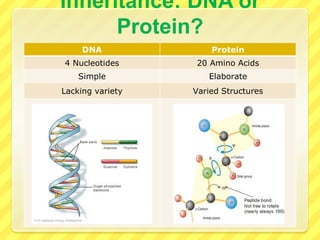
Inheritance: DNA or Protein?

Viruses

  • 1.
  • 2.
    Living or Non-living?LivingCharacteristicsHighly organizedPossess genes (hereditary)Non-living CharacteristicsNot made of cellsCannot reproduce on their ownWhich is it?Non-living
  • 3.
    General CharacteristicsConsist ofa bit of nucleic acid wrapped in a protein coat – called a capsidSurvive by infecting a cell and using the cell’s reproductive processes to make more viruses.Are VERY small, approximately 50µmAffect all living organisms—plants, animals, and bacteria.
  • 4.
  • 5.
    Phage ReproductionReproduce oneof two waysPhage bores a hole in the cell membrane and injects its DNA1. Lytic CycleProduces many little copies of the phage within the bacteria cellThen the bacteria cell lyses (breaks-open) and phages are releasedKills bacteria cells in the process2. Lysogenic CycleViral DNA is inserted into the bacterial DNA; becomes known as a prophage
  • 6.
    Viral DNA isreplicated, transcribed, and translated with the bacterial DNA
  • 7.
    Does NOT killthe bacterial cell, no phages are created
  • 8.
    Will be passedon to daughter cells with host DNA – creates a large # of bacteria cells carrying the phage/viral DNAEnvironmental factors may trigger a switch from the lysogenic to the lytic cycle
  • 9.
  • 10.
    Plant VirusesCan stuntplant growth and diminish crop yieldsMost contain RNA rather then DNA as their genetic materialGenetic engineering has been used to create plants resistant to some of the virusesEx: Tobacco Mosaic Virus, Potato X Virus
  • 11.
    Animal VirusesLipid By-layerCommoncauses of diseaseContained within an envelopeSpikes helps the virus enter and leave the host cellContain DNA or RNA as their genetic materialVaccines help prevent viral infections but most have no curesEx: Influenza, measles, mumps, herpes, HIV, small pox, chicken pox, etc…DNAFluCapsidReceptor Proteins
  • 12.
    Enveloped Virus ReproductionProteinspikes attach to cell and envelope fuses with the cell’s membraneVirus uses the cell to reproduce and leaves without killing the cellNot all animal viruses reproduce in the cytoplasm, many do so in the host cell’s nucleusMumps Virus
  • 13.
    HIV ReproductionVirus resemblesflu or mumps viruses physically, but has a special system of reproductionRetrovirus, an RNA virus that reproduces with DNAContains an enzyme called reverse transcriptase, which converts RNA into DNAHIV (Human Immunodeficiency Virus) causes AIDS (Acquired Immune Deficiency Syndrome)
  • 14.
    Experiments with VirusesRelativelyeasy to studyViral symptoms in organismsReproduce very quicklyProvided the first glimpses of how DNA works and the role it plays in heredityIn the early 1900s, the effects of viruses could be seen in the form of outbreaks of small pox or the disturbing behaviors of animals affected by rabiesOnly had simple microscopes, were unable to see the viruses
  • 15.
    Dmitri Iwanovski1892, RussianDmitri Iwanovski began research studying a disease effecting tobacco plantsCrushed plants to extract juicesHealthy plants were exposed to the extract and they then became infectedThe liquid was then filtered in order to remove the infection, but it still caused the plants to become diseasedConcluded there must be something in the infected plants that would ‘poison’ healthy ones
  • 16.
    MartinusBeijerinck1898, Professor ofMicrobiology in the NetherlandsAlso experimented with Tobacco Mosaic VirusObserved:‘Microbe’ was smaller then bacteriaCould only be cultured on living plantsSuggested that some ‘microbes’ are not cellularNamed the pathogen virus, Latin for toxin or poison
  • 17.
    Frederick Griffith1928, BritishMicrobiologistStudied the affects of two versions of the bacteria that causes pneumonia, one was pathogenic (smooth) and the other harmless (rough)
  • 18.
    Experimental FindingsThe inventionof the electron microscope allowed better views of tiny objectsWendell Stanley (Princeton, NJ), in 1935, isolated the nucleoprotein linked to causing the tobacco mosaic virus by crystallizationRealized a specific molecule was the root of inheritanceFocused attention on the chemical make-up of chromosomesEukaryotic chromosomes are made of DNA and proteinBut which was responsible for heredity?
  • 19.

Editor's Notes

  • #4 Prokaryotes 1µm; Eukaryotes 100 µm
  • #6 Survival of the prophage, and therefore the reproduction of the virus, depends entirely on the host cell
  • #10 1) RNA enters the cytoplasm 2) Enzymes remove the protein coat 3) Enzyme from virus provides a template to make more RNA strands 4) Makes mRNA to make new viral proteins 5) Synthesize new viral-genome RNA 6) New protein coats surround the new viral RNA 7) Virus cloaks itself in the plasma membrane of the host cell and leaves
  • #15 Injected S strain (pathogenic) in to living mice, they died from heart diseaseInjected R strain (non-pathogenic) in to living mice, the mouse was unaffectedHeated virulent (S strain) to kill it, injected heated strains, the mouse stayed healthyMixed dead S strain with living, non-pathogenic R strain bacteria—mice died when injected - living cells were converted to be pathogenic - all descendants of the transformed bacteria were pathogenicConcluded there was some ‘transforming factor’ to cause hereditable changes in bacteria, but it was still unknown