By 
Kumar
Definition 
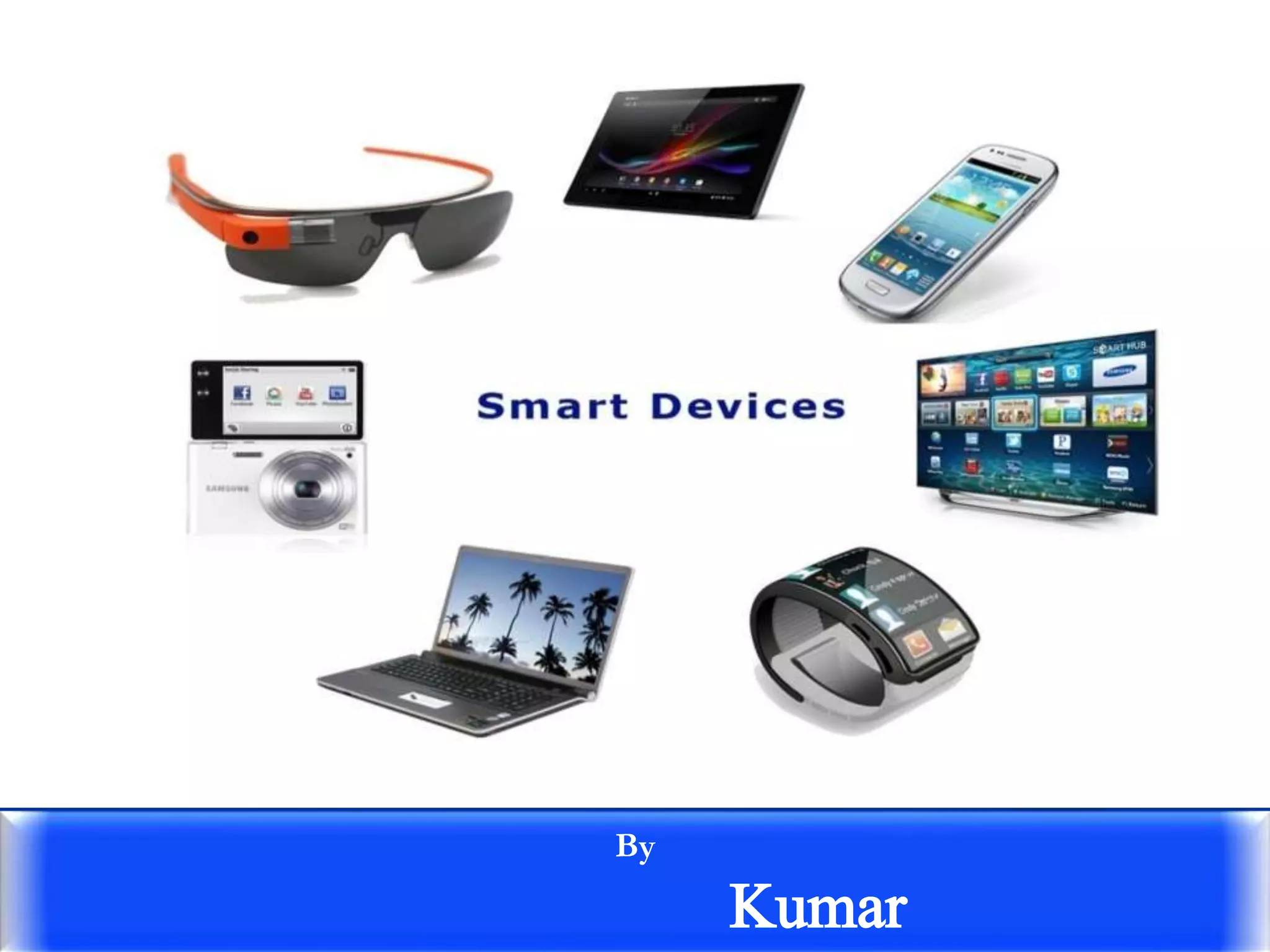
 A smart device is an electronic device, 
generally connected to other devices or 
networks via different protocols such as 
Bluetooth, NFC, Wi-Fi, 3G, etc., that can 
operate to some extent interactively and 
autonomously
Contents 
 Form factors 
 Characteristics 
 Mobile Devices 
 Ubiquitous Computing Properties 
 Environments 
 Smart Devices versus Services 
 Information Appliances versus Smart Devices 
 Overview 
 Conclusion
Form factors 
 In 1991 Mark Weiser proposed three basic 
forms for ubiquitous system devices: tabs, pads 
and boards. 
• Tabs : accompanied or wearable centimetre sized devices, 
e.g., smart phones, smart cards etc., 
• Pads : hand-held decimetre-sized devices, 
e.g., laptops. 
• Boards : meter sized interactive display devices, e.g., 
horizontal surface computers and vertical smart boards.
Characteristics 
 Smart Devices can be characterised as follows: 
• A set of system hardware & software ICT resources. This set is 
usually static fixed at design time. 
• Dynamic component-oriented resource extensions & plug-ins (Plug 
and play) of some hardware resources. 
• Remote external service access and execution. 
• Local, internal autonomous service execution 
• Access to specific external environments: human interaction, physical 
world interaction and distributed ICT / virtual computing interaction. 
• Ubiquitous computing properties. 
 Common types of smart devices include: 
 Tab and pad type smart devices that often as act as personalised #smart mobile 
devices 
 Smart environment devices.
Mobile Devices 
• Multi-purpose ICT devices e.g., personal office, mobile phone, 
camera, games console, etc 
• Multi-functional support eases access & interoperability of multi-functions 
at run-time but this can lead to a decreased openness 
of the system to maintain (upgrade) hardware components and 
to support more dynamic flexible run-time interoperability. 
• Personalised, configured to a specified owner. Device access can 
be secured only for the owner. 
• Operates as a single portal, e.g., a Web portal. 
 Smart mobile device service access is characterised by: 
 Open service discovery 
 Intermittent resource access.
Smart Mobile Devices 
 Highly portable devices becoming increasingly 
popular:
Mobile Smart Devices 
 Examples: 
 Personal Digital Assistants (PDAs) 
 iPhone and other “smartphones” 
 iPad and other tablet PCs 
 Portable game consoles with wireless connectivity 
(e.g. Nintendo DS and Sony PSP)
Mobile Devices of Tomorrow 
Tablets 
Ultra-Mobile PC 
Fixed Wireless Terminals 
Mobile Hotspots
Ubiquitous Computing Properties 
 Weiser’s vision for ubiquitous computing can be 
summarized in terms of three core properties: 
 Devices need to be networked, distributed and transparently accessible. 
 Human Computer Interaction with devices is hidden to a degree 
from its users. 
 Devices exhibit Context awareness of an environment in order to 
optimise their operation in that environment. 
 It is proposed that there are two additional core types of 
properties for UbiCom systems: 
 Devices can operate to some extent autonomously, i.e., without human 
intervention, be self-governed. 
 Devices can handle a multiplicity of dynamic actions and interactions, 
governed by intelligent decision-making and organisational interaction.
Environments 
 The term Smart Device Environments has two meanings. 
First, it can refer to a greater variety of device 
environments. Three different kinds of environments for 
devices can be differentiated as: 
 Virtual computing environments that enable smart devices to access pertinent 
services anywhere and anytime. 
 Physical environments that may be embedded with a variety of smart 
devices of different types including tags, sensors and controllers. 
These can have different form factors ranging from nano to micro 
to macro sized. 
 Humans environments : humans, either individually or collectively, 
inherently form a smart environment for devices. Such as mobile 
phones, pacemakers etc.,
Smart Devices versus Services 
 Devices may access or offer one or many 
services from other devices. 
 Services may be split across several devices or be 
offered by multiple types of services.
Smart Cards devices 
VCC 
Reset 
Clock 
GND 
VPP 
I/O 
Reserved
Information Appliances versus 
Smart Devices 
 Smart Devices are characterised and differ in several 
key ways. 
 First, Smart Devices in general can take a much wider range of form-factors 
than appliances. 
 Second, Smart Devices support the ubiquitous computing properties. 
 Third information appliances focus on remote interaction with 
computing environments that tend to be personalised whereas Smart 
Devices can also focus heavily on impersonal physical world interaction. 
 Four, the term appliance generally implies that devices are task specific 
and under the control of some embedded system or application specific 
operating system, whereas Smart Devices may support multiple tasks, e.g., 
a mobile phone can act as a phone but also as a games console, music 
player, camera, etc.
Overview
Conclusion 
 Smart devices have good and bad sides. 
 According to the research smart devices only have the 
disadvantages of addiction and not using for the right 
purposes some times. With the type of world that we have 
today smart devices are very useful. 
 I think that smart devices do have an effect on education in 
both good and bad ways. It makes it easier to research but 
some students abuse them. 
 In conclusion I think we really need smart devices these 
days because they have good effects.
Smart devices

Smart devices

  • 1.
  • 2.
    Definition  Asmart device is an electronic device, generally connected to other devices or networks via different protocols such as Bluetooth, NFC, Wi-Fi, 3G, etc., that can operate to some extent interactively and autonomously
  • 3.
    Contents  Formfactors  Characteristics  Mobile Devices  Ubiquitous Computing Properties  Environments  Smart Devices versus Services  Information Appliances versus Smart Devices  Overview  Conclusion
  • 4.
    Form factors In 1991 Mark Weiser proposed three basic forms for ubiquitous system devices: tabs, pads and boards. • Tabs : accompanied or wearable centimetre sized devices, e.g., smart phones, smart cards etc., • Pads : hand-held decimetre-sized devices, e.g., laptops. • Boards : meter sized interactive display devices, e.g., horizontal surface computers and vertical smart boards.
  • 6.
    Characteristics  SmartDevices can be characterised as follows: • A set of system hardware & software ICT resources. This set is usually static fixed at design time. • Dynamic component-oriented resource extensions & plug-ins (Plug and play) of some hardware resources. • Remote external service access and execution. • Local, internal autonomous service execution • Access to specific external environments: human interaction, physical world interaction and distributed ICT / virtual computing interaction. • Ubiquitous computing properties.  Common types of smart devices include:  Tab and pad type smart devices that often as act as personalised #smart mobile devices  Smart environment devices.
  • 8.
    Mobile Devices •Multi-purpose ICT devices e.g., personal office, mobile phone, camera, games console, etc • Multi-functional support eases access & interoperability of multi-functions at run-time but this can lead to a decreased openness of the system to maintain (upgrade) hardware components and to support more dynamic flexible run-time interoperability. • Personalised, configured to a specified owner. Device access can be secured only for the owner. • Operates as a single portal, e.g., a Web portal.  Smart mobile device service access is characterised by:  Open service discovery  Intermittent resource access.
  • 9.
    Smart Mobile Devices  Highly portable devices becoming increasingly popular:
  • 10.
    Mobile Smart Devices  Examples:  Personal Digital Assistants (PDAs)  iPhone and other “smartphones”  iPad and other tablet PCs  Portable game consoles with wireless connectivity (e.g. Nintendo DS and Sony PSP)
  • 12.
    Mobile Devices ofTomorrow Tablets Ultra-Mobile PC Fixed Wireless Terminals Mobile Hotspots
  • 13.
    Ubiquitous Computing Properties  Weiser’s vision for ubiquitous computing can be summarized in terms of three core properties:  Devices need to be networked, distributed and transparently accessible.  Human Computer Interaction with devices is hidden to a degree from its users.  Devices exhibit Context awareness of an environment in order to optimise their operation in that environment.  It is proposed that there are two additional core types of properties for UbiCom systems:  Devices can operate to some extent autonomously, i.e., without human intervention, be self-governed.  Devices can handle a multiplicity of dynamic actions and interactions, governed by intelligent decision-making and organisational interaction.
  • 14.
    Environments  Theterm Smart Device Environments has two meanings. First, it can refer to a greater variety of device environments. Three different kinds of environments for devices can be differentiated as:  Virtual computing environments that enable smart devices to access pertinent services anywhere and anytime.  Physical environments that may be embedded with a variety of smart devices of different types including tags, sensors and controllers. These can have different form factors ranging from nano to micro to macro sized.  Humans environments : humans, either individually or collectively, inherently form a smart environment for devices. Such as mobile phones, pacemakers etc.,
  • 15.
    Smart Devices versusServices  Devices may access or offer one or many services from other devices.  Services may be split across several devices or be offered by multiple types of services.
  • 16.
    Smart Cards devices VCC Reset Clock GND VPP I/O Reserved
  • 17.
    Information Appliances versus Smart Devices  Smart Devices are characterised and differ in several key ways.  First, Smart Devices in general can take a much wider range of form-factors than appliances.  Second, Smart Devices support the ubiquitous computing properties.  Third information appliances focus on remote interaction with computing environments that tend to be personalised whereas Smart Devices can also focus heavily on impersonal physical world interaction.  Four, the term appliance generally implies that devices are task specific and under the control of some embedded system or application specific operating system, whereas Smart Devices may support multiple tasks, e.g., a mobile phone can act as a phone but also as a games console, music player, camera, etc.
  • 19.
  • 22.
    Conclusion  Smartdevices have good and bad sides.  According to the research smart devices only have the disadvantages of addiction and not using for the right purposes some times. With the type of world that we have today smart devices are very useful.  I think that smart devices do have an effect on education in both good and bad ways. It makes it easier to research but some students abuse them.  In conclusion I think we really need smart devices these days because they have good effects.

Editor's Notes

  • #24 Struts Vignette – CMS Volantis – Repurposing factory