Biceps – The Pain Generator
Prof. Bijayendra Singh
Consultant Orthopaedic Surgeon, Medway NHS Foundation Trust
Visiting Professor, Canterbury Christ Church University
Anatomy
Function
 Elbow flexion and supination
 Head depressor in presence of large
cuff defect
 Decreases humeral head translation
Pathology
• Inflammation
– Degenerative tendinosis beware cuff tear
– Primary tendinitis rare
• Instability
– subluxation or dislocation (tear of CHL or
subscapularis)
• Trauma
– Tear
– SLAP lesion
Clinical Evaluation
1. Pain, Tenderness, Popping
2. Specific Test: Speed, Yergason, Upper Cut
3. Instability Test
4. Associated Lesion Test
Tests
 O'Brien Active Compression
 Kibler Anterior Slide
 Compression Rotation
 Resisted Supination External Rotation
 Speed
 Crank
 Biceps Load II (Kim)
 Mayo Shear
O’brient’s Test
 90 of flexion, 10 of horizontal
adduction, and maximum internal
rotation with the elbow in full
extension
 Resisted downward force at wrist
 On top of the shoulder = ACJ
 Inside the shoulder = Biceps
 Positive test is indicated by pain or
painful clicking in shoulder
Dynamic Labral Shear Test (O’Driscoll)
 Sitting or Supine
 arm at side and elbow
flexed 90
 ER & Abd 90
 Pain
 deep and/or posterior
 90 to 120 abduction
What I describe as Jobe’s
Maneuver for pain
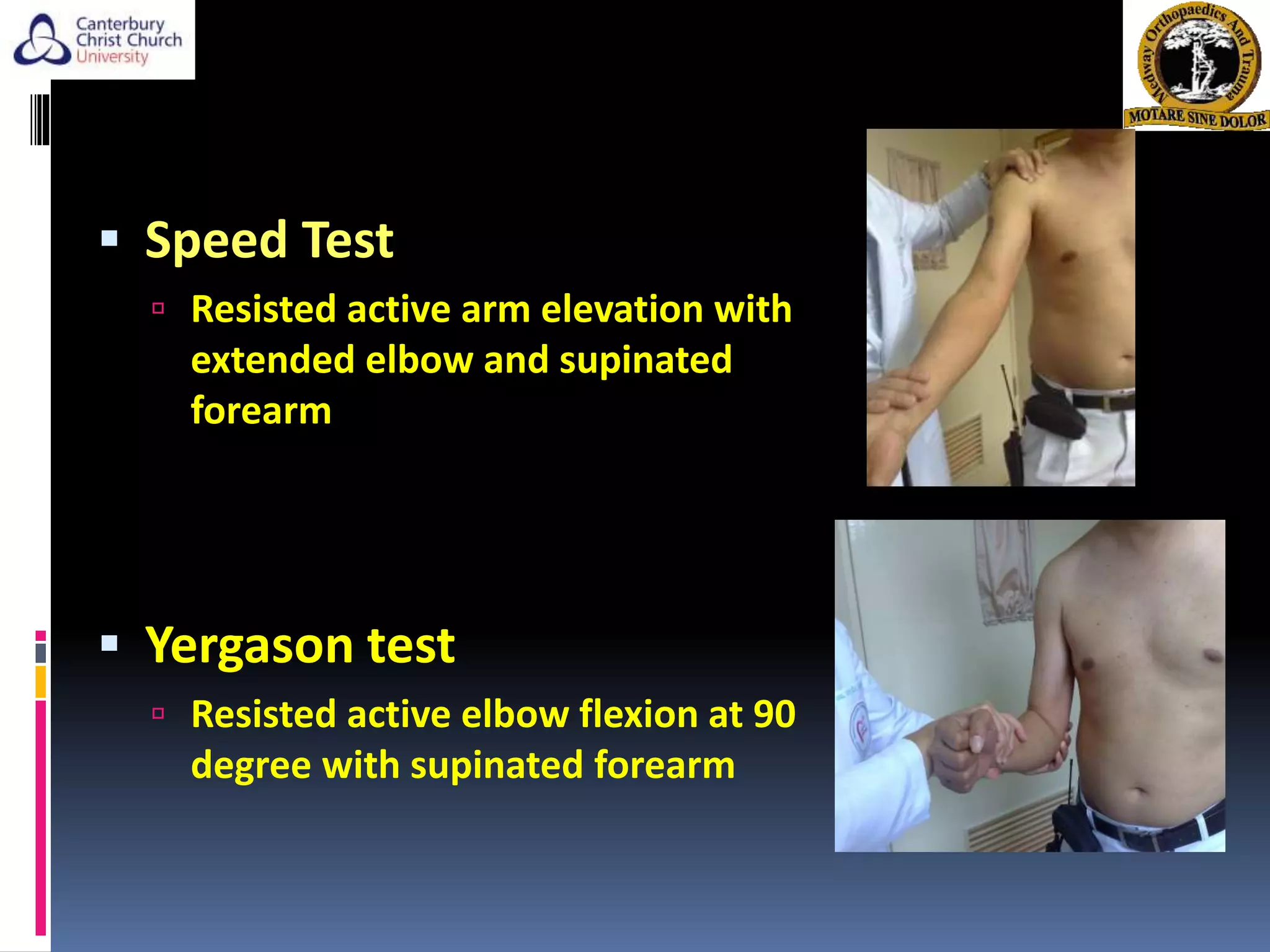
 Speed Test
 Resisted active arm elevation with
extended elbow and supinated
forearm
 Yergason test
 Resisted active elbow flexion at 90
degree with supinated forearm
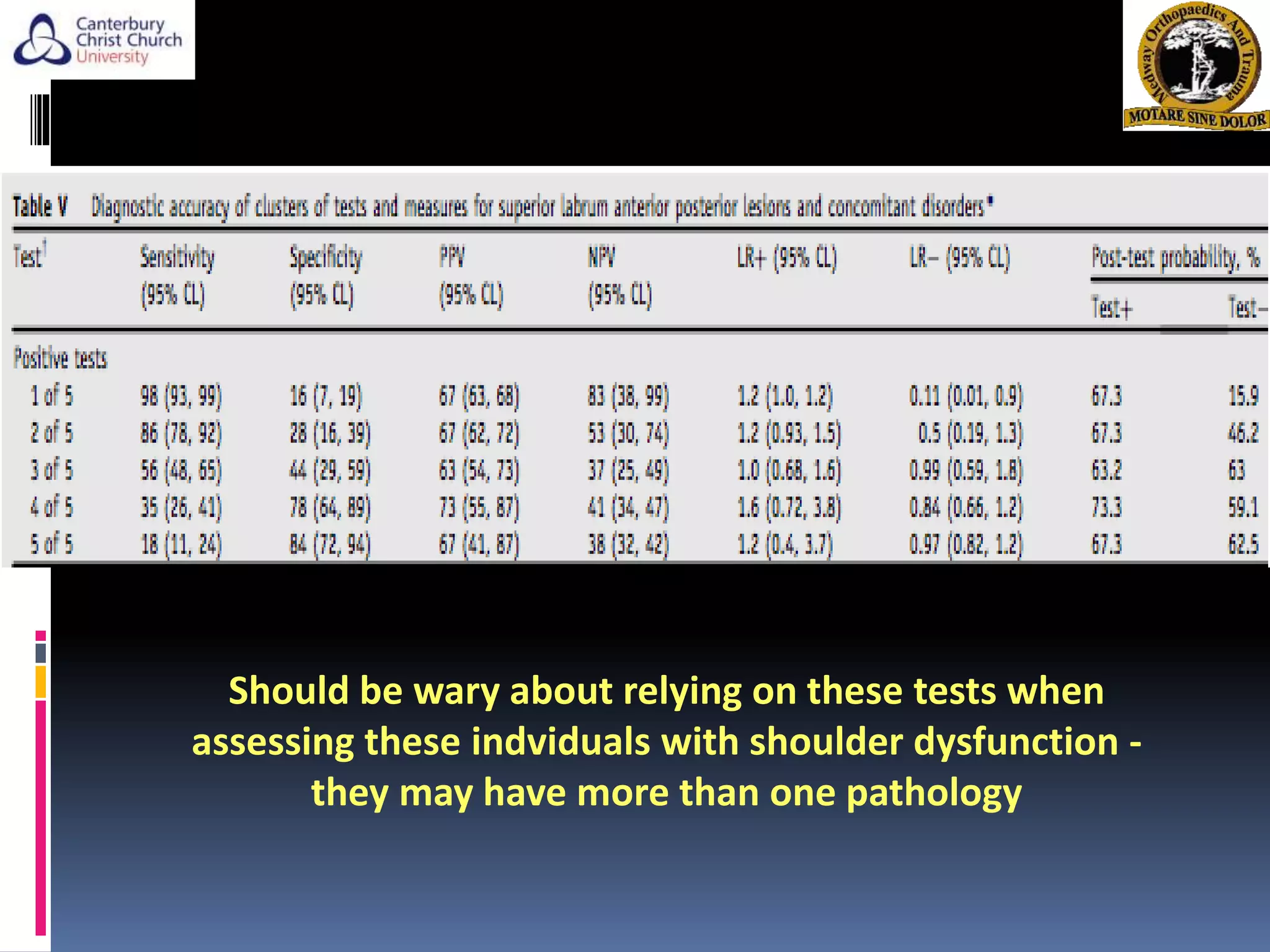
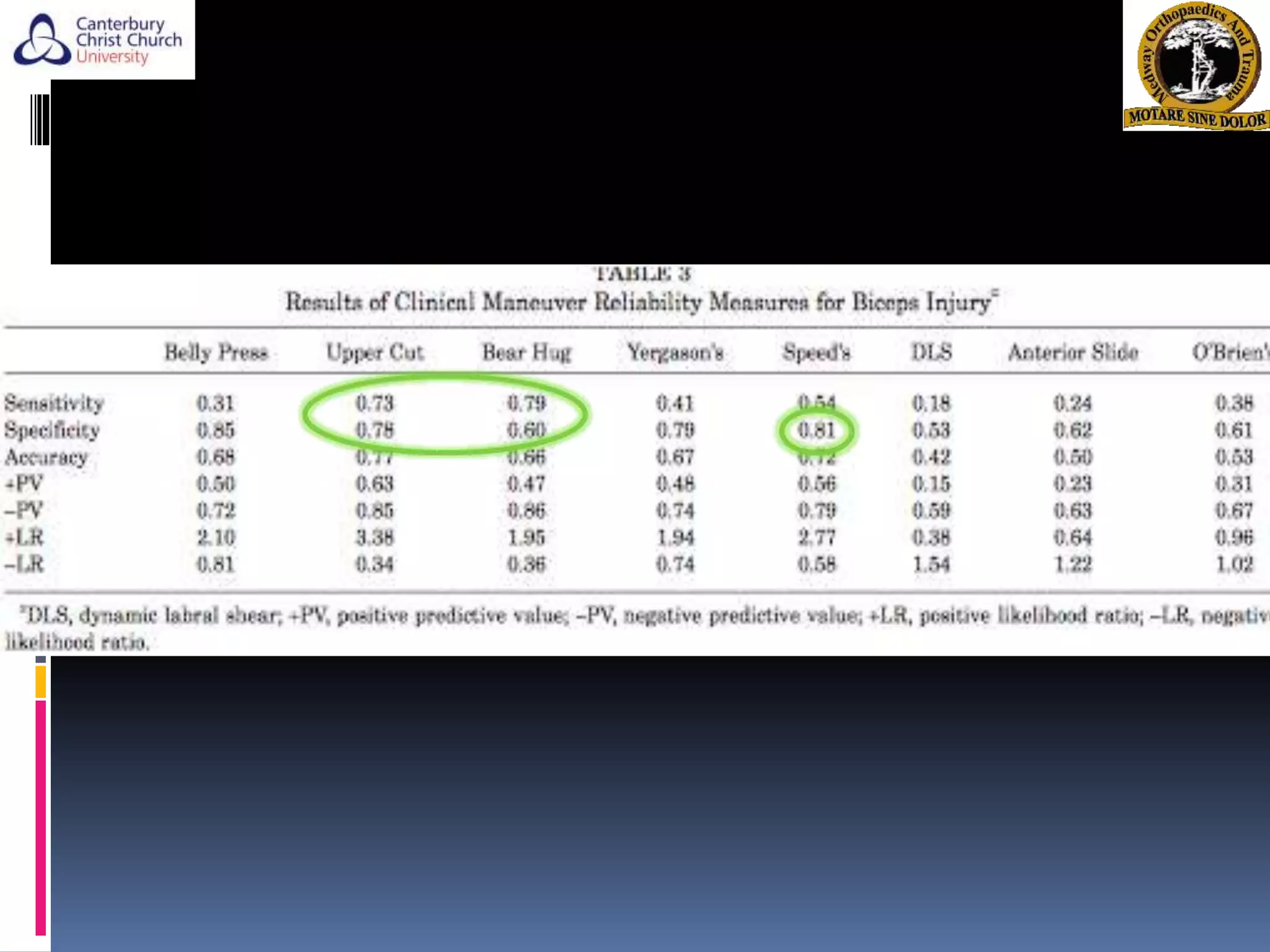
Accuracy of Clincal Tests
Jones & Galluch et al
Should be wary about relying on these tests when
assessing these indviduals with shoulder dysfunction -
they may have more than one pathology
Investigation
 Depends upon the lesion
 Intra-articular
 Groove
 MRI vs US
Treatment
 Depends on:
• Pathology of LHB
• Co-existing shoulder pathology
• Age
• Symptoms
• Level of function
 Conservative vs Operative
Conservative treatment
• Rotator Cuff Status
• Rest
• NSAIDS
• Steroid injection
• Physical therapy
• ROM exercise
• Muscle strengthening
Surgical Treatment
• Resistant to conservative
treatment
• Irreversible changes
• Tearing or fraying > 25%
• Decrease tendon size > 25%
• Subluxation from bicipital groove
• Instability
• Relative indication :
• Failed subacromial decompression with
persistent symptoms
• Bony abnormality
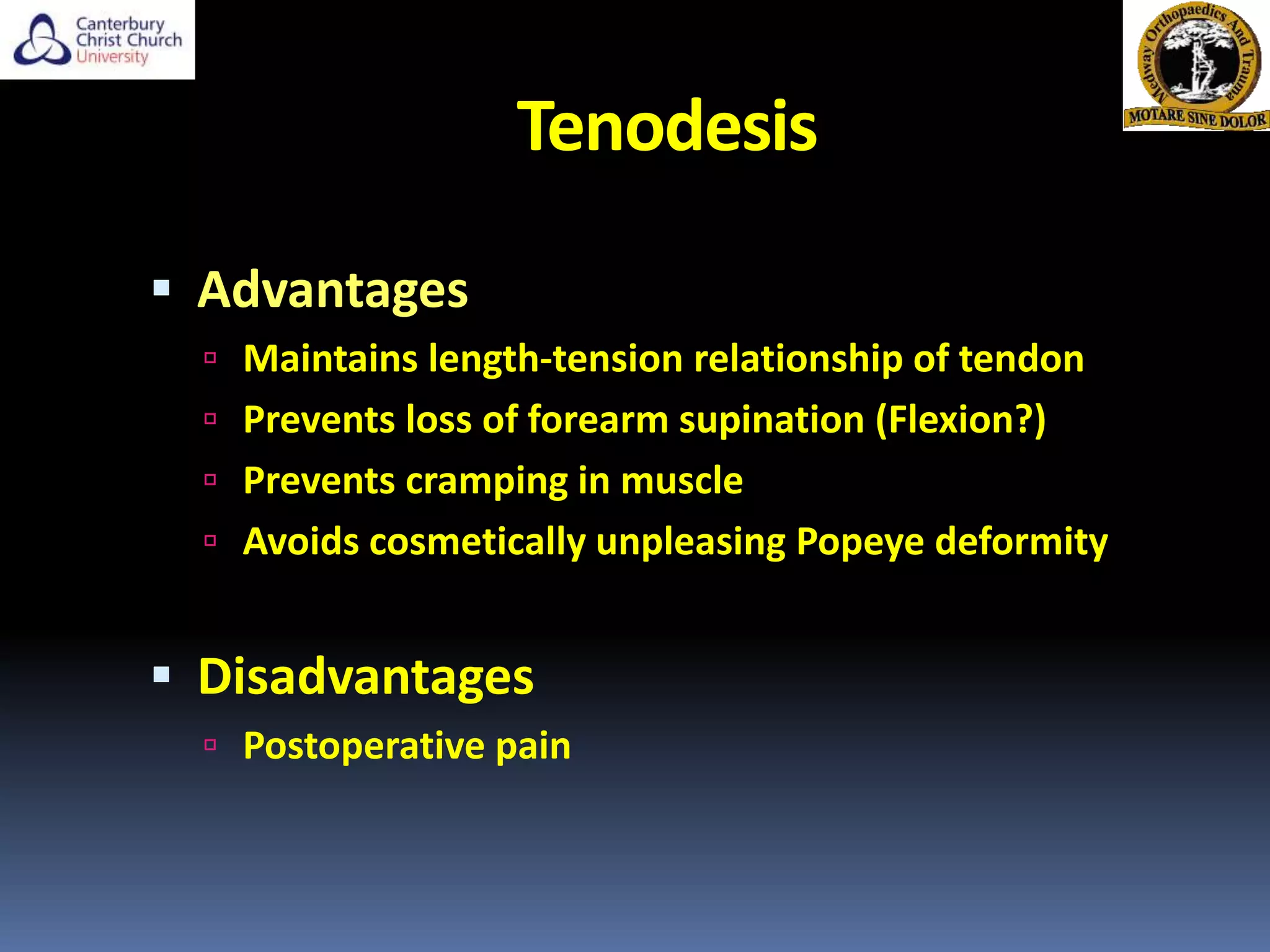
Tenodesis
OR
Tenotomy
Tenodesis
 Advantages
 Maintains length-tension relationship of tendon
 Prevents loss of forearm supination (Flexion?)
 Prevents cramping in muscle
 Avoids cosmetically unpleasing Popeye deformity
 Disadvantages
 Postoperative pain
Techniques
Biceps
Tenodesis
Open
Sub
pectoral
Soft
Tissue
A’scopy
Bony
High in
Groove
Soft Tissue Tenodesis
 Short head of biceps (Ambacher 2000)
 Transverse humeral ligament (Sekiya 2003)
 Conjoint tendon (Verma 2005)
 Repair site of rotator cuff (Franceschi 2008)
 Supraspinatus, Rotator interval
Bony Tenodesis
 Anchor (Gartsman 2000)
 Bone tunnel + Interference screw
 Keyhole, Periosteal flap, Screw and washer
 Transhumeral head guide pin (Boileau 2002)
 Pulley anchor in tunnel (Klepps 2002)
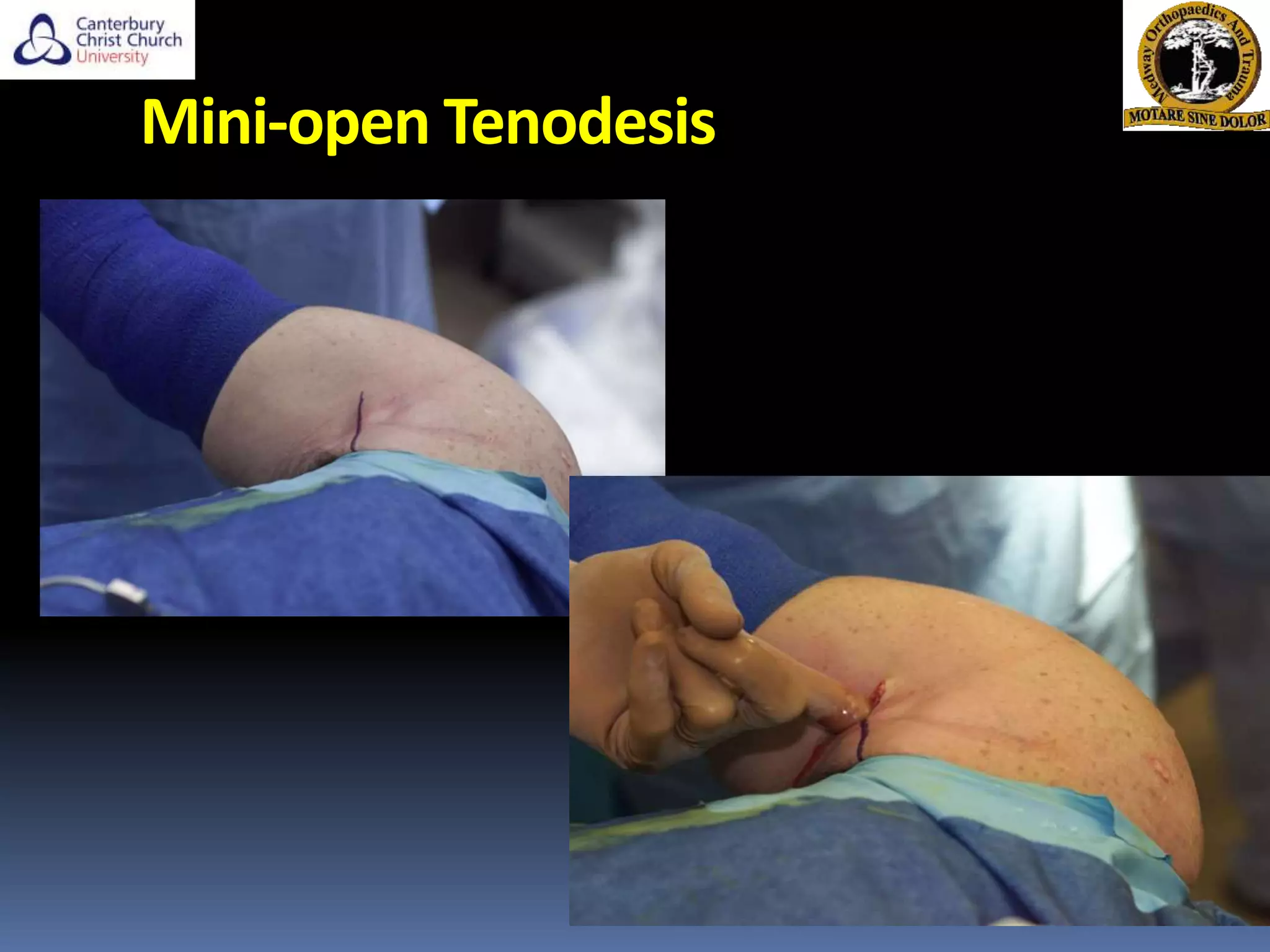
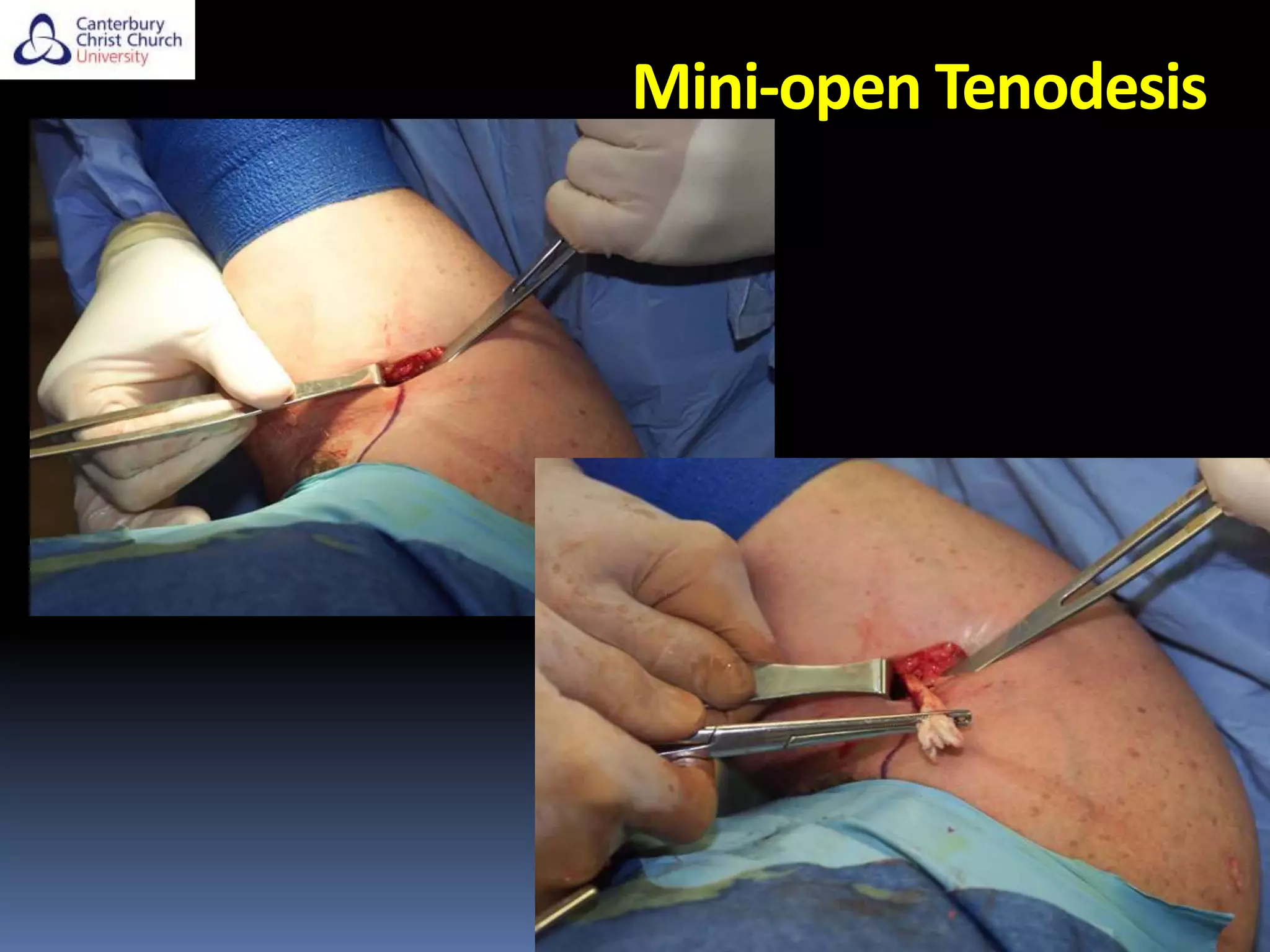
Mini-open Tenodesis
Mini-open Tenodesis
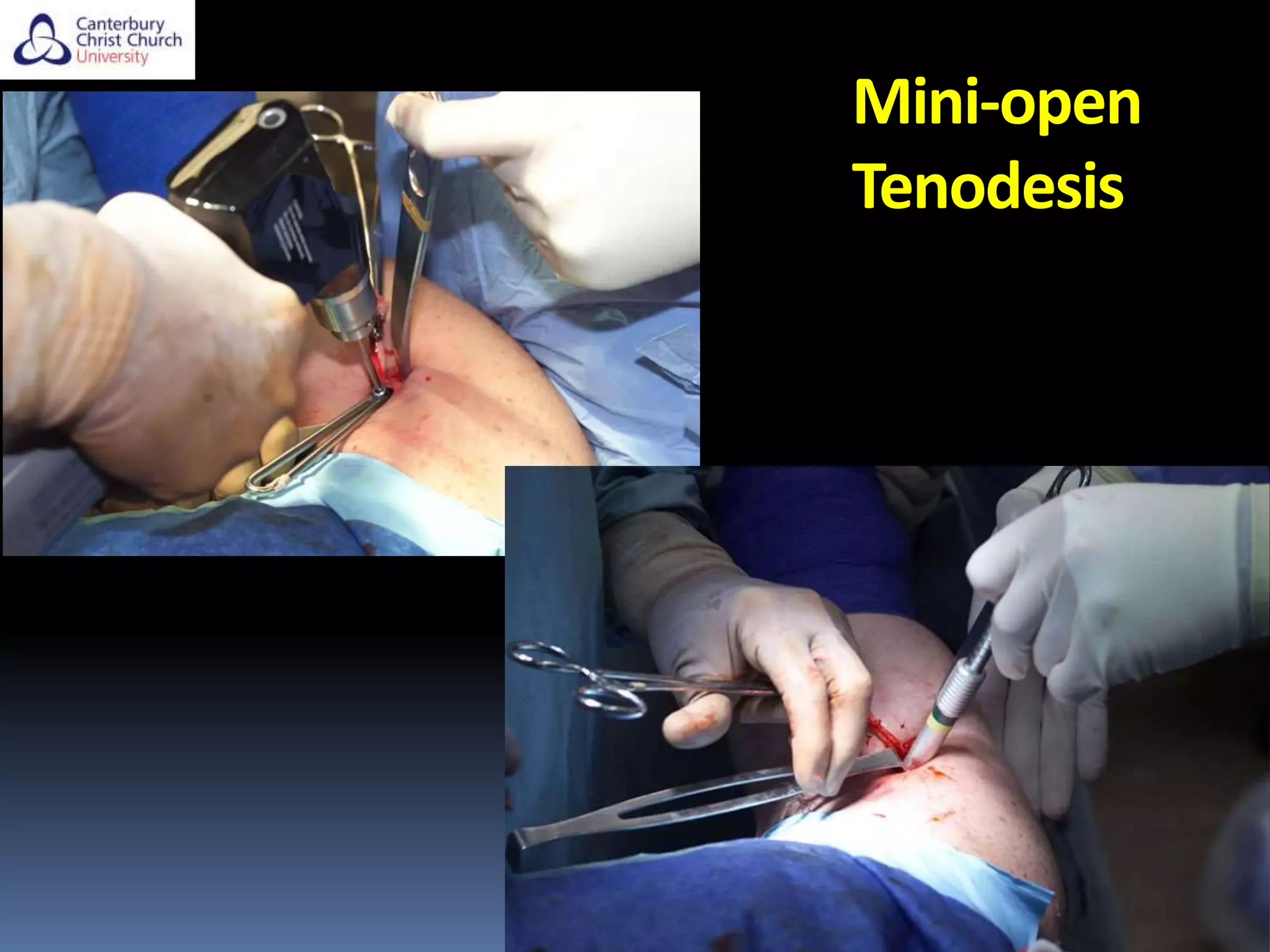
Mini-open
Tenodesis
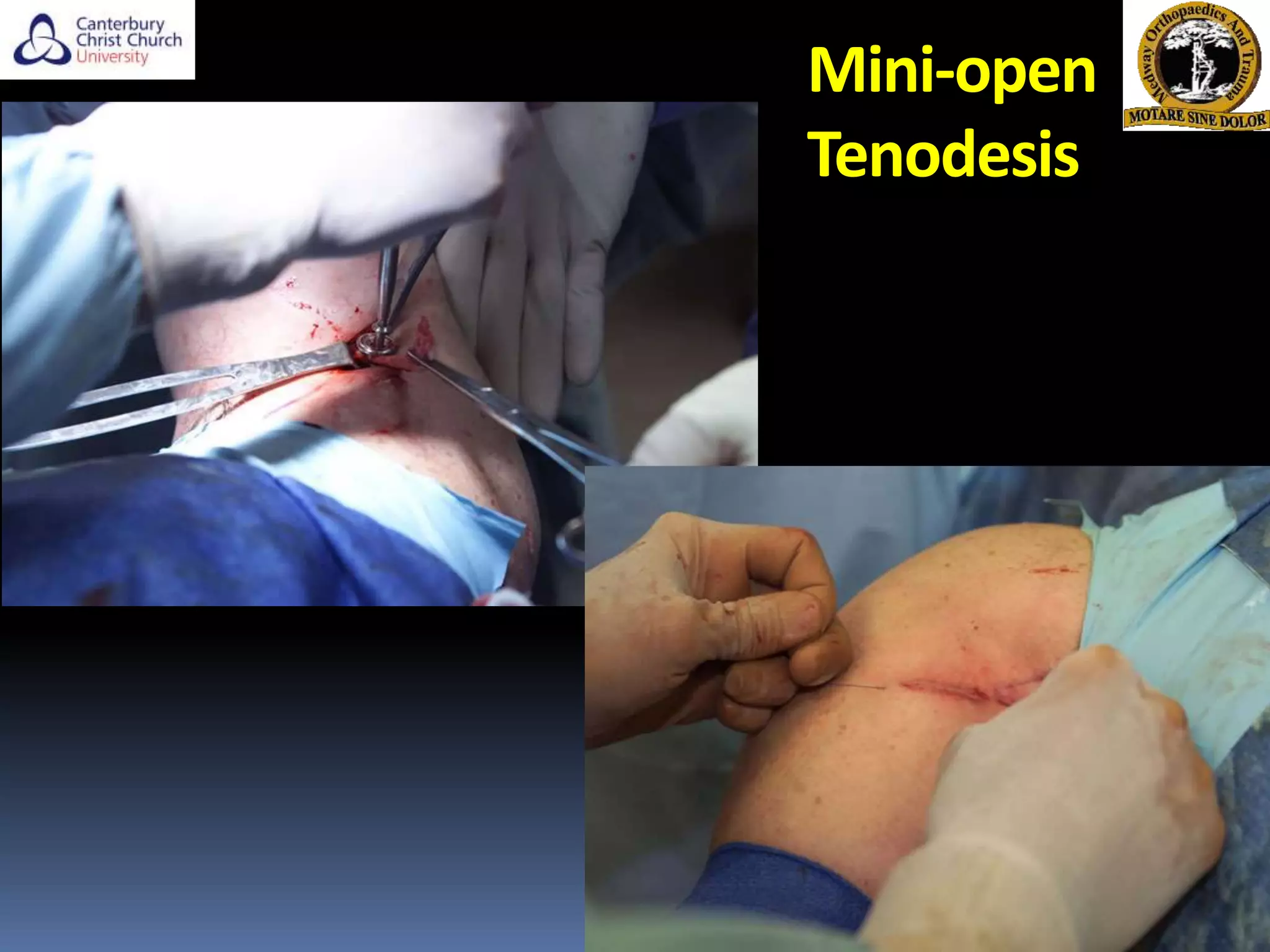
Mini-open
Tenodesis
Mini-open
Tenodesis
Arthroscopic Tenodesis
Interference screw in humeral head
Suture anchors
Arthroscopic Tenodesis
Tenotomy
 ? Function as static and dynamic restraint
 Controversy in function but no controversy in
source of pain
 Advantages
 Lesser incidence of post operative pain
 Does not require p/o immobilization
 No specific rehabilitation program
 Less cost
 Easier to perform
 Lesser operative time
- Releasing LHB with portion of
superior labrum (Bradbury 2008)
- Tenotomy of hypertrophic
and flattened LHB (Ahmad 2007)
- Low in female : female 37%,
male 83% (Kelly 2005)
Tenodesis vs Tenotomy
• Tenotomy and tenodesis have little difference in
muscle spasm, cramp, anterior shoulder pain
and cosmetic appearance (Osbahr 2002)
• English literatures : Tenotomy and tenodesis
have little difference in outcome (Frost 2009)
• Higher incidence of cosmetic deformity is seen
in patients treated with biceps tenotomy
compared with tenodesis, with an associated
lower load to tendon failure (Andrew 2011)
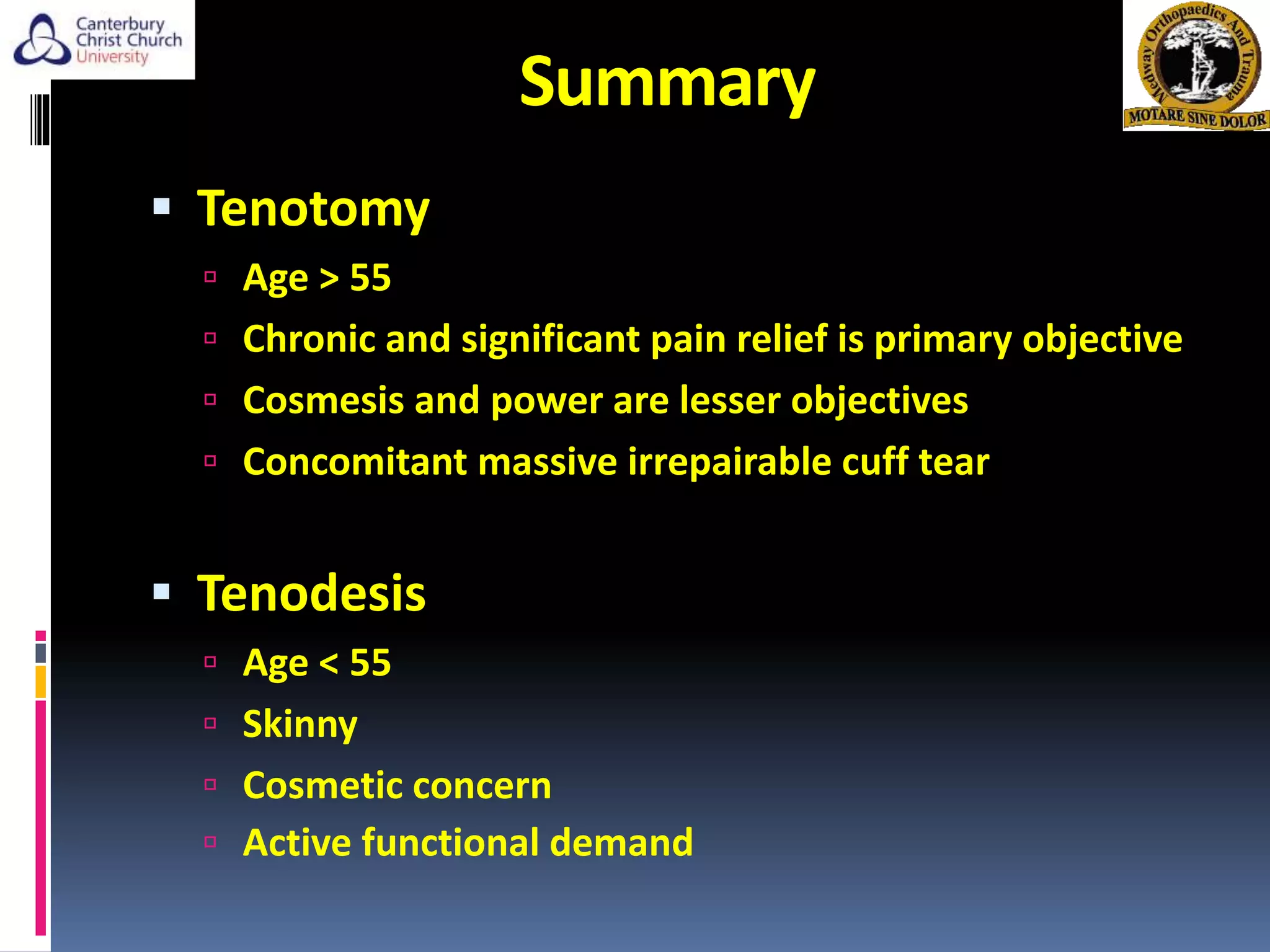
Summary
 Tenotomy
 Age > 55
 Chronic and significant pain relief is primary objective
 Cosmesis and power are lesser objectives
 Concomitant massive irrepairable cuff tear
 Tenodesis
 Age < 55
 Skinny
 Cosmetic concern
 Active functional demand
Conclusion
• Still no consensus in the literature
• Patient Factors & Demands
• Need high levels of evidence, control,
randomization and power, with well-
defined study variables
Thank You

Biceps the pain generator

  • 1.
    Biceps – ThePain Generator Prof. Bijayendra Singh Consultant Orthopaedic Surgeon, Medway NHS Foundation Trust Visiting Professor, Canterbury Christ Church University
  • 2.
  • 3.
    Function  Elbow flexionand supination  Head depressor in presence of large cuff defect  Decreases humeral head translation
  • 4.
    Pathology • Inflammation – Degenerativetendinosis beware cuff tear – Primary tendinitis rare • Instability – subluxation or dislocation (tear of CHL or subscapularis) • Trauma – Tear – SLAP lesion
  • 5.
    Clinical Evaluation 1. Pain,Tenderness, Popping 2. Specific Test: Speed, Yergason, Upper Cut 3. Instability Test 4. Associated Lesion Test
  • 6.
    Tests  O'Brien ActiveCompression  Kibler Anterior Slide  Compression Rotation  Resisted Supination External Rotation  Speed  Crank  Biceps Load II (Kim)  Mayo Shear
  • 7.
    O’brient’s Test  90of flexion, 10 of horizontal adduction, and maximum internal rotation with the elbow in full extension  Resisted downward force at wrist  On top of the shoulder = ACJ  Inside the shoulder = Biceps  Positive test is indicated by pain or painful clicking in shoulder
  • 8.
    Dynamic Labral ShearTest (O’Driscoll)  Sitting or Supine  arm at side and elbow flexed 90  ER & Abd 90  Pain  deep and/or posterior  90 to 120 abduction What I describe as Jobe’s Maneuver for pain
  • 9.
     Speed Test Resisted active arm elevation with extended elbow and supinated forearm  Yergason test  Resisted active elbow flexion at 90 degree with supinated forearm
  • 10.
    Accuracy of ClincalTests Jones & Galluch et al
  • 11.
    Should be waryabout relying on these tests when assessing these indviduals with shoulder dysfunction - they may have more than one pathology
  • 13.
    Investigation  Depends uponthe lesion  Intra-articular  Groove  MRI vs US
  • 14.
    Treatment  Depends on: •Pathology of LHB • Co-existing shoulder pathology • Age • Symptoms • Level of function  Conservative vs Operative
  • 15.
    Conservative treatment • RotatorCuff Status • Rest • NSAIDS • Steroid injection • Physical therapy • ROM exercise • Muscle strengthening
  • 16.
    Surgical Treatment • Resistantto conservative treatment • Irreversible changes • Tearing or fraying > 25% • Decrease tendon size > 25% • Subluxation from bicipital groove • Instability • Relative indication : • Failed subacromial decompression with persistent symptoms • Bony abnormality
  • 17.
  • 18.
    Tenodesis  Advantages  Maintainslength-tension relationship of tendon  Prevents loss of forearm supination (Flexion?)  Prevents cramping in muscle  Avoids cosmetically unpleasing Popeye deformity  Disadvantages  Postoperative pain
  • 19.
  • 20.
    Soft Tissue Tenodesis Short head of biceps (Ambacher 2000)  Transverse humeral ligament (Sekiya 2003)  Conjoint tendon (Verma 2005)  Repair site of rotator cuff (Franceschi 2008)  Supraspinatus, Rotator interval
  • 21.
    Bony Tenodesis  Anchor(Gartsman 2000)  Bone tunnel + Interference screw  Keyhole, Periosteal flap, Screw and washer  Transhumeral head guide pin (Boileau 2002)  Pulley anchor in tunnel (Klepps 2002)
  • 22.
  • 23.
  • 24.
  • 25.
  • 26.
  • 27.
    Arthroscopic Tenodesis Interference screwin humeral head Suture anchors
  • 28.
  • 31.
    Tenotomy  ? Functionas static and dynamic restraint  Controversy in function but no controversy in source of pain  Advantages  Lesser incidence of post operative pain  Does not require p/o immobilization  No specific rehabilitation program  Less cost  Easier to perform  Lesser operative time
  • 32.
    - Releasing LHBwith portion of superior labrum (Bradbury 2008) - Tenotomy of hypertrophic and flattened LHB (Ahmad 2007) - Low in female : female 37%, male 83% (Kelly 2005)
  • 33.
    Tenodesis vs Tenotomy •Tenotomy and tenodesis have little difference in muscle spasm, cramp, anterior shoulder pain and cosmetic appearance (Osbahr 2002) • English literatures : Tenotomy and tenodesis have little difference in outcome (Frost 2009) • Higher incidence of cosmetic deformity is seen in patients treated with biceps tenotomy compared with tenodesis, with an associated lower load to tendon failure (Andrew 2011)
  • 34.
    Summary  Tenotomy  Age> 55  Chronic and significant pain relief is primary objective  Cosmesis and power are lesser objectives  Concomitant massive irrepairable cuff tear  Tenodesis  Age < 55  Skinny  Cosmetic concern  Active functional demand
  • 35.
    Conclusion • Still noconsensus in the literature • Patient Factors & Demands • Need high levels of evidence, control, randomization and power, with well- defined study variables
  • 36.