Liverpool Mission Academy


                PP100
  Preaching and Communication Theory:
        Exploring Sermon Styles
        www.preachersforum.org
Learning Outcomes
1. Evaluate the homiletical effectiveness of
   sermon styles used by various important
   preachers.

2. Critically distinguish the differences
    between different types of sermons.

3. Rate the effectiveness of those different
    types of sermons for different liturgical
    contexts.
In the case of the following preachers
  from the 18th-21st centuries, we want to
                   know…
• What styles of preaching did they use?
• What exactly about those styles made
  their preaching effective in their day
  and time?
• How has preaching evolved
  throughout the centuries, and why
  does it continue to change?
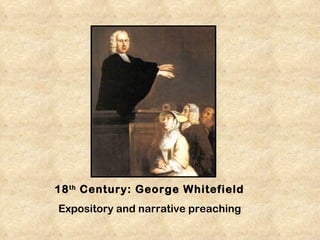
18 th Century: George Whitefield
Expository and narrative preaching
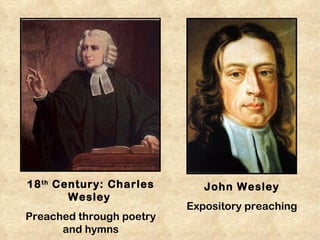
18 th Century: Charles       John Wesley
        Wesley
                          Expository preaching
Preached through poetry
      and hymns
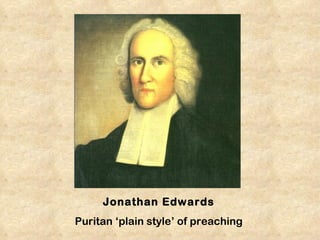
Jonathan Edwards
Puritan ‘plain style’ of preaching
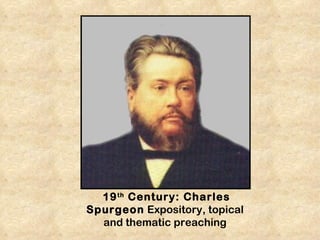
19 th Century: Charles
Spurgeon Expository, topical
  and thematic preaching
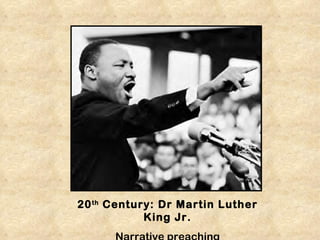
20 th Century: Dr Martin Luther
            King Jr.
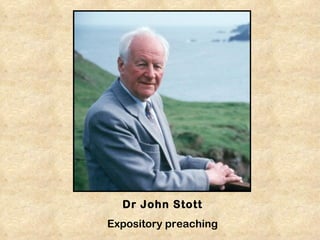
Dr John Stott
Expository preaching
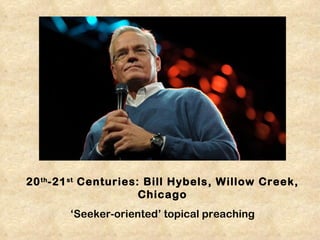
20 th -21 st Centuries: Bill Hybels, Willow Creek,
                       Chicago
        ‘Seeker-oriented’ topical preaching
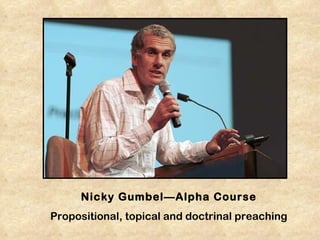
Nicky Gumbel—Alpha Course
Propositional, topical and doctrinal preaching
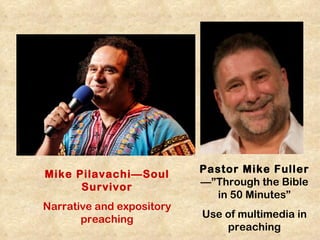
Mike Pilavachi—Soul        Pastor Mike Fuller
      Survivor             —”Through the Bible
                             in 50 Minutes”
Narrative and expository
       preaching           Use of multimedia in
                               preaching
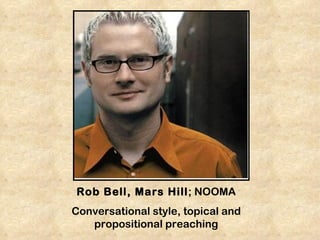
Rob Bell, Mars Hill; NOOMA
Conversational style, topical and
   propositional preaching
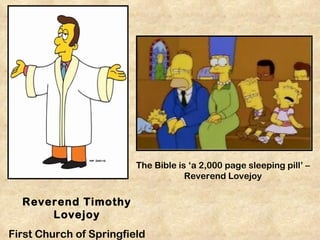
The Bible is ‘a 2,000 page sleeping pill’ –
                                     Reverend Lovejoy

  Reverend Timothy
      Lovejoy
First Church of Springfield
Conclusions

• Preaching continues to evolve as it is re-
  worked and reconceived by its best
  practitioners.
• The impact of historical, literary and
  rhetorical criticism has impacted both
  exegesis and preaching forms and styles.
• The ‘listening context’ has changed
  drastically since the 18th and 19th centuries.
• Today preachers (and the Bible also) no
  longer gain automatic acceptance from their
  listeners due to their position as clergy or
  their association with the church as an
  institution within Western society.
Overview: Various Sermon Styles
•   Propositional Sermons
•   Deductive Sermons
•   Inductive Sermons
•   Problem-Solution Sermons
•   Etymological Sermons
•   Analytical Sermons
•   Analogical Sermons
•   Biographical Sermons
•   Pastoral Sermon
•   Doctrinal Sermon
•   Book Sermon
•   Chapter Sermon
•   Topical Sermon
•   Thematic Sermon
•   Narrative Sermon
•   Expository Sermon
•   Liturgical Sermon
• ‘Rite of Passage Sermons’
    –   Funeral Sermon
    –   Wedding Sermon
    –   Baptismal/Confirmation Sermon
    –   Christening/baby dedication sermon
•   Musical Sermons
•   Dramatic Sermons
•   Doctrinal Sermons
•   Apologetic Sermons
5 Sermon Styles
1.    Technical Sermons
     • Analogical—analogies from historical or
        current societal myths and relating to the Bible
     • Propositional—‘main idea’ sermons
     • Deductive—begin with an interpretative
        hypothesis and demonstrate its validity
     • Inductive—ask questions of the text and arrive
        at an interpretative conclusion
     • Analytical—in-depth study of a biblical concept
        (justification, redemption etc).
     • Etymological--focus on Greek or Hebrew word-
        studies
     • Problem-solution—sets up the text as an
        interpretative problem to be solved
     • Expository—verse-by-verse ‘running
        commentary’ with illustrations and applications
2. Dogmatic Sermons (doctrinal
  traditions)
  A. Pastoral sermons—addressing pastoral
  issues and congregational concerns
  B. Doctrinal sermons—theological
  distinctives or denominational beliefs
  C. Topical sermons—biblical or relevant
  contemporary topic (marriage and
  singleness, finances, depression)
  D. Thematic sermons—biblical book or
  chapter themes (‘light and darkness’ in the
  book of John; ‘forgiveness’ in Matt. 18).
  E. Apologetic—defence of the Christian faith
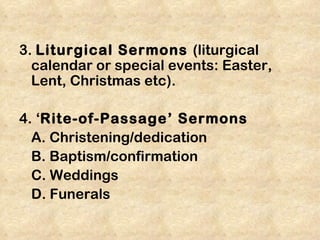
3. Liturgical Sermons (liturgical
  calendar or special events: Easter,
  Lent, Christmas etc).

4. ‘Rite-of-Passage’ Sermons
  A. Christening/dedication
  B. Baptism/confirmation
  C. Weddings
  D. Funerals
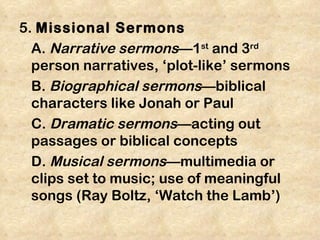
5. Missional Sermons
  A. Narrative sermons—1st and 3rd
  person narratives, ‘plot-like’ sermons
  B. Biographical sermons—biblical
  characters like Jonah or Paul
  C. Dramatic sermons—acting out
  passages or biblical concepts
  D. Musical sermons—multimedia or
  clips set to music; use of meaningful
  songs (Ray Boltz, ‘Watch the Lamb’)
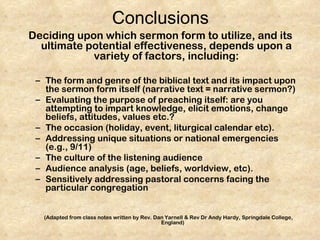
Conclusions
Deciding upon which sermon form to utilize, and its
  ultimate potential effectiveness, depends upon a
            variety of factors, including:

 – The form and genre of the biblical text and its impact upon
   the sermon form itself (narrative text = narrative sermon?)
 – Evaluating the purpose of preaching itself: are you
   attempting to impart knowledge, elicit emotions, change
   beliefs, attitudes, values etc.?
 – The occasion (holiday, event, liturgical calendar etc).
 – Addressing unique situations or national emergencies
   (e.g., 9/11)
 – The culture of the listening audience
 – Audience analysis (age, beliefs, worldview, etc).
 – Sensitively addressing pastoral concerns facing the
   particular congregation


   (Adapted from class notes written by Rev. Dan Yarnell & Rev Dr Andy Hardy, Springdale College,
                                               England)

PP100: Exploring Sermon Styles

  • 1.
    Liverpool Mission Academy PP100 Preaching and Communication Theory: Exploring Sermon Styles www.preachersforum.org
  • 2.
    Learning Outcomes 1. Evaluatethe homiletical effectiveness of sermon styles used by various important preachers. 2. Critically distinguish the differences between different types of sermons. 3. Rate the effectiveness of those different types of sermons for different liturgical contexts.
  • 3.
    In the caseof the following preachers from the 18th-21st centuries, we want to know… • What styles of preaching did they use? • What exactly about those styles made their preaching effective in their day and time? • How has preaching evolved throughout the centuries, and why does it continue to change?
  • 4.
    18 th Century:George Whitefield Expository and narrative preaching
  • 5.
    18 th Century:Charles John Wesley Wesley Expository preaching Preached through poetry and hymns
  • 6.
    Jonathan Edwards Puritan ‘plainstyle’ of preaching
  • 7.
    19 th Century:Charles Spurgeon Expository, topical and thematic preaching
  • 8.
    20 th Century:Dr Martin Luther King Jr.
  • 9.
  • 10.
    20 th -21st Centuries: Bill Hybels, Willow Creek, Chicago ‘Seeker-oriented’ topical preaching
  • 11.
    Nicky Gumbel—Alpha Course Propositional,topical and doctrinal preaching
  • 12.
    Mike Pilavachi—Soul Pastor Mike Fuller Survivor —”Through the Bible in 50 Minutes” Narrative and expository preaching Use of multimedia in preaching
  • 13.
    Rob Bell, MarsHill; NOOMA Conversational style, topical and propositional preaching
  • 14.
    The Bible is‘a 2,000 page sleeping pill’ – Reverend Lovejoy Reverend Timothy Lovejoy First Church of Springfield
  • 15.
    Conclusions • Preaching continuesto evolve as it is re- worked and reconceived by its best practitioners. • The impact of historical, literary and rhetorical criticism has impacted both exegesis and preaching forms and styles. • The ‘listening context’ has changed drastically since the 18th and 19th centuries. • Today preachers (and the Bible also) no longer gain automatic acceptance from their listeners due to their position as clergy or their association with the church as an institution within Western society.
  • 16.
    Overview: Various SermonStyles • Propositional Sermons • Deductive Sermons • Inductive Sermons • Problem-Solution Sermons • Etymological Sermons • Analytical Sermons • Analogical Sermons • Biographical Sermons
  • 17.
    Pastoral Sermon • Doctrinal Sermon • Book Sermon • Chapter Sermon • Topical Sermon • Thematic Sermon • Narrative Sermon • Expository Sermon • Liturgical Sermon
  • 18.
    • ‘Rite ofPassage Sermons’ – Funeral Sermon – Wedding Sermon – Baptismal/Confirmation Sermon – Christening/baby dedication sermon • Musical Sermons • Dramatic Sermons • Doctrinal Sermons • Apologetic Sermons
  • 19.
    5 Sermon Styles 1. Technical Sermons • Analogical—analogies from historical or current societal myths and relating to the Bible • Propositional—‘main idea’ sermons • Deductive—begin with an interpretative hypothesis and demonstrate its validity • Inductive—ask questions of the text and arrive at an interpretative conclusion • Analytical—in-depth study of a biblical concept (justification, redemption etc). • Etymological--focus on Greek or Hebrew word- studies • Problem-solution—sets up the text as an interpretative problem to be solved • Expository—verse-by-verse ‘running commentary’ with illustrations and applications
  • 20.
    2. Dogmatic Sermons(doctrinal traditions) A. Pastoral sermons—addressing pastoral issues and congregational concerns B. Doctrinal sermons—theological distinctives or denominational beliefs C. Topical sermons—biblical or relevant contemporary topic (marriage and singleness, finances, depression) D. Thematic sermons—biblical book or chapter themes (‘light and darkness’ in the book of John; ‘forgiveness’ in Matt. 18). E. Apologetic—defence of the Christian faith
  • 21.
    3. Liturgical Sermons(liturgical calendar or special events: Easter, Lent, Christmas etc). 4. ‘Rite-of-Passage’ Sermons A. Christening/dedication B. Baptism/confirmation C. Weddings D. Funerals
  • 22.
    5. Missional Sermons A. Narrative sermons—1st and 3rd person narratives, ‘plot-like’ sermons B. Biographical sermons—biblical characters like Jonah or Paul C. Dramatic sermons—acting out passages or biblical concepts D. Musical sermons—multimedia or clips set to music; use of meaningful songs (Ray Boltz, ‘Watch the Lamb’)
  • 23.
    Conclusions Deciding upon whichsermon form to utilize, and its ultimate potential effectiveness, depends upon a variety of factors, including: – The form and genre of the biblical text and its impact upon the sermon form itself (narrative text = narrative sermon?) – Evaluating the purpose of preaching itself: are you attempting to impart knowledge, elicit emotions, change beliefs, attitudes, values etc.? – The occasion (holiday, event, liturgical calendar etc). – Addressing unique situations or national emergencies (e.g., 9/11) – The culture of the listening audience – Audience analysis (age, beliefs, worldview, etc). – Sensitively addressing pastoral concerns facing the particular congregation (Adapted from class notes written by Rev. Dan Yarnell & Rev Dr Andy Hardy, Springdale College, England)