Liverpool Mission Academy


                  PP100
Preaching and the ‘Five-Fold Ministry’ Modes
         www.preachersforum.org
Learning Outcomes
1. Articulate the basic components that
   distinguish the so-called ‘fivefold
   ministries.’

2. Critically evaluate some of the driving
    forces that each of the fivefold ministry
    leadership types might bring to their
    preaching content and ethos.
Agree/Disagree:


Are there various
forces that might
drive the way in
which a person
preaches?
Personality & Preaching
    For example, might your
  preaching styles be impacted if
  your personality tends to be…

• More extroverted than
  introverted?
• More analytical than emotive?
• More emotive than analytical?
• More sensing than intuitive?
• More perceiving than judging?
Leadership & Preaching
Do the ‘fivefold ministries’ identified by Paul
  in Ephesians 4.11-12 reflect a variety of
               leadership styles?

Do these missional leadership styles have
 potential impact upon preaching forms?
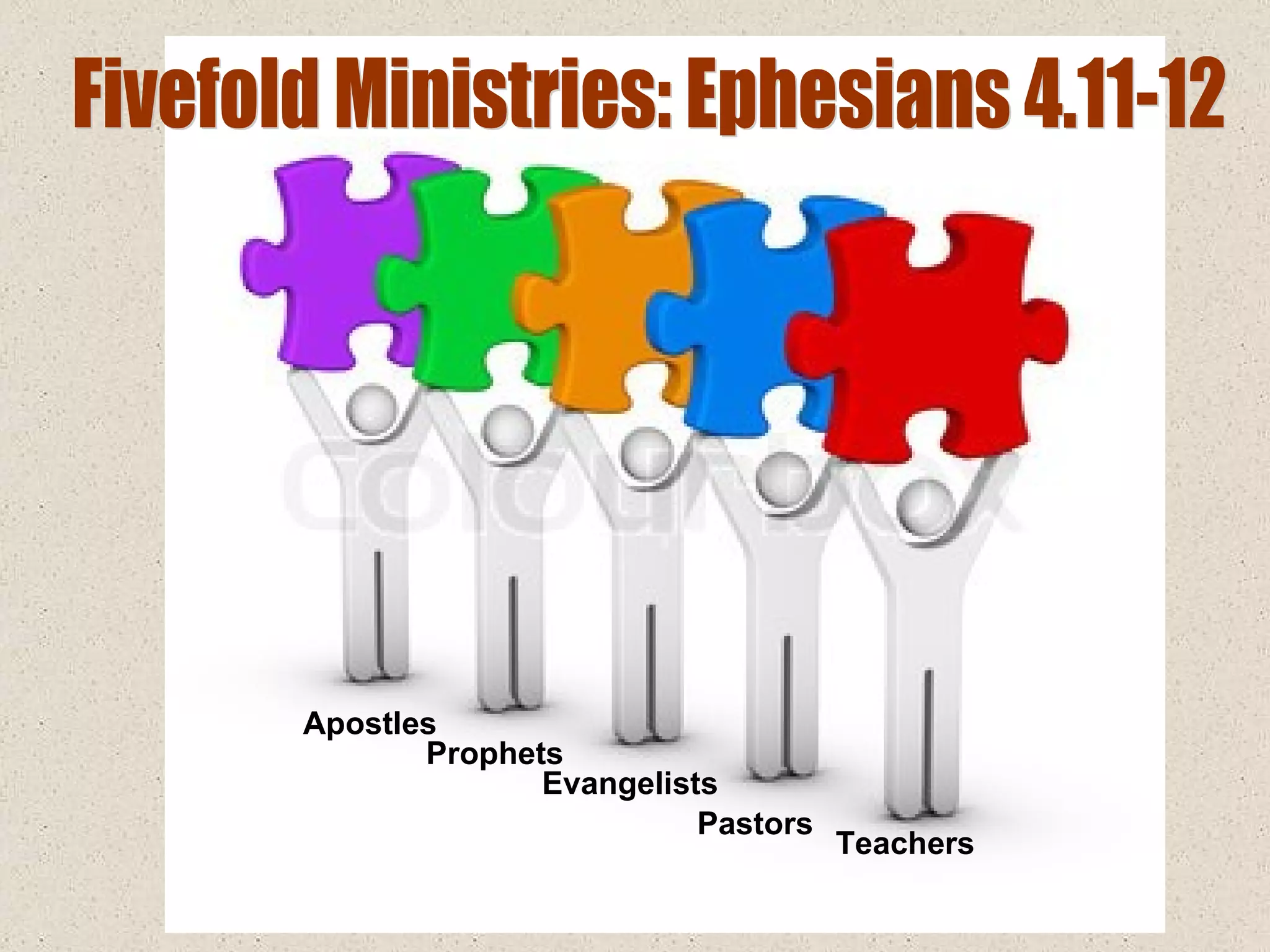
Apostles
       Prophets
              Evangelists
                        Pastors
                                  Teachers
If these
characterizations
fit a wide variety of
missional leadership
styles, how might each
of these categorizations
be driven to package
scriptural messages
in ways that are true to
their gifting?
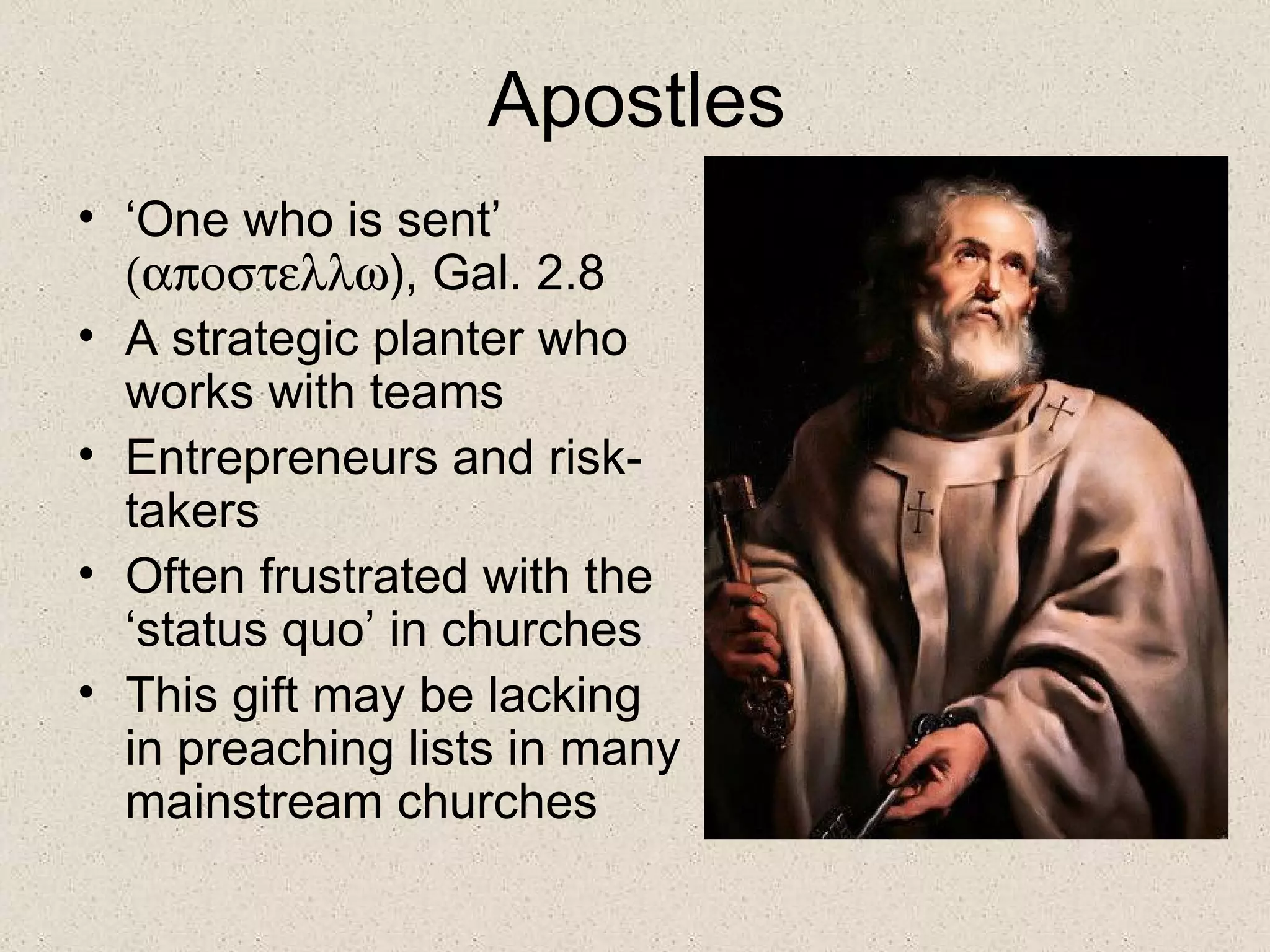
Apostles
• ‘One who is sent’
  (αποστελλω), Gal. 2.8
• A strategic planter who
  works with teams
• Entrepreneurs and risk-
  takers
• Often frustrated with the
  ‘status quo’ in churches
• This gift may be lacking
  in preaching lists in many
  mainstream churches
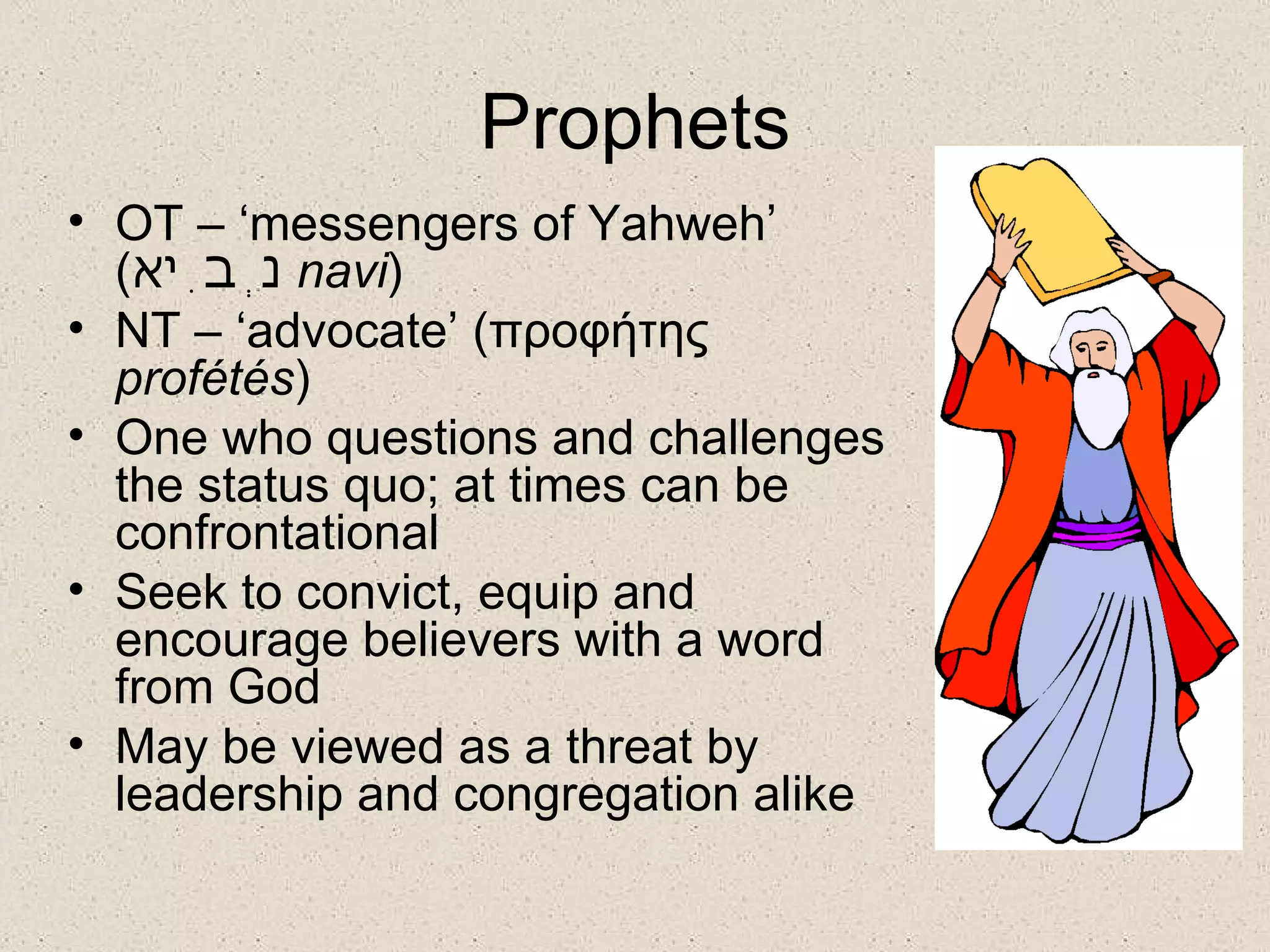
Prophets
• OT – ‘messengers of Yahweh’
  (‫ נְבִיא‬navi)
• NT – ‘advocate’ (προφήτης
  profétés)
• One who questions and challenges
  the status quo; at times can be
  confrontational
• Seek to convict, equip and
  encourage believers with a word
  from God
• May be viewed as a threat by
  leadership and congregation alike
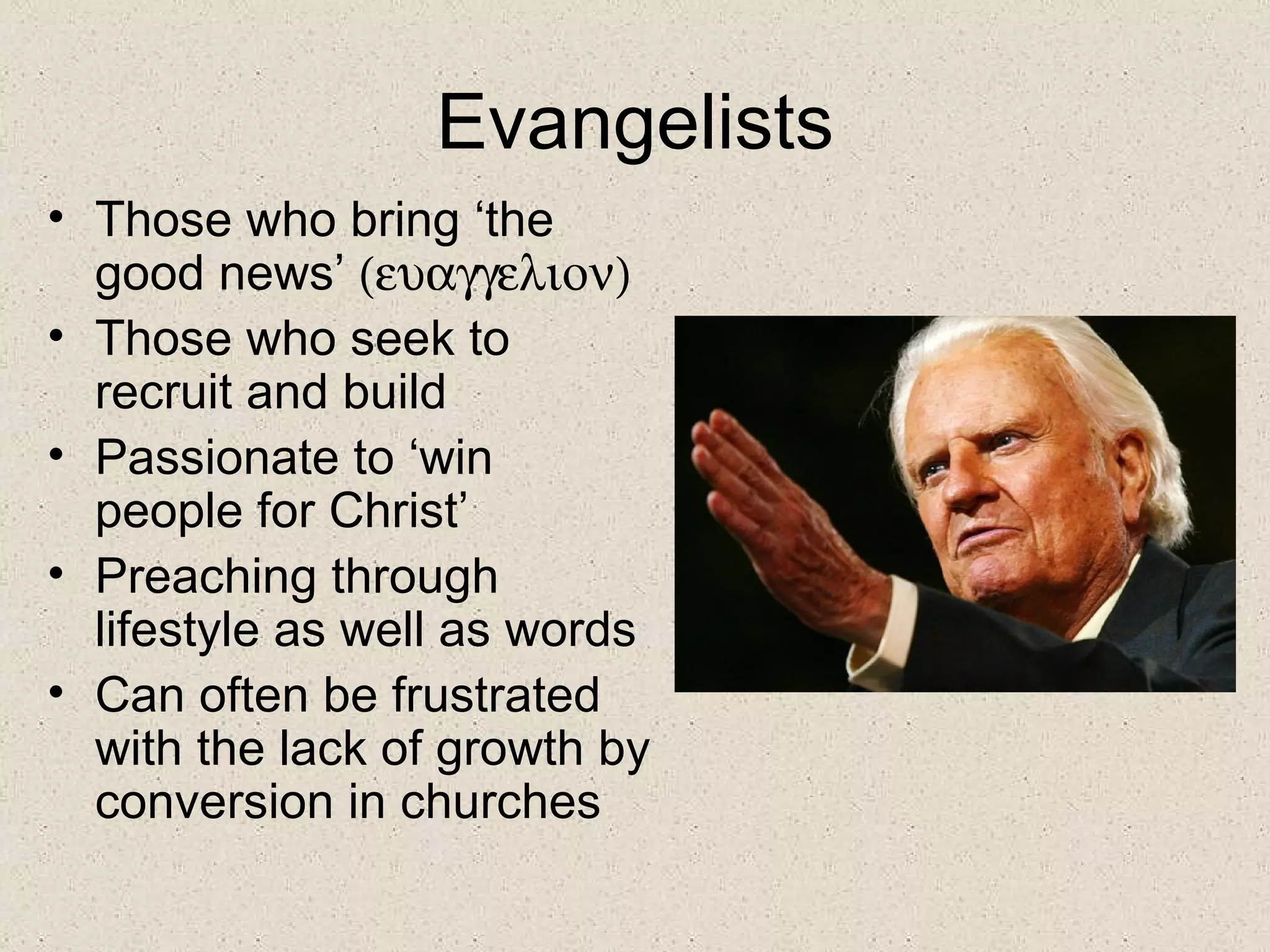
Evangelists
• Those who bring ‘the
  good news’ (ευαγγελιον)
• Those who seek to
  recruit and build
• Passionate to ‘win
  people for Christ’
• Preaching through
  lifestyle as well as words
• Can often be frustrated
  with the lack of growth by
  conversion in churches
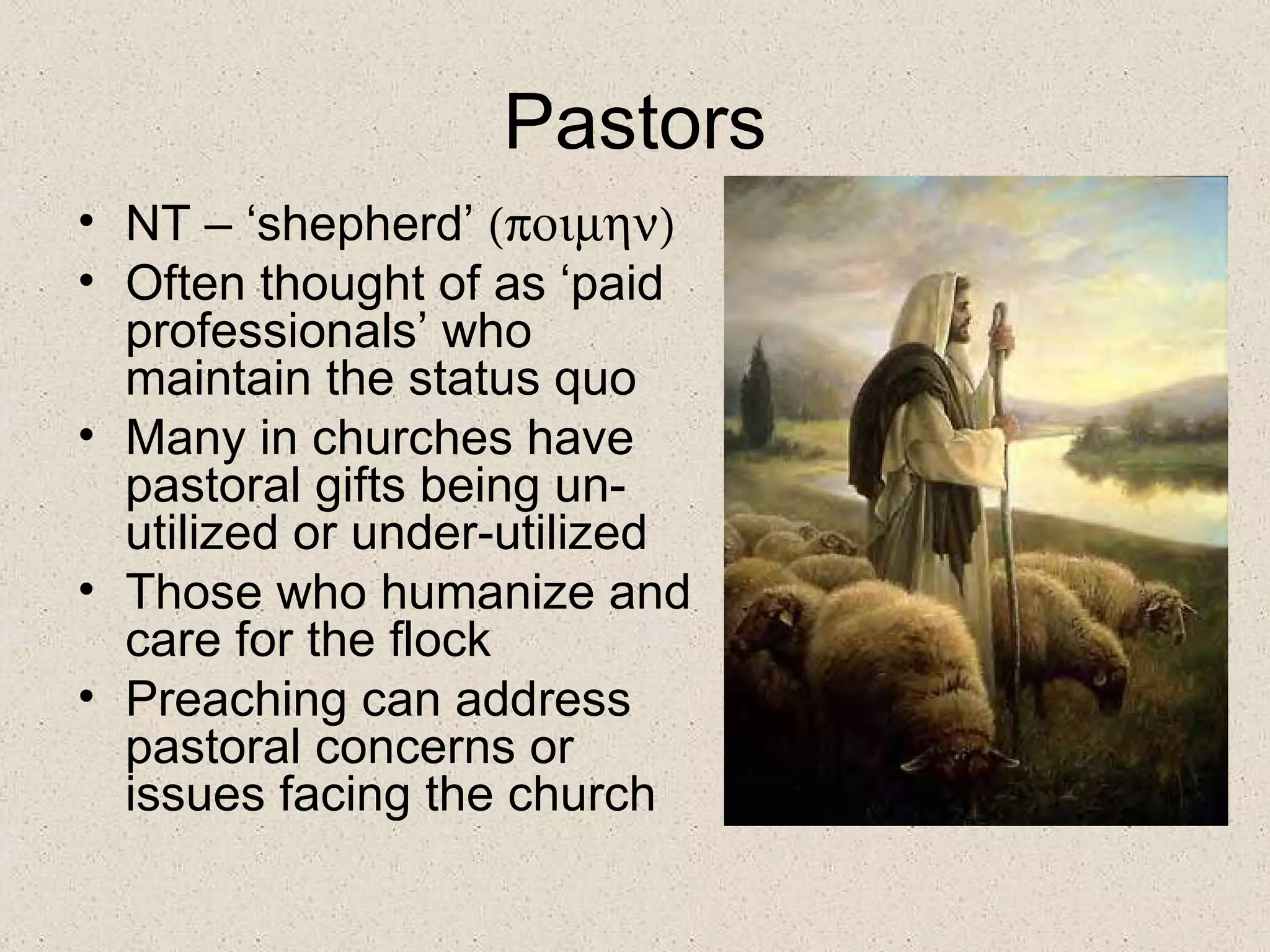
Pastors
• NT – ‘shepherd’ (ποιµην)
• Often thought of as ‘paid
  professionals’ who
  maintain the status quo
• Many in churches have
  pastoral gifts being un-
  utilized or under-utilized
• Those who humanize and
  care for the flock
• Preaching can address
  pastoral concerns or
  issues facing the church
Teachers
• Cultivates, organizes and
  explains difficult concepts
• Passion for learning and
  seeing others learn
• Can systematize complexity
• Helps people to grow in their
  understanding of the faith
Conclusions
• Can you identify your particular leadership gift as
  listed above?
• What sorts of preaching styles might the differing
  leadership gifts tend to gravitate toward?
• What types of preaching styles might best
  describe your gift set and why?
• Are you free to express your particular gift set in
  your current preaching context or is it being
  stifled?
• Why might this be and what steps can you take
  in order to change the situation?
• How could a church encourage and foster all 5
  gift sets?
 (Adapted from class notes written by Rev. Dan Yarnell & Rev Dr Andy Hardy, Springdale
                                     College, England)

PP100: The Fivefold Ministries and Preaching

  • 1.
    Liverpool Mission Academy PP100 Preaching and the ‘Five-Fold Ministry’ Modes www.preachersforum.org
  • 2.
    Learning Outcomes 1. Articulatethe basic components that distinguish the so-called ‘fivefold ministries.’ 2. Critically evaluate some of the driving forces that each of the fivefold ministry leadership types might bring to their preaching content and ethos.
  • 3.
    Agree/Disagree: Are there various forcesthat might drive the way in which a person preaches?
  • 4.
    Personality & Preaching For example, might your preaching styles be impacted if your personality tends to be… • More extroverted than introverted? • More analytical than emotive? • More emotive than analytical? • More sensing than intuitive? • More perceiving than judging?
  • 5.
    Leadership & Preaching Dothe ‘fivefold ministries’ identified by Paul in Ephesians 4.11-12 reflect a variety of leadership styles? Do these missional leadership styles have potential impact upon preaching forms?
  • 6.
    Apostles Prophets Evangelists Pastors Teachers
  • 7.
    If these characterizations fit awide variety of missional leadership styles, how might each of these categorizations be driven to package scriptural messages in ways that are true to their gifting?
  • 8.
    Apostles • ‘One whois sent’ (αποστελλω), Gal. 2.8 • A strategic planter who works with teams • Entrepreneurs and risk- takers • Often frustrated with the ‘status quo’ in churches • This gift may be lacking in preaching lists in many mainstream churches
  • 9.
    Prophets • OT –‘messengers of Yahweh’ (‫ נְבִיא‬navi) • NT – ‘advocate’ (προφήτης profétés) • One who questions and challenges the status quo; at times can be confrontational • Seek to convict, equip and encourage believers with a word from God • May be viewed as a threat by leadership and congregation alike
  • 10.
    Evangelists • Those whobring ‘the good news’ (ευαγγελιον) • Those who seek to recruit and build • Passionate to ‘win people for Christ’ • Preaching through lifestyle as well as words • Can often be frustrated with the lack of growth by conversion in churches
  • 11.
    Pastors • NT –‘shepherd’ (ποιµην) • Often thought of as ‘paid professionals’ who maintain the status quo • Many in churches have pastoral gifts being un- utilized or under-utilized • Those who humanize and care for the flock • Preaching can address pastoral concerns or issues facing the church
  • 12.
    Teachers • Cultivates, organizesand explains difficult concepts • Passion for learning and seeing others learn • Can systematize complexity • Helps people to grow in their understanding of the faith
  • 13.
    Conclusions • Can youidentify your particular leadership gift as listed above? • What sorts of preaching styles might the differing leadership gifts tend to gravitate toward? • What types of preaching styles might best describe your gift set and why? • Are you free to express your particular gift set in your current preaching context or is it being stifled? • Why might this be and what steps can you take in order to change the situation? • How could a church encourage and foster all 5 gift sets? (Adapted from class notes written by Rev. Dan Yarnell & Rev Dr Andy Hardy, Springdale College, England)