RECOMBINANT THERAPEUTIC
PROTEINS
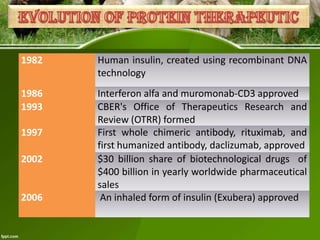
1982

Human insulin, created using recombinant DNA
technology

1986
1993

Interferon alfa and muromonab-CD3 approved
CBER's Office of Therapeutics Research and
Review (OTRR) formed
First whole chimeric antibody, rituximab, and
first humanized antibody, daclizumab, approved
$30 billion share of biotechnological drugs of
$400 billion in yearly worldwide pharmaceutical
sales
An inhaled form of insulin (Exubera) approved

1997
2002

2006
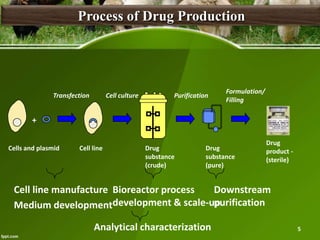
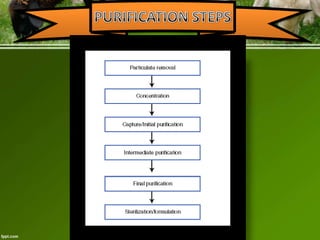
Process of Drug Production

Transfection

Cell culture

Purification

Formulation/
Filling

+
Cells and plasmid

Cell line

Drug
substance
(crude)

Drug
substance
(pure)

Drug
product (sterile)

Cell line manufacture Bioreactor process
Downstream
purification
Medium developmentdevelopment & scale-up
Analytical characterization

5
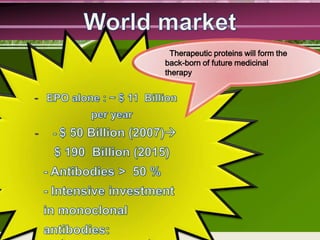
Therapeutic proteins will form the
back-born of future medicinal
therapy
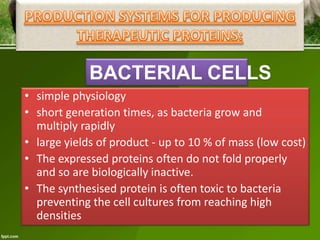
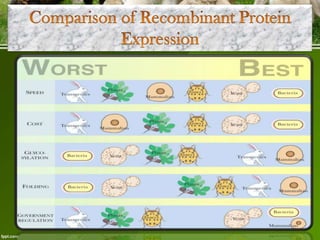
BACTERIAL CELLS
• simple physiology
• short generation times, as bacteria grow and
multiply rapidly
• large yields of product - up to 10 % of mass (low cost)
• The expressed proteins often do not fold properly
and so are biologically inactive.
• The synthesised protein is often toxic to bacteria
preventing the cell cultures from reaching high
densities
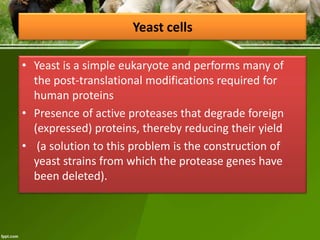
Yeast cells
• Yeast is a simple eukaryote and performs many of
the post-translational modifications required for
human proteins
• Presence of active proteases that degrade foreign
(expressed) proteins, thereby reducing their yield
• (a solution to this problem is the construction of
yeast strains from which the protease genes have
been deleted).
INSECT CELLS
• High level of expression
• Correct folding
• More difficult to work with
• Expensive
• Slow generation time
• Not suitable for proteins with repetitive sequences

PLANTS
•

• competitive cost
the availability of established practices for their
efficient harvesting, transporting,
• sorting and processing
• cheap method
• produce the desired proteins in vast quantities when
using larger animals like cows.
• long lead time to generate a herd of transgenic
animals
• concerns about the health of the animal.
• cause serious negative health effects
In vitro systems
• E. coli extract; plant wheatgerm extract; and
mammalian sources, rabbit reticulocyte lysate.
• lack both the genomic material and the cellular
boundary system
• contain the cellular components required for
transcription and/or translation of genes.
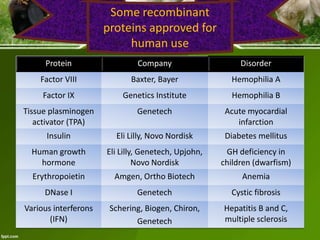
Some recombinant
proteins approved for
human use
Protein

Company

Disorder

Factor VIII

Baxter, Bayer

Hemophilia A

Factor IX

Genetics Institute

Hemophilia B

Tissue plasminogen
activator (TPA)

Genetech

Acute myocardial
infarction

Insulin

Eli Lilly, Novo Nordisk

Diabetes mellitus

Human growth
hormone

Eli Lilly, Genetech, Upjohn,
Novo Nordisk

GH deficiency in
children (dwarfism)

Erythropoietin

Amgen, Ortho Biotech

Anemia

DNase I

Genetech

Cystic fibrosis

Various interferons
(IFN)

Schering, Biogen, Chiron,
Genetech

Hepatitis B and C,
multiple sclerosis
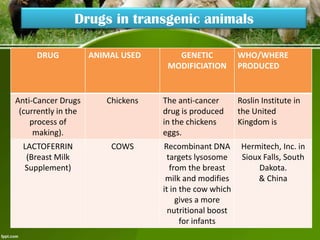
Drugs in transgenic animals
DRUG

ANIMAL USED

Anti-Cancer Drugs
(currently in the
process of
making).

Chickens

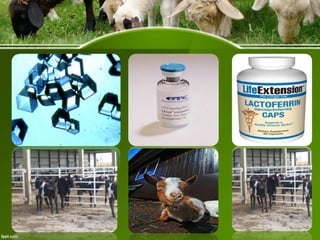
LACTOFERRIN
(Breast Milk
Supplement)

COWS

GENETIC
MODIFICIATION

The anti-cancer
drug is produced
in the chickens
eggs.
Recombinant DNA
targets lysosome
from the breast
milk and modifies
it in the cow which
gives a more
nutritional boost
for infants

WHO/WHERE
PRODUCED

Roslin Institute in
the United
Kingdom is
Hermitech, Inc. in
Sioux Falls, South
Dakota.
& China
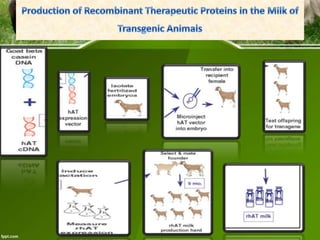
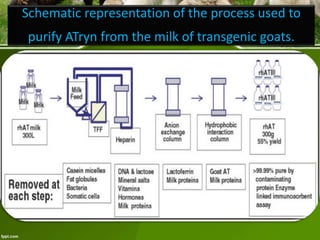
Schematic representation of the process used to

purify ATryn from the milk of transgenic goats.
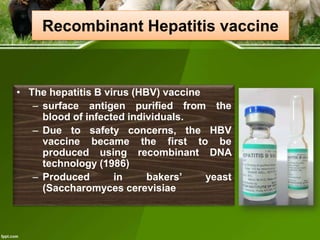
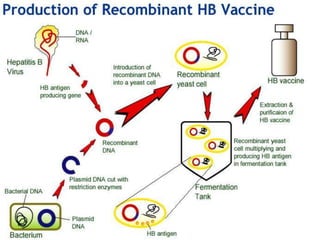
Recombinant Hepatitis vaccine

• The hepatitis B virus (HBV) vaccine
– surface antigen purified from the
blood of infected individuals.
– Due to safety concerns, the HBV
vaccine became the first to be
produced using recombinant DNA
technology (1986)
– Produced
in
bakers’
yeast
(Saccharomyces cerevisiae
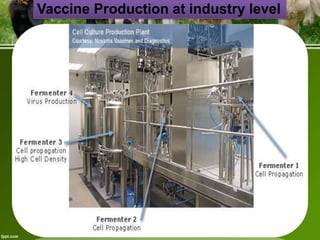
Vaccine Production at industry level

to respond to a human influenza pandemic.

• to respond to a human influenza pandemic.
•
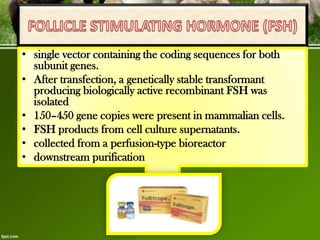
• single vector containing the coding sequences for both
subunit genes.
• After transfection, a genetically stable transformant
producing biologically active recombinant FSH was
isolated
• 150–450 gene copies were present in mammalian cells.
• FSH products from cell culture supernatants.
• collected from a perfusion-type bioreactor
• downstream purification
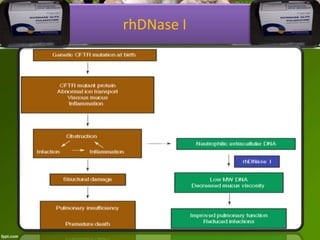
rhDNase I
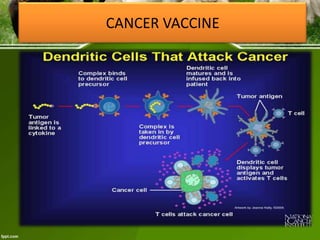
CANCER VACCINE
Bio therapeutics are delicate drugs
• Much larger and more
complex than traditional
pharmaceuticals
• Composed
of
unstable
proteins with a precise
structure
• Easily
damaged
by
unfavorable
temperature
history during storage
Recombinant therapeutic proteins

Recombinant therapeutic proteins

  • 1.
  • 3.
    1982 Human insulin, createdusing recombinant DNA technology 1986 1993 Interferon alfa and muromonab-CD3 approved CBER's Office of Therapeutics Research and Review (OTRR) formed First whole chimeric antibody, rituximab, and first humanized antibody, daclizumab, approved $30 billion share of biotechnological drugs of $400 billion in yearly worldwide pharmaceutical sales An inhaled form of insulin (Exubera) approved 1997 2002 2006
  • 5.
    Process of DrugProduction Transfection Cell culture Purification Formulation/ Filling + Cells and plasmid Cell line Drug substance (crude) Drug substance (pure) Drug product (sterile) Cell line manufacture Bioreactor process Downstream purification Medium developmentdevelopment & scale-up Analytical characterization 5
  • 6.
    Therapeutic proteins willform the back-born of future medicinal therapy
  • 7.
    BACTERIAL CELLS • simplephysiology • short generation times, as bacteria grow and multiply rapidly • large yields of product - up to 10 % of mass (low cost) • The expressed proteins often do not fold properly and so are biologically inactive. • The synthesised protein is often toxic to bacteria preventing the cell cultures from reaching high densities
  • 8.
    Yeast cells • Yeastis a simple eukaryote and performs many of the post-translational modifications required for human proteins • Presence of active proteases that degrade foreign (expressed) proteins, thereby reducing their yield • (a solution to this problem is the construction of yeast strains from which the protease genes have been deleted).
  • 10.
    INSECT CELLS • Highlevel of expression • Correct folding • More difficult to work with • Expensive • Slow generation time • Not suitable for proteins with repetitive sequences PLANTS • • competitive cost the availability of established practices for their efficient harvesting, transporting, • sorting and processing
  • 11.
    • cheap method •produce the desired proteins in vast quantities when using larger animals like cows. • long lead time to generate a herd of transgenic animals • concerns about the health of the animal. • cause serious negative health effects
  • 12.
    In vitro systems •E. coli extract; plant wheatgerm extract; and mammalian sources, rabbit reticulocyte lysate. • lack both the genomic material and the cellular boundary system • contain the cellular components required for transcription and/or translation of genes.
  • 15.
    Some recombinant proteins approvedfor human use Protein Company Disorder Factor VIII Baxter, Bayer Hemophilia A Factor IX Genetics Institute Hemophilia B Tissue plasminogen activator (TPA) Genetech Acute myocardial infarction Insulin Eli Lilly, Novo Nordisk Diabetes mellitus Human growth hormone Eli Lilly, Genetech, Upjohn, Novo Nordisk GH deficiency in children (dwarfism) Erythropoietin Amgen, Ortho Biotech Anemia DNase I Genetech Cystic fibrosis Various interferons (IFN) Schering, Biogen, Chiron, Genetech Hepatitis B and C, multiple sclerosis
  • 17.
    Drugs in transgenicanimals DRUG ANIMAL USED Anti-Cancer Drugs (currently in the process of making). Chickens LACTOFERRIN (Breast Milk Supplement) COWS GENETIC MODIFICIATION The anti-cancer drug is produced in the chickens eggs. Recombinant DNA targets lysosome from the breast milk and modifies it in the cow which gives a more nutritional boost for infants WHO/WHERE PRODUCED Roslin Institute in the United Kingdom is Hermitech, Inc. in Sioux Falls, South Dakota. & China
  • 20.
    Schematic representation ofthe process used to purify ATryn from the milk of transgenic goats.
  • 21.
    Recombinant Hepatitis vaccine •The hepatitis B virus (HBV) vaccine – surface antigen purified from the blood of infected individuals. – Due to safety concerns, the HBV vaccine became the first to be produced using recombinant DNA technology (1986) – Produced in bakers’ yeast (Saccharomyces cerevisiae
  • 23.
    Vaccine Production atindustry level to respond to a human influenza pandemic. • to respond to a human influenza pandemic. •
  • 24.
    • single vectorcontaining the coding sequences for both subunit genes. • After transfection, a genetically stable transformant producing biologically active recombinant FSH was isolated • 150–450 gene copies were present in mammalian cells. • FSH products from cell culture supernatants. • collected from a perfusion-type bioreactor • downstream purification
  • 25.
  • 26.
  • 27.
    Bio therapeutics aredelicate drugs • Much larger and more complex than traditional pharmaceuticals • Composed of unstable proteins with a precise structure • Easily damaged by unfavorable temperature history during storage