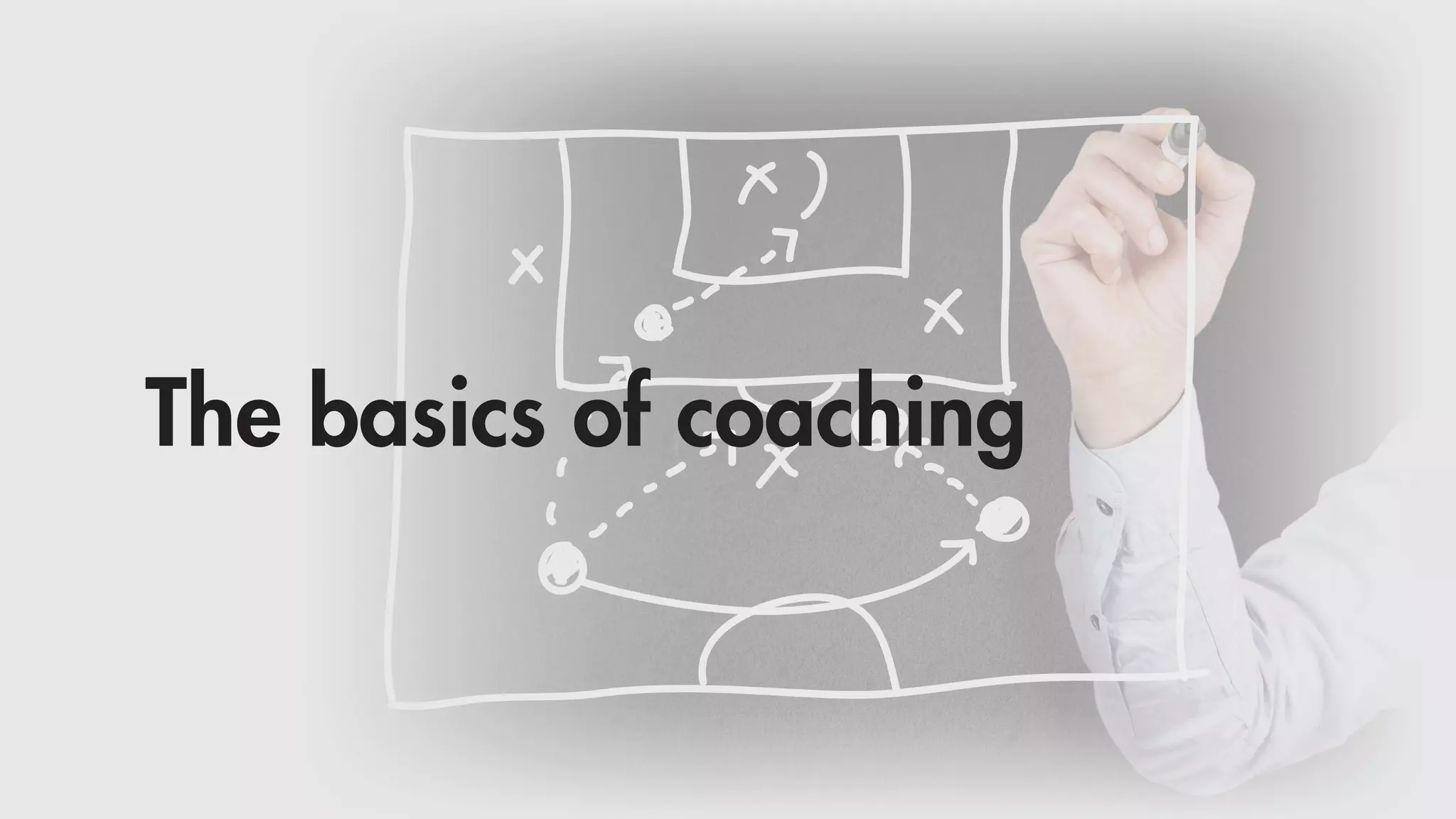
The basics of coaching
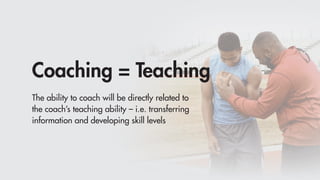
Coaching = Teaching
The ability to coach will be directly related to
the coach’s teaching ability – i.e. transferring
information and developing skill levels
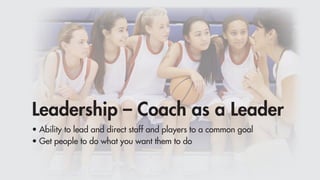
Leadership – Coach as a Leader
• Ability to lead and direct staff and players to a common goal
• Get people to do what you want them to do
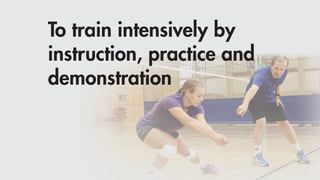
To train intensively by
instruction, practice and
demonstration
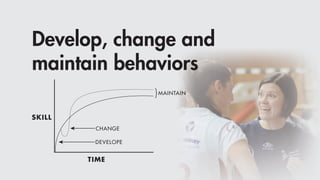
Develop, change and
maintain behaviors
Develop terminal levels
of performance that are
measurable, observable
and accountable
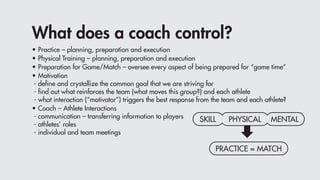
What does a coach control?
•	Practice – planning, preparation and execution
•	Physical Training – planning, preparation and execution
•	Preparation for Game/Match – oversee every aspect of being prepared for “game time”
•	Motivation
- define and crystallize the common goal that we are striving for
- find out what reinforces the team (what moves this group?) and each athlete
- what interaction (“motivator”) triggers the best response from the team and each athlete?
•	Coach – Athlete Interactions
- communication – transferring information to players
- athletes’ roles
- individual and team meetings
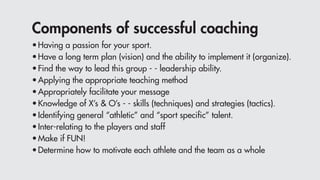
Components of successful coaching
•	Having a passion for your sport.
•	Have a long term plan (vision) and the ability to implement it (organize).
•	Find the way to lead this group - - leadership ability.
•	Applying the appropriate teaching method
•	Appropriately facilitate your message
•	Knowledge of X’s & O’s - - skills (techniques) and strategies (tactics).
•	Identifying general “athletic” and “sport specific” talent.
•	Inter-relating to the players and staff
•	Make if FUN!
•	Determine how to motivate each athlete and the team as a whole
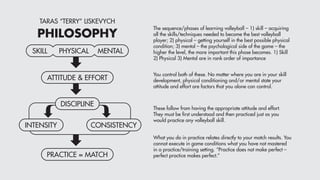
The sequence/phases of learning volleyball – 1) skill – acquiring
all the skills/techniques needed to become the best volleyball
player; 2) physical – getting yourself in the best possible physical
condition; 3) mental – the psychological side of the game – the
higher the level, the more important this phase becomes. 1) Skill
2) Physical 3) Mental are in rank order of importance
You control both of these. No matter where you are in your skill
development, physical conditioning and/or mental state your
attitude and effort are factors that you alone can control.
These follow from having the appropriate attitude and effort.
They must be first understood and then practiced just as you
would practice any volleyball skill.
What you do in practice relates directly to your match results. You
cannot execute in game conditions what you have not mastered
in a practice/training setting. “Practice does not make perfect –
perfect practice makes perfect.”
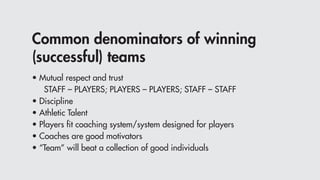
Common denominators of winning
(successful) teams
• Mutual respect and trust
		 STAFF – PLAYERS; PLAYERS – PLAYERS; STAFF – STAFF
• Discipline
• Athletic Talent
• Players fit coaching system/system designed for players
• Coaches are good motivators
• “Team” will beat a collection of good individuals
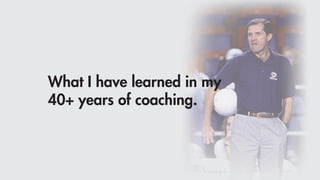
What I have learned in my
40+ years of coaching.
Surround yourself with the right people
Exceptional people
Players & staff
•	Know your strengths, but most importantly your weaknesses then ensure 				
	 those around you make your collective staff better
•	Delegate
•	“Over deliver” on your promises to them
•	Create a win-win situation for anyone that you work with
Know your priorities in life
•	What are the most important things for you – wealth, family, health,
	 religious beliefs, value system, integrity, friendship, etc.
•	Be true to yourself
•	Mom – “it goes quickly – everything in moderation – most important thing
	 in life is your” health
•	“One person’s BS is another person’s catechism”
•	“The most important things in life are not things”
•	Be able to make fun of yourself – laugh often and surround yourself with
	 others who can laugh with you
Develop and establish a clear
philosophy of coaching
•	Write it down
•	One page
•	Review it at the end of each year – modify it as needed
•	Make sure that it is easily understandable by your staff, players,
	 parents, administrators
Mentorship
•Find a mentor
•Give back – be a mentor
Work ethic – learn how to work
hard & smart
•	“This is a great country - - if you work hard anything is possible.
	 However, always remember you may work hard and you may not get
	 what you want, but YOU WILL NEVER get what you want if you do not
	 work hard” (Taras M. Liskevych /my father/)
•	“10,000 hours” – quality vs. quantity
Learn every day and read as much
as you can
•	Enhance your knowledge with something new every year (every day)
•	Seek out professional development and networking opportunities
•	Keep a list of books to read
	 ¬ both fiction and non-fiction
	 ¬ on coaching
	 ¬ on leadership and motivation
•	Learners will not be left behind
Positive energy –
glass ½ filled vs. glass ½ empty
Make a conscious choice to be part of the solution,
not the problem
Have a basic foundation of
teaching/coaching principles
•	The training environment is a key to your success. Practice is
	 the most important thing that you will do – practice does not make
	 perfect – perfect practice makes perfect
•	Design a system for your players – not fit players into a system
•	Do not try to do tactically what you cannot do technically
•	Environment shapes the desired outcome/behavior
Develop a system to Identify talent
•	Physical innate gifts
•	Attitude, effort and work ethic
•	Energy giver
•	Ability to keep plugging away after failing - “The greatest glory in
	 living lies not in never failing, but in rising every time that we fall”
	 (Nelson Mandela)
“The most important ingredient of coaching
success is the athletic talent of your team”
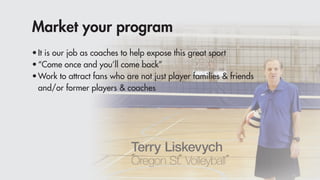
Market your program
•It is our job as coaches to help expose this great sport
•“Come once and you’ll come back”
•Work to attract fans who are not just player families & friends
and/or former players & coaches
Concern yourself with the
things you can control or
change, don’t worry about
things you can’t
Take charge of your attitude
– do not let anyone else
choose it for you
Success is a journey, not a
destination
The difference between
ordinary and extraordinary
is the little extra
“Failure is the opportunity to
begin more intelligently”
Henry Ford
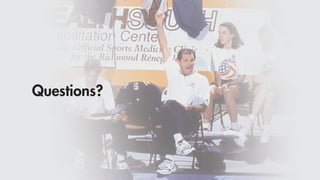
Questions?
Please visit the website bellow to review this presentation as well as other coaching
and athletic resources I have prepared for you.
Continuing Education
Drills, tactics, techniques, philosophies, fitness tips, nutritional advice, mental training – it’s all
here at TheArtofCoachingVolleyball.com - all taken from the valuable input of numerous
coaches across the country who have mentored players at every level and every age.
www.theartofcoachingvolleyball.com/terry-mvi

Terry Liskevych Presentation: Coaching Basics

  • 1.
    The basics ofcoaching
  • 2.
    Coaching = Teaching Theability to coach will be directly related to the coach’s teaching ability – i.e. transferring information and developing skill levels
  • 3.
    Leadership – Coachas a Leader • Ability to lead and direct staff and players to a common goal • Get people to do what you want them to do
  • 4.
    To train intensivelyby instruction, practice and demonstration
  • 5.
  • 6.
    Develop terminal levels ofperformance that are measurable, observable and accountable
  • 7.
    What does acoach control? • Practice – planning, preparation and execution • Physical Training – planning, preparation and execution • Preparation for Game/Match – oversee every aspect of being prepared for “game time” • Motivation - define and crystallize the common goal that we are striving for - find out what reinforces the team (what moves this group?) and each athlete - what interaction (“motivator”) triggers the best response from the team and each athlete? • Coach – Athlete Interactions - communication – transferring information to players - athletes’ roles - individual and team meetings
  • 8.
    Components of successfulcoaching • Having a passion for your sport. • Have a long term plan (vision) and the ability to implement it (organize). • Find the way to lead this group - - leadership ability. • Applying the appropriate teaching method • Appropriately facilitate your message • Knowledge of X’s & O’s - - skills (techniques) and strategies (tactics). • Identifying general “athletic” and “sport specific” talent. • Inter-relating to the players and staff • Make if FUN! • Determine how to motivate each athlete and the team as a whole
  • 9.
    The sequence/phases oflearning volleyball – 1) skill – acquiring all the skills/techniques needed to become the best volleyball player; 2) physical – getting yourself in the best possible physical condition; 3) mental – the psychological side of the game – the higher the level, the more important this phase becomes. 1) Skill 2) Physical 3) Mental are in rank order of importance You control both of these. No matter where you are in your skill development, physical conditioning and/or mental state your attitude and effort are factors that you alone can control. These follow from having the appropriate attitude and effort. They must be first understood and then practiced just as you would practice any volleyball skill. What you do in practice relates directly to your match results. You cannot execute in game conditions what you have not mastered in a practice/training setting. “Practice does not make perfect – perfect practice makes perfect.”
  • 10.
    Common denominators ofwinning (successful) teams • Mutual respect and trust STAFF – PLAYERS; PLAYERS – PLAYERS; STAFF – STAFF • Discipline • Athletic Talent • Players fit coaching system/system designed for players • Coaches are good motivators • “Team” will beat a collection of good individuals
  • 11.
    What I havelearned in my 40+ years of coaching.
  • 12.
    Surround yourself withthe right people Exceptional people Players & staff • Know your strengths, but most importantly your weaknesses then ensure those around you make your collective staff better • Delegate • “Over deliver” on your promises to them • Create a win-win situation for anyone that you work with
  • 13.
    Know your prioritiesin life • What are the most important things for you – wealth, family, health, religious beliefs, value system, integrity, friendship, etc. • Be true to yourself • Mom – “it goes quickly – everything in moderation – most important thing in life is your” health • “One person’s BS is another person’s catechism” • “The most important things in life are not things” • Be able to make fun of yourself – laugh often and surround yourself with others who can laugh with you
  • 14.
    Develop and establisha clear philosophy of coaching • Write it down • One page • Review it at the end of each year – modify it as needed • Make sure that it is easily understandable by your staff, players, parents, administrators
  • 15.
  • 16.
    Work ethic –learn how to work hard & smart • “This is a great country - - if you work hard anything is possible. However, always remember you may work hard and you may not get what you want, but YOU WILL NEVER get what you want if you do not work hard” (Taras M. Liskevych /my father/) • “10,000 hours” – quality vs. quantity
  • 17.
    Learn every dayand read as much as you can • Enhance your knowledge with something new every year (every day) • Seek out professional development and networking opportunities • Keep a list of books to read ¬ both fiction and non-fiction ¬ on coaching ¬ on leadership and motivation • Learners will not be left behind
  • 18.
    Positive energy – glass½ filled vs. glass ½ empty Make a conscious choice to be part of the solution, not the problem
  • 19.
    Have a basicfoundation of teaching/coaching principles • The training environment is a key to your success. Practice is the most important thing that you will do – practice does not make perfect – perfect practice makes perfect • Design a system for your players – not fit players into a system • Do not try to do tactically what you cannot do technically • Environment shapes the desired outcome/behavior
  • 20.
    Develop a systemto Identify talent • Physical innate gifts • Attitude, effort and work ethic • Energy giver • Ability to keep plugging away after failing - “The greatest glory in living lies not in never failing, but in rising every time that we fall” (Nelson Mandela) “The most important ingredient of coaching success is the athletic talent of your team”
  • 21.
    Market your program •Itis our job as coaches to help expose this great sport •“Come once and you’ll come back” •Work to attract fans who are not just player families & friends and/or former players & coaches
  • 22.
    Concern yourself withthe things you can control or change, don’t worry about things you can’t
  • 23.
    Take charge ofyour attitude – do not let anyone else choose it for you
  • 24.
    Success is ajourney, not a destination The difference between ordinary and extraordinary is the little extra
  • 25.
    “Failure is theopportunity to begin more intelligently” Henry Ford
  • 28.
  • 29.
    Please visit thewebsite bellow to review this presentation as well as other coaching and athletic resources I have prepared for you. Continuing Education Drills, tactics, techniques, philosophies, fitness tips, nutritional advice, mental training – it’s all here at TheArtofCoachingVolleyball.com - all taken from the valuable input of numerous coaches across the country who have mentored players at every level and every age. www.theartofcoachingvolleyball.com/terry-mvi