




Teaching && lleeaarrnniinngg EEnngglliisshh 
uunnddeerr ddiiffffiiccuulltt cciirrccuummssttaanncceess 
ggrraahhaamm..ssttaannlleeyy@@bbrriittiisshhccoouunncciill..oorrgg
WWoorrkksshhoopp 
• IInnttrroodduuccttiioonn 
• TToopp--ddoowwnn iinnnnoovvaattiioonn 
• pprreevveennttiioonn//ssoolluuttiioonn ggaammee 
• GGrroouupp ddiissccuussssiioonn 
• YYoouurr ffeeeeddbbaacckk aanndd 
ssuuggggeessttiioonnss ffrroomm rreesseeaarrcchh 
• FFiinnaall wwoorrddss aanndd qq&&aa
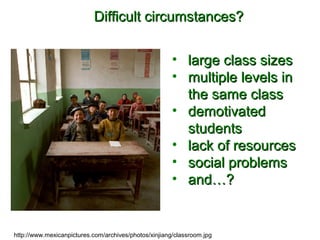
DDiiffffiiccuulltt cciirrccuummssttaanncceess?? 
• llaarrggee ccllaassss ssiizzeess 
• mmuullttiippllee lleevveellss iinn 
tthhee ssaammee ccllaassss 
• ddeemmoottiivvaatteedd 
ssttuuddeennttss 
• llaacckk ooff rreessoouurrcceess 
• ssoocciiaall pprroobblleemmss 
• aanndd……?? 
http://www.mexicanpictures.com/archives/photos/xinjiang/classroom.jpg
mmiinniimmaallllyy iinnvvaassiivvee eedduuccaattiioonn 
http://www.hole-in-the-wall.com/ 
http://www.flickr.com/photos/cristinacosta 
http://www.hole-in-the-wall.com/Videos/Madangir.mpg
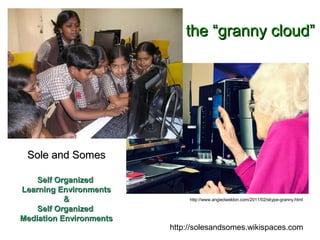
http://www.angiedweldon.com/2011/02/skype-granny.html 
http://solesandsomes.wikispaces.com 
SSoollee aanndd SSoommeess 
SSeellff OOrrggaanniizzeedd 
LLeeaarrnniinngg EEnnvviirroonnmmeennttss 
&& 
SSeellff OOrrggaanniizzeedd 
MMeeddiiaattiioonn EEnnvviirroonnmmeennttss 
tthhee ““ggrraannnnyy cclloouudd””
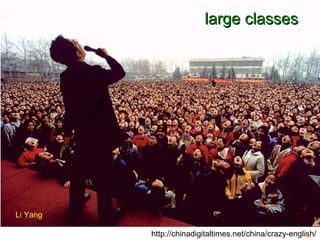
llaarrggee ccllaasssseess 
http://chinadigitaltimes.net/china/crazy-english/ 
Li Yang
http://www.screencast.com/t/OTVK2kl3dqR2
http://www.sino-platonic.org/complete/spp180_crazy_english.pdf 
http://www.screencast.com/t/E5AKtChtdv
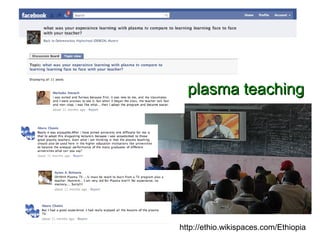
ppllaassmmaa tteeaacchhiinngg 
http://ethio.wikispaces.com/Ethiopia
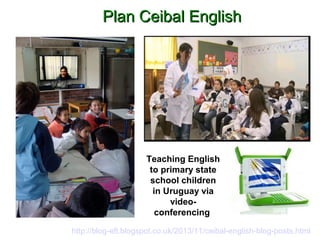
PPllaann CCeeiibbaall EEnngglliisshh 
Teaching English 
to primary state 
school children 
in Uruguay via 
video-conferencing 
http://blog-efl.blogspot.co.uk/2013/11/ceibal-english-blog-posts.html
PPrreevveennttiioonn//SSoolluuttiioonn ggaammee 
•DDeessccrriibbee aa ddiiffffiiccuulltt cciirrccuummssttaannccee yyoouu 
hhaavvee hhaadd ttoo ddeeaall wwiitthh –– bbee ssppeecciiffiicc 
•WWrriittee iitt ddoowwnn oonn aa ppoosstt--iitt 
•IInn ggrroouuppss yyoouu aarree ggooiinngg ttoo bbrraaiinnssttoorrmm 
ppoossssiibbllee pprreevveennttiioonn oorr ssoolluuttiioonnss 
•PPooiinnttss wwiillll bbee aawwaarrddeedd ttoo tthhee bbeesstt 
oonneess!!
FFuurrtthheerr ddiissccuussssiioonn ((55 mmiinnuutteess eeaacchh)) 
•LLaarrggee ccllaasssseess 
•MMuullttiippllee lleevveellss 
•DDee--mmoottiivvaattiioonn 
•LLaacckk ooff rreessoouurrcceess 
•SSoocciiaall pprroobblleemmss 
•OOtthheerr
FFeeeeddbbaacckk 
•LLaarrggee ccllaasssseess
LLaarrggee ccllaasssseess 
•DDiivviiddee aa llaarrggee ccllaassss iinnttoo 22--33 ggrroouuppss.. AAssssiiggnn pprraaccttiissee oorr 
rreevviieeww eexxeerrcciisseess ttoo tthhee ootthheerr ggrroouupp((ss)) wwhhiillee yyoouu tteeaacchh oonnee 
ggrroouupp 
•SSttaattiioonn wwoorrkk.. AAssssiiggnn ppuuppiillss ttoo ssmmaallll ggrroouuppss aanndd ggiivvee tthheemm 
pprroojjeeccttss oorr ssiimmppllee ttaasskkss ttoo ddoo ttooggeetthheerr.. CChhaannggee tthhee ggrroouupp 
oonnccee iinn aa wwhhiillee.. 
•TTrraaiinn aallll tthhee ppuuppiillss hhooww ttoo lleeaadd aa ggrroouupp.. GGiivvee eevveerryyoonnee tthhee 
cchhaannccee ttoo bbee aa ggrroouupp lleeaaddeerr 
•MMaakkee uussee ooff tthhee ssttrroonnggeesstt ssttuuddeennttss ttoo hheellpp bbee ppeeeerr ttuuttoorrss ttoo 
tthhee wweeaakkeesstt ssttuuddeennttss
FFeeeeddbbaacckk 
•MMuullttiippllee lleevveellss
MMuullttiippllee lleevveellss 
•SSttaattiioonn wwoorrkk.. AAssssiiggnn ppuuppiillss ttoo ssmmaallll ggrroouuppss aanndd ggiivvee tthheemm 
pprroojjeeccttss oorr ssiimmppllee ttaasskkss ttoo ddoo ttooggeetthheerr tthhaatt aarree vvaarriieedd 
ddeeppeennddiinngg oonn lleevveell ooff ppuuppiillss.. CChhaannggee tthhee ggrroouupp oonnccee iinn aa 
wwhhiillee.. 
•SSttuuddeenntt ttuuttoorrss.. GGeett tthhee ssttrroonnggeesstt ssttuuddeennttss ttoo ‘‘tteeaacchh’’ tthhee 
wweeaakkeesstt oonneess.. 
•HHaavvee eexxttrraa mmaatteerriiaall//ttaasskkss aavvaaiillaabbllee ffoorr tthhee ffaasstt ffiinniisshheerrss
FFeeeeddbbaacckk 
•DDee--mmoottiivvaattiioonn
DDee--mmoottiivvaattiioonn 
•KKnnooww yyoouurr ssttuuddeennttss.. WWhhaatt ddoo tthheeyy lliikkee?? WWhhaatt ddoonn’’tt tthheeyy 
lliikkee?? UUssee eexxaammpplleess//mmaatteerriiaall rreelleevvaanntt ttoo tthheeiirr lliivveess.. 
•BBee aa ggoooodd eexxaammppllee –– ppuuppiillss wwiillll bbee mmoorree lliikkeellyy ttoo bbee 
mmoottiivvaatteedd iiff yyoouu aarree.. 
•GGeett ffeeeeddbbaacckk ffrroomm tthhee ppuuppiillss aabboouutt wwhhaatt yyoouu ddoo iinn ccllaassss –– 
vvaarryy tthhee aaccttiivviittiieess aaccccoorrddiinngg ttoo tthhiiss 
•GGiivvee mmoorree cchhooiiccee//aauuttoonnoommyy ttoo tthhee lleeaarrnneerrss –– tteeaacchh tthheemm ttoo 
bbee mmoorree aauuttoonnoommoouuss lleeaarrnneerrss
FFeeeeddbbaacckk 
•LLaacckk ooff rreessoouurrcceess
LLaacckk ooff rreessoouurrcceess 
•SShhaarree iinn iinnnnoovvaattiivvee wwaayyss ((ssttaattiioonn wwoorrkk,, eettcc..)) 
•MMaakkee mmoorree uussee ooff hhuummaann rreessoouurrcceess 
•GGeett tthhee ssss ttoo mmaakkee rreessoouurrcceess ((ffllaasshhccaarrddss,, eettcc)) 
•FFiinndd ooppppoorrttuunniittiieess ffoorr llaanngguuaaggee lleeaarrnniinngg iinn tthhee ssss eevveerryyddaayy 
lliivveess 
•MMaakkee tthhee mmoosstt ooff tthhee eexxiissttiinngg ((lliimmiitteedd)) rreessoouurrcceess iinn 
iimmaaggiinnaattiivvee//iinnvveennttiivvee wwaayyss
FFeeeeddbbaacckk 
•SSoocciiaall pprroobblleemmss
SSoocciiaall pprroobblleemmss 
•KKnnooww yyoouurr ssttuuddeennttss 
•MMaakkee yyoouurr ccllaassss tthhee ssaaffee//ffuunn ppllaaccee ttoo bbee 
•SShhooww uunnddeerrssttaannddiinngg//ccoonnssiiddeerraattiioonn
FFeeeeddbbaacckk 
•OOtthheerr
OOtthheerr 
•KKnnooww yyoouurr ssttuuddeennttss wweellll 
•EEssttaabblliisshh ggoooodd rraappppoorrtt wwiitthh tthhee ssttuuddeennttss 
•CCoommmmuunniiccaattee aanndd ggiivvee ffeeeeddbbaacckk ffrreeqquueennttllyy 
•SShhooww ccoonncceerrnn ffoorr bbootthh wweeaakk aanndd ssttrroonngg ssttuuddeennttss 
•AArroouussee tthhee ssttuuddeennttss’’ iinntteerreessttss 
•CCrreeaattee aa ssaaffee//ffrriieennddllyy aattmmoosspphheerree iinn ccllaassss 
•MMaannaaggee ssttuuddeennttss tthhrroouugghh ggrroouuppiinngg iinn ddiiffffeerreenntt wwaayyss 
•KKeeeepp ccllaassss ddiisscciipplliinneedd bbyy eessttaabblliisshhiinngg ssttaannddaarrddss 
•PPrroommoottee lleeaarrnneerr aauuttoonnoommyy 
•SSmmiillee!!
TTeeaacchhiinngg aanndd lleeaarrnniinngg EEnngglliisshh 
uunnddeerr ddiiffffiiccuulltt cciirrccuummssttaanncceess 
ggrraahhaamm..SSttaannlleeyy@@bbrriittiisshhccoouunncciill..oorrgg
References: 
•Lamb, M (2002) ‘Explaining successful language learning in difficult 
circumstances’, Prospect, Vol 17 No.2 Available online: 
http://www.ameprc.mq.edu.au/docs/prospect_journal/volume_17_no_2/17_2_3_Lamb.pdf 
•Smith, R (2011) ‘Teaching in difficult circumstances: a research agenda’ in 
Pattison, T (ed) IATEFL 2010 Conference Selections, Canterbury, Kent: IATEFL. 
Available online: 
http://www.academia.edu/4175162/Teaching_English_in_difficult_circumstances_A_new_research_agenda 
•Smith, R (2001-14) 
http://www2.warwick.ac.uk/fac/soc/al/research/groups/ellta/resources/telc/ 
•West, M (1960) Teaching in difficult Circumstances, London: Longmans, 
Green
TELC (Teaching English in Large Classes) initiative 
http://telcnet.weebly.com

Teaching & Learning English under difficult circumstances

  • 1.
    Teaching && lleeaarrnniinnggEEnngglliisshh uunnddeerr ddiiffffiiccuulltt cciirrccuummssttaanncceess ggrraahhaamm..ssttaannlleeyy@@bbrriittiisshhccoouunncciill..oorrgg
  • 2.
    WWoorrkksshhoopp • IInnttrroodduuccttiioonn • TToopp--ddoowwnn iinnnnoovvaattiioonn • pprreevveennttiioonn//ssoolluuttiioonn ggaammee • GGrroouupp ddiissccuussssiioonn • YYoouurr ffeeeeddbbaacckk aanndd ssuuggggeessttiioonnss ffrroomm rreesseeaarrcchh • FFiinnaall wwoorrddss aanndd qq&&aa
  • 3.
    DDiiffffiiccuulltt cciirrccuummssttaanncceess?? •llaarrggee ccllaassss ssiizzeess • mmuullttiippllee lleevveellss iinn tthhee ssaammee ccllaassss • ddeemmoottiivvaatteedd ssttuuddeennttss • llaacckk ooff rreessoouurrcceess • ssoocciiaall pprroobblleemmss • aanndd……?? http://www.mexicanpictures.com/archives/photos/xinjiang/classroom.jpg
  • 4.
    mmiinniimmaallllyy iinnvvaassiivvee eedduuccaattiioonn http://www.hole-in-the-wall.com/ http://www.flickr.com/photos/cristinacosta http://www.hole-in-the-wall.com/Videos/Madangir.mpg
  • 5.
    http://www.angiedweldon.com/2011/02/skype-granny.html http://solesandsomes.wikispaces.com SSoolleeaanndd SSoommeess SSeellff OOrrggaanniizzeedd LLeeaarrnniinngg EEnnvviirroonnmmeennttss && SSeellff OOrrggaanniizzeedd MMeeddiiaattiioonn EEnnvviirroonnmmeennttss tthhee ““ggrraannnnyy cclloouudd””
  • 6.
  • 7.
  • 8.
  • 9.
  • 10.
    PPllaann CCeeiibbaall EEnngglliisshh Teaching English to primary state school children in Uruguay via video-conferencing http://blog-efl.blogspot.co.uk/2013/11/ceibal-english-blog-posts.html
  • 11.
    PPrreevveennttiioonn//SSoolluuttiioonn ggaammee •DDeessccrriibbeeaa ddiiffffiiccuulltt cciirrccuummssttaannccee yyoouu hhaavvee hhaadd ttoo ddeeaall wwiitthh –– bbee ssppeecciiffiicc •WWrriittee iitt ddoowwnn oonn aa ppoosstt--iitt •IInn ggrroouuppss yyoouu aarree ggooiinngg ttoo bbrraaiinnssttoorrmm ppoossssiibbllee pprreevveennttiioonn oorr ssoolluuttiioonnss •PPooiinnttss wwiillll bbee aawwaarrddeedd ttoo tthhee bbeesstt oonneess!!
  • 12.
    FFuurrtthheerr ddiissccuussssiioonn ((55mmiinnuutteess eeaacchh)) •LLaarrggee ccllaasssseess •MMuullttiippllee lleevveellss •DDee--mmoottiivvaattiioonn •LLaacckk ooff rreessoouurrcceess •SSoocciiaall pprroobblleemmss •OOtthheerr
  • 13.
  • 14.
    LLaarrggee ccllaasssseess •DDiivviiddeeaa llaarrggee ccllaassss iinnttoo 22--33 ggrroouuppss.. AAssssiiggnn pprraaccttiissee oorr rreevviieeww eexxeerrcciisseess ttoo tthhee ootthheerr ggrroouupp((ss)) wwhhiillee yyoouu tteeaacchh oonnee ggrroouupp •SSttaattiioonn wwoorrkk.. AAssssiiggnn ppuuppiillss ttoo ssmmaallll ggrroouuppss aanndd ggiivvee tthheemm pprroojjeeccttss oorr ssiimmppllee ttaasskkss ttoo ddoo ttooggeetthheerr.. CChhaannggee tthhee ggrroouupp oonnccee iinn aa wwhhiillee.. •TTrraaiinn aallll tthhee ppuuppiillss hhooww ttoo lleeaadd aa ggrroouupp.. GGiivvee eevveerryyoonnee tthhee cchhaannccee ttoo bbee aa ggrroouupp lleeaaddeerr •MMaakkee uussee ooff tthhee ssttrroonnggeesstt ssttuuddeennttss ttoo hheellpp bbee ppeeeerr ttuuttoorrss ttoo tthhee wweeaakkeesstt ssttuuddeennttss
  • 15.
  • 16.
    MMuullttiippllee lleevveellss •SSttaattiioonnwwoorrkk.. AAssssiiggnn ppuuppiillss ttoo ssmmaallll ggrroouuppss aanndd ggiivvee tthheemm pprroojjeeccttss oorr ssiimmppllee ttaasskkss ttoo ddoo ttooggeetthheerr tthhaatt aarree vvaarriieedd ddeeppeennddiinngg oonn lleevveell ooff ppuuppiillss.. CChhaannggee tthhee ggrroouupp oonnccee iinn aa wwhhiillee.. •SSttuuddeenntt ttuuttoorrss.. GGeett tthhee ssttrroonnggeesstt ssttuuddeennttss ttoo ‘‘tteeaacchh’’ tthhee wweeaakkeesstt oonneess.. •HHaavvee eexxttrraa mmaatteerriiaall//ttaasskkss aavvaaiillaabbllee ffoorr tthhee ffaasstt ffiinniisshheerrss
  • 17.
  • 18.
    DDee--mmoottiivvaattiioonn •KKnnooww yyoouurrssttuuddeennttss.. WWhhaatt ddoo tthheeyy lliikkee?? WWhhaatt ddoonn’’tt tthheeyy lliikkee?? UUssee eexxaammpplleess//mmaatteerriiaall rreelleevvaanntt ttoo tthheeiirr lliivveess.. •BBee aa ggoooodd eexxaammppllee –– ppuuppiillss wwiillll bbee mmoorree lliikkeellyy ttoo bbee mmoottiivvaatteedd iiff yyoouu aarree.. •GGeett ffeeeeddbbaacckk ffrroomm tthhee ppuuppiillss aabboouutt wwhhaatt yyoouu ddoo iinn ccllaassss –– vvaarryy tthhee aaccttiivviittiieess aaccccoorrddiinngg ttoo tthhiiss •GGiivvee mmoorree cchhooiiccee//aauuttoonnoommyy ttoo tthhee lleeaarrnneerrss –– tteeaacchh tthheemm ttoo bbee mmoorree aauuttoonnoommoouuss lleeaarrnneerrss
  • 19.
  • 20.
    LLaacckk ooff rreessoouurrcceess •SShhaarree iinn iinnnnoovvaattiivvee wwaayyss ((ssttaattiioonn wwoorrkk,, eettcc..)) •MMaakkee mmoorree uussee ooff hhuummaann rreessoouurrcceess •GGeett tthhee ssss ttoo mmaakkee rreessoouurrcceess ((ffllaasshhccaarrddss,, eettcc)) •FFiinndd ooppppoorrttuunniittiieess ffoorr llaanngguuaaggee lleeaarrnniinngg iinn tthhee ssss eevveerryyddaayy lliivveess •MMaakkee tthhee mmoosstt ooff tthhee eexxiissttiinngg ((lliimmiitteedd)) rreessoouurrcceess iinn iimmaaggiinnaattiivvee//iinnvveennttiivvee wwaayyss
  • 21.
  • 22.
    SSoocciiaall pprroobblleemmss •KKnnoowwyyoouurr ssttuuddeennttss •MMaakkee yyoouurr ccllaassss tthhee ssaaffee//ffuunn ppllaaccee ttoo bbee •SShhooww uunnddeerrssttaannddiinngg//ccoonnssiiddeerraattiioonn
  • 23.
  • 24.
    OOtthheerr •KKnnooww yyoouurrssttuuddeennttss wweellll •EEssttaabblliisshh ggoooodd rraappppoorrtt wwiitthh tthhee ssttuuddeennttss •CCoommmmuunniiccaattee aanndd ggiivvee ffeeeeddbbaacckk ffrreeqquueennttllyy •SShhooww ccoonncceerrnn ffoorr bbootthh wweeaakk aanndd ssttrroonngg ssttuuddeennttss •AArroouussee tthhee ssttuuddeennttss’’ iinntteerreessttss •CCrreeaattee aa ssaaffee//ffrriieennddllyy aattmmoosspphheerree iinn ccllaassss •MMaannaaggee ssttuuddeennttss tthhrroouugghh ggrroouuppiinngg iinn ddiiffffeerreenntt wwaayyss •KKeeeepp ccllaassss ddiisscciipplliinneedd bbyy eessttaabblliisshhiinngg ssttaannddaarrddss •PPrroommoottee lleeaarrnneerr aauuttoonnoommyy •SSmmiillee!!
  • 25.
    TTeeaacchhiinngg aanndd lleeaarrnniinnggEEnngglliisshh uunnddeerr ddiiffffiiccuulltt cciirrccuummssttaanncceess ggrraahhaamm..SSttaannlleeyy@@bbrriittiisshhccoouunncciill..oorrgg
  • 26.
    References: •Lamb, M(2002) ‘Explaining successful language learning in difficult circumstances’, Prospect, Vol 17 No.2 Available online: http://www.ameprc.mq.edu.au/docs/prospect_journal/volume_17_no_2/17_2_3_Lamb.pdf •Smith, R (2011) ‘Teaching in difficult circumstances: a research agenda’ in Pattison, T (ed) IATEFL 2010 Conference Selections, Canterbury, Kent: IATEFL. Available online: http://www.academia.edu/4175162/Teaching_English_in_difficult_circumstances_A_new_research_agenda •Smith, R (2001-14) http://www2.warwick.ac.uk/fac/soc/al/research/groups/ellta/resources/telc/ •West, M (1960) Teaching in difficult Circumstances, London: Longmans, Green
  • 27.
    TELC (Teaching Englishin Large Classes) initiative http://telcnet.weebly.com

Editor's Notes

  • #2 Introduction
  • #3 Here’s the plan for the workshop: 1) Brief introduction of some difficult circumstances that English teachers have to cope with (large classes, multiple levels, demotivation) 2) some innovative top-down solutions that have been put into practice around the world, with varying results 3) These are all large-scale projects, but can individual teachers help each other teach in difficult circumstances? This is the purpose of this workshop today – to use our collected experience to help each other 4) Prevention/Solution game 5) Ppts in smaller groups discuss 4 broad subjects related to dealing with difficult circumstances 6) Feedback: volunteers present their ideas and I also present ideas suggested in the research literature 7) Final words, presentation of references and opportunity for last q&a.
  • #4 What are difficult circumstances? Here are some. Can you think of any others?
  • #5 There have been a number of top-down solutions to learning and teaching when circumstances are difficult. One of these is the Hole-in-the-Wall project. A solution to there being a lack of teachers in many villages of India, this consists of a learning station consisting of a computer with an Internet connection embedded in a hole in the wall. Since 1999 and the first computer in Kalkaji, New Delhi, the project has grown to more than 100 computers across India and elsewhere. Mitra took a PC connected to a high-speed data connection and imbedded it in a concrete wall next to the wall of his research facility in the south end of New Delhi. What he discovered was that ghetto kids aged 6 to 12, most of whom have only the most rudimentary education and little knowledge of English took to it and within days, they had taught themselves to draw on the computer and to browse the Net. What has been found is that curiosity takes over when there is an enabling environment where they can learn on their own. This type of learning has also shown results when it comes to improvement in English. The idea behind this is that groups of children can learn on their own without any direct intervention. Dr Sugata Mitra callas this Minimally Invasive Education (MIE). He found that children using Learning Stations required little or no inputs from teachers and learnt on their own by the process of exploration, discovery and peer coaching.
  • #6 Here’s another solution dreamt up by Dr. Sugata Mitra, using the transformative power of the Internet to solve a problem involving a lack of teachers. Mitra thought he could use the Internet telephony software Skype to improve literacy and education. On one trip to India, Mitra asked a group of Indian children what they would like to use Skype for. “Surprisingly, they said they wanted British grandmothers to read them fairytales.” Mitra told the Guardian newspaper. Mitra then started looking for volunteers and found about 200 story telling Grannies. “Many are retired teachers, who are now regularly on Skype teaching children in the slums,” The project, called “Sole and Somes” is often referred to as ““the Granny Cloud” and has evolved from storytelling to the volunteers working as educational mentors. They are available on Skype for about an hour a week for sessions involving conversations, story-telling and singing
  • #7 When is a class a large class? 30 students? 60? 100? What about a football stadium full of students? When people don't have access to enough teachers, or don't have enough money, innovative solutions emerge. Here's an example. This method of teaching English was devised in China by Li Yang (featured in the photo) and is called Crazy English. Li Yang has taught English now to millions of students. He appears in stadiums, sometimes to groups of 10,000 students or more. And to think some of you complain about teaching large classes!
  • #9 Let's watch a short video about Crazy English so you can get a better idea of how it works. Li Yang shouts out words and phrases and asks his students to repeat out loud and shout back. It's all about learning through repetition, and the shouting is meant to increase confidence in speaking in another language. Is it effective? Who knows, but it seems to be a very popular method and for some people it's their only contact with the language
  • #10 Large class sizes and the problems that go with them are not only a problem in China In Ethiopia, where the typical primary and secondary school class sizes are from 55-100 Ethiopia, they have adopted a method called Plasma teaching. This involves the installation of a plasma TV in the classroom and the students and teachers watch and listen to a lesson transmitted by satellite or recorded previously by a teacher in South Africa. Partly the reason for doing this is because many of the Ethiopian teachers are not sufficiently qualified or they lack teacher training Local teachers are meant to support the TV lesson by giving an introduction, conducting post-viewing activities, facilitating a discussion, and providing a conclusion or even substituting when the power is out. As a short to medium term solution for the country it seems to have had mixed results, with it working in some areas and not so well in others. In the long term, Ethiopia needs more teachers that are better trained.
  • #11 Dealing with a lack of teachers is also the reason for being of the Plan Ceibal English project. A lack of primary school English teachers across Uruguay has been solved by “beaming in” teachers remotely. The project now has 2100 classes a week and aims to cover the whole country next year with 4,000 classes in schools across the country.
  • #12 Prevention/Solution game (20 mins) - Ppts write down on slips of paper (post-its) brief details of the most difficult circumstances they have had to deal with as teachers – they are collected - Board split into 2/4 (depending on number of teams of ppts) and teams take role of ‘prevention’ or ‘solution’ - Ppts’ difficult circumstances are read out and the teams discuss them and then write their prevention/solution on the flipchart/board - Prevention/solution suggestions are read out and ppts vote for and discuss merits of each
  • #26 Thank you for listening I am the project manager for the British Council on the Plan Ceibal English project.
  • #27 References to relevant research you may find useful
  • #28 Do you have something to share? Please join TELC?