Structures and
Physical properties
Polarity of bonds
Prepared By:-Dr. Anjali Bhardwaj
Associate Professor
Arya College Of Pharmacy
Definition of Polarity
“A state or a condition of an atom or a molecule having positive and
also negative charges” or we can say that Polarity is the concept of
the separation of an electric charge leading a molecule to have a
positive and negative end. Example HCl is polar compound, you know
why?
Factors on which the Polarity of Bonds Depends
1) Relative Electronegativity of Participating Atoms
Since the bond polarity involves pulling of electrons towards
itself, hence a more electronegative element will be able to
attract the electrons more towards itself. As a result, the
electrons will definitely move towards the more electronegative
element. The amount of their shifting will depend upon the
relative electronegativity of the participating atoms.
2) The Spatial Arrangement of Various Bonds in the Atom
The shared pair of electrons also experience pulling force
from the other bonded and non-bonded pair of
electrons. This results in different bond polarity between
same participating atoms that are present in different
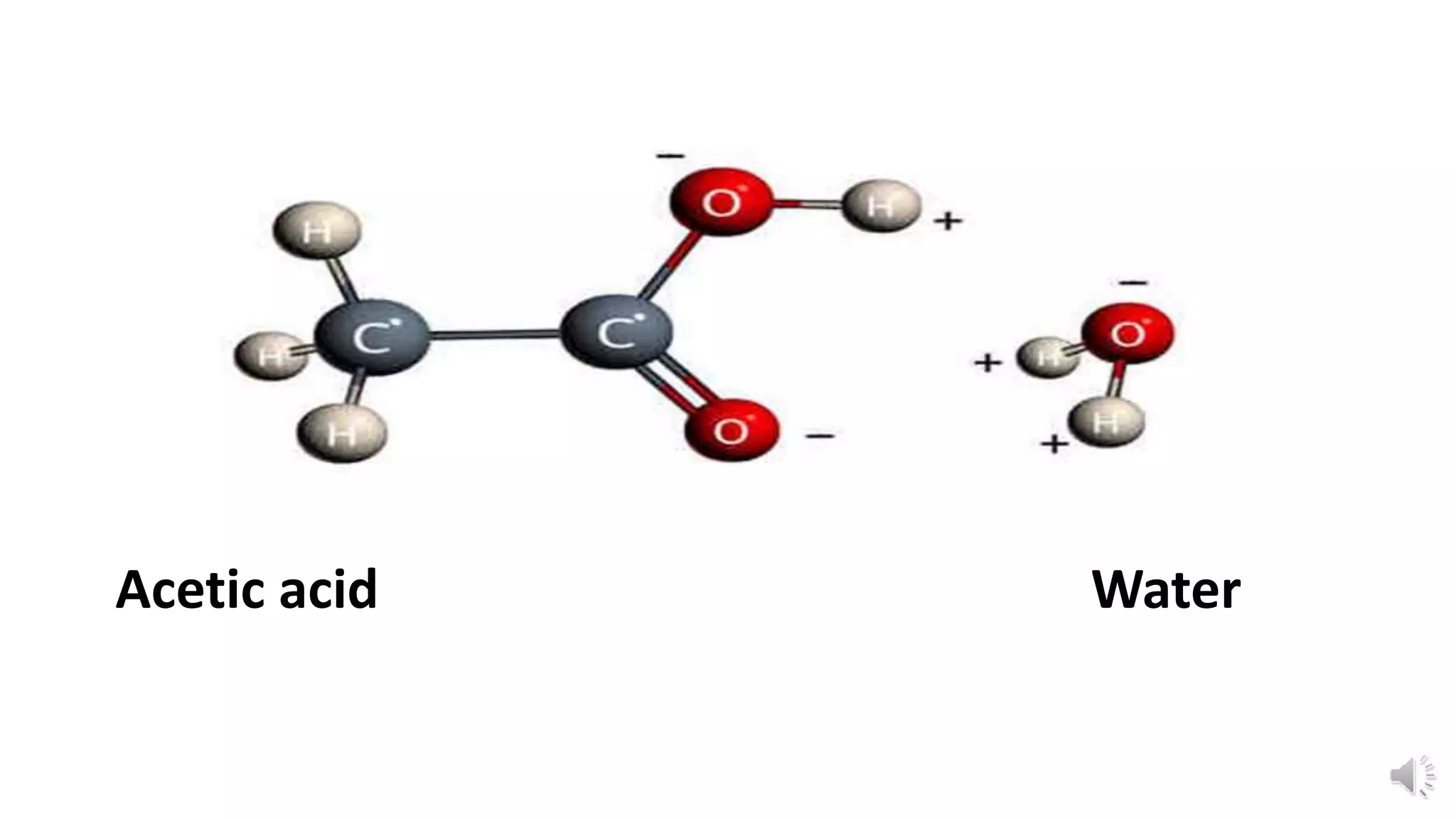
molecules. For e.g. Bond Polarity of O-H bond in a water
molecule and acetic acid molecule is different. This is due
to the different spatial arrangement of various bonds in
the molecule.
Acetic acid Water

Polarity Of Bonds

  • 1.
    Structures and Physical properties Polarityof bonds Prepared By:-Dr. Anjali Bhardwaj Associate Professor Arya College Of Pharmacy
  • 2.
    Definition of Polarity “Astate or a condition of an atom or a molecule having positive and also negative charges” or we can say that Polarity is the concept of the separation of an electric charge leading a molecule to have a positive and negative end. Example HCl is polar compound, you know why?
  • 3.
    Factors on whichthe Polarity of Bonds Depends 1) Relative Electronegativity of Participating Atoms Since the bond polarity involves pulling of electrons towards itself, hence a more electronegative element will be able to attract the electrons more towards itself. As a result, the electrons will definitely move towards the more electronegative element. The amount of their shifting will depend upon the relative electronegativity of the participating atoms.
  • 4.
    2) The SpatialArrangement of Various Bonds in the Atom The shared pair of electrons also experience pulling force from the other bonded and non-bonded pair of electrons. This results in different bond polarity between same participating atoms that are present in different molecules. For e.g. Bond Polarity of O-H bond in a water molecule and acetic acid molecule is different. This is due to the different spatial arrangement of various bonds in the molecule.
  • 5.