HYPERCALCEMIA 
ANEELA PASHA 
Final year 
Clinical Pharmacy.
HYPERCALCEMIA 
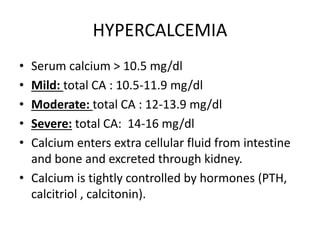
• Serum calcium > 10.5 mg/dl 
• Mild: total CA : 10.5-11.9 mg/dl 
• Moderate: total CA : 12-13.9 mg/dl 
• Severe: total CA: 14-16 mg/dl 
• Calcium enters extra cellular fluid from intestine 
and bone and excreted through kidney. 
• Calcium is tightly controlled by hormones (PTH, 
calcitriol , calcitonin).
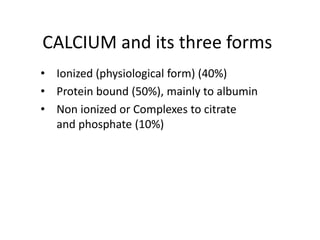
CALCIUM and its three forms 
• Ionized (physiological form) (40%) 
• Protein bound (50%), mainly to albumin 
• Non ionized or Complexes to citrate 
and phosphate (10%)
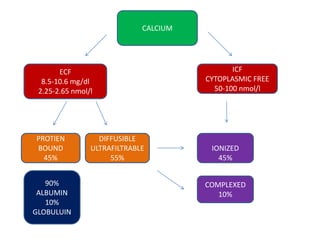
CALCIUM 
ECF 
8.5-10.6 mg/dl 
2.25-2.65 nmol/l 
ICF 
CYTOPLASMIC FREE 
50-100 nmol/l 
PROTIEN 
BOUND 
45% 
DIFFUSIBLE 
ULTRAFILTRABLE 
55% 
90% 
ALBUMIN 
10% 
GLOBULUIN 
IONIZED 
45% 
COMPLEXED 
10%
FUNCTIONS 
• Muscle contraction 
• Neuromuscular/ nerve conduction 
• Intracellular signaling 
• Bone formation 
• Coagulation 
• Enzyme regulation
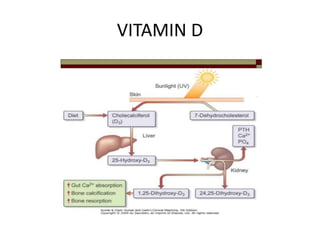
VITAMIN D
Causes of hypercalcemia 
Endocrine: 
• Hyperparathyroidism 
• MEN Type 1 (parathyroid adenoma , pituitary adenoma , pancreatic islet cell tumor) 
• Familial hypocalciuric hypercalcemia 
Malignancy: 
• Metastases 
• PTHrP 
• Breast caner, lung cancer , bone cancer. 
Granulomatous Disease: 
• Sarcoidosis 
• TB 
Miscellaneous: 
• Acute kidney failure 
• Milk-alkali syndrome 
Medications: 
• Lithium therapy 
• Thiazides ( inc. Na, water absorp and inc ca concentration) 
• Vit D
Causes of hypercalcemia 
C calcium supplements 
H hyperparathyroidism 
I immobilization 
M MEN, milk-alkali syndrome, 
medication 
P parathyroid hyperplasia or 
adenoma 
A alcohol 
N neoplasm (breast, lung, 
kidney) 
Z Zollinger ellison syndrome 
E excessive vit D 
E excessive vit A 
S Sarcoidosis
THYROTOXICOSIS 
• Sever thyrotoxicosis 
• Increased calcium release from bone 
(thyroxine acts on bone) 
• PTH is normal 
• Takes 4-6 weeks to resolve with antithyroid 
treatment
Clinical presentation 
• The famous mnemonic ; 
• Stone 
• Bones 
• Abdominal moans 
• thrones 
• Psychic groans 
• Others: anorexia, n/v , weakness, renal failure cardiac 
arrest , stupor or coma . 
• Hypocalcaemia can increase gastrin production, 
leading to increased acidity so peptic ulcer may also 
occur.
INVESTIGATIONS 
• History 
• Examination 
• ECG 
• Blood levels.
INVESTIGATIONS 
• History + PTH levels are essential for 
diagnosis. 
• Blood tests: calcium, phosphate, magnesium, 
creatinine, U&E, PTH. 
• CXR (bones ,lungs etc. ) 
• CT scan / MRI 
• Mammogram 
• ECG = short QT interval
MANAGEMENT 
• Persistent 
high levels of 
calcium.
MANAGEMENT 
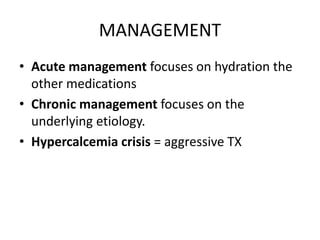
• Acute management focuses on hydration the 
other medications 
• Chronic management focuses on the 
underlying etiology. 
• Hypercalcemia crisis = aggressive TX
MANAGEMENT 
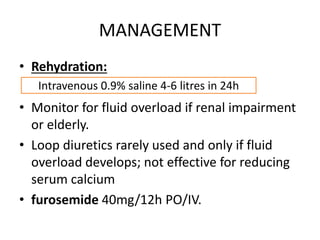
• Rehydration: 
Intravenous 0.9% saline 4-6 litres in 24h 
• Monitor for fluid overload if renal impairment 
or elderly. 
• Loop diuretics rarely used and only if fluid 
overload develops; not effective for reducing 
serum calcium 
• furosemide 40mg/12h PO/IV.
MANAGEMENT 
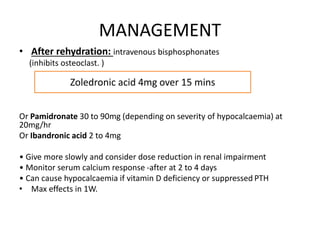
• After rehydration: intravenous bisphosphonates 
(inhibits osteoclast. ) 
Zoledronic acid 4mg over 15 mins 
Or Pamidronate 30 to 90mg (depending on severity of hypocalcaemia) at 
20mg/hr 
Or Ibandronic acid 2 to 4mg 
• Give more slowly and consider dose reduction in renal impairment 
• Monitor serum calcium response -after at 2 to 4 days 
• Can cause hypocalcaemia if vitamin D deficiency or suppressed PTH 
• Max effects in 1W.
MANAGEMENT 
• Second line treatments: 
• Glucocorticoids (inhibit VIT D production) 
• In lymphoma, other granulomatous diseases 
or Vit D poisoning, sarcoidosis. 
• Prednisolone 20-40mg daily 
• Usually effective in 2 to 4 days
MANAGEMENT 
• Calcitonin : 
• Can be considered if poor response to 
Bisphosphonates 
• Dose 4U/kg S/C or IM 12h 
• Calcimimetics : 
• Licensed for hypocalcaemia due to primary 
hyperparathyroidism, parathyroid carcinoma or 
renal failure. 
• only cinacalcet is currently available
• DIALYSIS 
• In cases life-threatening hypercalcemia, 
dialysis to get rid your blood of extra calcium 
and waste and lowering serum calcium levels. 
• Only when other treatment methods not 
works.
MANAGEMENT 
• SURGERY 
• Parathyroidectomy 
• Can be considered in acute presentation of 
primary hyperparathyroidism if severe 
hypercalcaemia and poor response to other 
measures. 
• Chemotherapy in malignancy.
LIFESTYLE CHANGES 
• Healthier lifestyle 
• Drink plenty of water 
• Exercise .
Complications (if untreated) 
• Osteoporosis 
• Kidney stones 
• Kidney failure 
• Nervous system dysfunction 
• Arrhythmia 
• Cardiac arrest
REFERENCE 
• Society for Endocrinology, Endocrine guidance. 
• Kumar and Clark medicine 2009 
• Emedicine.medscape.com 
• Dipiro Pharmacotherapy Handbook 8th Edition 
• (Pg. 988-989)

Hypercalcemia ,causes and treatment

  • 1.
    HYPERCALCEMIA ANEELA PASHA Final year Clinical Pharmacy.
  • 2.
    HYPERCALCEMIA • Serumcalcium > 10.5 mg/dl • Mild: total CA : 10.5-11.9 mg/dl • Moderate: total CA : 12-13.9 mg/dl • Severe: total CA: 14-16 mg/dl • Calcium enters extra cellular fluid from intestine and bone and excreted through kidney. • Calcium is tightly controlled by hormones (PTH, calcitriol , calcitonin).
  • 3.
    CALCIUM and itsthree forms • Ionized (physiological form) (40%) • Protein bound (50%), mainly to albumin • Non ionized or Complexes to citrate and phosphate (10%)
  • 4.
    CALCIUM ECF 8.5-10.6mg/dl 2.25-2.65 nmol/l ICF CYTOPLASMIC FREE 50-100 nmol/l PROTIEN BOUND 45% DIFFUSIBLE ULTRAFILTRABLE 55% 90% ALBUMIN 10% GLOBULUIN IONIZED 45% COMPLEXED 10%
  • 5.
    FUNCTIONS • Musclecontraction • Neuromuscular/ nerve conduction • Intracellular signaling • Bone formation • Coagulation • Enzyme regulation
  • 6.
  • 7.
    Causes of hypercalcemia Endocrine: • Hyperparathyroidism • MEN Type 1 (parathyroid adenoma , pituitary adenoma , pancreatic islet cell tumor) • Familial hypocalciuric hypercalcemia Malignancy: • Metastases • PTHrP • Breast caner, lung cancer , bone cancer. Granulomatous Disease: • Sarcoidosis • TB Miscellaneous: • Acute kidney failure • Milk-alkali syndrome Medications: • Lithium therapy • Thiazides ( inc. Na, water absorp and inc ca concentration) • Vit D
  • 8.
    Causes of hypercalcemia C calcium supplements H hyperparathyroidism I immobilization M MEN, milk-alkali syndrome, medication P parathyroid hyperplasia or adenoma A alcohol N neoplasm (breast, lung, kidney) Z Zollinger ellison syndrome E excessive vit D E excessive vit A S Sarcoidosis
  • 9.
    THYROTOXICOSIS • Severthyrotoxicosis • Increased calcium release from bone (thyroxine acts on bone) • PTH is normal • Takes 4-6 weeks to resolve with antithyroid treatment
  • 10.
    Clinical presentation •The famous mnemonic ; • Stone • Bones • Abdominal moans • thrones • Psychic groans • Others: anorexia, n/v , weakness, renal failure cardiac arrest , stupor or coma . • Hypocalcaemia can increase gastrin production, leading to increased acidity so peptic ulcer may also occur.
  • 11.
    INVESTIGATIONS • History • Examination • ECG • Blood levels.
  • 12.
    INVESTIGATIONS • History+ PTH levels are essential for diagnosis. • Blood tests: calcium, phosphate, magnesium, creatinine, U&E, PTH. • CXR (bones ,lungs etc. ) • CT scan / MRI • Mammogram • ECG = short QT interval
  • 13.
    MANAGEMENT • Persistent high levels of calcium.
  • 14.
    MANAGEMENT • Acutemanagement focuses on hydration the other medications • Chronic management focuses on the underlying etiology. • Hypercalcemia crisis = aggressive TX
  • 15.
    MANAGEMENT • Rehydration: Intravenous 0.9% saline 4-6 litres in 24h • Monitor for fluid overload if renal impairment or elderly. • Loop diuretics rarely used and only if fluid overload develops; not effective for reducing serum calcium • furosemide 40mg/12h PO/IV.
  • 16.
    MANAGEMENT • Afterrehydration: intravenous bisphosphonates (inhibits osteoclast. ) Zoledronic acid 4mg over 15 mins Or Pamidronate 30 to 90mg (depending on severity of hypocalcaemia) at 20mg/hr Or Ibandronic acid 2 to 4mg • Give more slowly and consider dose reduction in renal impairment • Monitor serum calcium response -after at 2 to 4 days • Can cause hypocalcaemia if vitamin D deficiency or suppressed PTH • Max effects in 1W.
  • 17.
    MANAGEMENT • Secondline treatments: • Glucocorticoids (inhibit VIT D production) • In lymphoma, other granulomatous diseases or Vit D poisoning, sarcoidosis. • Prednisolone 20-40mg daily • Usually effective in 2 to 4 days
  • 18.
    MANAGEMENT • Calcitonin: • Can be considered if poor response to Bisphosphonates • Dose 4U/kg S/C or IM 12h • Calcimimetics : • Licensed for hypocalcaemia due to primary hyperparathyroidism, parathyroid carcinoma or renal failure. • only cinacalcet is currently available
  • 19.
    • DIALYSIS •In cases life-threatening hypercalcemia, dialysis to get rid your blood of extra calcium and waste and lowering serum calcium levels. • Only when other treatment methods not works.
  • 20.
    MANAGEMENT • SURGERY • Parathyroidectomy • Can be considered in acute presentation of primary hyperparathyroidism if severe hypercalcaemia and poor response to other measures. • Chemotherapy in malignancy.
  • 21.
    LIFESTYLE CHANGES •Healthier lifestyle • Drink plenty of water • Exercise .
  • 22.
    Complications (if untreated) • Osteoporosis • Kidney stones • Kidney failure • Nervous system dysfunction • Arrhythmia • Cardiac arrest
  • 23.
    REFERENCE • Societyfor Endocrinology, Endocrine guidance. • Kumar and Clark medicine 2009 • Emedicine.medscape.com • Dipiro Pharmacotherapy Handbook 8th Edition • (Pg. 988-989)