Downloaded 24 times
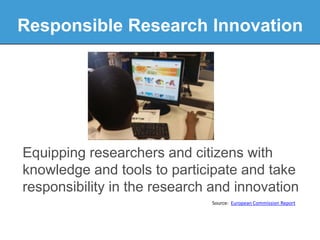
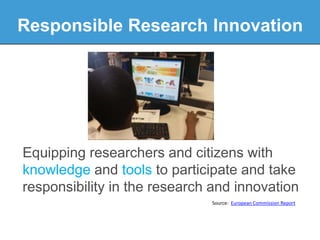
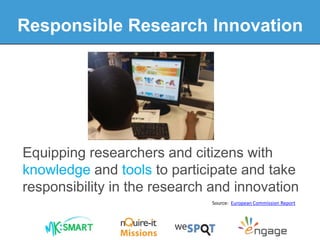
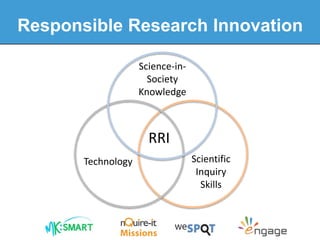
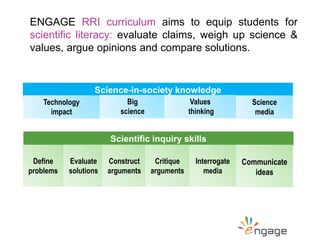
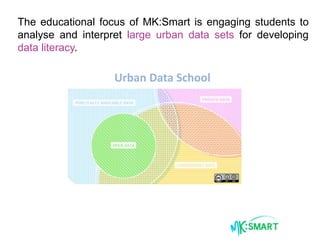
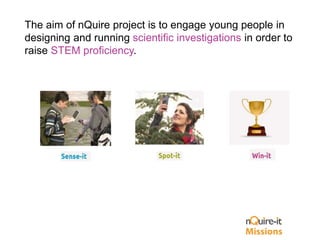
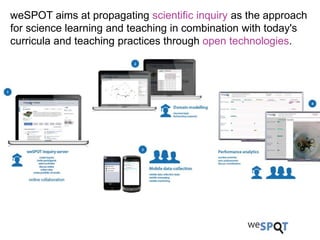
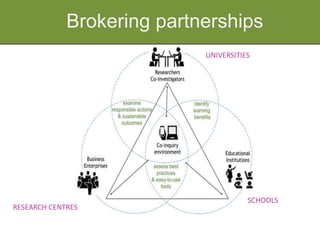
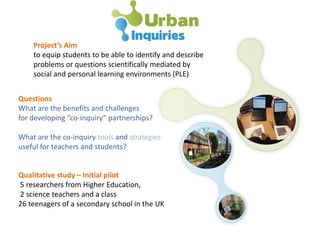
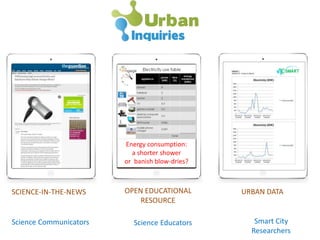
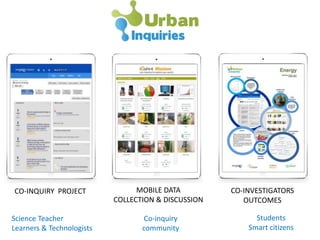
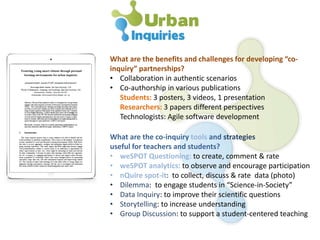

This document discusses responsible research and innovation through partnerships between researchers, citizens, and students. It promotes using co-inquiry tools and strategies to equip students with science literacy skills. Examples mentioned include using mobile data collection and discussion apps to engage students in scientific investigations around urban issues. The benefits identified are collaboration in authentic scenarios and co-authorship of publications. Challenges include coordinating different perspectives between students, researchers, and technologists. Recommendations are made around using technologies like weSPOT for questioning, analytics and data collection to support student-centered teaching and learning.


