Equipping the Next Generation for Active Engagement in Science
EngagingScience.eu
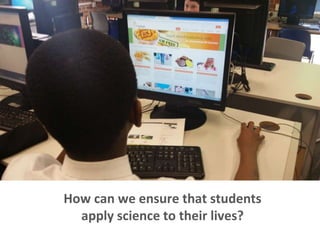
How can we ensure that students
apply science to their lives?
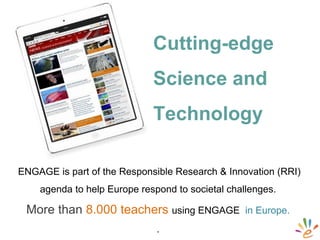
ENGAGE is part of the Responsible Research & Innovation (RRI)
agenda to help Europe respond to societal challenges.
More than 8.000 teachers using ENGAGE in Europe.
.
Cutting-edge
Science and
Technology
• identify contemporary science issues
• analyse emerging dilemmas in science
• develop scientific reasoning through enquiry
Teaches big
curriculum
ideas
Our goal is to help teachers and
students:
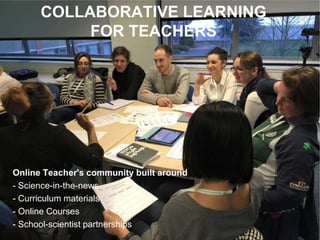
COLLABORATIVE LEARNING
FOR TEACHERS
Online Teacher's community built around
- Science-in-the-news
- Curriculum materials
- Online Courses
- School-scientist partnerships
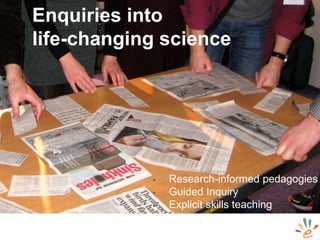
Enquiries into
life-changing science
▪ Research-informed pedagogies
▪ Guided Inquiry
▪ Explicit skills teaching
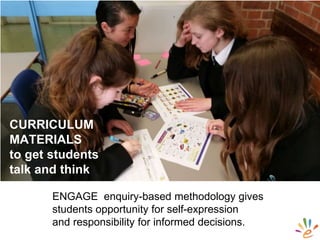
ENGAGE enquiry-based methodology gives
students opportunity for self-expression
and responsibility for informed decisions.
CURRICULUM
MATERIALS
to get students
talk and think
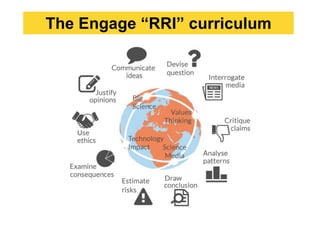
The Engage “RRI” curriculum
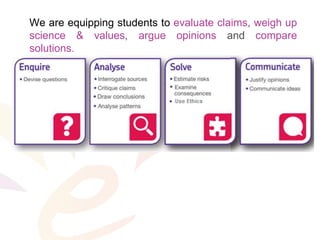
We are equipping students to evaluate claims, weigh up
science & values, argue opinions and compare
solutions.
Play 2 degrees
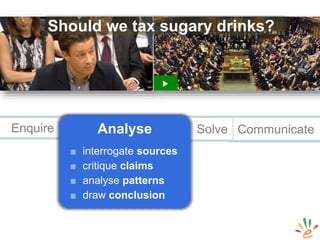
Enquire CommunicateSolveAnalyse
■ interrogate sources
■ critique claims
■ analyse patterns
■ draw conclusion
Should we tax sugary drinks?
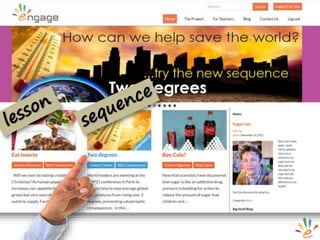
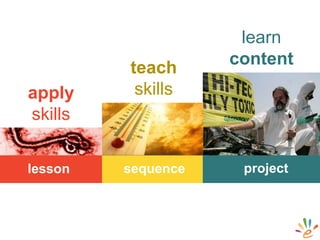
lesson sequence project
apply
skills
teach
skills
learn
content
Problem
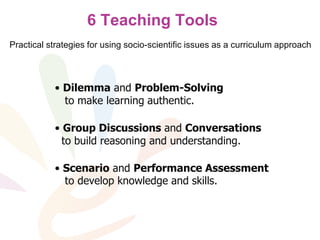
• Dilemma and Problem-Solving
to make learning authentic.
• Group Discussions and Conversations
to build reasoning and understanding.
• Scenario and Performance Assessment
to develop knowledge and skills.
6 Teaching Tools
Practical strategies for using socio-scientific issues as a curriculum approach
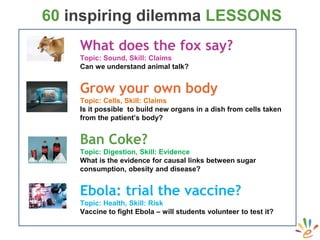
60 inspiring dilemma LESSONS
What does the fox say?
Topic: Sound, Skill: Claims
Can we understand animal talk?
Grow your own body
Topic: Cells, Skill: Claims
Is it possible to build new organs in a dish from cells taken
from the patient’s body?
Ban Coke?
Topic: Digestion, Skill: Evidence
What is the evidence for causal links between sugar
consumption, obesity and disease?
Ebola: trial the vaccine?
Topic: Health, Skill: Risk
Vaccine to fight Ebola – will students volunteer to test it?
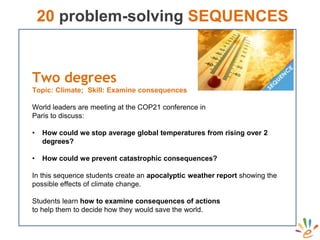
20 problem-solving SEQUENCES
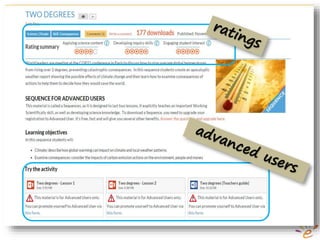
Two degrees
Topic: Climate; Skill: Examine consequences
World leaders are meeting at the COP21 conference in
Paris to discuss:
• How could we stop average global temperatures from rising over 2
degrees?
• How could we prevent catastrophic consequences?
In this sequence students create an apocalyptic weather report showing the
possible effects of climate change.
Students learn how to examine consequences of actions
to help them to decide how they would save the world.
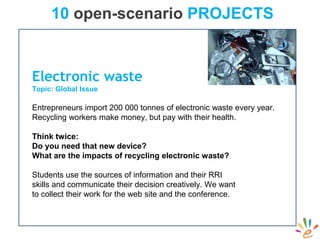
10 open-scenario PROJECTS
Electronic waste
Topic: Global Issue
Entrepreneurs import 200 000 tonnes of electronic waste every year.
Recycling workers make money, but pay with their health.
Think twice:
Do you need that new device?
What are the impacts of recycling electronic waste?
Students use the sources of information and their RRI
skills and communicate their decision creatively. We want
to collect their work for the web site and the conference.
Activities and
games from
ENGAGE really
engage
students!
The materials
are very topical
and are
easy-to-use.
Thank you
for leaving it
editable.
Teachers‘ comments
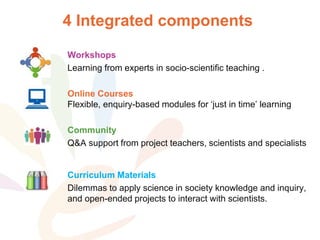
4 Integrated components
Workshops
Learning from experts in socio-scientific teaching .
Online Courses
Flexible, enquiry-based modules for ‘just in time’ learning
Community
Q&A support from project teachers, scientists and specialists
Curriculum Materials
Dilemmas to apply science in society knowledge and inquiry,
and open-ended projects to interact with scientists.
which will propel teachers in their own enquiry
to become expert with RRI:
1. Adopt: online community and CPD for coaching.
2. Adapt: activities for effective learning
3. Transform: projects for partnership with RRI scientists.
Three-stage path
ENGAGE CONSORTIUM
Engaging.Science.eu
Contacts: Tony Sherborne (Project Coordinator)
tonysherborne@gmail.com
Alexandra Okada(Legacy Lead)
ale.okada@open.ac.uk
Andy Bullough (Project Manager)
andybullough@upd8.org.uk

ENGAGE project presentation 2016

  • 1.
    Equipping the NextGeneration for Active Engagement in Science EngagingScience.eu
  • 2.
    How can weensure that students apply science to their lives?
  • 3.
    ENGAGE is partof the Responsible Research & Innovation (RRI) agenda to help Europe respond to societal challenges. More than 8.000 teachers using ENGAGE in Europe. . Cutting-edge Science and Technology
  • 4.
    • identify contemporaryscience issues • analyse emerging dilemmas in science • develop scientific reasoning through enquiry Teaches big curriculum ideas Our goal is to help teachers and students:
  • 5.
    COLLABORATIVE LEARNING FOR TEACHERS OnlineTeacher's community built around - Science-in-the-news - Curriculum materials - Online Courses - School-scientist partnerships
  • 6.
    Enquiries into life-changing science ▪Research-informed pedagogies ▪ Guided Inquiry ▪ Explicit skills teaching
  • 7.
    ENGAGE enquiry-based methodologygives students opportunity for self-expression and responsibility for informed decisions. CURRICULUM MATERIALS to get students talk and think
  • 8.
  • 9.
    We are equippingstudents to evaluate claims, weigh up science & values, argue opinions and compare solutions.
  • 10.
  • 12.
    Enquire CommunicateSolveAnalyse ■ interrogatesources ■ critique claims ■ analyse patterns ■ draw conclusion Should we tax sugary drinks?
  • 13.
  • 14.
    Problem • Dilemma andProblem-Solving to make learning authentic. • Group Discussions and Conversations to build reasoning and understanding. • Scenario and Performance Assessment to develop knowledge and skills. 6 Teaching Tools Practical strategies for using socio-scientific issues as a curriculum approach
  • 15.
    60 inspiring dilemmaLESSONS What does the fox say? Topic: Sound, Skill: Claims Can we understand animal talk? Grow your own body Topic: Cells, Skill: Claims Is it possible to build new organs in a dish from cells taken from the patient’s body? Ban Coke? Topic: Digestion, Skill: Evidence What is the evidence for causal links between sugar consumption, obesity and disease? Ebola: trial the vaccine? Topic: Health, Skill: Risk Vaccine to fight Ebola – will students volunteer to test it?
  • 16.
    20 problem-solving SEQUENCES Twodegrees Topic: Climate; Skill: Examine consequences World leaders are meeting at the COP21 conference in Paris to discuss: • How could we stop average global temperatures from rising over 2 degrees? • How could we prevent catastrophic consequences? In this sequence students create an apocalyptic weather report showing the possible effects of climate change. Students learn how to examine consequences of actions to help them to decide how they would save the world.
  • 17.
    10 open-scenario PROJECTS Electronicwaste Topic: Global Issue Entrepreneurs import 200 000 tonnes of electronic waste every year. Recycling workers make money, but pay with their health. Think twice: Do you need that new device? What are the impacts of recycling electronic waste? Students use the sources of information and their RRI skills and communicate their decision creatively. We want to collect their work for the web site and the conference.
  • 18.
    Activities and games from ENGAGEreally engage students! The materials are very topical and are easy-to-use. Thank you for leaving it editable. Teachers‘ comments
  • 20.
    4 Integrated components Workshops Learningfrom experts in socio-scientific teaching . Online Courses Flexible, enquiry-based modules for ‘just in time’ learning Community Q&A support from project teachers, scientists and specialists Curriculum Materials Dilemmas to apply science in society knowledge and inquiry, and open-ended projects to interact with scientists.
  • 21.
    which will propelteachers in their own enquiry to become expert with RRI: 1. Adopt: online community and CPD for coaching. 2. Adapt: activities for effective learning 3. Transform: projects for partnership with RRI scientists. Three-stage path
  • 22.
  • 23.
    Engaging.Science.eu Contacts: Tony Sherborne(Project Coordinator) tonysherborne@gmail.com Alexandra Okada(Legacy Lead) ale.okada@open.ac.uk Andy Bullough (Project Manager) andybullough@upd8.org.uk