DESIGN AND ANALYSIS OF PRESSURE VESSELS
BY CONVENTIONAL AND ASME STANDARDS
AND ITS COMPARISON
TEAM MEMBERS : 1.KETAN SANGLE
2.AKSHAY CHINCHAMALATPURE
3.AKSHAY MANE.
GUIDE : PROF. D.N.JADHAV
MECHANICAL DEPARTMENT,
SARDAR PATEL COLLEGE OF ENGINEERING
BE MECHANICAL PROJECT
ABOUT PROJECT.........................................................3
INTRODUCTION..........................................................5
PURPOSE OF PROJECT..............................................6
FLOW CHART..............................................................7
PRODUCT SPECIFICATIONS....................................8
PROJECT COMPONENTS..........................................8
METHODOLOGY........................................................14
IMPACT ON VARIOUS ASPECTS.............................15
FUTURE SCOPE.........................................................16
 Design and analysis of pressure vessel by conventional
and ASME code with comparison
 Reveals best and safe design method
 Softwares needed- 1. Pv-elite
2. Ansys
 Widely used design method- ASME code
 Increase in safety and reduced cost
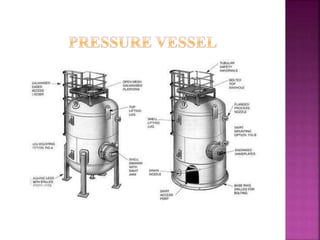
 Pressure vessel- closed container sustaining pressure
difference
 Includes- shell, head, nozzle, support, fittings.
 Use of pressure vessel-
1.Storage
2.Pressurization
 Application-
1.Chemical industries
2.Oil refinaries
3.Nuclear reactors
4.Submarines
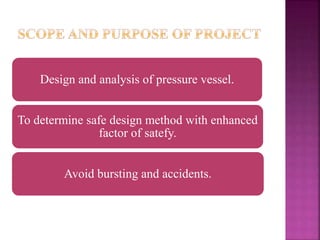
Design and analysis of pressure vessel.
To determine safe design method with enhanced
factor of satefy.
Avoid bursting and accidents.
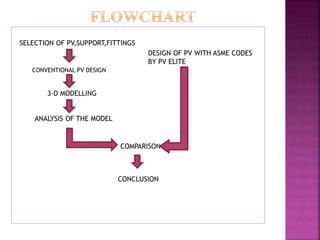
SELECTION OF PV,SUPPORT,FITTINGS
CONVENTIONAL PV DESIGN
3-D MODELLING
ANALYSIS OF THE MODEL
DESIGN OF PV WITH ASME CODES
BY PV ELITE
COMPARISON
CONCLUSION
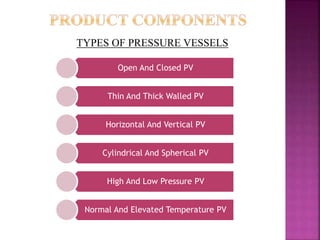
Open And Closed PV
Thin And Thick Walled PV
Horizontal And Vertical PV
Cylindrical And Spherical PV
High And Low Pressure PV
Normal And Elevated Temperature PV
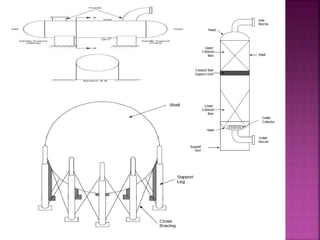
TYPES OF PRESSURE VESSELS
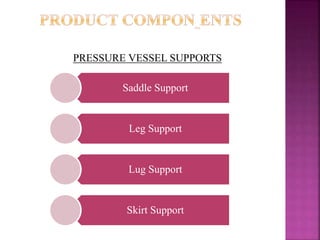
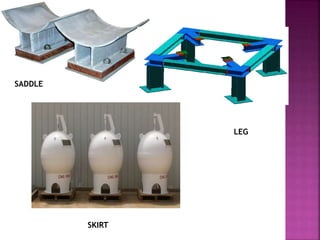
Saddle Support
Leg Support
Lug Support
Skirt Support
PRESSURE VESSEL SUPPORTS
SADDLE
LEG
SKIRT
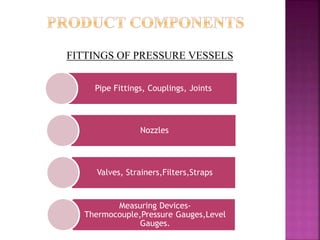
Pipe Fittings, Couplings, Joints
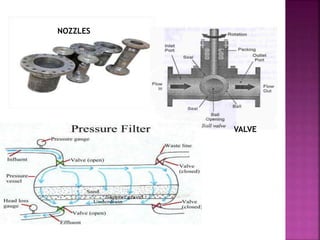
Nozzles
Valves, Strainers,Filters,Straps
Measuring Devices-
Thermocouple,Pressure Gauges,Level
Gauges.
FITTINGS OF PRESSURE VESSELS
NOZZLES
VALVE
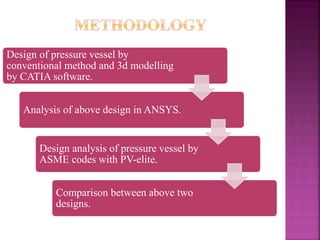
Design of pressure vessel by
conventional method and 3d modelling
by CATIA software.
Analysis of above design in ANSYS.
Design analysis of pressure vessel by
ASME codes with PV-elite.
Comparison between above two
designs.
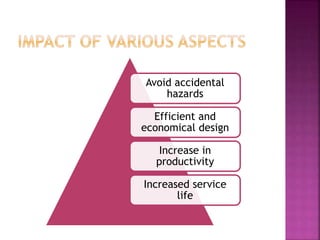
Avoid accidental
hazards
Efficient and
economical design
Increase in
productivity
Increased service
life
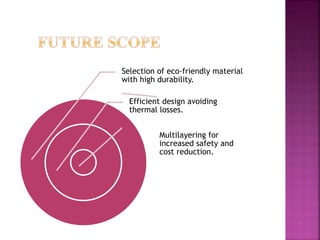
Selection of eco-friendly material
with high durability.
Efficient design avoiding
thermal losses.
Multilayering for
increased safety and
cost reduction.
design and analysis of pressure vessel

design and analysis of pressure vessel

  • 1.
    DESIGN AND ANALYSISOF PRESSURE VESSELS BY CONVENTIONAL AND ASME STANDARDS AND ITS COMPARISON TEAM MEMBERS : 1.KETAN SANGLE 2.AKSHAY CHINCHAMALATPURE 3.AKSHAY MANE. GUIDE : PROF. D.N.JADHAV MECHANICAL DEPARTMENT, SARDAR PATEL COLLEGE OF ENGINEERING BE MECHANICAL PROJECT
  • 2.
    ABOUT PROJECT.........................................................3 INTRODUCTION..........................................................5 PURPOSE OFPROJECT..............................................6 FLOW CHART..............................................................7 PRODUCT SPECIFICATIONS....................................8 PROJECT COMPONENTS..........................................8 METHODOLOGY........................................................14 IMPACT ON VARIOUS ASPECTS.............................15 FUTURE SCOPE.........................................................16
  • 3.
     Design andanalysis of pressure vessel by conventional and ASME code with comparison  Reveals best and safe design method  Softwares needed- 1. Pv-elite 2. Ansys  Widely used design method- ASME code  Increase in safety and reduced cost
  • 5.
     Pressure vessel-closed container sustaining pressure difference  Includes- shell, head, nozzle, support, fittings.  Use of pressure vessel- 1.Storage 2.Pressurization  Application- 1.Chemical industries 2.Oil refinaries 3.Nuclear reactors 4.Submarines
  • 6.
    Design and analysisof pressure vessel. To determine safe design method with enhanced factor of satefy. Avoid bursting and accidents.
  • 7.
    SELECTION OF PV,SUPPORT,FITTINGS CONVENTIONALPV DESIGN 3-D MODELLING ANALYSIS OF THE MODEL DESIGN OF PV WITH ASME CODES BY PV ELITE COMPARISON CONCLUSION
  • 8.
    Open And ClosedPV Thin And Thick Walled PV Horizontal And Vertical PV Cylindrical And Spherical PV High And Low Pressure PV Normal And Elevated Temperature PV TYPES OF PRESSURE VESSELS
  • 10.
    Saddle Support Leg Support LugSupport Skirt Support PRESSURE VESSEL SUPPORTS
  • 11.
  • 12.
    Pipe Fittings, Couplings,Joints Nozzles Valves, Strainers,Filters,Straps Measuring Devices- Thermocouple,Pressure Gauges,Level Gauges. FITTINGS OF PRESSURE VESSELS
  • 13.
  • 14.
    Design of pressurevessel by conventional method and 3d modelling by CATIA software. Analysis of above design in ANSYS. Design analysis of pressure vessel by ASME codes with PV-elite. Comparison between above two designs.
  • 15.
    Avoid accidental hazards Efficient and economicaldesign Increase in productivity Increased service life
  • 16.
    Selection of eco-friendlymaterial with high durability. Efficient design avoiding thermal losses. Multilayering for increased safety and cost reduction.