
Dr. Ramil B. Simsuangco 
Oral Anatomy Professor 
College of Dentistry 
Manila Central University
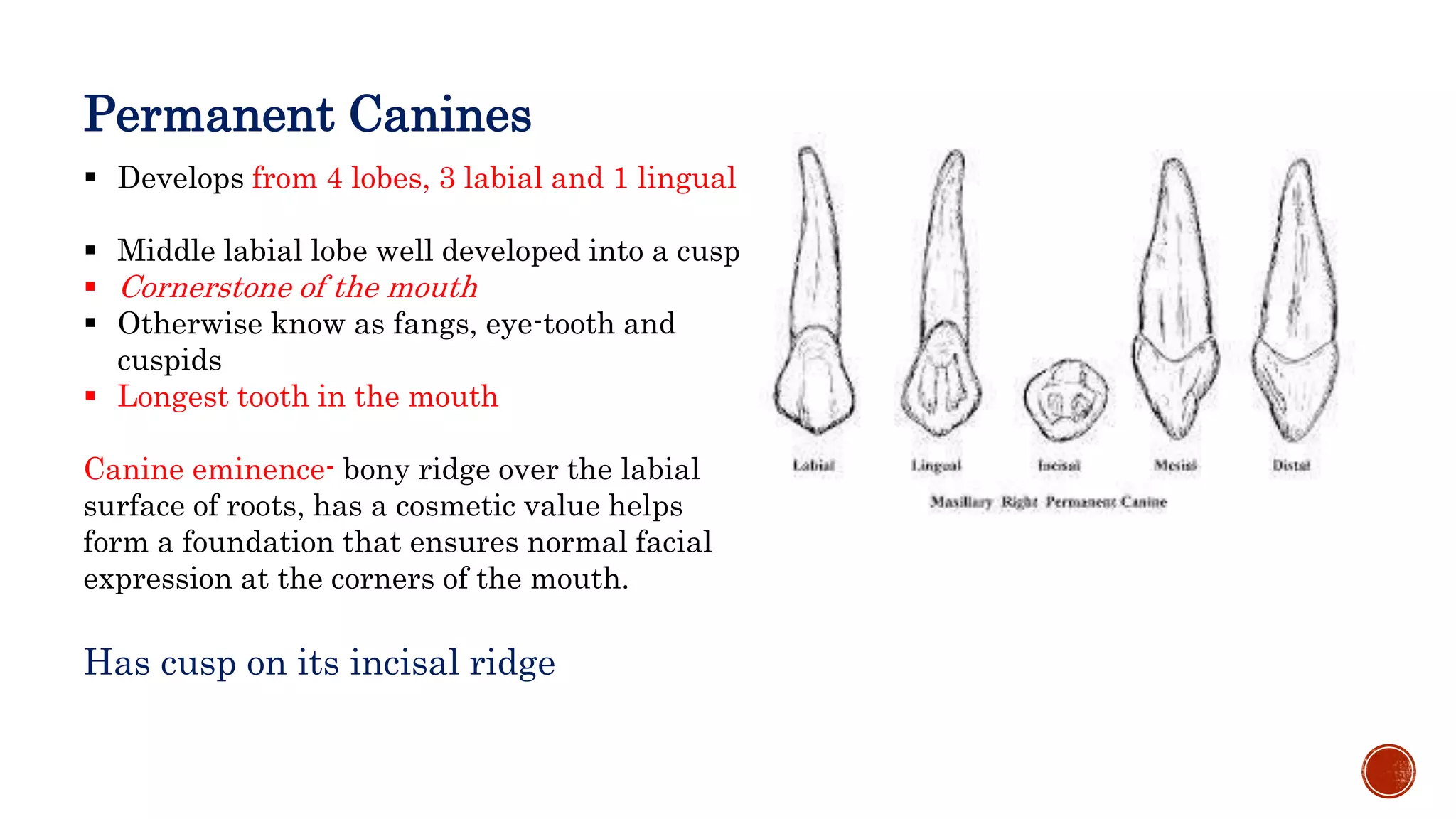
Permanent Canines 
 Develops from 4 lobes, 3 labial and 1 lingual 
 Middle labial lobe well developed into a cusp 
 Cornerstone of the mouth 
 Otherwise know as fangs, eye-tooth and 
cuspids 
 Longest tooth in the mouth 
Canine eminence- bony ridge over the labial 
surface of roots, has a cosmetic value helps 
form a foundation that ensures normal facial 
expression at the corners of the mouth. 
Has cusp on its incisal ridge
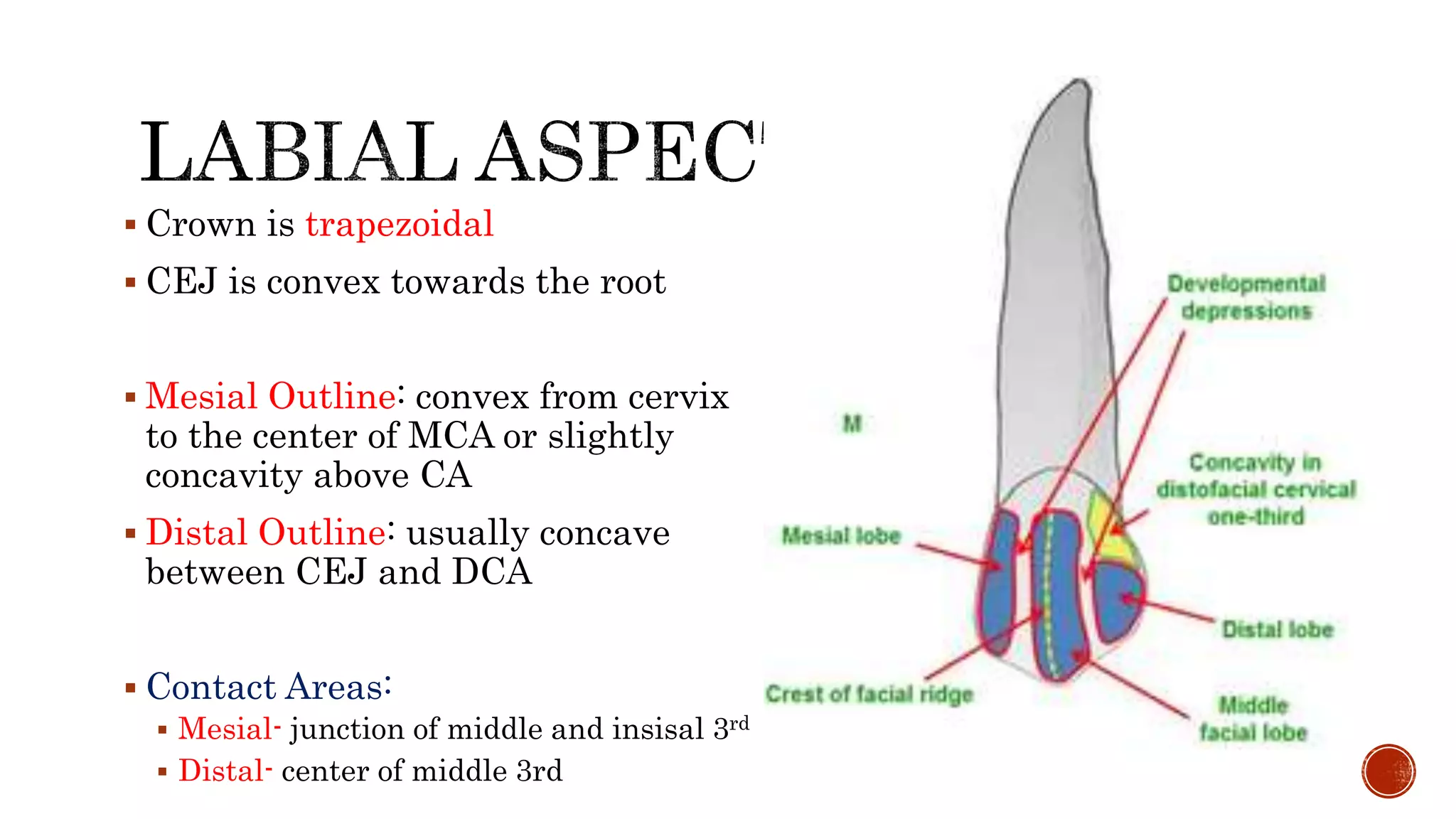
 Crown is trapezoidal 
 CEJ is convex towards the root 
 Mesial Outline: convex from cervix 
to the center of MCA or slightly 
concavity above CA 
 Distal Outline: usually concave 
between CEJ and DCA 
 Contact Areas: 
 Mesial- junction of middle and insisal 3rd 
 Distal- center of middle 3rd
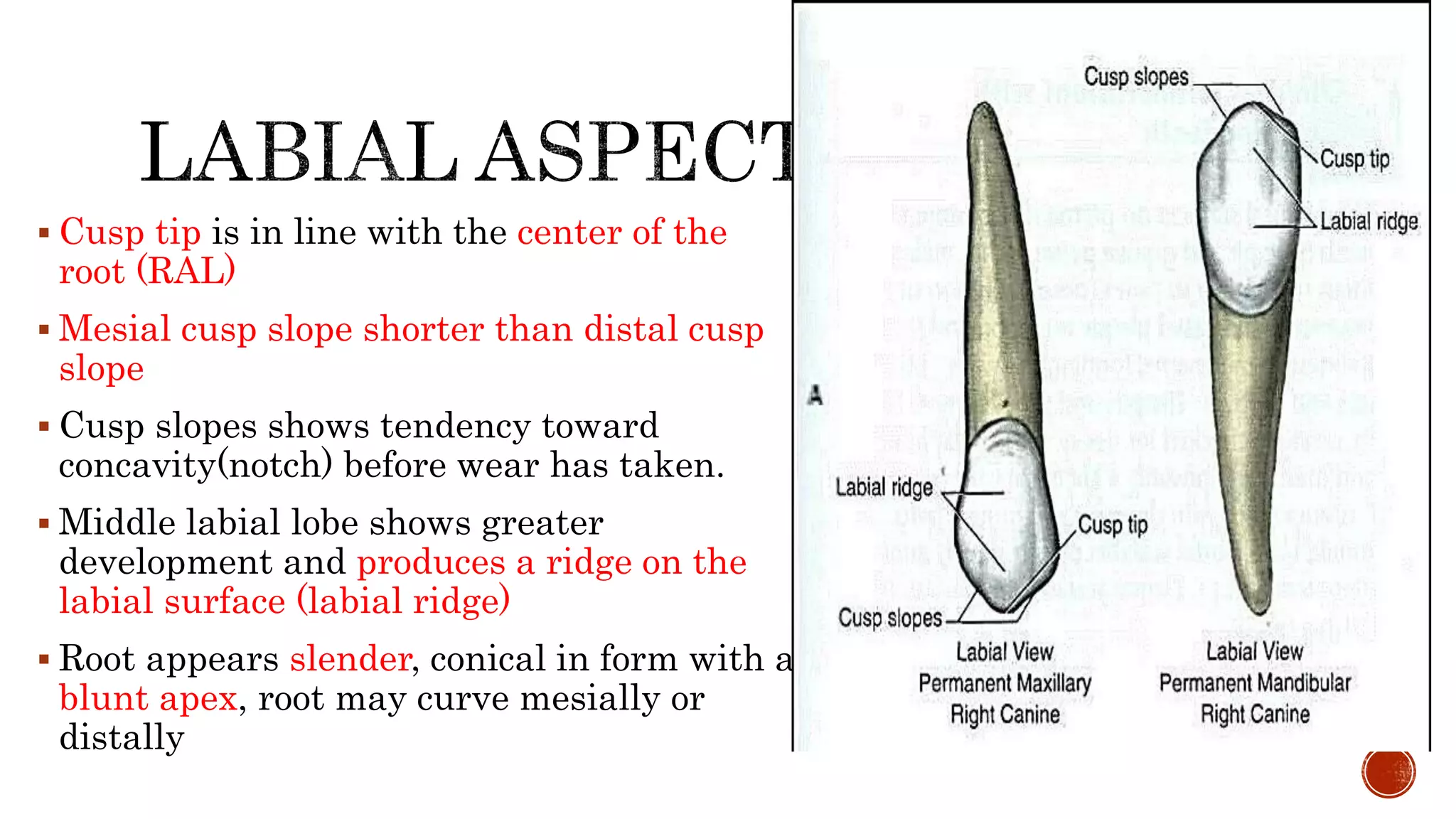
 Cusp tip is in line with the center of the 
root (RAL) 
 Mesial cusp slope shorter than distal cusp 
slope 
 Cusp slopes shows tendency toward 
concavity(notch) before wear has taken. 
 Middle labial lobe shows greater 
development and produces a ridge on the 
labial surface (labial ridge) 
 Root appears slender, conical in form with a 
blunt apex, root may curve mesially or 
distally
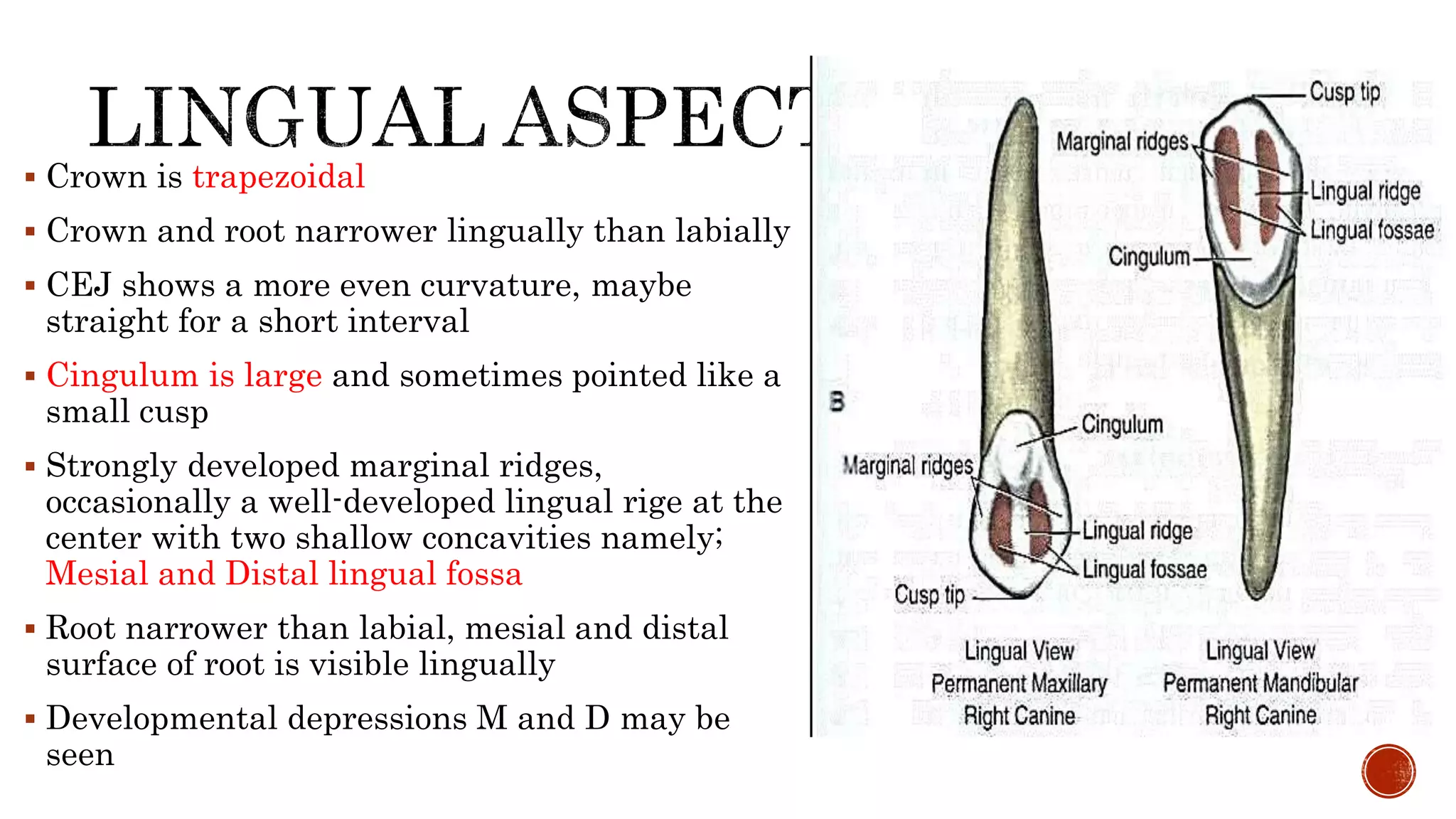
 Crown is trapezoidal 
 Crown and root narrower lingually than labially 
 CEJ shows a more even curvature, maybe 
straight for a short interval 
 Cingulum is large and sometimes pointed like a 
small cusp 
 Strongly developed marginal ridges, 
occasionally a well-developed lingual rige at the 
center with two shallow concavities namely; 
Mesial and Distal lingual fossa 
 Root narrower than labial, mesial and distal 
surface of root is visible lingually 
 Developmental depressions M and D may be 
seen
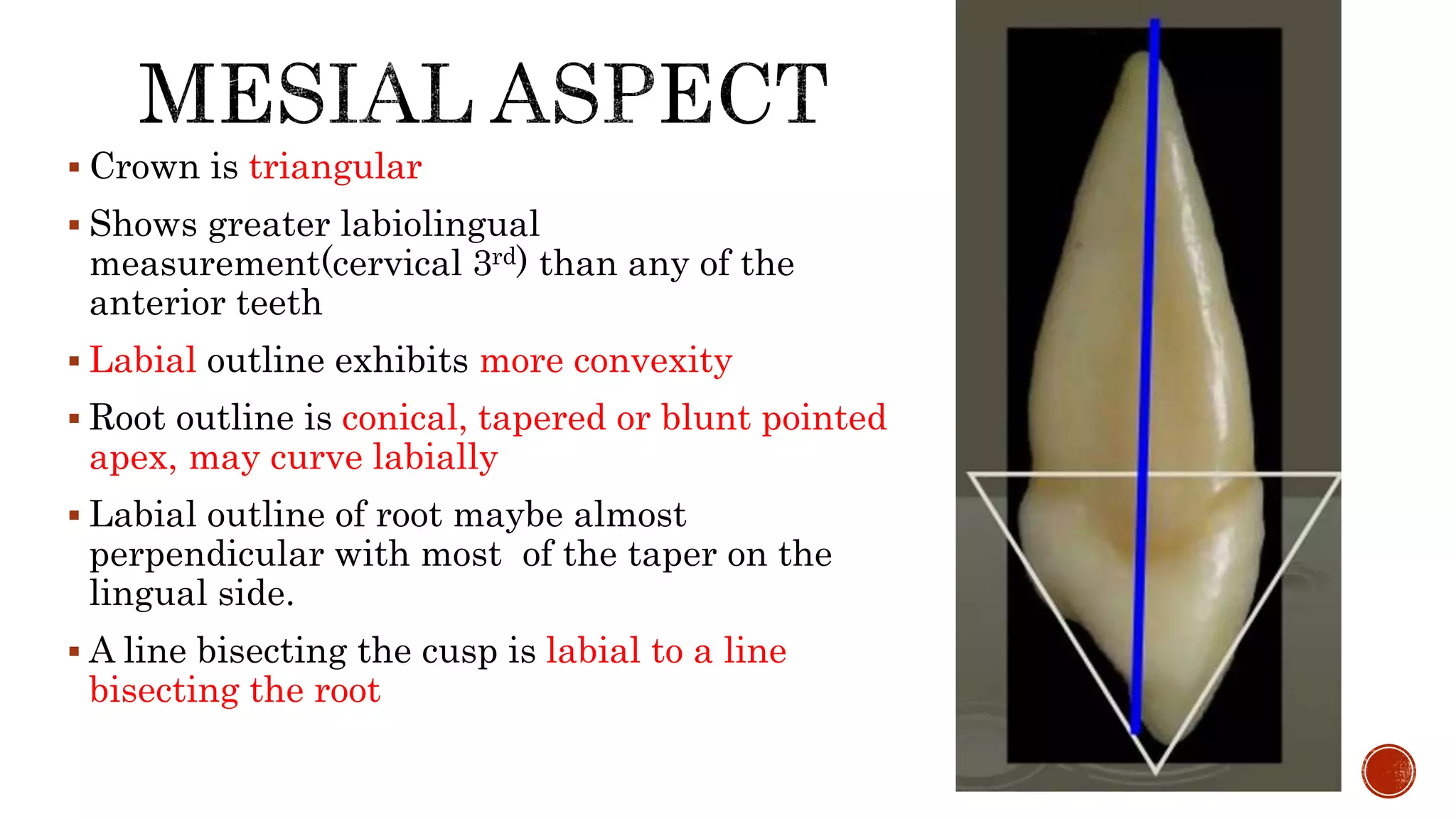
 Crown is triangular 
 Shows greater labiolingual 
measurement(cervical 3rd) than any of the 
anterior teeth 
 Labial outline exhibits more convexity 
 Root outline is conical, tapered or blunt pointed 
apex, may curve labially 
 Labial outline of root maybe almost 
perpendicular with most of the taper on the 
lingual side. 
 A line bisecting the cusp is labial to a line 
bisecting the root
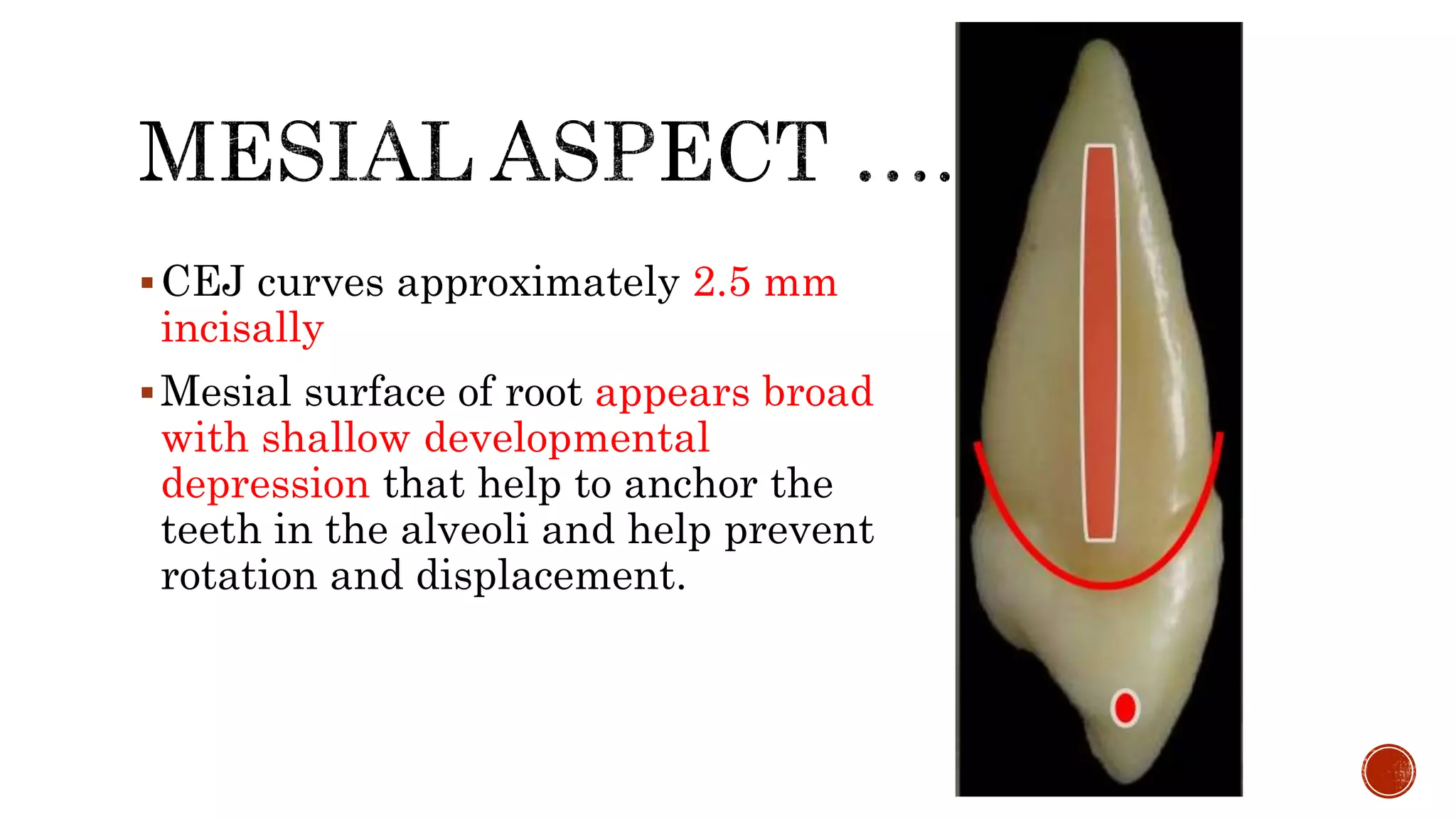
CEJ curves approximately 2.5 mm 
incisally 
 Mesial surface of root appears broad 
with shallow developmental 
depression that help to anchor the 
teeth in the alveoli and help prevent 
rotation and displacement.
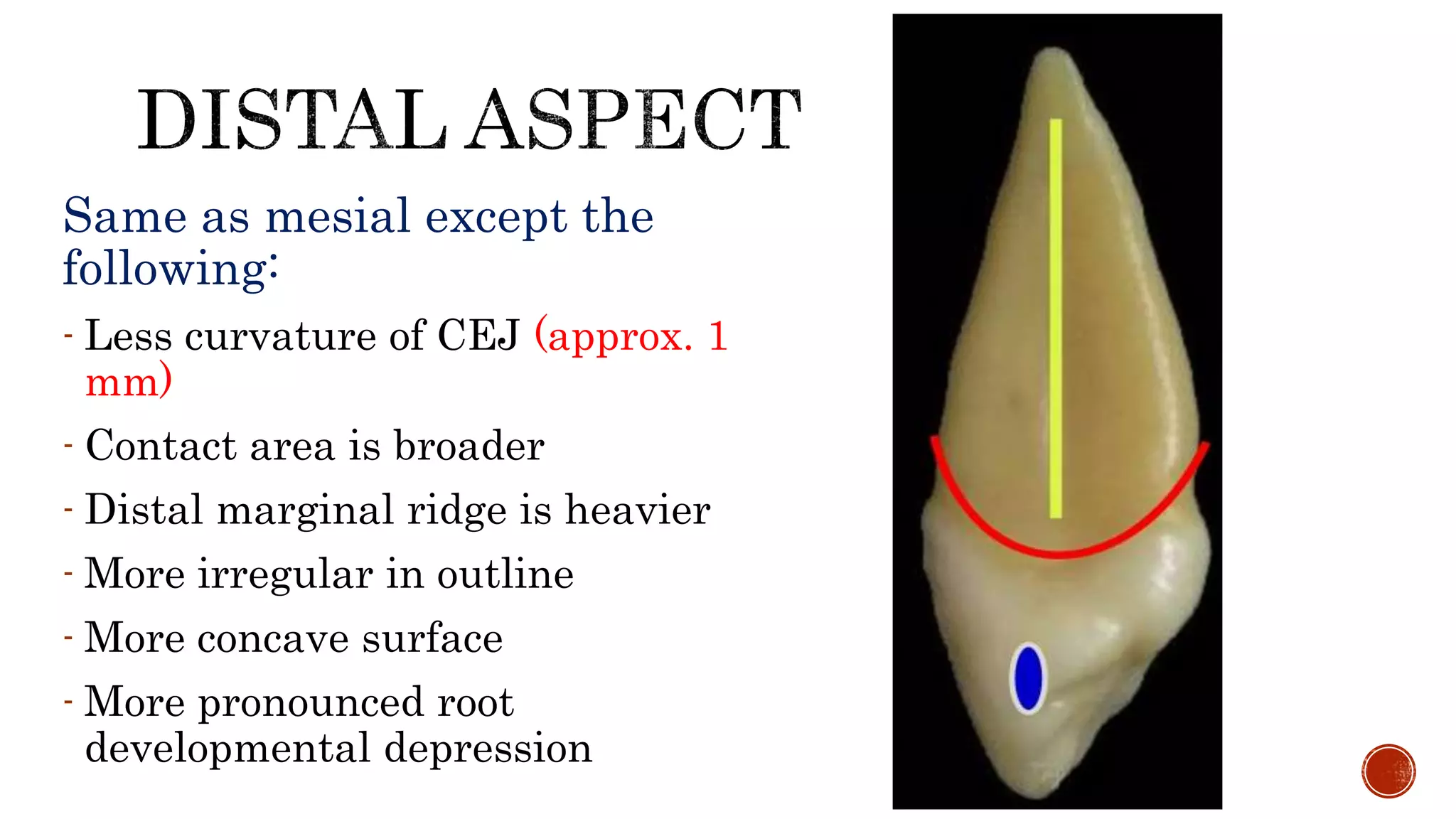
Same as mesial except the 
following: 
- Less curvature of CEJ (approx. 1 
mm) 
- Contact area is broader 
- Distal marginal ridge is heavier 
- More irregular in outline 
- More concave surface 
- More pronounced root 
developmental depression
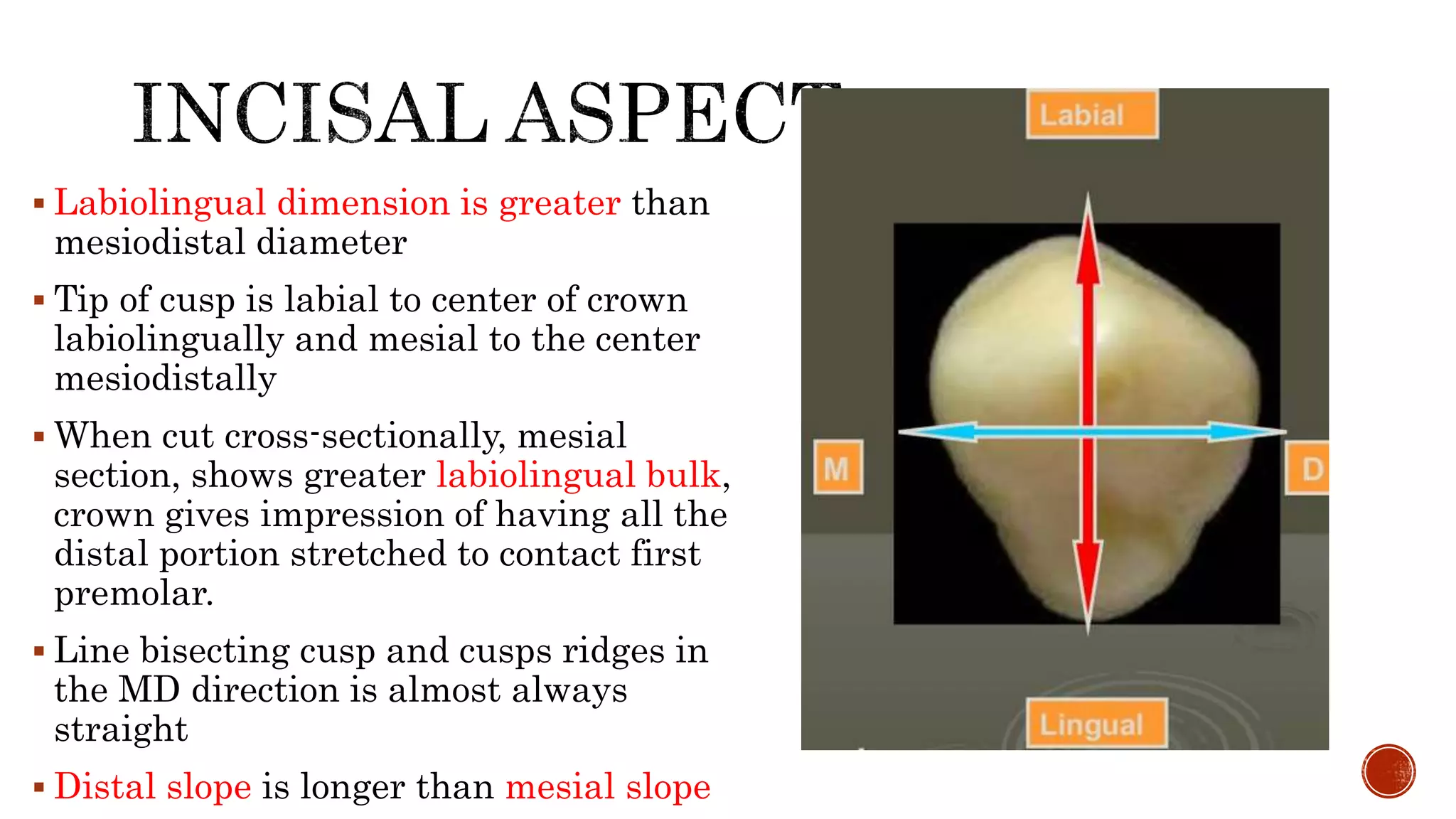
 Labiolingual dimension is greater than 
mesiodistal diameter 
 Tip of cusp is labial to center of crown 
labiolingually and mesial to the center 
mesiodistally 
 When cut cross-sectionally, mesial 
section, shows greater labiolingual bulk, 
crown gives impression of having all the 
distal portion stretched to contact first 
premolar. 
 Line bisecting cusp and cusps ridges in 
the MD direction is almost always 
straight 
 Distal slope is longer than mesial slope
PERMANENT MAXILLARY CANINE

PERMANENT MAXILLARY CANINE

  • 1.
    Dr. Ramil B.Simsuangco Oral Anatomy Professor College of Dentistry Manila Central University
  • 2.
    Permanent Canines Develops from 4 lobes, 3 labial and 1 lingual  Middle labial lobe well developed into a cusp  Cornerstone of the mouth  Otherwise know as fangs, eye-tooth and cuspids  Longest tooth in the mouth Canine eminence- bony ridge over the labial surface of roots, has a cosmetic value helps form a foundation that ensures normal facial expression at the corners of the mouth. Has cusp on its incisal ridge
  • 3.
     Crown istrapezoidal  CEJ is convex towards the root  Mesial Outline: convex from cervix to the center of MCA or slightly concavity above CA  Distal Outline: usually concave between CEJ and DCA  Contact Areas:  Mesial- junction of middle and insisal 3rd  Distal- center of middle 3rd
  • 4.
     Cusp tipis in line with the center of the root (RAL)  Mesial cusp slope shorter than distal cusp slope  Cusp slopes shows tendency toward concavity(notch) before wear has taken.  Middle labial lobe shows greater development and produces a ridge on the labial surface (labial ridge)  Root appears slender, conical in form with a blunt apex, root may curve mesially or distally
  • 5.
     Crown istrapezoidal  Crown and root narrower lingually than labially  CEJ shows a more even curvature, maybe straight for a short interval  Cingulum is large and sometimes pointed like a small cusp  Strongly developed marginal ridges, occasionally a well-developed lingual rige at the center with two shallow concavities namely; Mesial and Distal lingual fossa  Root narrower than labial, mesial and distal surface of root is visible lingually  Developmental depressions M and D may be seen
  • 6.
     Crown istriangular  Shows greater labiolingual measurement(cervical 3rd) than any of the anterior teeth  Labial outline exhibits more convexity  Root outline is conical, tapered or blunt pointed apex, may curve labially  Labial outline of root maybe almost perpendicular with most of the taper on the lingual side.  A line bisecting the cusp is labial to a line bisecting the root
  • 7.
    CEJ curves approximately2.5 mm incisally  Mesial surface of root appears broad with shallow developmental depression that help to anchor the teeth in the alveoli and help prevent rotation and displacement.
  • 8.
    Same as mesialexcept the following: - Less curvature of CEJ (approx. 1 mm) - Contact area is broader - Distal marginal ridge is heavier - More irregular in outline - More concave surface - More pronounced root developmental depression
  • 9.
     Labiolingual dimensionis greater than mesiodistal diameter  Tip of cusp is labial to center of crown labiolingually and mesial to the center mesiodistally  When cut cross-sectionally, mesial section, shows greater labiolingual bulk, crown gives impression of having all the distal portion stretched to contact first premolar.  Line bisecting cusp and cusps ridges in the MD direction is almost always straight  Distal slope is longer than mesial slope