TOMATO
FARMING IN TANZANIA
WWW.KILIMOMAX.COM
LESSON 10: HARVESTING AND POST-
HARVEST MANAGEMENT
TABLE OF CONTENTS
Harvesting Techniques and Fruit Maturity
Post-Harvest Handling Practices
01
02
Storage and Transportation Considerations
02
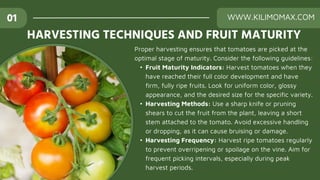
HARVESTING TECHNIQUES AND FRUIT MATURITY
01 WWW.KILIMOMAX.COM
Proper harvesting ensures that tomatoes are picked at the
optimal stage of maturity. Consider the following guidelines:
• Fruit Maturity Indicators: Harvest tomatoes when they
have reached their full color development and have
firm, fully ripe fruits. Look for uniform color, glossy
appearance, and the desired size for the specific variety.
• Harvesting Methods: Use a sharp knife or pruning
shears to cut the fruit from the plant, leaving a short
stem attached to the tomato. Avoid excessive handling
or dropping, as it can cause bruising or damage.
• Harvesting Frequency: Harvest ripe tomatoes regularly
to prevent overripening or spoilage on the vine. Aim for
frequent picking intervals, especially during peak
harvest periods.
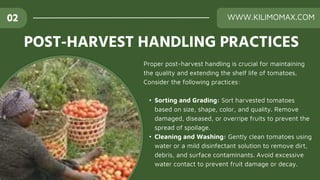
POST-HARVEST HANDLING PRACTICES
02 WWW.KILIMOMAX.COM
Proper post-harvest handling is crucial for maintaining
the quality and extending the shelf life of tomatoes.
Consider the following practices:
• Sorting and Grading: Sort harvested tomatoes
based on size, shape, color, and quality. Remove
damaged, diseased, or overripe fruits to prevent the
spread of spoilage.
• Cleaning and Washing: Gently clean tomatoes using
water or a mild disinfectant solution to remove dirt,
debris, and surface contaminants. Avoid excessive
water contact to prevent fruit damage or decay.
• Drying: Allow tomatoes to dry naturally after
washing. Excessive moisture can promote the
growth of fungi or bacteria.
• Packaging: Pack tomatoes in suitable containers,
such as ventilated crates, baskets, or cartons, to
allow airflow and minimize bruising. Avoid
overcrowding to prevent compression and
damage.
POST-HARVEST HANDLING
PRACTICES
03 WWW.KILIMOMAX.COM
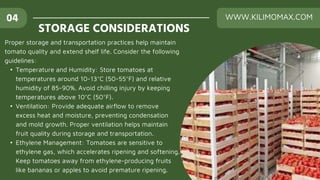
Proper storage and transportation practices help maintain
tomato quality and extend shelf life. Consider the following
guidelines:
• Temperature and Humidity: Store tomatoes at
temperatures around 10-13°C (50-55°F) and relative
humidity of 85-90%. Avoid chilling injury by keeping
temperatures above 10°C (50°F).
• Ventilation: Provide adequate airflow to remove
excess heat and moisture, preventing condensation
and mold growth. Proper ventilation helps maintain
fruit quality during storage and transportation.
• Ethylene Management: Tomatoes are sensitive to
ethylene gas, which accelerates ripening and softening.
Keep tomatoes away from ethylene-producing fruits
like bananas or apples to avoid premature ripening.
STORAGE CONSIDERATIONS
04 WWW.KILIMOMAX.COM
• Handling and Transportation: Handle tomatoes
carefully to minimize bruising or mechanical damage.
Use appropriate cushioning materials during
transportation to prevent fruit movement and
reduce impact.
• Monitoring and Quality Control: Regularly inspect
stored tomatoes for signs of decay, disease
development, or ripening. Remove damaged or
spoiled fruits promptly to prevent further
deterioration.
By implementing proper harvesting techniques, post-
harvest handling practices, and storage considerations,
you can maintain the quality, extend the shelf life, and
maximize the market value of your tomatoes.
TRANSPORTATION CONSIDERATIONS
05 WWW.KILIMOMAX.COM
CONGRATULATIONS
+255 688 154 404 www.kilimomax.com Info@kilimomax.com

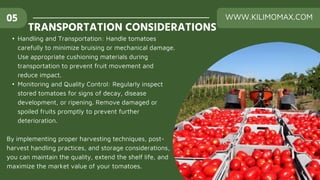
Tomato harvest

  • 1.
    TOMATO FARMING IN TANZANIA WWW.KILIMOMAX.COM LESSON10: HARVESTING AND POST- HARVEST MANAGEMENT
  • 2.
    TABLE OF CONTENTS HarvestingTechniques and Fruit Maturity Post-Harvest Handling Practices 01 02 Storage and Transportation Considerations 02
  • 3.
    HARVESTING TECHNIQUES ANDFRUIT MATURITY 01 WWW.KILIMOMAX.COM Proper harvesting ensures that tomatoes are picked at the optimal stage of maturity. Consider the following guidelines: • Fruit Maturity Indicators: Harvest tomatoes when they have reached their full color development and have firm, fully ripe fruits. Look for uniform color, glossy appearance, and the desired size for the specific variety. • Harvesting Methods: Use a sharp knife or pruning shears to cut the fruit from the plant, leaving a short stem attached to the tomato. Avoid excessive handling or dropping, as it can cause bruising or damage. • Harvesting Frequency: Harvest ripe tomatoes regularly to prevent overripening or spoilage on the vine. Aim for frequent picking intervals, especially during peak harvest periods.
  • 4.
    POST-HARVEST HANDLING PRACTICES 02WWW.KILIMOMAX.COM Proper post-harvest handling is crucial for maintaining the quality and extending the shelf life of tomatoes. Consider the following practices: • Sorting and Grading: Sort harvested tomatoes based on size, shape, color, and quality. Remove damaged, diseased, or overripe fruits to prevent the spread of spoilage. • Cleaning and Washing: Gently clean tomatoes using water or a mild disinfectant solution to remove dirt, debris, and surface contaminants. Avoid excessive water contact to prevent fruit damage or decay.
  • 5.
    • Drying: Allowtomatoes to dry naturally after washing. Excessive moisture can promote the growth of fungi or bacteria. • Packaging: Pack tomatoes in suitable containers, such as ventilated crates, baskets, or cartons, to allow airflow and minimize bruising. Avoid overcrowding to prevent compression and damage. POST-HARVEST HANDLING PRACTICES 03 WWW.KILIMOMAX.COM
  • 6.
    Proper storage andtransportation practices help maintain tomato quality and extend shelf life. Consider the following guidelines: • Temperature and Humidity: Store tomatoes at temperatures around 10-13°C (50-55°F) and relative humidity of 85-90%. Avoid chilling injury by keeping temperatures above 10°C (50°F). • Ventilation: Provide adequate airflow to remove excess heat and moisture, preventing condensation and mold growth. Proper ventilation helps maintain fruit quality during storage and transportation. • Ethylene Management: Tomatoes are sensitive to ethylene gas, which accelerates ripening and softening. Keep tomatoes away from ethylene-producing fruits like bananas or apples to avoid premature ripening. STORAGE CONSIDERATIONS 04 WWW.KILIMOMAX.COM
  • 7.
    • Handling andTransportation: Handle tomatoes carefully to minimize bruising or mechanical damage. Use appropriate cushioning materials during transportation to prevent fruit movement and reduce impact. • Monitoring and Quality Control: Regularly inspect stored tomatoes for signs of decay, disease development, or ripening. Remove damaged or spoiled fruits promptly to prevent further deterioration. By implementing proper harvesting techniques, post- harvest handling practices, and storage considerations, you can maintain the quality, extend the shelf life, and maximize the market value of your tomatoes. TRANSPORTATION CONSIDERATIONS 05 WWW.KILIMOMAX.COM
  • 8.
    CONGRATULATIONS +255 688 154404 www.kilimomax.com Info@kilimomax.com