Science Process
Skills
Logical operations of thinking in
investigations. They are either basic or
integrated.
Basic Process Skills: Observing, comparing,
classifying, quantifying, inferring, predicting,
communicating, and manipulative skills.
Integrated Process Skills: Embodied in
experimenting which includes hypothesizing,
controlling variables and classifying data.
The Basic Process
Skills
1. OBSERVING
Observation uses the five senses to gather
information about an object or event.
 Taste
 Touch
 Hearing
 Sight
 Smell
The Process of observing can be:
• Qualitative – this is identifying and naming the properties of an
object such as its shape, color, size, texture, smell, and sound.
• Quantitative – This kind of observation involves measurement.
• Change – it could be the result of crushing, pounding, burning,
cutting, decaying, etc.
2. CLASSIFYING
There is an overwhelming number of things
around us – nonliving and living things. Order can
be attained by observing similarities, differences
and interrelationships and by grouping them
accordingly to suit some purpose.
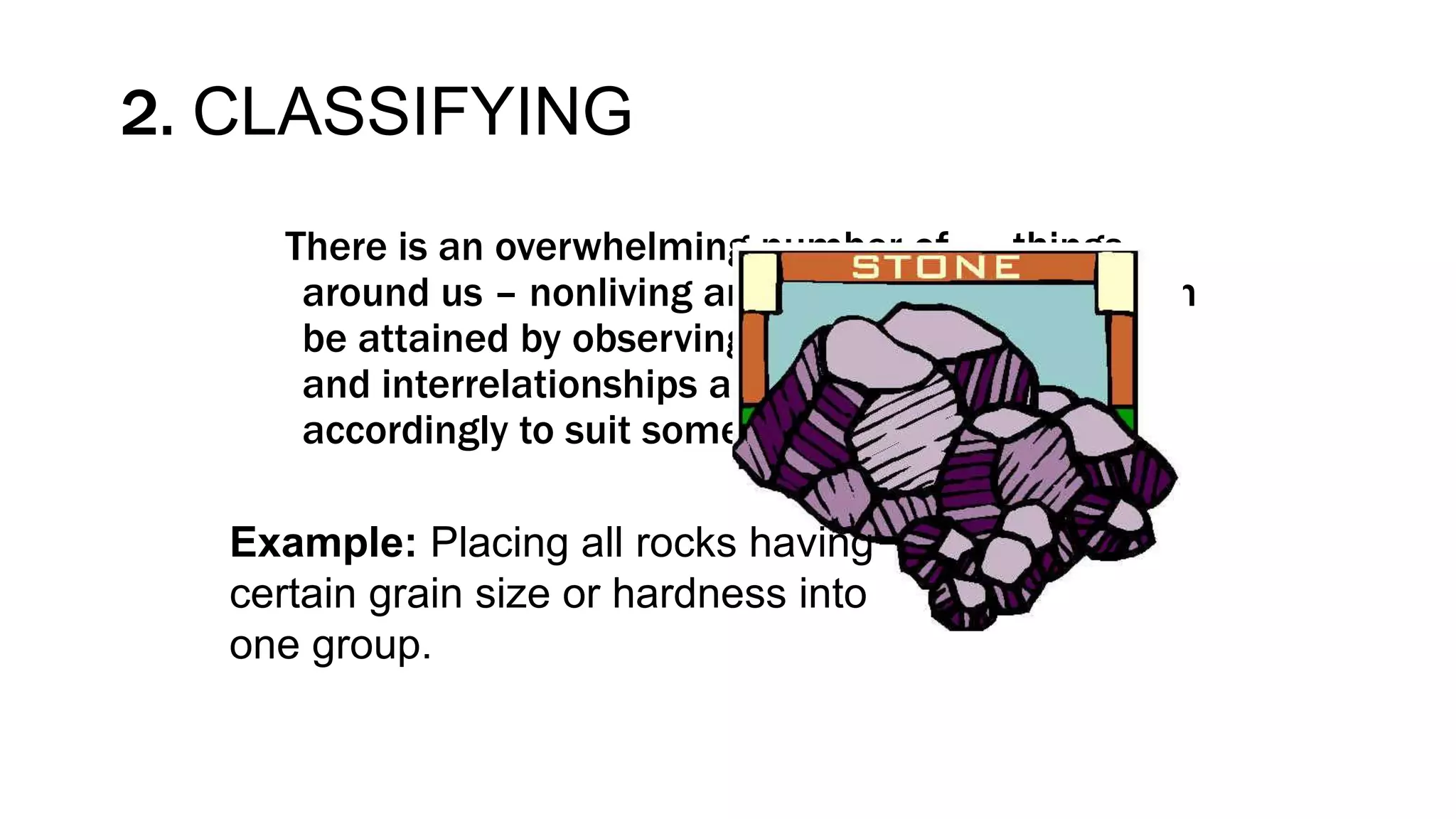
Example: Placing all rocks having
certain grain size or hardness into
one group.
3. COMPARING
Comparing is using observable
properties in discovering similarities
of and differences between objects
and phenomena. Through
comparison, we are able to identify
relationships among objects and
phenomena observed.
4. INFERRING
An explanation of an
observation
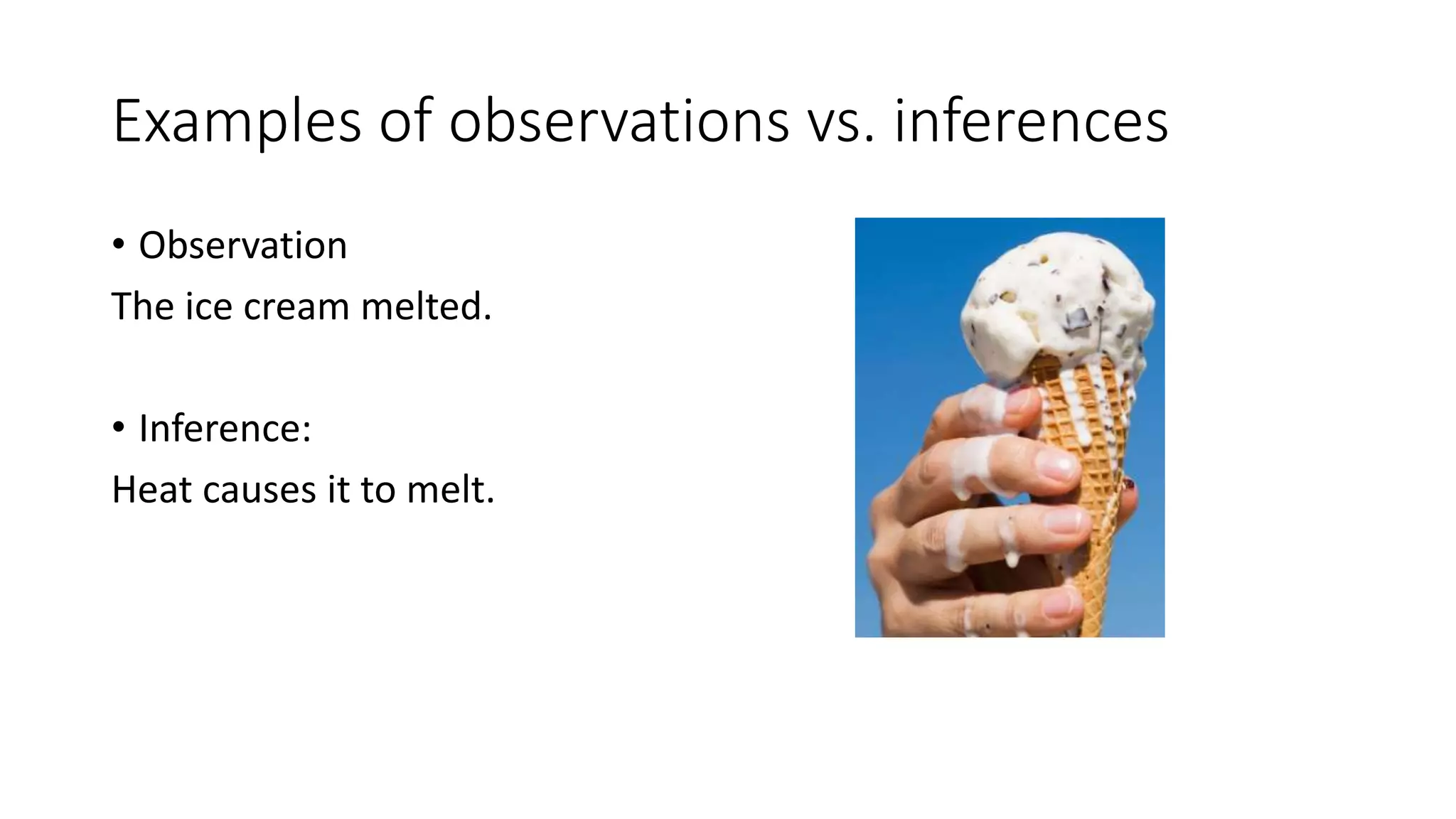
Examples of observations vs. inferences
• Observation
The ice cream melted.
• Inference:
Heat causes it to melt.
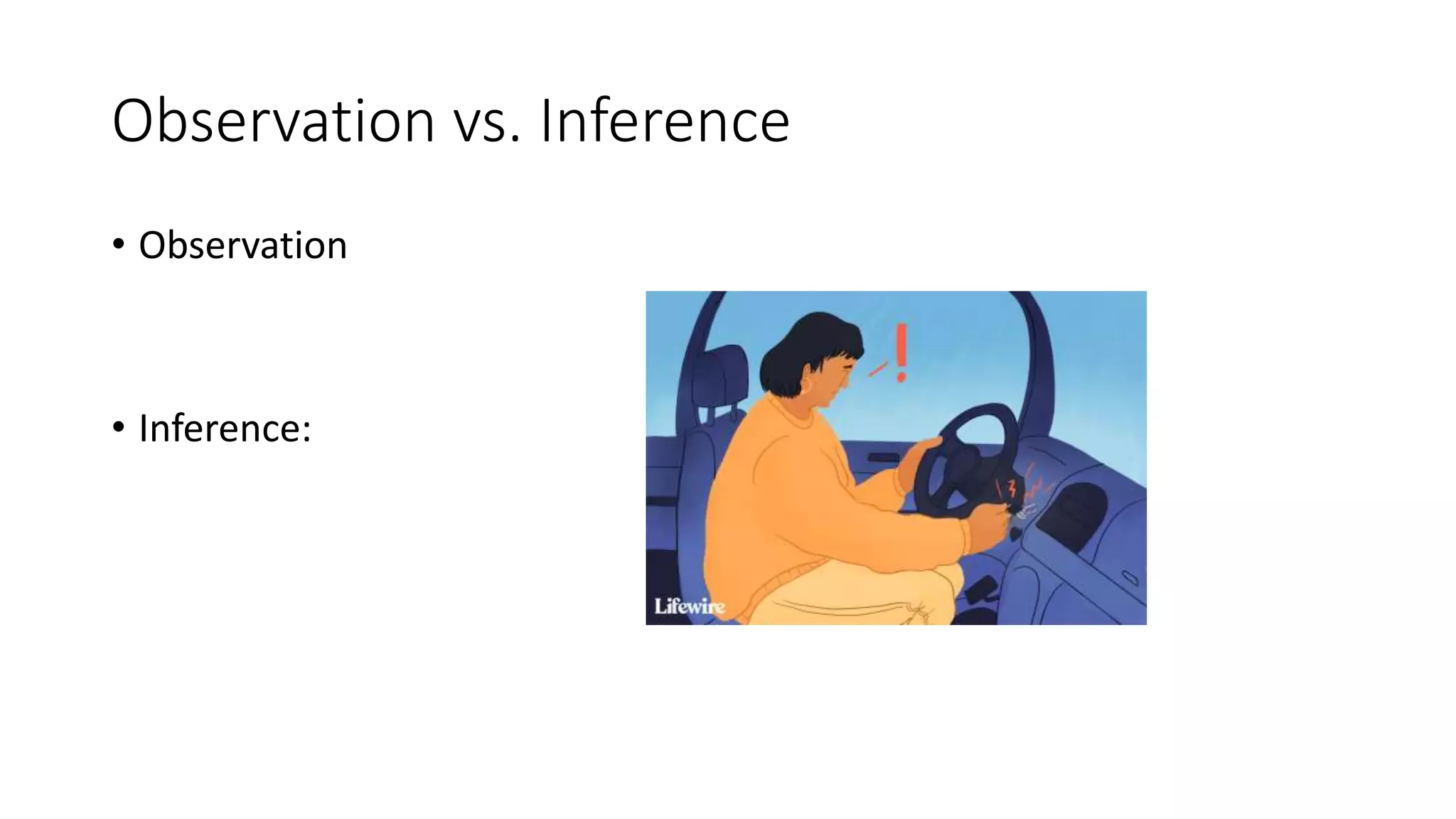
Observation vs. Inference
• Observation
• Inference:
5. PREDICTING
Predicting is the process of using past
observations or data along with other kinds of
scientific knowledge to forecast event or
relationships. A statement not based on
observation is not a prediction. It is simply a
guess.
Interpolation – is predicting new data based on and within a trend/
pattern of previously observed data.
Extrapolation - is predicting new data outside or beyond the range
of previously observed data.
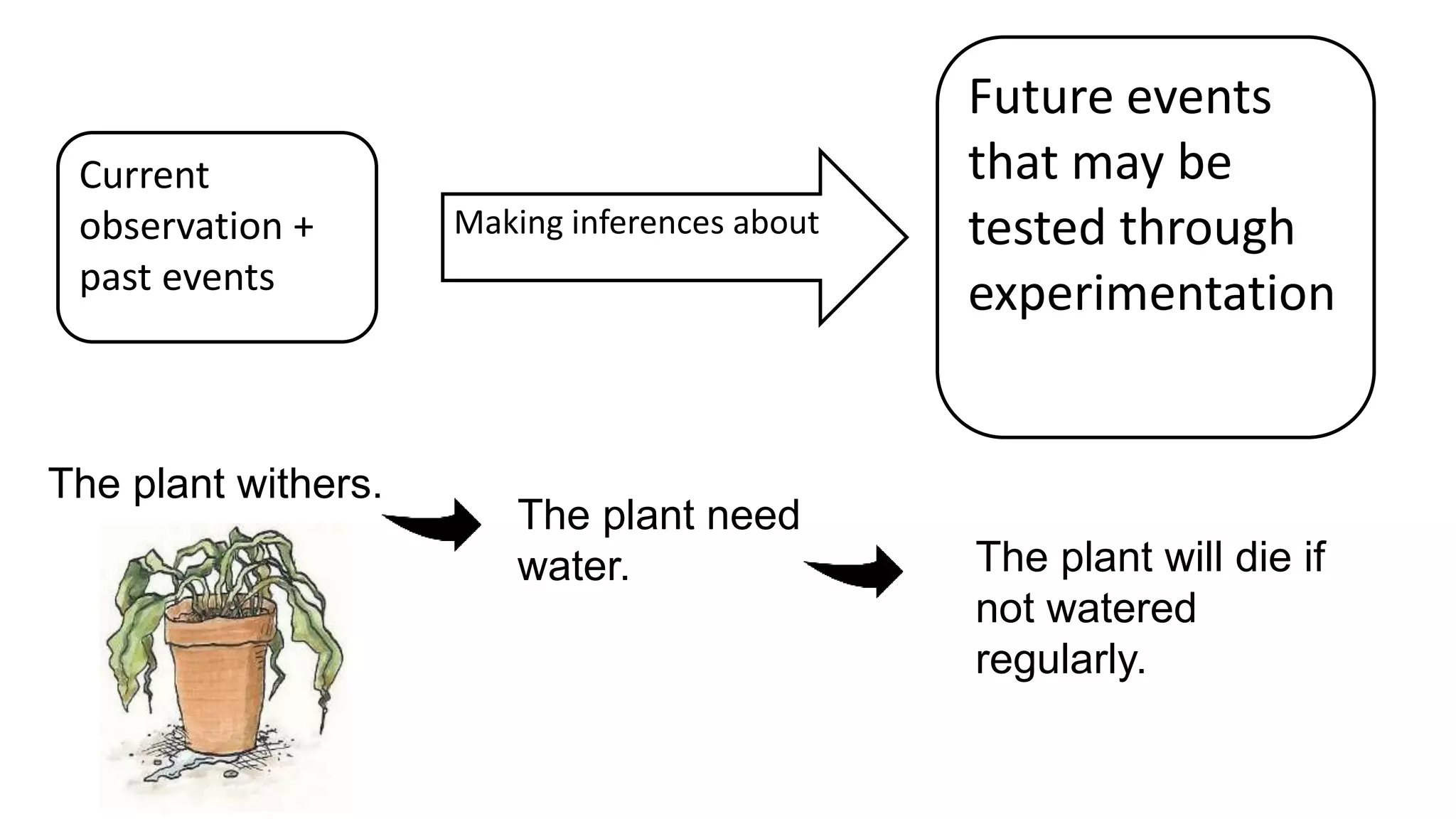
Current
observation +
past events
Making inferences about
Future events
that may be
tested through
experimentation
The plant withers.
The plant need
water. The plant will die if
not watered
regularly.
6. QUANTIFYING/MEASURING
Quantifying is making and manipulating
quantitative observations.
This involves:
1. Using numbers
2. measuring
3. using time and space
Example: Using a meter stick to
measure the length of a table in
centimeters.
7. COMMUNICATING
Expressing ideas in many forms, such as orally,
in writing or with graphs, diagrams, tables of
data or photographs is a way of
communicating.
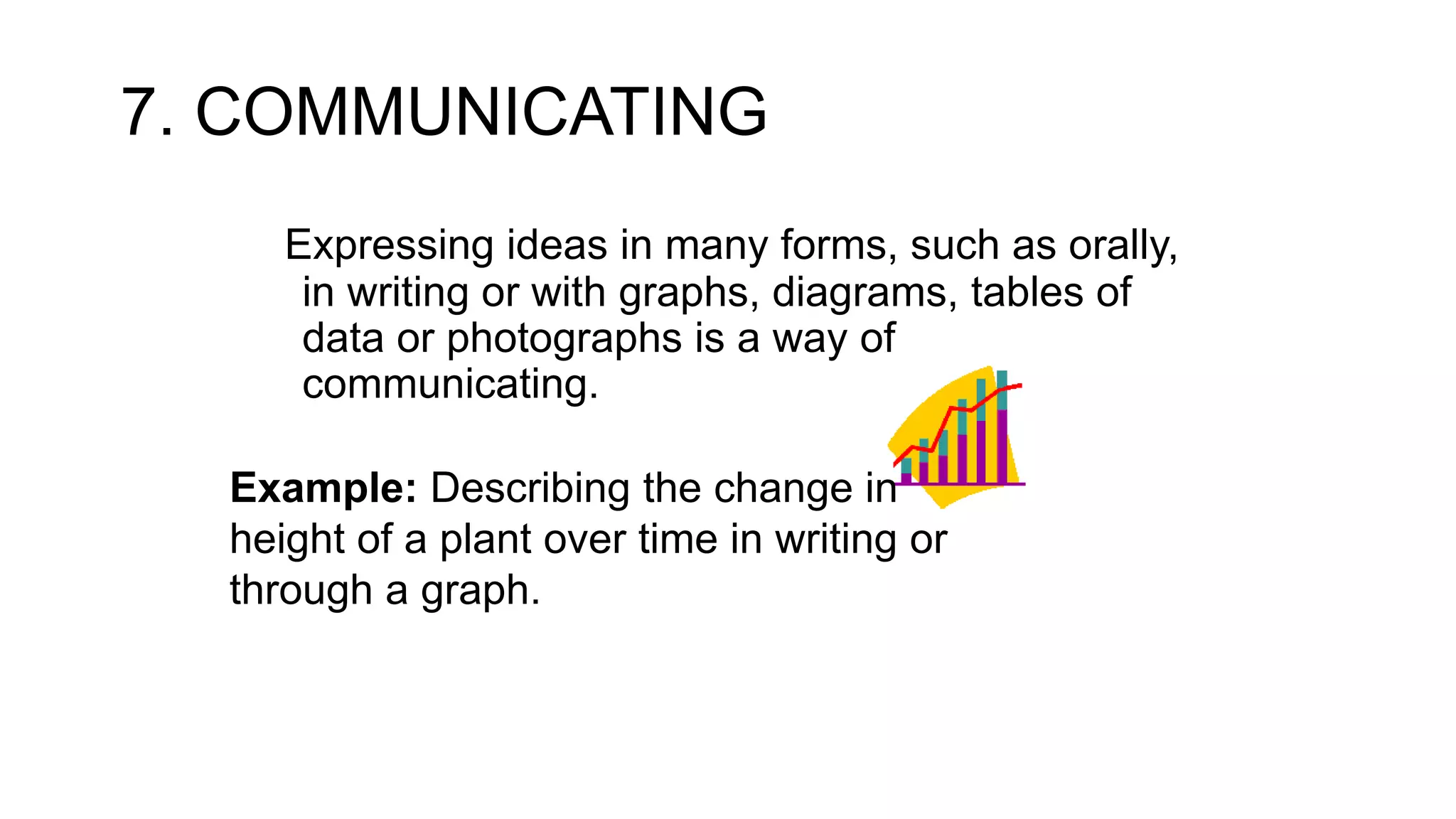
Example: Describing the change in
height of a plant over time in writing or
through a graph.
8. MANIPULATIVE SKILLS
These skills involve using equipment
and materials properly and
accurately, preparing setups for
investigation, and handling
specimen carefully.
8. EXPERIMENTING
• Testing a hypothesis through the
manipulation and control of
independent variables and noting the
effects on a dependent variable
• Interpreting and presenting results in
the form of a report that others can
follow to replicate the experiment
• Integrated process skill
Inquiry
Skills necessary to carry out the
process of scientific or systematic
thinking
Includes the opportunity to…
Ask a question
Formulate a procedure
Gather empirical data
Draw conclusions based on data
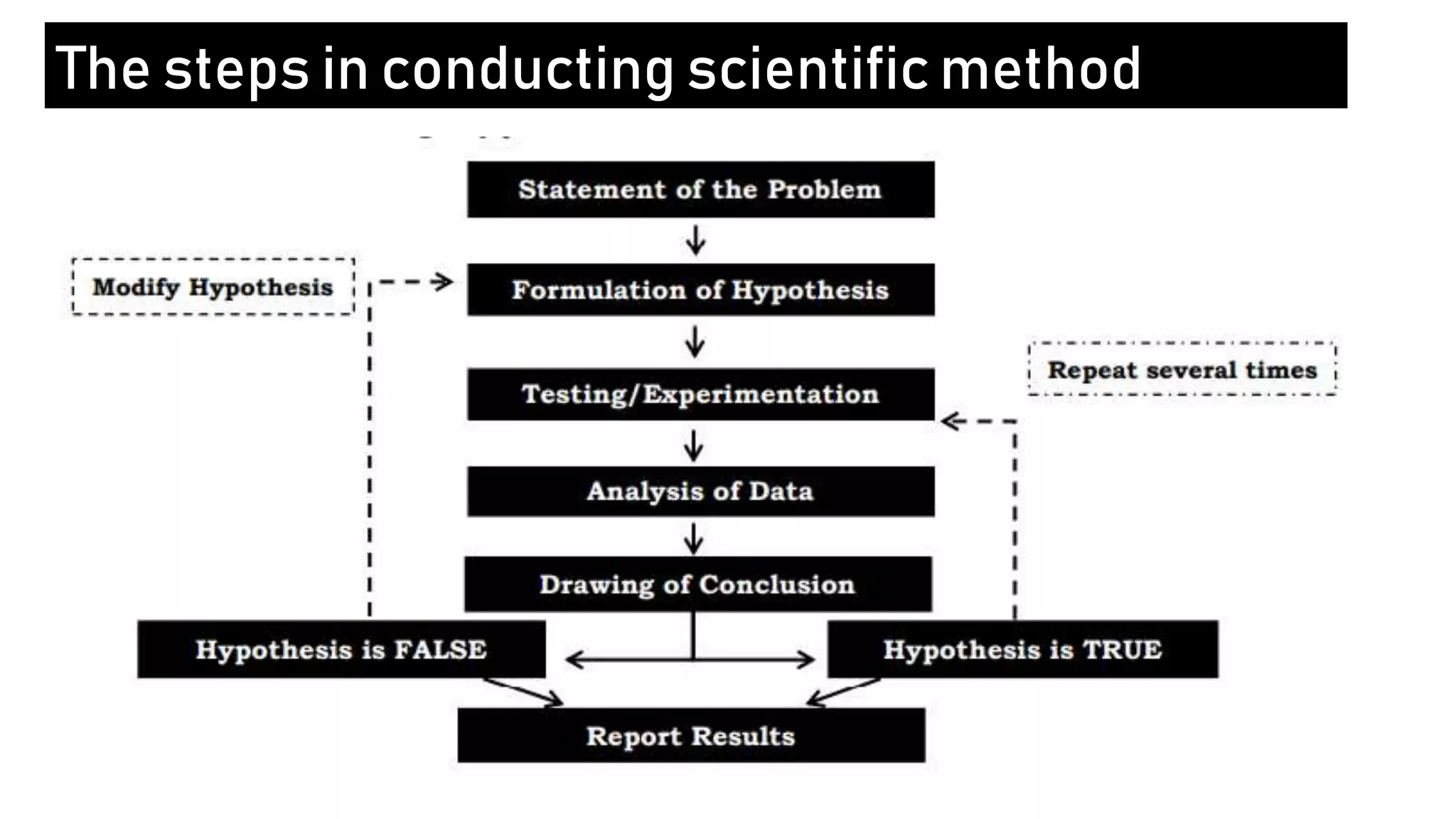
The steps in conducting scientific method
Ben used tables and
graphs to show the results
of his experiments.
For the activity, Shannon
separated the materials
into recyclables and non-
recyclables.
Alexander weighed the
sand and soil that he will
use for the experiment.
Maria described the color,
taste, and odor of the
food after leaving it on
the table for three days.

science process skills.ppt

  • 1.
  • 2.
    Logical operations ofthinking in investigations. They are either basic or integrated. Basic Process Skills: Observing, comparing, classifying, quantifying, inferring, predicting, communicating, and manipulative skills. Integrated Process Skills: Embodied in experimenting which includes hypothesizing, controlling variables and classifying data.
  • 3.
  • 4.
    1. OBSERVING Observation usesthe five senses to gather information about an object or event.  Taste  Touch  Hearing  Sight  Smell
  • 5.
    The Process ofobserving can be: • Qualitative – this is identifying and naming the properties of an object such as its shape, color, size, texture, smell, and sound. • Quantitative – This kind of observation involves measurement. • Change – it could be the result of crushing, pounding, burning, cutting, decaying, etc.
  • 6.
    2. CLASSIFYING There isan overwhelming number of things around us – nonliving and living things. Order can be attained by observing similarities, differences and interrelationships and by grouping them accordingly to suit some purpose. Example: Placing all rocks having certain grain size or hardness into one group.
  • 7.
    3. COMPARING Comparing isusing observable properties in discovering similarities of and differences between objects and phenomena. Through comparison, we are able to identify relationships among objects and phenomena observed.
  • 8.
    4. INFERRING An explanationof an observation
  • 9.
    Examples of observationsvs. inferences • Observation The ice cream melted. • Inference: Heat causes it to melt.
  • 10.
    Observation vs. Inference •Observation • Inference:
  • 11.
    5. PREDICTING Predicting isthe process of using past observations or data along with other kinds of scientific knowledge to forecast event or relationships. A statement not based on observation is not a prediction. It is simply a guess. Interpolation – is predicting new data based on and within a trend/ pattern of previously observed data. Extrapolation - is predicting new data outside or beyond the range of previously observed data.
  • 12.
    Current observation + past events Makinginferences about Future events that may be tested through experimentation The plant withers. The plant need water. The plant will die if not watered regularly.
  • 13.
    6. QUANTIFYING/MEASURING Quantifying ismaking and manipulating quantitative observations. This involves: 1. Using numbers 2. measuring 3. using time and space Example: Using a meter stick to measure the length of a table in centimeters.
  • 14.
    7. COMMUNICATING Expressing ideasin many forms, such as orally, in writing or with graphs, diagrams, tables of data or photographs is a way of communicating. Example: Describing the change in height of a plant over time in writing or through a graph.
  • 15.
    8. MANIPULATIVE SKILLS Theseskills involve using equipment and materials properly and accurately, preparing setups for investigation, and handling specimen carefully.
  • 16.
    8. EXPERIMENTING • Testinga hypothesis through the manipulation and control of independent variables and noting the effects on a dependent variable • Interpreting and presenting results in the form of a report that others can follow to replicate the experiment • Integrated process skill
  • 17.
    Inquiry Skills necessary tocarry out the process of scientific or systematic thinking Includes the opportunity to… Ask a question Formulate a procedure Gather empirical data Draw conclusions based on data
  • 18.
    The steps inconducting scientific method
  • 20.
    Ben used tablesand graphs to show the results of his experiments.
  • 21.
    For the activity,Shannon separated the materials into recyclables and non- recyclables.
  • 22.
    Alexander weighed the sandand soil that he will use for the experiment.
  • 23.
    Maria described thecolor, taste, and odor of the food after leaving it on the table for three days.