Focusing on Instructional StrategiesUsing Thinking Maps for Curriculum PlanningChapter 5Pages 234 - 240
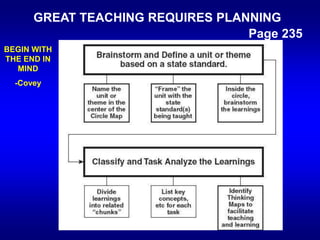
GREAT TEACHING REQUIRES PLANNINGPage 235BEGIN WITH THE END IN MIND-Covey
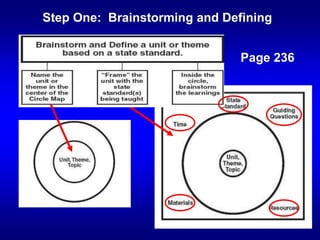
Step One:  Brainstorming and DefiningPage 236
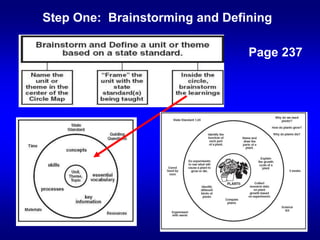
Step One:  Brainstorming and DefiningPage 237
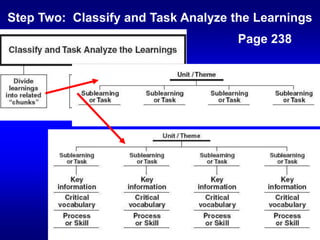
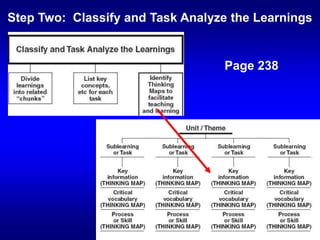
Step Two:  Classify and Task Analyze the LearningsPage 238
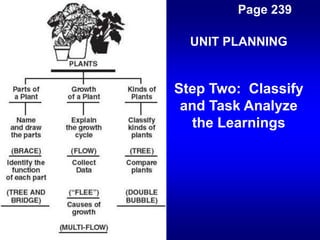
Page 239UNIT PLANNINGStep Two:  Classify and Task Analyze the Learnings
Page   142
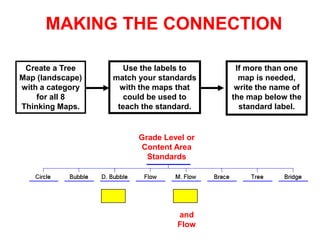
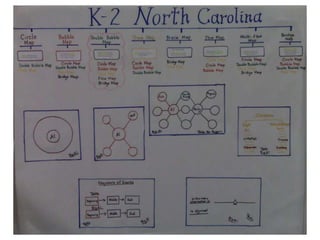
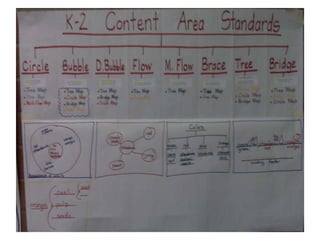
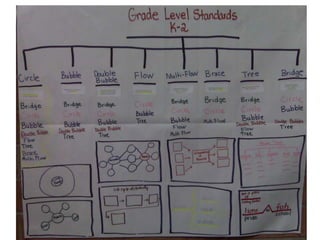
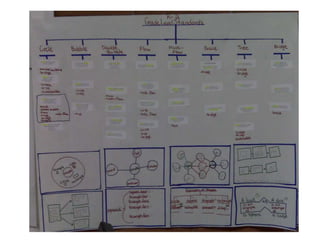
Grade Level or Content Area StandardsUse the labels to match your standards with the maps that could be used to teach the standard.If more than one map is needed, write the name of the map below the standard label.MAKING THE CONNECTIONCreate a Tree Map (landscape) with a category for all 8 Thinking Maps.and Flow
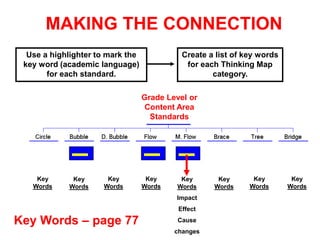
Create a list of key words for each Thinking Map category.Grade Level or Content Area StandardsKey WordsKey WordsKey WordsKey WordsKey WordsKeyWordsKey WordsImpactEffectCausechangesKey WordsMAKING THE CONNECTIONUse a highlighter to mark the key word (academic language) for each standard.Key Words – page 77
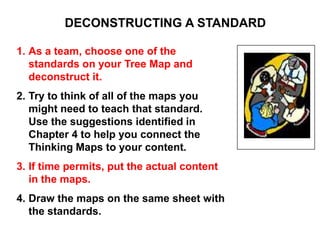
DECONSTRUCTING A STANDARDAs a team, choose one of the standards on your Tree Map and deconstruct it.  Try to think of all of the maps you might need to teach that standard.  Use the suggestions identified in Chapter 4 to help you connect the Thinking Maps to your content.  If time permits, put the actual content in the maps.  Draw the maps on the same sheet with the standards.
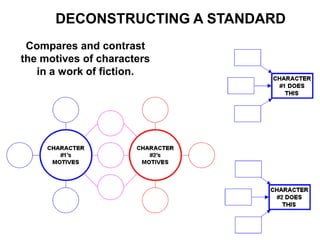
DECONSTRUCTING A STANDARDCompares and contrast the motives of characters in a work of fiction.
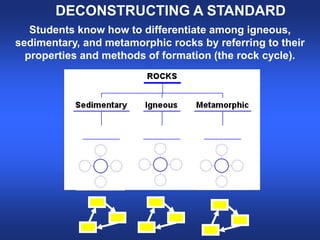
DECONSTRUCTING A STANDARDStudents know how to differentiate among igneous, sedimentary, and metamorphic rocks by referring to their properties and methods of formation (the rock cycle).
Prior KnowledgeHow do you know what you know?(Be Specific)  Not just TV, but which shows.
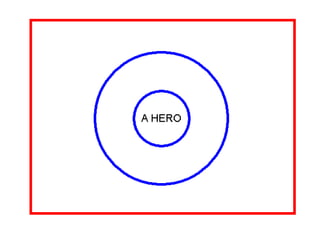
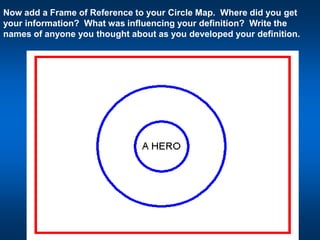
Now add a Frame of Reference to your Circle Map.  Where did you get your information?  What was influencing your definition?  Write the names of anyone you thought about as you developed your definition.
Source(s)Where did you get your information?What is the best source for information about this subject?
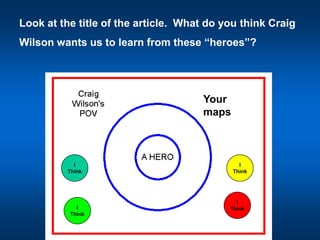
Now let’s add a Source beyond your Prior Knowledge.Read the following article.Craig Wilson’s “Real heroes:  We could all learn something from them.”USA Today, November 2003
123COOPERATIVE LEARNING STRATEGYCount off at your tables1 – 3.Write your number on your paper.
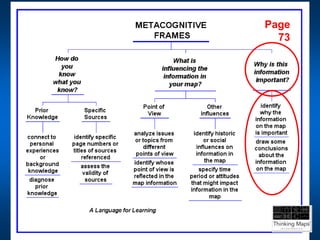
Page 73
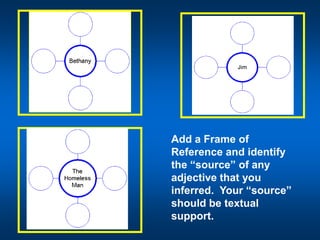
Add a Frame of Reference and identify the “source” of any adjective that you inferred.  Your “source” should be textual support.
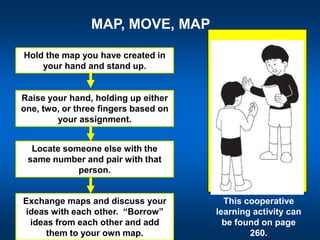
Raise your hand, holding up either one, two, or three fingers based on your assignment.Locate someone else with the same number and pair with that person.Exchange maps and discuss your ideas with each other.  “Borrow” ideas from each other and add them to your own map.MAP, MOVE, MAPHold the map you have created in your hand and stand up.This cooperative learning activity can be found on page 260.
Page 73
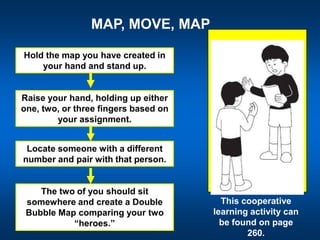
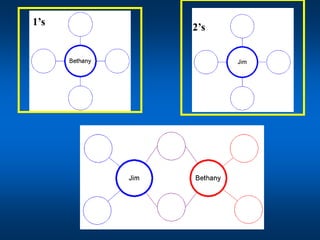
Raise your hand, holding up either one, two, or three fingers based on your assignment.Locate someone with a different number and pair with that person.The two of you should sit somewhere and create a Double Bubble Map comparing your two “heroes.”MAP, MOVE, MAPHold the map you have created in your hand and stand up.This cooperative learning activity can be found on page 260.
1’s2’s
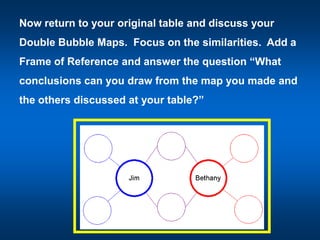
Now return to your original table and discuss your Double Bubble Maps.  Focus on the similarities.  Add a Frame of Reference and answer the question “What conclusions can you draw from the map you made and the others discussed at your table?”
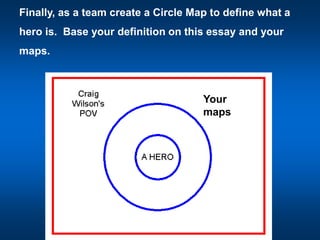
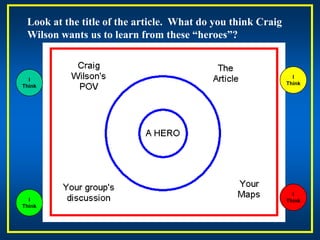
Finally, as a team create a Circle Map to define what a hero is.  Base your definition on this essay and your maps.Your maps
Page 73

Thinking Maps Presentation

  • 2.
    Focusing on InstructionalStrategiesUsing Thinking Maps for Curriculum PlanningChapter 5Pages 234 - 240
  • 3.
    GREAT TEACHING REQUIRESPLANNINGPage 235BEGIN WITH THE END IN MIND-Covey
  • 4.
    Step One: Brainstorming and DefiningPage 236
  • 5.
    Step One: Brainstorming and DefiningPage 237
  • 6.
    Step Two: Classify and Task Analyze the LearningsPage 238
  • 7.
    Step Two: Classify and Task Analyze the LearningsPage 238
  • 8.
    Page 239UNIT PLANNINGStepTwo: Classify and Task Analyze the Learnings
  • 10.
  • 11.
    Grade Level orContent Area StandardsUse the labels to match your standards with the maps that could be used to teach the standard.If more than one map is needed, write the name of the map below the standard label.MAKING THE CONNECTIONCreate a Tree Map (landscape) with a category for all 8 Thinking Maps.and Flow
  • 12.
    Create a listof key words for each Thinking Map category.Grade Level or Content Area StandardsKey WordsKey WordsKey WordsKey WordsKey WordsKeyWordsKey WordsImpactEffectCausechangesKey WordsMAKING THE CONNECTIONUse a highlighter to mark the key word (academic language) for each standard.Key Words – page 77
  • 13.
    DECONSTRUCTING A STANDARDAsa team, choose one of the standards on your Tree Map and deconstruct it. Try to think of all of the maps you might need to teach that standard. Use the suggestions identified in Chapter 4 to help you connect the Thinking Maps to your content. If time permits, put the actual content in the maps. Draw the maps on the same sheet with the standards.
  • 14.
    DECONSTRUCTING A STANDARDComparesand contrast the motives of characters in a work of fiction.
  • 15.
    DECONSTRUCTING A STANDARDStudentsknow how to differentiate among igneous, sedimentary, and metamorphic rocks by referring to their properties and methods of formation (the rock cycle).
  • 20.
    Prior KnowledgeHow doyou know what you know?(Be Specific) Not just TV, but which shows.
  • 22.
    Now add aFrame of Reference to your Circle Map. Where did you get your information? What was influencing your definition? Write the names of anyone you thought about as you developed your definition.
  • 23.
    Source(s)Where did youget your information?What is the best source for information about this subject?
  • 24.
    Now let’s adda Source beyond your Prior Knowledge.Read the following article.Craig Wilson’s “Real heroes: We could all learn something from them.”USA Today, November 2003
  • 25.
    123COOPERATIVE LEARNING STRATEGYCountoff at your tables1 – 3.Write your number on your paper.
  • 26.
  • 27.
    Add a Frameof Reference and identify the “source” of any adjective that you inferred. Your “source” should be textual support.
  • 28.
    Raise your hand,holding up either one, two, or three fingers based on your assignment.Locate someone else with the same number and pair with that person.Exchange maps and discuss your ideas with each other. “Borrow” ideas from each other and add them to your own map.MAP, MOVE, MAPHold the map you have created in your hand and stand up.This cooperative learning activity can be found on page 260.
  • 29.
  • 30.
    Raise your hand,holding up either one, two, or three fingers based on your assignment.Locate someone with a different number and pair with that person.The two of you should sit somewhere and create a Double Bubble Map comparing your two “heroes.”MAP, MOVE, MAPHold the map you have created in your hand and stand up.This cooperative learning activity can be found on page 260.
  • 31.
  • 32.
    Now return toyour original table and discuss your Double Bubble Maps. Focus on the similarities. Add a Frame of Reference and answer the question “What conclusions can you draw from the map you made and the others discussed at your table?”
  • 33.
    Finally, as ateam create a Circle Map to define what a hero is. Base your definition on this essay and your maps.Your maps
  • 34.