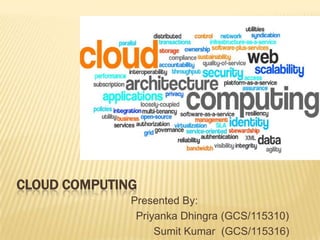
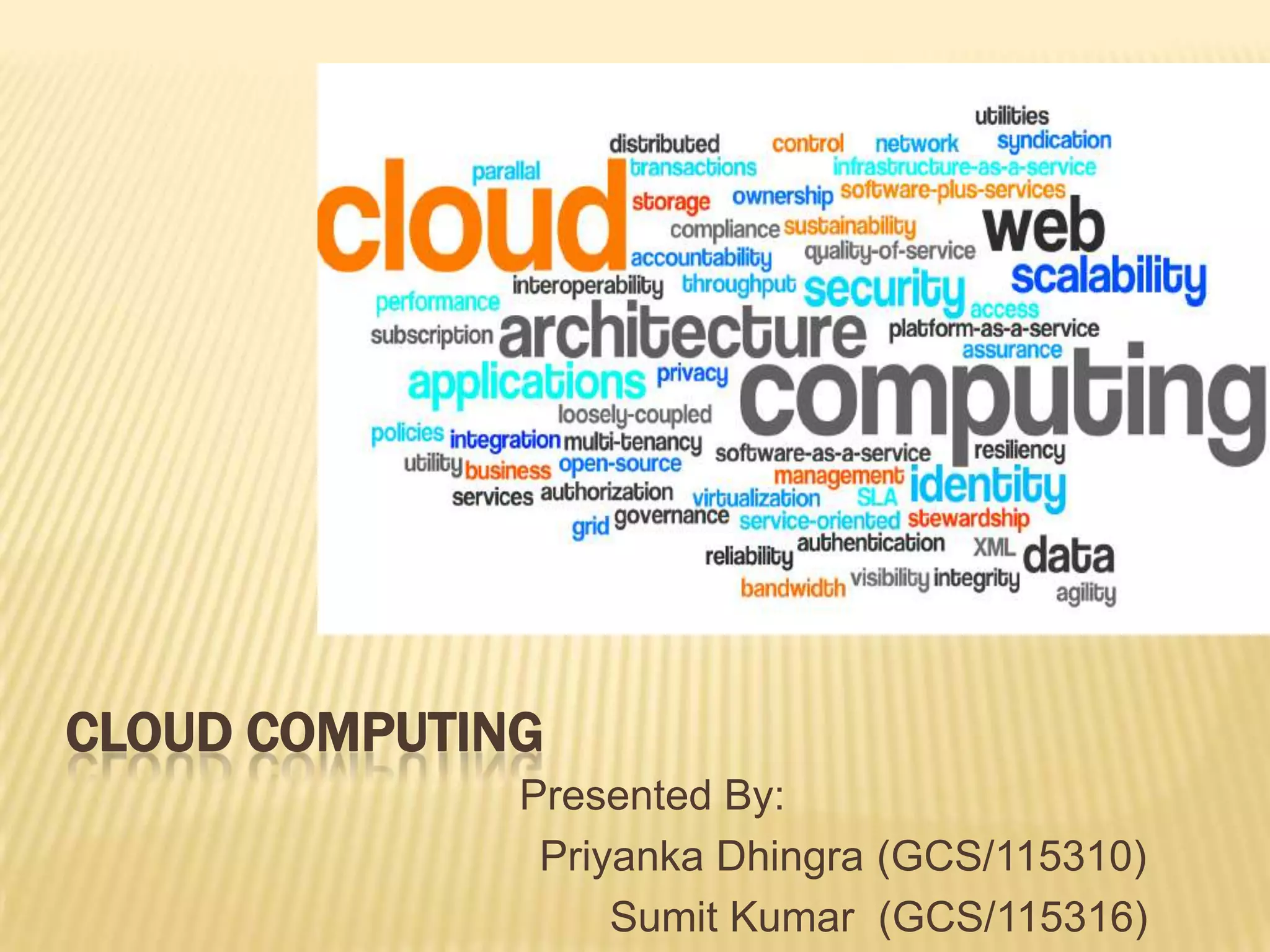
CLOUD COMPUTING
              Presented By:
               Priyanka Dhingra (GCS/115310)
                   Sumit Kumar (GCS/115316)
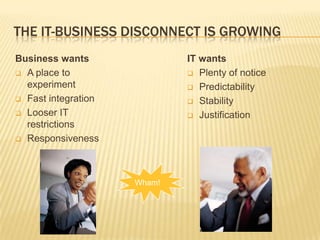
THE IT-BUSINESS DISCONNECT IS GROWING
Business wants               IT wants
 A place to                  Plenty of notice
  experiment                  Predictability
 Fast integration            Stability
 Looser IT                   Justification
  restrictions
 Responsiveness


                     Wham!
WHO’S FILLING THE GAP?


   Cloud computing
What Cloud Computing “IS NOT”?
It is not Network Computing
•Application and Data are not confined to
any specific Company’s Server
•No VPN Access
•Encompasses multiple companies, multiple
servers and multiple networks
It is not Traditional Outsourcing
•Not a contract to host data by 3rdparty
Hosting Business
•No subcontracting for computing services
for specific outside firm
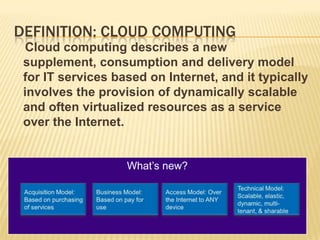
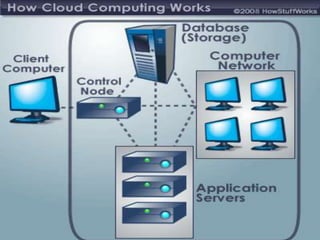
DEFINITION: CLOUD COMPUTING
  Cloud computing describes a new
 supplement, consumption and delivery model
 for IT services based on Internet, and it typically
 involves the provision of dynamically scalable
 and often virtualized resources as a service
 over the Internet.


                   What’s new?
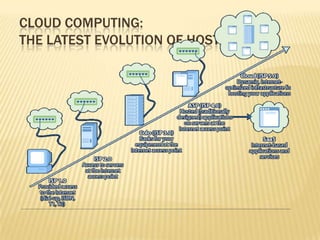
CLOUD COMPUTING:
THE LATEST EVOLUTION OF HOSTING
CLOUD COMPUTING:CHARACTERITICS
   Massive, abstracted infrastructure
       Components decided for you
 Dynamic allocation, scaling, movement of
  applications
 Pay per use

 No long-term commitments

 OS, application architecture independent

 No hardware or software to install
CLOUD’S CUSTOMERS

   Startups
       Web-based business, SaaS, collaboration services, widget
        providers, mobile services, social networking

   Small businesses
       Online businesses, online presence, collaboration, enterprise
        integration

   Enterprises
       R&D projects, quick promotions, widgets, online
        collaboration, partner integration, social networking, new business
        ventures
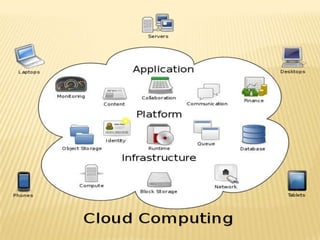
COMPONENTS TO CLOUD COMPUTING
   Platform-As-A-Service (PaaS)
      Delivers a computing platform and/or solution stack as a service
      Facilitates deployment of applications without the cost and complexity of
       buying and managing the underlying hardware and software layers

   Infrastructure-As-A-Service (IaaS)
      The delivery of computer IasS, typically platform virtualization
      For example:
          Virtual desktops
          Grid computing


   Applications-As-A-Service (AaaS) /Software-As-A-Service (SaaS)
      Leverages the Cloud in software architecture
      Eliminates the need to install and run the application on the customer's
       own computer
      Type:
          Commercial
          Government
CLOUD ADVANTAGES

 Massive scale yields economies of scale.
 Common infrastructure speeds innovation.
       Dynamic, automated infrastructure easier
 High utilization yields greater ROI.
 Success drives IT investment.
       IT is the business.
       If your customers succeed, so do you.
Cloud computing ppt

Cloud computing ppt

  • 1.
    CLOUD COMPUTING Presented By: Priyanka Dhingra (GCS/115310) Sumit Kumar (GCS/115316)
  • 2.
    THE IT-BUSINESS DISCONNECTIS GROWING Business wants IT wants  A place to  Plenty of notice experiment  Predictability  Fast integration  Stability  Looser IT  Justification restrictions  Responsiveness Wham!
  • 3.
    WHO’S FILLING THEGAP? Cloud computing
  • 4.
    What Cloud Computing“IS NOT”? It is not Network Computing •Application and Data are not confined to any specific Company’s Server •No VPN Access •Encompasses multiple companies, multiple servers and multiple networks It is not Traditional Outsourcing •Not a contract to host data by 3rdparty Hosting Business •No subcontracting for computing services for specific outside firm
  • 5.
    DEFINITION: CLOUD COMPUTING Cloud computing describes a new supplement, consumption and delivery model for IT services based on Internet, and it typically involves the provision of dynamically scalable and often virtualized resources as a service over the Internet. What’s new?
  • 7.
    CLOUD COMPUTING: THE LATESTEVOLUTION OF HOSTING
  • 8.
    CLOUD COMPUTING:CHARACTERITICS  Massive, abstracted infrastructure  Components decided for you  Dynamic allocation, scaling, movement of applications  Pay per use  No long-term commitments  OS, application architecture independent  No hardware or software to install
  • 9.
    CLOUD’S CUSTOMERS  Startups  Web-based business, SaaS, collaboration services, widget providers, mobile services, social networking  Small businesses  Online businesses, online presence, collaboration, enterprise integration  Enterprises  R&D projects, quick promotions, widgets, online collaboration, partner integration, social networking, new business ventures
  • 11.
    COMPONENTS TO CLOUDCOMPUTING  Platform-As-A-Service (PaaS)  Delivers a computing platform and/or solution stack as a service  Facilitates deployment of applications without the cost and complexity of buying and managing the underlying hardware and software layers  Infrastructure-As-A-Service (IaaS)  The delivery of computer IasS, typically platform virtualization  For example:  Virtual desktops  Grid computing  Applications-As-A-Service (AaaS) /Software-As-A-Service (SaaS)  Leverages the Cloud in software architecture  Eliminates the need to install and run the application on the customer's own computer  Type:  Commercial  Government
  • 12.
    CLOUD ADVANTAGES  Massivescale yields economies of scale.  Common infrastructure speeds innovation.  Dynamic, automated infrastructure easier  High utilization yields greater ROI.  Success drives IT investment.  IT is the business.  If your customers succeed, so do you.