5’terminal m7G cap 
of messenger RNA: 
structure and function 
By Sukanya Varape 
Roll No. 1385
Why the cap was evolved only in Eukaryotes? 
Loss of Shine- Dulgarno base pairing in eukaryotes which is a means of 
directing the ribosome to the mRNA 
Eukaryote use ‘cap’ as an alternative signal for directing translational 
machinery to the mRNA 
Appearance of 5’exorionuclease only in eukaryotes 
Existence of capping enzymes only in eukaryotes 
Specificity of Guanylytransferase
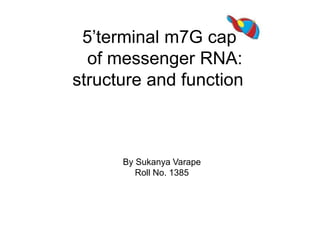
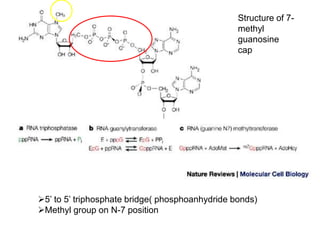
Structure of 7- 
methyl 
guanosine 
cap 
5’ to 5’ triphosphate bridge( phosphoanhydride bonds) 
Methyl group on N-7 position
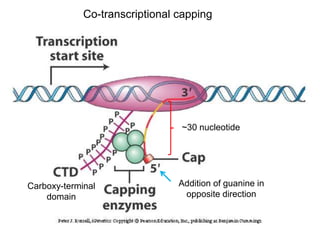
Co-transcriptional capping 
Carboxy-terminal 
domain 
~30 nucleotide 
Addition of guanine in 
opposite direction
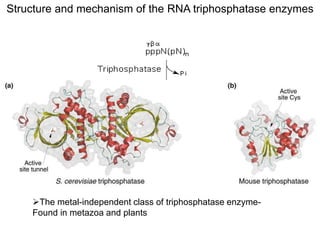
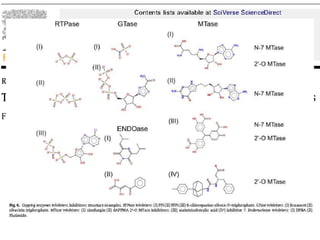
Structure and mechanism of the RNA triphosphatase enzymes 
Mechanically and structurally they are diverse 
Two families 
The divalent-cation-dependent RNA triphosphatase- 
Found in protozoa, eukaryotic viruses and fungi 
The metal-independent class of triphosphatase enzyme- 
Found in metazoa and plants
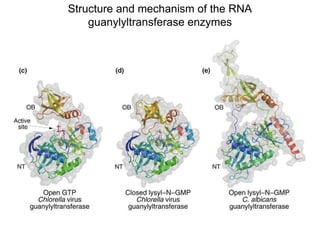
Structure and mechanism of the RNA 
guanylyltransferase enzymes 
Lysine side chain 
It have two structural domains 
N-terminal nucleotidyl transferae 
C-terminal OB fold domain 
It resembles DNA and RNA ligases
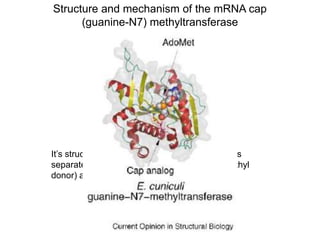
Structure and mechanism of the mRNA cap 
(guanine-N7) methyltransferase 
It’s structure has revealed that, enzyme contains 
separate ligand- binding pocket for AdoMet(methyl 
donor) and cap guanine(methyl acceptor)
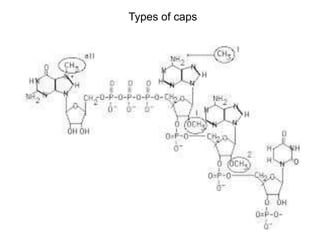
Types of caps
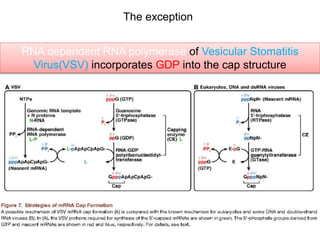
The exception 
RNA dependent RNA polymerase of Vesicular Stomatitis 
Virus(VSV) incorporates GDP into the cap structure
Functions of m7G cap 
Essential for the growth of eukaryotic cells 
Marks the translational start site 
Protects mRNA from degradation by 5’exoribonucleases 
Methyl group facilitate translation 
Participate in mRNA splicing and enhances its accuracy 
Binds to nuclear cap binding complex to facilitate mRNA transport to 
cytoplasm 
Specificity of Gunylytransferase ensures that the caps are added only to the 
intact transcripts and not to endolyticaly cleaved once.
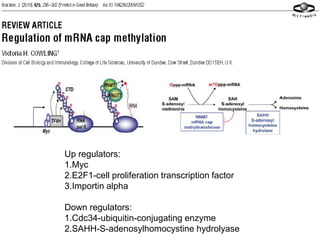
Up regulators: 
1.Myc 
2.E2F1-cell proliferation transcription factor 
3.Importin alpha 
Down regulators: 
1.Cdc34-ubiquitin-conjugating enzyme 
2.SAHH-S-adenosylhomocystine hydrolyase
1.Specificity 
2.Potency
mammalian cells contain a surveillance machinery anchored by the DXO and 
Xrn2 factors that will rapidly degrade incorrectly capped pre-mRNAs 
Possible Target proteins: 
1. Viral TAT protein 
2. Mammalian PMIT enzyme
mRNAs with short poly-A tails are captured poorly by oligo-dT based methods 
Recombinant human cap-binding protein eIF4E was used to capture mRNAs 
on the basis of the 5’ cap structure 
With mRNA capture by the 5’ 7-methyl guanosine cap provides a more 
complete view of the transcriptome and can be used to assay changes in 
mRNA poly-A tail length on a genome-wide scale.
Based preparation and sequencing of concatamers of DNA tags deriving from 
the initial 20 nucleotides from 5’ end mRNAs CAGE 
Allows high-throughout gene expression analysis and the profiling of 
transcriptional start points (TSP), including promoter usage Analysis
References 
Amiya k. Banerjee, 5'-Terminal Cap Structure in Eukaryotic Messenger Ribonucleic 
Acids, MICROBIOLOGICAL REVIEWS, vol.2 June 1980 
Stewart Shuman, What messenger RNA Capping tells us about the eukaryotic 
evolution, Nature reviews, MolCellBio, Vol. 3 Aug. 2002 
Meigang Gu and Christopher D Lima, Processing the message: structural insights into 
capping and decapping mRNA, Current Opinion in Structural Biology, 15:99–106, 2005 
Victoria H. COWLING, Regulation of mRNA cap methylation, Biochem. J. (2010) 425, 
295–302 
Tomoaki Ogino and Amiya K. Banerjee Unconventional Mechanism of mRNACapping 
by the RNA-Dependent RNA Polymerase of Vesicular Stomatitis Virus Molecular Cell 25, 
85–97, January 12, 2007 
Jeffrey Wilusz, Putting an ‘End’ to HIV mRNAs: capping and polyadenylation as 
potential therapeutic targets, Wilusz AIDS Research and Therapy 2013, 10:31 
François Ferron, Etienne Decroly, Barbara Selisko, Bruno Canard, The viral RNA 
capping machinery as a target for antiviral drugs, Antiviral Research 96 (2012) 21–31 
Michael D. Blower et al, Combining Different mRNA Capture Methods to Analyze the 
Transcriptome: Analysis of the Xenopus laevis Transcriptome, PLOS ONE ,October 
2013, Volume 8, Issue 10 
Toshiyuki Shiraki, Cap analysis gene expression for high-throughput analysis of 
transcriptional starting point and identification of promoter usage, PNAS December 23, 
2003 vol. 100 no. 26
Anne-Claude Gingras, Nature Reviews Molecular Cell Biology AOP, published 
online 14 october 2009
5' cap

5' cap

  • 1.
    5’terminal m7G cap of messenger RNA: structure and function By Sukanya Varape Roll No. 1385
  • 2.
    Why the capwas evolved only in Eukaryotes? Loss of Shine- Dulgarno base pairing in eukaryotes which is a means of directing the ribosome to the mRNA Eukaryote use ‘cap’ as an alternative signal for directing translational machinery to the mRNA Appearance of 5’exorionuclease only in eukaryotes Existence of capping enzymes only in eukaryotes Specificity of Guanylytransferase
  • 3.
    Structure of 7- methyl guanosine cap 5’ to 5’ triphosphate bridge( phosphoanhydride bonds) Methyl group on N-7 position
  • 4.
    Co-transcriptional capping Carboxy-terminal domain ~30 nucleotide Addition of guanine in opposite direction
  • 5.
    Structure and mechanismof the RNA triphosphatase enzymes Mechanically and structurally they are diverse Two families The divalent-cation-dependent RNA triphosphatase- Found in protozoa, eukaryotic viruses and fungi The metal-independent class of triphosphatase enzyme- Found in metazoa and plants
  • 6.
    Structure and mechanismof the RNA guanylyltransferase enzymes Lysine side chain It have two structural domains N-terminal nucleotidyl transferae C-terminal OB fold domain It resembles DNA and RNA ligases
  • 7.
    Structure and mechanismof the mRNA cap (guanine-N7) methyltransferase It’s structure has revealed that, enzyme contains separate ligand- binding pocket for AdoMet(methyl donor) and cap guanine(methyl acceptor)
  • 8.
  • 9.
    The exception RNAdependent RNA polymerase of Vesicular Stomatitis Virus(VSV) incorporates GDP into the cap structure
  • 10.
    Functions of m7Gcap Essential for the growth of eukaryotic cells Marks the translational start site Protects mRNA from degradation by 5’exoribonucleases Methyl group facilitate translation Participate in mRNA splicing and enhances its accuracy Binds to nuclear cap binding complex to facilitate mRNA transport to cytoplasm Specificity of Gunylytransferase ensures that the caps are added only to the intact transcripts and not to endolyticaly cleaved once.
  • 11.
    Up regulators: 1.Myc 2.E2F1-cell proliferation transcription factor 3.Importin alpha Down regulators: 1.Cdc34-ubiquitin-conjugating enzyme 2.SAHH-S-adenosylhomocystine hydrolyase
  • 12.
  • 13.
    mammalian cells containa surveillance machinery anchored by the DXO and Xrn2 factors that will rapidly degrade incorrectly capped pre-mRNAs Possible Target proteins: 1. Viral TAT protein 2. Mammalian PMIT enzyme
  • 14.
    mRNAs with shortpoly-A tails are captured poorly by oligo-dT based methods Recombinant human cap-binding protein eIF4E was used to capture mRNAs on the basis of the 5’ cap structure With mRNA capture by the 5’ 7-methyl guanosine cap provides a more complete view of the transcriptome and can be used to assay changes in mRNA poly-A tail length on a genome-wide scale.
  • 15.
    Based preparation andsequencing of concatamers of DNA tags deriving from the initial 20 nucleotides from 5’ end mRNAs CAGE Allows high-throughout gene expression analysis and the profiling of transcriptional start points (TSP), including promoter usage Analysis
  • 16.
    References Amiya k.Banerjee, 5'-Terminal Cap Structure in Eukaryotic Messenger Ribonucleic Acids, MICROBIOLOGICAL REVIEWS, vol.2 June 1980 Stewart Shuman, What messenger RNA Capping tells us about the eukaryotic evolution, Nature reviews, MolCellBio, Vol. 3 Aug. 2002 Meigang Gu and Christopher D Lima, Processing the message: structural insights into capping and decapping mRNA, Current Opinion in Structural Biology, 15:99–106, 2005 Victoria H. COWLING, Regulation of mRNA cap methylation, Biochem. J. (2010) 425, 295–302 Tomoaki Ogino and Amiya K. Banerjee Unconventional Mechanism of mRNACapping by the RNA-Dependent RNA Polymerase of Vesicular Stomatitis Virus Molecular Cell 25, 85–97, January 12, 2007 Jeffrey Wilusz, Putting an ‘End’ to HIV mRNAs: capping and polyadenylation as potential therapeutic targets, Wilusz AIDS Research and Therapy 2013, 10:31 François Ferron, Etienne Decroly, Barbara Selisko, Bruno Canard, The viral RNA capping machinery as a target for antiviral drugs, Antiviral Research 96 (2012) 21–31 Michael D. Blower et al, Combining Different mRNA Capture Methods to Analyze the Transcriptome: Analysis of the Xenopus laevis Transcriptome, PLOS ONE ,October 2013, Volume 8, Issue 10 Toshiyuki Shiraki, Cap analysis gene expression for high-throughput analysis of transcriptional starting point and identification of promoter usage, PNAS December 23, 2003 vol. 100 no. 26
  • 17.
    Anne-Claude Gingras, NatureReviews Molecular Cell Biology AOP, published online 14 october 2009