PREPARED BY –
MR. SUHEL KHAN, M.Sc. NURSING
MEDICAL AND SURGICAL NURSING
CANCEROFEAR
 Ear cancer can affect both the inner ear and
external parts of the ear. It often starts as a skin
cancer on the outer ear that then spreads
throughout the various ear structures including
the ear canal, eardrum, the temporal bone,
ossicles, mastoid bone, facial movement nerve,
and inner ear organs of hearing and balance.
Ear cancer is a disease
that causes abnormal
cell growth in the ear.
The symptoms can
vary depending on
where the tumour is
and how far it spreads.
It might cause ear
pain, blood and
hearing problems.
DEFINITION
 Ear cancer is vary rare.
 Only about 300 people in the United states are
diagnosed with it each year.
 Exact cause is unknown
 Being older
 Chronic ear infections
 Ear piercings
 Inherited conditions, such as neurofibromatosis
 Prior radiation exposure
 Smoking, including exposure to secondhand smoke.
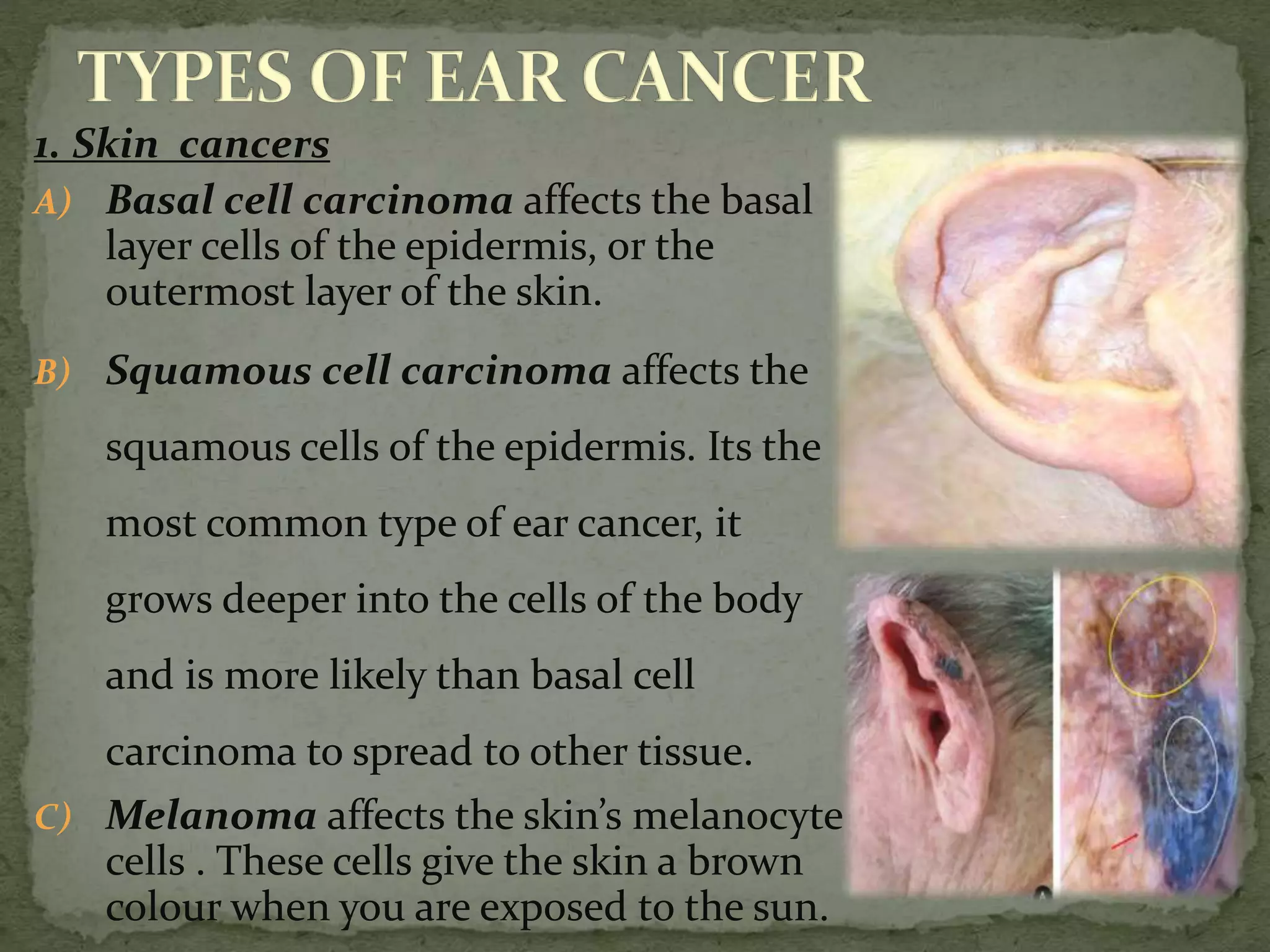
1. Skin cancers
A) Basal cell carcinoma affects the basal
layer cells of the epidermis, or the
outermost layer of the skin.
B) Squamous cell carcinoma affects the
squamous cells of the epidermis. Its the
most common type of ear cancer, it
grows deeper into the cells of the body
and is more likely than basal cell
carcinoma to spread to other tissue.
C) Melanoma affects the skin’s melanocyte
cells . These cells give the skin a brown
colour when you are exposed to the sun.
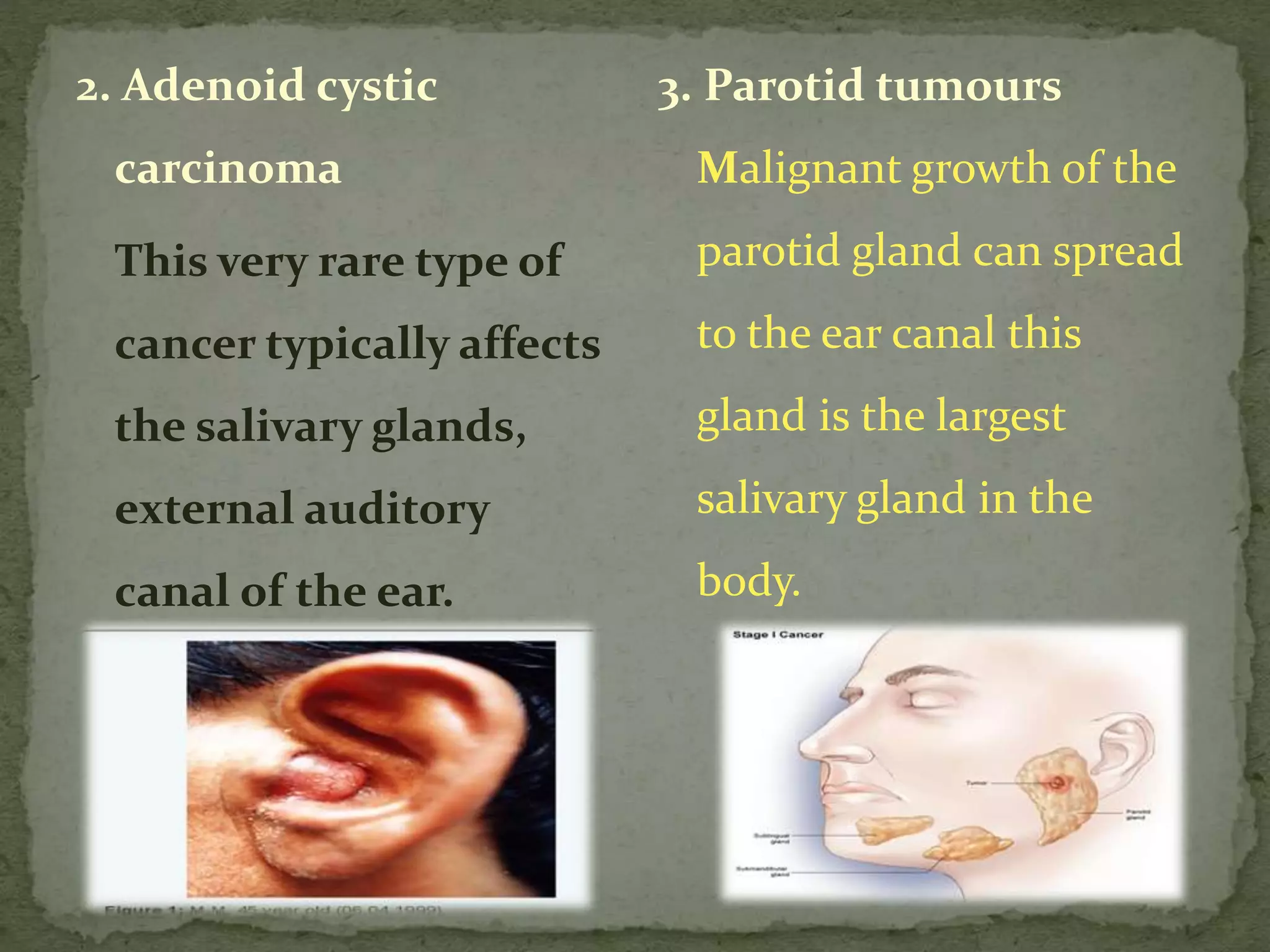
2. Adenoid cystic
carcinoma
This very rare type of
cancer typically affects
the salivary glands,
external auditory
canal of the ear.
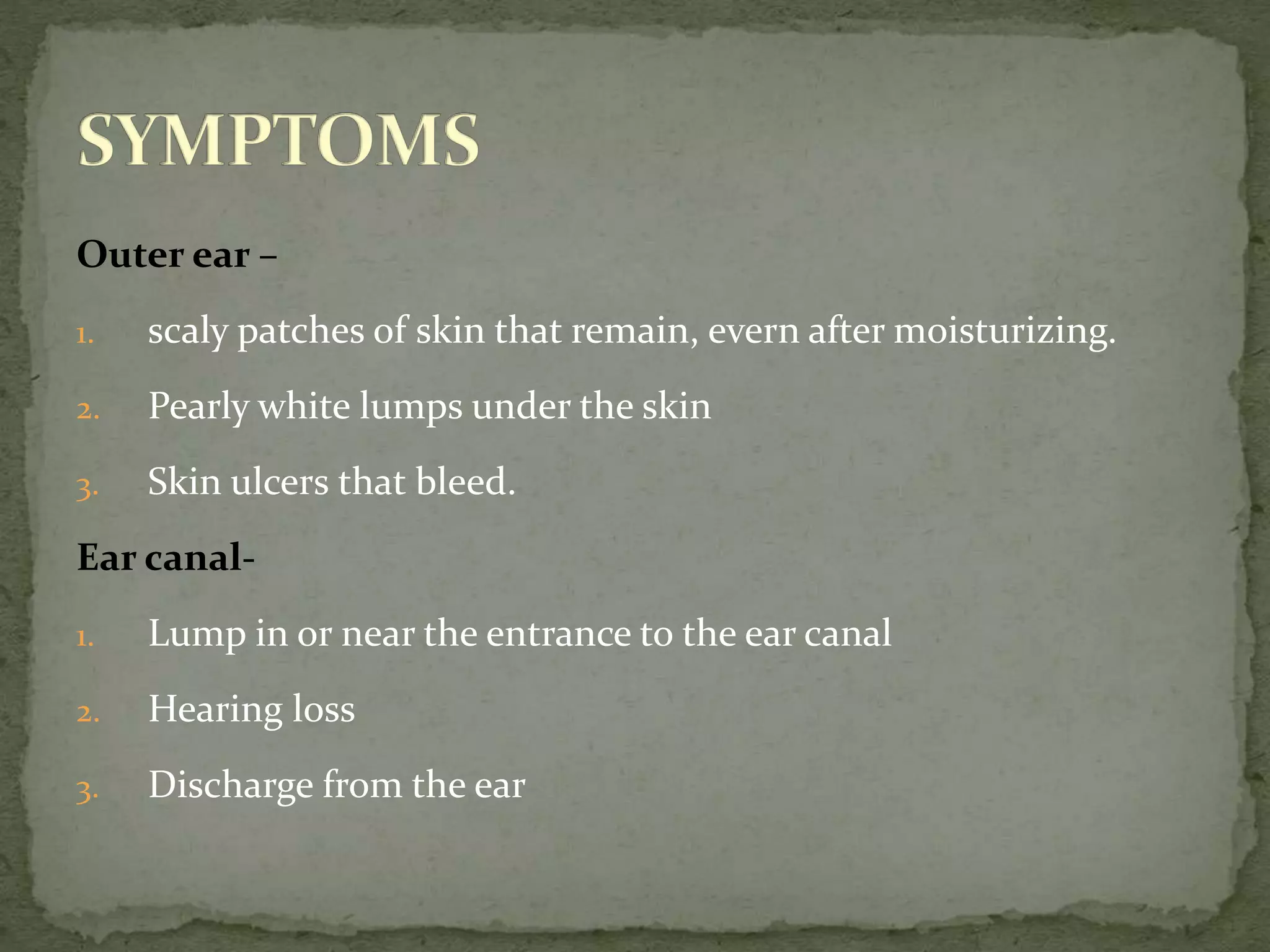
3. Parotid tumours
Malignant growth of the
parotid gland can spread
to the ear canal this
gland is the largest
salivary gland in the
body.
Outer ear –
1. scaly patches of skin that remain, evern after moisturizing.
2. Pearly white lumps under the skin
3. Skin ulcers that bleed.
Ear canal-
1. Lump in or near the entrance to the ear canal
2. Hearing loss
3. Discharge from the ear
 Middle ear –
1. Discharge from the ear, which may be bleed
2. Hearing loss
3. Ear pain
4. Numbness on the affected side of the head
Inner ear –
1. Ear pain
2. Dizziness
3. Hearing loss
4. Tinnitus
5. Headache
 History taking
 Physical examination
 Biopsy
 Imaging test, MRI and CT SCAN
 Skin cancers on pinna
are generally removed, it
may need reconstruction
surgery incase large area
is affected.
 Ear canal or temporal
bone cancers require
surgery followed by
radiotherapy.
1. Removal of the canal,
skin, bone and
eardrum.
2. The ear is
reconstructed. Hearing
is not affected.
1. Remove the sleeve area of the
outer ear and the middle ear.
2. Hearing is affected and it will
never become normal
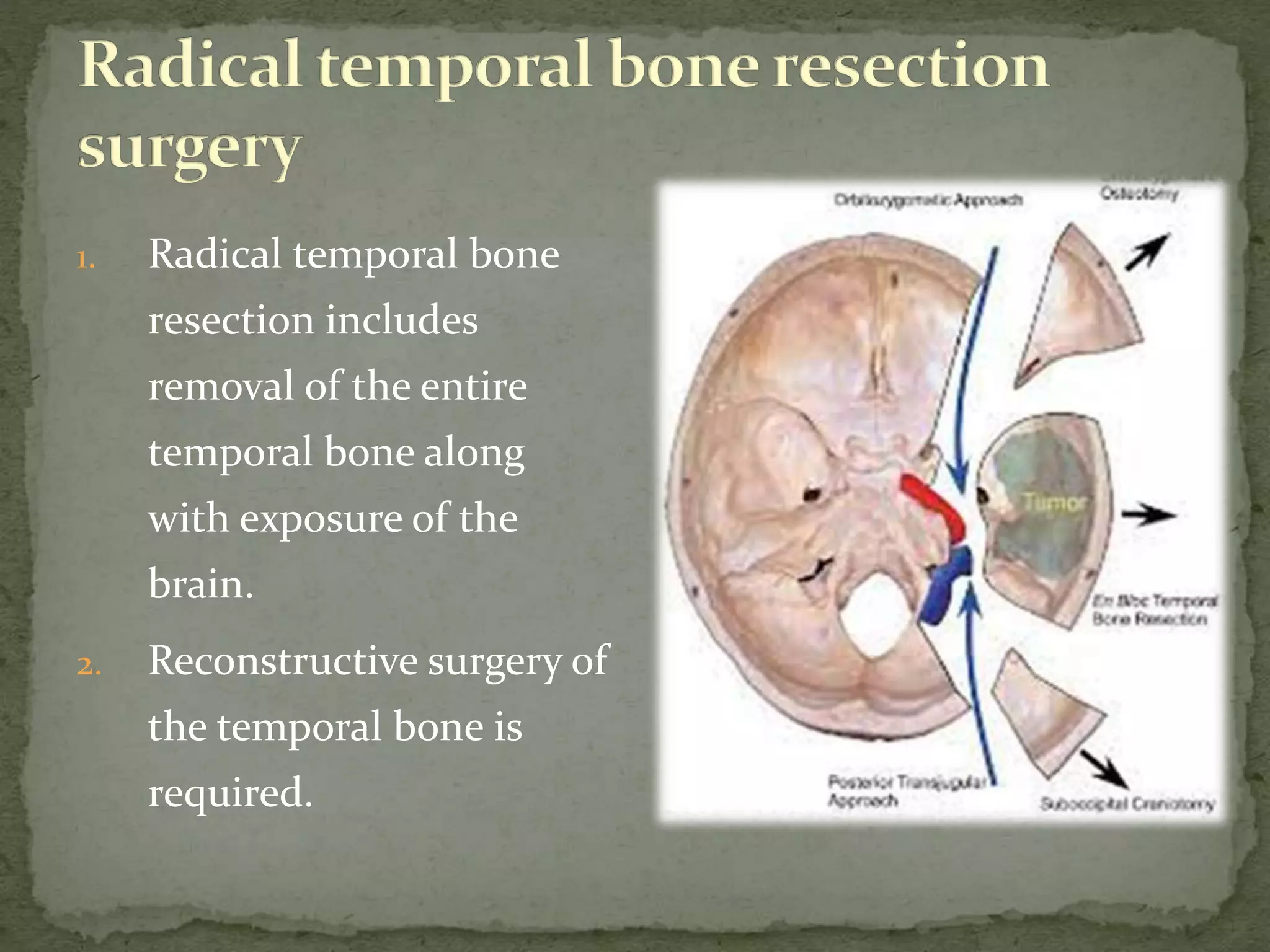
1. Radical temporal bone
resection includes
removal of the entire
temporal bone along
with exposure of the
brain.
2. Reconstructive surgery of
the temporal bone is
required.
 Radiotherapy is used after surgery
with a very less dose so as to
prevent the complication due to
radiation exposure of bones of
the skull.
 Hearing loss
 Dizziness
 Facial paralysis
Nursing assessment
 Assess the pain level
 Monitor vial signs
 Monitor urinary output
 Check hearing loss
 Observe skin: sunburn,
lesions, scratches, rashes,
itching.
 Assess tissue integrity
 Observe scalp for hair loss
 Assess vertigo, tinnitus
 Assess patient’s knowledge
about cancer and its
management.
 Chronic pain related to
cancer.
 Impaired tissue integrity
related to disease condition
and radiotherapy.
 Impaired nutritional patter
less than body requirement
related to nausea, vomiting
 High risk of infection related
to bone marrow depression
secondary to radiotherapy
 Activity intolerance related to
weakness.
 Depression/ fear related to
treatment and disease
prognosis.
Nursing diagnosis

carcinoma of Ear.pptx

  • 1.
    PREPARED BY – MR.SUHEL KHAN, M.Sc. NURSING MEDICAL AND SURGICAL NURSING CANCEROFEAR
  • 2.
     Ear cancercan affect both the inner ear and external parts of the ear. It often starts as a skin cancer on the outer ear that then spreads throughout the various ear structures including the ear canal, eardrum, the temporal bone, ossicles, mastoid bone, facial movement nerve, and inner ear organs of hearing and balance.
  • 3.
    Ear cancer isa disease that causes abnormal cell growth in the ear. The symptoms can vary depending on where the tumour is and how far it spreads. It might cause ear pain, blood and hearing problems. DEFINITION
  • 4.
     Ear canceris vary rare.  Only about 300 people in the United states are diagnosed with it each year.
  • 5.
     Exact causeis unknown  Being older  Chronic ear infections  Ear piercings  Inherited conditions, such as neurofibromatosis  Prior radiation exposure  Smoking, including exposure to secondhand smoke.
  • 6.
    1. Skin cancers A)Basal cell carcinoma affects the basal layer cells of the epidermis, or the outermost layer of the skin. B) Squamous cell carcinoma affects the squamous cells of the epidermis. Its the most common type of ear cancer, it grows deeper into the cells of the body and is more likely than basal cell carcinoma to spread to other tissue. C) Melanoma affects the skin’s melanocyte cells . These cells give the skin a brown colour when you are exposed to the sun.
  • 7.
    2. Adenoid cystic carcinoma Thisvery rare type of cancer typically affects the salivary glands, external auditory canal of the ear. 3. Parotid tumours Malignant growth of the parotid gland can spread to the ear canal this gland is the largest salivary gland in the body.
  • 8.
    Outer ear – 1.scaly patches of skin that remain, evern after moisturizing. 2. Pearly white lumps under the skin 3. Skin ulcers that bleed. Ear canal- 1. Lump in or near the entrance to the ear canal 2. Hearing loss 3. Discharge from the ear
  • 9.
     Middle ear– 1. Discharge from the ear, which may be bleed 2. Hearing loss 3. Ear pain 4. Numbness on the affected side of the head Inner ear – 1. Ear pain 2. Dizziness 3. Hearing loss 4. Tinnitus 5. Headache
  • 11.
     History taking Physical examination  Biopsy  Imaging test, MRI and CT SCAN
  • 12.
     Skin cancerson pinna are generally removed, it may need reconstruction surgery incase large area is affected.  Ear canal or temporal bone cancers require surgery followed by radiotherapy.
  • 13.
    1. Removal ofthe canal, skin, bone and eardrum. 2. The ear is reconstructed. Hearing is not affected.
  • 14.
    1. Remove thesleeve area of the outer ear and the middle ear. 2. Hearing is affected and it will never become normal
  • 15.
    1. Radical temporalbone resection includes removal of the entire temporal bone along with exposure of the brain. 2. Reconstructive surgery of the temporal bone is required.
  • 16.
     Radiotherapy isused after surgery with a very less dose so as to prevent the complication due to radiation exposure of bones of the skull.
  • 17.
     Hearing loss Dizziness  Facial paralysis
  • 18.
    Nursing assessment  Assessthe pain level  Monitor vial signs  Monitor urinary output  Check hearing loss  Observe skin: sunburn, lesions, scratches, rashes, itching.  Assess tissue integrity  Observe scalp for hair loss  Assess vertigo, tinnitus  Assess patient’s knowledge about cancer and its management.  Chronic pain related to cancer.  Impaired tissue integrity related to disease condition and radiotherapy.  Impaired nutritional patter less than body requirement related to nausea, vomiting  High risk of infection related to bone marrow depression secondary to radiotherapy  Activity intolerance related to weakness.  Depression/ fear related to treatment and disease prognosis. Nursing diagnosis