Professor Shirley Alexander
Deputy Vice-Chancellor (Education and
Students)
University of Technology, Sydney
@SAlexander_UTS
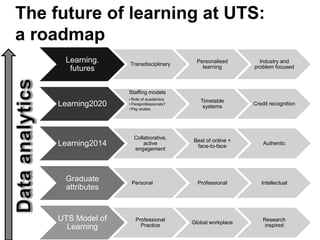
Learning.
futures
Transdisciplinary
Personalised
learning
Industry and
problem focused
Learning2020
Staffing models
• Role of academics
• Paraprofessionals?
• Pay scales
Timetable
systems
Credit recognition
Learning2014
Collaborative,
active
engagement
Best of online +
face-to-face
Authentic
Graduate
attributes
Personal Professional Intellectual
UTS Model of
Learning
Professional
Practice
Global workplace
Research
inspired
The future of learning at UTS:
a roadmap
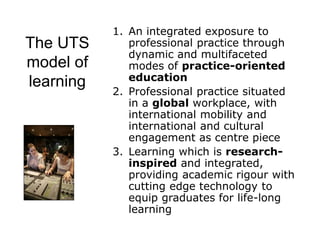
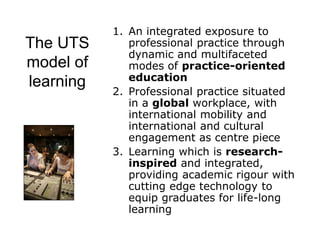
The UTS
model of
learning
1. An integrated exposure to
professional practice through
dynamic and multifaceted
modes of practice-oriented
education
2. Professional practice situated
in a global workplace, with
international mobility and
international and cultural
engagement as centre piece
3. Learning which is research-
inspired and integrated,
providing academic rigour with
cutting edge technology to
equip graduates for life-long
learning
4
0
5
10
15
20
25
30
35
1979 1984 1989 1994 1999 2004 2009 2014
Per cent
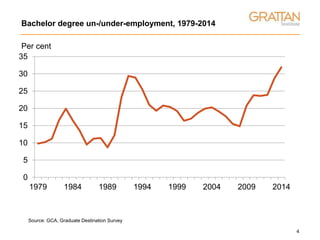
Bachelor degree un-/under-employment, 1979-2014
Source: GCA, Graduate Destination Survey
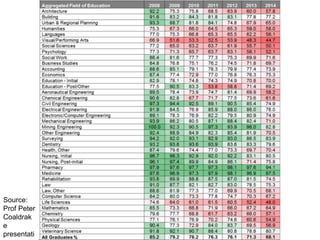
Source:
Prof Peter
Coaldrak
e
presentati
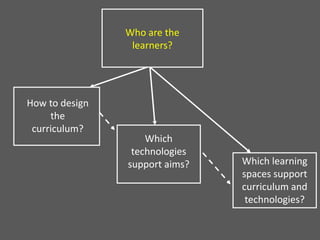
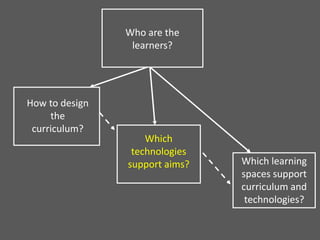
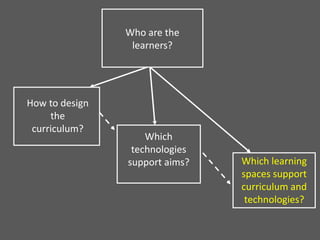
Who are the
learners?
How to design
the
curriculum?
Which learning
spaces support
curriculum and
technologies?
Which
technologies
support aims?
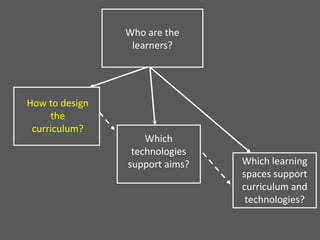
Who are the
learners?
How to design
the
curriculum?
Which learning
spaces support
curriculum and
technologies?
Which
technologies
support aims?
The UTS
model of
learning
1. An integrated exposure to
professional practice through
dynamic and multifaceted
modes of practice-oriented
education
2. Professional practice situated
in a global workplace, with
international mobility and
international and cultural
engagement as centre piece
3. Learning which is research-
inspired and integrated,
providing academic rigour with
cutting edge technology to
equip graduates for life-long
learning
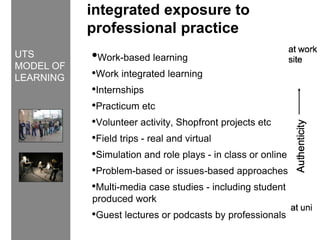
UTS
MODEL OF
LEARNING
integrated exposure to
professional practice
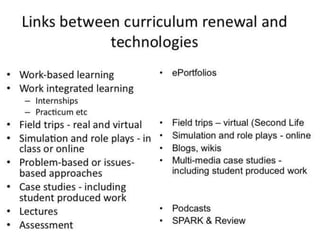
•Work-based learning
•Work integrated learning
•Internships
•Practicum etc
•Volunteer activity, Shopfront projects etc
•Field trips - real and virtual
•Simulation and role plays - in class or online
•Problem-based or issues-based approaches
•Multi-media case studies - including student
produced work
•Guest lectures or podcasts by professionals
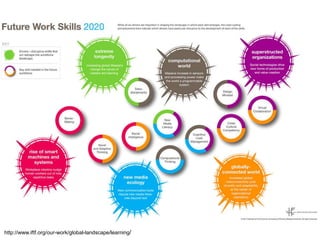
http://www.iftf.org/our-work/global-landscape/learning/
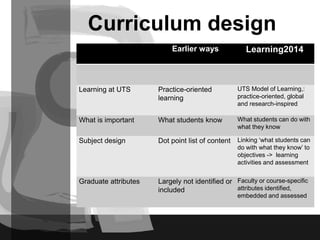
Curriculum design
Earlier ways Learning2014
Learning at UTS Practice-oriented
learning
UTS Model of Learning,:
practice-oriented, global
and research-inspired
What is important What students know What students can do with
what they know
Subject design Dot point list of content Linking ‘what students can
do with what they know’ to
objectives -> learning
activities and assessment
Graduate attributes Largely not identified or
included
Faculty or course-specific
attributes identified,
embedded and assessed
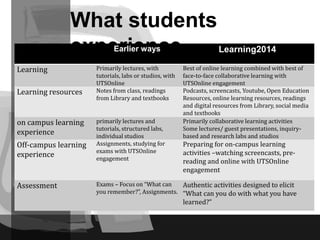
What students
experienceEarlier ways Learning2014
Learning Primarily lectures, with
tutorials, labs or studios, with
UTSOnline
Best of online learning combined with best of
face-to-face collaborative learning with
UTSOnline engagement
Learning resources Notes from class, readings
from Library and textbooks
Podcasts, screencasts, Youtube, Open Education
Resources, online learning resources, readings
and digital resources from Library, social media
and textbooks
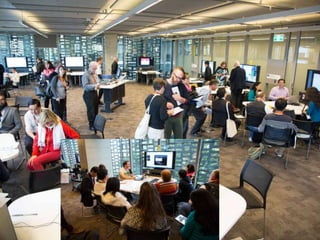
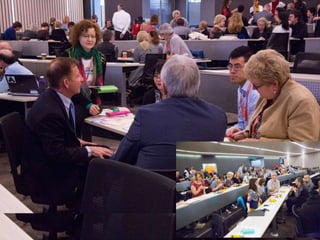
on campus learning
experience
primarily lectures and
tutorials, structured labs,
individual studios
Primarily collaborative learning activities
Some lectures/ guest presentations, inquiry-
based and research labs and studios
Off-campus learning
experience
Assignments, studying for
exams with UTSOnline
engagement
Preparing for on-campus learning
activities –watching screencasts, pre-
reading and online with UTSOnline
engagement
Assessment Exams – Focus on “What can
you remember?”, Assignments.
Authentic activities designed to elicit
“What can you do with what you have
learned?”
Who are the
learners?
How to design
the
curriculum?
Which learning
spaces support
curriculum and
technologies?
Which
technologies
support aims?
Who are the
learners?
How to design
the
curriculum?
Which learning
spaces support
curriculum and
technologies?
Which
technologies
support aims?
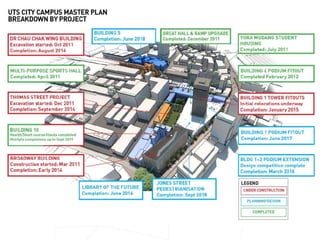
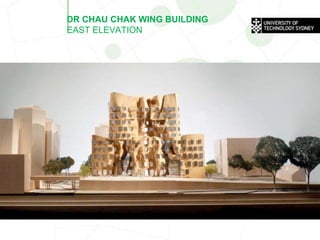
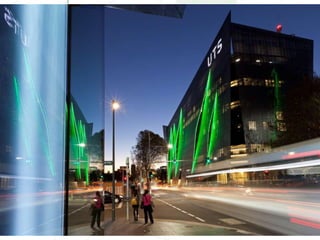
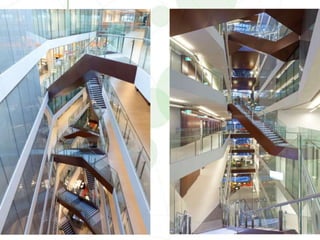
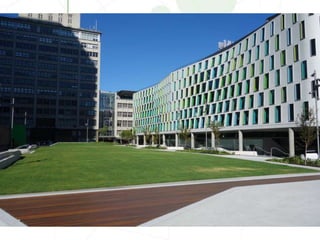
DR CHAU CHAK WING BUILDING
EAST ELEVATION
C
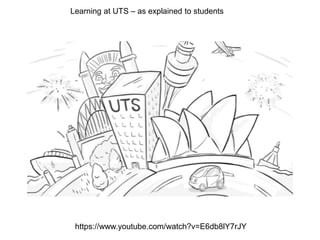
https://www.youtube.com/watch?v=E6db8lY7rJY
Learning at UTS – as explained to students
NSW Secondary Principals

NSW Secondary Principals

  • 1.
    Professor Shirley Alexander DeputyVice-Chancellor (Education and Students) University of Technology, Sydney @SAlexander_UTS
  • 2.
    Learning. futures Transdisciplinary Personalised learning Industry and problem focused Learning2020 Staffingmodels • Role of academics • Paraprofessionals? • Pay scales Timetable systems Credit recognition Learning2014 Collaborative, active engagement Best of online + face-to-face Authentic Graduate attributes Personal Professional Intellectual UTS Model of Learning Professional Practice Global workplace Research inspired The future of learning at UTS: a roadmap
  • 3.
    The UTS model of learning 1.An integrated exposure to professional practice through dynamic and multifaceted modes of practice-oriented education 2. Professional practice situated in a global workplace, with international mobility and international and cultural engagement as centre piece 3. Learning which is research- inspired and integrated, providing academic rigour with cutting edge technology to equip graduates for life-long learning
  • 4.
    4 0 5 10 15 20 25 30 35 1979 1984 19891994 1999 2004 2009 2014 Per cent Bachelor degree un-/under-employment, 1979-2014 Source: GCA, Graduate Destination Survey
  • 5.
  • 7.
    Who are the learners? Howto design the curriculum? Which learning spaces support curriculum and technologies? Which technologies support aims?
  • 8.
    Who are the learners? Howto design the curriculum? Which learning spaces support curriculum and technologies? Which technologies support aims?
  • 9.
    The UTS model of learning 1.An integrated exposure to professional practice through dynamic and multifaceted modes of practice-oriented education 2. Professional practice situated in a global workplace, with international mobility and international and cultural engagement as centre piece 3. Learning which is research- inspired and integrated, providing academic rigour with cutting edge technology to equip graduates for life-long learning
  • 10.
    UTS MODEL OF LEARNING integrated exposureto professional practice •Work-based learning •Work integrated learning •Internships •Practicum etc •Volunteer activity, Shopfront projects etc •Field trips - real and virtual •Simulation and role plays - in class or online •Problem-based or issues-based approaches •Multi-media case studies - including student produced work •Guest lectures or podcasts by professionals
  • 11.
  • 12.
    Curriculum design Earlier waysLearning2014 Learning at UTS Practice-oriented learning UTS Model of Learning,: practice-oriented, global and research-inspired What is important What students know What students can do with what they know Subject design Dot point list of content Linking ‘what students can do with what they know’ to objectives -> learning activities and assessment Graduate attributes Largely not identified or included Faculty or course-specific attributes identified, embedded and assessed
  • 13.
    What students experienceEarlier waysLearning2014 Learning Primarily lectures, with tutorials, labs or studios, with UTSOnline Best of online learning combined with best of face-to-face collaborative learning with UTSOnline engagement Learning resources Notes from class, readings from Library and textbooks Podcasts, screencasts, Youtube, Open Education Resources, online learning resources, readings and digital resources from Library, social media and textbooks on campus learning experience primarily lectures and tutorials, structured labs, individual studios Primarily collaborative learning activities Some lectures/ guest presentations, inquiry- based and research labs and studios Off-campus learning experience Assignments, studying for exams with UTSOnline engagement Preparing for on-campus learning activities –watching screencasts, pre- reading and online with UTSOnline engagement Assessment Exams – Focus on “What can you remember?”, Assignments. Authentic activities designed to elicit “What can you do with what you have learned?”
  • 14.
    Who are the learners? Howto design the curriculum? Which learning spaces support curriculum and technologies? Which technologies support aims?
  • 17.
    Who are the learners? Howto design the curriculum? Which learning spaces support curriculum and technologies? Which technologies support aims?
  • 18.
    DR CHAU CHAKWING BUILDING EAST ELEVATION
  • 40.
  • 42.