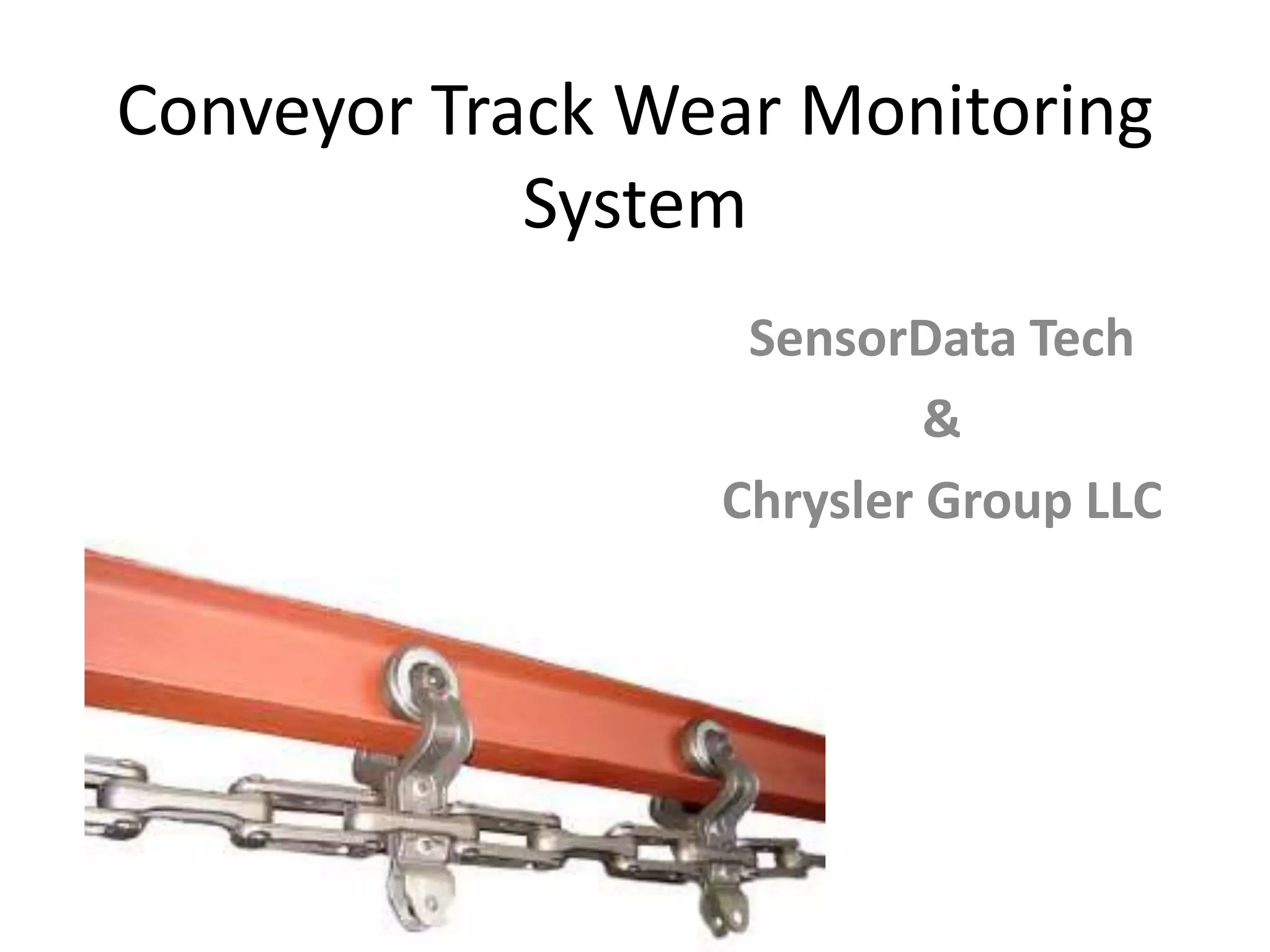
Conveyor Track Wear Monitoring
System
SensorData Tech
&
Chrysler Group LLC
Technology preview
• Eddy Current
• Hall effect Sensing
• Ultrasound Method
• Laser
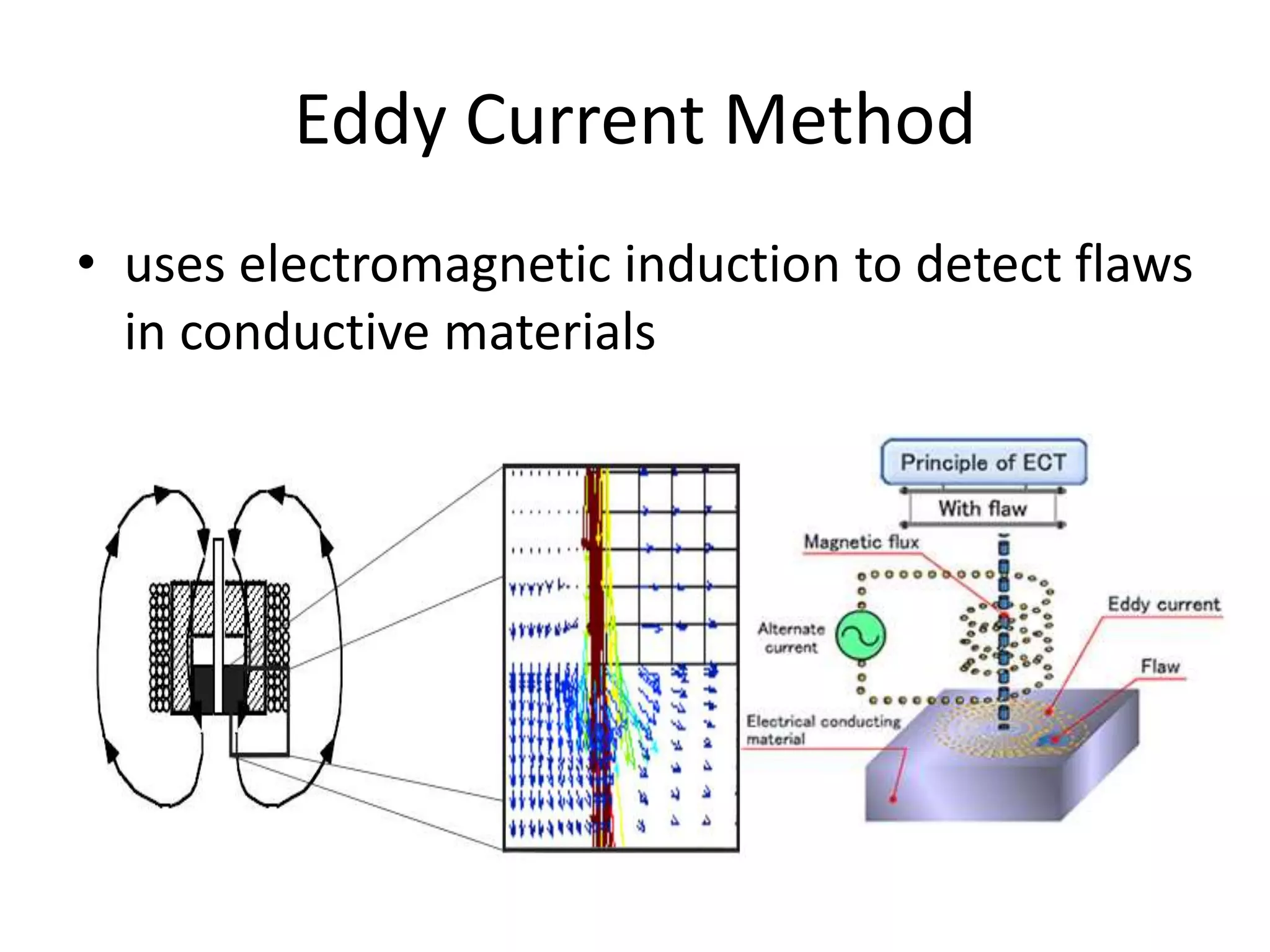
Eddy Current Method
• uses electromagnetic induction to detect flaws
in conductive materials
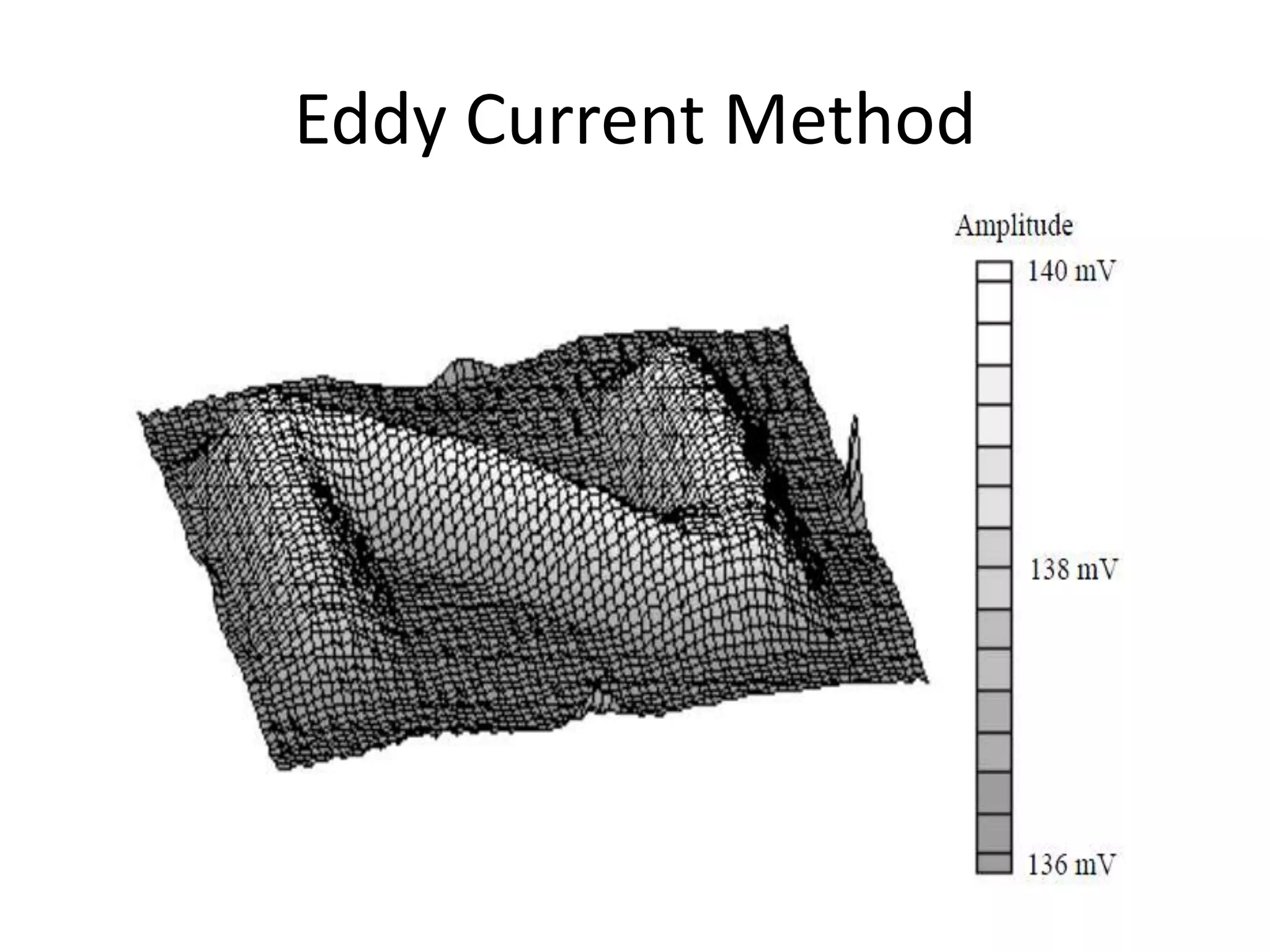
Eddy Current Method
Eddy Current Method
- the surface of the material must be accessible.
- the finish of the material may cause bad
readings.
- Increase in temperature due to the increase in
internal energy cause bad readings.
- flaws that lie parallel to the probe may be
undetectable.
- the depth of penetration into the material is
limited by the materials' conductivity
Hall Effect Sensing
• Measurements are made by placing a small target ball on
the inside of a container while holding a magnetic Hall
probe in the outside.
• When material thickness changes, the distance between
the target ball and the probe also changes, which affects
the magnetic field and changes the induced voltage in
the Hall Effect sensor in a predictable way
Hall Effect Sensing
• Advantages:
- Material sound velocity is not needed because
measurements are independent of material properties.
- The probe can be scanned over an area to quickly locate
minimum thickness.
- Small radius areas and extremely thin samples can be
measured.
Hall Effect Sensing
• Disadvantages:
- Access to both sides of the material is necessary: small
reference ball on the inside, probe on the outside.
- Only for non-magnetic materials such as plastic, glass, and
aluminum. (Nearby Magnetic Objects and Magnetic Fields
mess up the readings)
- Maximum measurable thickness is 10mm (0.400 inch).
Ultrasound Technology
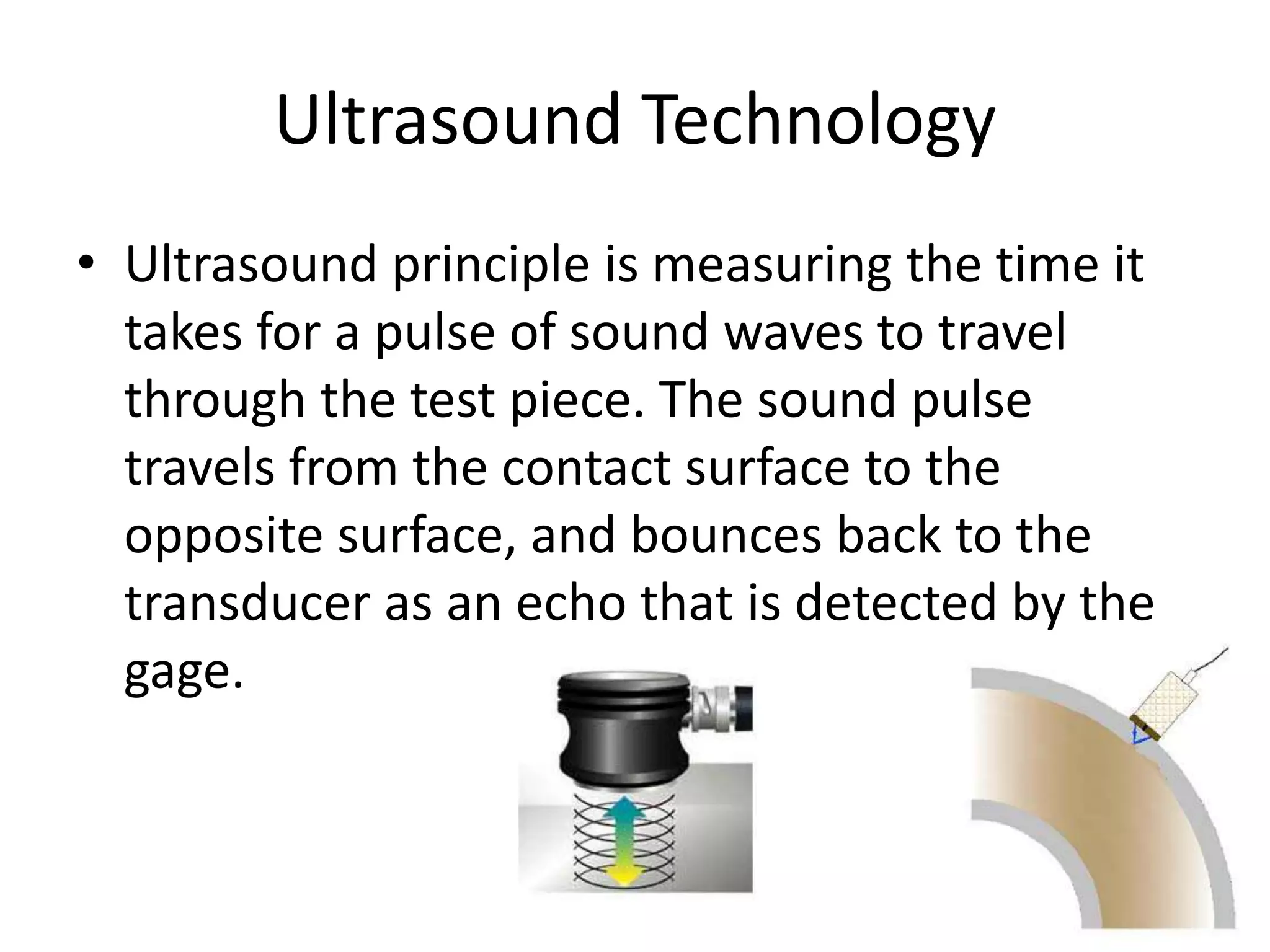
• Ultrasound principle is measuring the time it
takes for a pulse of sound waves to travel
through the test piece. The sound pulse
travels from the contact surface to the
opposite surface, and bounces back to the
transducer as an echo that is detected by the
gage.
Ultrasound Technology
• Advantages:
- Measurements require access to only one side of the material.
- Most engineering materials can be measured, except absorbent
materials such as paper and Styrofoam.
- Wide thickness range from 0.003” to several inches.
- Can measure closed containers, large sheets, and other
geometries where access to both sides is difficult.
Ultrasound Technology
• Disadvantages:
- It is necessary to calibrate the instrument for material sound
velocity since sound travels at a different speed through
different materials.
- Ultrasound requires a drop of a liquid medium (couplant)
between the transducer tip and the part.
- Certain material properties and part geometries such as
temperature, porosity, and uneven surfaces may affect
accuracy.
Laser Technology
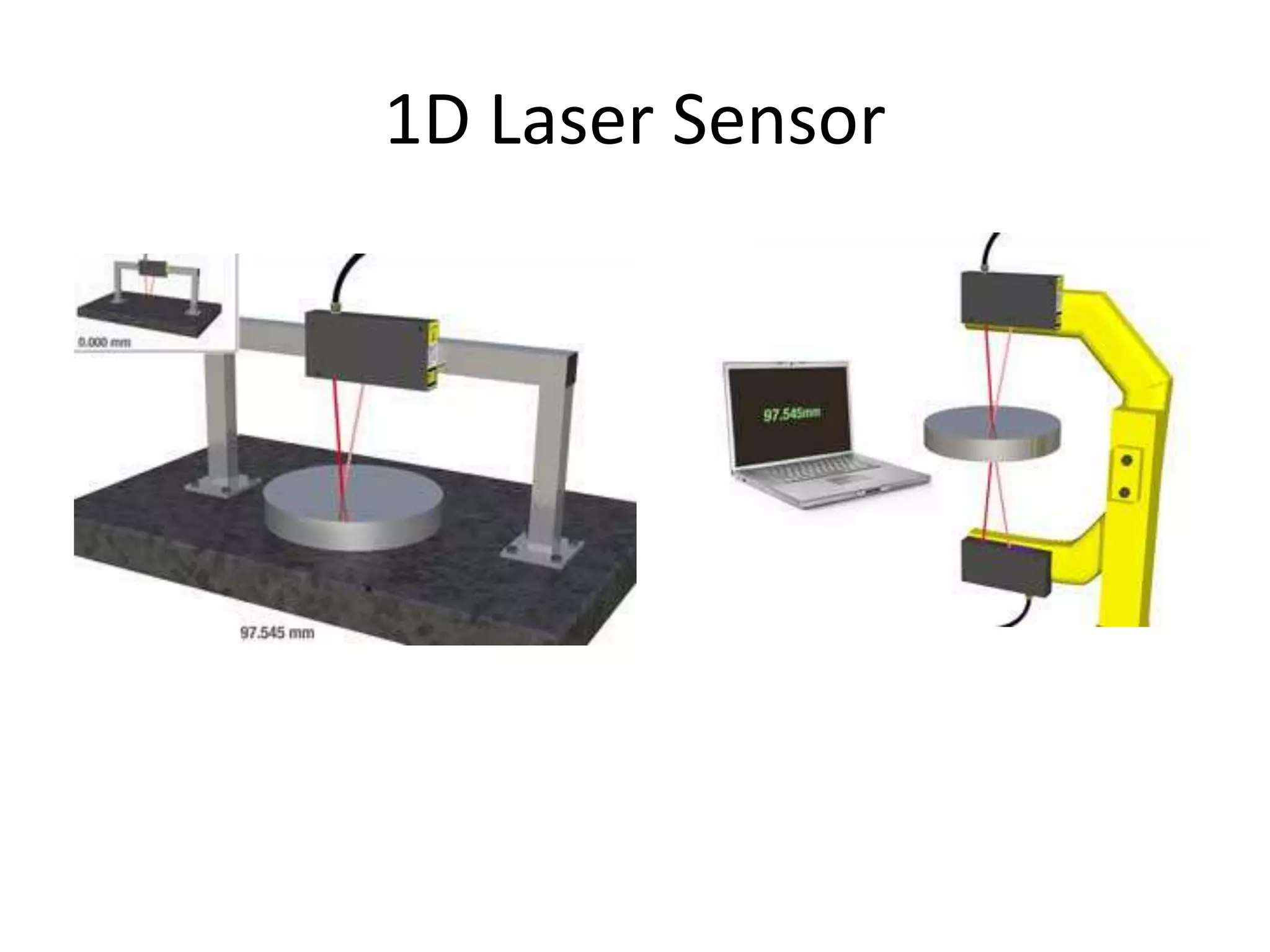
• Laser measuring sensors used in industry for
dimensional verification of length, width or
thickness.
- The 1D types can measure height, position,
thickness and run out / vibration at high
speed.
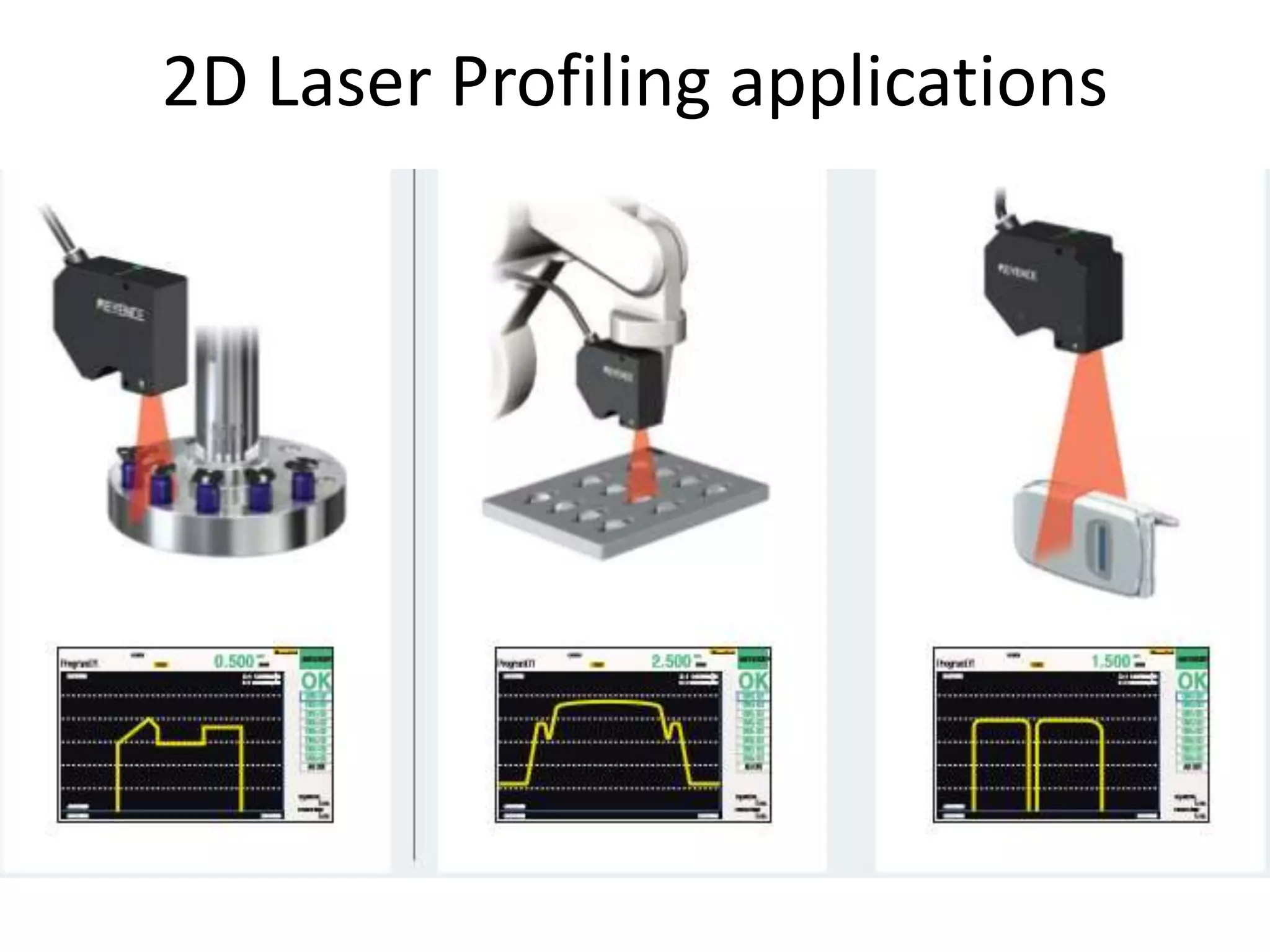
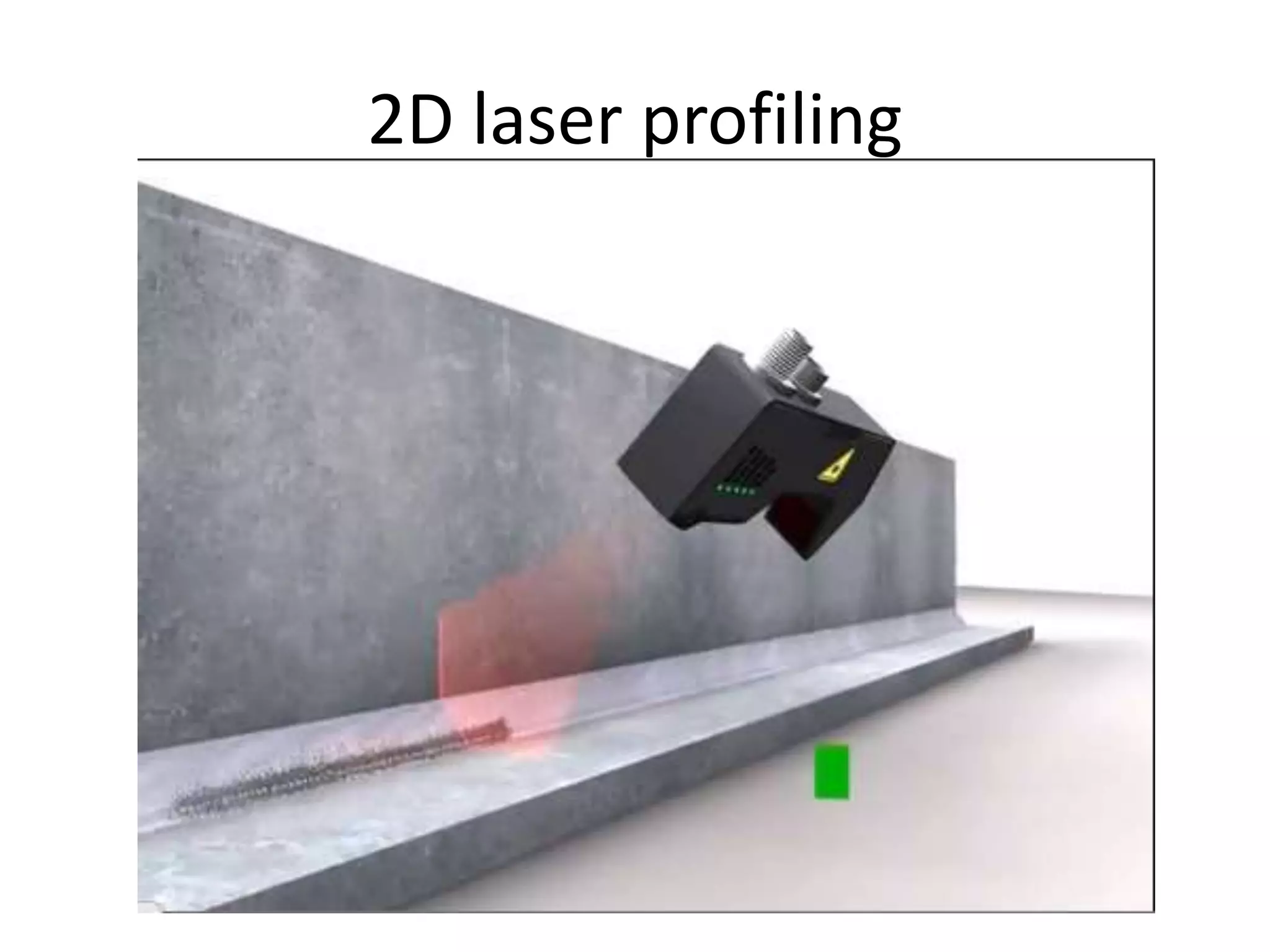
- The 2D types can quickly determine the target
profile, enabling high speed height, width,
angle and gap measurements.
1D Laser Sensor
2D Laser Profiling applications
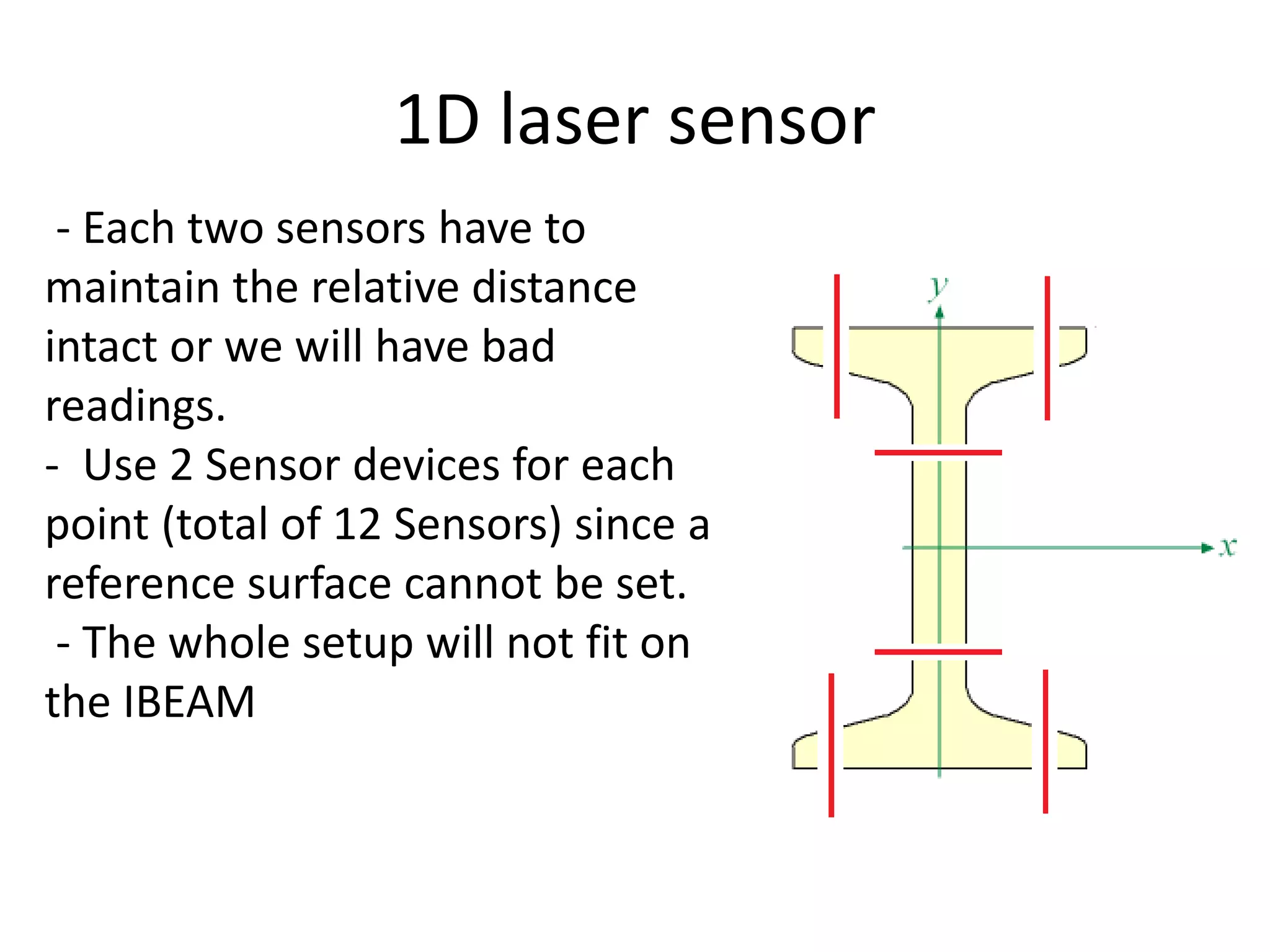
1D laser sensor
- Each two sensors have to
maintain the relative distance
intact or we will have bad
readings.
- Use 2 Sensor devices for each
point (total of 12 Sensors) since a
reference surface cannot be set.
- The whole setup will not fit on
the IBEAM
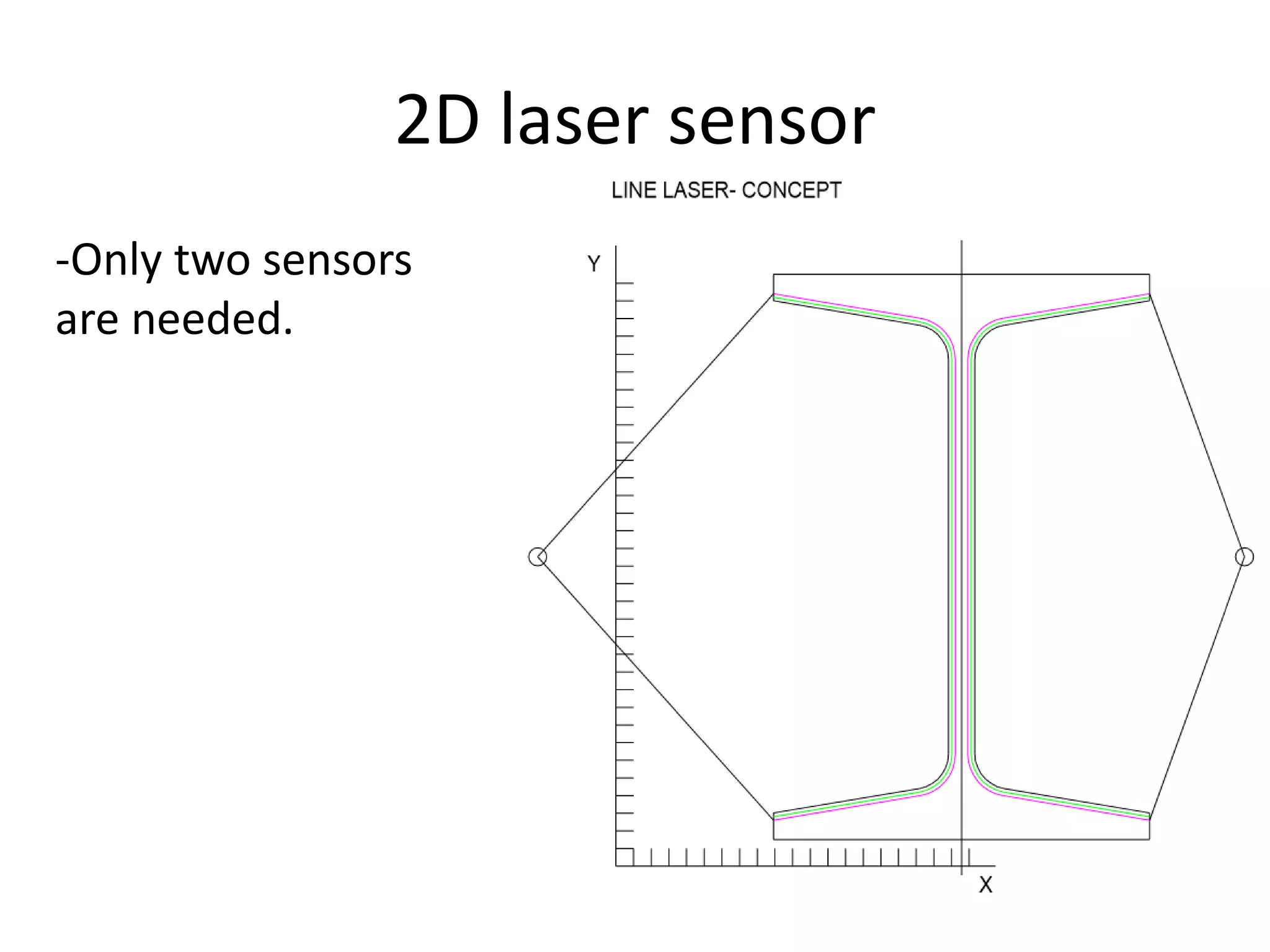
2D laser sensor
-Only two sensors
are needed.
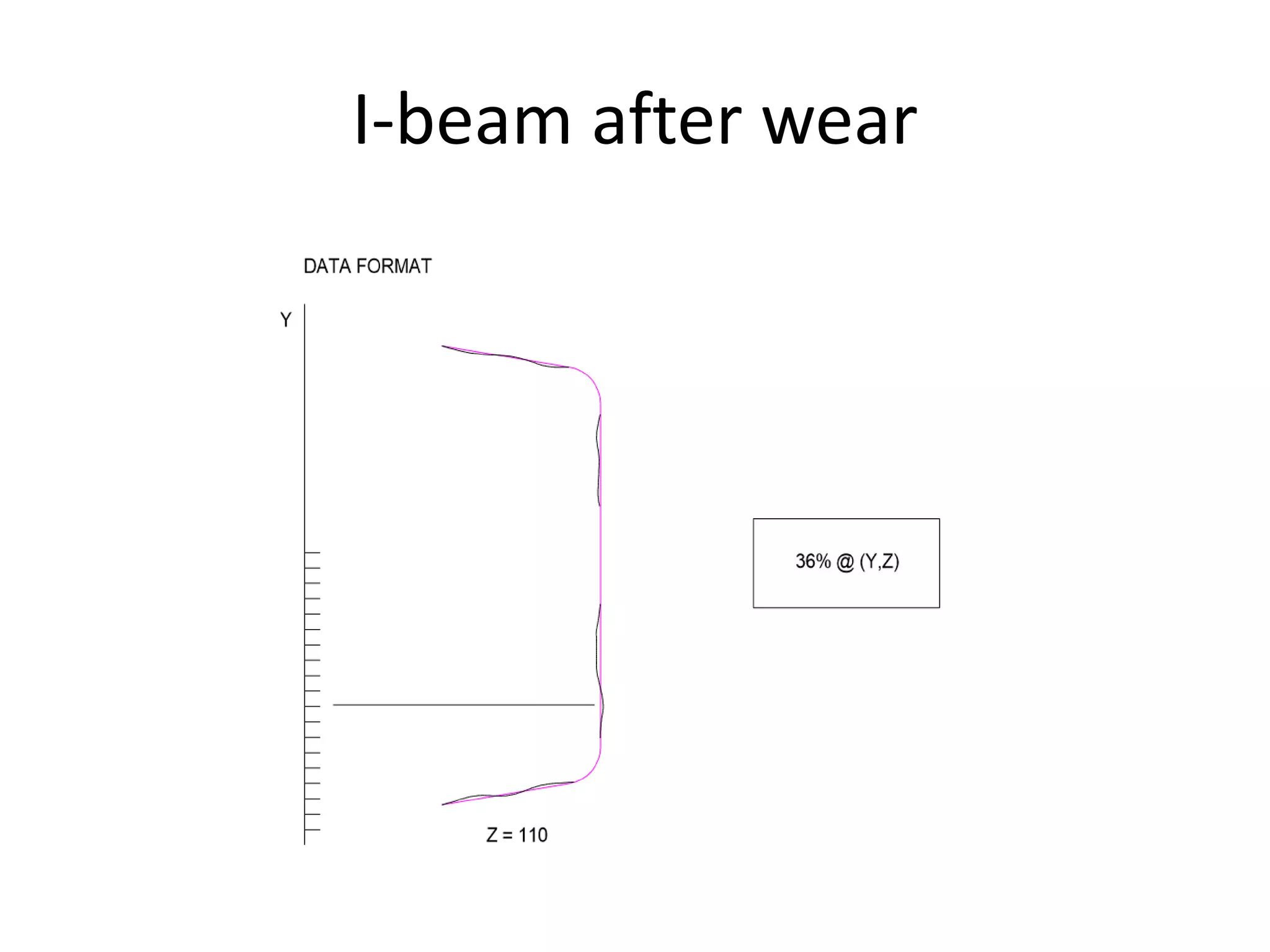
I-beam after wear
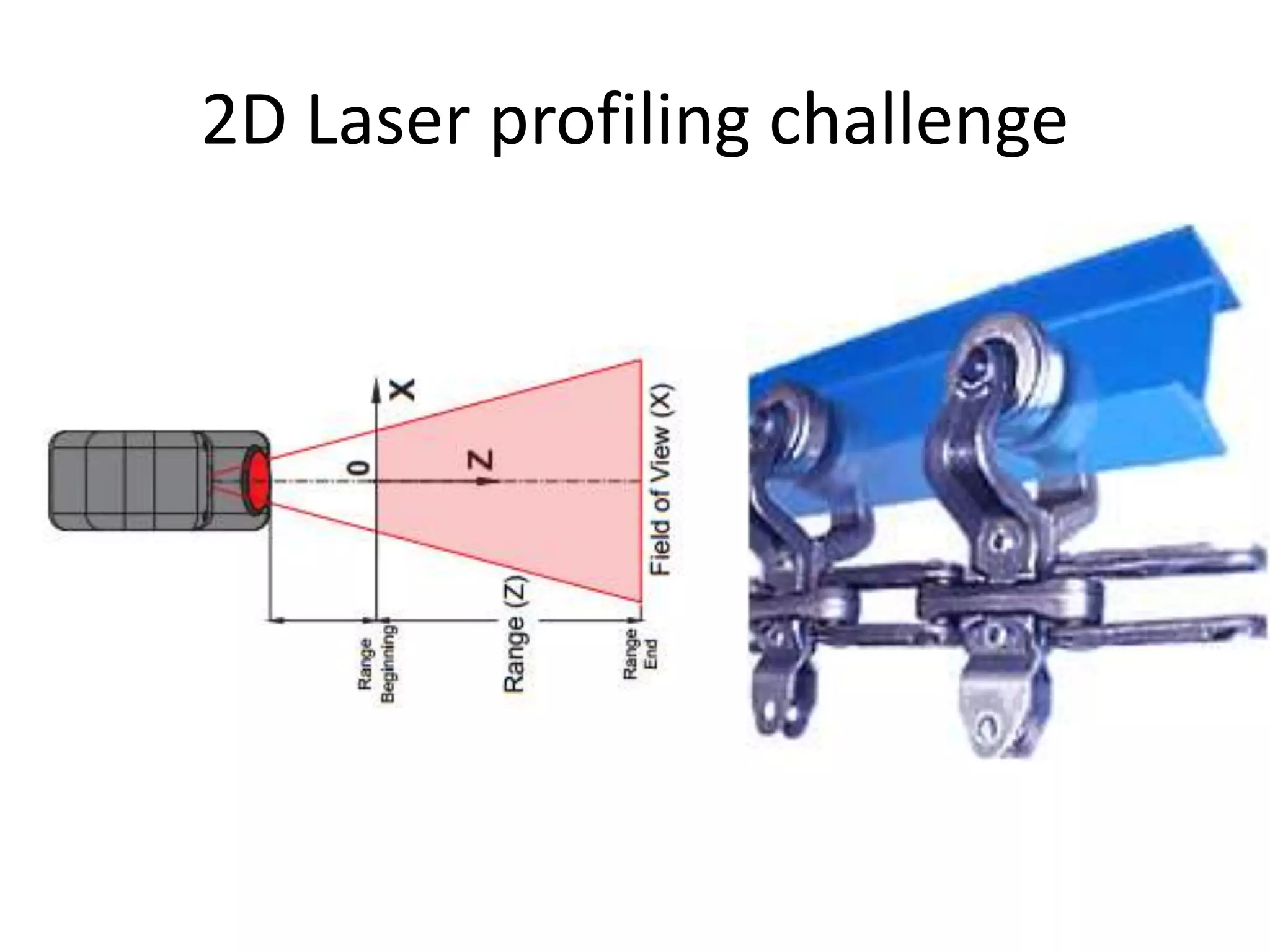
2D Laser profiling challenge
Typical Trolley Assembly
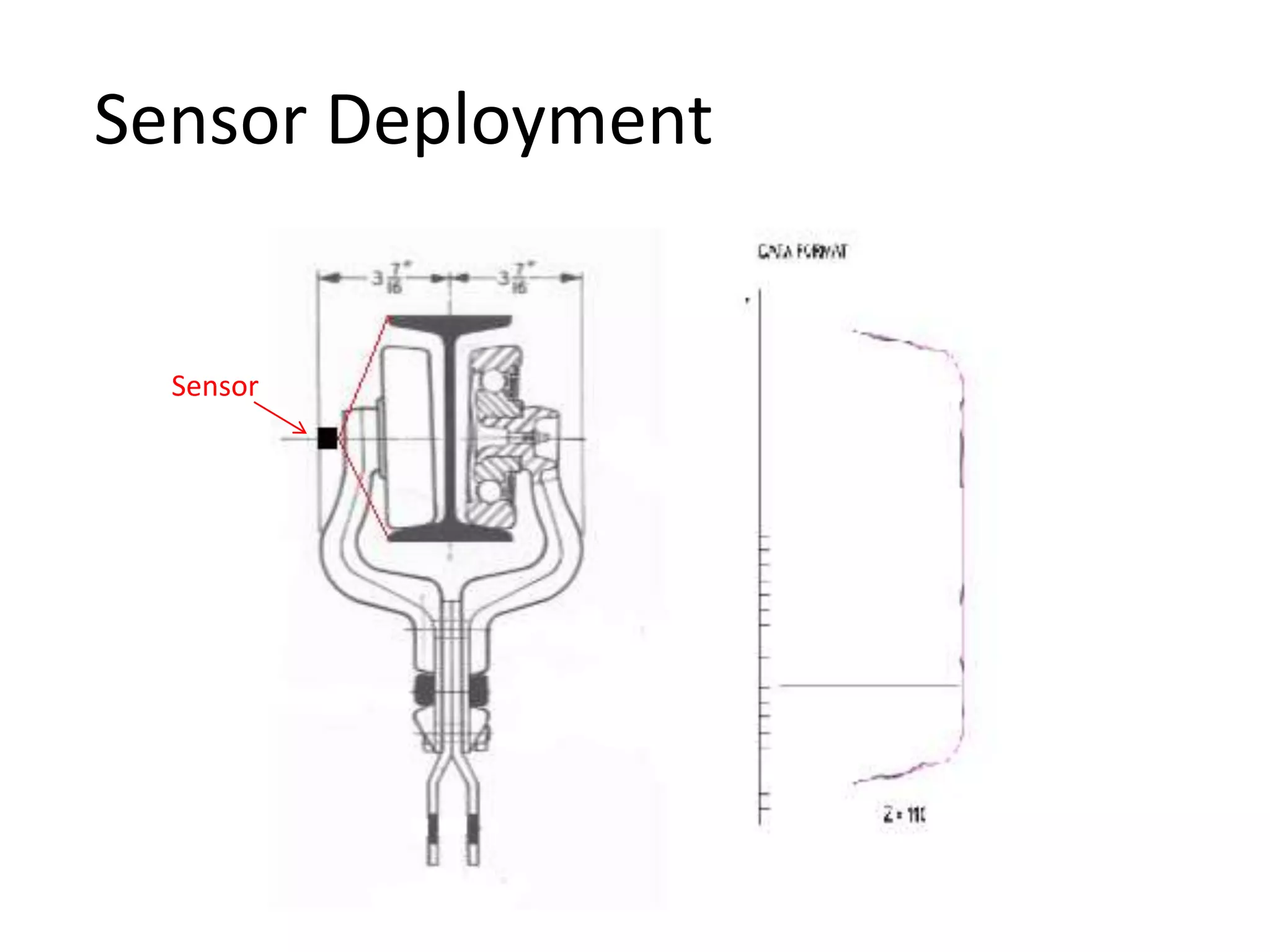
Sensor Deployment
Sensor
2D laser profiling

Conveyor Track Wear Monitoring System (1)

  • 1.
    Conveyor Track WearMonitoring System SensorData Tech & Chrysler Group LLC
  • 2.
    Technology preview • EddyCurrent • Hall effect Sensing • Ultrasound Method • Laser
  • 3.
    Eddy Current Method •uses electromagnetic induction to detect flaws in conductive materials
  • 4.
  • 5.
    Eddy Current Method -the surface of the material must be accessible. - the finish of the material may cause bad readings. - Increase in temperature due to the increase in internal energy cause bad readings. - flaws that lie parallel to the probe may be undetectable. - the depth of penetration into the material is limited by the materials' conductivity
  • 6.
    Hall Effect Sensing •Measurements are made by placing a small target ball on the inside of a container while holding a magnetic Hall probe in the outside. • When material thickness changes, the distance between the target ball and the probe also changes, which affects the magnetic field and changes the induced voltage in the Hall Effect sensor in a predictable way
  • 7.
    Hall Effect Sensing •Advantages: - Material sound velocity is not needed because measurements are independent of material properties. - The probe can be scanned over an area to quickly locate minimum thickness. - Small radius areas and extremely thin samples can be measured.
  • 8.
    Hall Effect Sensing •Disadvantages: - Access to both sides of the material is necessary: small reference ball on the inside, probe on the outside. - Only for non-magnetic materials such as plastic, glass, and aluminum. (Nearby Magnetic Objects and Magnetic Fields mess up the readings) - Maximum measurable thickness is 10mm (0.400 inch).
  • 9.
    Ultrasound Technology • Ultrasoundprinciple is measuring the time it takes for a pulse of sound waves to travel through the test piece. The sound pulse travels from the contact surface to the opposite surface, and bounces back to the transducer as an echo that is detected by the gage.
  • 10.
    Ultrasound Technology • Advantages: -Measurements require access to only one side of the material. - Most engineering materials can be measured, except absorbent materials such as paper and Styrofoam. - Wide thickness range from 0.003” to several inches. - Can measure closed containers, large sheets, and other geometries where access to both sides is difficult.
  • 11.
    Ultrasound Technology • Disadvantages: -It is necessary to calibrate the instrument for material sound velocity since sound travels at a different speed through different materials. - Ultrasound requires a drop of a liquid medium (couplant) between the transducer tip and the part. - Certain material properties and part geometries such as temperature, porosity, and uneven surfaces may affect accuracy.
  • 12.
    Laser Technology • Lasermeasuring sensors used in industry for dimensional verification of length, width or thickness. - The 1D types can measure height, position, thickness and run out / vibration at high speed. - The 2D types can quickly determine the target profile, enabling high speed height, width, angle and gap measurements.
  • 13.
  • 14.
    2D Laser Profilingapplications
  • 15.
    1D laser sensor -Each two sensors have to maintain the relative distance intact or we will have bad readings. - Use 2 Sensor devices for each point (total of 12 Sensors) since a reference surface cannot be set. - The whole setup will not fit on the IBEAM
  • 16.
    2D laser sensor -Onlytwo sensors are needed.
  • 18.
  • 19.
  • 20.
  • 21.
  • 22.