BARBITURATES
SAYAN KUNDU
DR.B.C. ROY COLLEGE OF PHARMACY AND ALLIED
HEALTH SCIENCES
DEFINITION
Barbiturates have been popular hypnotics and
sedatives of the last century upto 1960s, but are
not used now to promote sleep or to calm patients.
However, they are described first because they
are the prototype of CNS depressants.
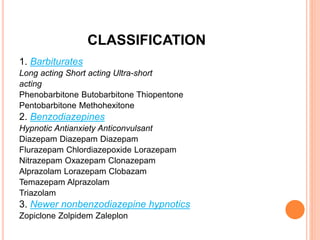
CLASSIFICATION
1. Barbiturates
Long acting Short acting Ultra-short
acting
Phenobarbitone Butobarbitone Thiopentone
Pentobarbitone Methohexitone
2. Benzodiazepines
Hypnotic Antianxiety Anticonvulsant
Diazepam Diazepam Diazepam
Flurazepam Chlordiazepoxide Lorazepam
Nitrazepam Oxazepam Clonazepam
Alprazolam Lorazepam Clobazam
Temazepam Alprazolam
Triazolam
3. Newer nonbenzodiazepine hypnotics
Zopiclone Zolpidem Zaleplon
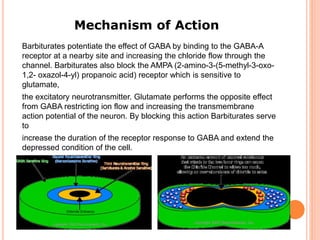
Mechanism of Action
Barbiturates potentiate the effect of GABA by binding to the GABA-A
receptor at a nearby site and increasing the chloride flow through the
channel. Barbiturates also block the AMPA (2-amino-3-(5-methyl-3-oxo-
1,2- oxazol-4-yl) propanoic acid) receptor which is sensitive to
glutamate,
the excitatory neurotransmitter. Glutamate performs the opposite effect
from GABA restricting ion flow and increasing the transmembrane
action potential of the neuron. By blocking this action Barbiturates serve
to
increase the duration of the receptor response to GABA and extend the
depressed condition of the cell.
PHARMACOLOGICAL ACTIONS
 A. On CNS
 1.Mild degree of sedation to general anaesthesia.
 2.Anticonvulsant effect.
 3.Respiratory centre depression
 B. On CVS
 1.Hypotension
 2.Decrease heart rate
 3.Circulatory collapse
 C. On liver
 1.Enzyme induction,so increase metabolism of itself &
other drugs.
 2.Stimulate glucoronyl transferase.
 D. On kidney
 1.Antidiuretic effect (increase ADH)
 2.Decrease urinary output by depressing GFR
INDICATION
1.As anticonvulsant
tetanus
eclampasia,
epilesy
cerebral haemorrhage
convulsant drug poisoning
during surgical anaesthesia
2.As sedative & hypnotic
3.Intravenous anaesthesia
4.Hyperbilurobinaemia & kernicterous
5.Haemolytic jaundice
6.Cholestasis
7.In narco analysis &narcopathy
8.speech prior to neuro surgery
9.Kernicterus in children
Contraindication
1.Pulmonary insufficiency,pulmonary emphysema
2.In idiosyncratic patient
3.Acute intermittent pophyria
4.In impaired renal function
5.In hepatic failure
6.Ptient with suicidal tendency
7.CCF & hypovolmic shock
Uses
 Barbiturates have been use in the past to treat a
variety of symptoms from insomnia and dementia to
neonatal jaundice
 They have largely been replaced with drugs such
as benzodiazepine due to their propensity for
addiction and reduced effect over the extended use
 Still used widely to treat seizures particularily
neonatal seizures
 Used when benzo class drugs fail
 Cannot be used for treatment of absence seizures
ADVERSE EFFECT OF BARBITURATES
 1.Pain;Localized or diffuse myalgic,neuralgic or arthritic
pain especially in psychoneurotic patient.
 2.Allergic skin lessions
 3.After effects
drowsiness
Hangover effect
Over excitement
Night mares & night terrors
weakness & lethargy
 4.Drug automatism
 5.Enzyme induction (so tolerance develops rapidly)
 6.Idiosyncratic reaction:barbiturates precipitate attacks
of acute porphyria in sussceptible individual
Doses of barbiturates
 The typical dose of phenobarbital use as
anticonvulsant,,
 For adult:50-100 mg,2/3 times per day
 For newborn:2-4 mg per kilogram of body weight per
day
 For infant:5-8 mg per kilogram pf body weight
 For sedation before surgery 100-200 mg,one hour
before surgery
Barbiturates

Barbiturates

  • 1.
    BARBITURATES SAYAN KUNDU DR.B.C. ROYCOLLEGE OF PHARMACY AND ALLIED HEALTH SCIENCES
  • 2.
    DEFINITION Barbiturates have beenpopular hypnotics and sedatives of the last century upto 1960s, but are not used now to promote sleep or to calm patients. However, they are described first because they are the prototype of CNS depressants.
  • 3.
    CLASSIFICATION 1. Barbiturates Long actingShort acting Ultra-short acting Phenobarbitone Butobarbitone Thiopentone Pentobarbitone Methohexitone 2. Benzodiazepines Hypnotic Antianxiety Anticonvulsant Diazepam Diazepam Diazepam Flurazepam Chlordiazepoxide Lorazepam Nitrazepam Oxazepam Clonazepam Alprazolam Lorazepam Clobazam Temazepam Alprazolam Triazolam 3. Newer nonbenzodiazepine hypnotics Zopiclone Zolpidem Zaleplon
  • 4.
    Mechanism of Action Barbituratespotentiate the effect of GABA by binding to the GABA-A receptor at a nearby site and increasing the chloride flow through the channel. Barbiturates also block the AMPA (2-amino-3-(5-methyl-3-oxo- 1,2- oxazol-4-yl) propanoic acid) receptor which is sensitive to glutamate, the excitatory neurotransmitter. Glutamate performs the opposite effect from GABA restricting ion flow and increasing the transmembrane action potential of the neuron. By blocking this action Barbiturates serve to increase the duration of the receptor response to GABA and extend the depressed condition of the cell.
  • 5.
    PHARMACOLOGICAL ACTIONS  A.On CNS  1.Mild degree of sedation to general anaesthesia.  2.Anticonvulsant effect.  3.Respiratory centre depression  B. On CVS  1.Hypotension  2.Decrease heart rate  3.Circulatory collapse  C. On liver  1.Enzyme induction,so increase metabolism of itself & other drugs.  2.Stimulate glucoronyl transferase.  D. On kidney  1.Antidiuretic effect (increase ADH)  2.Decrease urinary output by depressing GFR
  • 6.
    INDICATION 1.As anticonvulsant tetanus eclampasia, epilesy cerebral haemorrhage convulsantdrug poisoning during surgical anaesthesia 2.As sedative & hypnotic 3.Intravenous anaesthesia 4.Hyperbilurobinaemia & kernicterous 5.Haemolytic jaundice 6.Cholestasis 7.In narco analysis &narcopathy 8.speech prior to neuro surgery 9.Kernicterus in children
  • 7.
    Contraindication 1.Pulmonary insufficiency,pulmonary emphysema 2.Inidiosyncratic patient 3.Acute intermittent pophyria 4.In impaired renal function 5.In hepatic failure 6.Ptient with suicidal tendency 7.CCF & hypovolmic shock
  • 8.
    Uses  Barbiturates havebeen use in the past to treat a variety of symptoms from insomnia and dementia to neonatal jaundice  They have largely been replaced with drugs such as benzodiazepine due to their propensity for addiction and reduced effect over the extended use  Still used widely to treat seizures particularily neonatal seizures  Used when benzo class drugs fail  Cannot be used for treatment of absence seizures
  • 9.
    ADVERSE EFFECT OFBARBITURATES  1.Pain;Localized or diffuse myalgic,neuralgic or arthritic pain especially in psychoneurotic patient.  2.Allergic skin lessions  3.After effects drowsiness Hangover effect Over excitement Night mares & night terrors weakness & lethargy  4.Drug automatism  5.Enzyme induction (so tolerance develops rapidly)  6.Idiosyncratic reaction:barbiturates precipitate attacks of acute porphyria in sussceptible individual
  • 10.
    Doses of barbiturates The typical dose of phenobarbital use as anticonvulsant,,  For adult:50-100 mg,2/3 times per day  For newborn:2-4 mg per kilogram of body weight per day  For infant:5-8 mg per kilogram pf body weight  For sedation before surgery 100-200 mg,one hour before surgery