States of Fragility 2015
Meeting Post-2015 Ambitions
Stockholm School of Economics, 11 May 2015
Jolanda Profos, Peace & Conflict Adviser, OECD/DCD
1. From ‘fragile states’ to ‘states of fragility’
2. Reducing poverty will hinge on success
in building resilient institutions
3. Better allocation and smarter use of
development assistance
4. Looking beyond ODA
1
From ‘fragile states’
to ‘states of fragility’
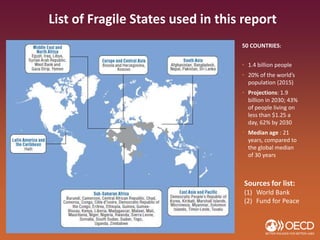
List of Fragile States used in this report
AMERICAS
Haiti
50 COUNTRIES:
• 1.4 billion people
• 20% of the world’s
population (2015)
• Projections: 1.9
billion in 2030; 43%
of people living on
less than $1.25 a
day, 62% by 2030
• Median age : 21
years, compared to
the global median
of 30 years
Sources for list:
(1) World Bank
(2) Fund for Peace
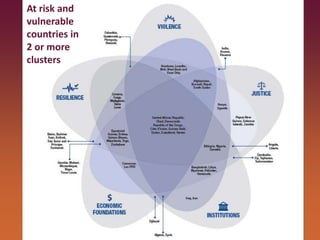
At risk and
vulnerable
countries in
2 or more
clusters
2
Reducing poverty will hinge on
success in building resilient institutions
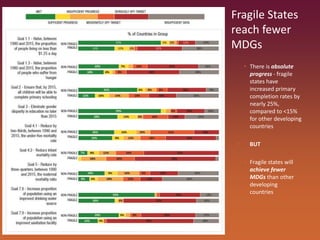
Fragile States
reach fewer
MDGs
• There is absolute
progress - fragile
states have
increased primary
completion rates by
nearly 25%,
compared to <15%
for other developing
countries
• BUT
• Fragile states will
achieve fewer
MDGs than other
developing
countries
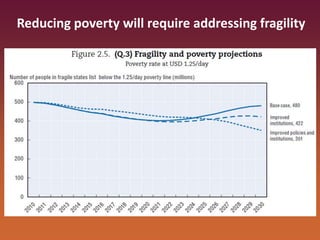
Reducing poverty will require addressing fragility
3
Better allocation of development
assistance
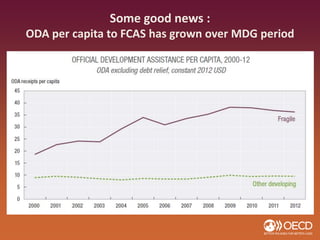
Some good news :
ODA per capita to FCAS has grown over MDG period
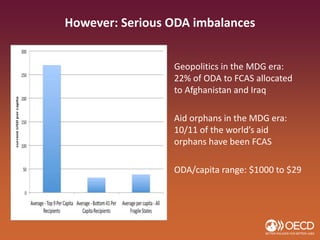
However: Serious ODA imbalances
• Geopolitics in the MDG era:
22% of ODA to FCAS allocated
to Afghanistan and Iraq
• Aid orphans in the MDG era:
10/11 of the world’s aid
orphans have been FCAS
• ODA/capita range: $1000 to $29
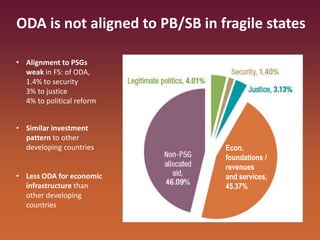
• Alignment to PSGs
weak in FS: of ODA,
1.4% to security
3% to justice
4% to political reform
• Similar investment
pattern to other
developing countries
• Less ODA for economic
infrastructure than
other developing
countries
ODA is not aligned to PB/SB in fragile states
Econ.
foundations /
revenues
and services,
45.37%
Towards smarter aid for fragile contexts?
– Some examples…
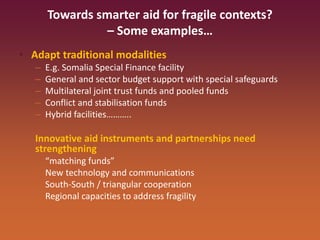
• Adapt traditional modalities
– E.g. Somalia Special Finance facility
– General and sector budget support with special safeguards
– Multilateral joint trust funds and pooled funds
– Conflict and stabilisation funds
– Hybrid facilities………..
Innovative aid instruments and partnerships need
strengthening
- “matching funds”
- New technology and communications
- South-South / triangular cooperation
- Regional capacities to address fragility
4
Looking beyond ODA
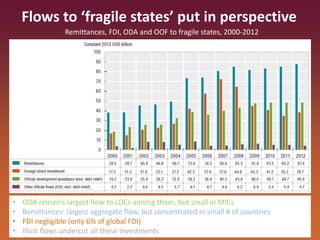
Flows to ‘fragile states’ put in perspective
Remittances, FDI, ODA and OOF to fragile states, 2000-2012
• ODA remains largest flow to LDCs among them, but small in MICs
• Remittances: largest aggregate flow, but concentrated in small # of countries
• FDI negligible (only 6% of global FDI)
• Illicit flows undercut all these investments
To download the full report, visit :
www.oecd.org/dac/governance-peace

States of Fragility 2015

  • 1.
    States of Fragility2015 Meeting Post-2015 Ambitions Stockholm School of Economics, 11 May 2015 Jolanda Profos, Peace & Conflict Adviser, OECD/DCD
  • 2.
    1. From ‘fragilestates’ to ‘states of fragility’ 2. Reducing poverty will hinge on success in building resilient institutions 3. Better allocation and smarter use of development assistance 4. Looking beyond ODA
  • 3.
    1 From ‘fragile states’ to‘states of fragility’
  • 4.
    List of FragileStates used in this report AMERICAS Haiti 50 COUNTRIES: • 1.4 billion people • 20% of the world’s population (2015) • Projections: 1.9 billion in 2030; 43% of people living on less than $1.25 a day, 62% by 2030 • Median age : 21 years, compared to the global median of 30 years Sources for list: (1) World Bank (2) Fund for Peace
  • 5.
    At risk and vulnerable countriesin 2 or more clusters
  • 6.
    2 Reducing poverty willhinge on success in building resilient institutions
  • 7.
    Fragile States reach fewer MDGs •There is absolute progress - fragile states have increased primary completion rates by nearly 25%, compared to <15% for other developing countries • BUT • Fragile states will achieve fewer MDGs than other developing countries
  • 8.
    Reducing poverty willrequire addressing fragility
  • 9.
    3 Better allocation ofdevelopment assistance
  • 10.
    Some good news: ODA per capita to FCAS has grown over MDG period
  • 11.
    However: Serious ODAimbalances • Geopolitics in the MDG era: 22% of ODA to FCAS allocated to Afghanistan and Iraq • Aid orphans in the MDG era: 10/11 of the world’s aid orphans have been FCAS • ODA/capita range: $1000 to $29
  • 12.
    • Alignment toPSGs weak in FS: of ODA, 1.4% to security 3% to justice 4% to political reform • Similar investment pattern to other developing countries • Less ODA for economic infrastructure than other developing countries ODA is not aligned to PB/SB in fragile states Econ. foundations / revenues and services, 45.37%
  • 13.
    Towards smarter aidfor fragile contexts? – Some examples… • Adapt traditional modalities – E.g. Somalia Special Finance facility – General and sector budget support with special safeguards – Multilateral joint trust funds and pooled funds – Conflict and stabilisation funds – Hybrid facilities……….. Innovative aid instruments and partnerships need strengthening - “matching funds” - New technology and communications - South-South / triangular cooperation - Regional capacities to address fragility
  • 14.
  • 15.
    Flows to ‘fragilestates’ put in perspective Remittances, FDI, ODA and OOF to fragile states, 2000-2012 • ODA remains largest flow to LDCs among them, but small in MICs • Remittances: largest aggregate flow, but concentrated in small # of countries • FDI negligible (only 6% of global FDI) • Illicit flows undercut all these investments
  • 16.
    To download thefull report, visit : www.oecd.org/dac/governance-peace