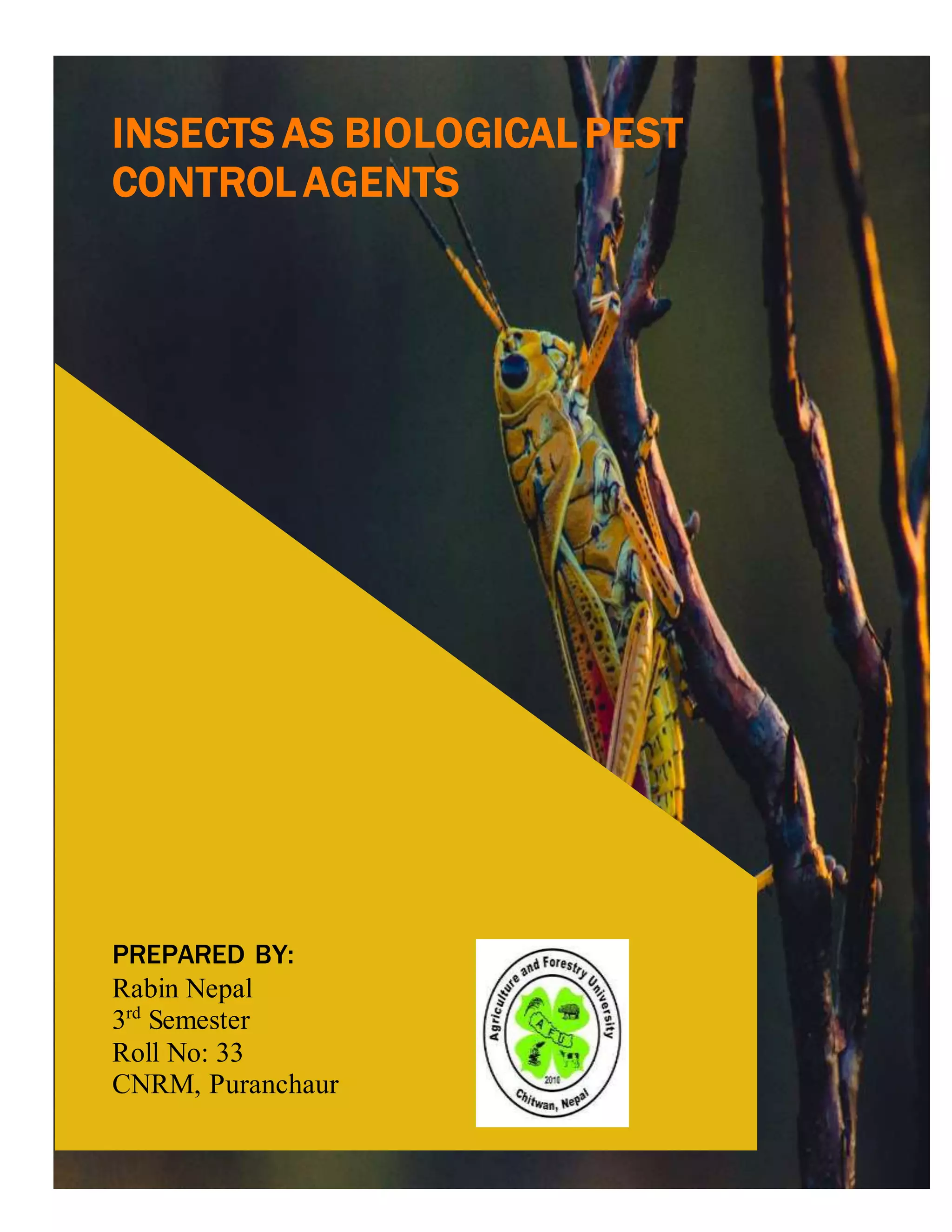
INSECTS AS BIOLOGICAL PEST
CONTROL AGENTS
PREPARED BY:
Rabin Nepal
3rd
Semester
Roll No: 33
CNRM, Puranchaur
REPORT TITLE
PAGE 2
INTRODUCTION
Many of us view insects in terms of its harmful sides, the way it damages the crop species,
transmit diseases and causes negative impact on human welfare. But beside these negative
aspects, there are a lot of beneficial plots hidden behind insects. Their role as pollinator,
scavenger and usefulness of various insects such as honey bee, silkworm, lac insects too has
added great importance not only in human life but also to the ecosystem. In addition to these, one
of the underrated but a major positive aspect of insect is the way it has been acting as a
biocontrol agent. Insect as biological control agent has been playing a great addition in
controlling of pest such as mites, pathogen, pant diseases and even other harmful insects. Insect
predators and parasitoids attack and feed on other insects, particularly on insect pests of plants
and thus considered natural enemies. Through this type of feeding, natural enemies contribute to
a type of pest regulation referred to as natural biological control. Natural enemies responsible
nearby 33 % of the natural pest control in cultivated systems. Beyond natural biological control,
natural enemies can be manipulated as part of integrated pest management programs through the
importation and establishment of exotic natural enemy species (classical biological control),
direct manipulation of populations (augmentative biological control), and, more to this research,
through manipulation of their environment (conservation biological control). Their role in pest
management is studied under two major categories: predators and parasitoids.
Predators
Predators are mainly free-living species that directly consume a large number of prey during
their whole lifetime. Given that many major crop pests are insects, many of the predators used in
biological control are insectivorous species. Predators catch and eat their prey. Some common
predatory insects include ladybird beetles, carabid (ground) beetles, staphylinid (rove) beetles,
syrphid (hover) flies, lacewings, minute pirate bugs, nabid bugs, big-eyed bugs, midges and
wasps.
Predator Pest
Tiger Beetle Sting bug of rice
Lady Bird Beetle Aphid, Scaly insects, Mealy bugs
Spotted Lady Beetle Larvae of Colorado potato beetle
Hoverfly Aphids
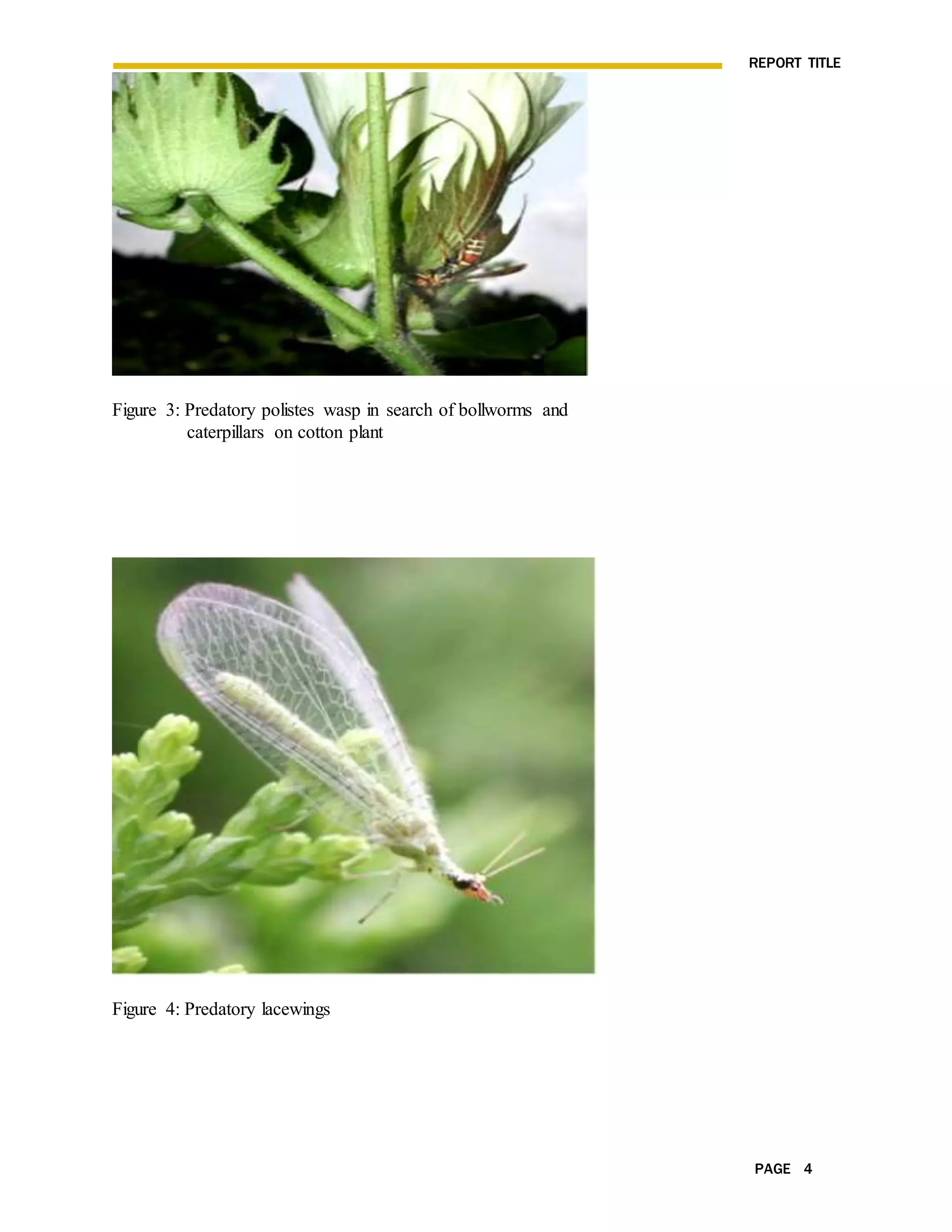
Polistes Wasp Bollworms, Caterpillar
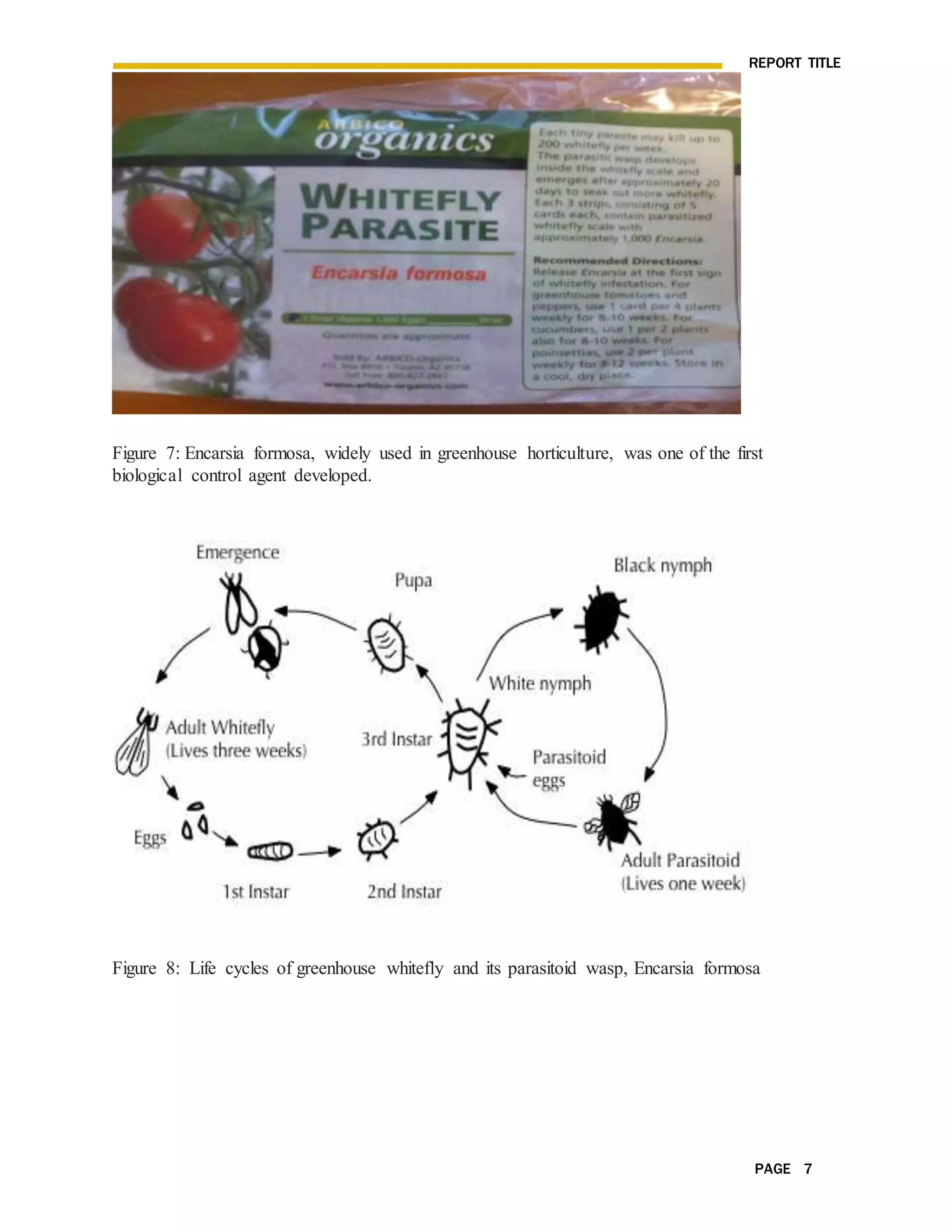
Lacewings Aphids, Mites, Scale insects
REPORT TITLE
PAGE 3
Figure 1: Preying mantid consuming insect prey. Photo credit: Jon Lelito, Dept. of Entomology,
Penn State University.
Figure 2: Hoverfly larvae eating pea aphids. Photo credit: agefotostock
REPORT TITLE
PAGE 4
Figure 3: Predatory polistes wasp in search of bollworms and
caterpillars on cotton plant
Figure 4: Predatory lacewings
REPORT TITLE
PAGE 5
Parasitoids
Parasitoids (sometimes called parasites) do not usually eat their hosts directly. Adult parasitoids
lay their eggs in, on, or near their host insect. When the eggs hatch, the immature parasitoids use
the host as food. Many parasitoids are very small wasps and are not easily noticed. Tachinid flies
are another group of parasitoids. They look like large houseflies and deposit their white, oval
eggs on the backs of caterpillars and other pests. The eggs hatch, enter the host, and kill it.
Parasitoids often require a source of food in addition to their host insect, such as nectar or pollen.
Parasitoid Feed Upon
Ichneumonid Wasp Caterpillar
Braconid Wasp Caterpillar, Aphids
Tachinid Flies Beetle larvae, True bugs
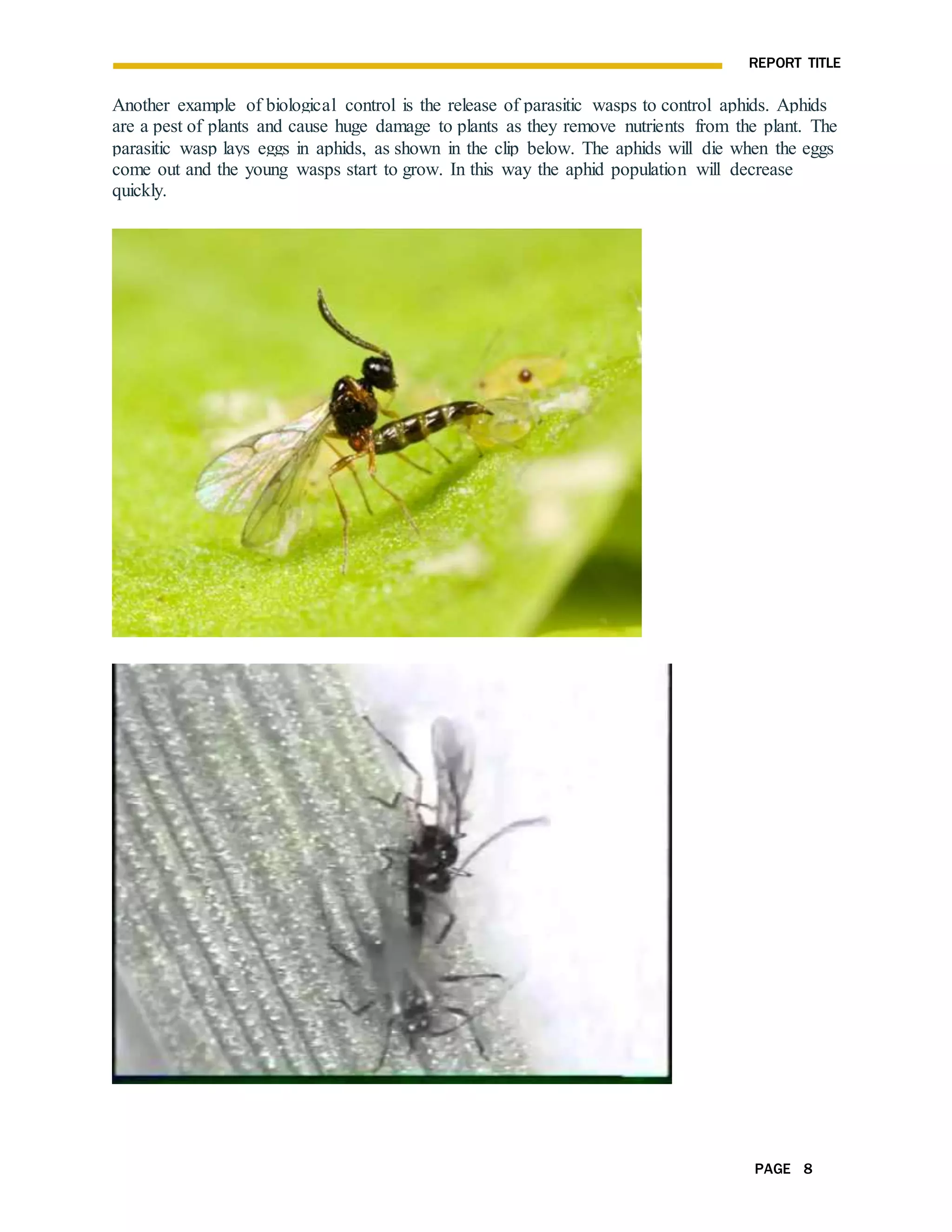
Chalcid Wasp (Encarsia Formosa) Whitefly
Anaphes flavipes Egg parasitoid of chrysomelidae
Cotesia glomeratus Larval parasitoid of cabbage butterfly
Diadegma insulare Diamond black moth larvae
Encarsia inaron Whitefly
Trichogramma sps Eggs of noctuidae, eggs of Chilo
partellus(maize stem borer)
Trissolcus basali Green sting bug
Athrycia cinerea Armyworm
Aleochara bilineata Cabbage root maggot
Aleiodes indiscretus Gypsy moth caterpillar
REPORT TITLE
PAGE 6
Figure 5. Parasitic ichneumonid wasp. Photo credit: Merle Shepard, Clemson
University, Bugwood.org
Figure 6: A parasitoid wasp Aleiodes indiscretus parasitizing gypsy moth caterpillar, a serious
pest of forestry
REPORT TITLE
PAGE 7
Figure 7: Encarsia formosa, widely used in greenhouse horticulture, was one of the first
biological control agent developed.
Figure 8: Life cycles of greenhouse whitefly and its parasitoid wasp, Encarsia formosa
REPORT TITLE
PAGE 8
Another example of biological control is the release of parasitic wasps to control aphids. Aphids
are a pest of plants and cause huge damage to plants as they remove nutrients from the plant. The
parasitic wasp lays eggs in aphids, as shown in the clip below. The aphids will die when the eggs
come out and the young wasps start to grow. In this way the aphid population will decrease
quickly.
REPORT TITLE
PAGE 9
REFERENCES
Richards, O. W, and R. G. Davies. (1997). Imm’s General Textbook of Entomology. Vol. I and
II. Chapman and Hall, London
BIOCOMES. (n.d.). Biological control examples. Retrieved from
http://www.biocomes.eu/biological-control/biological-control-examples/
Barbercheck, M.E. (2019). Biological Control of Insect Pests. Retrieved from
https://eorganic.org/node/919#:~:text=Biological%20control%20using%20pathogens%2
0is%20often%20called%20microbial%20control.&text=Several%20insect%2Dpathogeni
c%20fungi%20are,where%20humidity%20is%20relatively%20high.
Reddy, N.H. (2018). Biological Control of Pest. Retrieved from
https://www2.slideshare.net/NelaturiHimashankarr/biological-control-of-pest-
119625030?qid=c9a8c2c3-07ce-40cd-b49e-5e4fbc30a159&v=&b=&from_search=2
Wikipedia. (2020). Biological Pest Control. Retrieved from
https://en.wikipedia.org/wiki/Biological_pest_control
Bhandari, G. (n.d.). Role of Beneficial Insects. Retrieved from
https://drive.google.com/file/d/1C2IWf0r_QNwxmp8Mkm9zASMKewkzNZLz/view

Insects as biological pest control agents

  • 1.
    INSECTS AS BIOLOGICALPEST CONTROL AGENTS PREPARED BY: Rabin Nepal 3rd Semester Roll No: 33 CNRM, Puranchaur
  • 2.
    REPORT TITLE PAGE 2 INTRODUCTION Manyof us view insects in terms of its harmful sides, the way it damages the crop species, transmit diseases and causes negative impact on human welfare. But beside these negative aspects, there are a lot of beneficial plots hidden behind insects. Their role as pollinator, scavenger and usefulness of various insects such as honey bee, silkworm, lac insects too has added great importance not only in human life but also to the ecosystem. In addition to these, one of the underrated but a major positive aspect of insect is the way it has been acting as a biocontrol agent. Insect as biological control agent has been playing a great addition in controlling of pest such as mites, pathogen, pant diseases and even other harmful insects. Insect predators and parasitoids attack and feed on other insects, particularly on insect pests of plants and thus considered natural enemies. Through this type of feeding, natural enemies contribute to a type of pest regulation referred to as natural biological control. Natural enemies responsible nearby 33 % of the natural pest control in cultivated systems. Beyond natural biological control, natural enemies can be manipulated as part of integrated pest management programs through the importation and establishment of exotic natural enemy species (classical biological control), direct manipulation of populations (augmentative biological control), and, more to this research, through manipulation of their environment (conservation biological control). Their role in pest management is studied under two major categories: predators and parasitoids. Predators Predators are mainly free-living species that directly consume a large number of prey during their whole lifetime. Given that many major crop pests are insects, many of the predators used in biological control are insectivorous species. Predators catch and eat their prey. Some common predatory insects include ladybird beetles, carabid (ground) beetles, staphylinid (rove) beetles, syrphid (hover) flies, lacewings, minute pirate bugs, nabid bugs, big-eyed bugs, midges and wasps. Predator Pest Tiger Beetle Sting bug of rice Lady Bird Beetle Aphid, Scaly insects, Mealy bugs Spotted Lady Beetle Larvae of Colorado potato beetle Hoverfly Aphids Polistes Wasp Bollworms, Caterpillar Lacewings Aphids, Mites, Scale insects
  • 3.
    REPORT TITLE PAGE 3 Figure1: Preying mantid consuming insect prey. Photo credit: Jon Lelito, Dept. of Entomology, Penn State University. Figure 2: Hoverfly larvae eating pea aphids. Photo credit: agefotostock
  • 4.
    REPORT TITLE PAGE 4 Figure3: Predatory polistes wasp in search of bollworms and caterpillars on cotton plant Figure 4: Predatory lacewings
  • 5.
    REPORT TITLE PAGE 5 Parasitoids Parasitoids(sometimes called parasites) do not usually eat their hosts directly. Adult parasitoids lay their eggs in, on, or near their host insect. When the eggs hatch, the immature parasitoids use the host as food. Many parasitoids are very small wasps and are not easily noticed. Tachinid flies are another group of parasitoids. They look like large houseflies and deposit their white, oval eggs on the backs of caterpillars and other pests. The eggs hatch, enter the host, and kill it. Parasitoids often require a source of food in addition to their host insect, such as nectar or pollen. Parasitoid Feed Upon Ichneumonid Wasp Caterpillar Braconid Wasp Caterpillar, Aphids Tachinid Flies Beetle larvae, True bugs Chalcid Wasp (Encarsia Formosa) Whitefly Anaphes flavipes Egg parasitoid of chrysomelidae Cotesia glomeratus Larval parasitoid of cabbage butterfly Diadegma insulare Diamond black moth larvae Encarsia inaron Whitefly Trichogramma sps Eggs of noctuidae, eggs of Chilo partellus(maize stem borer) Trissolcus basali Green sting bug Athrycia cinerea Armyworm Aleochara bilineata Cabbage root maggot Aleiodes indiscretus Gypsy moth caterpillar
  • 6.
    REPORT TITLE PAGE 6 Figure5. Parasitic ichneumonid wasp. Photo credit: Merle Shepard, Clemson University, Bugwood.org Figure 6: A parasitoid wasp Aleiodes indiscretus parasitizing gypsy moth caterpillar, a serious pest of forestry
  • 7.
    REPORT TITLE PAGE 7 Figure7: Encarsia formosa, widely used in greenhouse horticulture, was one of the first biological control agent developed. Figure 8: Life cycles of greenhouse whitefly and its parasitoid wasp, Encarsia formosa
  • 8.
    REPORT TITLE PAGE 8 Anotherexample of biological control is the release of parasitic wasps to control aphids. Aphids are a pest of plants and cause huge damage to plants as they remove nutrients from the plant. The parasitic wasp lays eggs in aphids, as shown in the clip below. The aphids will die when the eggs come out and the young wasps start to grow. In this way the aphid population will decrease quickly.
  • 9.
    REPORT TITLE PAGE 9 REFERENCES Richards,O. W, and R. G. Davies. (1997). Imm’s General Textbook of Entomology. Vol. I and II. Chapman and Hall, London BIOCOMES. (n.d.). Biological control examples. Retrieved from http://www.biocomes.eu/biological-control/biological-control-examples/ Barbercheck, M.E. (2019). Biological Control of Insect Pests. Retrieved from https://eorganic.org/node/919#:~:text=Biological%20control%20using%20pathogens%2 0is%20often%20called%20microbial%20control.&text=Several%20insect%2Dpathogeni c%20fungi%20are,where%20humidity%20is%20relatively%20high. Reddy, N.H. (2018). Biological Control of Pest. Retrieved from https://www2.slideshare.net/NelaturiHimashankarr/biological-control-of-pest- 119625030?qid=c9a8c2c3-07ce-40cd-b49e-5e4fbc30a159&v=&b=&from_search=2 Wikipedia. (2020). Biological Pest Control. Retrieved from https://en.wikipedia.org/wiki/Biological_pest_control Bhandari, G. (n.d.). Role of Beneficial Insects. Retrieved from https://drive.google.com/file/d/1C2IWf0r_QNwxmp8Mkm9zASMKewkzNZLz/view