ANA RALLO
PABLO FUENTES
ROXANE HOFER
NACHO ARNANZ
MARTA ALONSO
COOPERATIVE LEARNING
OTHERSIDERS
COOPERATIVE LEARNING
 Video
 Diversity inside the clasroom.
 Mix of work parts.
 More than a methodology .
 Social skills.
 Solve problems.
 Teach as a content.
GROUP DISTRIBUTION
 Base teams: heterogeneous, stable.
 Sporadic teams: specific works or
sessions.
 Expert teams: each student is
specialized in a topic.
CLASS DISTRIBUTION
CLASS PHILOSOPHY
 Slogans are needed for the motivation of students.
 RULES:
 Respect.
 Share.
 Accept others’ decisions.
 Ask for help if needed.
 Work in silence.
 Comply tasks.
 Participation.
TEAM NOTEBOOK
A) Team composition
B) Role distribution:
 each one has a task.
 each one has a role.
 rotative roles
 roles’ review.
 commitment.
 Stages in the improvement processes:
 Constant use of skills.
 Teacher’s support.
 Correct use of skills.
 Daily use of skills.
 Teachers’ rules:
 Be specific.
 Define correctly the skill.
 Work step by step.
 Insisting in the repetitive practice.
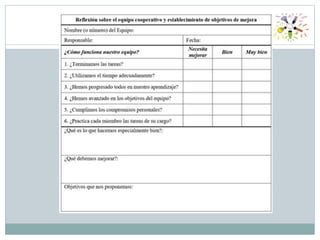
TEAM NOTEBOOK
A) Team composition
B) Role distribution
C) Teamplan
 Certain amount of time.
 Set specific Goals  improve productivity & output.
 Examples: process, presentation, attitude.
 General & permanent goals.
 Revision of Team performance
 Personalized workingplan grade
 Consistent effectiveness of cooperative learning: capacity
of systematic reflection
 Description of process
 Decisions (behavior: change, maintain)
TEAM NOTEBOOK
A) Team composition
B) Role distribution
C) Teamplan
D) The diary of sessions
 Secretary
 Celebration of teams and class
- Important part.
- achievement, success, appreciation, respect,
affirmation.
- ability of working in teams, satisfaction.
TEAM NOTEBOOK
TECHNIQUES:
Team assisted individualization (TAI)
- Same topic.
- Assessed performance.
- Needs of everyone.
- Responsibility (help, personal goals)
- Respect.
- Pace and level of learning.
- Benefits of group work.
Peer Tutoring
- Cooperative learning structure.
- Duality.
- Individual differences.
- Didactic relationship between participants.
- 2 classmates (same class & age)
- tutor
- Student
- detailed explanations: process of solving a
problem (no solutions should be already made!)
El rompecabezas (Jigsaw)
 Areas of knowledge.
 Contents are "fragmented" in different parts.
 Students need each other.
 Are "forced" to cooperate.
 Each one has only one piece of the puzzle.
Group-Investigation
- Same processes as in TAI technique.
- Each group searches for information of their
respective subtopic.
- Three types of evaluation: teacher, group and
individual.
Teams - Games Tournaments (TGT
technique)
 Base groups.
 Subject selection for the week.
 Cards.
 Tournament.

Cooperative learning

  • 1.
    ANA RALLO PABLO FUENTES ROXANEHOFER NACHO ARNANZ MARTA ALONSO COOPERATIVE LEARNING OTHERSIDERS
  • 4.
    COOPERATIVE LEARNING  Video Diversity inside the clasroom.  Mix of work parts.  More than a methodology .  Social skills.  Solve problems.  Teach as a content.
  • 5.
    GROUP DISTRIBUTION  Baseteams: heterogeneous, stable.  Sporadic teams: specific works or sessions.  Expert teams: each student is specialized in a topic.
  • 6.
  • 7.
    CLASS PHILOSOPHY  Slogansare needed for the motivation of students.  RULES:  Respect.  Share.  Accept others’ decisions.  Ask for help if needed.  Work in silence.  Comply tasks.  Participation.
  • 8.
    TEAM NOTEBOOK A) Teamcomposition B) Role distribution:  each one has a task.  each one has a role.  rotative roles  roles’ review.  commitment.
  • 9.
     Stages inthe improvement processes:  Constant use of skills.  Teacher’s support.  Correct use of skills.  Daily use of skills.  Teachers’ rules:  Be specific.  Define correctly the skill.  Work step by step.  Insisting in the repetitive practice. TEAM NOTEBOOK
  • 10.
    A) Team composition B)Role distribution C) Teamplan  Certain amount of time.  Set specific Goals  improve productivity & output.  Examples: process, presentation, attitude.  General & permanent goals.  Revision of Team performance  Personalized workingplan grade  Consistent effectiveness of cooperative learning: capacity of systematic reflection  Description of process  Decisions (behavior: change, maintain) TEAM NOTEBOOK
  • 13.
    A) Team composition B)Role distribution C) Teamplan D) The diary of sessions  Secretary  Celebration of teams and class - Important part. - achievement, success, appreciation, respect, affirmation. - ability of working in teams, satisfaction. TEAM NOTEBOOK
  • 14.
    TECHNIQUES: Team assisted individualization(TAI) - Same topic. - Assessed performance. - Needs of everyone. - Responsibility (help, personal goals) - Respect. - Pace and level of learning. - Benefits of group work.
  • 15.
    Peer Tutoring - Cooperativelearning structure. - Duality. - Individual differences. - Didactic relationship between participants. - 2 classmates (same class & age) - tutor - Student - detailed explanations: process of solving a problem (no solutions should be already made!)
  • 16.
    El rompecabezas (Jigsaw) Areas of knowledge.  Contents are "fragmented" in different parts.  Students need each other.  Are "forced" to cooperate.  Each one has only one piece of the puzzle.
  • 17.
    Group-Investigation - Same processesas in TAI technique. - Each group searches for information of their respective subtopic. - Three types of evaluation: teacher, group and individual.
  • 19.
    Teams - GamesTournaments (TGT technique)  Base groups.  Subject selection for the week.  Cards.  Tournament.