Overview of Groin Problems and Injuries
Introduction
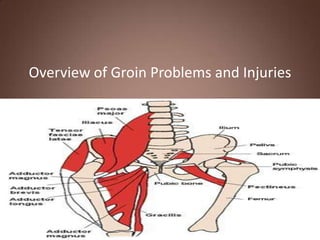
The groin areas Click
here to see an
illustration which are
located on each side of
the body in the folds
where the belly joins
the legs. The pubic area
lies between the two
groin areas.
Groin Injuries
Groin injuries most
commonly occur during:
• Sports or recreational
activities, such as ice
hockey, cross-country
skiing, basketball, and
soccer.
• Work-related activities.
• Work or projects around
the home.
• Motor vehicle accidents.
Other causes of groin problems
Groin pain not caused by
an injury to the groin may
be coming from other
parts of the body. This is
called radiating, or
referred, pain. Pulled
muscles, ligaments, or
tendons in the leg may
cause symptoms in the
groin. It is important to
look for other causes of
groin pain when you have
not had an injury.
Diagnosis
When discussing a groin injury, the
hip is a logical place to start. Your hip
joint is the largest weight bearing
joint in your body. It is designed to
absorb shock, generate force, while
maintaining an impressive range of
motion when functioning correctly.

Groin Injuries And Problems

  • 1.
    Overview of GroinProblems and Injuries
  • 2.
    Introduction The groin areasClick here to see an illustration which are located on each side of the body in the folds where the belly joins the legs. The pubic area lies between the two groin areas.
  • 3.
    Groin Injuries Groin injuriesmost commonly occur during: • Sports or recreational activities, such as ice hockey, cross-country skiing, basketball, and soccer. • Work-related activities. • Work or projects around the home. • Motor vehicle accidents.
  • 4.
    Other causes ofgroin problems Groin pain not caused by an injury to the groin may be coming from other parts of the body. This is called radiating, or referred, pain. Pulled muscles, ligaments, or tendons in the leg may cause symptoms in the groin. It is important to look for other causes of groin pain when you have not had an injury.
  • 5.
    Diagnosis When discussing agroin injury, the hip is a logical place to start. Your hip joint is the largest weight bearing joint in your body. It is designed to absorb shock, generate force, while maintaining an impressive range of motion when functioning correctly.