Downloaded 25 times

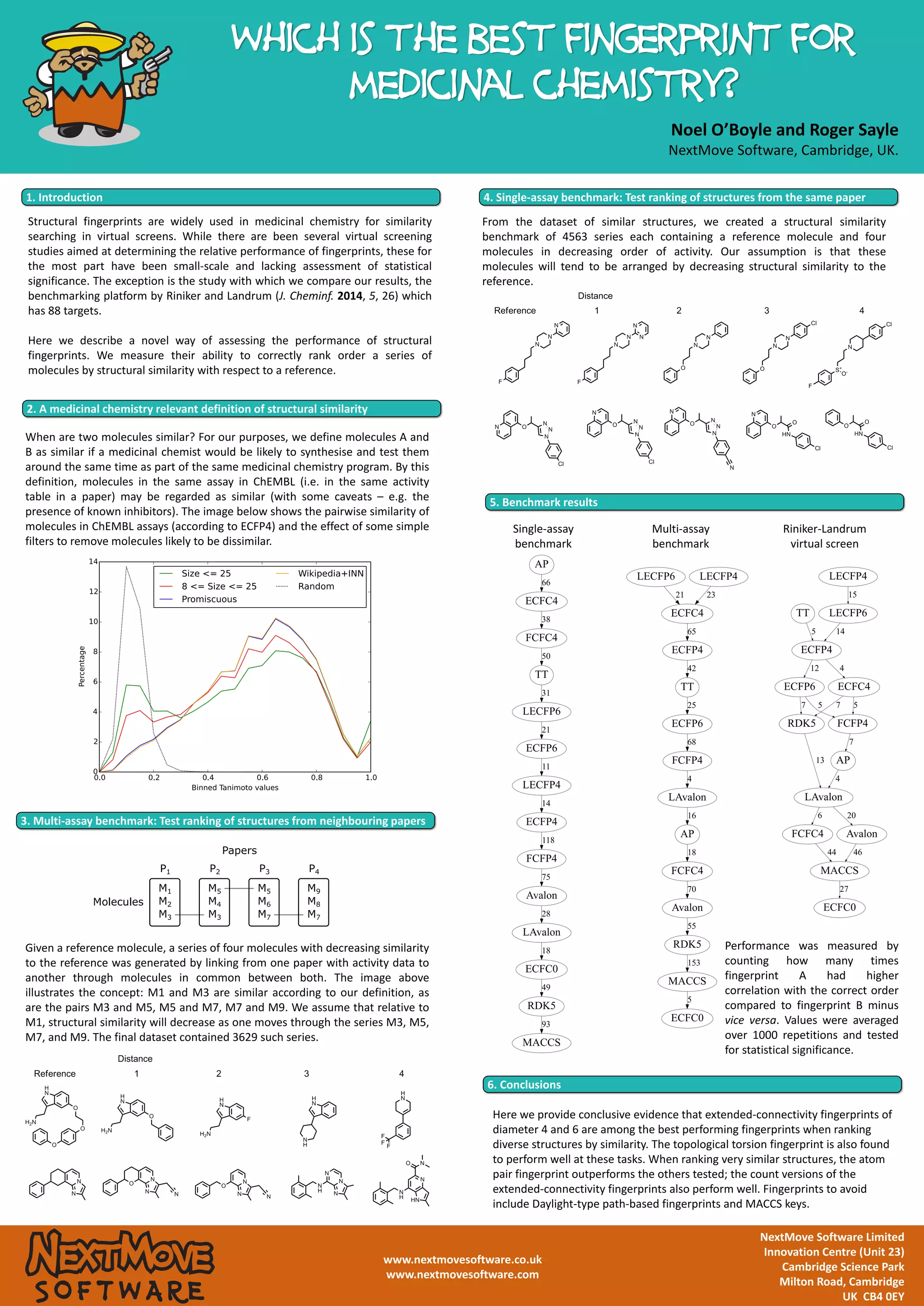

This document discusses the performance of structural fingerprints in medicinal chemistry for molecular similarity searching. It introduces a novel benchmarking approach, comparing the ranking ability of various fingerprints based on their ability to correlate with known structural similarities among molecules. The results highlight that extended-connectivity fingerprints and topological torsion fingerprints perform well, while certain types like daylight-path-based fingerprints are less effective.


![RDKit: Six Not-So-Easy Pieces [RDKit UGM 2016]](https://cdn.slidesharecdn.com/ss_thumbnails/rdkittautomersbasel16-161031122400-thumbnail.jpg?width=640&height=640&fit=bounds)


