Medically Unexplained
Physical Symptoms (MUPS)
Mohammed AlHinai
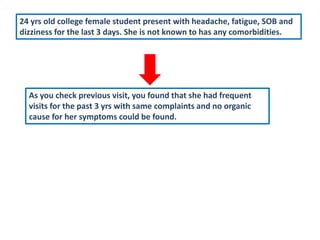
24 yrs old college female student present with headache, fatigue, SOB and
dizziness for the last 3 days. She is not known to has any comorbidities.
As you check previous visit, you found that she had frequent
visits for the past 3 yrs with same complaints and no organic
cause for her symptoms could be found.
Objective
• Definition of somatic form disorders
• Epidemiology.
• Clinical manifestation and diagnostic criteria of somatic form disorders.
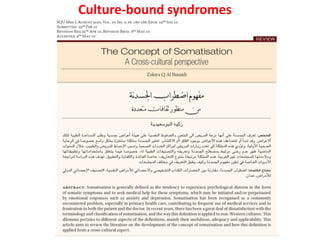
• The effect of culture to the presentation
• Approach to patient with somatic form disorders.
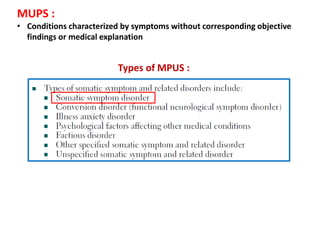
MUPS :
• Conditions characterized by symptoms without corresponding objective
findings or medical explanation
Types of MPUS :
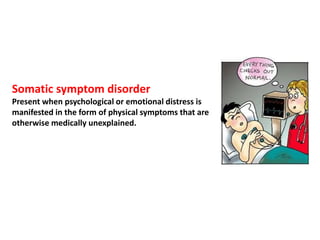
Somatic symptom disorder
Present when psychological or emotional distress is
manifested in the form of physical symptoms that are
otherwise medically unexplained.
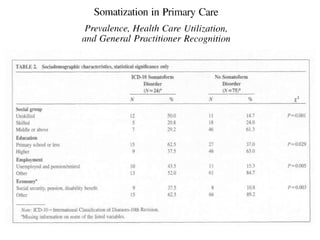
Epidemiology
• The prevalence of somatic symptom disorder in the general population
is an estimated 5% to 7%, making this one of the most common
categories of patient concerns in the primary care setting.
• An estimated 20% to 25% of patients who present with acute somatic
symptoms go on to develop a chronic somatic illness.
• Females tend to present with somatic symptom disorder more often
than males, with an estimated female-to-male ratio of 10:1.
Risk factors
• Female sex
• Fewer years of education
• Lower socioeconomic status or other social stressors
• History of childhood chronic illness
• History of sexual abuse or other childhood and adult trauma
• Concurrent general medical disorders (especially in older patients)
• Concurrent psychiatric disorder (especially depressive or anxiety
disorders)
• Family history of chronic illness
Clinical features
• Excessive thoughts, worrying, or
behaviors (time and energy)
related to the somatic symptoms
or to health concerns.
• One or more current somatic
symptoms that are long-standing
and cause distress or
psychosocial impairment.
• Pain symptoms – Joint pain, leg/arm pain, back pain, headache,
chest pain, abdominal pain, dysuria, and diffuse pain.
• Nonspecific symptoms – Fatigue, syncope, and dizziness
• Gastrointestinal symptoms – Nausea, vomiting, abdominal
pain, bloating, gas, and diarrhea.
• Cardiopulmonary symptoms – Chest pain, shortness of breath,
and palpitations.
• Neurologic symptoms – Movement disorders, sensory loss,
weakness, and paralysis
• Reproductive organ symptoms – Dyspareunia, dysmenorrhea,
and erectile dysfunction.
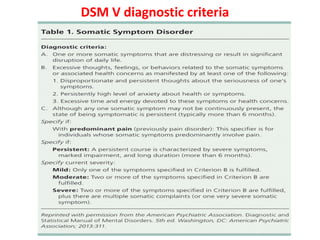
DSM V diagnostic criteria
Culture-bound syndromes
Approach to patient with
somatic symptoms disorders
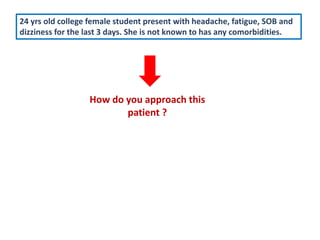
24 yrs old college female student present with headache, fatigue, SOB and
dizziness for the last 3 days. She is not known to has any comorbidities.
How do you approach this
patient ?
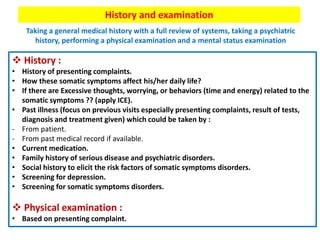
History and examination
Taking a general medical history with a full review of systems, taking a psychiatric
history, performing a physical examination and a mental status examination
 History :
• History of presenting complaints.
• How these somatic symptoms affect his/her daily life?
• If there are Excessive thoughts, worrying, or behaviors (time and energy) related to the
somatic symptoms ?? (apply ICE).
• Past illness (focus on previous visits especially presenting complaints, result of tests,
diagnosis and treatment given) which could be taken by :
- From patient.
- From past medical record if available.
• Current medication.
• Family history of serious disease and psychiatric disorders.
• Social history to elicit the risk factors of somatic symptoms disorders.
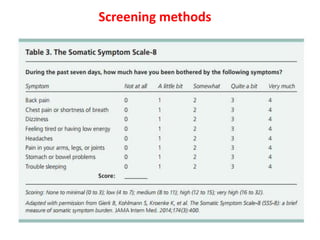
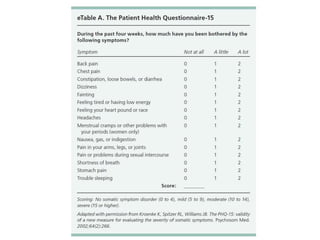
• Screening for depression.
• Screening for somatic symptoms disorders.
 Physical examination :
• Based on presenting complaint.
Screening methods
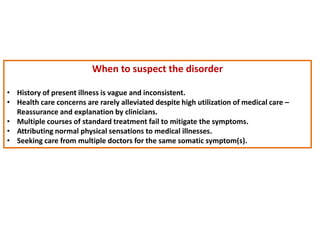
When to suspect the disorder
• History of present illness is vague and inconsistent.
• Health care concerns are rarely alleviated despite high utilization of medical care –
Reassurance and explanation by clinicians.
• Multiple courses of standard treatment fail to mitigate the symptoms.
• Attributing normal physical sensations to medical illnesses.
• Seeking care from multiple doctors for the same somatic symptom(s).
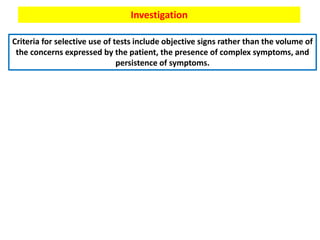
Investigation
Criteria for selective use of tests include objective signs rather than the volume of
the concerns expressed by the patient, the presence of complex symptoms, and
persistence of symptoms.
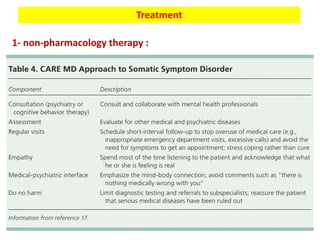
Treatment
1- non-pharmacology therapy :
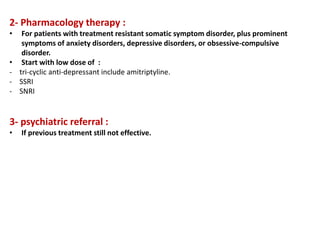
2- Pharmacology therapy :
• For patients with treatment resistant somatic symptom disorder, plus prominent
symptoms of anxiety disorders, depressive disorders, or obsessive-compulsive
disorder.
• Start with low dose of :
- tri-cyclic anti-depressant include amitriptyline.
- SSRI
- SNRI
3- psychiatric referral :
• If previous treatment still not effective.
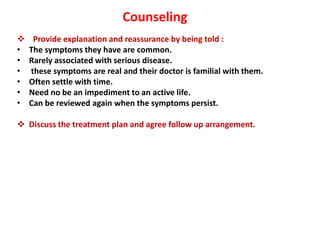
Counseling
 Provide explanation and reassurance by being told :
• The symptoms they have are common.
• Rarely associated with serious disease.
• these symptoms are real and their doctor is familial with them.
• Often settle with time.
• Need no be an impediment to an active life.
• Can be reviewed again when the symptoms persist.
 Discuss the treatment plan and agree follow up arrangement.
Prognosis
• Somatic symptoms disorders are generally chronic.
• Some studies shown that :
- 50% to 75% of patients with MUSD show improvement.
- 10% to 30% deteriorate.
• Better prognostic indicators include having fewer physical symptoms
and better functioning at baseline.
Reference
• Aafp.org,. 'Somatoform Disorders - American Family Physician'. N.p.,
2015. Web. 8 Apr. 2015.
• Diagnostic And Statistical Manual Of Mental Disorders Fifth Edi T Ion
DSM-5 ,American Psychiatric Association.
• The Concept of Somatisation, Cross-cultural perspective , Zakiya Q Al
Busaidi
• Up to date.

medically unexplained physical symptoms

  • 1.
  • 2.
    24 yrs oldcollege female student present with headache, fatigue, SOB and dizziness for the last 3 days. She is not known to has any comorbidities. As you check previous visit, you found that she had frequent visits for the past 3 yrs with same complaints and no organic cause for her symptoms could be found.
  • 3.
    Objective • Definition ofsomatic form disorders • Epidemiology. • Clinical manifestation and diagnostic criteria of somatic form disorders. • The effect of culture to the presentation • Approach to patient with somatic form disorders.
  • 4.
    MUPS : • Conditionscharacterized by symptoms without corresponding objective findings or medical explanation Types of MPUS :
  • 5.
    Somatic symptom disorder Presentwhen psychological or emotional distress is manifested in the form of physical symptoms that are otherwise medically unexplained.
  • 6.
    Epidemiology • The prevalenceof somatic symptom disorder in the general population is an estimated 5% to 7%, making this one of the most common categories of patient concerns in the primary care setting. • An estimated 20% to 25% of patients who present with acute somatic symptoms go on to develop a chronic somatic illness. • Females tend to present with somatic symptom disorder more often than males, with an estimated female-to-male ratio of 10:1.
  • 7.
    Risk factors • Femalesex • Fewer years of education • Lower socioeconomic status or other social stressors • History of childhood chronic illness • History of sexual abuse or other childhood and adult trauma • Concurrent general medical disorders (especially in older patients) • Concurrent psychiatric disorder (especially depressive or anxiety disorders) • Family history of chronic illness
  • 9.
    Clinical features • Excessivethoughts, worrying, or behaviors (time and energy) related to the somatic symptoms or to health concerns. • One or more current somatic symptoms that are long-standing and cause distress or psychosocial impairment. • Pain symptoms – Joint pain, leg/arm pain, back pain, headache, chest pain, abdominal pain, dysuria, and diffuse pain. • Nonspecific symptoms – Fatigue, syncope, and dizziness • Gastrointestinal symptoms – Nausea, vomiting, abdominal pain, bloating, gas, and diarrhea. • Cardiopulmonary symptoms – Chest pain, shortness of breath, and palpitations. • Neurologic symptoms – Movement disorders, sensory loss, weakness, and paralysis • Reproductive organ symptoms – Dyspareunia, dysmenorrhea, and erectile dysfunction.
  • 10.
  • 11.
  • 13.
    Approach to patientwith somatic symptoms disorders
  • 14.
    24 yrs oldcollege female student present with headache, fatigue, SOB and dizziness for the last 3 days. She is not known to has any comorbidities. How do you approach this patient ?
  • 15.
    History and examination Takinga general medical history with a full review of systems, taking a psychiatric history, performing a physical examination and a mental status examination  History : • History of presenting complaints. • How these somatic symptoms affect his/her daily life? • If there are Excessive thoughts, worrying, or behaviors (time and energy) related to the somatic symptoms ?? (apply ICE). • Past illness (focus on previous visits especially presenting complaints, result of tests, diagnosis and treatment given) which could be taken by : - From patient. - From past medical record if available. • Current medication. • Family history of serious disease and psychiatric disorders. • Social history to elicit the risk factors of somatic symptoms disorders. • Screening for depression. • Screening for somatic symptoms disorders.  Physical examination : • Based on presenting complaint.
  • 16.
  • 18.
    When to suspectthe disorder • History of present illness is vague and inconsistent. • Health care concerns are rarely alleviated despite high utilization of medical care – Reassurance and explanation by clinicians. • Multiple courses of standard treatment fail to mitigate the symptoms. • Attributing normal physical sensations to medical illnesses. • Seeking care from multiple doctors for the same somatic symptom(s).
  • 19.
    Investigation Criteria for selectiveuse of tests include objective signs rather than the volume of the concerns expressed by the patient, the presence of complex symptoms, and persistence of symptoms.
  • 20.
  • 21.
    2- Pharmacology therapy: • For patients with treatment resistant somatic symptom disorder, plus prominent symptoms of anxiety disorders, depressive disorders, or obsessive-compulsive disorder. • Start with low dose of : - tri-cyclic anti-depressant include amitriptyline. - SSRI - SNRI 3- psychiatric referral : • If previous treatment still not effective.
  • 22.
    Counseling  Provide explanationand reassurance by being told : • The symptoms they have are common. • Rarely associated with serious disease. • these symptoms are real and their doctor is familial with them. • Often settle with time. • Need no be an impediment to an active life. • Can be reviewed again when the symptoms persist.  Discuss the treatment plan and agree follow up arrangement.
  • 23.
    Prognosis • Somatic symptomsdisorders are generally chronic. • Some studies shown that : - 50% to 75% of patients with MUSD show improvement. - 10% to 30% deteriorate. • Better prognostic indicators include having fewer physical symptoms and better functioning at baseline.
  • 24.
    Reference • Aafp.org,. 'SomatoformDisorders - American Family Physician'. N.p., 2015. Web. 8 Apr. 2015. • Diagnostic And Statistical Manual Of Mental Disorders Fifth Edi T Ion DSM-5 ,American Psychiatric Association. • The Concept of Somatisation, Cross-cultural perspective , Zakiya Q Al Busaidi • Up to date.