Pharmaceutical and
Formulation Considerations
What is Pharmaceutical
technology?
• Pharmaceutical Technology is the discipline of
pharmacy that deals with the process of turning a
new chemical entity (NCE) into a medication to be used
safely and effectively by patients.
• It is also called the science of dosage form design.
• It deals with the formulation of a pure drug substance
into a dosage form
Drug and medicine
• Medicine is actually the drug delivery system
• That is, they are means of introducing drugs to the body
in safe, efficacious, reproducible and convenient ways
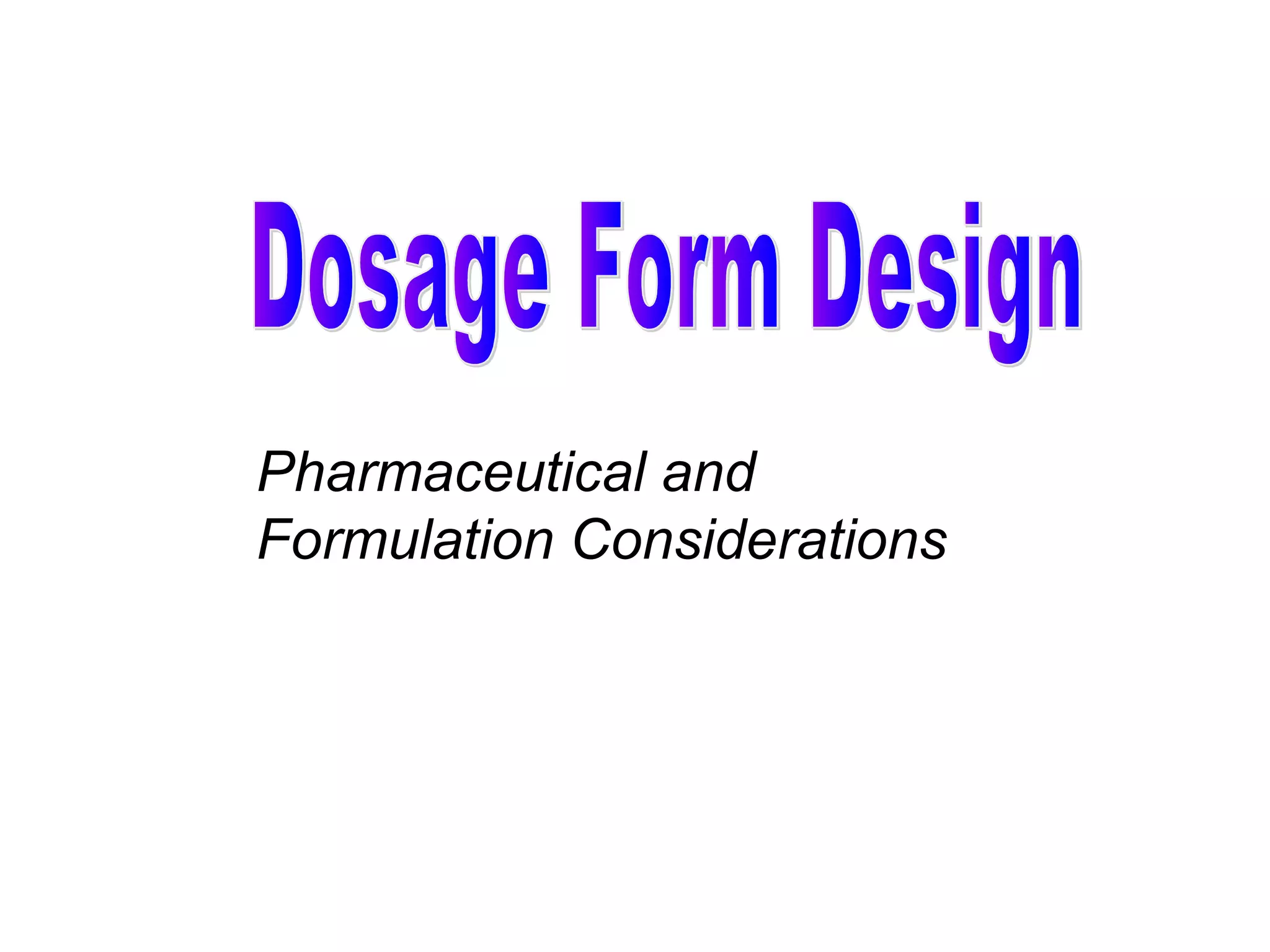
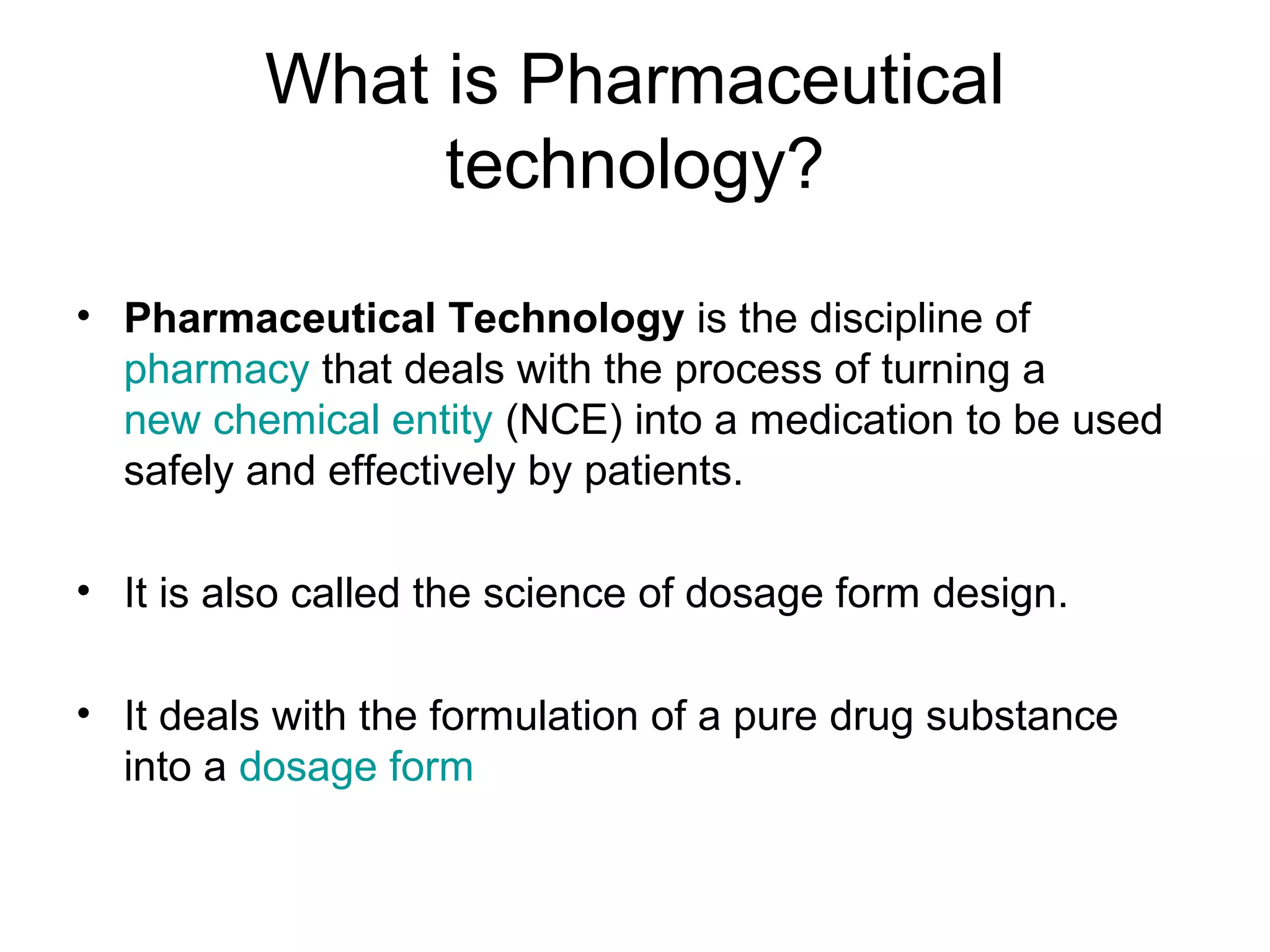
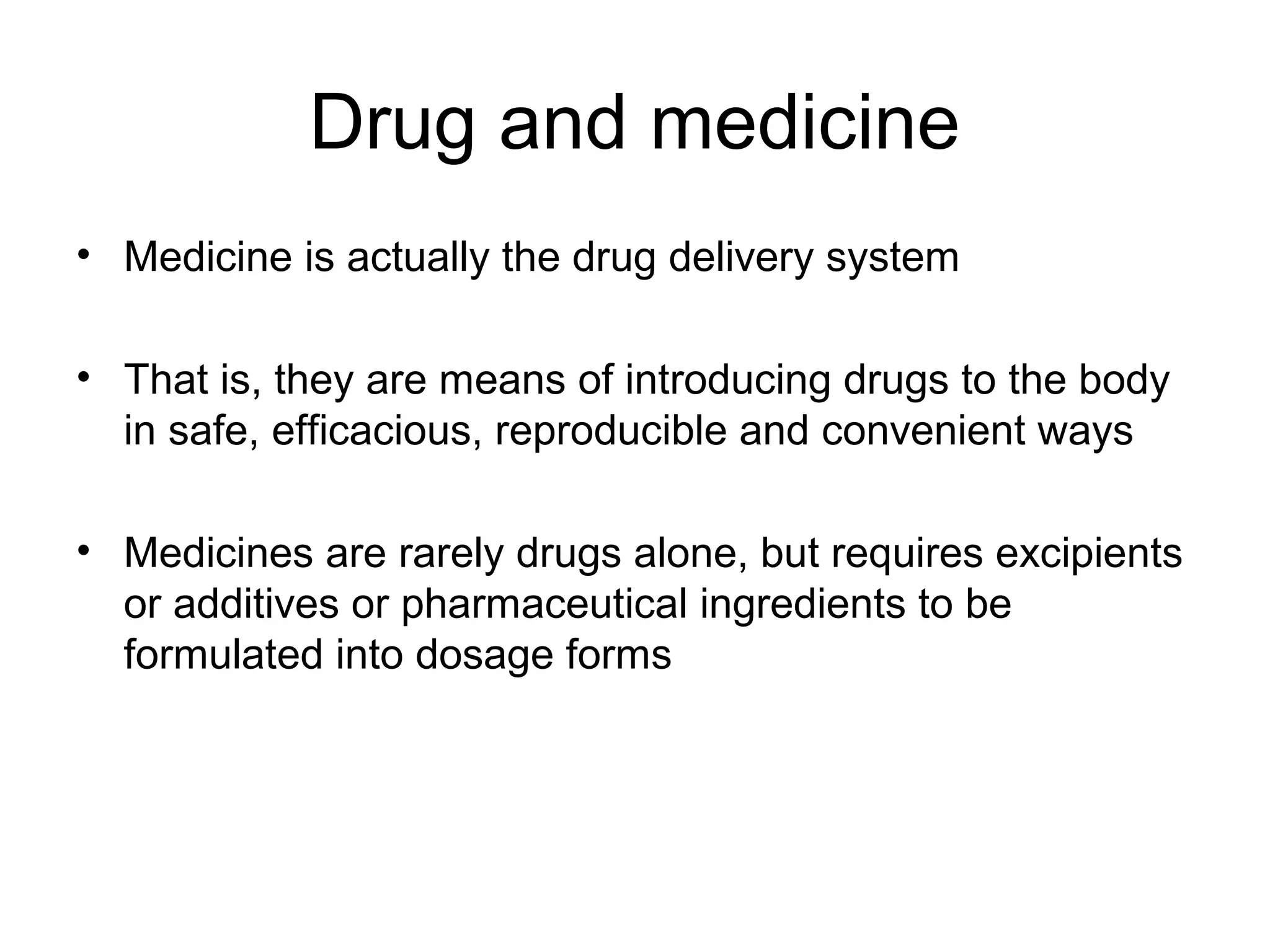
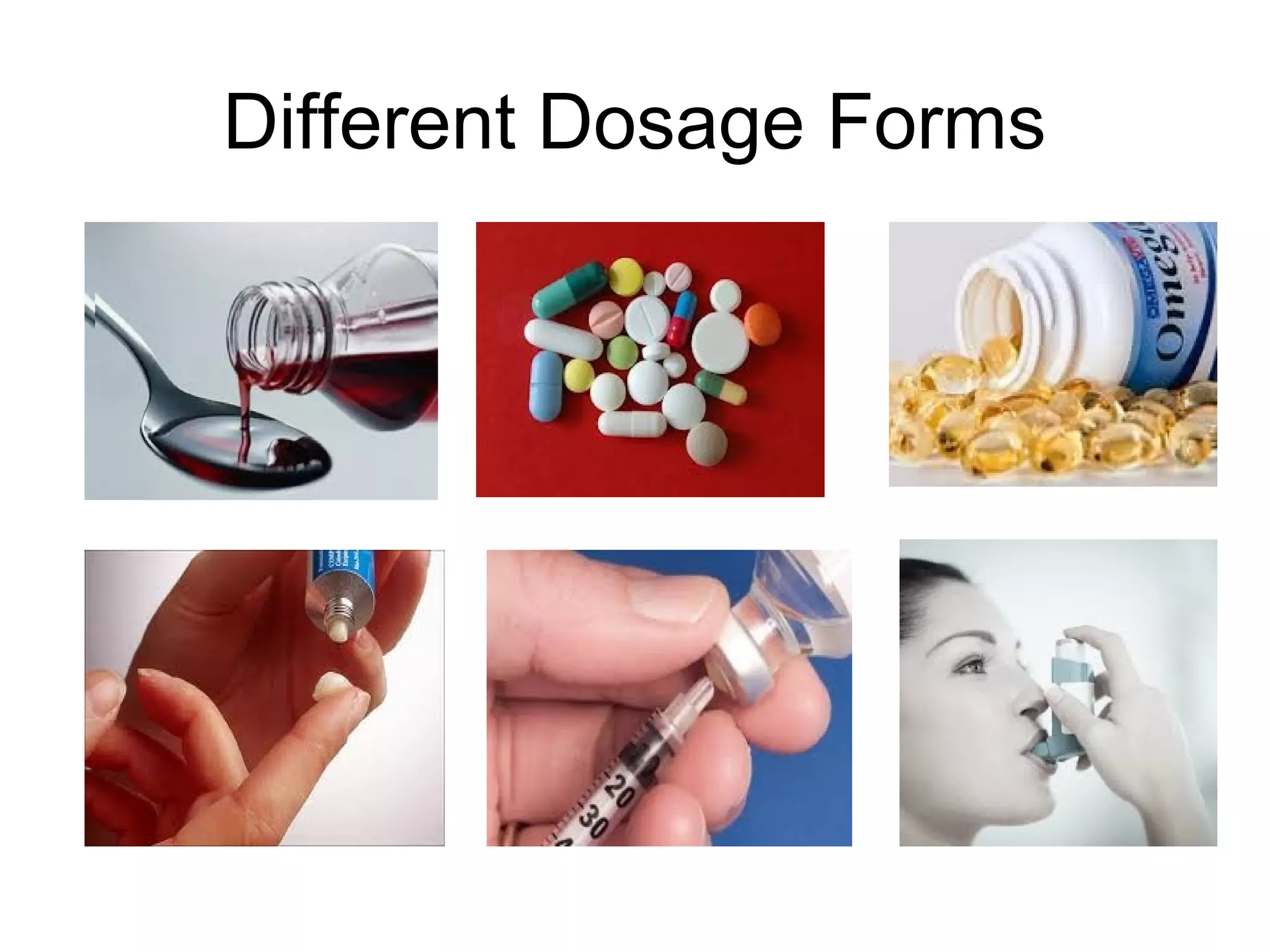
• Medicines are rarely drugs alone, but requires excipients
or additives or pharmaceutical ingredients to be
formulated into dosage forms
Different Dosage Forms
Pharmaceutical ingredients or excipients
• The non-medicinal agents that are given as parts of a
formulation in combination with a drug substance to
produce a final dosage form and serve varied and
specialized pharmaceutical functions are known as
pharmaceutical ingredients or excipients.
• Examples:
For solutions- solvents, flavors, sweeteners, colorants,
preservatives, stabilizers etc.
For tablets- diluents or fillers, binders, lubricants,
disintegrating agents etc.
What are the purposes of formulating
different types of dosage forms?
• In order to provide the safe and appropriate dose of a
drug to the patient, drug substances are formulated in a
dosage forms
• Selective use of different excipients produces dosage
forms of various types
• Besides providing the safe and convenient delivery of
accurate dosage, there are different purposes for which
different dosage forms are designed.
These are :
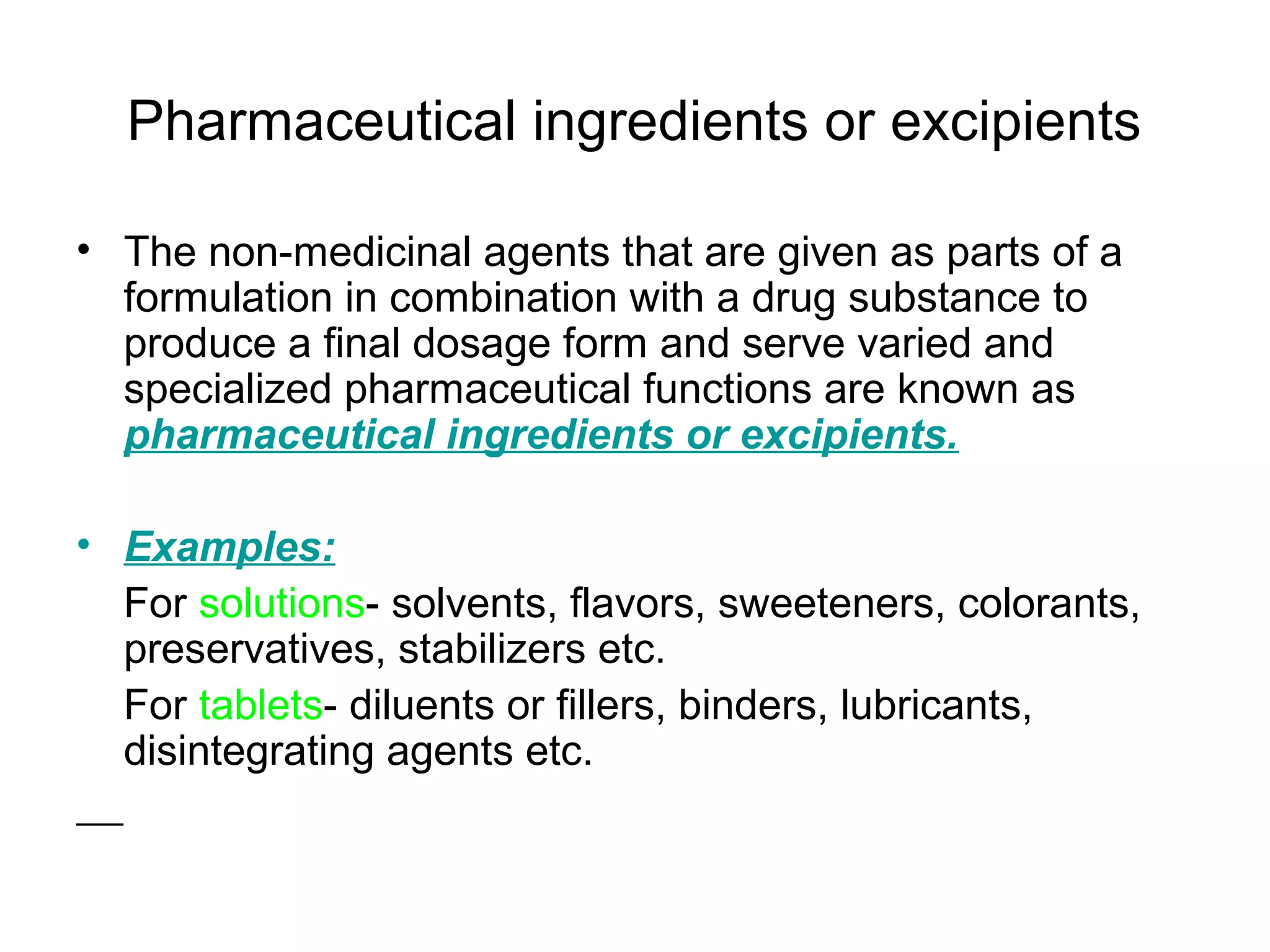
1) To protect the drug substance from the destructive
influences of atmospheric oxygen or humidity (coated
tablets, sealed ampuls)
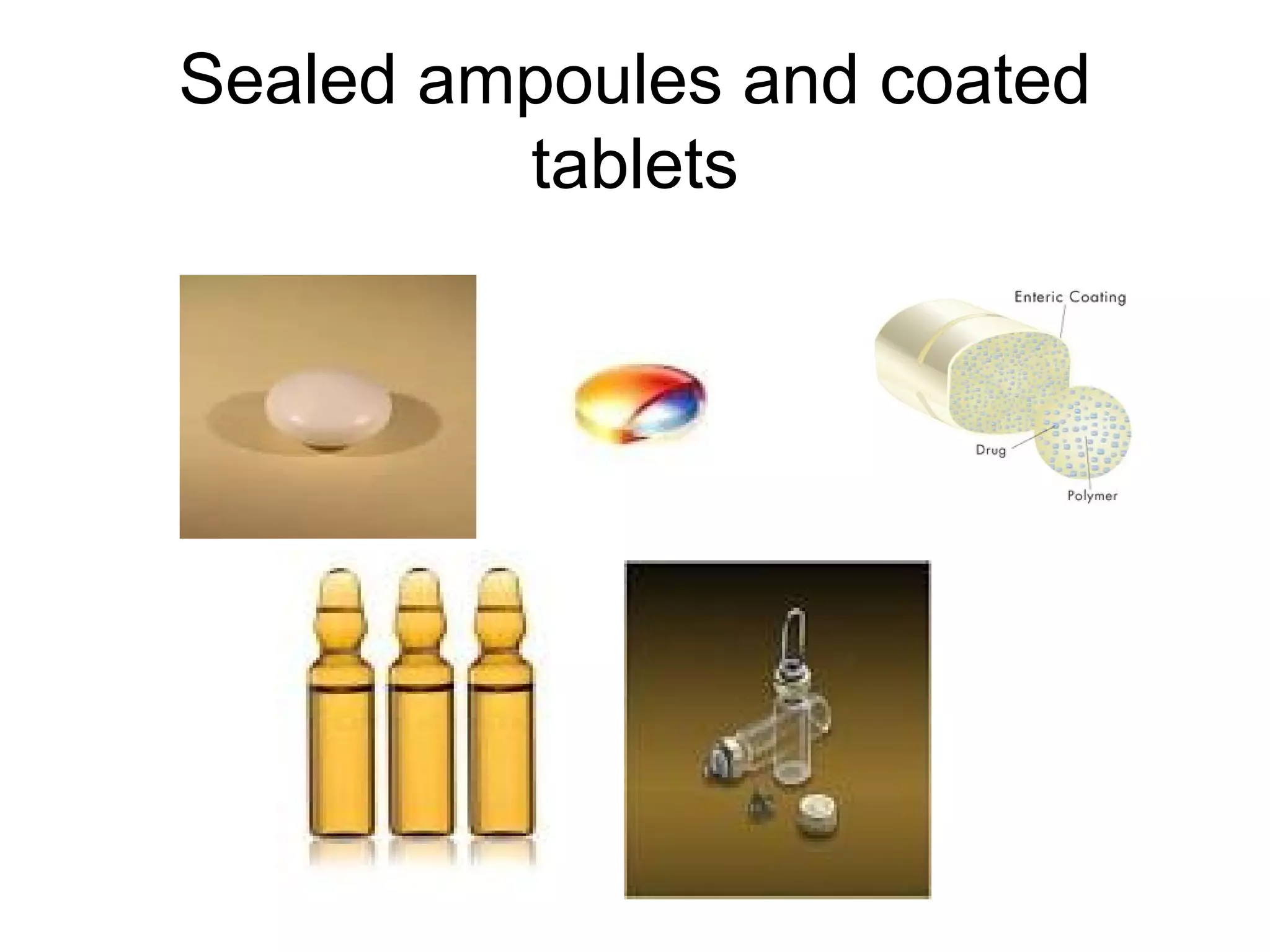
Sealed ampoules and coated
tablets
The purposes …
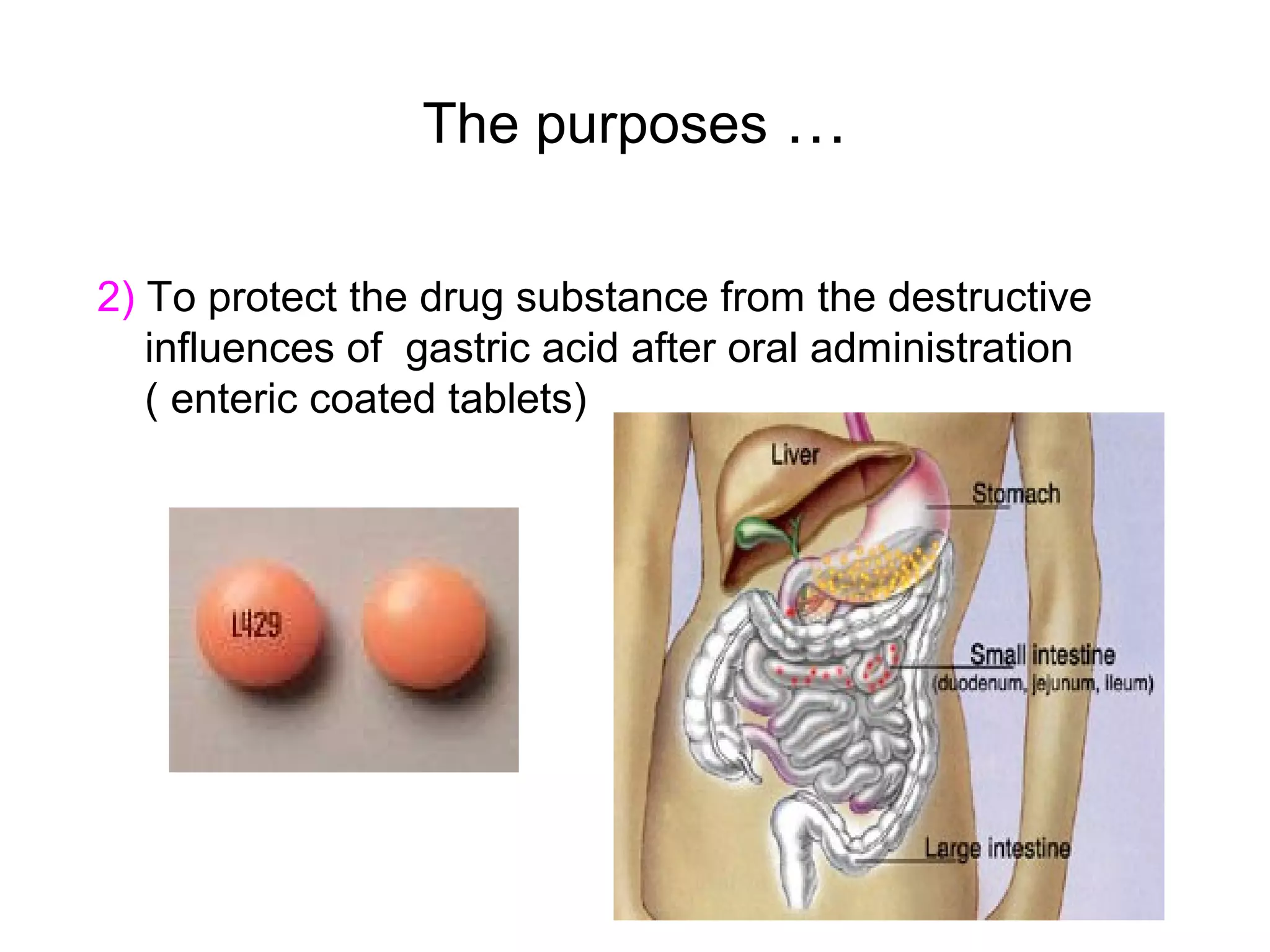
2) To protect the drug substance from the destructive
influences of gastric acid after oral administration
( enteric coated tablets)
The purposes …
3) To conceal the bitter, salty or offensive taste or odor of
a drug substance (capsules, coated tablets, flavored
syrups)
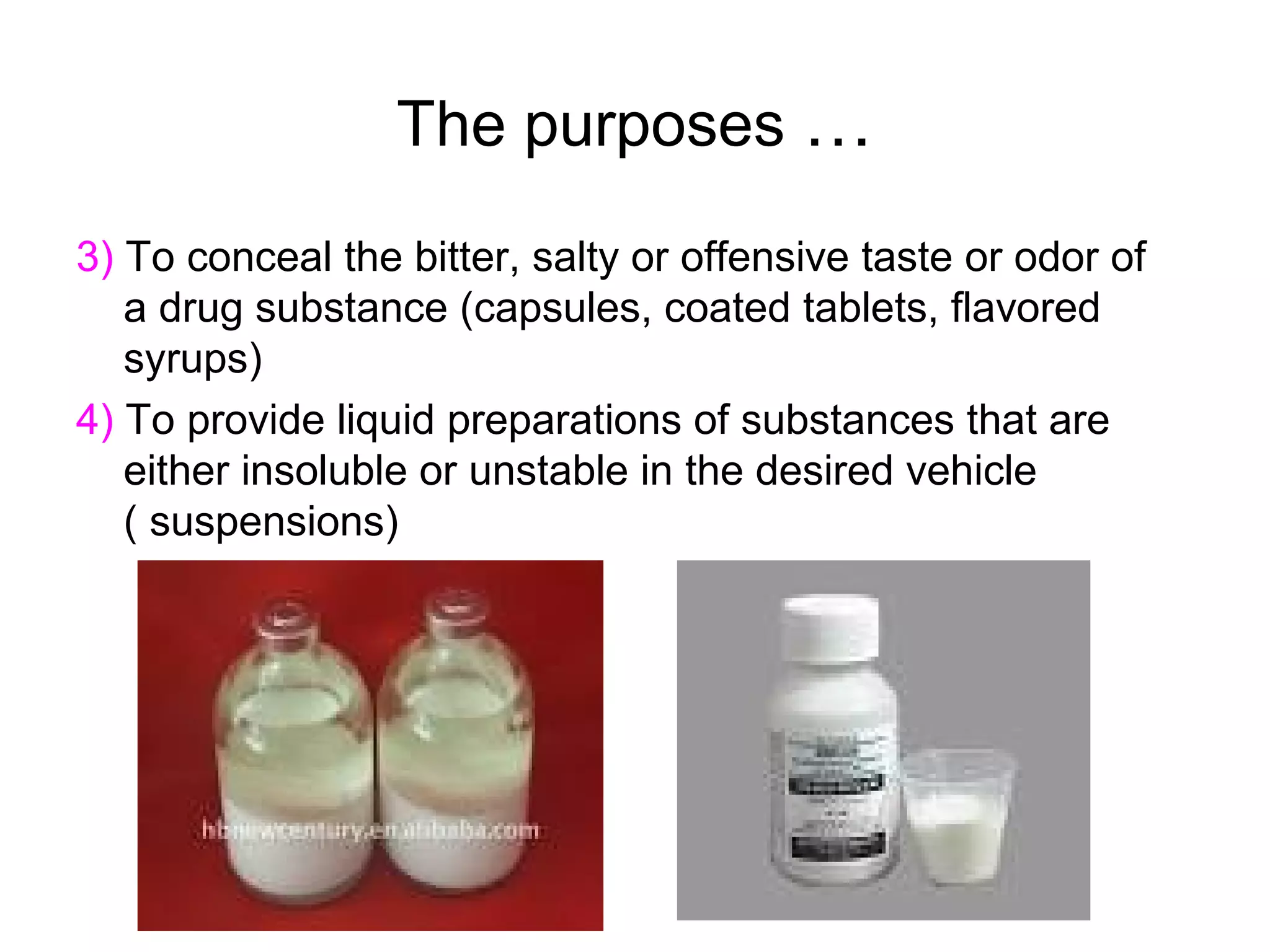
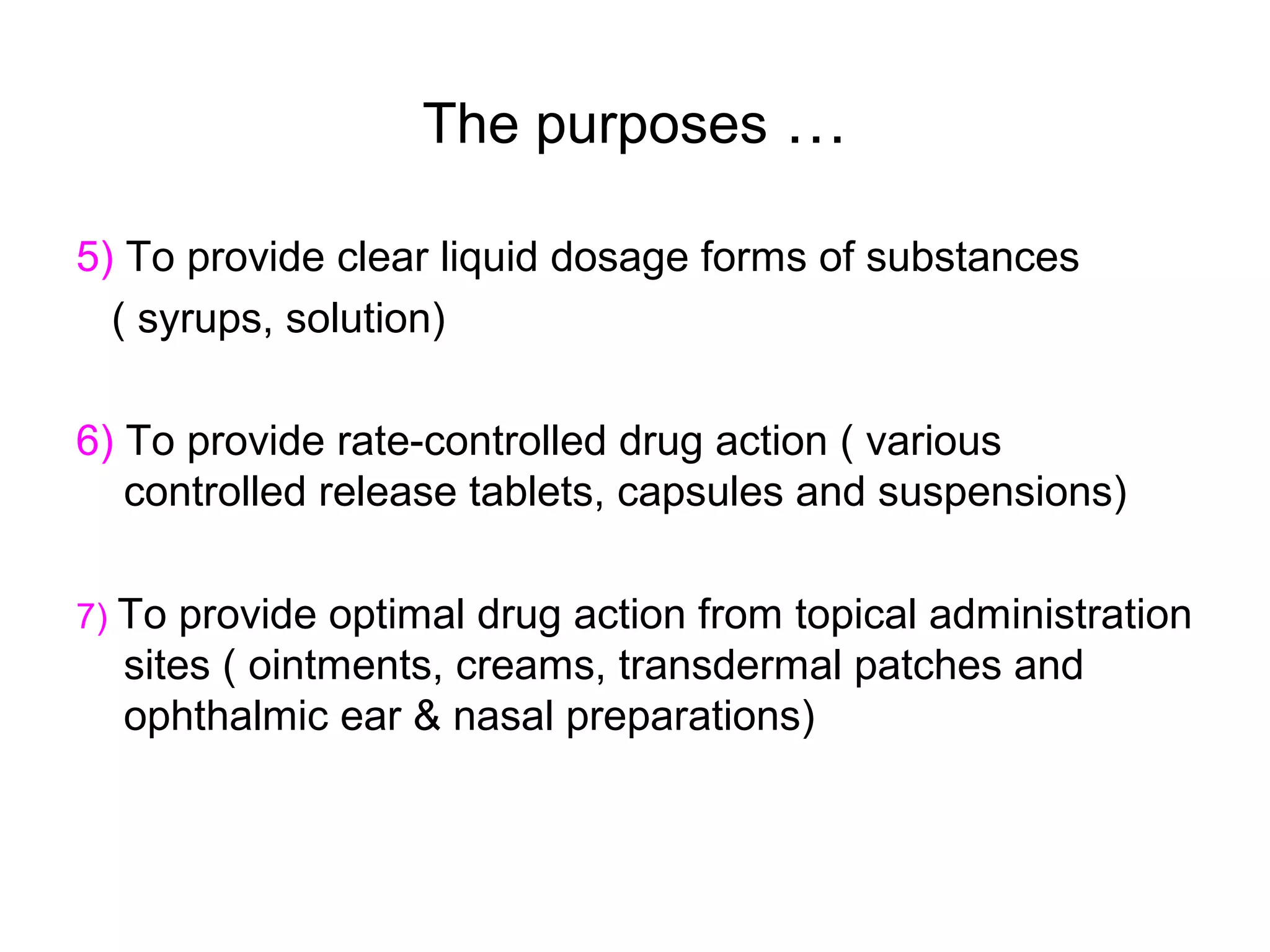
4) To provide liquid preparations of substances that are
either insoluble or unstable in the desired vehicle
( suspensions)
The purposes …
5) To provide clear liquid dosage forms of substances
( syrups, solution)
6) To provide rate-controlled drug action ( various
controlled release tablets, capsules and suspensions)
7) To

provide optimal drug action from topical administration
sites ( ointments, creams, transdermal patches and
ophthalmic ear & nasal preparations)
The purposes …
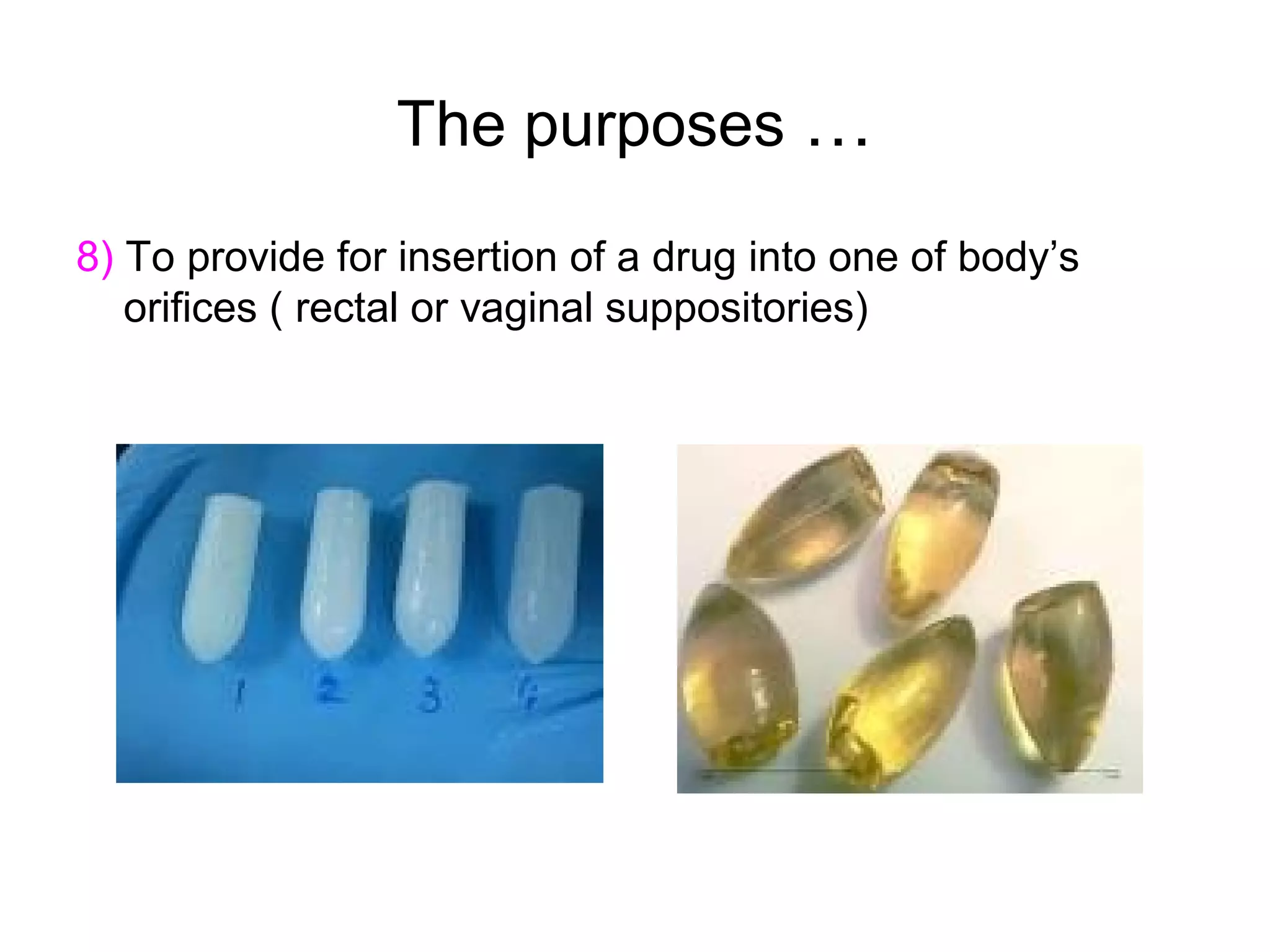
8) To provide for insertion of a drug into one of body’s
orifices ( rectal or vaginal suppositories)
The purposes …
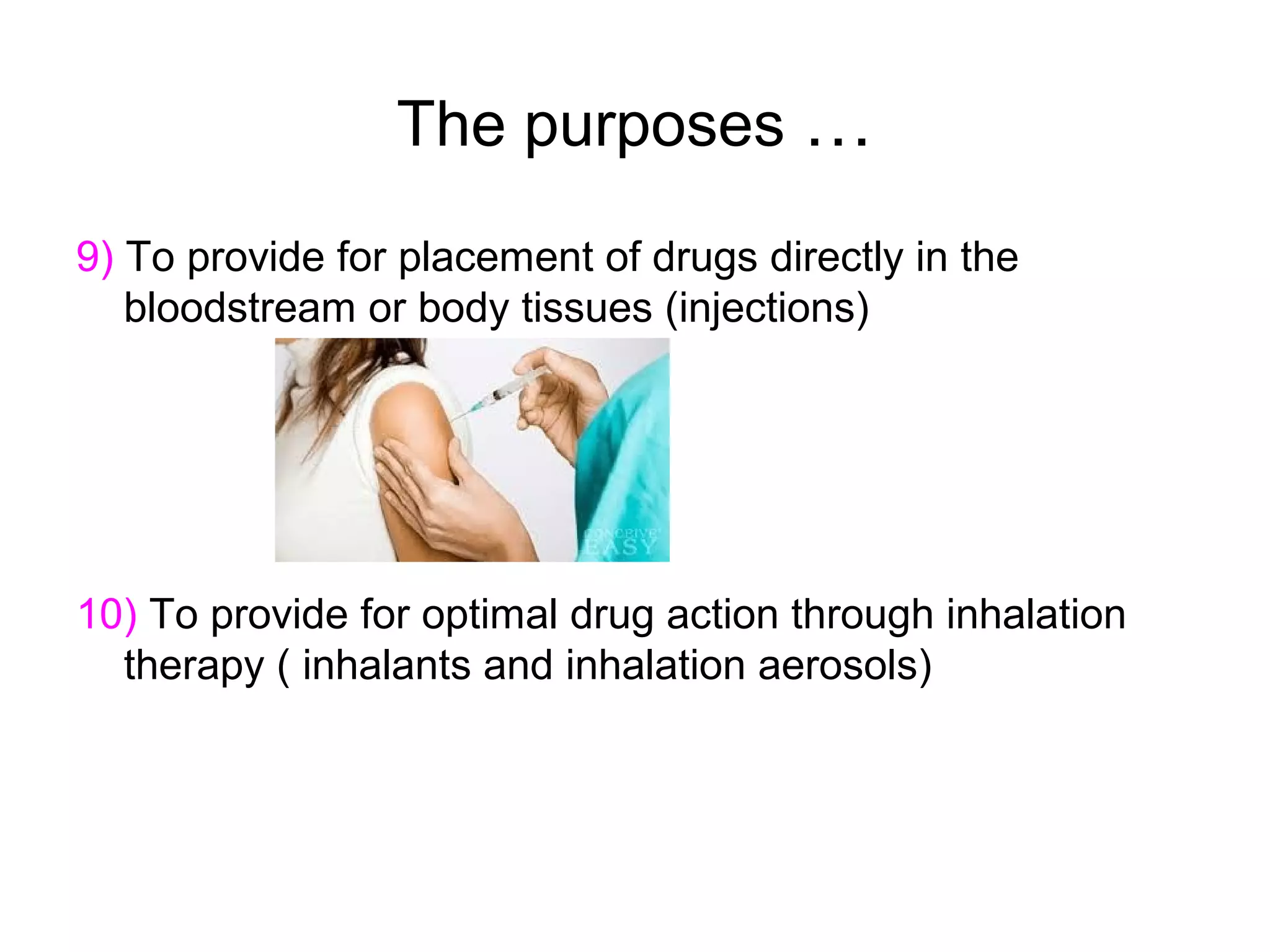
9) To provide for placement of drugs directly in the
bloodstream or body tissues (injections)

10) To provide for optimal drug action through inhalation
therapy ( inhalants and inhalation aerosols)
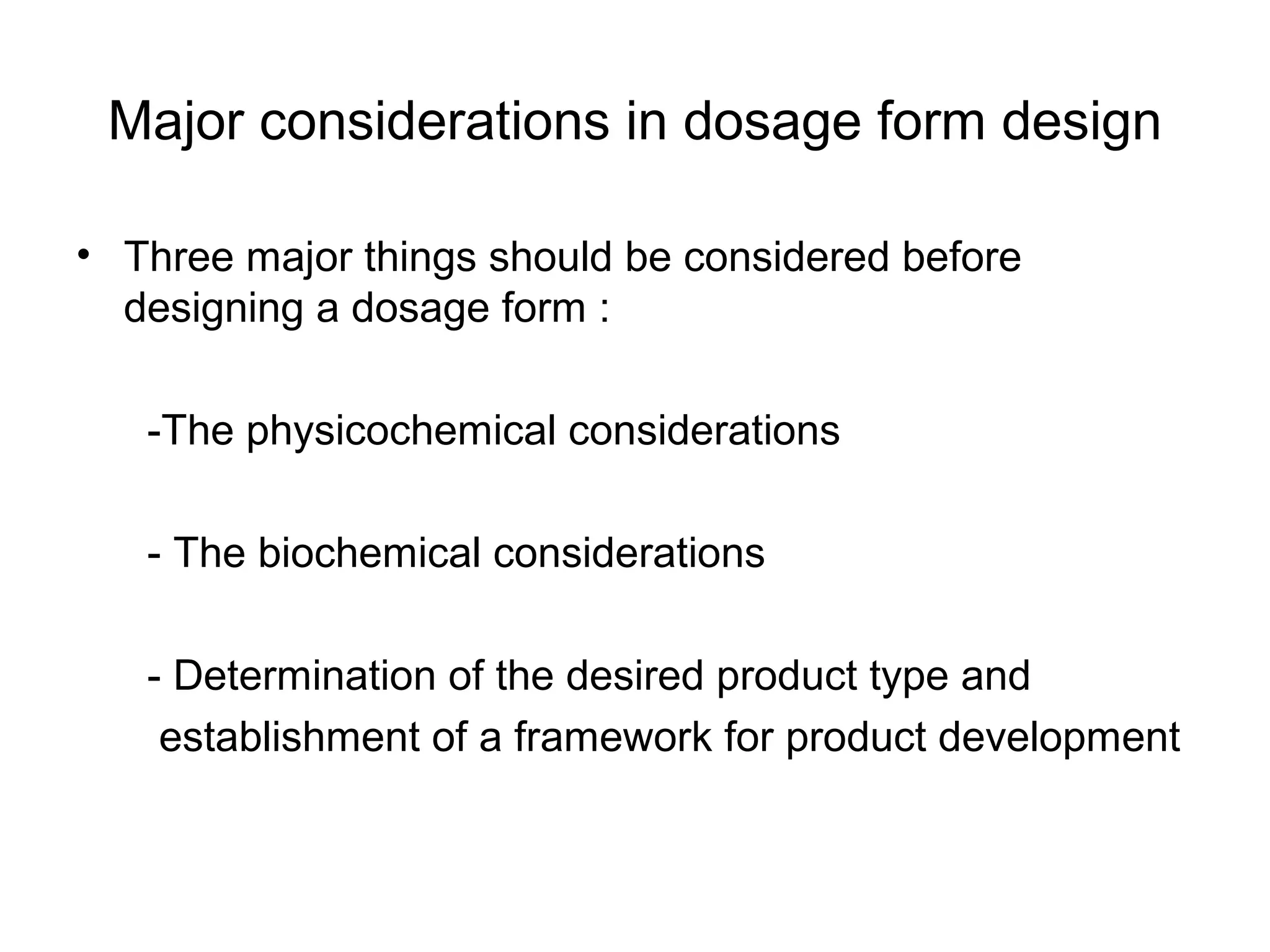
Major considerations in dosage form design
• Three major things should be considered before
designing a dosage form :
-The physicochemical considerations
- The biochemical considerations
- Determination of the desired product type and
establishment of a framework for product development
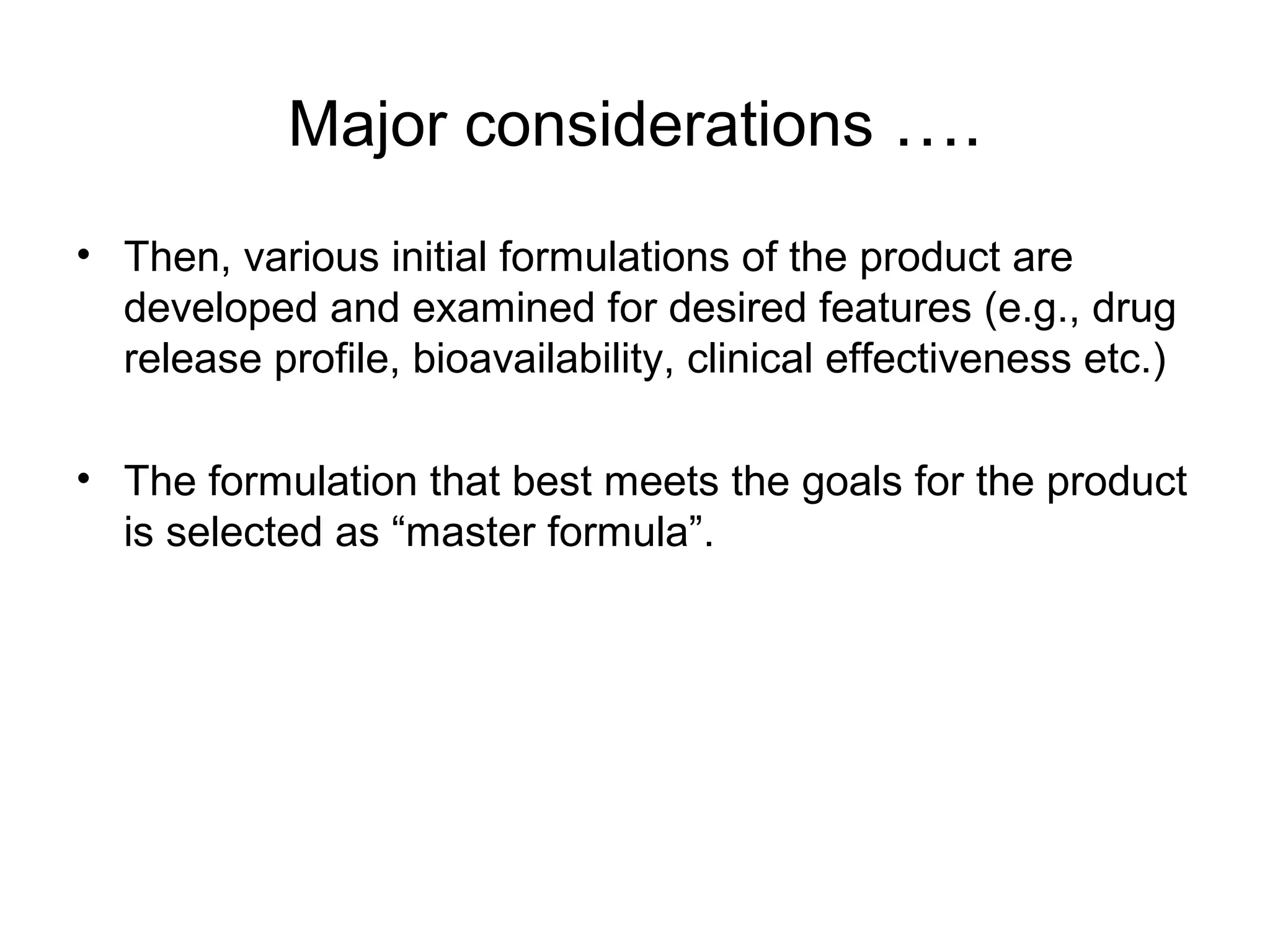
Major considerations ….
• Then, various initial formulations of the product are
developed and examined for desired features (e.g., drug
release profile, bioavailability, clinical effectiveness etc.)
• The formulation that best meets the goals for the product
is selected as “master formula”.
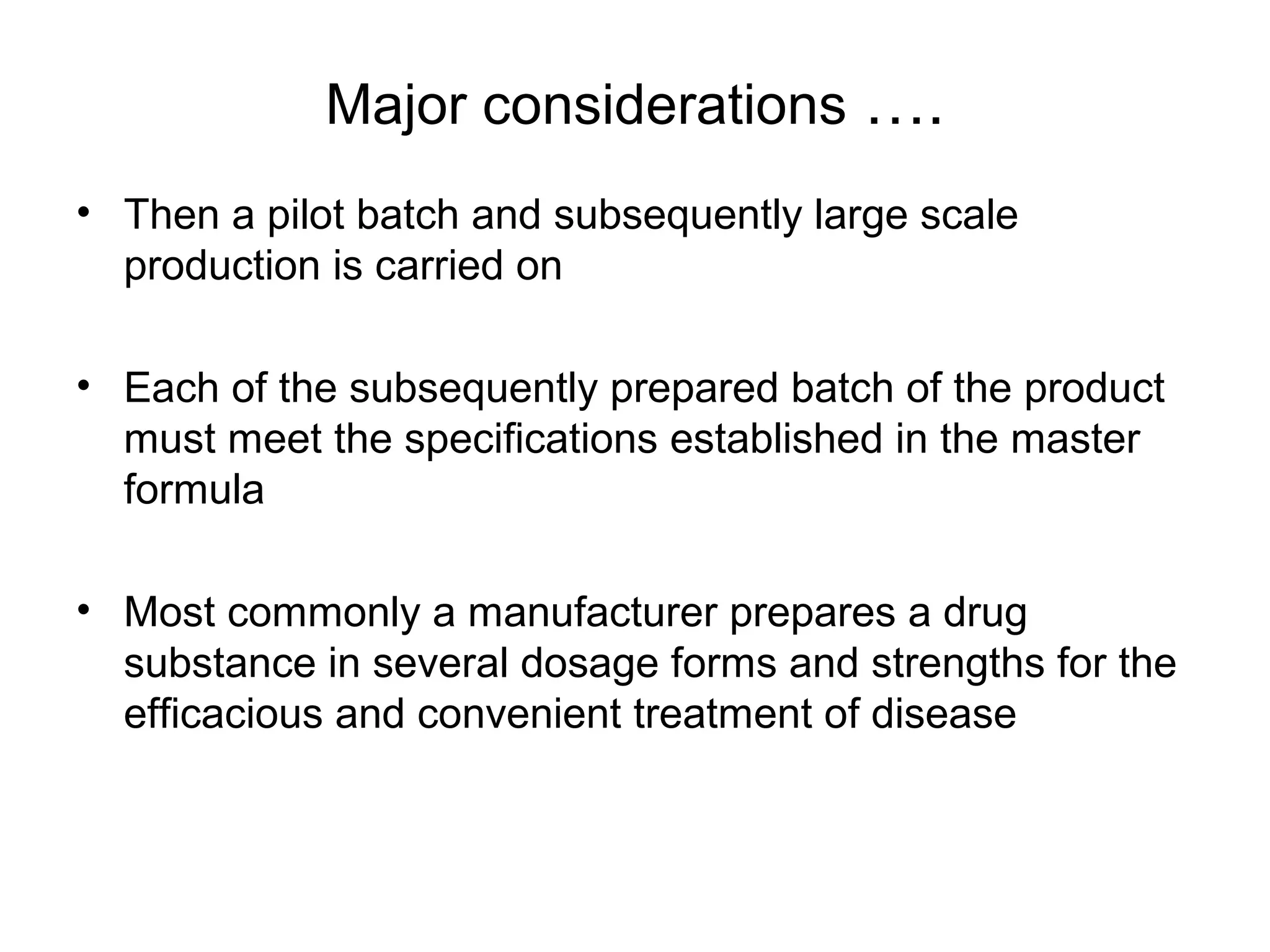
Major considerations ….
• Then a pilot batch and subsequently large scale
production is carried on
• Each of the subsequently prepared batch of the product
must meet the specifications established in the master
formula
• Most commonly a manufacturer prepares a drug
substance in several dosage forms and strengths for the
efficacious and convenient treatment of disease
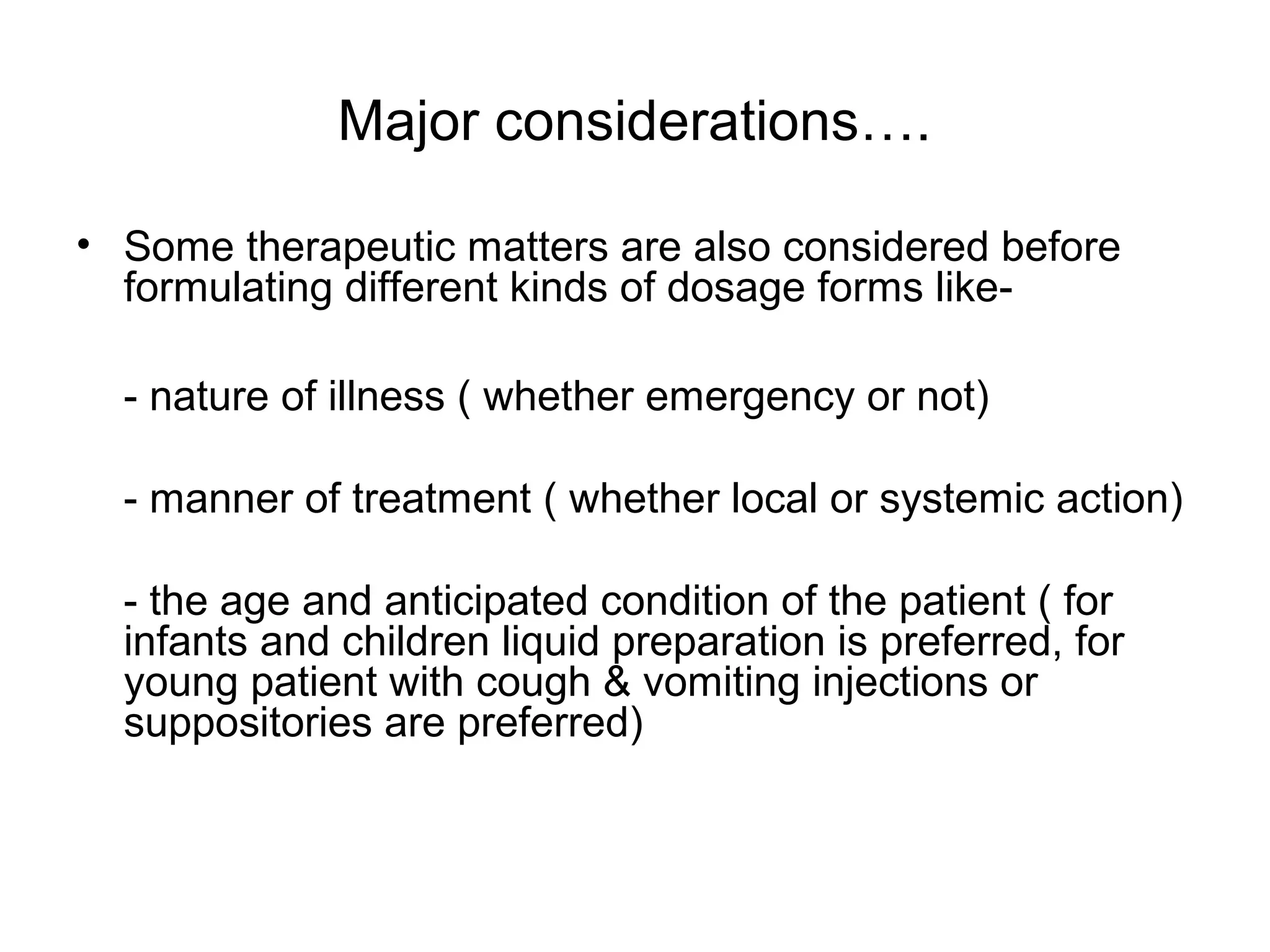
Major considerations….
• Some therapeutic matters are also considered before
formulating different kinds of dosage forms like- nature of illness ( whether emergency or not)
- manner of treatment ( whether local or systemic action)
- the age and anticipated condition of the patient ( for
infants and children liquid preparation is preferred, for
young patient with cough & vomiting injections or
suppositories are preferred)
Major considerations….
- in case of swallowing problem, chewable tablet or
capsules may be prepared
-

to reduce the frequency of administration, sustained
release or extended released form is preferred

- Thus the therapeutic considerations, in turn helps to
decide the suitable dosage form, the appropriate route of
administration, suitable duration and dose frequency if
the drug in question

Dosage form design

  • 1.
  • 2.
    What is Pharmaceutical technology? •Pharmaceutical Technology is the discipline of pharmacy that deals with the process of turning a new chemical entity (NCE) into a medication to be used safely and effectively by patients. • It is also called the science of dosage form design. • It deals with the formulation of a pure drug substance into a dosage form
  • 3.
    Drug and medicine •Medicine is actually the drug delivery system • That is, they are means of introducing drugs to the body in safe, efficacious, reproducible and convenient ways • Medicines are rarely drugs alone, but requires excipients or additives or pharmaceutical ingredients to be formulated into dosage forms
  • 4.
  • 5.
    Pharmaceutical ingredients orexcipients • The non-medicinal agents that are given as parts of a formulation in combination with a drug substance to produce a final dosage form and serve varied and specialized pharmaceutical functions are known as pharmaceutical ingredients or excipients. • Examples: For solutions- solvents, flavors, sweeteners, colorants, preservatives, stabilizers etc. For tablets- diluents or fillers, binders, lubricants, disintegrating agents etc.
  • 6.
    What are thepurposes of formulating different types of dosage forms? • In order to provide the safe and appropriate dose of a drug to the patient, drug substances are formulated in a dosage forms • Selective use of different excipients produces dosage forms of various types • Besides providing the safe and convenient delivery of accurate dosage, there are different purposes for which different dosage forms are designed. These are : 1) To protect the drug substance from the destructive influences of atmospheric oxygen or humidity (coated tablets, sealed ampuls)
  • 7.
    Sealed ampoules andcoated tablets
  • 8.
    The purposes … 2)To protect the drug substance from the destructive influences of gastric acid after oral administration ( enteric coated tablets)
  • 9.
    The purposes … 3)To conceal the bitter, salty or offensive taste or odor of a drug substance (capsules, coated tablets, flavored syrups) 4) To provide liquid preparations of substances that are either insoluble or unstable in the desired vehicle ( suspensions)
  • 10.
    The purposes … 5)To provide clear liquid dosage forms of substances ( syrups, solution) 6) To provide rate-controlled drug action ( various controlled release tablets, capsules and suspensions) 7) To provide optimal drug action from topical administration sites ( ointments, creams, transdermal patches and ophthalmic ear & nasal preparations)
  • 11.
    The purposes … 8)To provide for insertion of a drug into one of body’s orifices ( rectal or vaginal suppositories)
  • 12.
    The purposes … 9)To provide for placement of drugs directly in the bloodstream or body tissues (injections) 10) To provide for optimal drug action through inhalation therapy ( inhalants and inhalation aerosols)
  • 13.
    Major considerations indosage form design • Three major things should be considered before designing a dosage form : -The physicochemical considerations - The biochemical considerations - Determination of the desired product type and establishment of a framework for product development
  • 14.
    Major considerations …. •Then, various initial formulations of the product are developed and examined for desired features (e.g., drug release profile, bioavailability, clinical effectiveness etc.) • The formulation that best meets the goals for the product is selected as “master formula”.
  • 15.
    Major considerations …. •Then a pilot batch and subsequently large scale production is carried on • Each of the subsequently prepared batch of the product must meet the specifications established in the master formula • Most commonly a manufacturer prepares a drug substance in several dosage forms and strengths for the efficacious and convenient treatment of disease
  • 16.
    Major considerations…. • Sometherapeutic matters are also considered before formulating different kinds of dosage forms like- nature of illness ( whether emergency or not) - manner of treatment ( whether local or systemic action) - the age and anticipated condition of the patient ( for infants and children liquid preparation is preferred, for young patient with cough & vomiting injections or suppositories are preferred)
  • 17.
    Major considerations…. - incase of swallowing problem, chewable tablet or capsules may be prepared - to reduce the frequency of administration, sustained release or extended released form is preferred - Thus the therapeutic considerations, in turn helps to decide the suitable dosage form, the appropriate route of administration, suitable duration and dose frequency if the drug in question