BIOLOGY 2
Presented by:
Dan Michael D. Pabilona
BEED-3D3
Presented to:
Ms. Earma G. Padilla
Instructor, Biology 2
March 09, 2017
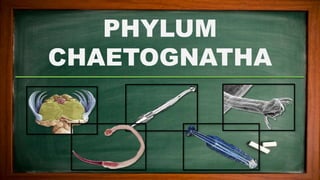
PHYLUM
CHAETOGNATHA
 General Description
 Mode of Nutrition
 Reproduction
 Locomotion
 Habitat
 Classification
The name Chaetognatha (ke-tog-na-tha) comes from the Greek word
( Chaite – means long flowing hair, + Gnathos – means Jaw)
Chaetognatha
Phylum Chaetognatha meaning Bristle-jaws.
- commonly known as “arrow worms”. Are
coelomate animals of relatively small size, with
straight, slender, transparent body displaying
perfect bilateral symmetry.
* they are usually colorless, slightly opaque.
General Description
* the body is divided in three parts by internal
partitioning: HEAD, TRUNK and TAIL.
- Fins on both the tail and the body.
- The head has eyes with photoreceptive cells,
Each side of the head bears a group of curved
grasping hooks and one or two rows of teeth.
* called the anterior and posterior teeth.
* the hooks and teeth are made of chitin.
- The trunk bears one or two pairs of lateral fins
incorporating structures superficially similar to
the fin rays of fish, with which they are not
homologous.
- They are generally less than an inch (2.5
centimeters) in size.
 Chaetognaths are carnivorous predators.
 These voracious meat-eaters catch large
numbers of copepods, larval fish,
crustaceans, swallowing them whole.
- The large spines around their mouth helps
them grab and restrain their prey and
immobilize them with neurotoxins.
Mode Of Nutrition
All known Chaetognatha are Hermaphrodites.
* meaning they possess both male and
female sex organs.
- The female organ ( the ovaries)
* are just behind the mid-body mark
(trunk)
- The male organ ( the testis)
* are in the tail
Reproduction
 The sperm mature before the ova
(eggs) which may help avoid self
fertilization to same extent.
Fertilization is internal and depending on
the species fertilized eggs may be
brooded, deposited on the seafloor, or
released into the ocean.
 Their torpedo-like body shape allows
them to move quickly through the water.
- Chaetognatha alternate between swimming
and floating.
- The fins along their body are not used to
swim, but rather to help them float.
- They usually swim to the surface at night
and descend during daytime.
Locomotion
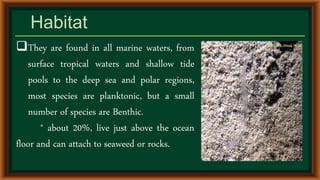
They are found in all marine waters, from
surface tropical waters and shallow tide
pools to the deep sea and polar regions,
most species are planktonic, but a small
number of species are Benthic.
* about 20%, live just above the ocean
floor and can attach to seaweed or rocks.
Habitat
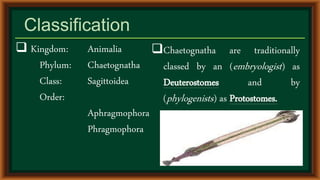
Chaetognatha are traditionally
classed by an (embryologist) as
Deuterostomes and by
(phylogenists) as Protostomes.
Classification
 Kingdom: Animalia
Phylum: Chaetognatha
Class: Sagittoidea
Order:
Aphragmophora
Phragmophora
The embryologist Lynn Margulis and
K.V Schwartz placed chaetognaths in
deuterostomes in their five kingdom
classification.
Deuterostomes - The name
deuterostomes means "second mouth."
The name is derived from the embryo
developing the anus first, followed by the
mouth.
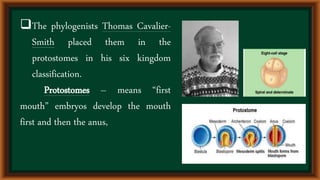
The phylogenists Thomas Cavalier-
Smith placed them in the
protostomes in his six kingdom
classification.
Protostomes – means “first
mouth” embryos develop the mouth
first and then the anus,
Reference
• Animaldiversity.org/accounts/chaetognatha
• www.earthlife.net/inverts/chaetognatha.html
• www.newworldencyclopedia.org/entry/Chaetognatha
• https://en.Wikipedia.orh/wiki/Chaetognatha
• eol.org/pages/1740/overview
• Species-identification.org
• www.polarlife.ca/organisms/inverts/marine_inverts/chaet
ognatha.htm

chaetognaths Diversity

  • 1.
    BIOLOGY 2 Presented by: DanMichael D. Pabilona BEED-3D3 Presented to: Ms. Earma G. Padilla Instructor, Biology 2 March 09, 2017
  • 2.
  • 3.
     General Description Mode of Nutrition  Reproduction  Locomotion  Habitat  Classification
  • 4.
    The name Chaetognatha(ke-tog-na-tha) comes from the Greek word ( Chaite – means long flowing hair, + Gnathos – means Jaw) Chaetognatha
  • 5.
    Phylum Chaetognatha meaningBristle-jaws. - commonly known as “arrow worms”. Are coelomate animals of relatively small size, with straight, slender, transparent body displaying perfect bilateral symmetry. * they are usually colorless, slightly opaque. General Description
  • 6.
    * the bodyis divided in three parts by internal partitioning: HEAD, TRUNK and TAIL. - Fins on both the tail and the body. - The head has eyes with photoreceptive cells, Each side of the head bears a group of curved grasping hooks and one or two rows of teeth.
  • 7.
    * called theanterior and posterior teeth. * the hooks and teeth are made of chitin. - The trunk bears one or two pairs of lateral fins incorporating structures superficially similar to the fin rays of fish, with which they are not homologous. - They are generally less than an inch (2.5 centimeters) in size.
  • 8.
     Chaetognaths arecarnivorous predators.  These voracious meat-eaters catch large numbers of copepods, larval fish, crustaceans, swallowing them whole. - The large spines around their mouth helps them grab and restrain their prey and immobilize them with neurotoxins. Mode Of Nutrition
  • 9.
    All known Chaetognathaare Hermaphrodites. * meaning they possess both male and female sex organs. - The female organ ( the ovaries) * are just behind the mid-body mark (trunk) - The male organ ( the testis) * are in the tail Reproduction
  • 10.
     The spermmature before the ova (eggs) which may help avoid self fertilization to same extent. Fertilization is internal and depending on the species fertilized eggs may be brooded, deposited on the seafloor, or released into the ocean.
  • 11.
     Their torpedo-likebody shape allows them to move quickly through the water. - Chaetognatha alternate between swimming and floating. - The fins along their body are not used to swim, but rather to help them float. - They usually swim to the surface at night and descend during daytime. Locomotion
  • 12.
    They are foundin all marine waters, from surface tropical waters and shallow tide pools to the deep sea and polar regions, most species are planktonic, but a small number of species are Benthic. * about 20%, live just above the ocean floor and can attach to seaweed or rocks. Habitat
  • 13.
    Chaetognatha are traditionally classedby an (embryologist) as Deuterostomes and by (phylogenists) as Protostomes. Classification  Kingdom: Animalia Phylum: Chaetognatha Class: Sagittoidea Order: Aphragmophora Phragmophora
  • 14.
    The embryologist LynnMargulis and K.V Schwartz placed chaetognaths in deuterostomes in their five kingdom classification. Deuterostomes - The name deuterostomes means "second mouth." The name is derived from the embryo developing the anus first, followed by the mouth.
  • 15.
    The phylogenists ThomasCavalier- Smith placed them in the protostomes in his six kingdom classification. Protostomes – means “first mouth” embryos develop the mouth first and then the anus,
  • 16.
    Reference • Animaldiversity.org/accounts/chaetognatha • www.earthlife.net/inverts/chaetognatha.html •www.newworldencyclopedia.org/entry/Chaetognatha • https://en.Wikipedia.orh/wiki/Chaetognatha • eol.org/pages/1740/overview • Species-identification.org • www.polarlife.ca/organisms/inverts/marine_inverts/chaet ognatha.htm