Hybrid and Hybrid Breeding-
 Hybrid - Hybrid is formed by
combining the qualities of
two different breeds, species
or genera through sexual
reproduction.
 Hybrid Plant- A plant that
has been produced from 2
different types of plant.
 Hybrid Breeding-When two
different plants are crossed
together to produce a new
hybrid variety, it is called as
Hybrid Breeding.
 Advantages- In most of the
cases, the hybrids are better
than parental ones.
Process of Hybrid Breeding-
 Hybridization-It is the process
of crossing two genetically
different individuals to result
in a new individual with
different traits.
 Objectives-1-To create genetic
variation.
2- To combine the desired
characters into a single
individual.
Types- 1-Intervarietal
Hybridization.
2- Distant Hybridization.
Procedure of
Hybridization-
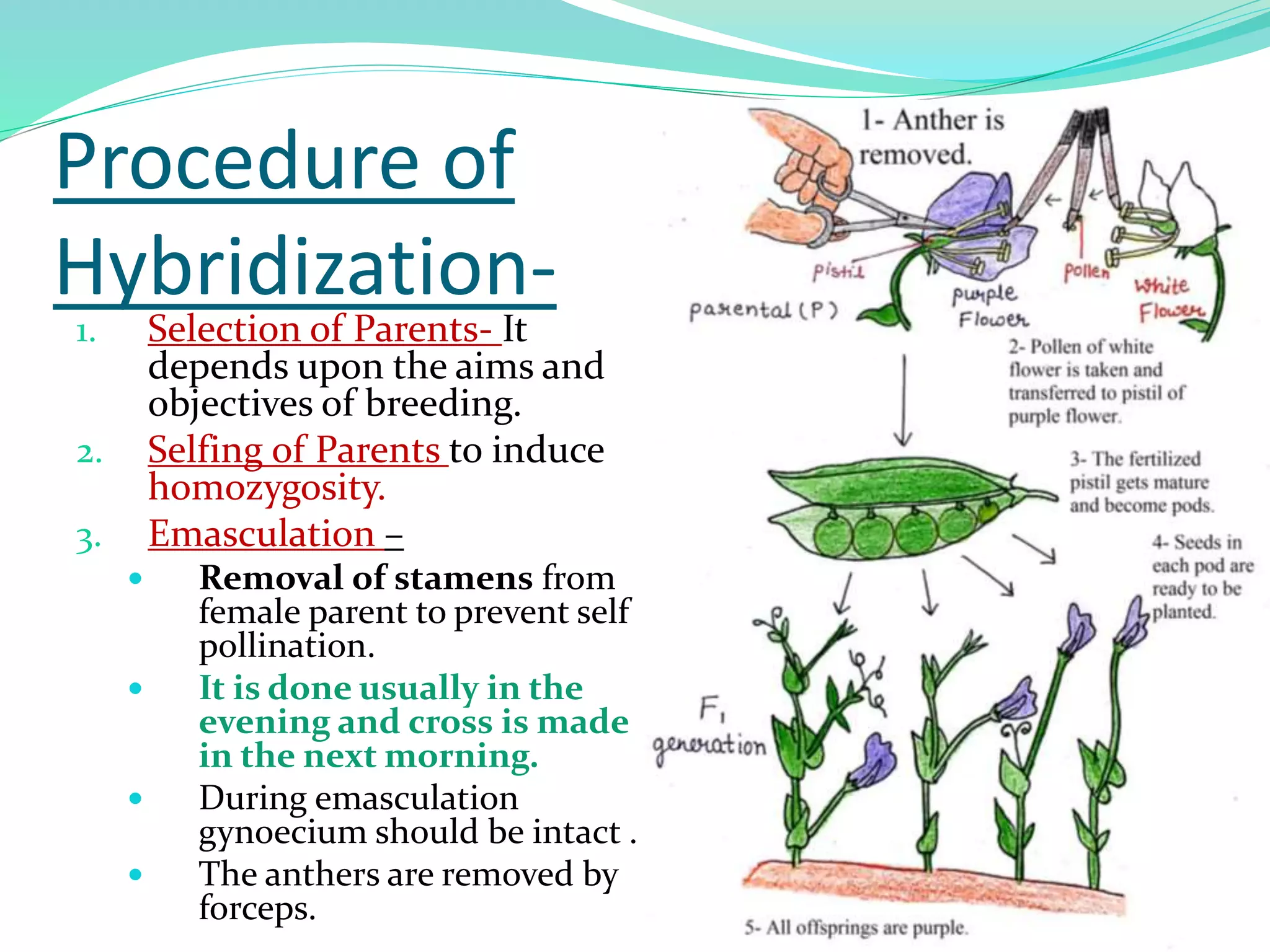
1. Selection of Parents- It
depends upon the aims and
objectives of breeding.
2. Selfing of Parents to induce
homozygosity.
3. Emasculation –
 Removal of stamens from
female parent to prevent self
pollination.
 It is done usually in the
evening and cross is made
in the next morning.
 During emasculation
gynoecium should be intact .
 The anthers are removed by
forceps.
Emasculation-
Thevetia peruviana Anthers and
stigma of
Thevetia
Stamens are
removed.
2-Bagging-The emasculated
flower is immediately bagged
to prevent cross pollination
by any foreign pollen.
3-Tagging- The bagged flower is
tagged by label.
4-Crossing- In the next morning
the desired pollen is placed
on the stigma of
emasculated flowers to bring
about fertilization.
5-Harvesting and sorting of F1
seeds.
6-Raising the F1 generation.
Bagging
Tagging
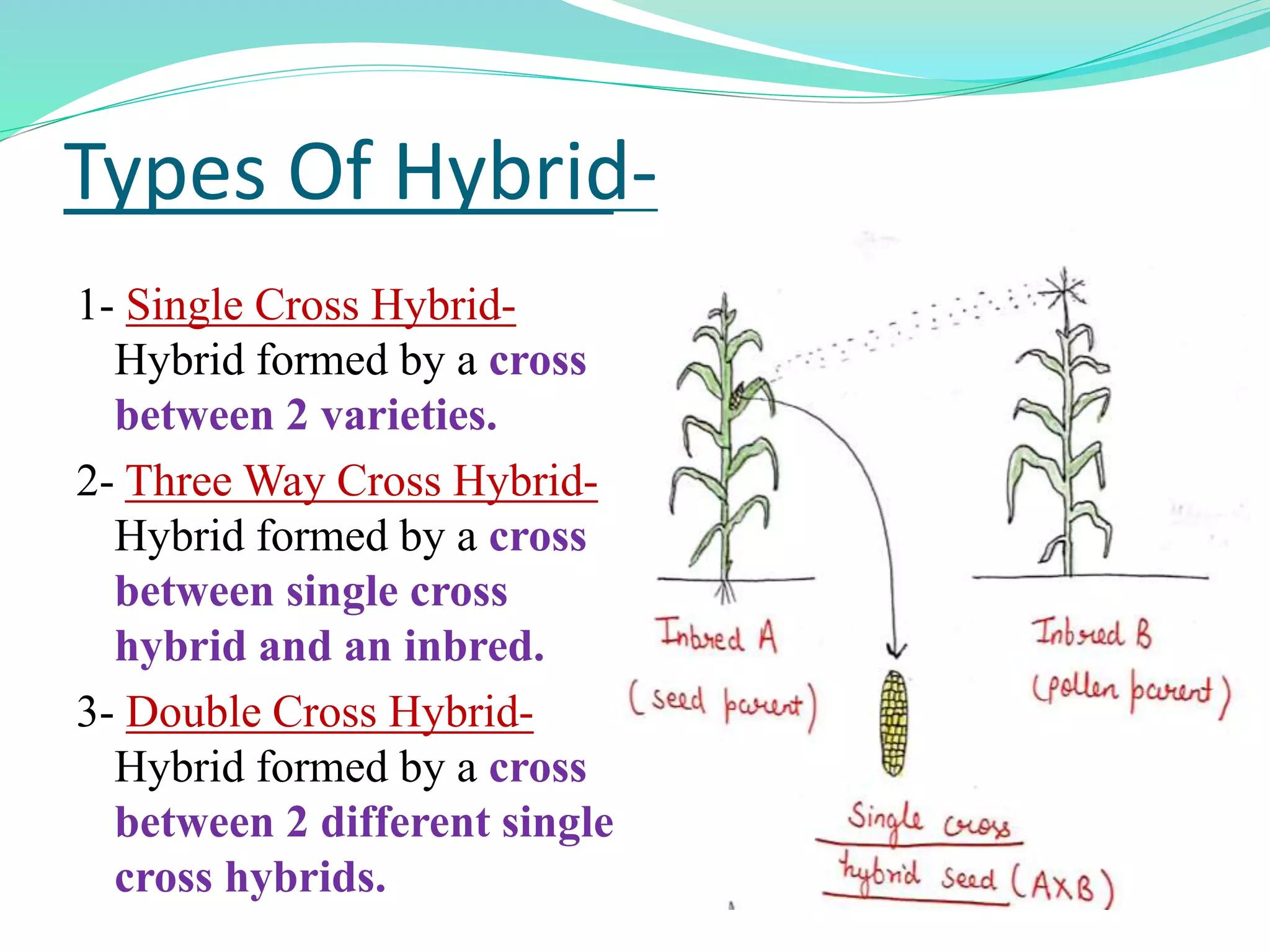
Types Of Hybrid-
1- Single Cross Hybrid-
Hybrid formed by a cross
between 2 varieties.
2- Three Way Cross Hybrid-
Hybrid formed by a cross
between single cross
hybrid and an inbred.
3- Double Cross Hybrid-
Hybrid formed by a cross
between 2 different single
cross hybrids.
Some Important Hybrid Varieties-
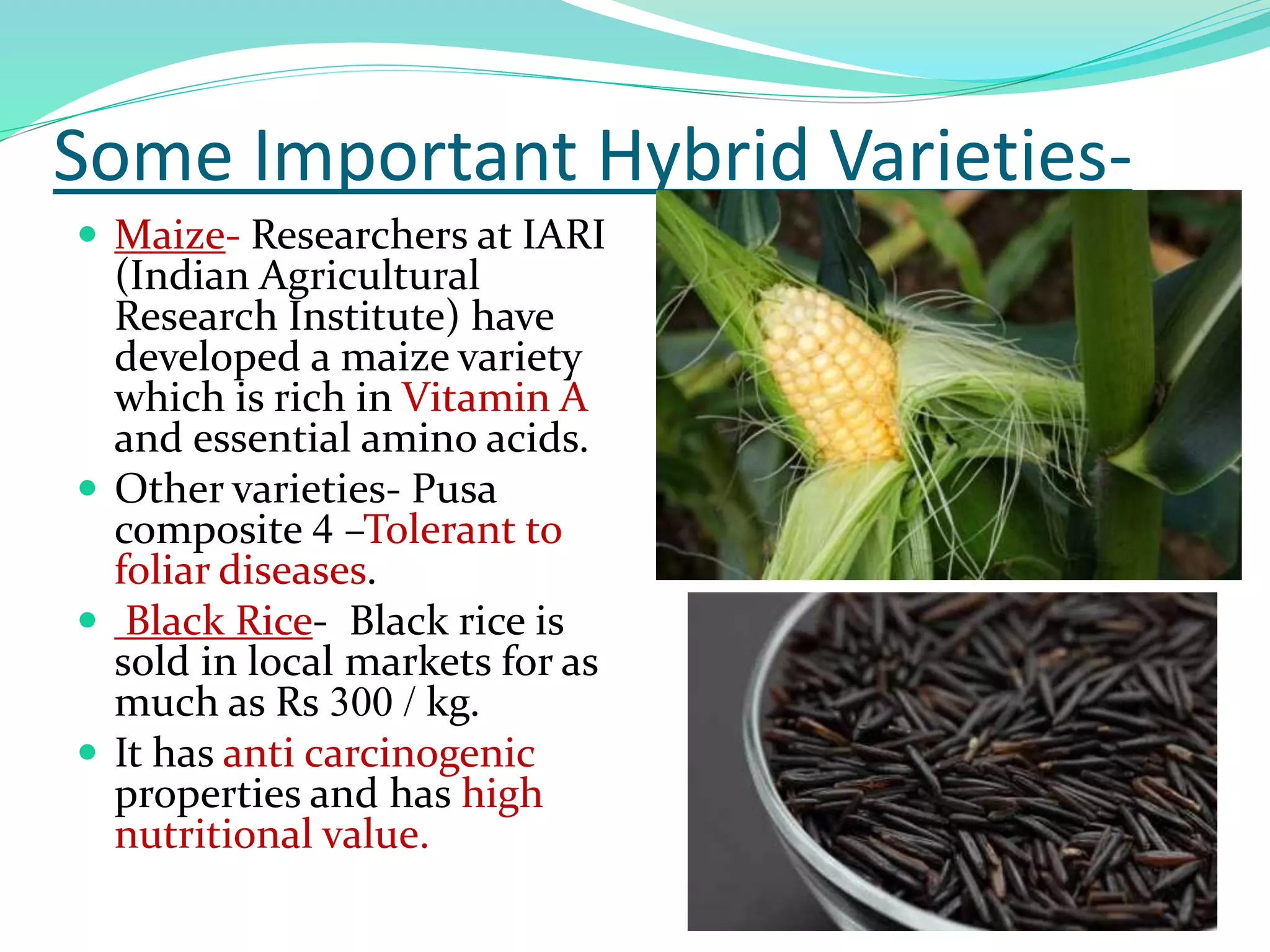
 Maize- Researchers at IARI
(Indian Agricultural
Research Institute) have
developed a maize variety
which is rich in Vitamin A
and essential amino acids.
 Other varieties- Pusa
composite 4 –Tolerant to
foliar diseases.
 Black Rice- Black rice is
sold in local markets for as
much as Rs 300 / kg.
 It has anti carcinogenic
properties and has high
nutritional value.
 Tomato- Hybrid tomatoes
have more flesh and more
shelf life.
 They have less seeds ,so less
oxalate content.
 Watermelon-
1. Saraswati- Fleshy deep red,
delicious , sugar content 12-
14%.
2. Kiran –Has smooth dark
green rind. Sweet in taste.
3. Yellow Doll watermelon–
Very sweet , yellow colored
due to presence of Beta
Carotene.
HYBRID TOMATOES.
SARASWATI
KIRAN
Yellow Doll
Watermelon
THANKS…
ANY QUESTIONS ?

Hybrid breeding in plants

  • 2.
    Hybrid and HybridBreeding-  Hybrid - Hybrid is formed by combining the qualities of two different breeds, species or genera through sexual reproduction.  Hybrid Plant- A plant that has been produced from 2 different types of plant.  Hybrid Breeding-When two different plants are crossed together to produce a new hybrid variety, it is called as Hybrid Breeding.  Advantages- In most of the cases, the hybrids are better than parental ones.
  • 3.
    Process of HybridBreeding-  Hybridization-It is the process of crossing two genetically different individuals to result in a new individual with different traits.  Objectives-1-To create genetic variation. 2- To combine the desired characters into a single individual. Types- 1-Intervarietal Hybridization. 2- Distant Hybridization.
  • 4.
    Procedure of Hybridization- 1. Selectionof Parents- It depends upon the aims and objectives of breeding. 2. Selfing of Parents to induce homozygosity. 3. Emasculation –  Removal of stamens from female parent to prevent self pollination.  It is done usually in the evening and cross is made in the next morning.  During emasculation gynoecium should be intact .  The anthers are removed by forceps.
  • 5.
    Emasculation- Thevetia peruviana Anthersand stigma of Thevetia Stamens are removed.
  • 6.
    2-Bagging-The emasculated flower isimmediately bagged to prevent cross pollination by any foreign pollen. 3-Tagging- The bagged flower is tagged by label. 4-Crossing- In the next morning the desired pollen is placed on the stigma of emasculated flowers to bring about fertilization. 5-Harvesting and sorting of F1 seeds. 6-Raising the F1 generation. Bagging Tagging
  • 7.
    Types Of Hybrid- 1-Single Cross Hybrid- Hybrid formed by a cross between 2 varieties. 2- Three Way Cross Hybrid- Hybrid formed by a cross between single cross hybrid and an inbred. 3- Double Cross Hybrid- Hybrid formed by a cross between 2 different single cross hybrids.
  • 9.
    Some Important HybridVarieties-  Maize- Researchers at IARI (Indian Agricultural Research Institute) have developed a maize variety which is rich in Vitamin A and essential amino acids.  Other varieties- Pusa composite 4 –Tolerant to foliar diseases.  Black Rice- Black rice is sold in local markets for as much as Rs 300 / kg.  It has anti carcinogenic properties and has high nutritional value.
  • 10.
     Tomato- Hybridtomatoes have more flesh and more shelf life.  They have less seeds ,so less oxalate content.  Watermelon- 1. Saraswati- Fleshy deep red, delicious , sugar content 12- 14%. 2. Kiran –Has smooth dark green rind. Sweet in taste. 3. Yellow Doll watermelon– Very sweet , yellow colored due to presence of Beta Carotene. HYBRID TOMATOES. SARASWATI KIRAN Yellow Doll Watermelon
  • 11.