UCI EMERGENCY MEDICINE
AUGUST 24, 2011
JENNIFER ARMSTRONG
Pyoderma Gangrenosum
Pyoderma gangrenosum
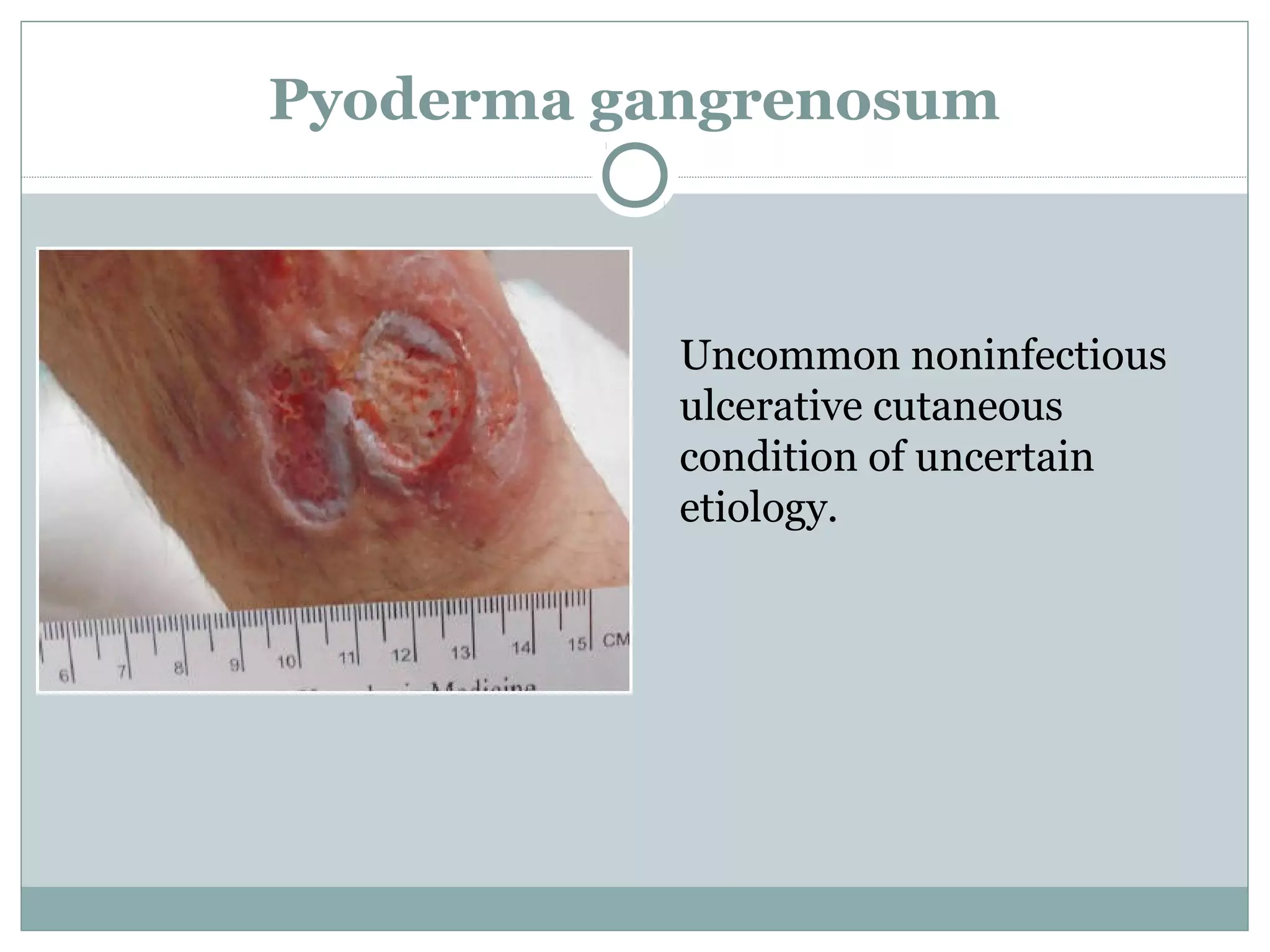
Uncommon noninfectious
ulcerative cutaneous
condition of uncertain
etiology.
What is Pyoderma Gangrenosum
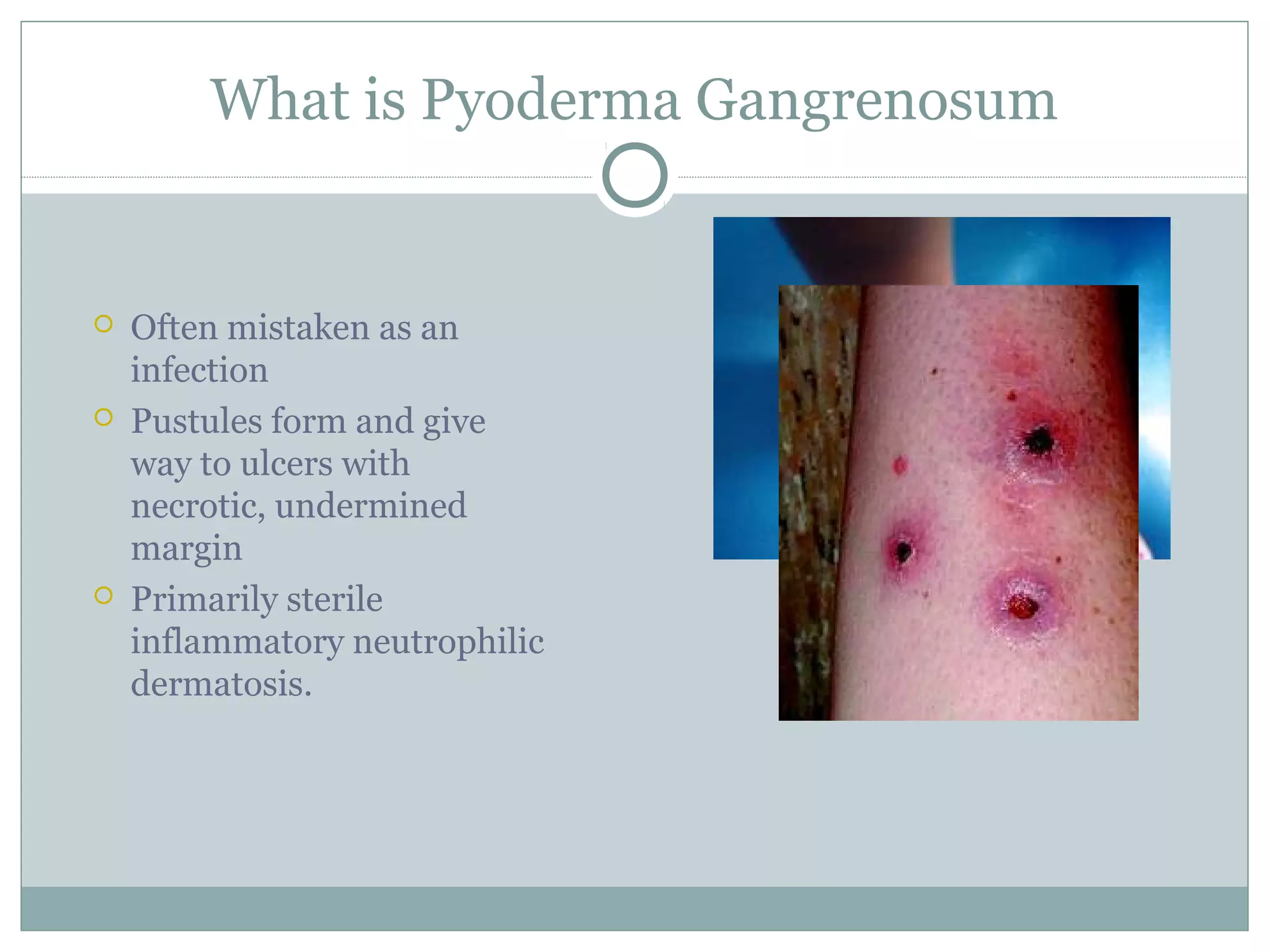
 Often mistaken as an
infection
 Pustules form and give
way to ulcers with
necrotic, undermined
margin
 Primarily sterile
inflammatory neutrophilic
dermatosis.
Epidemiology
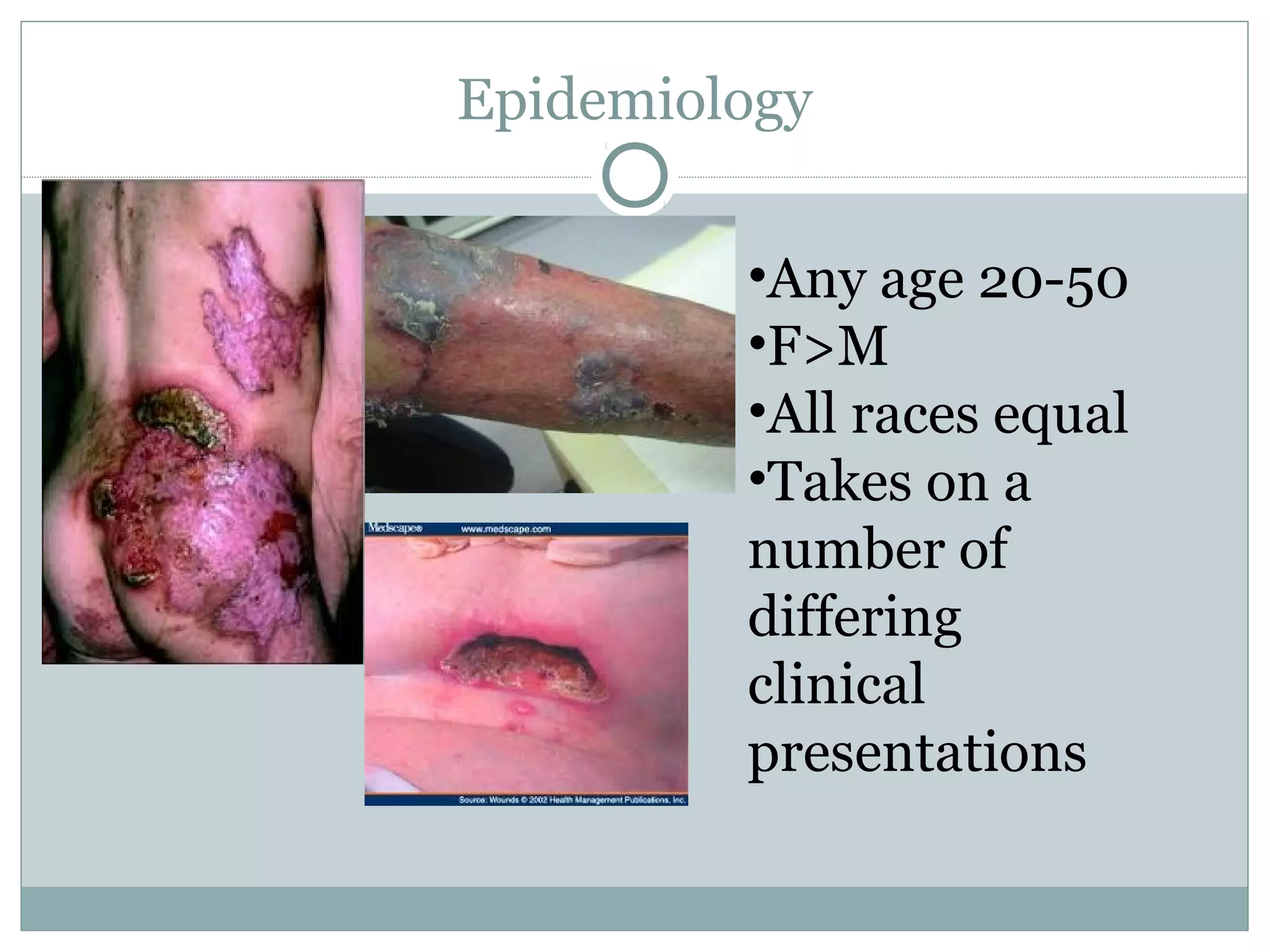
•Any age 20-50
•F>M
•All races equal
•Takes on a
number of
differing
clinical
presentations
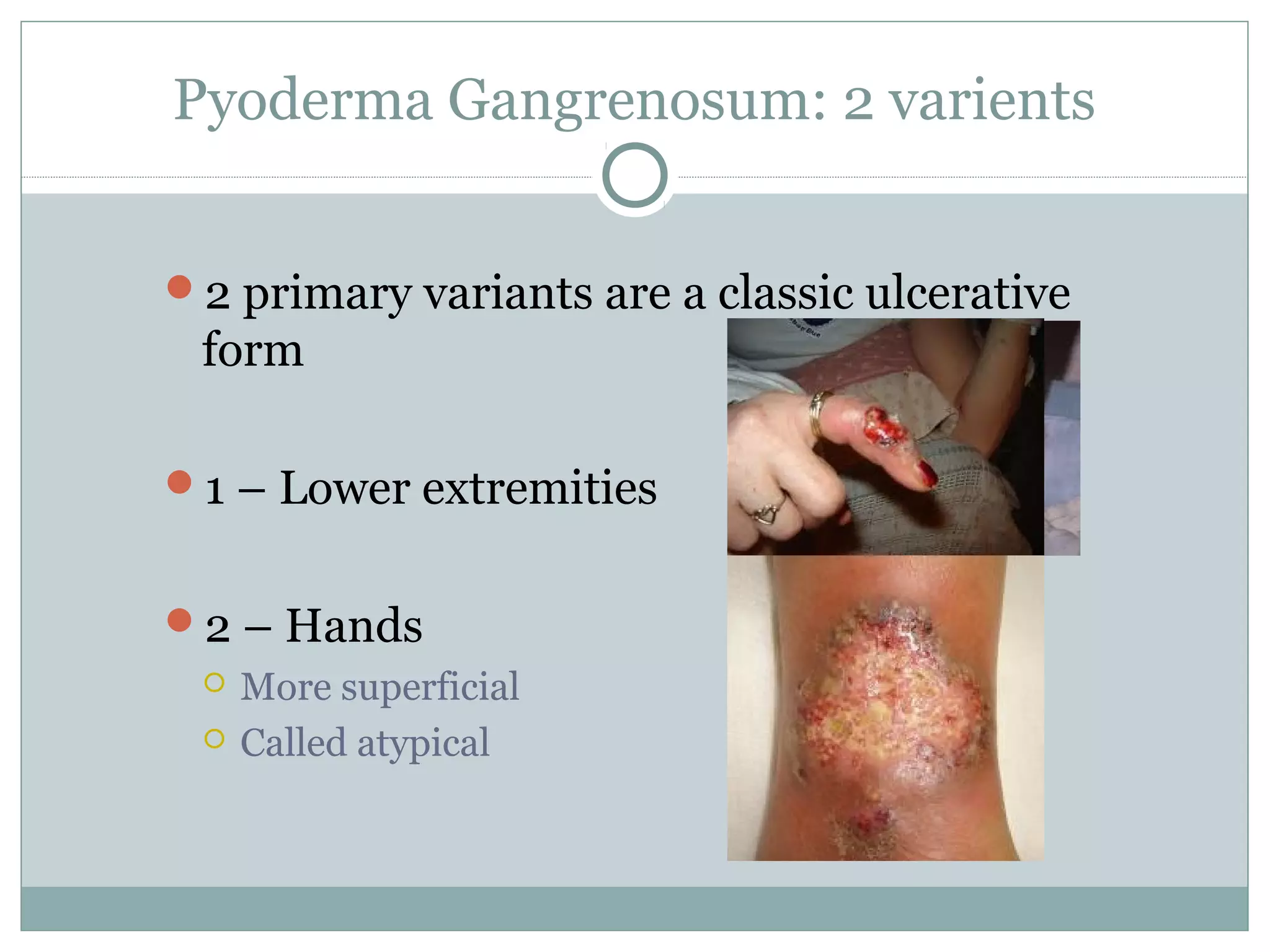
Pyoderma Gangrenosum: 2 varients
2 primary variants are a classic ulcerative
form
1 – Lower extremities
2 – Hands
 More superficial
 Called atypical
The different clinical types of PG
Variants-Typical findings
Ulcerative PG
 Ulceration with rapidly evolving purulent wound ground
Pustular PG
 Discrete pustules, sometimes self-limited, commonly
associated with inflammatory bowel disease
Bullous PG
 Superficial bullae with development of ulcerations
Vegetative PG
 Erosions and superficial ulcers
Pathophysiology
• Poorly understood
• Dysregulation of the immune system, specifically altered
neutrophil chemotaxis, is believed to be involved
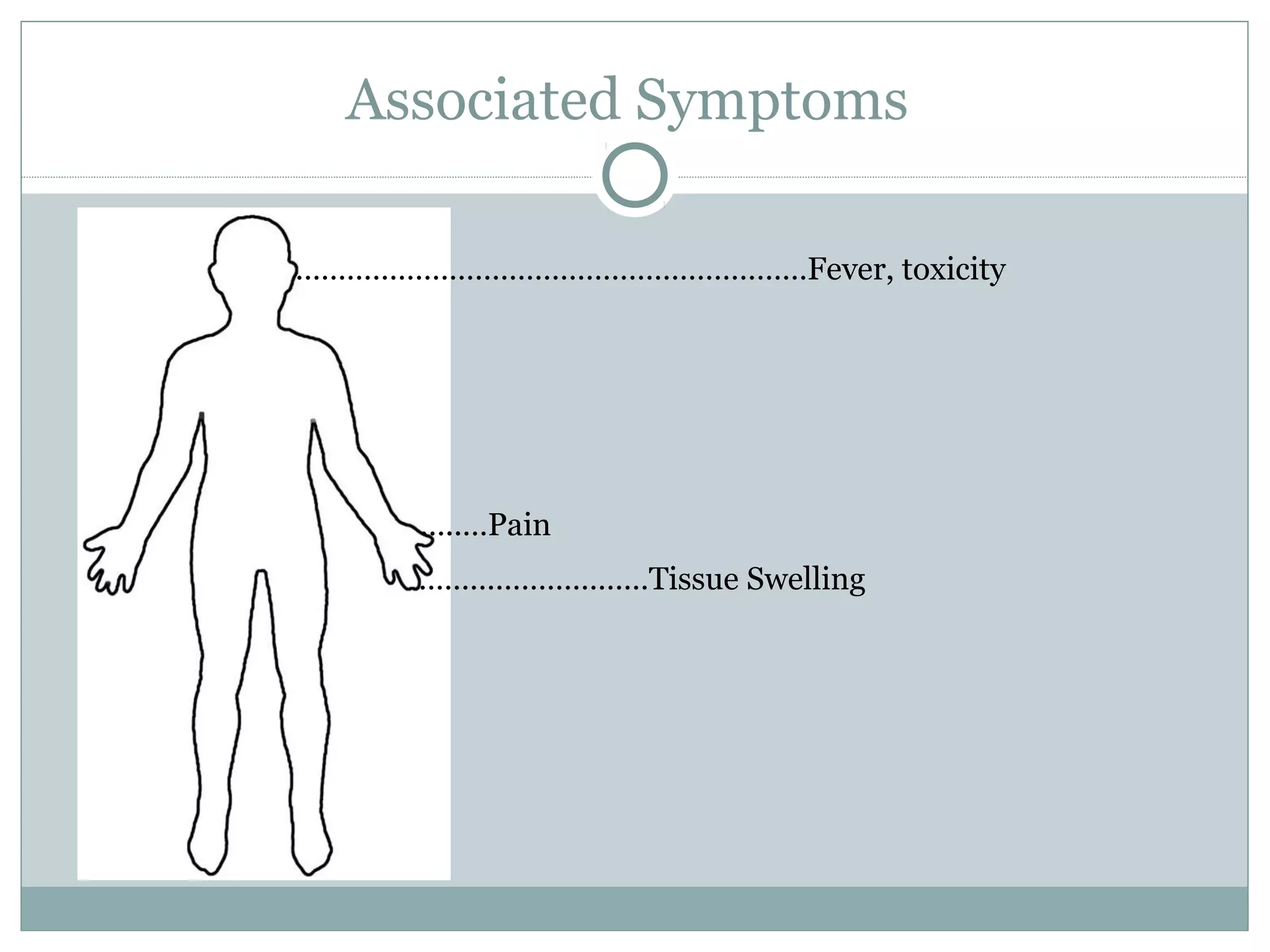
Associated Symptoms
……………………………………………………Fever, toxicity
…..…Pain
………………………Tissue Swelling
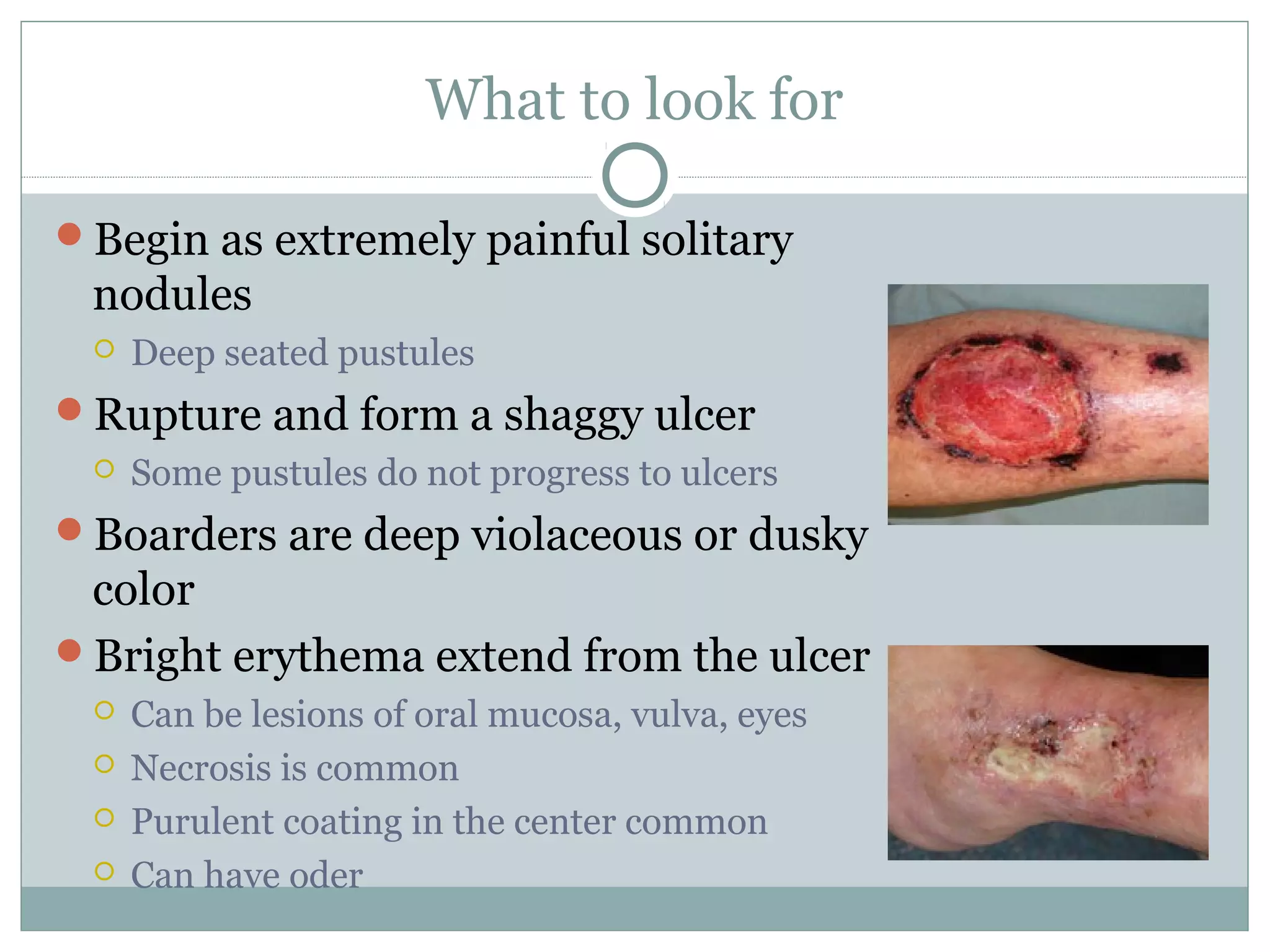
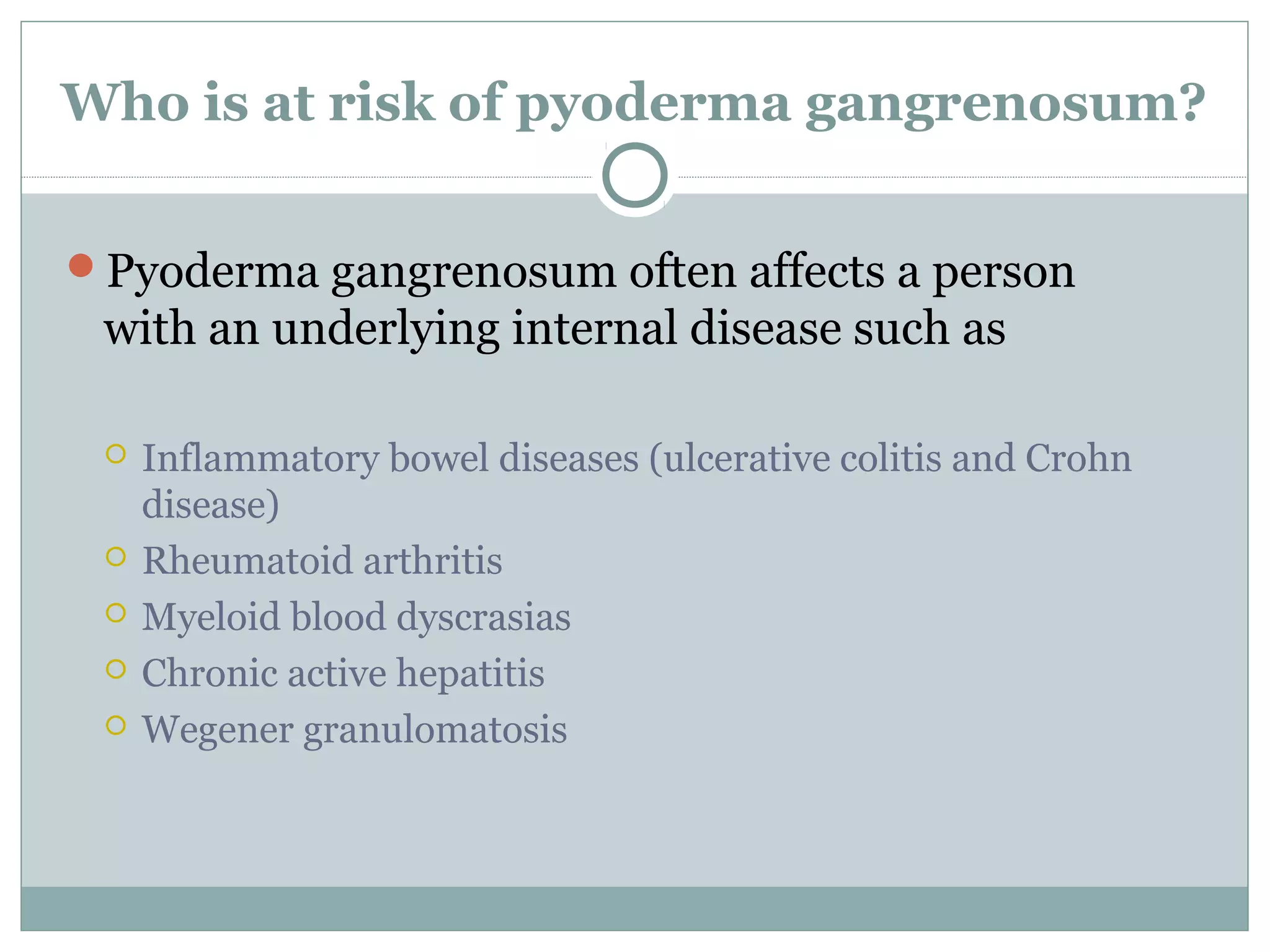
What to look for
Begin as extremely painful solitary
nodules
 Deep seated pustules
Rupture and form a shaggy ulcer
 Some pustules do not progress to ulcers
Boarders are deep violaceous or dusky
color
Bright erythema extend from the ulcer
 Can be lesions of oral mucosa, vulva, eyes
 Necrosis is common
 Purulent coating in the center common
 Can have oder
Who is at risk of pyoderma gangrenosum?
Pyoderma gangrenosum often affects a person
with an underlying internal disease such as
 Inflammatory bowel diseases (ulcerative colitis and Crohn
disease)
 Rheumatoid arthritis
 Myeloid blood dyscrasias
 Chronic active hepatitis
 Wegener granulomatosis
Key Clinical Findings
Starts quite suddenly, often
at the site of a minor injury.
 It may start as a small pustule,
red bump or blood-blister.
The skin then breaks down
resulting in an ulcer which
can deepen and widen
rapidly.
Any trauma worsens the
lesion
Treatment - Pyoderma Gangrenosum
Options
Mild
• Intralesional corticosteroids
Moderate/Severe
• Prednisone: 0.5-2mg/kg PO. Divided into 4x daily
• Usually weeks to months
• Cyclosporine-A: 0.5-1.0 mg /kg/day. Divide BID
• Rapid response and marked improvement of pain
Surgical
• NEVER!
• NO I/D, NO biopsy
Referral
• Dermatology for management is indicated for multiple
lesions
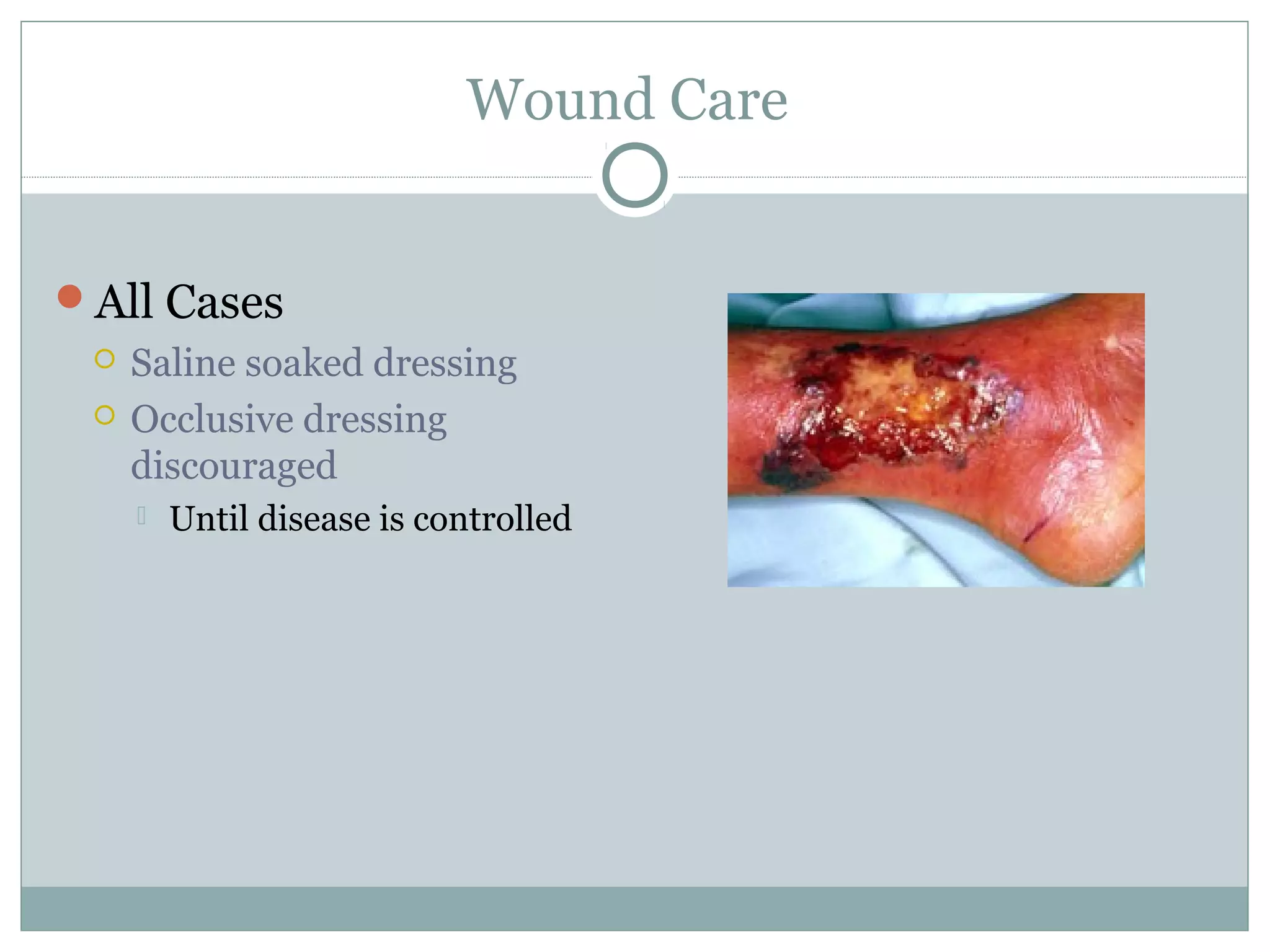
Wound Care
All Cases
 Saline soaked dressing
 Occlusive dressing
discouraged
 Until disease is controlled
Diagnosis
Often misdiagnosed
Diagnosed by its characteristic appearance.
There is no specific test.
 The wound should be swabbed and cultured for micro-
organisms, but these are not the cause of pyoderma
gangrenosum.
Mostly, blood tests are not particularly helpful. Some
patients may have a positive ANCA.
The pathergy test is usually positive (a skin prick test
causing a papule, pustule or ulcer).
Differential Diagnosis
References
• ON REQUEST
THANK YOU!!

Pyoderma Gangrenosum

  • 1.
    UCI EMERGENCY MEDICINE AUGUST24, 2011 JENNIFER ARMSTRONG Pyoderma Gangrenosum
  • 2.
    Pyoderma gangrenosum Uncommon noninfectious ulcerativecutaneous condition of uncertain etiology.
  • 3.
    What is PyodermaGangrenosum  Often mistaken as an infection  Pustules form and give way to ulcers with necrotic, undermined margin  Primarily sterile inflammatory neutrophilic dermatosis.
  • 4.
    Epidemiology •Any age 20-50 •F>M •Allraces equal •Takes on a number of differing clinical presentations
  • 5.
    Pyoderma Gangrenosum: 2varients 2 primary variants are a classic ulcerative form 1 – Lower extremities 2 – Hands  More superficial  Called atypical
  • 6.
    The different clinicaltypes of PG Variants-Typical findings Ulcerative PG  Ulceration with rapidly evolving purulent wound ground Pustular PG  Discrete pustules, sometimes self-limited, commonly associated with inflammatory bowel disease Bullous PG  Superficial bullae with development of ulcerations Vegetative PG  Erosions and superficial ulcers
  • 7.
    Pathophysiology • Poorly understood •Dysregulation of the immune system, specifically altered neutrophil chemotaxis, is believed to be involved
  • 8.
  • 9.
    What to lookfor Begin as extremely painful solitary nodules  Deep seated pustules Rupture and form a shaggy ulcer  Some pustules do not progress to ulcers Boarders are deep violaceous or dusky color Bright erythema extend from the ulcer  Can be lesions of oral mucosa, vulva, eyes  Necrosis is common  Purulent coating in the center common  Can have oder
  • 10.
    Who is atrisk of pyoderma gangrenosum? Pyoderma gangrenosum often affects a person with an underlying internal disease such as  Inflammatory bowel diseases (ulcerative colitis and Crohn disease)  Rheumatoid arthritis  Myeloid blood dyscrasias  Chronic active hepatitis  Wegener granulomatosis
  • 11.
    Key Clinical Findings Startsquite suddenly, often at the site of a minor injury.  It may start as a small pustule, red bump or blood-blister. The skin then breaks down resulting in an ulcer which can deepen and widen rapidly. Any trauma worsens the lesion
  • 12.
    Treatment - PyodermaGangrenosum Options Mild • Intralesional corticosteroids Moderate/Severe • Prednisone: 0.5-2mg/kg PO. Divided into 4x daily • Usually weeks to months • Cyclosporine-A: 0.5-1.0 mg /kg/day. Divide BID • Rapid response and marked improvement of pain Surgical • NEVER! • NO I/D, NO biopsy Referral • Dermatology for management is indicated for multiple lesions
  • 13.
    Wound Care All Cases Saline soaked dressing  Occlusive dressing discouraged  Until disease is controlled
  • 14.
    Diagnosis Often misdiagnosed Diagnosed byits characteristic appearance. There is no specific test.  The wound should be swabbed and cultured for micro- organisms, but these are not the cause of pyoderma gangrenosum. Mostly, blood tests are not particularly helpful. Some patients may have a positive ANCA. The pathergy test is usually positive (a skin prick test causing a papule, pustule or ulcer).
  • 15.
  • 16.