Presented By
Jafsi KP
Al shifa College of Nursing
Perinthalmanna
Juvenile delinquency
CONTENT:
 Juvenile delinquency
 Risk factors
 Characteristics
 Causes
 Prevention
 Legal measures
 Role of school teachers
JUVENILE DELINQUENCY
Conduct by a
juvenile
characterized
by antisocial
behavior
that is beyond
parental control
and therefore
subject to legal
action
A violation of
the law
committed
by a juvenile
and not
punishable
by death or
life
MEANING
 Juvenile
delinquency is the
most important
aspect of the subject
matter of
criminology.
 Juvenile
delinquency, as a
legal concept is of
recent origin.
 Juvenile
delinquency is a big
breading centre of
 The word delinquency is derived from
the Latin word “delinquere” meaning de
i.e. away and linquere i.e. to leave thus,
meaning to leave or to abandon.
INCIDENCE
 According to NCRB (National Crime Records
Bureau) data for 2011 64% of all juvenile
criminals fall in the age group of 16-18 .
 In 2011 ,33887 juveniles were arrested for
25,178 instances of crime. Of these 1,211
juveniles in the 7-12 years age group , 11,019
in the age 12-16 years age group while 21,657
in the 16-18 years age group
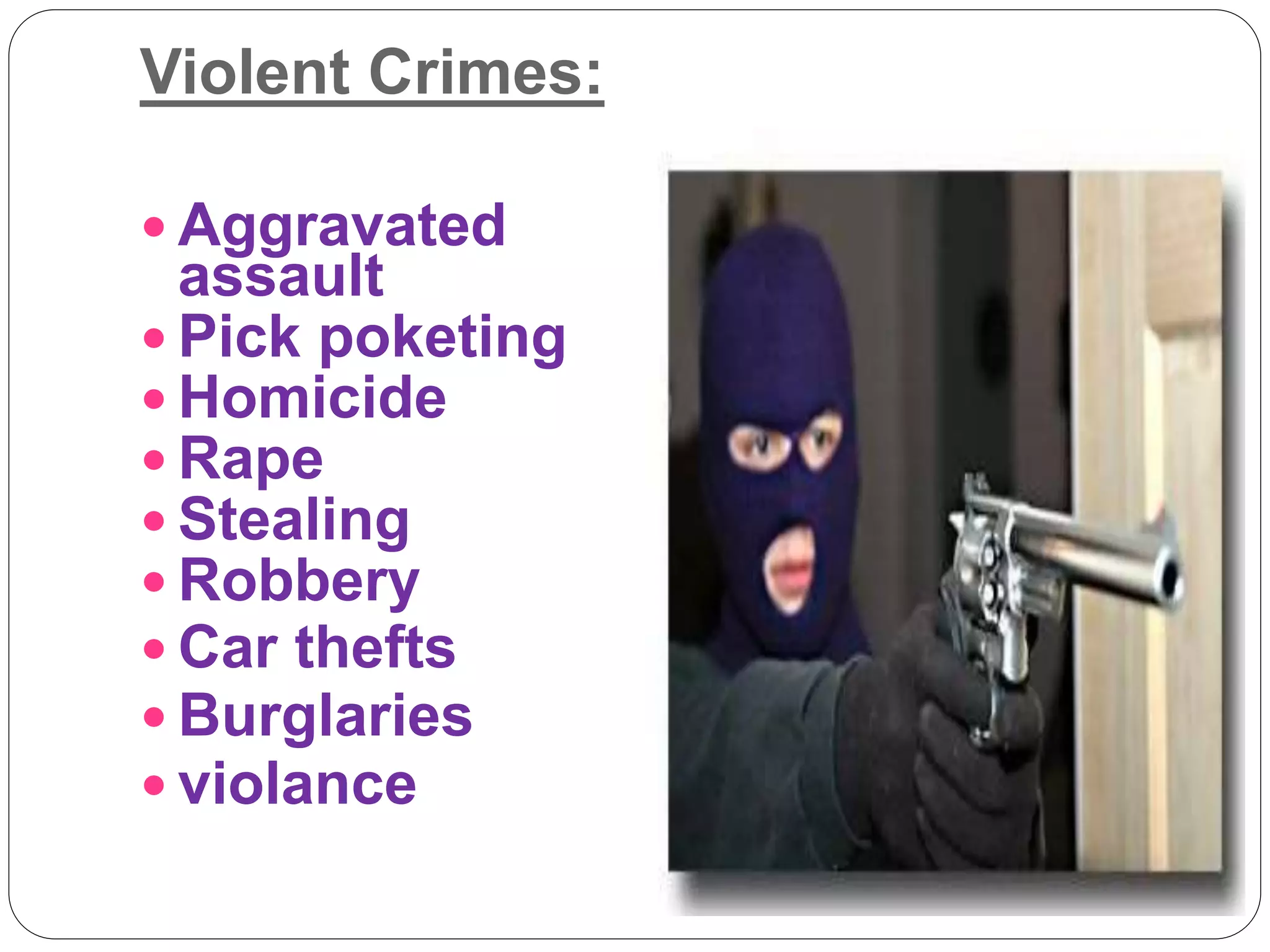
Violent Crimes:
 Aggravated
assault
 Pick poketing
 Homicide
 Rape
 Stealing
 Robbery
 Car thefts
 Burglaries
 violance
CHARACTERISTICS OF
JUVENILE DELINQUENCY
The delinquency rates are many times
higher for boys than girls, that is,
girls commit fewer delinquencies
than boy
 Nine out of 10 juvenile delinquents
are first-offenders and only one-
tenth is recidivists or past-offenders
The
delinquency
rates tend to be
highest during
early
Juvenile
delinquency is
more in urban
than a rural
phenomenon
RISK FACTORS OF JUVENILE DELINQUENCY
Individual risk factors
 low intelligence
 impulsiveness or the inability to
delay gratification
Family environment and peer influence
 The level of parental supervision
 Harsh punishment
 parental conflict or separation
 criminal parents or siblings
 parental abuse or neglect
Social and community
 The availability of drugs and
firearms,
 community disorganization
 economic depravation.
CAUSES OF JUVENILE
DELINQUENCY
 BIOLOGICAL CAUSES
 Heredity defects and
glandular problems
 XYY type of
chromosomal defects
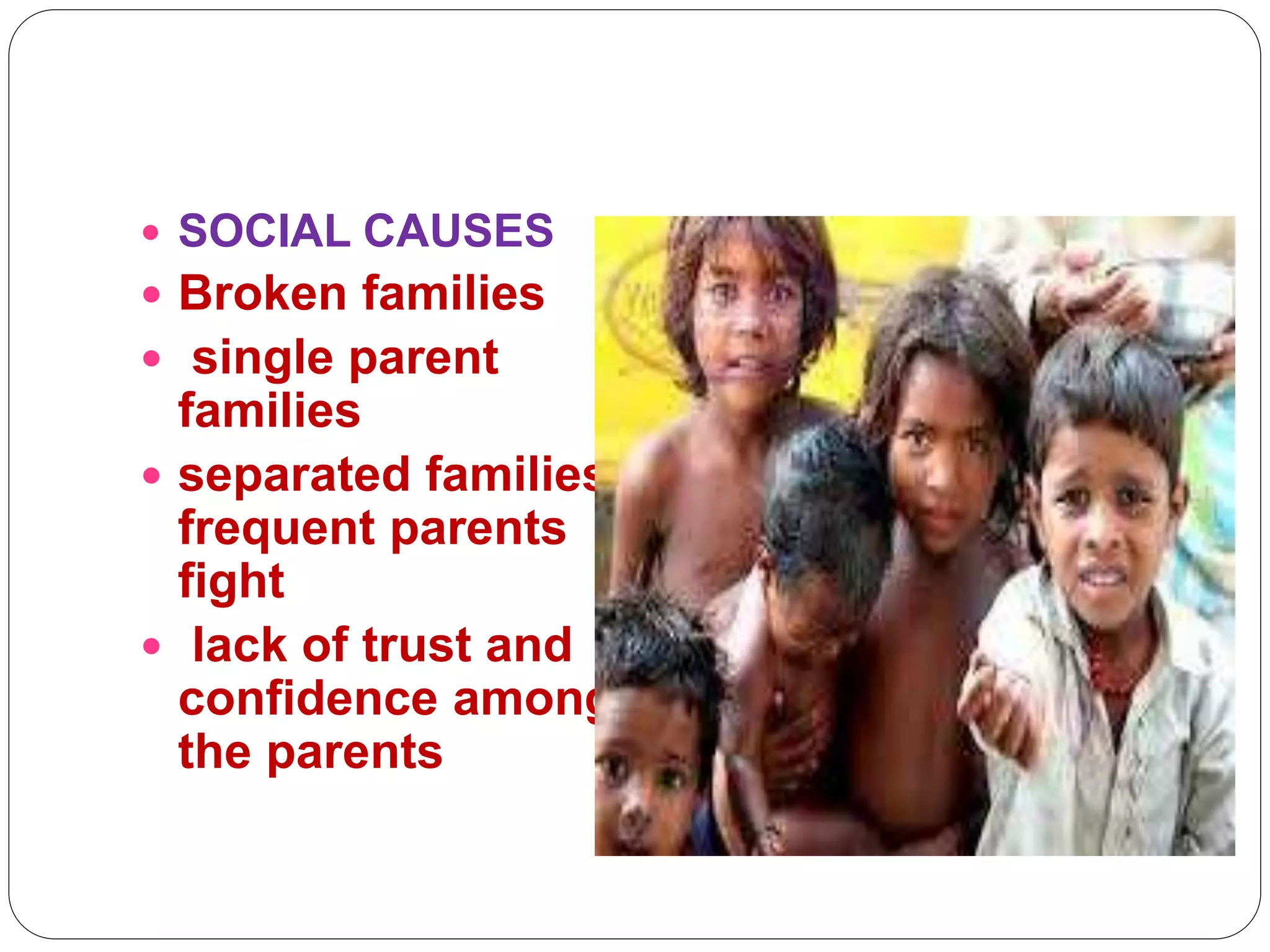
 SOCIAL CAUSES
 Broken families
 single parent families
 separated families,
frequent parents fight
 lack of trust and
confidence among the
parents
 SOCIAL CAUSES
 Broken families
 single parent
families
 separated families,
frequent parents
fight
 lack of trust and
confidence among
the parents
 Alcoholic parents
• Step parents
 Criminal parents or
psychological
problems in
parents
Step parents
 Criminal parents or
psychological
problems in
parents
 Poverty
 Neglect
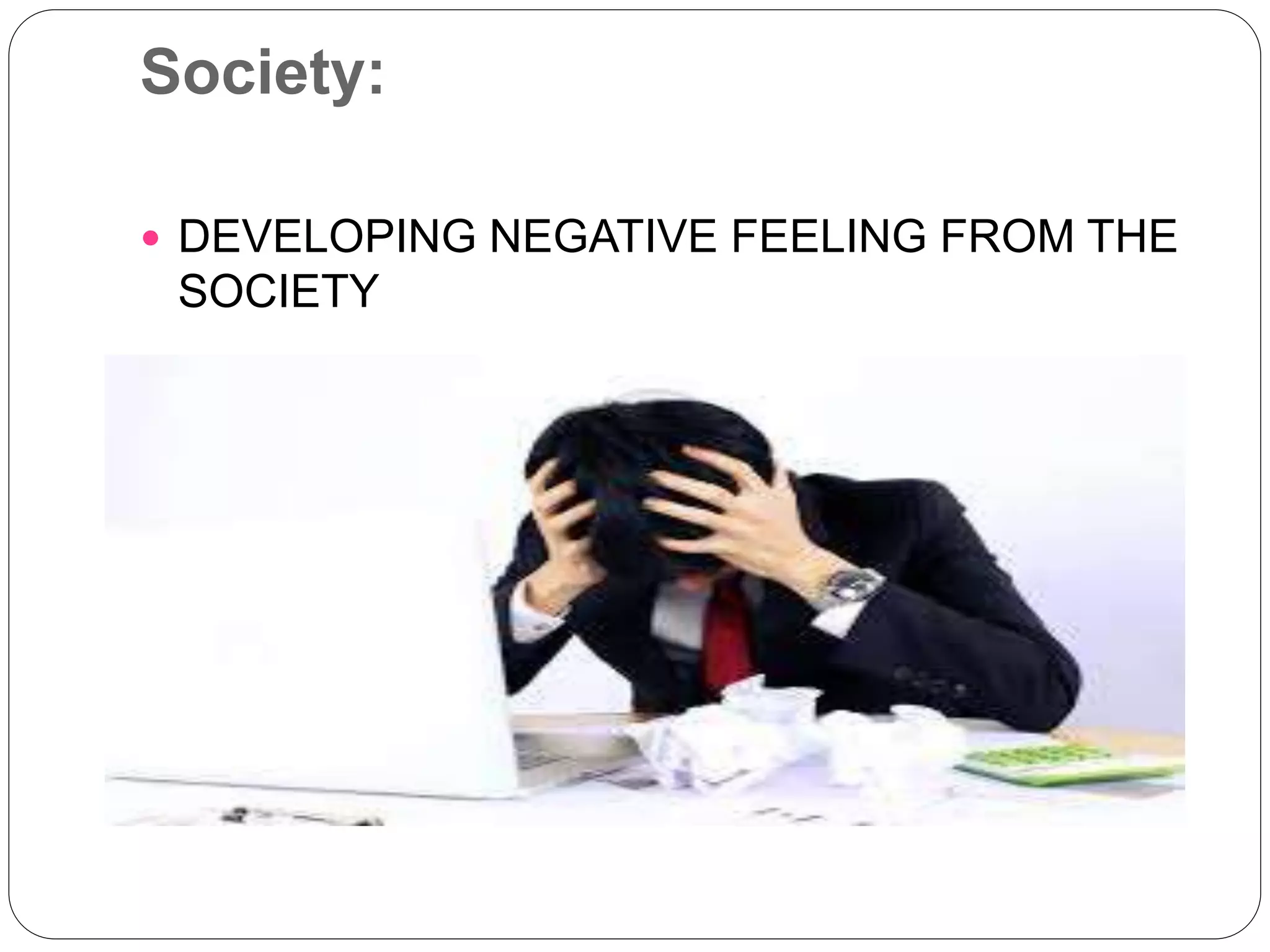
 Developing negative
feeling from the
society
 Mental disability

Neglect
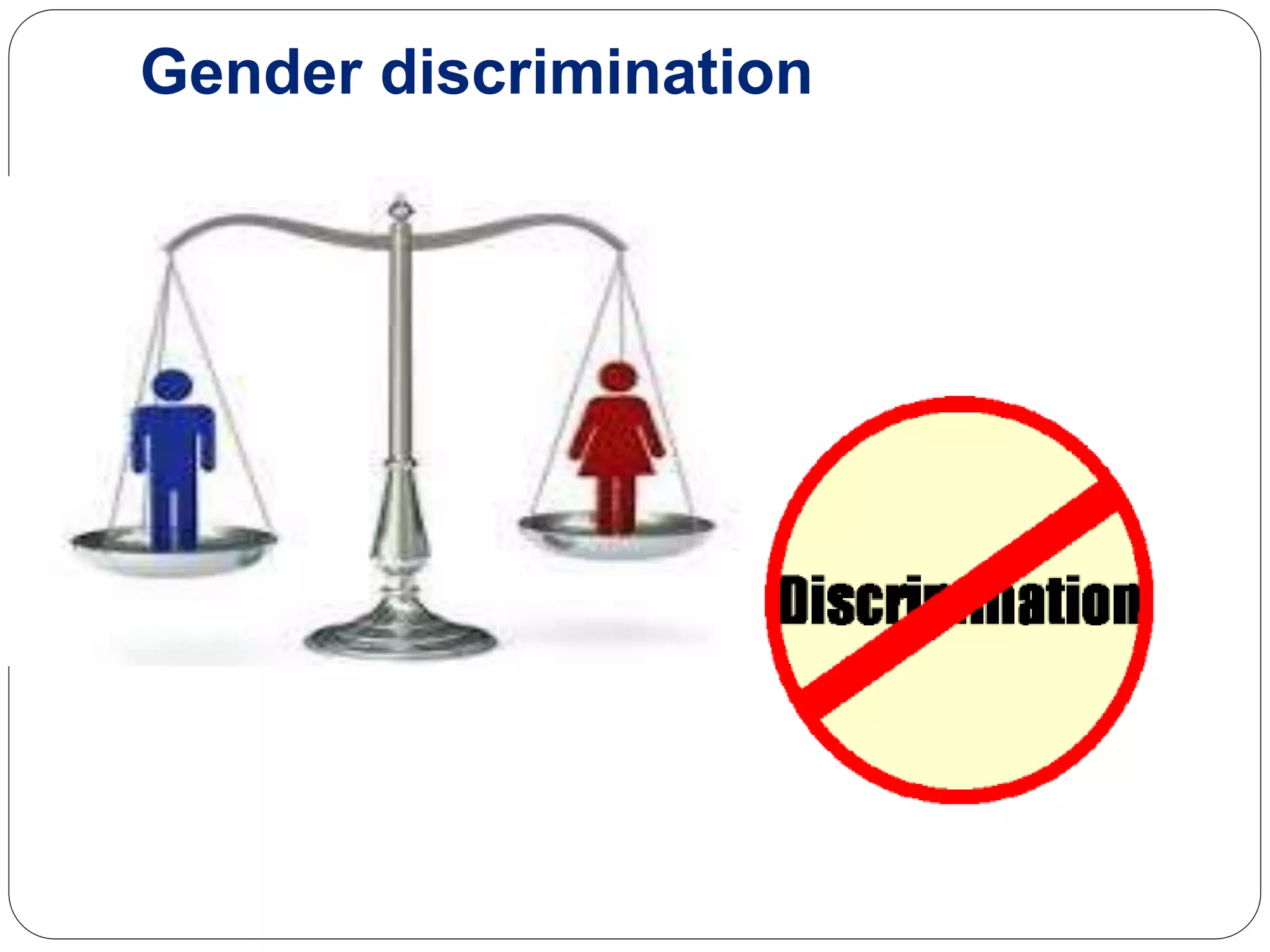
Gender discrimination
Society:
 DEVELOPING NEGATIVE FEELING FROM THE
SOCIETY
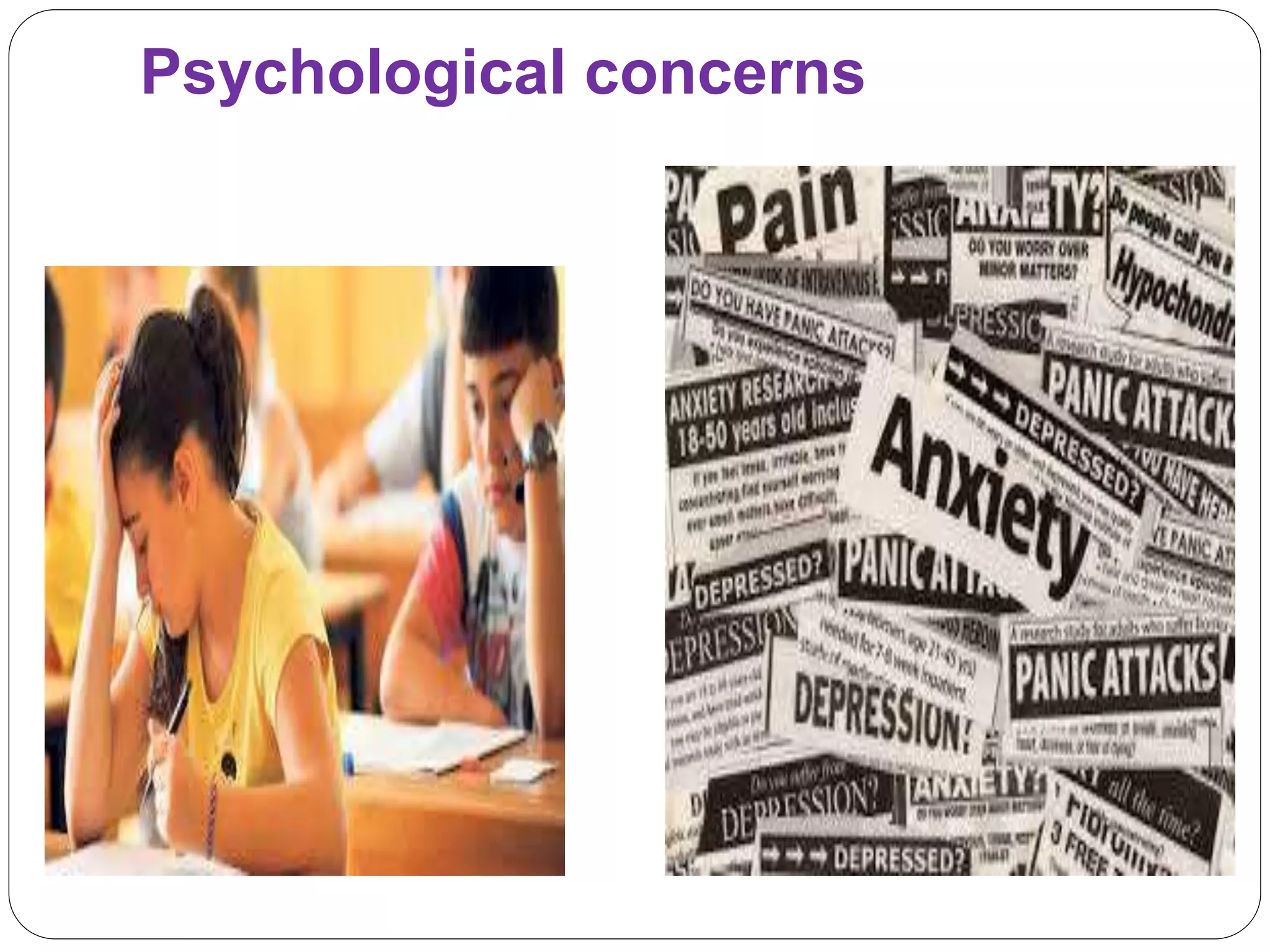
Psychological concerns
Mental disability
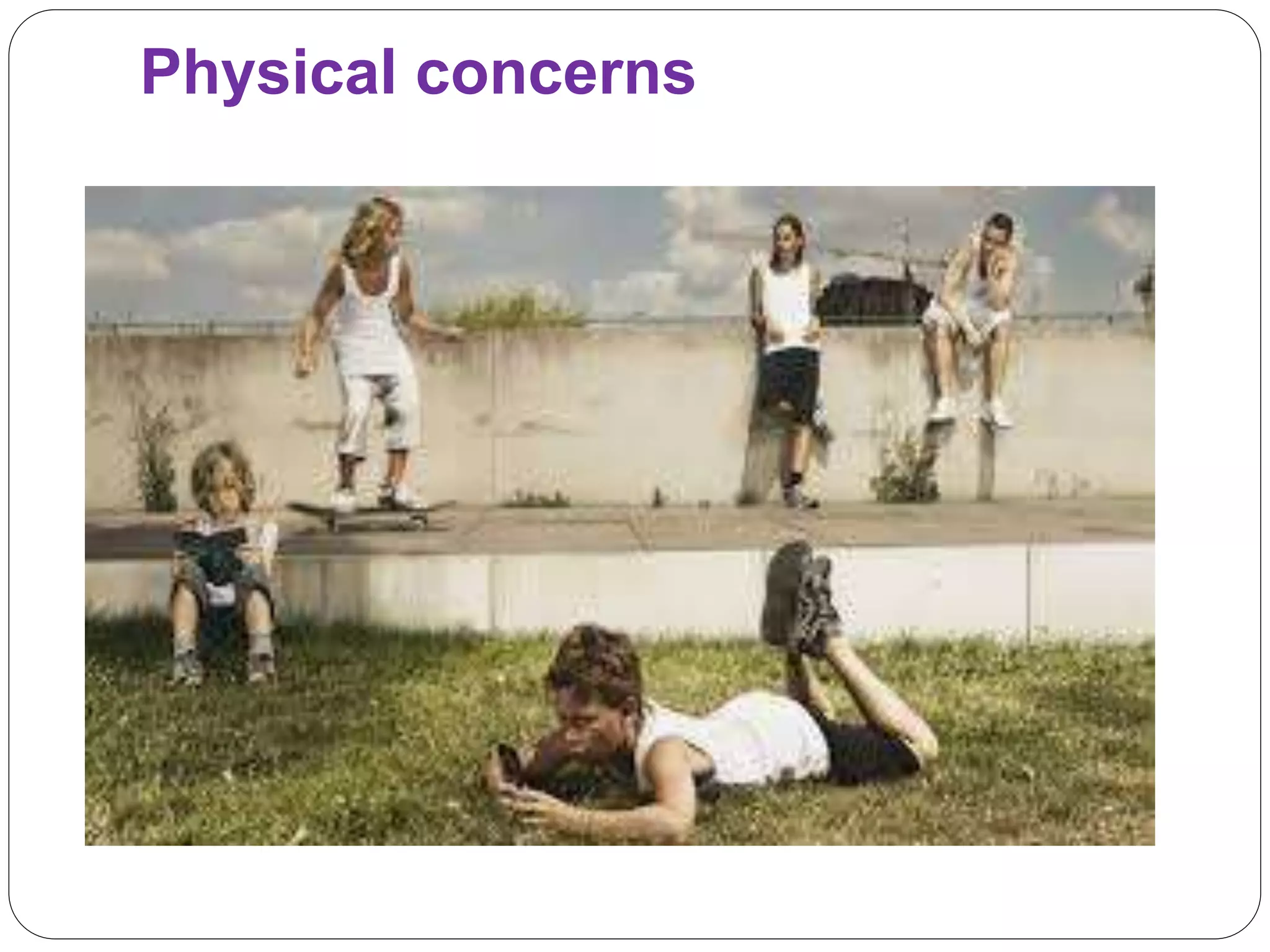
Physical concerns
 Drug use
Peer group
influence
 friends commit crime
adolescents often
learn to do it
 Peer group rejection
 Abusive behaviour
 Personal Reasons
 The negative feelings
make the person
commit crime even if
he belongs to a good
family.
Educational Curriculum
 Delinquents are
typically non-
bookish and non-
academic
individuals who take
studies like a
burden. When they
fail in exams and get
scolded by their
family, they tend to
indulge themselves
in delinquent acts
PREVENTION
 Education
 Recreation
 Community
involvement
 Creation of special
programs
 Parent-Child
Interaction Training
Program
 Bullying Prevention
Program
Education
 Teach children about
the effects of drugs,
gangs, sex, and
weapons
 This is particularly
important where
youth are barraged
with sexual and
violent images.
 Educational
programs have the
underlying intent of
encouraging hope
and opening up
opportunities for
young people
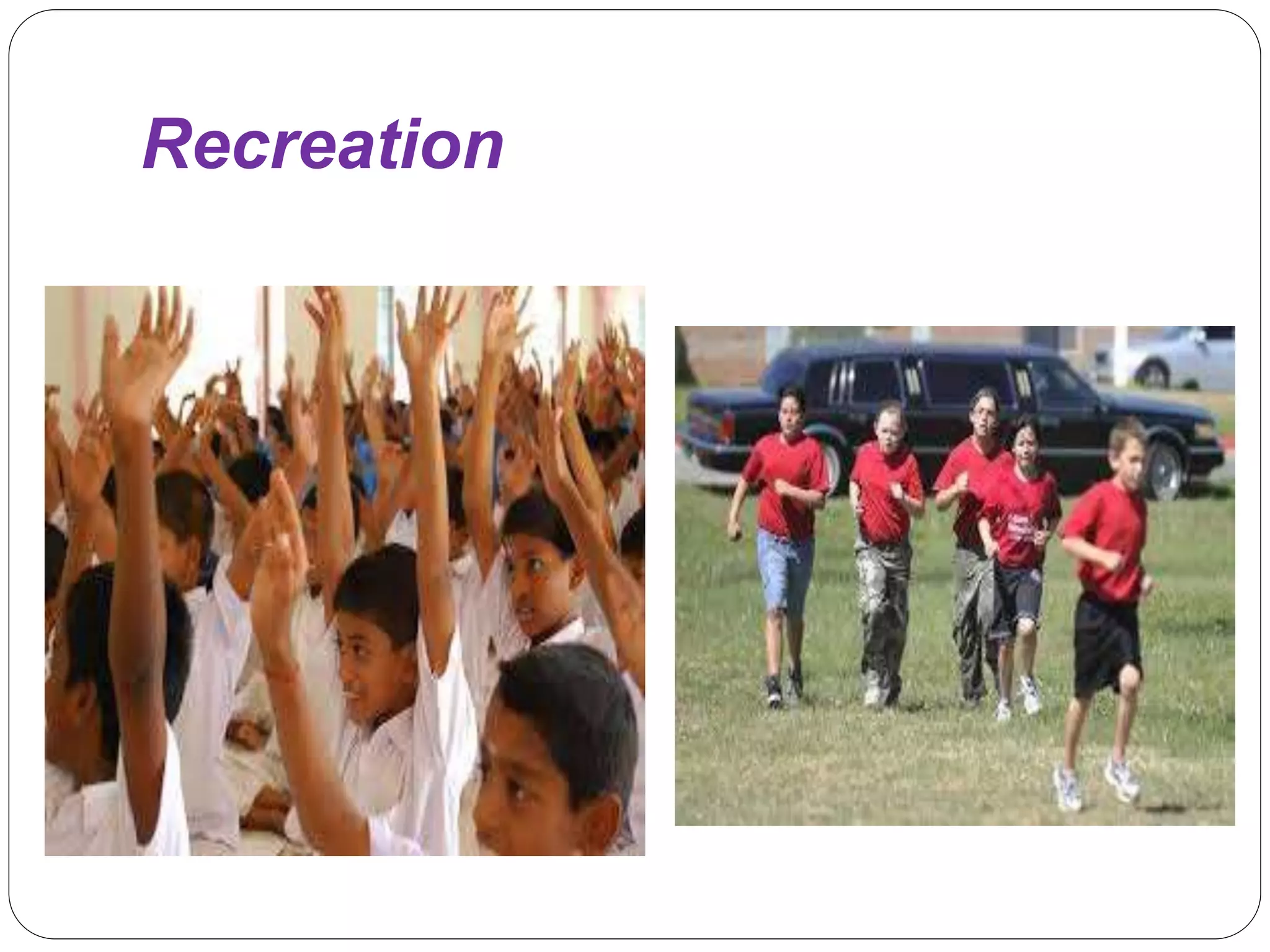
Recreation
 Recreation
programs allow
youths to connect
with other adults
and children in the
community
 sports, dancing,
music, rock
climbing, drama,
karate, bowling,
art, and other
activities.
Community involvement
 Involvement in community groups
provide youth with an opportunity to
interact in a safe social environment
 Girl scouts, boy scouts, church youth
groups, and volunteer groups all
involve within a community
Parent-Child Interaction Training
Program
 A therapist guides the parents, educating
them on how best to respond to their child's
behaviour whether positive or negative.
 The program has been shown to reduce
hyperactivity, attention deficit,
aggression, and anxious behaviour in
children
Bullying Prevention Program
 Bullying is unwanted,
aggressive behavior
among school aged
children that involves
a real or perceived
power imbalance
 place in elementary
and junior high school
settings
 An anonymous
student questionnaire
fills teachers and
administrators in as to
who is doing the
bullying
 set up class rules and
facilitate discussions
that address the
problem
Prevention Programs within the Juvenile Justice
System
 Drug rehabilitation assistance, counselling, and
educational opportunities
 provide them with job training, give them the
experience of living in a safe, stable environment,
and provide them with assistance to break
harmful habits
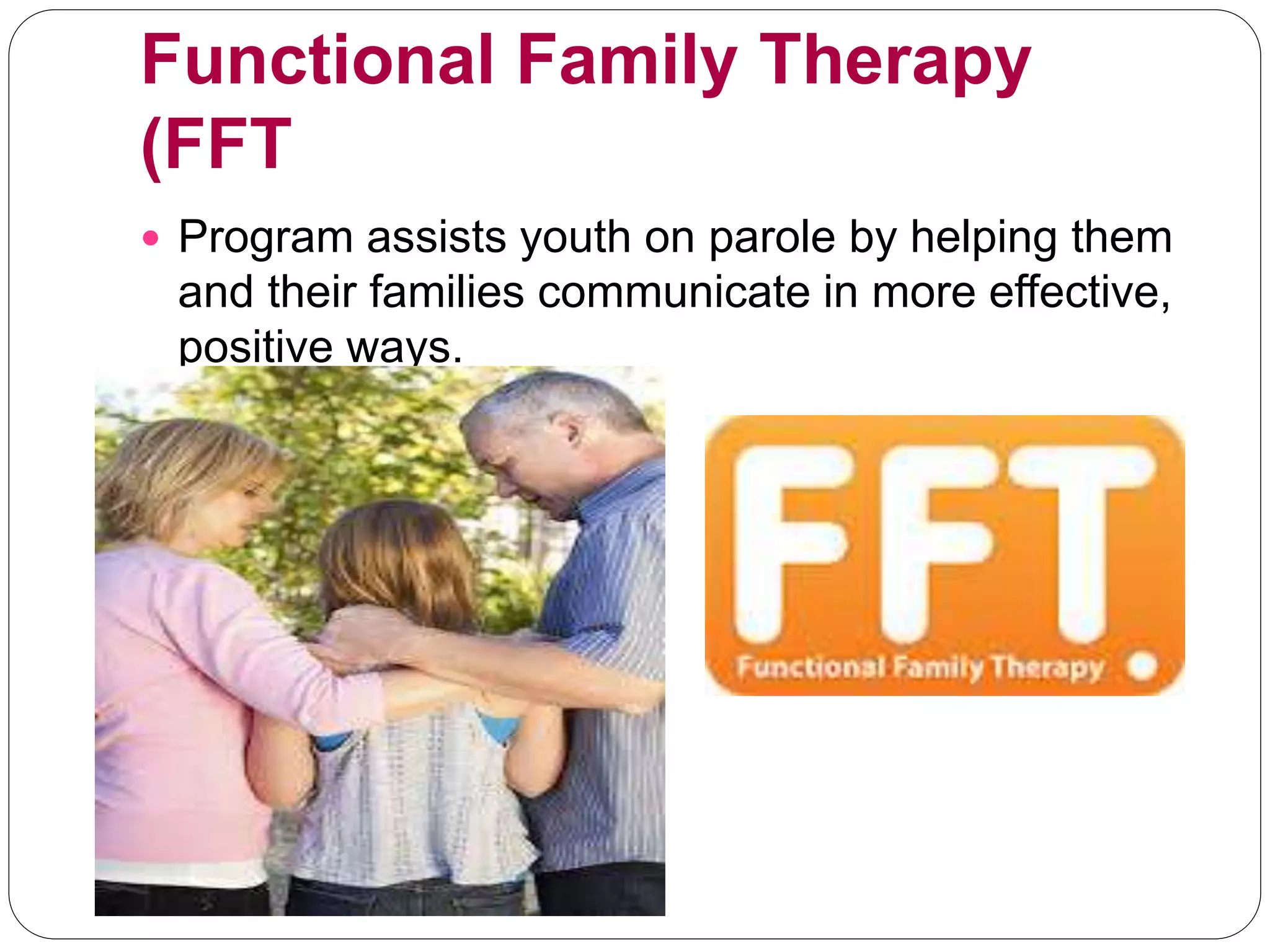
Functional Family Therapy
(FFT
 Program assists youth on parole by helping them
and their families communicate in more effective,
positive ways.
CONTROL MEASURES OF JUVENILE
DELINQUENCY
 Accept the delinquent as a person in his own
right, and give affection and security.
 Watch for the signs of maladjustment; early
treatment may prevent this maladjusted.
 Providing the child with a variety of experiences
like music and dance, art and craft, etc. can serve
the purpose
 Change the conditions of home, school and
community that seem to give rise to such
behavior.
 CHILD GUIDANCE CLINIC
 The first child guidance clinic was started in
Chicago in 1909.
 To prevent children from the possibility of
becoming neurotics and psychotics in later life.
 a team work job, the comprising of a psychiatrist,
clinical psychologist, educational psychologist,
psychiatric social workers, public health nurses,
paediatrician, speech therapist, occupational
therapist, and neurologist.
Specialized Programs Provided at Child
Guidance Clinic
 Early Intervention
 Intensive Family Support
 Play therapy
 Juvenile Fire setter Intervention Program
 Assessment and Treatment of Sexual Behavior
Problems
CHILD PLACEMENT
 Orphanages: Children who have no home, or
who for some reason could not be cared for by
their parents are placed in orphanages.
 Remand homes: The child is placed under the
care of doctors, psychiatrists, and other trained
personnel
JUVENILE HOME
LEGISLATIVE MEASURES
Apprentices Act of 1850:
 Orphans and poor children could take the benefit
of this Act.
 The Act also dealt with children who committed
petty offences
Reformatory Schools Act of 1897:
 Under this Act courts were empowered to send
for detention youthful male offenders to
Reformatory School for a period
Children Acts
Children Acts enacted by
Madras in 1920 and followed by
other States,
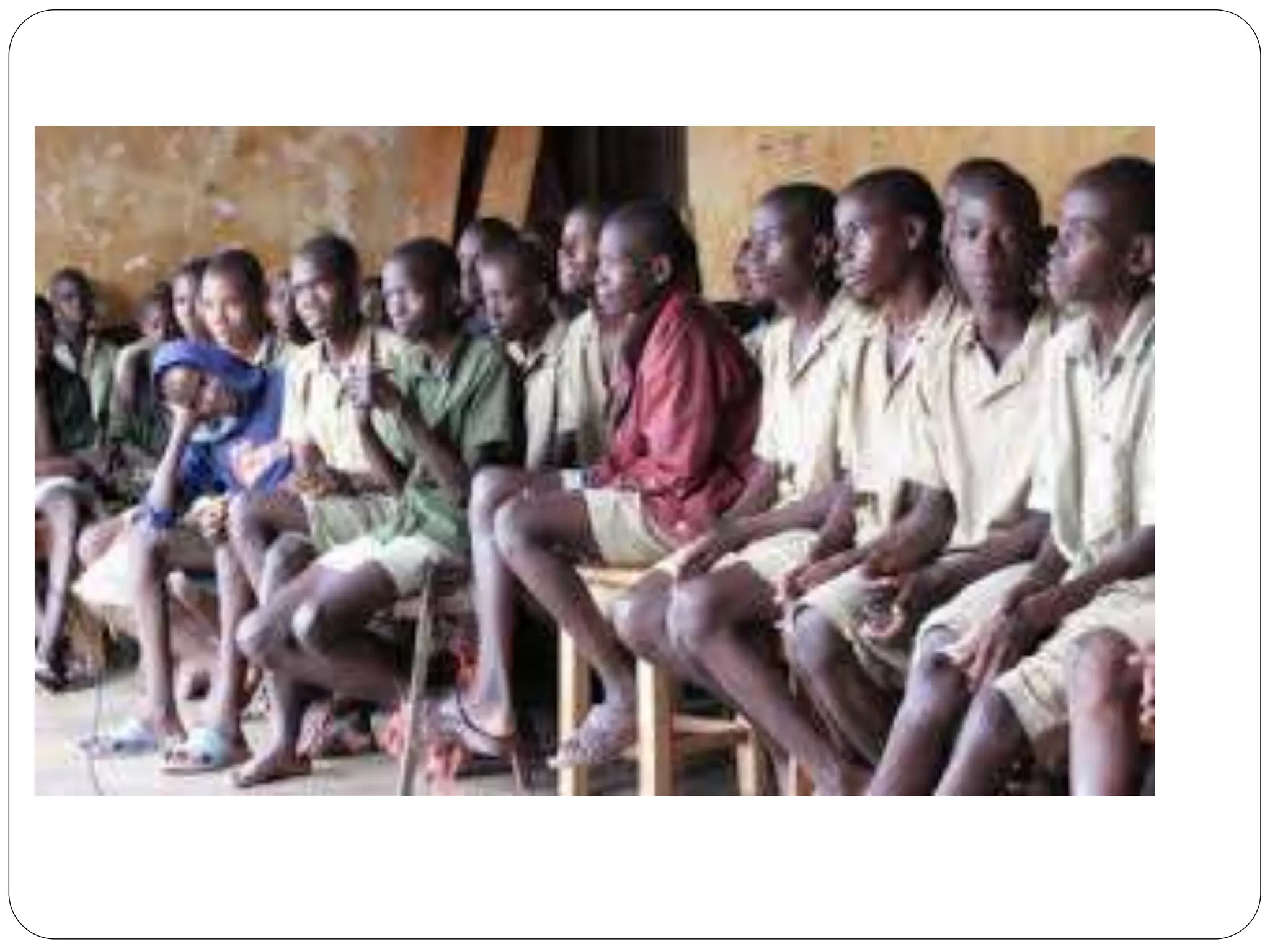
No child under 14 years of age
can be imprisoned under any
circumstances and no young
person between 14-16 years of
age can be imprisoned unless
he is certified to be an unruly
person
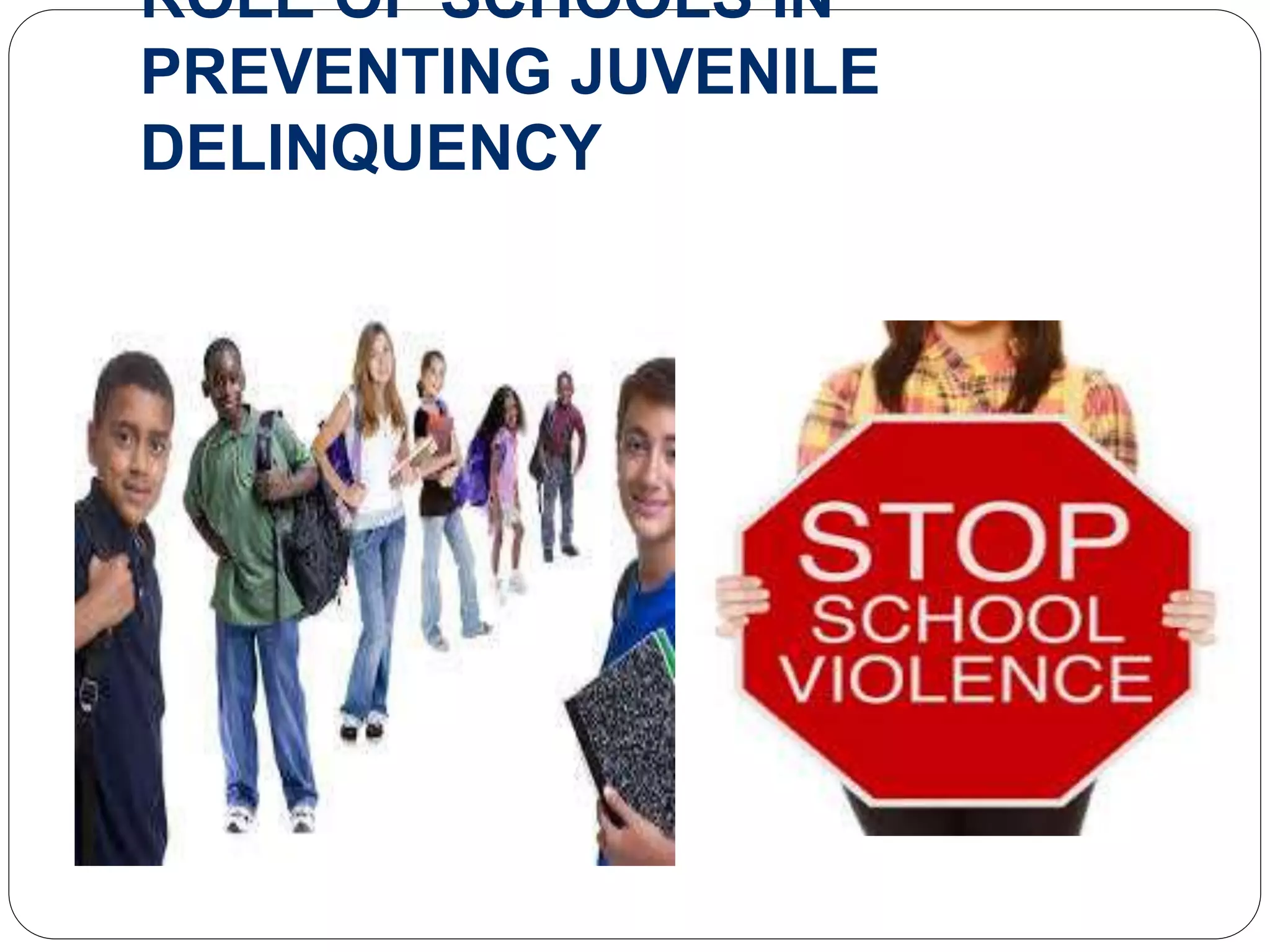
ROLE OF SCHOOLS IN
PREVENTING JUVENILE
DELINQUENCY
School-Based Programs for Children and
Adolescents
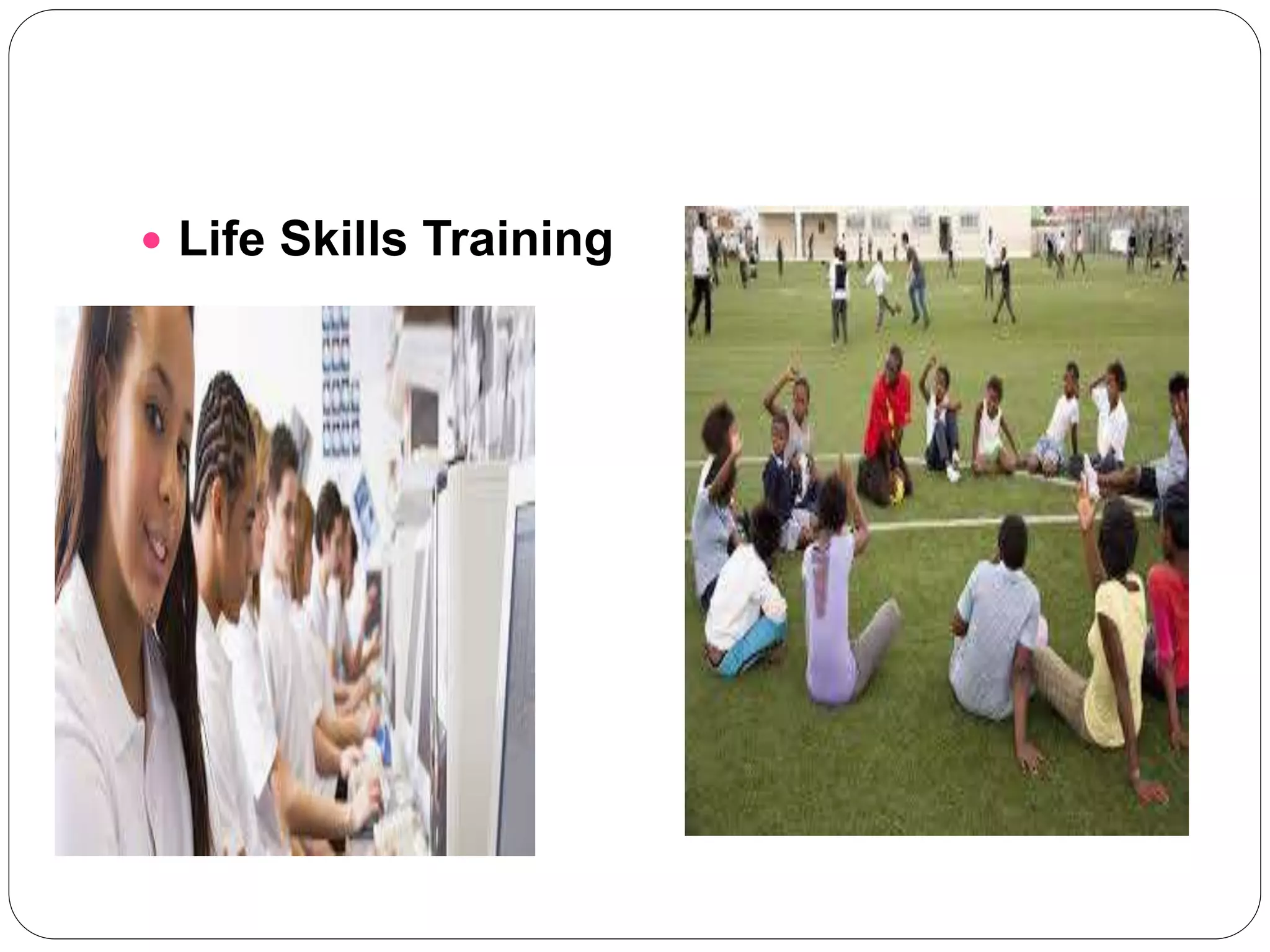
 Life skills training;
 Socialization skills;
 Problem-solving and coping skills;
 Preparation for parenthood;
 Self-protection training.

 Life Skills Training
 Socialization Skills
Problem-solving and Coping Skills
Preparation for Parenthood
School-Community Programs
Use of School Facilities and
Resources
 workshops on child abuse
 Joint school-community adult education
programs
 School newsletters
 School staff can serve as consultants,
leaders, and facilitators of these programs
Juvenile delinquency

Juvenile delinquency

  • 1.
    Presented By Jafsi KP Alshifa College of Nursing Perinthalmanna Juvenile delinquency
  • 2.
    CONTENT:  Juvenile delinquency Risk factors  Characteristics  Causes  Prevention  Legal measures  Role of school teachers
  • 3.
    JUVENILE DELINQUENCY Conduct bya juvenile characterized by antisocial behavior that is beyond parental control and therefore subject to legal action
  • 4.
    A violation of thelaw committed by a juvenile and not punishable by death or life
  • 5.
    MEANING  Juvenile delinquency isthe most important aspect of the subject matter of criminology.  Juvenile delinquency, as a legal concept is of recent origin.  Juvenile delinquency is a big breading centre of
  • 6.
     The worddelinquency is derived from the Latin word “delinquere” meaning de i.e. away and linquere i.e. to leave thus, meaning to leave or to abandon.
  • 7.
    INCIDENCE  According toNCRB (National Crime Records Bureau) data for 2011 64% of all juvenile criminals fall in the age group of 16-18 .  In 2011 ,33887 juveniles were arrested for 25,178 instances of crime. Of these 1,211 juveniles in the 7-12 years age group , 11,019 in the age 12-16 years age group while 21,657 in the 16-18 years age group
  • 8.
    Violent Crimes:  Aggravated assault Pick poketing  Homicide  Rape  Stealing  Robbery  Car thefts  Burglaries  violance
  • 15.
    CHARACTERISTICS OF JUVENILE DELINQUENCY Thedelinquency rates are many times higher for boys than girls, that is, girls commit fewer delinquencies than boy
  • 16.
     Nine outof 10 juvenile delinquents are first-offenders and only one- tenth is recidivists or past-offenders
  • 17.
    The delinquency rates tend tobe highest during early
  • 18.
    Juvenile delinquency is more inurban than a rural phenomenon
  • 19.
    RISK FACTORS OFJUVENILE DELINQUENCY Individual risk factors  low intelligence  impulsiveness or the inability to delay gratification
  • 20.
    Family environment andpeer influence  The level of parental supervision  Harsh punishment  parental conflict or separation  criminal parents or siblings  parental abuse or neglect
  • 21.
    Social and community The availability of drugs and firearms,  community disorganization  economic depravation.
  • 23.
    CAUSES OF JUVENILE DELINQUENCY BIOLOGICAL CAUSES  Heredity defects and glandular problems  XYY type of chromosomal defects  SOCIAL CAUSES  Broken families  single parent families  separated families, frequent parents fight  lack of trust and confidence among the parents
  • 24.
     SOCIAL CAUSES Broken families  single parent families  separated families, frequent parents fight  lack of trust and confidence among the parents
  • 25.
     Alcoholic parents •Step parents  Criminal parents or psychological problems in parents
  • 26.
  • 27.
     Criminal parentsor psychological problems in parents
  • 28.
     Poverty  Neglect Developing negative feeling from the society  Mental disability 
  • 30.
  • 32.
  • 33.
    Society:  DEVELOPING NEGATIVEFEELING FROM THE SOCIETY
  • 34.
  • 35.
  • 36.
  • 37.
  • 38.
    Peer group influence  friendscommit crime adolescents often learn to do it  Peer group rejection  Abusive behaviour
  • 39.
     Personal Reasons The negative feelings make the person commit crime even if he belongs to a good family.
  • 40.
    Educational Curriculum  Delinquentsare typically non- bookish and non- academic individuals who take studies like a burden. When they fail in exams and get scolded by their family, they tend to indulge themselves in delinquent acts
  • 41.
    PREVENTION  Education  Recreation Community involvement  Creation of special programs  Parent-Child Interaction Training Program  Bullying Prevention Program
  • 43.
    Education  Teach childrenabout the effects of drugs, gangs, sex, and weapons  This is particularly important where youth are barraged with sexual and violent images.  Educational programs have the underlying intent of encouraging hope and opening up opportunities for young people
  • 44.
  • 45.
     Recreation programs allow youthsto connect with other adults and children in the community  sports, dancing, music, rock climbing, drama, karate, bowling, art, and other activities.
  • 46.
    Community involvement  Involvementin community groups provide youth with an opportunity to interact in a safe social environment  Girl scouts, boy scouts, church youth groups, and volunteer groups all involve within a community
  • 47.
    Parent-Child Interaction Training Program A therapist guides the parents, educating them on how best to respond to their child's behaviour whether positive or negative.
  • 48.
     The programhas been shown to reduce hyperactivity, attention deficit, aggression, and anxious behaviour in children
  • 49.
    Bullying Prevention Program Bullying is unwanted, aggressive behavior among school aged children that involves a real or perceived power imbalance  place in elementary and junior high school settings
  • 50.
     An anonymous studentquestionnaire fills teachers and administrators in as to who is doing the bullying  set up class rules and facilitate discussions that address the problem
  • 53.
    Prevention Programs withinthe Juvenile Justice System  Drug rehabilitation assistance, counselling, and educational opportunities  provide them with job training, give them the experience of living in a safe, stable environment, and provide them with assistance to break harmful habits
  • 54.
    Functional Family Therapy (FFT Program assists youth on parole by helping them and their families communicate in more effective, positive ways.
  • 55.
    CONTROL MEASURES OFJUVENILE DELINQUENCY  Accept the delinquent as a person in his own right, and give affection and security.  Watch for the signs of maladjustment; early treatment may prevent this maladjusted.  Providing the child with a variety of experiences like music and dance, art and craft, etc. can serve the purpose  Change the conditions of home, school and community that seem to give rise to such behavior.
  • 56.
     CHILD GUIDANCECLINIC  The first child guidance clinic was started in Chicago in 1909.  To prevent children from the possibility of becoming neurotics and psychotics in later life.  a team work job, the comprising of a psychiatrist, clinical psychologist, educational psychologist, psychiatric social workers, public health nurses, paediatrician, speech therapist, occupational therapist, and neurologist.
  • 58.
    Specialized Programs Providedat Child Guidance Clinic  Early Intervention  Intensive Family Support  Play therapy  Juvenile Fire setter Intervention Program  Assessment and Treatment of Sexual Behavior Problems
  • 59.
    CHILD PLACEMENT  Orphanages:Children who have no home, or who for some reason could not be cared for by their parents are placed in orphanages.  Remand homes: The child is placed under the care of doctors, psychiatrists, and other trained personnel
  • 62.
  • 64.
  • 65.
    Apprentices Act of1850:  Orphans and poor children could take the benefit of this Act.  The Act also dealt with children who committed petty offences
  • 66.
    Reformatory Schools Actof 1897:  Under this Act courts were empowered to send for detention youthful male offenders to Reformatory School for a period Children Acts Children Acts enacted by Madras in 1920 and followed by other States,
  • 67.
    No child under14 years of age can be imprisoned under any circumstances and no young person between 14-16 years of age can be imprisoned unless he is certified to be an unruly person
  • 68.
    ROLE OF SCHOOLSIN PREVENTING JUVENILE DELINQUENCY
  • 69.
    School-Based Programs forChildren and Adolescents  Life skills training;  Socialization skills;  Problem-solving and coping skills;  Preparation for parenthood;  Self-protection training. 
  • 71.
  • 72.
  • 73.
  • 74.
  • 75.
  • 77.
    Use of SchoolFacilities and Resources  workshops on child abuse  Joint school-community adult education programs  School newsletters  School staff can serve as consultants, leaders, and facilitators of these programs