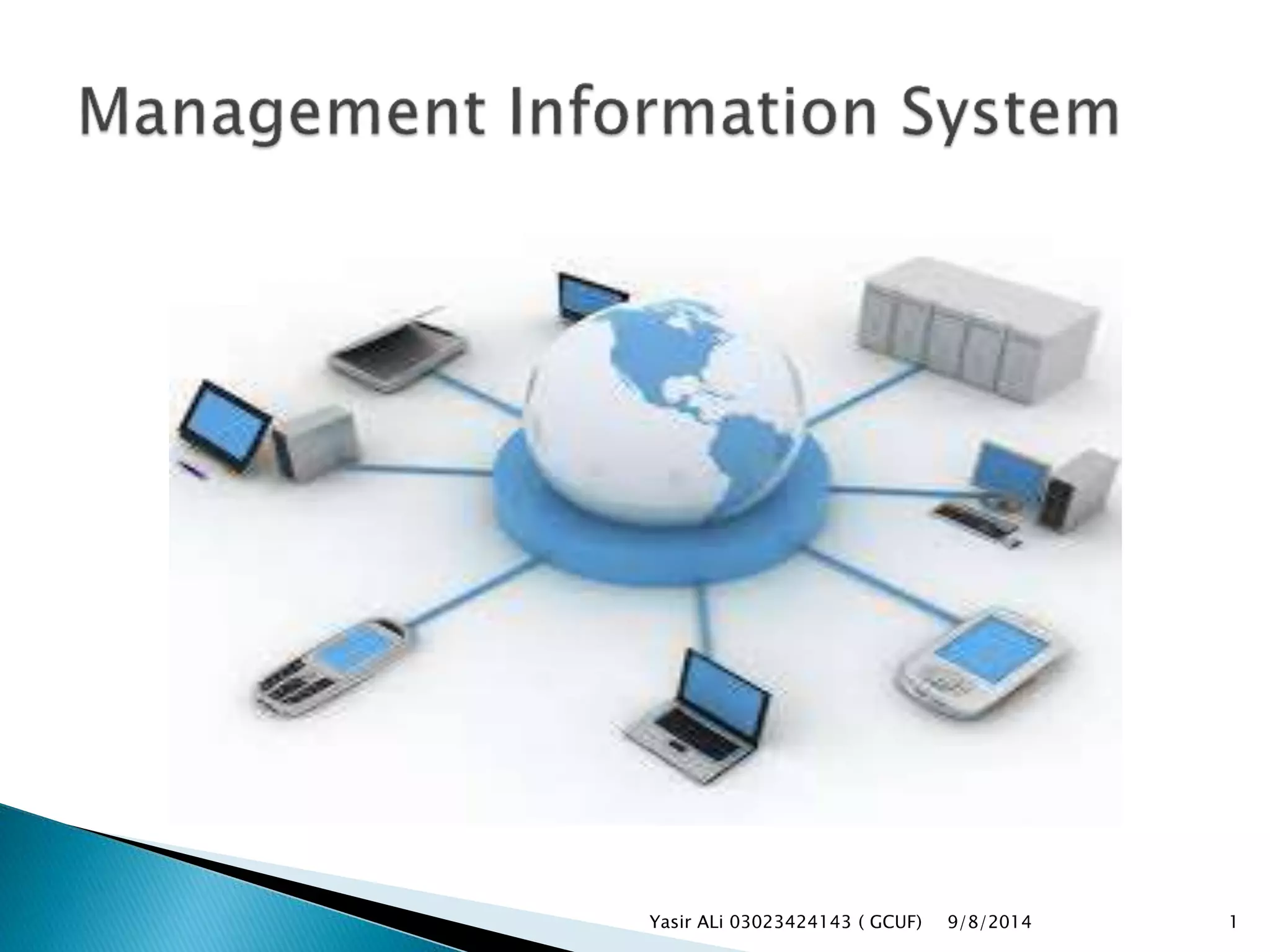
9/8/2014Yasir ALi 03023424143 ( GCUF) 1
 In business and organizations is the function
that coordinates the efforts of people to
accomplish goals and objectives using
available resources efficiently and effectively.
Management
comprises planning, organizing, staffing, lead
ing or directing,
and controlling an organization or initiative
to accomplish a goal.
9/8/2014Yasir ALi 03023424143 ( GCUF) 2
 Information system (IS)
◦ A set of interrelated components that collect,
manipulate, and disseminate data and information,
and provide feedback to meet an objective
◦ Examples: ATMs, airline reservation systems,
course reservation systems
9/8/2014Yasir ALi 03023424143 ( GCUF) 3
 Information is one of an organization’s most
valuable resources
 Information is different from data
9/8/2014Yasir ALi 03023424143 ( GCUF) 4
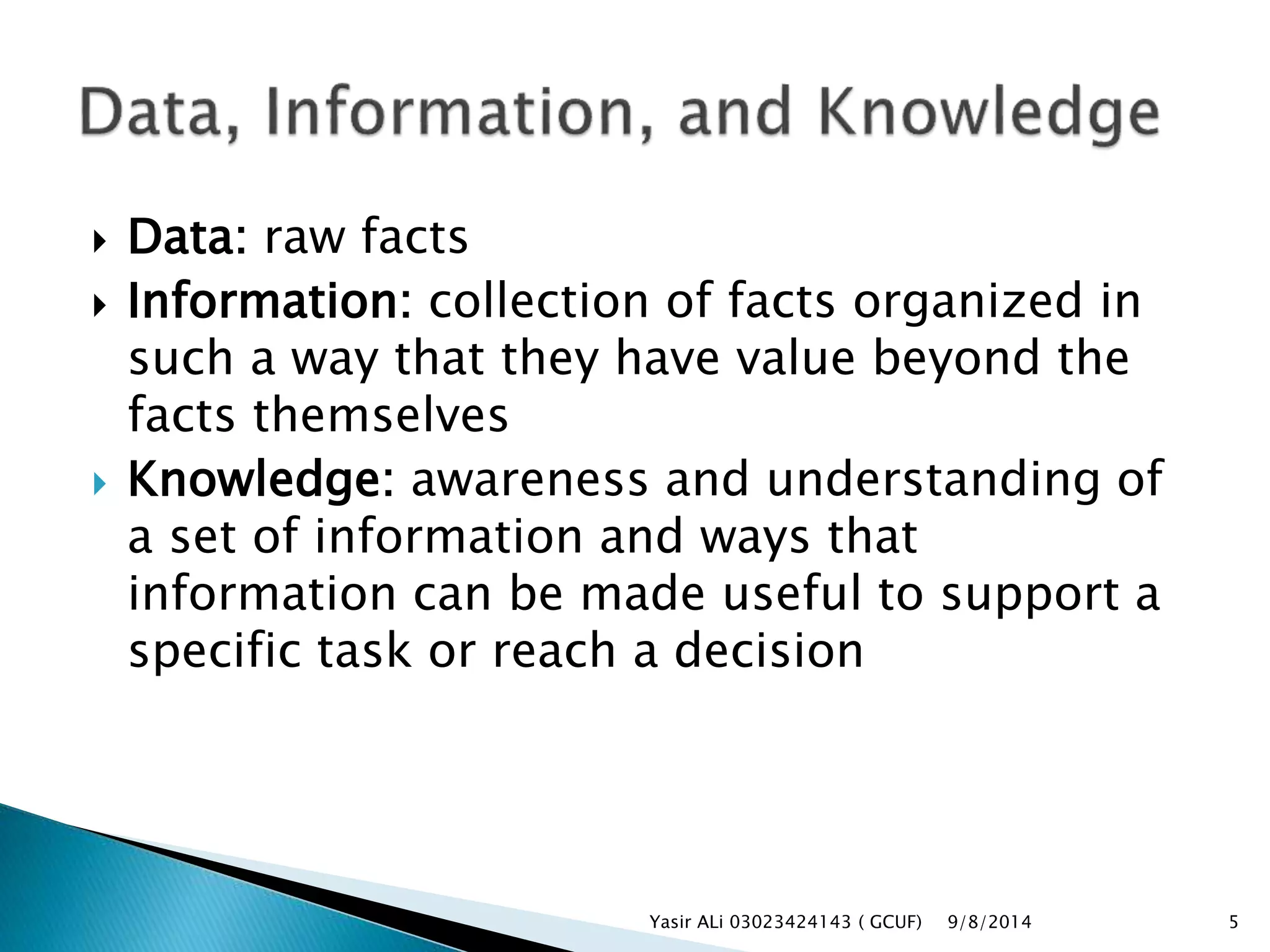
 Data: raw facts
 Information: collection of facts organized in
such a way that they have value beyond the
facts themselves
 Knowledge: awareness and understanding of
a set of information and ways that
information can be made useful to support a
specific task or reach a decision
9/8/2014Yasir ALi 03023424143 ( GCUF) 5
9/8/2014Yasir ALi 03023424143 ( GCUF) 6
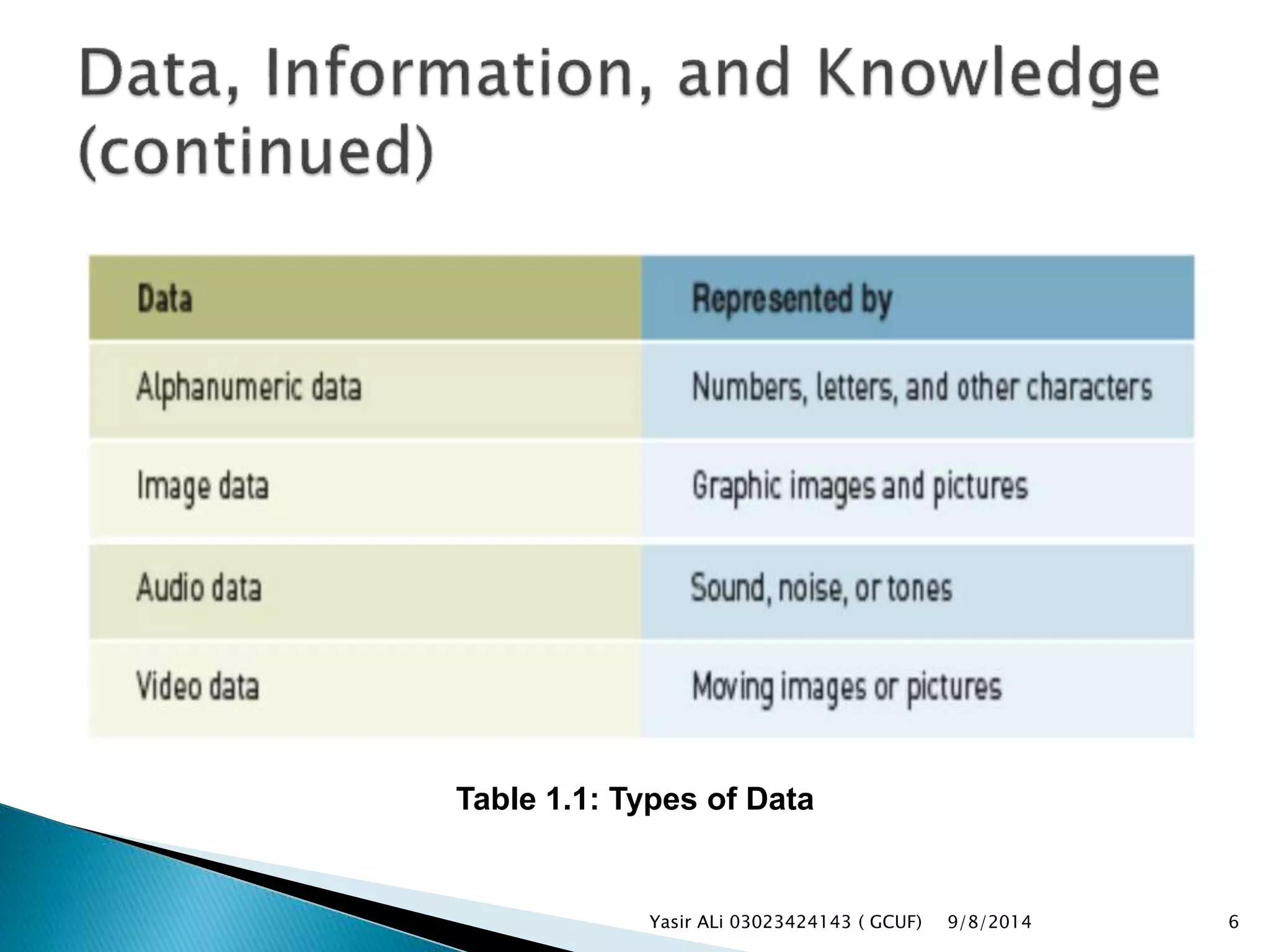
Table 1.1: Types of Data
9/8/2014Yasir ALi 03023424143 ( GCUF) 7
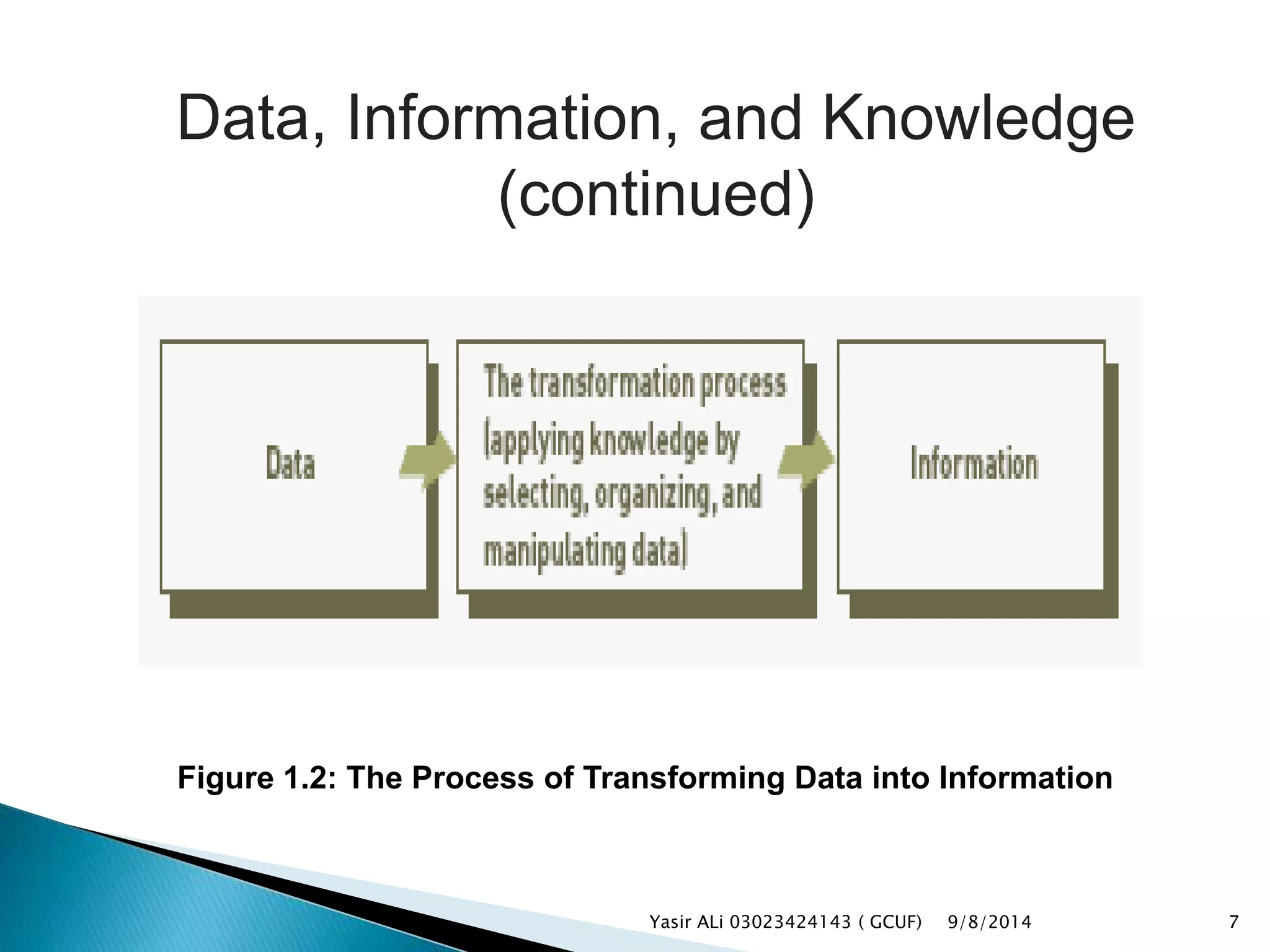
Figure 1.2: The Process of Transforming Data into Information
Data, Information, and Knowledge
(continued)
9/8/2014Yasir ALi 03023424143 ( GCUF) 8
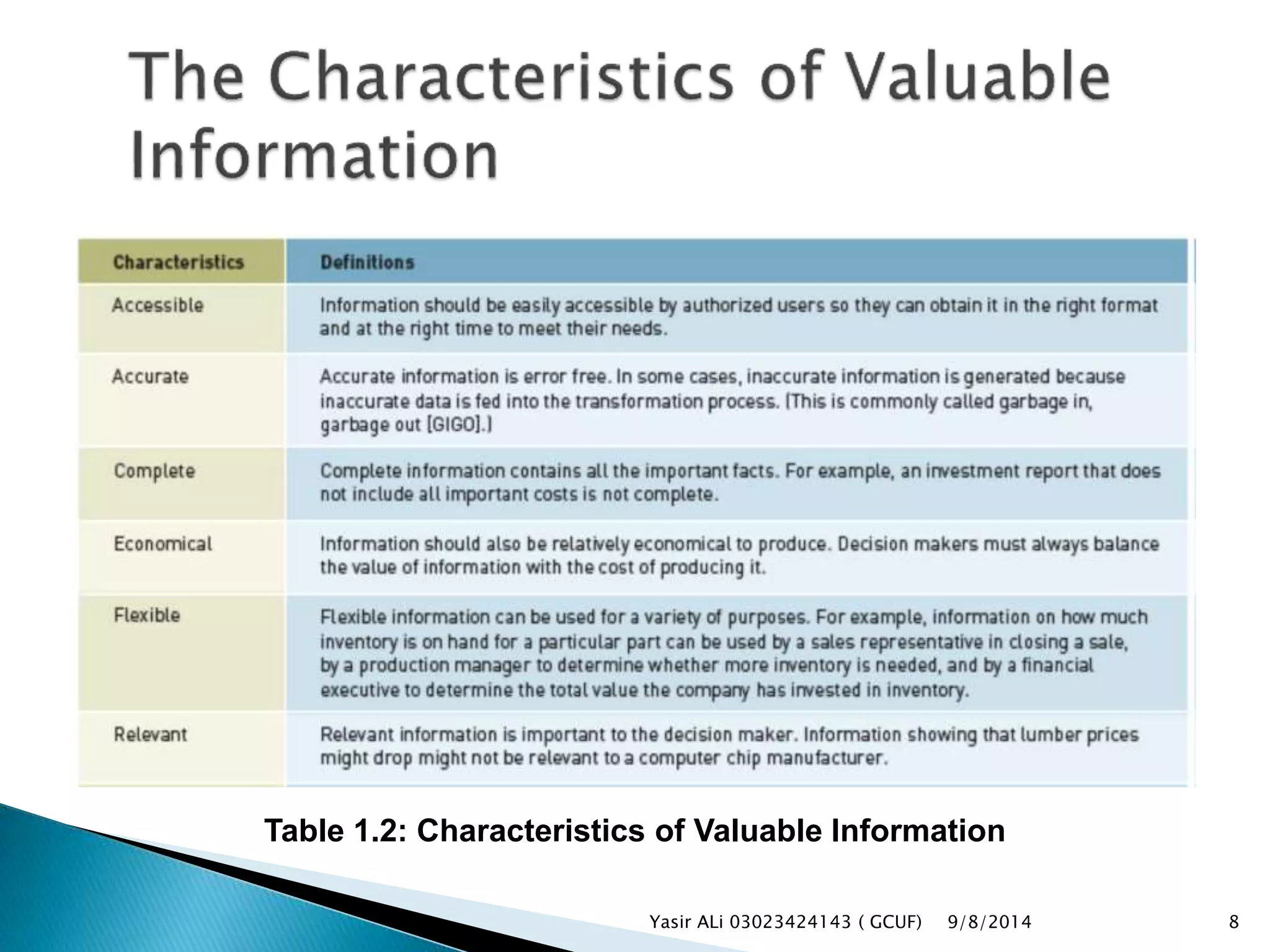
Table 1.2: Characteristics of Valuable Information
9/8/2014Yasir ALi 03023424143 ( GCUF) 9
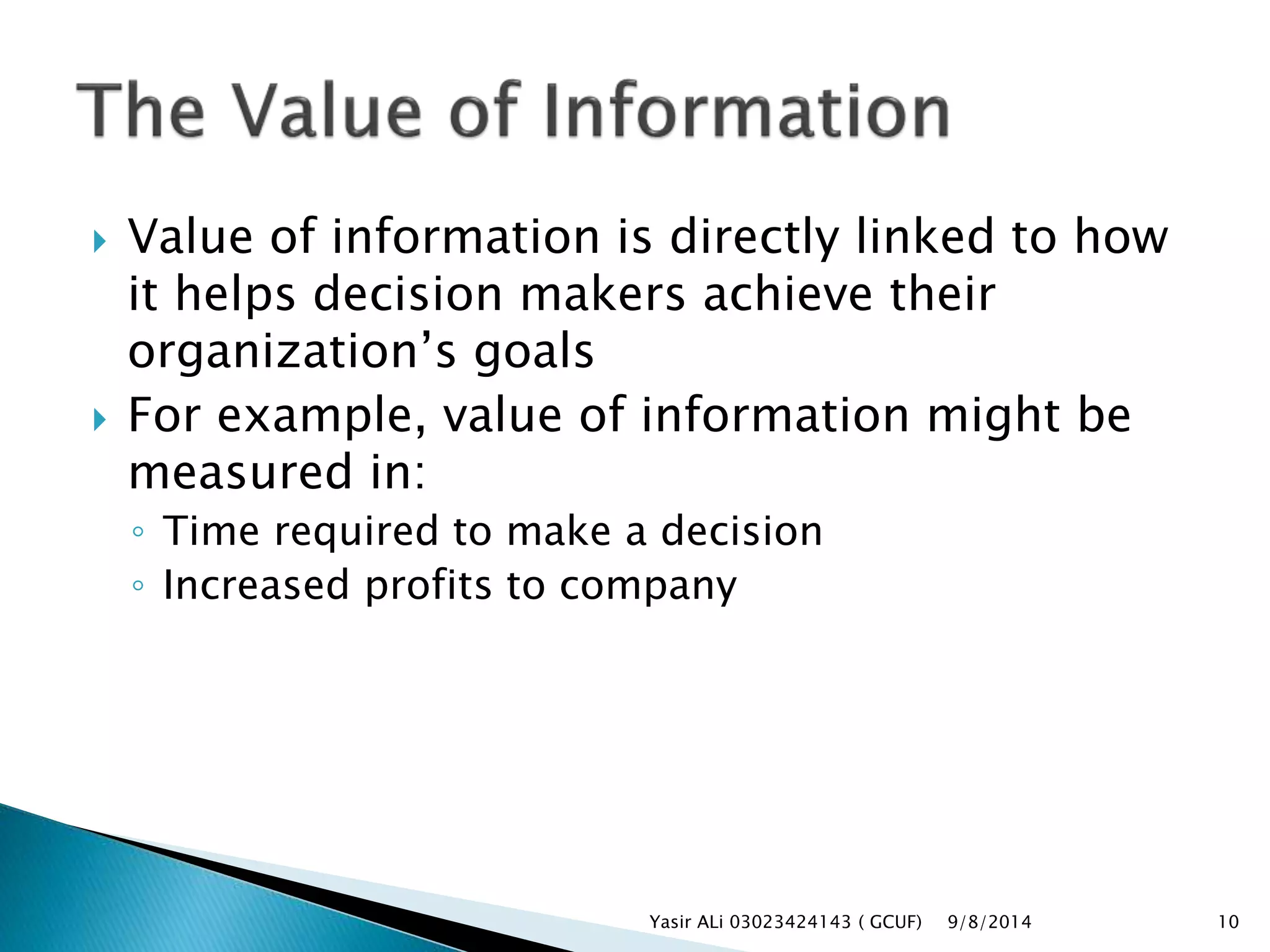
Table 1.2: Characteristics of Valuable Information (continued)
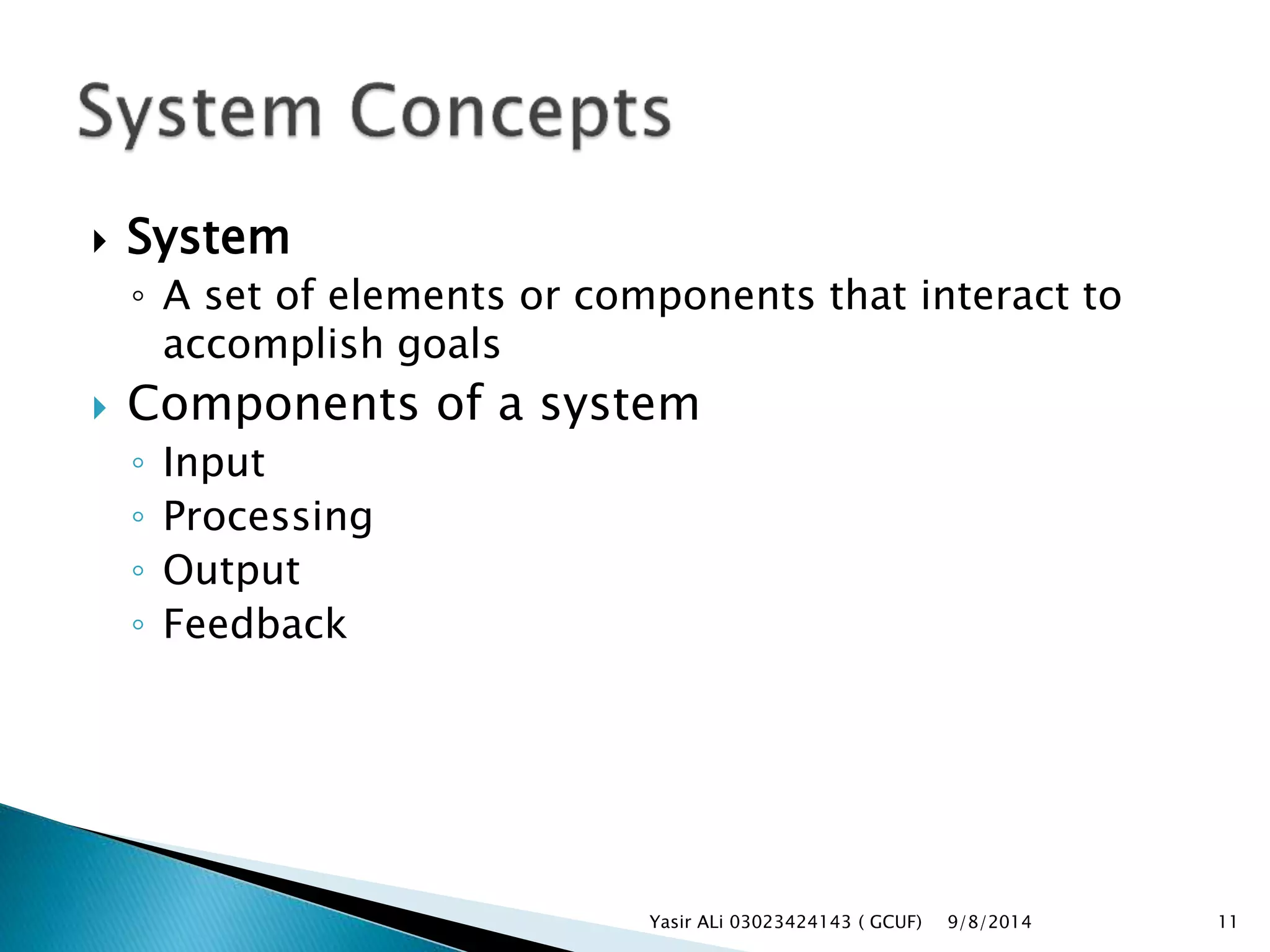
 Value of information is directly linked to how
it helps decision makers achieve their
organization’s goals
 For example, value of information might be
measured in:
◦ Time required to make a decision
◦ Increased profits to company
9/8/2014Yasir ALi 03023424143 ( GCUF) 10
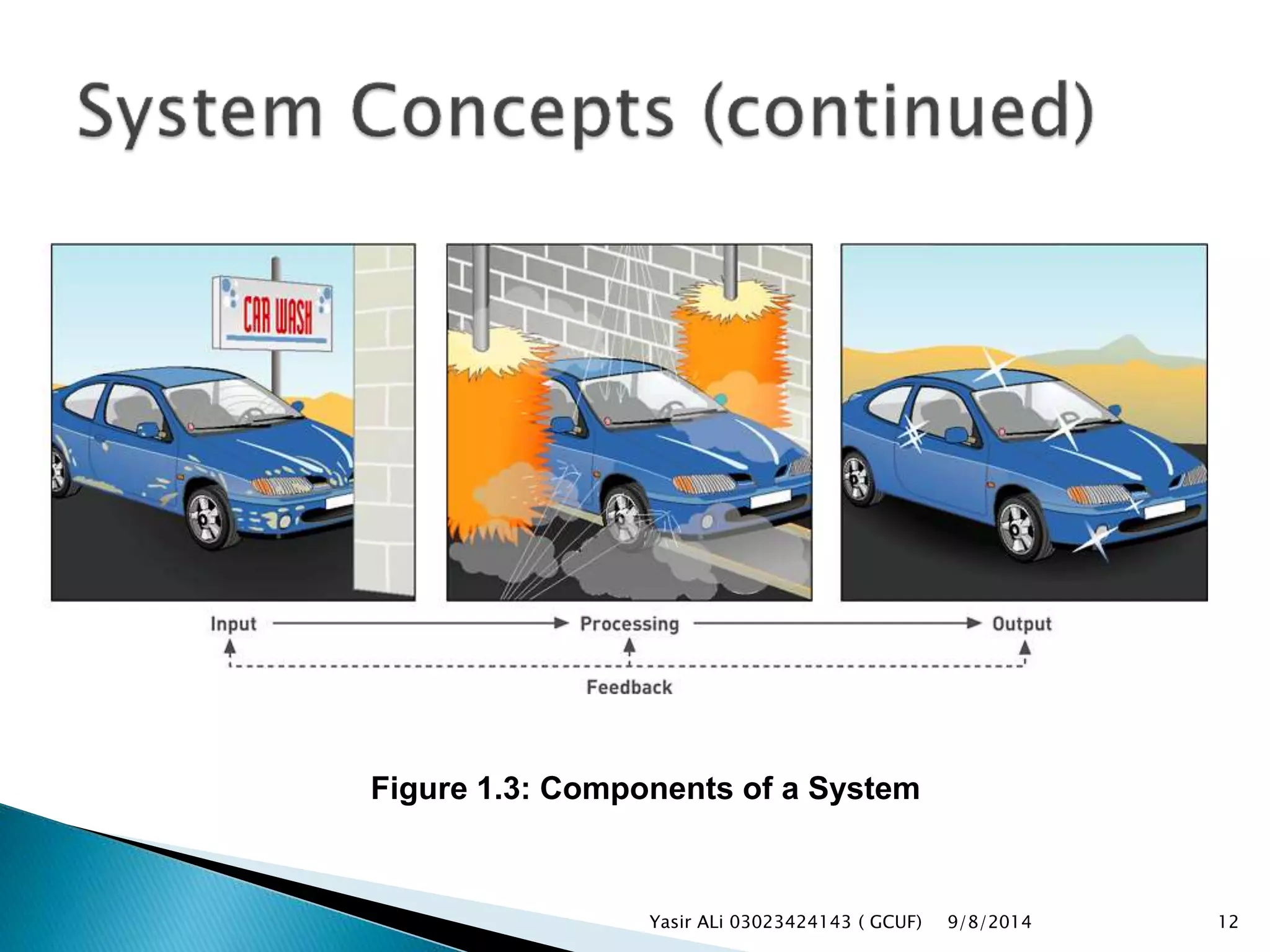
 System
◦ A set of elements or components that interact to
accomplish goals
 Components of a system
◦ Input
◦ Processing
◦ Output
◦ Feedback
9/8/2014Yasir ALi 03023424143 ( GCUF) 11
9/8/2014Yasir ALi 03023424143 ( GCUF) 12
Figure 1.3: Components of a System
 Efficiency: measure of what is produced
divided by what is consumed
 Effectiveness: extent to which system attains
its goals
 System performance standard: a specific
objective of the system
9/8/2014Yasir ALi 03023424143 ( GCUF) 13
9/8/2014Yasir ALi 03023424143 ( GCUF) 14
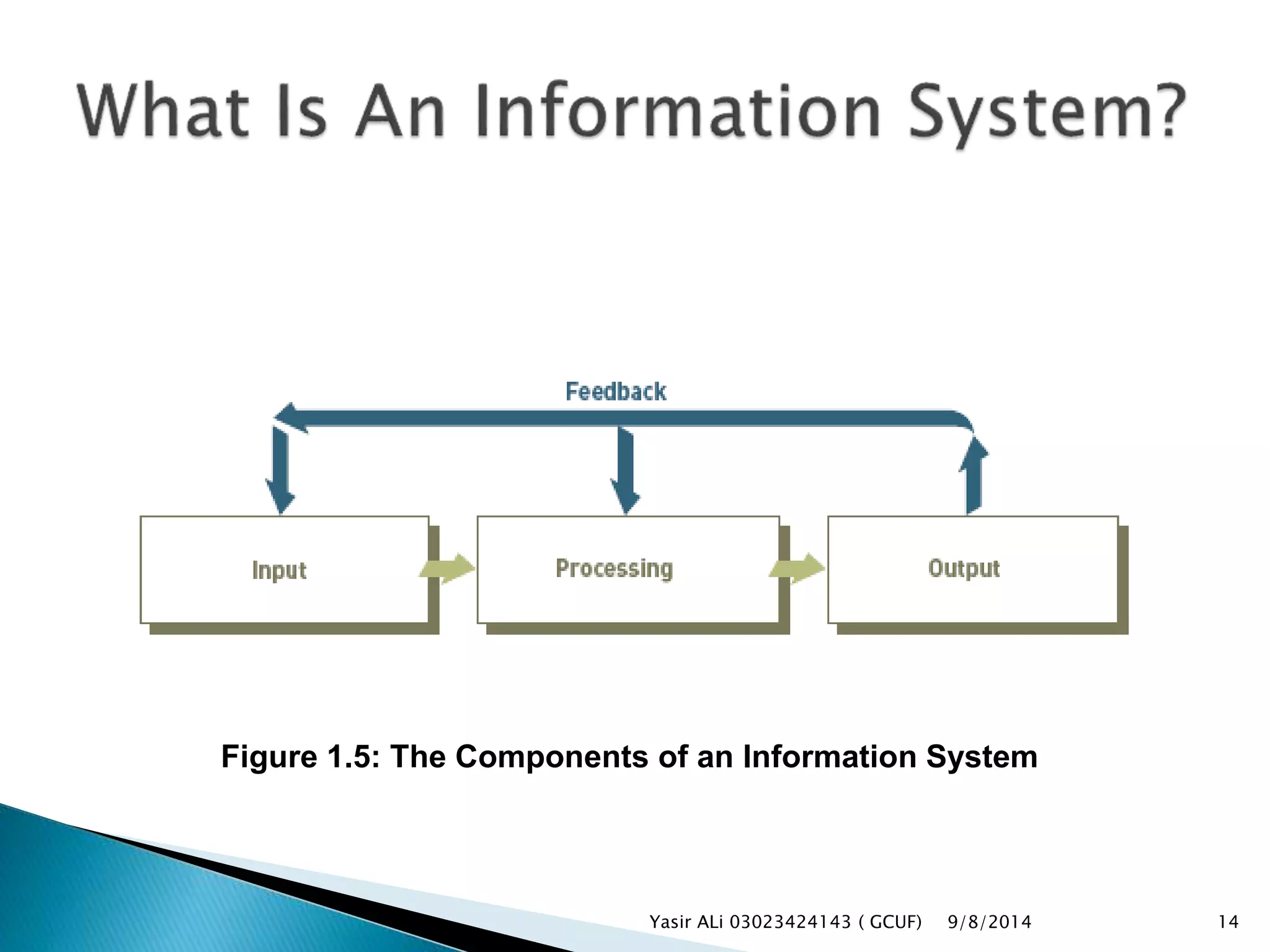
Figure 1.5: The Components of an Information System
 Input: activity of gathering and capturing raw
data
 Processing: converting or transforming data
into useful outputs
 Output: production of useful information,
usually in the form of documents and reports
 Feedback: output that is used to make
changes to input or processing activities
9/8/2014Yasir ALi 03023424143 ( GCUF) 15
 An information system can be:
◦ Manual
◦ Computerized
9/8/2014Yasir ALi 03023424143 ( GCUF) 16
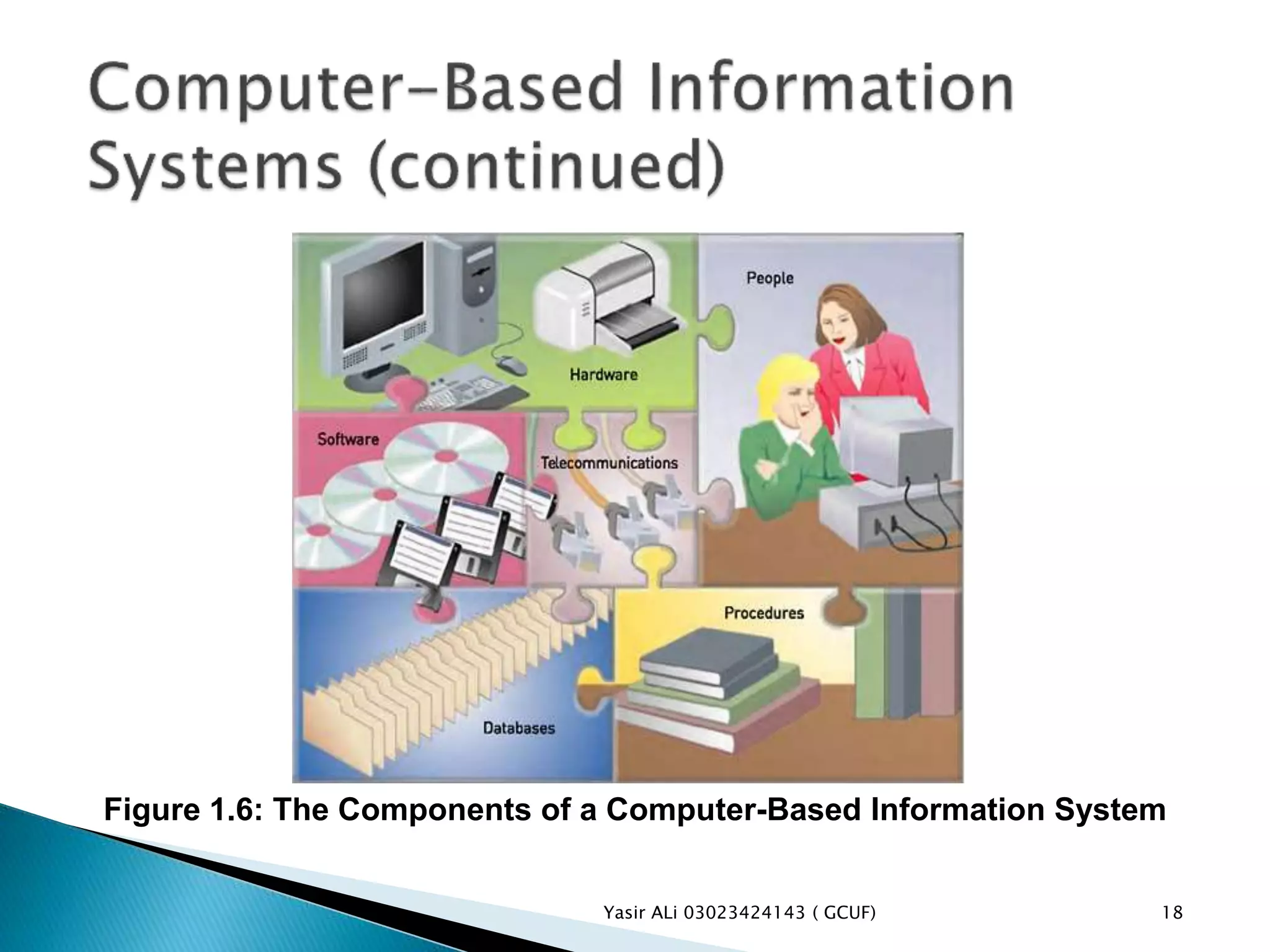
 Computer-based information system (CBIS)
◦ A single set of hardware, software, databases,
telecommunications, people, and procedures that
are configured to collect, manipulate, store, and
process data into information
9/8/2014Yasir ALi 03023424143 ( GCUF) 17
Yasir ALi 03023424143 ( GCUF) 18
Figure 1.6: The Components of a Computer-Based Information System

Management information system

  • 1.
  • 2.
     In businessand organizations is the function that coordinates the efforts of people to accomplish goals and objectives using available resources efficiently and effectively. Management comprises planning, organizing, staffing, lead ing or directing, and controlling an organization or initiative to accomplish a goal. 9/8/2014Yasir ALi 03023424143 ( GCUF) 2
  • 3.
     Information system(IS) ◦ A set of interrelated components that collect, manipulate, and disseminate data and information, and provide feedback to meet an objective ◦ Examples: ATMs, airline reservation systems, course reservation systems 9/8/2014Yasir ALi 03023424143 ( GCUF) 3
  • 4.
     Information isone of an organization’s most valuable resources  Information is different from data 9/8/2014Yasir ALi 03023424143 ( GCUF) 4
  • 5.
     Data: rawfacts  Information: collection of facts organized in such a way that they have value beyond the facts themselves  Knowledge: awareness and understanding of a set of information and ways that information can be made useful to support a specific task or reach a decision 9/8/2014Yasir ALi 03023424143 ( GCUF) 5
  • 6.
    9/8/2014Yasir ALi 03023424143( GCUF) 6 Table 1.1: Types of Data
  • 7.
    9/8/2014Yasir ALi 03023424143( GCUF) 7 Figure 1.2: The Process of Transforming Data into Information Data, Information, and Knowledge (continued)
  • 8.
    9/8/2014Yasir ALi 03023424143( GCUF) 8 Table 1.2: Characteristics of Valuable Information
  • 9.
    9/8/2014Yasir ALi 03023424143( GCUF) 9 Table 1.2: Characteristics of Valuable Information (continued)
  • 10.
     Value ofinformation is directly linked to how it helps decision makers achieve their organization’s goals  For example, value of information might be measured in: ◦ Time required to make a decision ◦ Increased profits to company 9/8/2014Yasir ALi 03023424143 ( GCUF) 10
  • 11.
     System ◦ Aset of elements or components that interact to accomplish goals  Components of a system ◦ Input ◦ Processing ◦ Output ◦ Feedback 9/8/2014Yasir ALi 03023424143 ( GCUF) 11
  • 12.
    9/8/2014Yasir ALi 03023424143( GCUF) 12 Figure 1.3: Components of a System
  • 13.
     Efficiency: measureof what is produced divided by what is consumed  Effectiveness: extent to which system attains its goals  System performance standard: a specific objective of the system 9/8/2014Yasir ALi 03023424143 ( GCUF) 13
  • 14.
    9/8/2014Yasir ALi 03023424143( GCUF) 14 Figure 1.5: The Components of an Information System
  • 15.
     Input: activityof gathering and capturing raw data  Processing: converting or transforming data into useful outputs  Output: production of useful information, usually in the form of documents and reports  Feedback: output that is used to make changes to input or processing activities 9/8/2014Yasir ALi 03023424143 ( GCUF) 15
  • 16.
     An informationsystem can be: ◦ Manual ◦ Computerized 9/8/2014Yasir ALi 03023424143 ( GCUF) 16
  • 17.
     Computer-based informationsystem (CBIS) ◦ A single set of hardware, software, databases, telecommunications, people, and procedures that are configured to collect, manipulate, store, and process data into information 9/8/2014Yasir ALi 03023424143 ( GCUF) 17
  • 18.
    Yasir ALi 03023424143( GCUF) 18 Figure 1.6: The Components of a Computer-Based Information System