Name _________________________________ Period _______ Date _________________ 
THE HUMAN BODY SYSTEMS 
System 
Function 
Diagram 
Major Organs 
Interactions- 
Working with Other 
Systems 
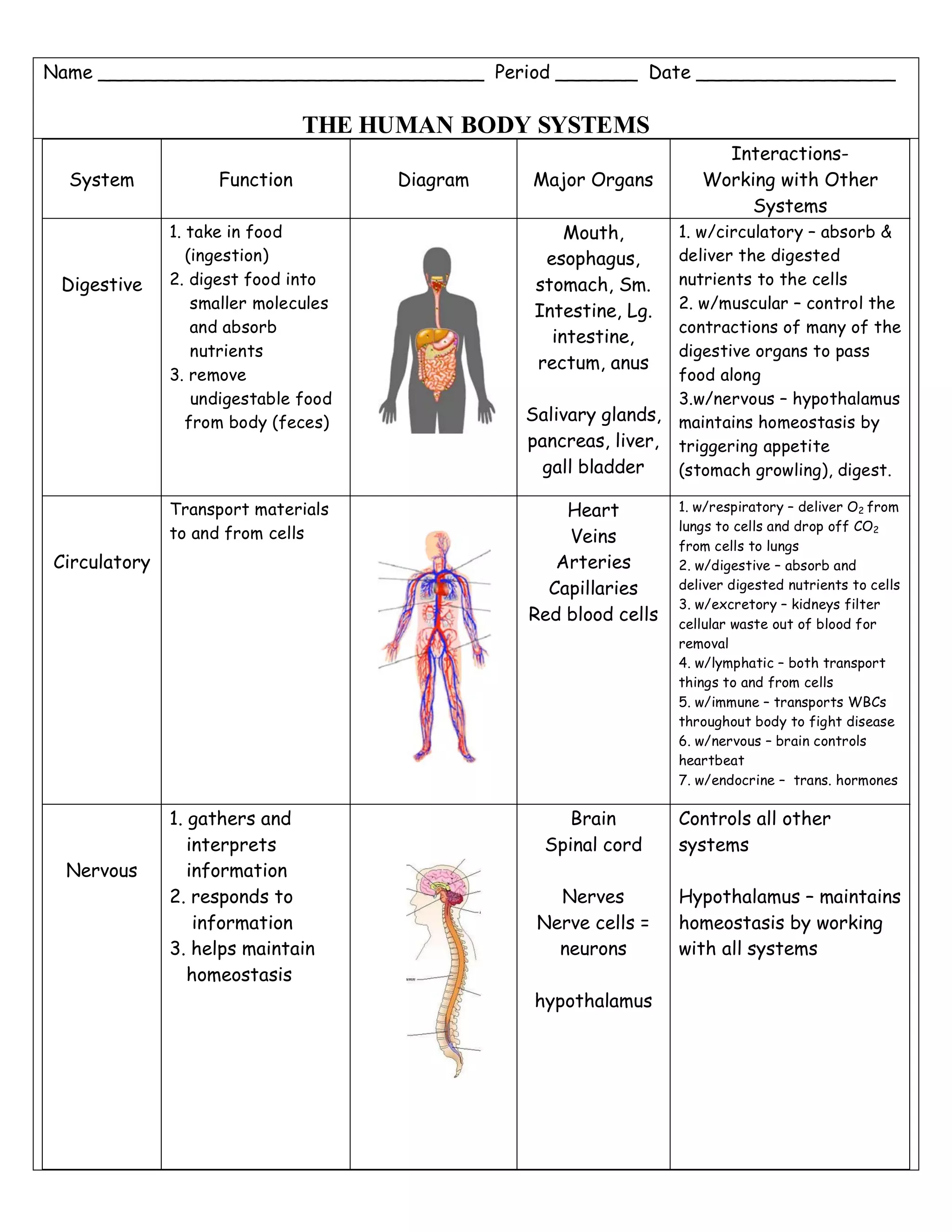
Digestive 
1. take in food 
(ingestion) 
2. digest food into 
smaller molecules 
and absorb 
nutrients 
3. remove 
undigestable food 
from body (feces) 
Mouth, 
esophagus, 
stomach, Sm. 
Intestine, Lg. 
intestine, 
rectum, anus 
Salivary glands, 
pancreas, liver, 
gall bladder 
1. w/circulatory – absorb & 
deliver the digested 
nutrients to the cells 
2. w/muscular – control the 
contractions of many of the 
digestive organs to pass 
food along 
3.w/nervous – hypothalamus 
maintains homeostasis by 
triggering appetite 
(stomach growling), digest. 
Circulatory 
Transport materials 
to and from cells 
Heart 
Veins 
Arteries 
Capillaries 
Red blood cells 
1. w/respiratory – deliver O2 from 
lungs to cells and drop off CO2 
from cells to lungs 
2. w/digestive – absorb and 
deliver digested nutrients to cells 
3. w/excretory – kidneys filter 
cellular waste out of blood for 
removal 
4. w/lymphatic – both transport 
things to and from cells 
5. w/immune – transports WBCs 
throughout body to fight disease 
6. w/nervous – brain controls 
heartbeat 
7. w/endocrine – trans. hormones 
Nervous 
1. gathers and 
interprets 
information 
2. responds to 
information 
3. helps maintain 
homeostasis 
Brain 
Spinal cord 
Nerves 
Nerve cells = 
neurons 
hypothalamus 
Controls all other 
systems 
Hypothalamus – maintains 
homeostasis by working 
with all systems
System 
Function 
Diagram 
Major Organs 
Interactions- 
Working with Other 
Systems 
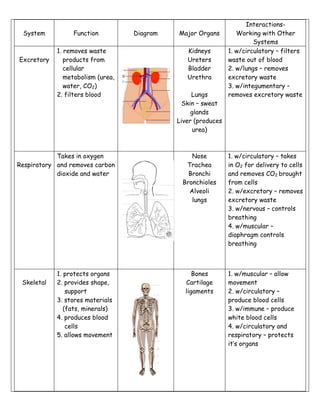
Excretory 
1. removes waste 
products from 
cellular 
metabolism (urea, 
water, CO2) 
2. filters blood 
Kidneys 
Ureters 
Bladder 
Urethra 
Lungs 
Skin – sweat 
glands 
Liver (produces 
urea) 
1. w/circulatory – filters 
waste out of blood 
2. w/lungs – removes 
excretory waste 
3. w/integumentary – 
removes excretory waste 
Respiratory 
Takes in oxygen 
and removes carbon 
dioxide and water 
Nose 
Trachea 
Bronchi 
Bronchioles 
Alveoli 
lungs 
1. w/circulatory – takes 
in O2 for delivery to cells 
and removes CO2 brought 
from cells 
2. w/excretory – removes 
excretory waste 
3. w/nervous – controls 
breathing 
4. w/muscular – 
diaphragm controls 
breathing 
Skeletal 
1. protects organs 
2. provides shape, 
support 
3. stores materials 
(fats, minerals) 
4. produces blood 
cells 
5. allows movement 
Bones 
Cartilage 
ligaments 
1. w/muscular – allow 
movement 
2. w/circulatory – 
produce blood cells 
3. w/immune – produce 
white blood cells 
4. w/circulatory and 
respiratory – protects 
it’s organs
System 
Function 
Diagram 
Major Organs 
Interactions- 
Working with Other 
Systems 
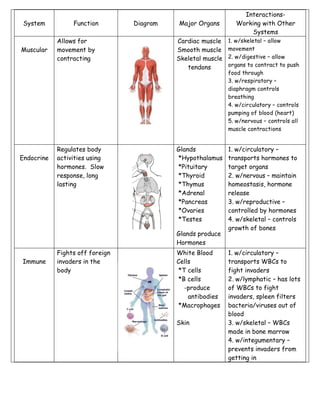
Muscular 
Allows for 
movement by 
contracting 
Cardiac muscle 
Smooth muscle 
Skeletal muscle 
tendons 
1. w/skeletal – allow 
movement 
2. w/digestive – allow 
organs to contract to push 
food through 
3. w/respiratory – 
diaphragm controls 
breathing 
4. w/circulatory – controls 
pumping of blood (heart) 
5. w/nervous – controls all 
muscle contractions 
Endocrine 
Regulates body 
activities using 
hormones. Slow 
response, long 
lasting 
Glands 
*Hypothalamus 
*Pituitary 
*Thyroid 
*Thymus 
*Adrenal 
*Pancreas 
*Ovaries 
*Testes 
Glands produce 
Hormones 
1. w/circulatory – 
transports hormones to 
target organs 
2. w/nervous – maintain 
homeostasis, hormone 
release 
3. w/reproductive – 
controlled by hormones 
4. w/skeletal – controls 
growth of bones 
Immune 
Fights off foreign 
invaders in the 
body 
White Blood 
Cells 
*T cells 
*B cells 
-produce 
antibodies 
*Macrophages 
Skin 
1. w/circulatory – 
transports WBCs to 
fight invaders 
2. w/lymphatic – has lots 
of WBCs to fight 
invaders, spleen filters 
bacteria/viruses out of 
blood 
3. w/skeletal – WBCs 
made in bone marrow 
4. w/integumentary – 
prevents invaders from 
getting in
System 
Function 
Diagram 
Major Organs 
Interactions- 
Working with Other 
Systems 
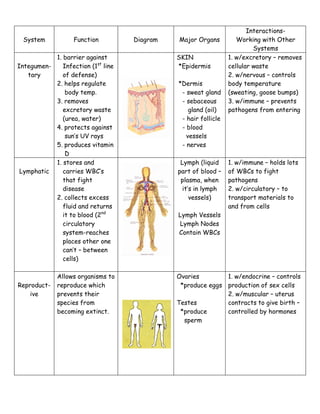
Integumen-tary 
1. barrier against 
Infection (1st line 
of defense) 
2. helps regulate 
body temp. 
3. removes 
excretory waste 
(urea, water) 
4. protects against 
sun’s UV rays 
5. produces vitamin 
D 
SKIN 
*Epidermis 
*Dermis 
- sweat gland 
- sebaceous 
gland (oil) 
- hair follicle 
- blood 
vessels 
- nerves 
1. w/excretory – removes 
cellular waste 
2. w/nervous – controls 
body temperature 
(sweating, goose bumps) 
3. w/immune – prevents 
pathogens from entering 
Lymphatic 
1. stores and 
carries WBC’s 
that fight 
disease 
2. collects excess 
fluid and returns 
it to blood (2nd 
circulatory 
system-reaches 
places other one 
can’t – between 
cells) 
Lymph (liquid 
part of blood – 
plasma, when 
it’s in lymph 
vessels) 
Lymph Vessels 
Lymph Nodes 
Contain WBCs 
1. w/immune – holds lots 
of WBCs to fight 
pathogens 
2. w/circulatory – to 
transport materials to 
and from cells 
Reproduct-ive 
Allows organisms to 
reproduce which 
prevents their 
species from 
becoming extinct. 
Ovaries 
*produce eggs 
Testes 
*produce 
sperm 
1. w/endocrine – controls 
production of sex cells 
2. w/muscular – uterus 
contracts to give birth – 
controlled by hormones
Body system-study-sheet

Body system-study-sheet

  • 1.
    Name _________________________________ Period_______ Date _________________ THE HUMAN BODY SYSTEMS System Function Diagram Major Organs Interactions- Working with Other Systems Digestive 1. take in food (ingestion) 2. digest food into smaller molecules and absorb nutrients 3. remove undigestable food from body (feces) Mouth, esophagus, stomach, Sm. Intestine, Lg. intestine, rectum, anus Salivary glands, pancreas, liver, gall bladder 1. w/circulatory – absorb & deliver the digested nutrients to the cells 2. w/muscular – control the contractions of many of the digestive organs to pass food along 3.w/nervous – hypothalamus maintains homeostasis by triggering appetite (stomach growling), digest. Circulatory Transport materials to and from cells Heart Veins Arteries Capillaries Red blood cells 1. w/respiratory – deliver O2 from lungs to cells and drop off CO2 from cells to lungs 2. w/digestive – absorb and deliver digested nutrients to cells 3. w/excretory – kidneys filter cellular waste out of blood for removal 4. w/lymphatic – both transport things to and from cells 5. w/immune – transports WBCs throughout body to fight disease 6. w/nervous – brain controls heartbeat 7. w/endocrine – trans. hormones Nervous 1. gathers and interprets information 2. responds to information 3. helps maintain homeostasis Brain Spinal cord Nerves Nerve cells = neurons hypothalamus Controls all other systems Hypothalamus – maintains homeostasis by working with all systems
  • 2.
    System Function Diagram Major Organs Interactions- Working with Other Systems Excretory 1. removes waste products from cellular metabolism (urea, water, CO2) 2. filters blood Kidneys Ureters Bladder Urethra Lungs Skin – sweat glands Liver (produces urea) 1. w/circulatory – filters waste out of blood 2. w/lungs – removes excretory waste 3. w/integumentary – removes excretory waste Respiratory Takes in oxygen and removes carbon dioxide and water Nose Trachea Bronchi Bronchioles Alveoli lungs 1. w/circulatory – takes in O2 for delivery to cells and removes CO2 brought from cells 2. w/excretory – removes excretory waste 3. w/nervous – controls breathing 4. w/muscular – diaphragm controls breathing Skeletal 1. protects organs 2. provides shape, support 3. stores materials (fats, minerals) 4. produces blood cells 5. allows movement Bones Cartilage ligaments 1. w/muscular – allow movement 2. w/circulatory – produce blood cells 3. w/immune – produce white blood cells 4. w/circulatory and respiratory – protects it’s organs
  • 3.
    System Function Diagram Major Organs Interactions- Working with Other Systems Muscular Allows for movement by contracting Cardiac muscle Smooth muscle Skeletal muscle tendons 1. w/skeletal – allow movement 2. w/digestive – allow organs to contract to push food through 3. w/respiratory – diaphragm controls breathing 4. w/circulatory – controls pumping of blood (heart) 5. w/nervous – controls all muscle contractions Endocrine Regulates body activities using hormones. Slow response, long lasting Glands *Hypothalamus *Pituitary *Thyroid *Thymus *Adrenal *Pancreas *Ovaries *Testes Glands produce Hormones 1. w/circulatory – transports hormones to target organs 2. w/nervous – maintain homeostasis, hormone release 3. w/reproductive – controlled by hormones 4. w/skeletal – controls growth of bones Immune Fights off foreign invaders in the body White Blood Cells *T cells *B cells -produce antibodies *Macrophages Skin 1. w/circulatory – transports WBCs to fight invaders 2. w/lymphatic – has lots of WBCs to fight invaders, spleen filters bacteria/viruses out of blood 3. w/skeletal – WBCs made in bone marrow 4. w/integumentary – prevents invaders from getting in
  • 4.
    System Function Diagram Major Organs Interactions- Working with Other Systems Integumen-tary 1. barrier against Infection (1st line of defense) 2. helps regulate body temp. 3. removes excretory waste (urea, water) 4. protects against sun’s UV rays 5. produces vitamin D SKIN *Epidermis *Dermis - sweat gland - sebaceous gland (oil) - hair follicle - blood vessels - nerves 1. w/excretory – removes cellular waste 2. w/nervous – controls body temperature (sweating, goose bumps) 3. w/immune – prevents pathogens from entering Lymphatic 1. stores and carries WBC’s that fight disease 2. collects excess fluid and returns it to blood (2nd circulatory system-reaches places other one can’t – between cells) Lymph (liquid part of blood – plasma, when it’s in lymph vessels) Lymph Vessels Lymph Nodes Contain WBCs 1. w/immune – holds lots of WBCs to fight pathogens 2. w/circulatory – to transport materials to and from cells Reproduct-ive Allows organisms to reproduce which prevents their species from becoming extinct. Ovaries *produce eggs Testes *produce sperm 1. w/endocrine – controls production of sex cells 2. w/muscular – uterus contracts to give birth – controlled by hormones