FEUDALISM
FEUDALISM IN EUROPE
FEATURES:
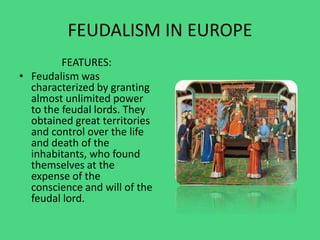
• Feudalism was
characterized by granting
almost unlimited power
to the feudal lords. They
obtained great territories
and control over the life
and death of the
inhabitants, who found
themselves at the
expense of the
conscience and will of the
feudal lord.
FEUDAL ECONOMY
THE MANOR:
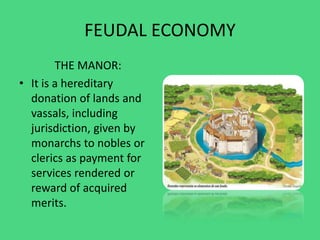
• It is a hereditary
donation of lands and
vassals, including
jurisdiction, given by
monarchs to nobles or
clerics as payment for
services rendered or
reward of acquired
merits.
FEUDAL SOCIETY
ESTATES:
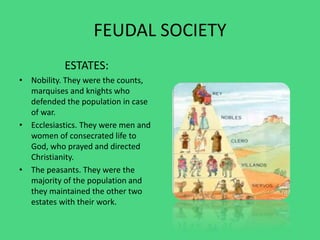
• Nobility. They were the counts,
marquises and knights who
defended the population in case
of war.
• Ecclesiastics. They were men and
women of consecrated life to
God, who prayed and directed
Christianity.
• The peasants. They were the
majority of the population and
they maintained the other two
estates with their work.
HOW NOBLES LIVED
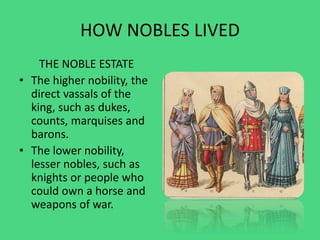
THE NOBLE ESTATE
• The higher nobility, the
direct vassals of the
king, such as dukes,
counts, marquises and
barons.
• The lower nobility,
lesser nobles, such as
knights or people who
could own a horse and
weapons of war.
1

1

  • 1.
  • 2.
    FEUDALISM IN EUROPE FEATURES: •Feudalism was characterized by granting almost unlimited power to the feudal lords. They obtained great territories and control over the life and death of the inhabitants, who found themselves at the expense of the conscience and will of the feudal lord.
  • 3.
    FEUDAL ECONOMY THE MANOR: •It is a hereditary donation of lands and vassals, including jurisdiction, given by monarchs to nobles or clerics as payment for services rendered or reward of acquired merits.
  • 4.
    FEUDAL SOCIETY ESTATES: • Nobility.They were the counts, marquises and knights who defended the population in case of war. • Ecclesiastics. They were men and women of consecrated life to God, who prayed and directed Christianity. • The peasants. They were the majority of the population and they maintained the other two estates with their work.
  • 5.
    HOW NOBLES LIVED THENOBLE ESTATE • The higher nobility, the direct vassals of the king, such as dukes, counts, marquises and barons. • The lower nobility, lesser nobles, such as knights or people who could own a horse and weapons of war.