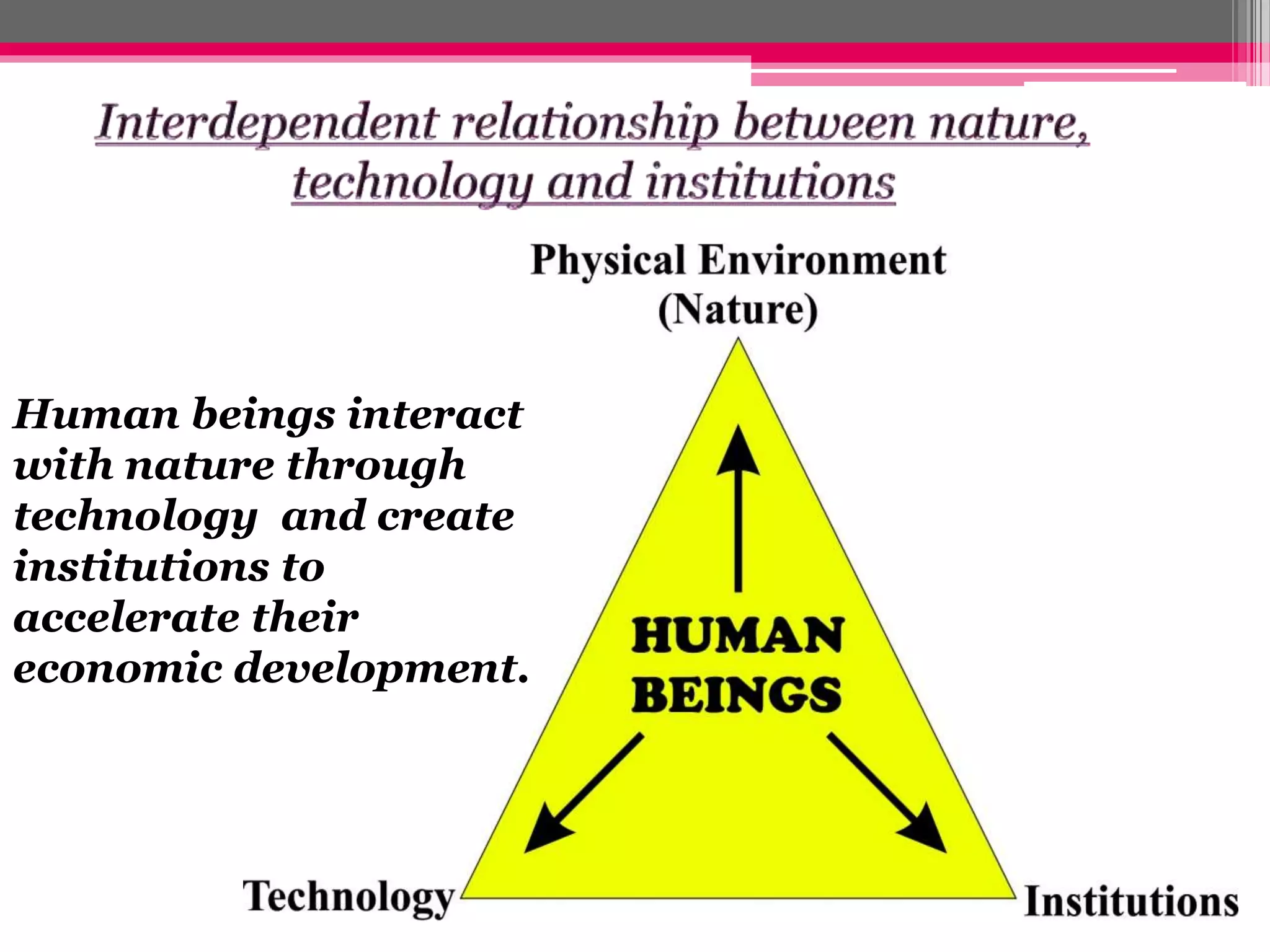
Human beings interact
with nature through
technology and create
institutions to
accelerate their
economic development.
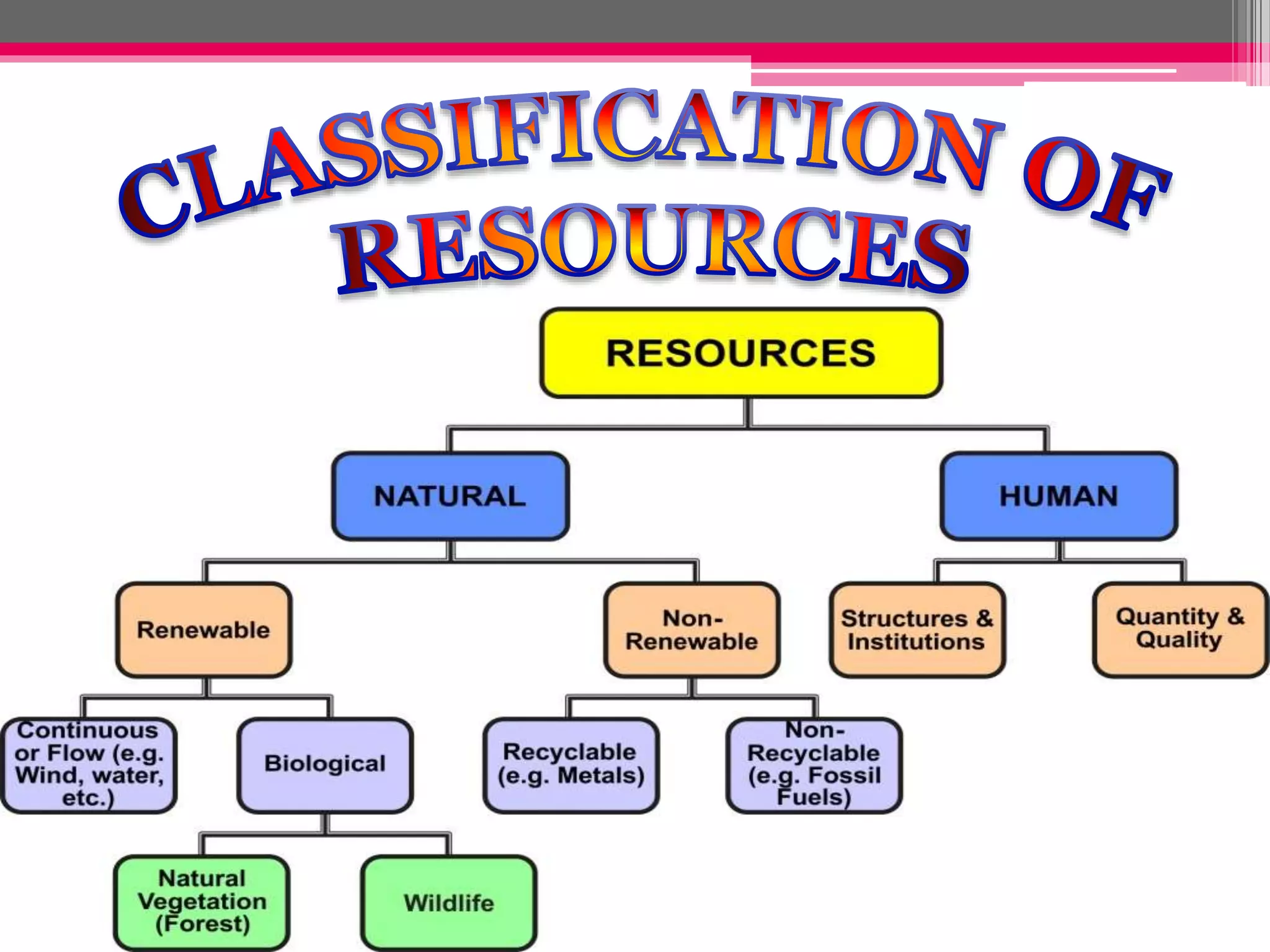
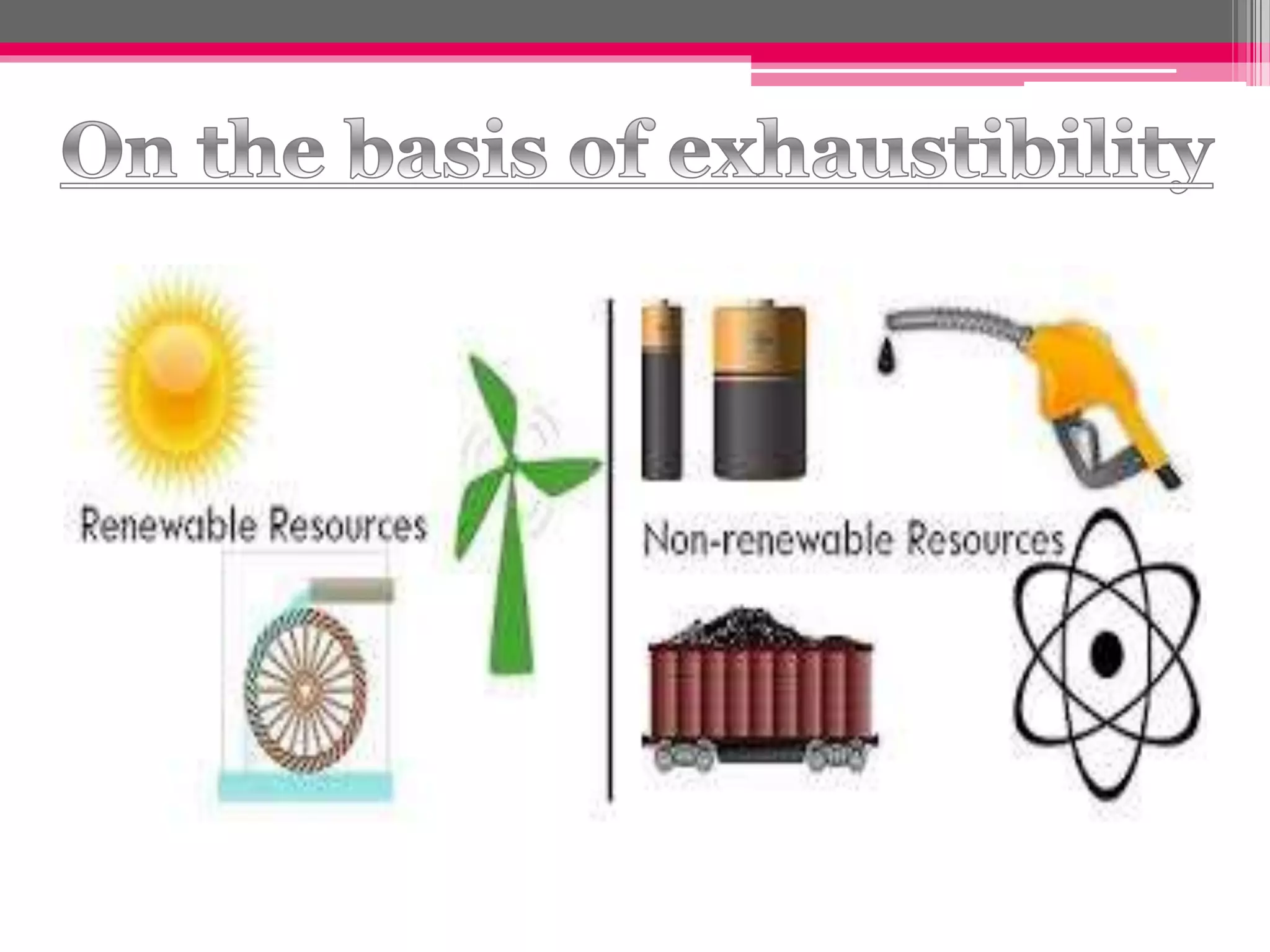
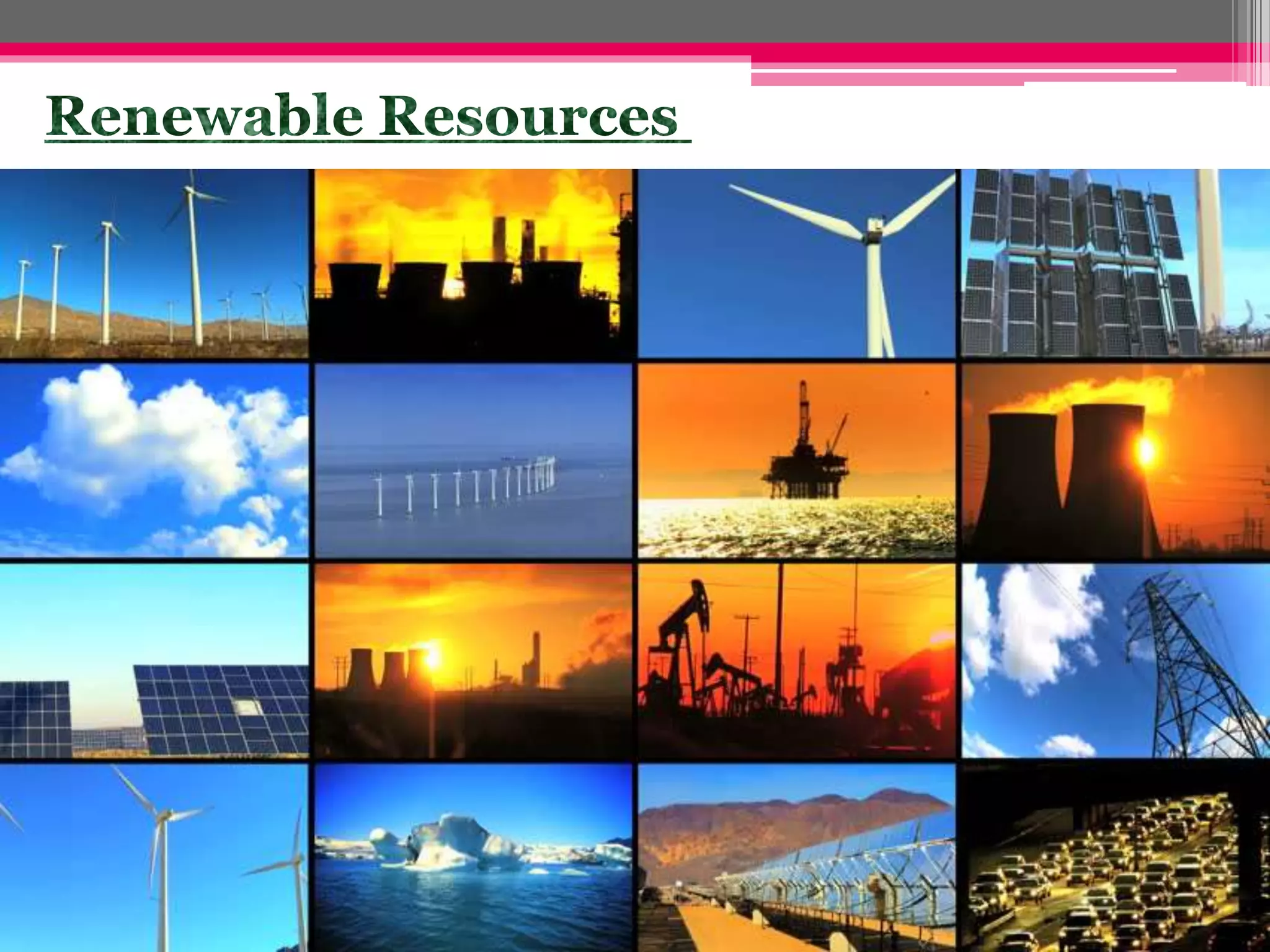
Renewable Resources
Non-Renewable Resources
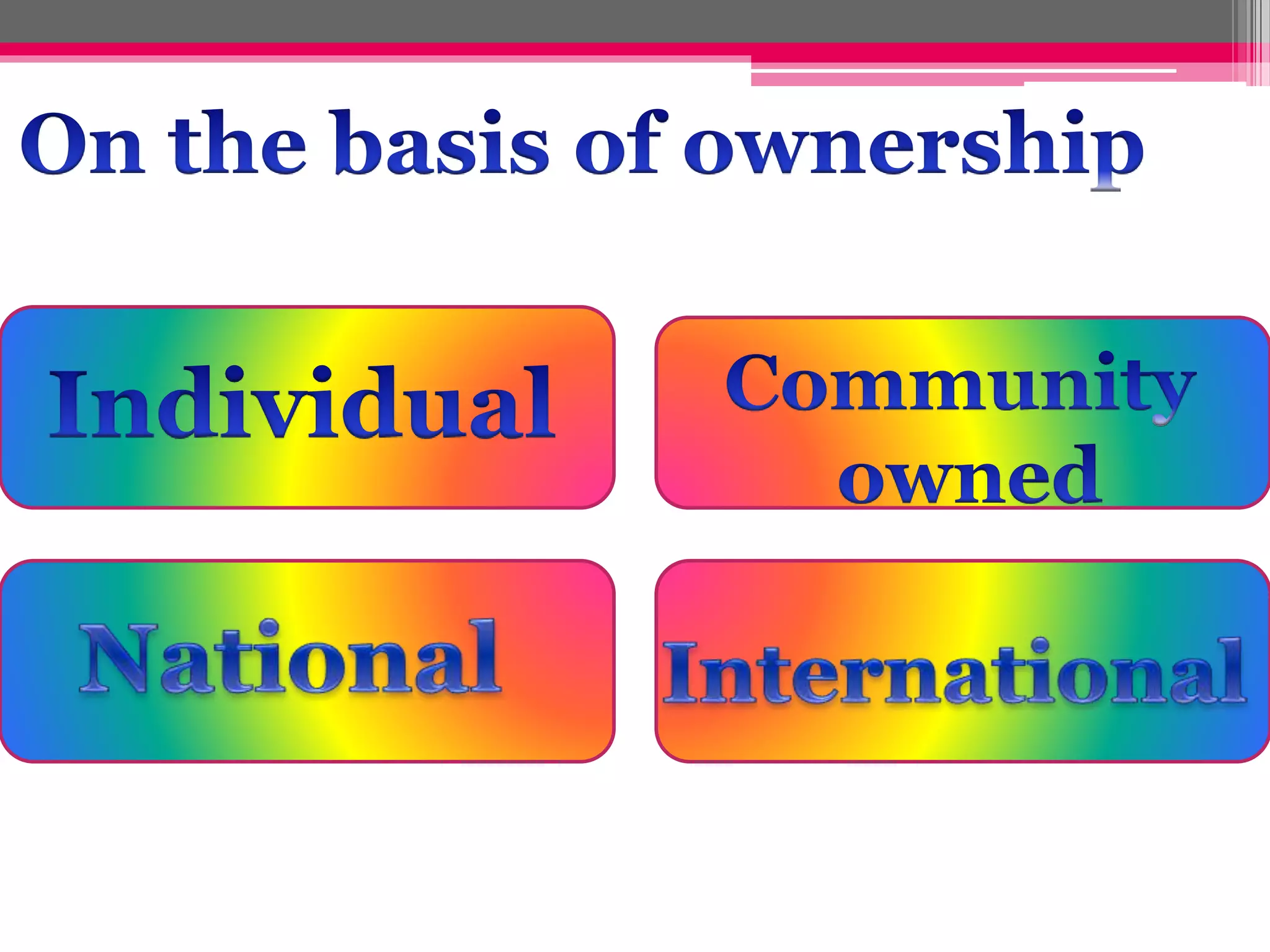
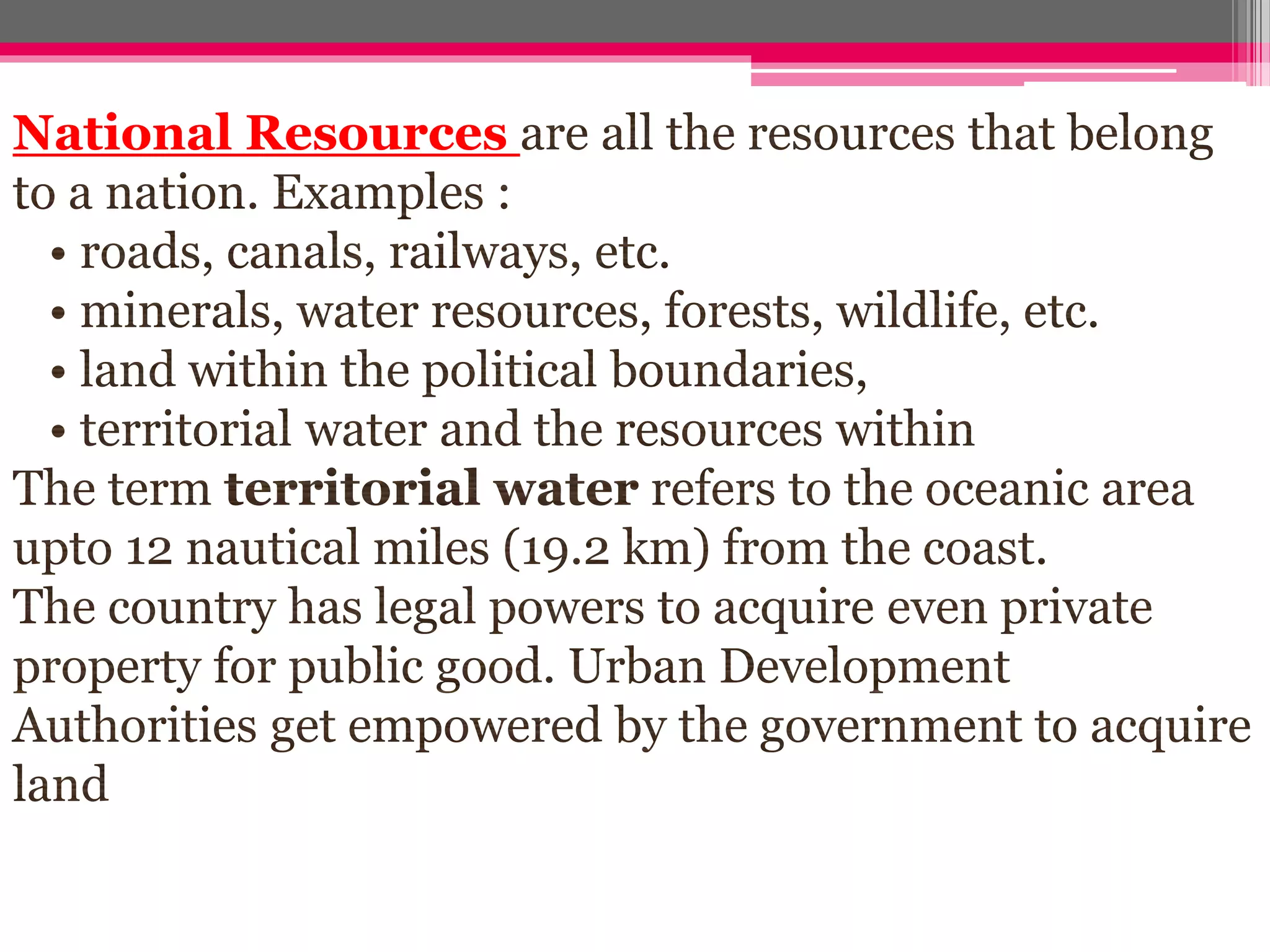
Individual Resources
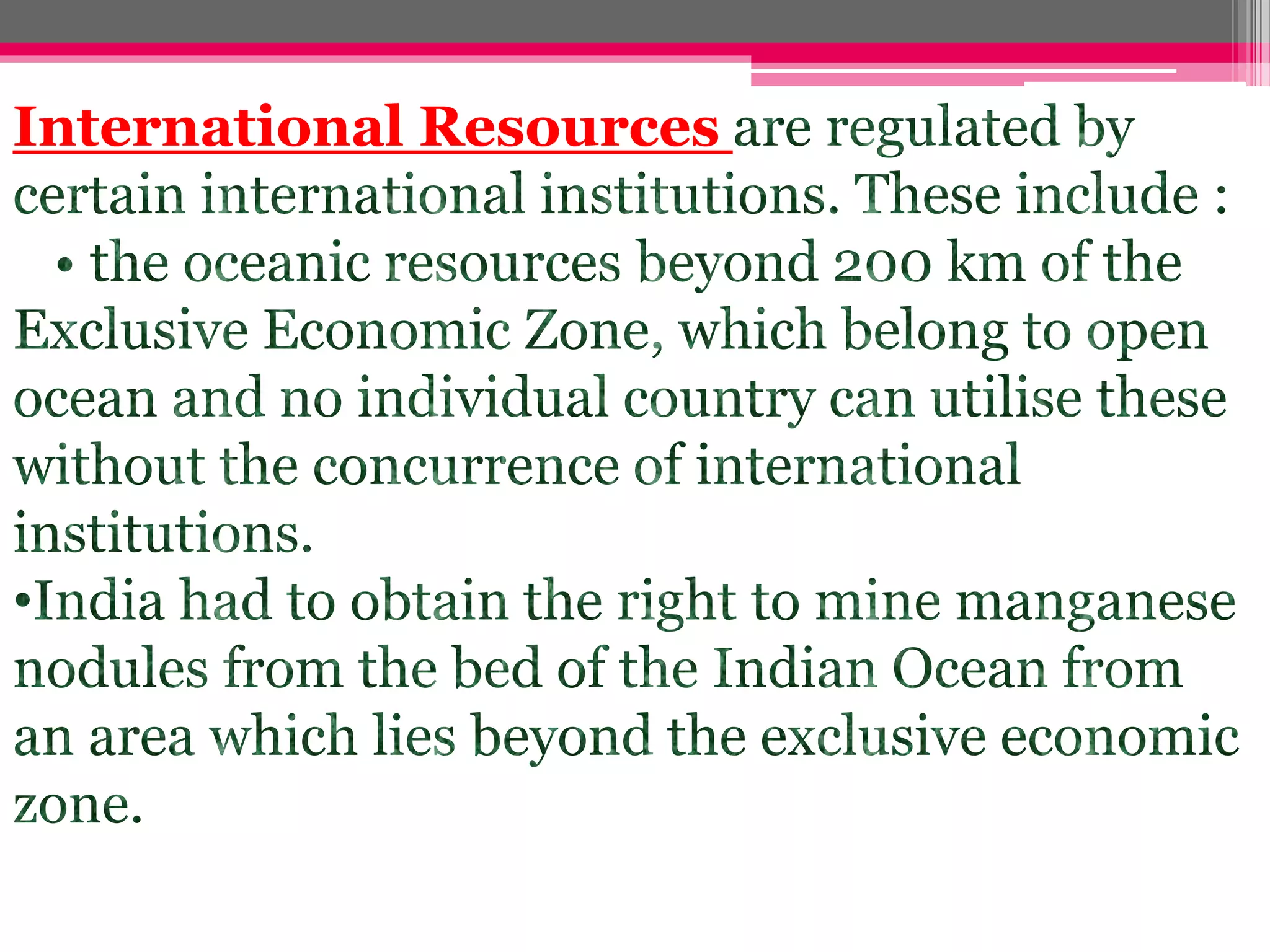
Community Resources
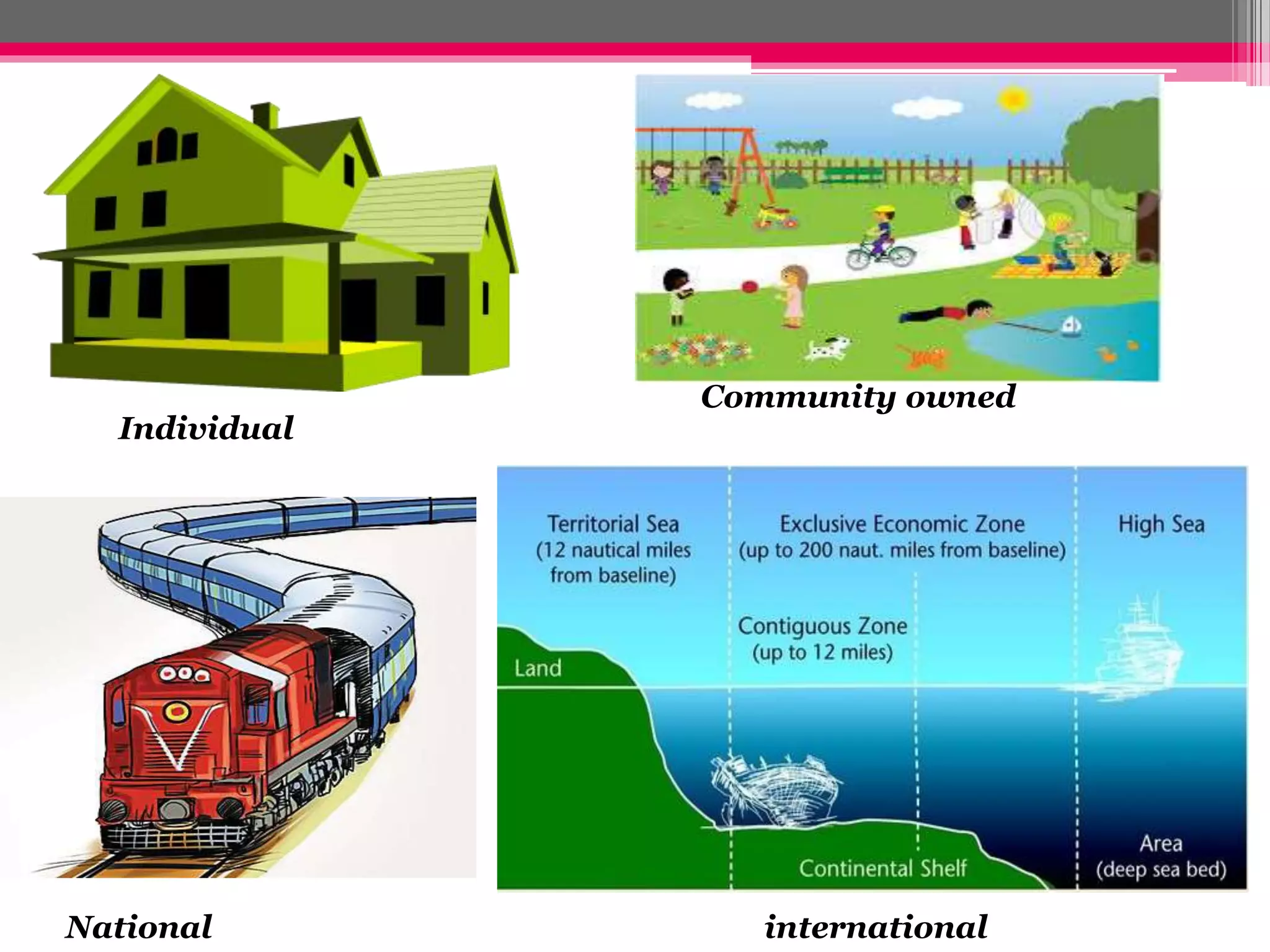
National Resources
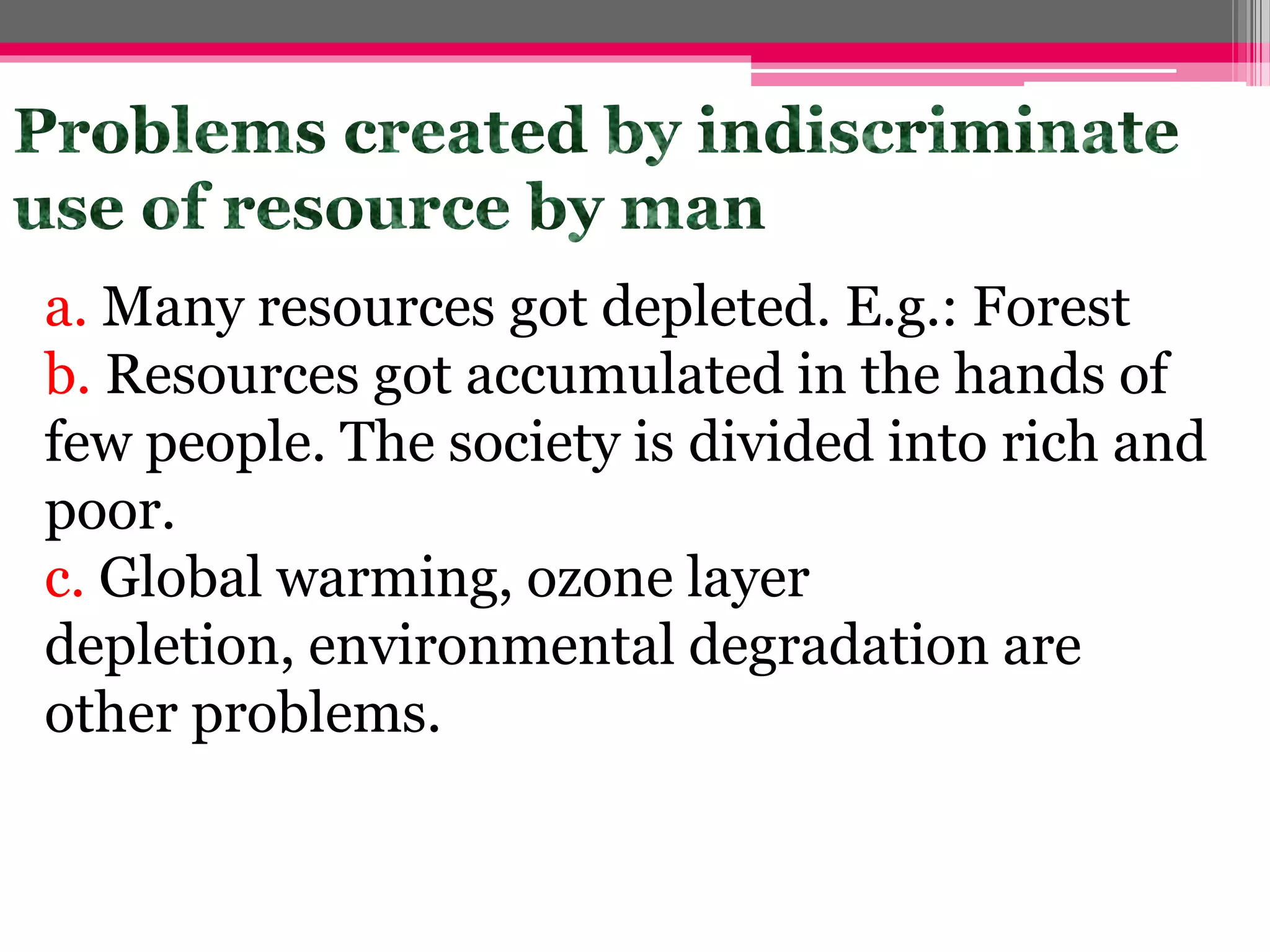
International Resources
Community owned
Individual
National international
a. Many resources got depleted. E.g.: Forest
b. Resources got accumulated in the hands of
few people. The society is divided into rich and
poor.
c. Global warming, ozone layer
depletion, environmental degradation are
other problems.
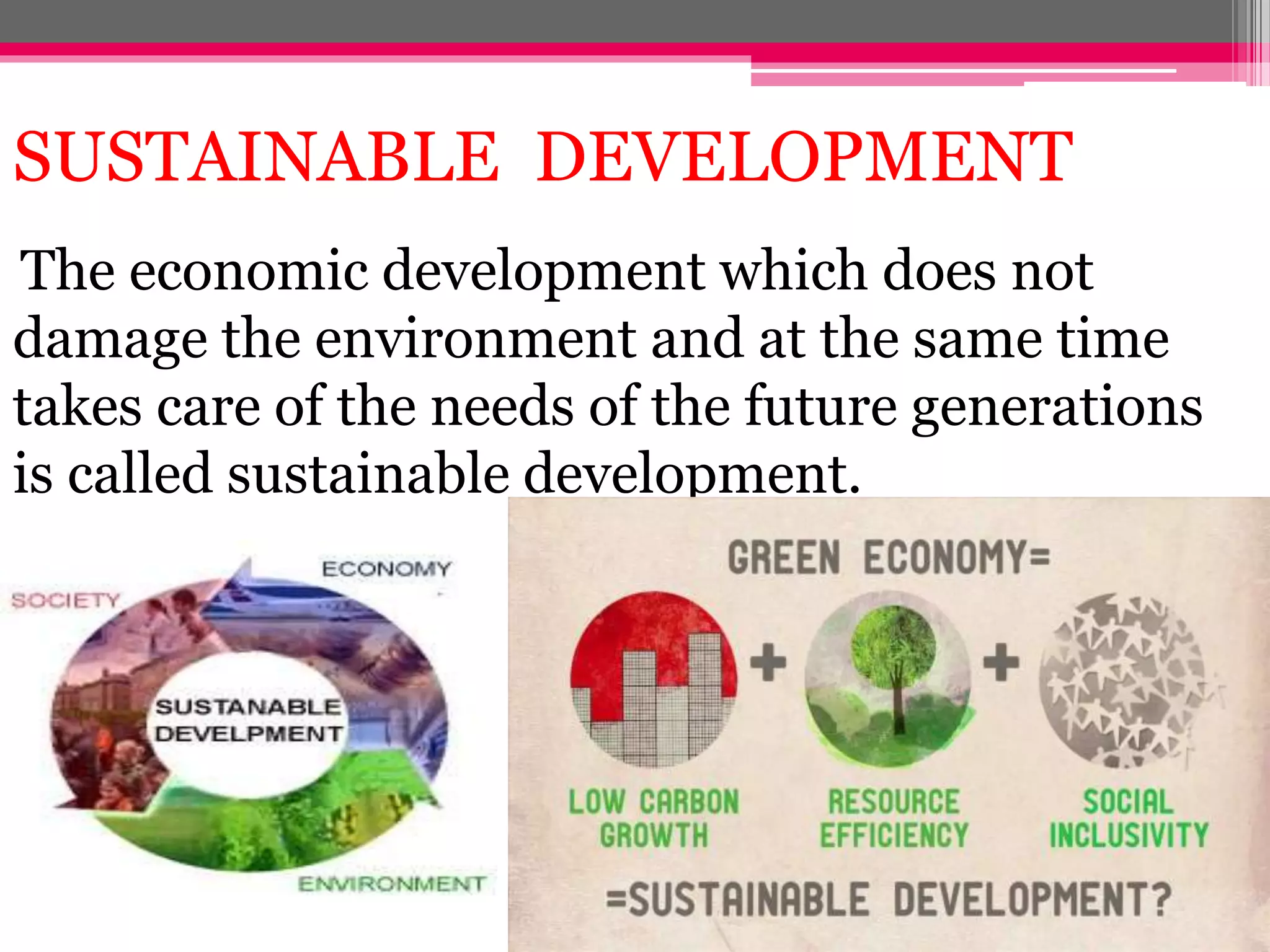
SUSTAINABLE DEVELOPMENT
The economic development which does not
damage the environment and at the same time
takes care of the needs of the future generations
is called sustainable development.
is a technique or skill of proper utilization of
resources.
A) identification and listing of resources
Surveying, mapping and the measurement of the qualities and the quantities
of the resources are the important activities undertaken at this stage.
B) planning for exploitation
Develop a planning structure with suitable technology, skill and institutional
setup.
C) Match resource development plans with national development plans.
It is necessary for the balanced development of India.
1) Some regions of India are rich in certain resources and poor in
some other resources.
E.g.: Rajasthan is poor in water resources but rich in solar
and wind energy.
2) Some regions are self sufficient while other regions are very
poor in important resources. Ex: Madhya Pradesh is rich in many
resources but Ladakh is poor in resources.
3) Wastage of resources can be avoided by planning.
4) Environmental pollution can be reduced.
5) Over exploitation of resources can be avoided.
Planned use of resources in order to meet the
present needs and to store a part for the future
generations is called resource conservation.
It is necessary because
1) Many resources are non-renewable
and exhaustible. If we conserve them we can use
them for a longer period of time.
2) Conservation of resources helps us to reduce
wastage. It will help in economic progress.
3) Resource conservation helps us to protect the
environment.
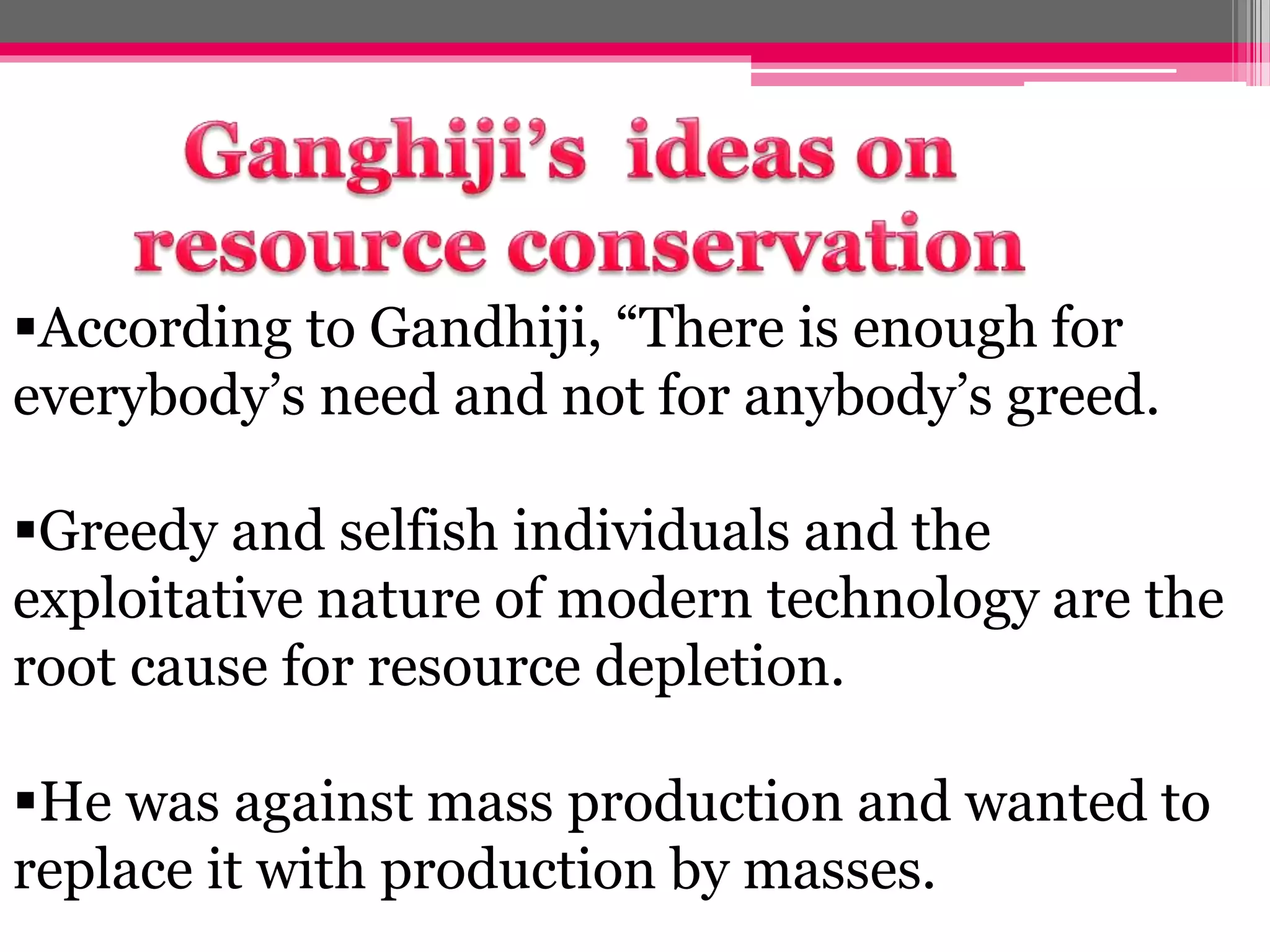
According to Gandhiji, “There is enough for
everybody’s need and not for anybody’s greed.
Greedy and selfish individuals and the
exploitative nature of modern technology are the
root cause for resource depletion.
He was against mass production and wanted to
replace it with production by masses.
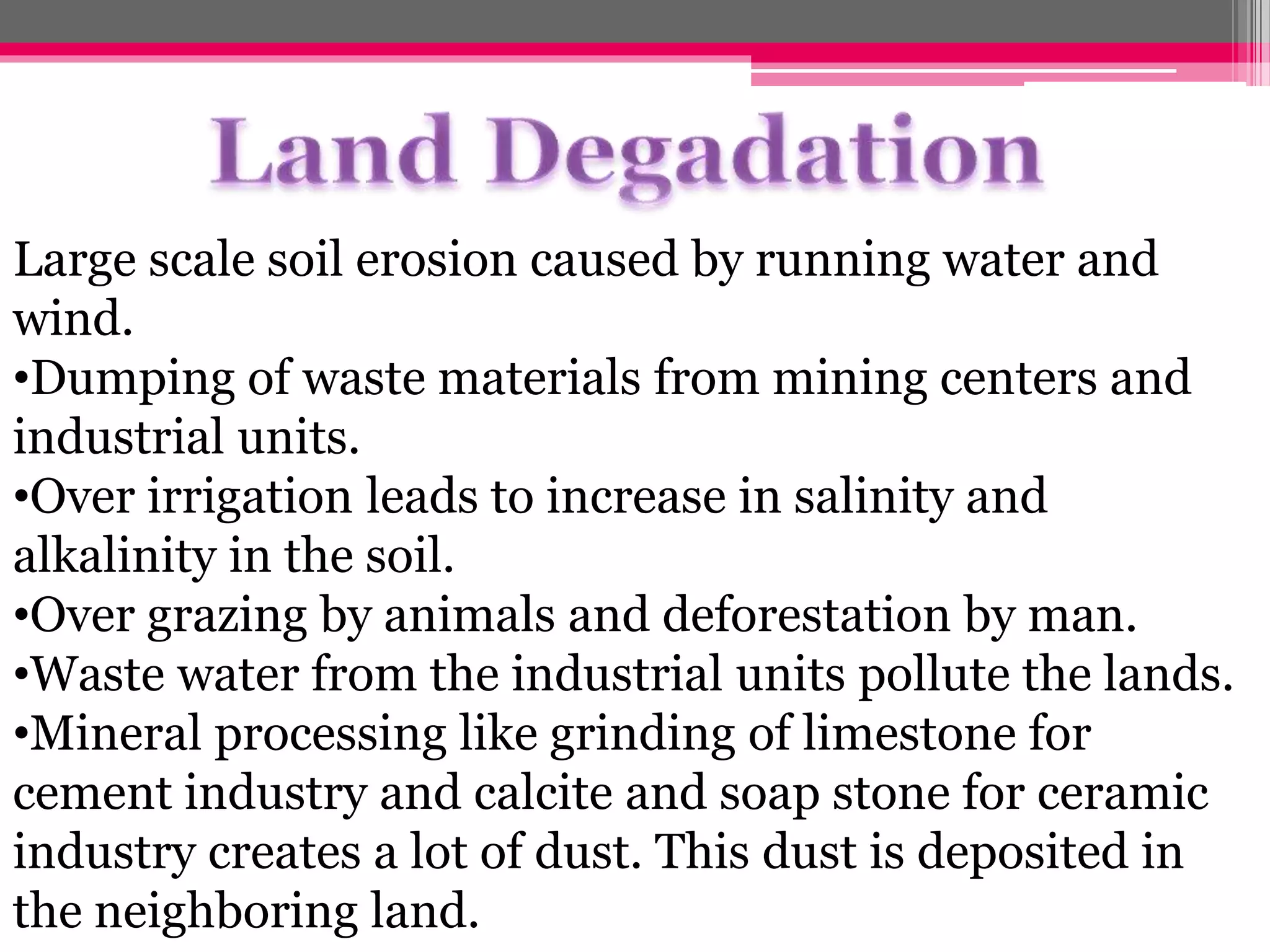
Large scale soil erosion caused by running water and
wind.
•Dumping of waste materials from mining centers and
industrial units.
•Over irrigation leads to increase in salinity and
alkalinity in the soil.
•Over grazing by animals and deforestation by man.
•Waste water from the industrial units pollute the lands.
•Mineral processing like grinding of limestone for
cement industry and calcite and soap stone for ceramic
industry creates a lot of dust. This dust is deposited in
the neighboring land.
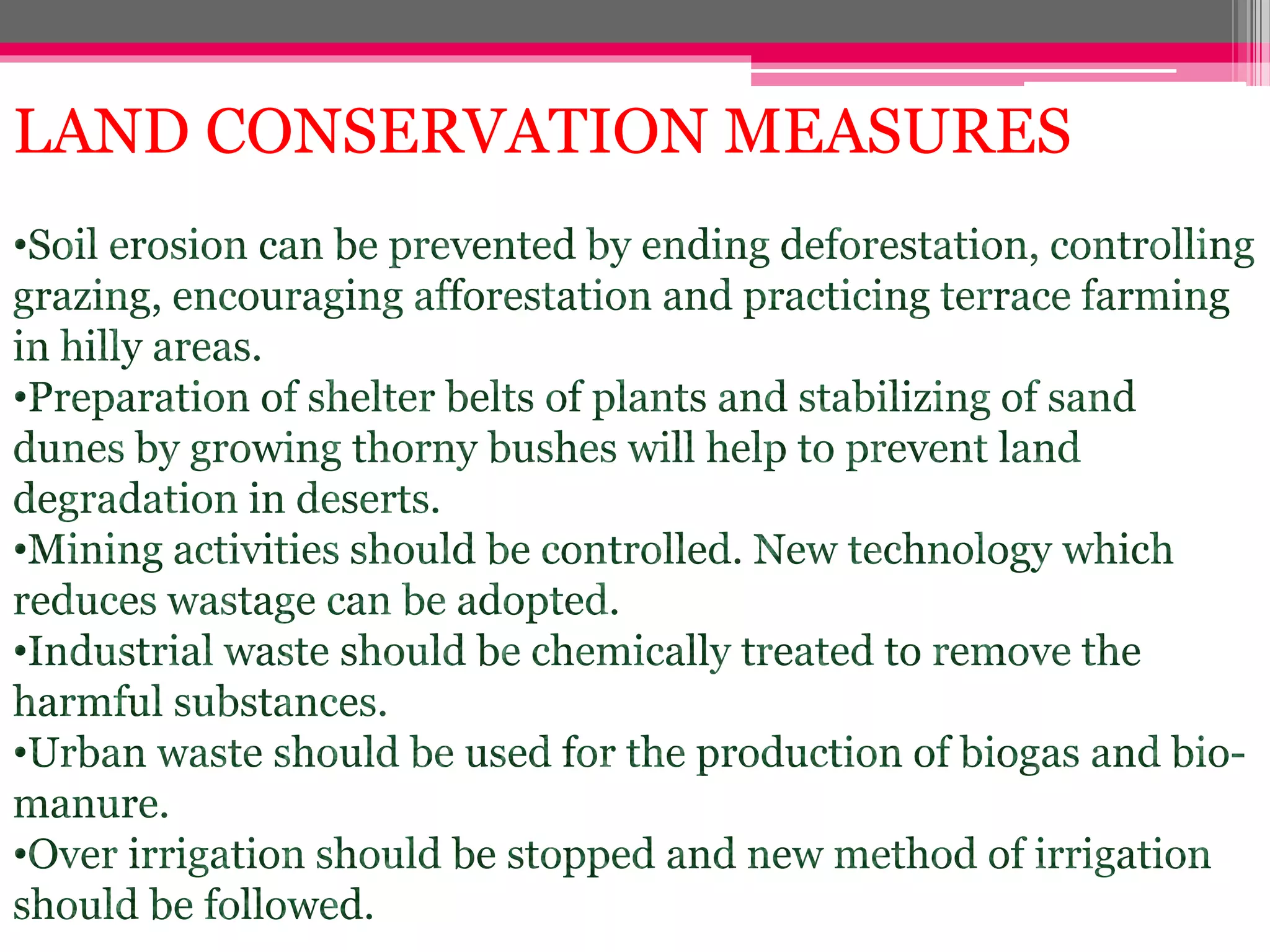
LAND CONSERVATION MEASURES
1) Climate:
Climate decides the rate of weathering and the type of
vegetation.
2) Topography:
Topography of the land decides the accumulation of soil.
3) Nature of parent rock:
It decides compositions and texture of the soil.
4)Vegetation:
Vegetation decides the amount of humus available in the
soil.
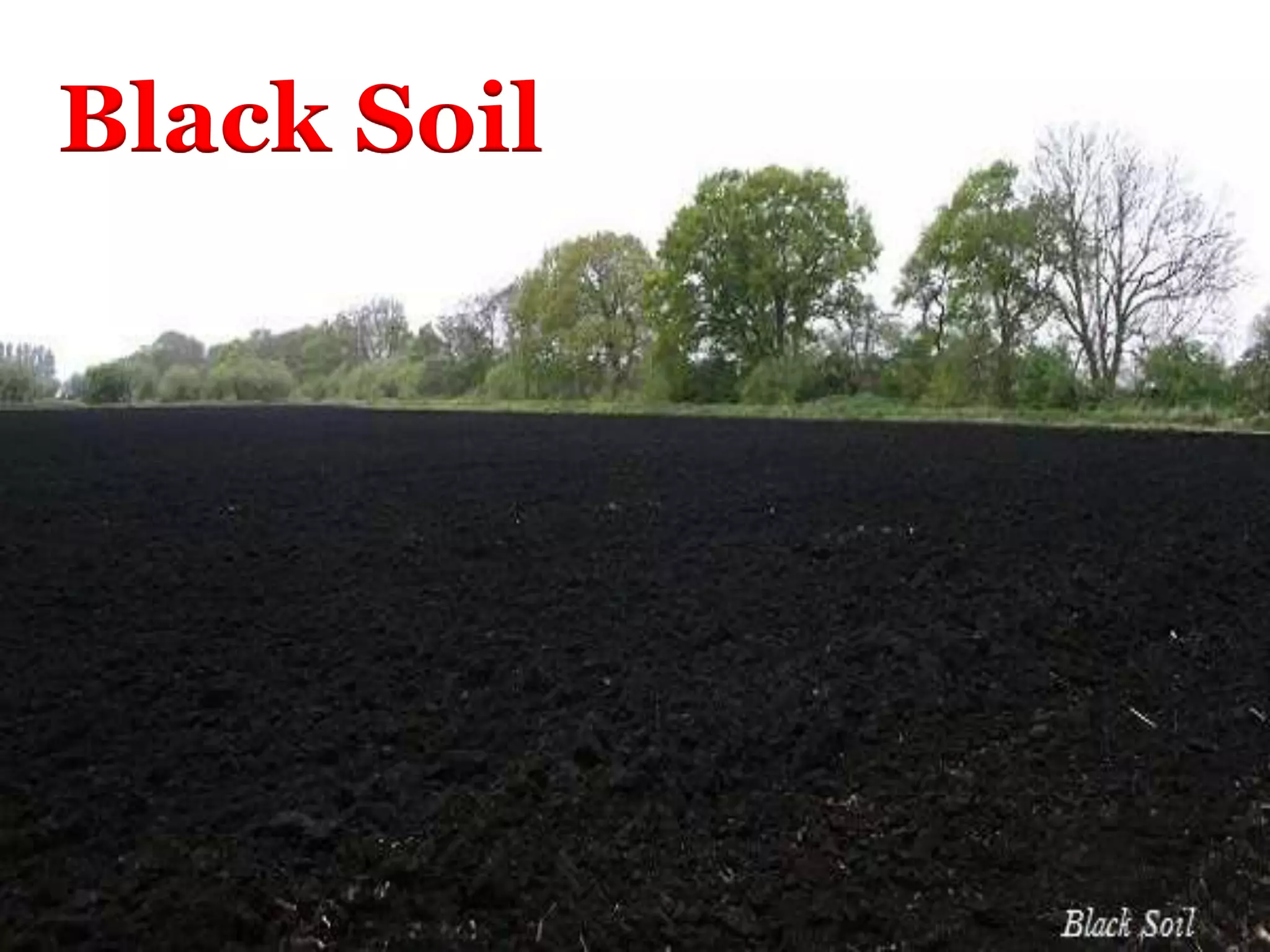
Black Soil
.
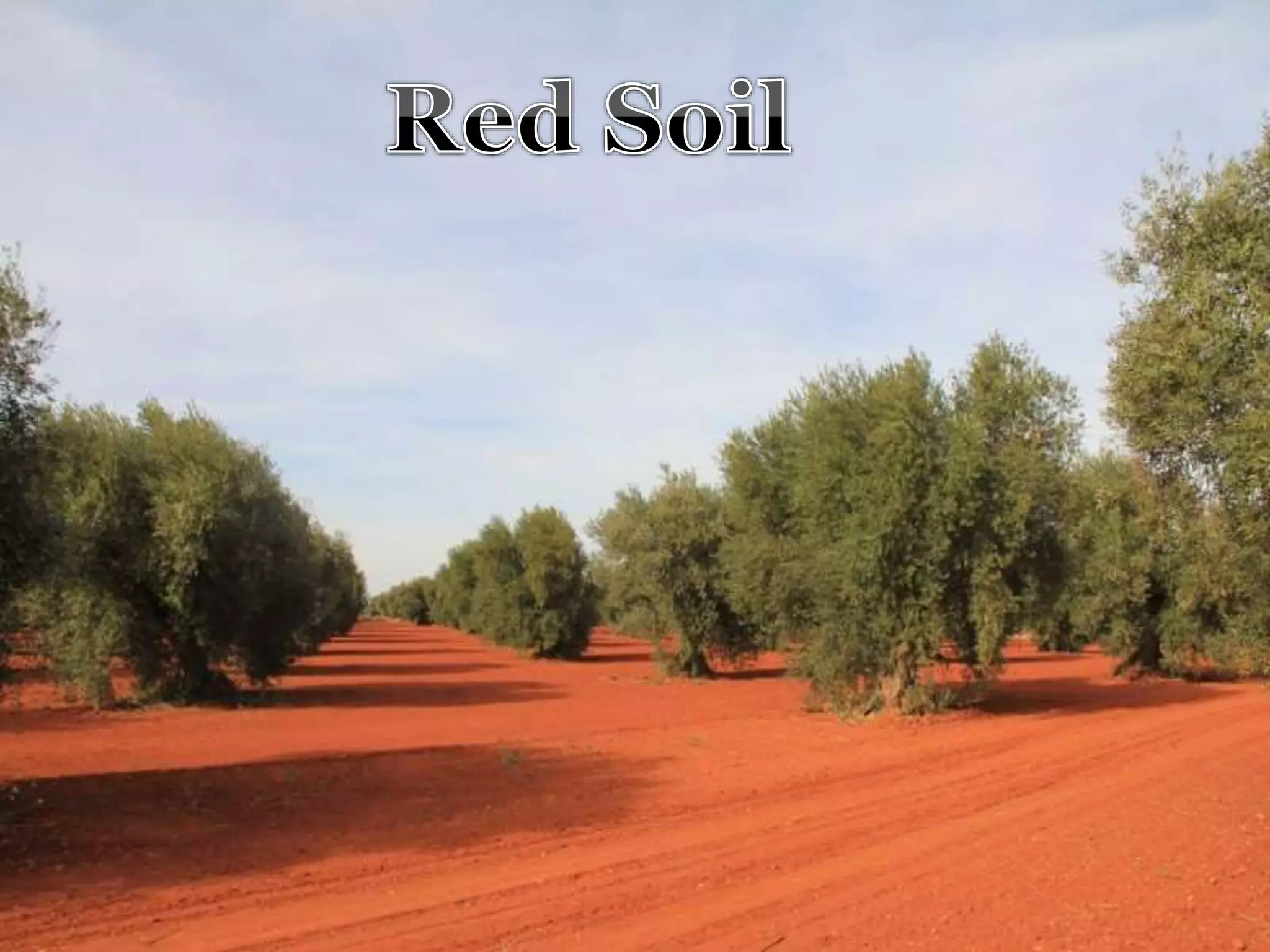
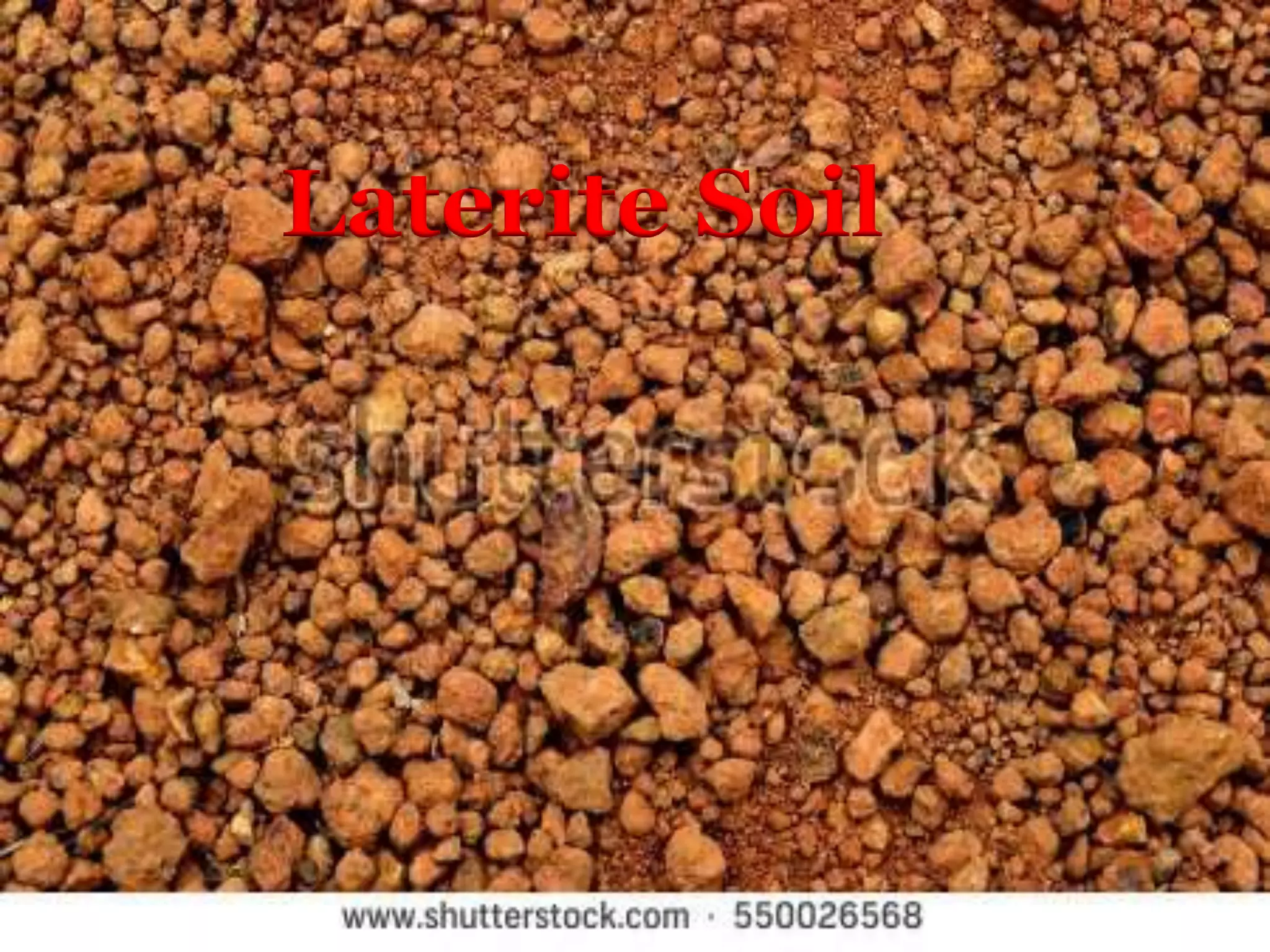
Laterite Soil
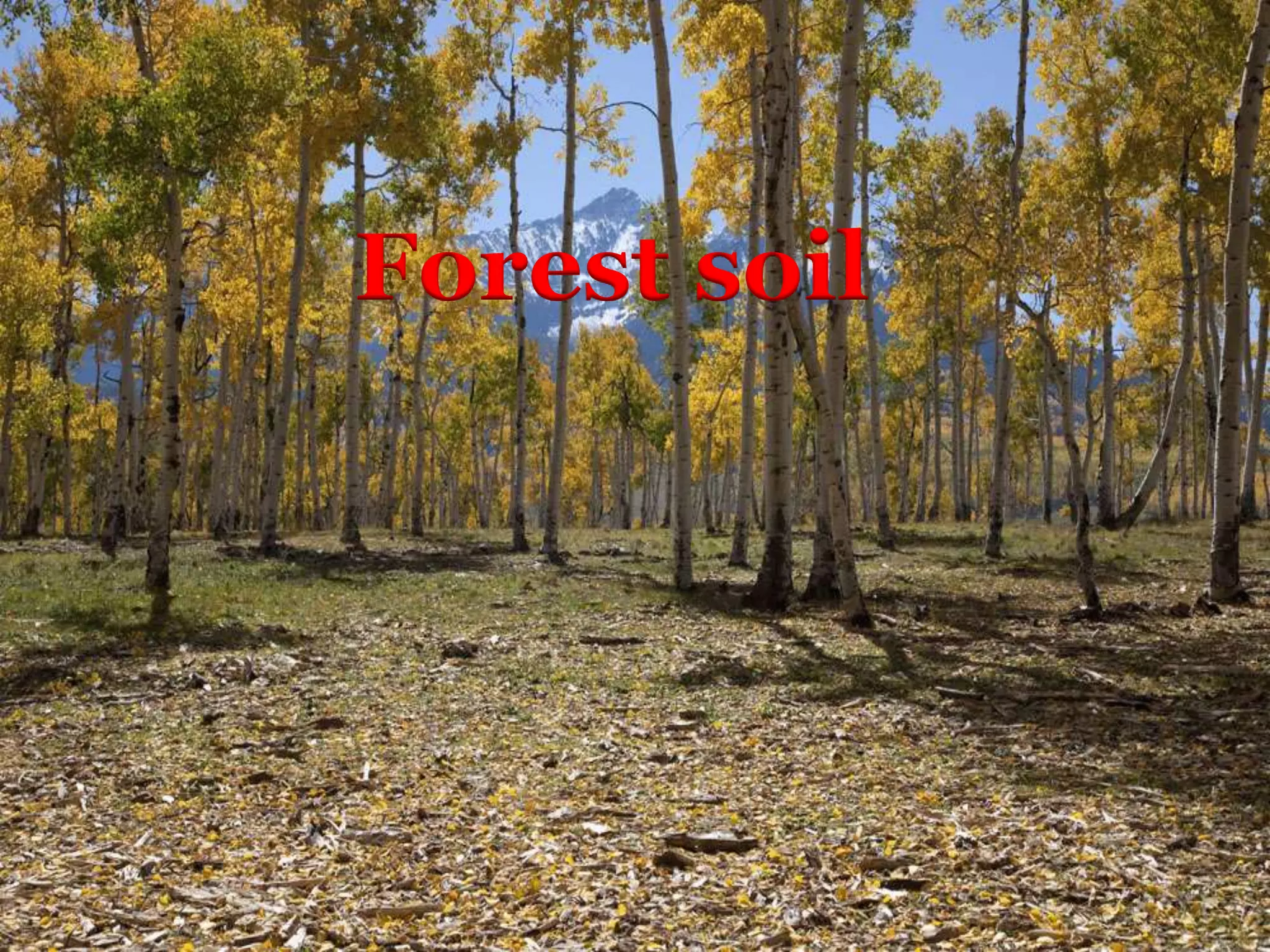
Forest soil
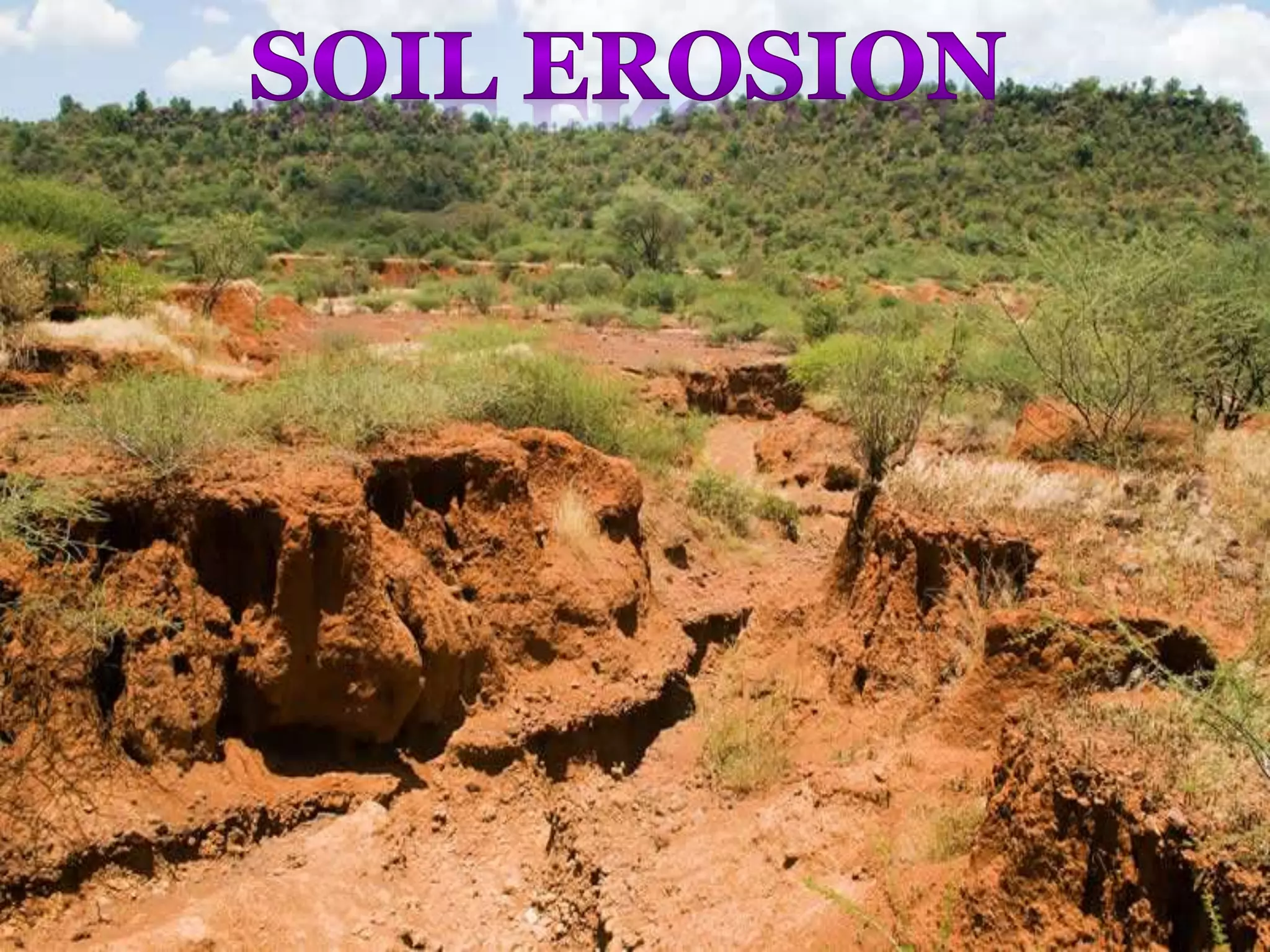
•Removal of top soil from one place to another by
natural agencies is called soil erosion.
•It is caused by running water and wind.
•Deforestation, over grazing and unscientific
agricultural practices are responsible for large
scale soil erosion.
•Two types: gully erosion and sheet erosion.
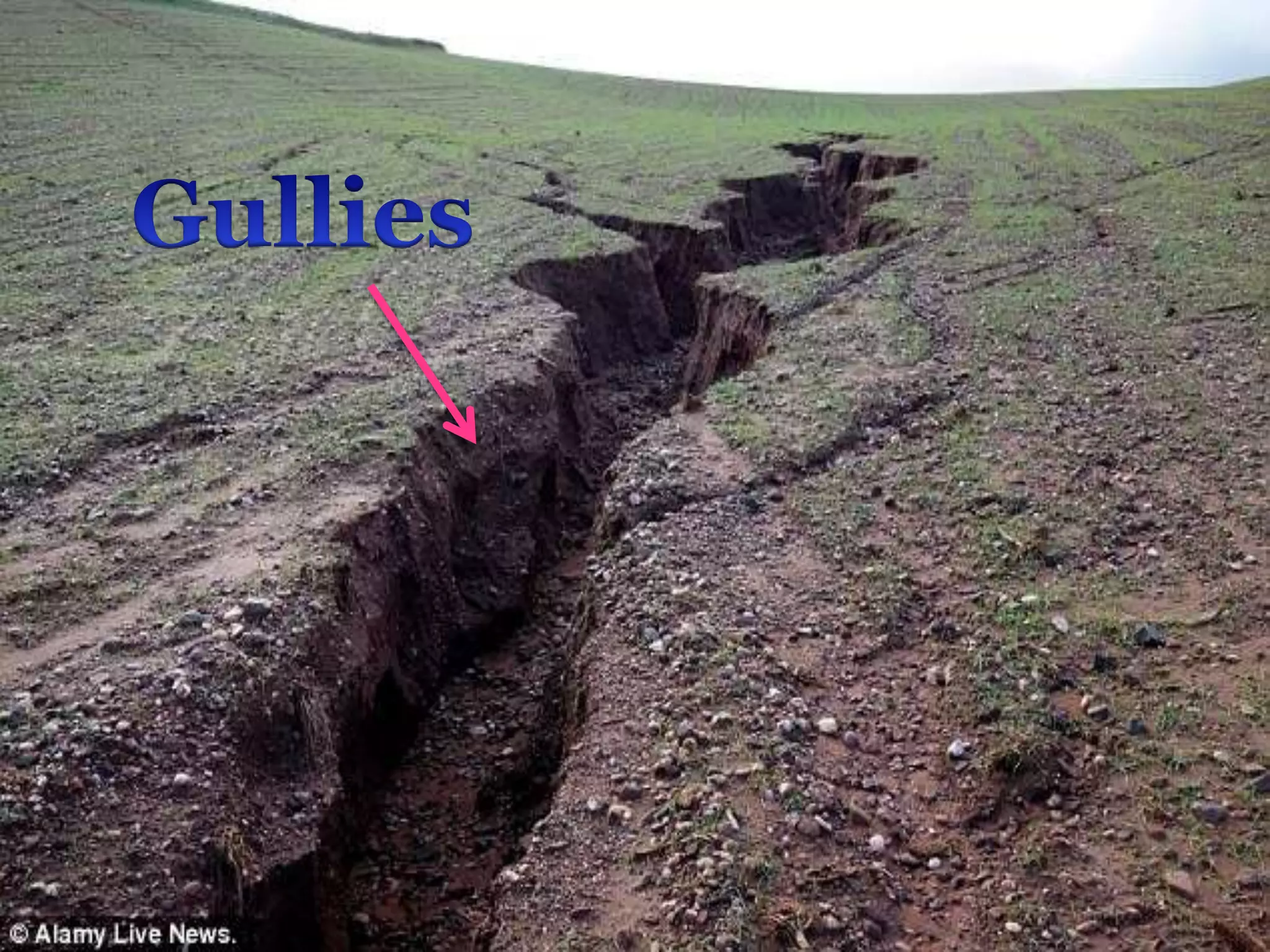
The rain water when moves down on an uneven
land scoops away the soil and form deep channels
called gullies. This type of erosion is called gully
erosion.
A land which is broken into many small parts by
the gullies is called bad land. A bad land is unfit
for cultivation and for other economic activities.
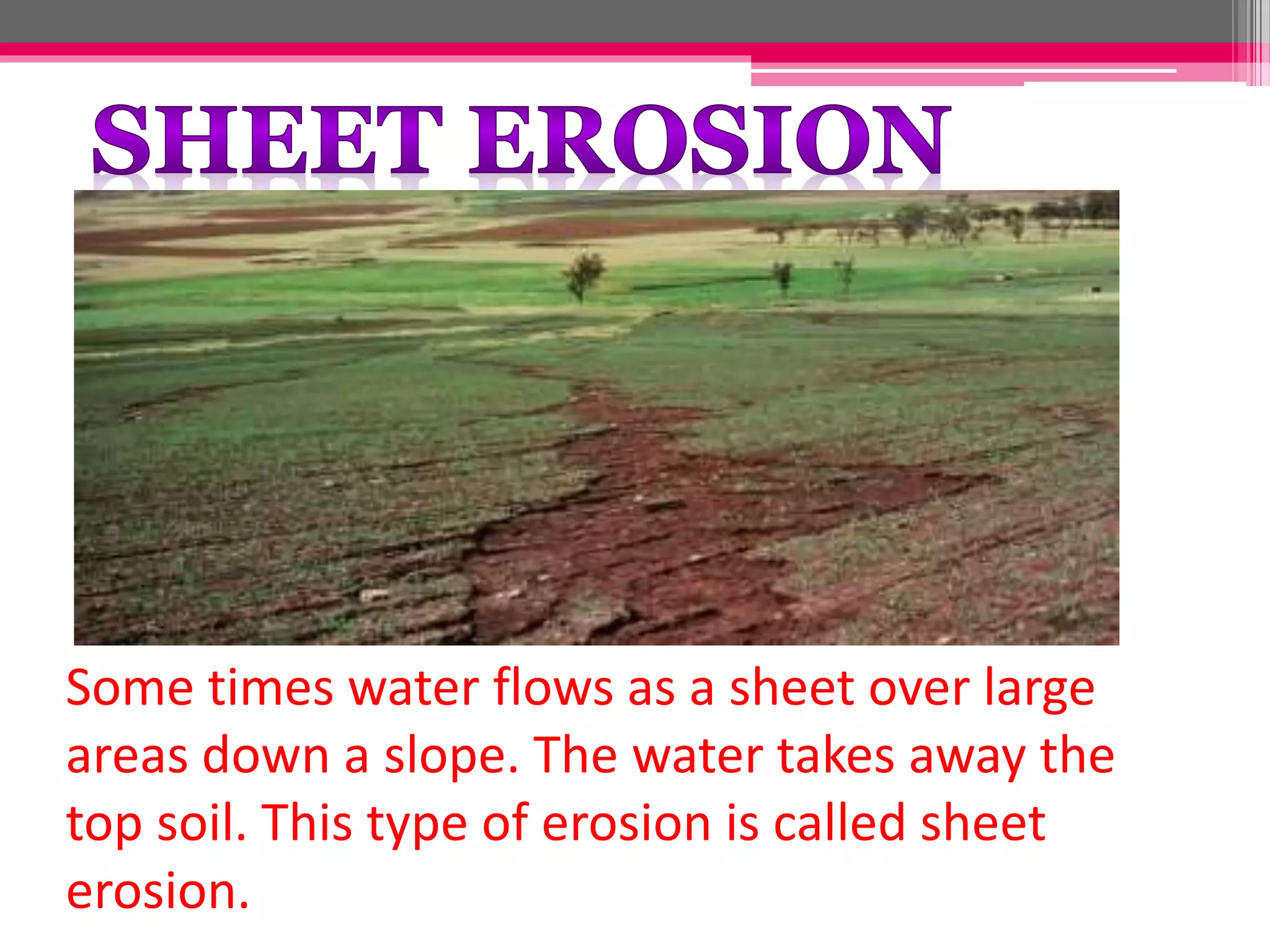
Some times water flows as a sheet over large
areas down a slope. The water takes away the
top soil. This type of erosion is called sheet
erosion.
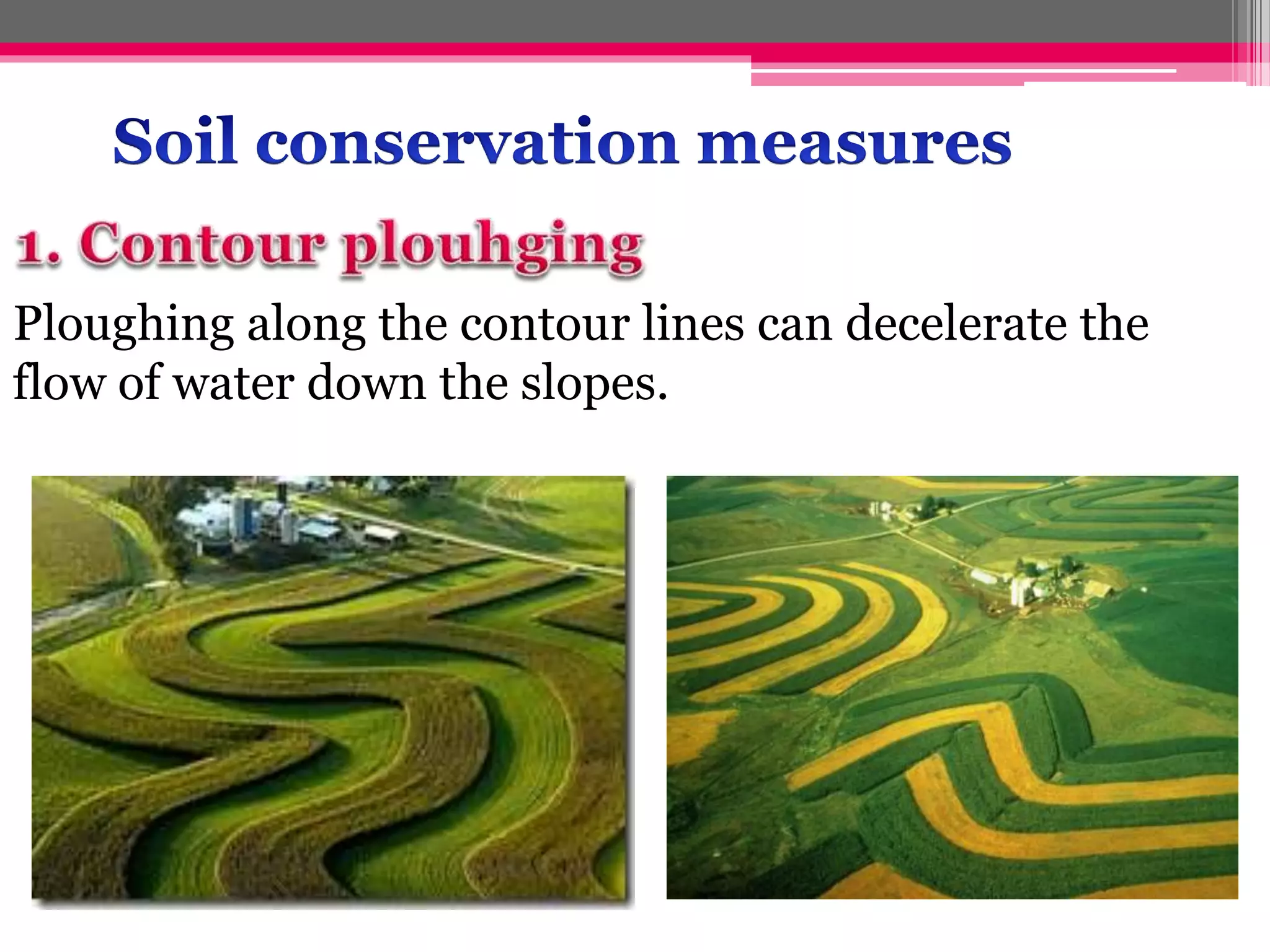
Ploughing along the contour lines can decelerate the
flow of water down the slopes.
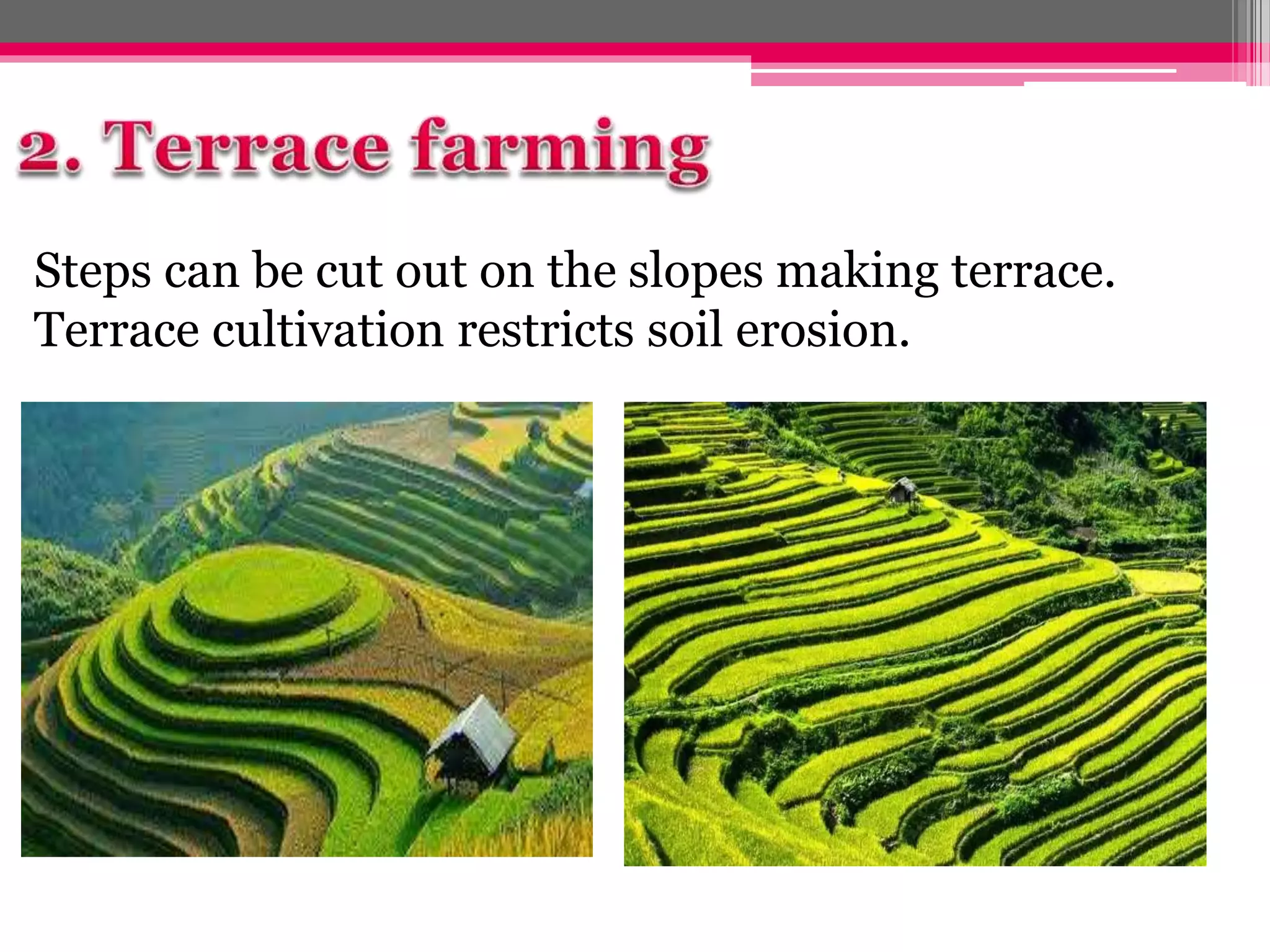
Steps can be cut out on the slopes making terrace.
Terrace cultivation restricts soil erosion.
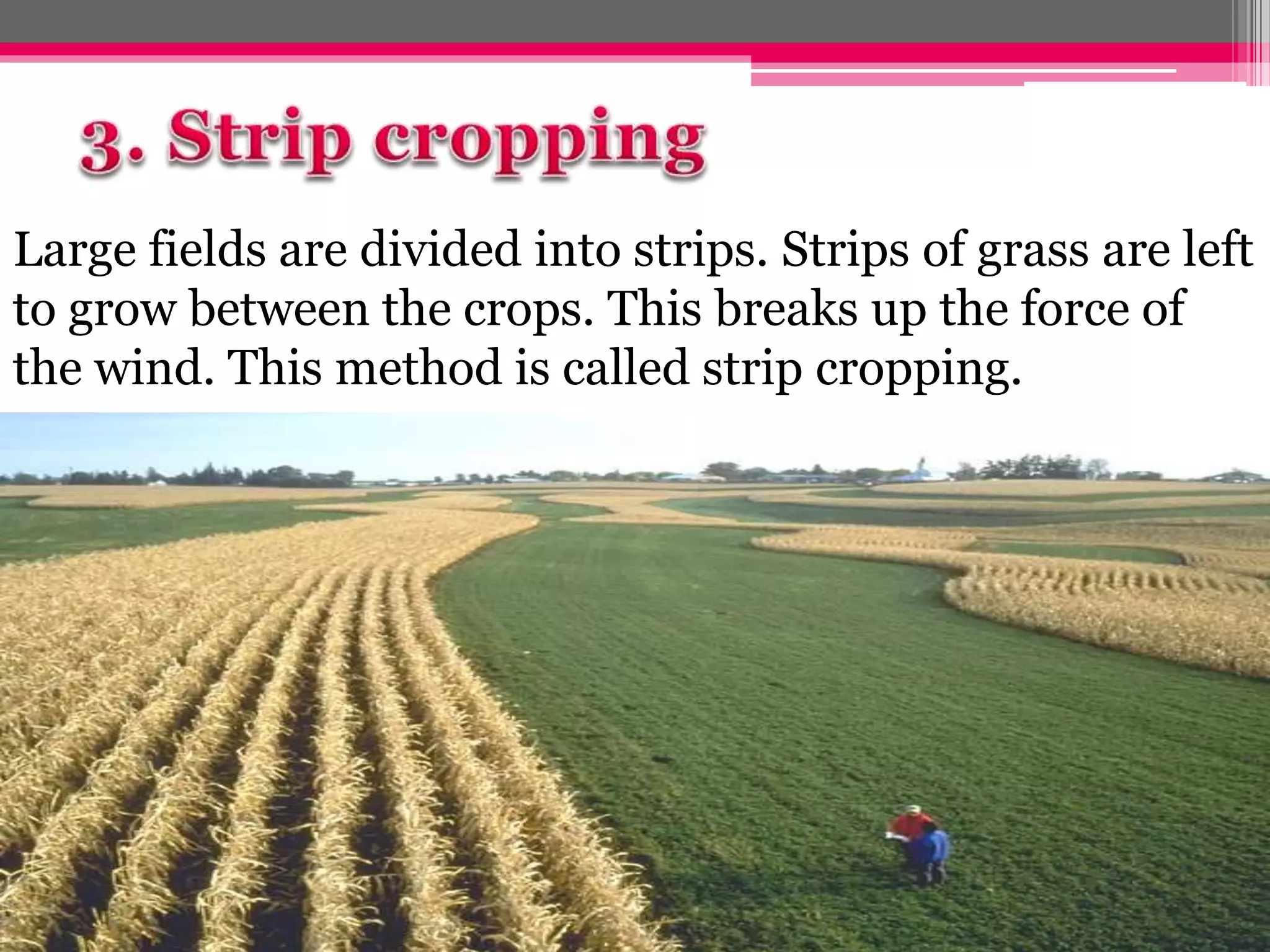
Large fields are divided into strips. Strips of grass are left
to grow between the crops. This breaks up the force of
the wind. This method is called strip cropping.
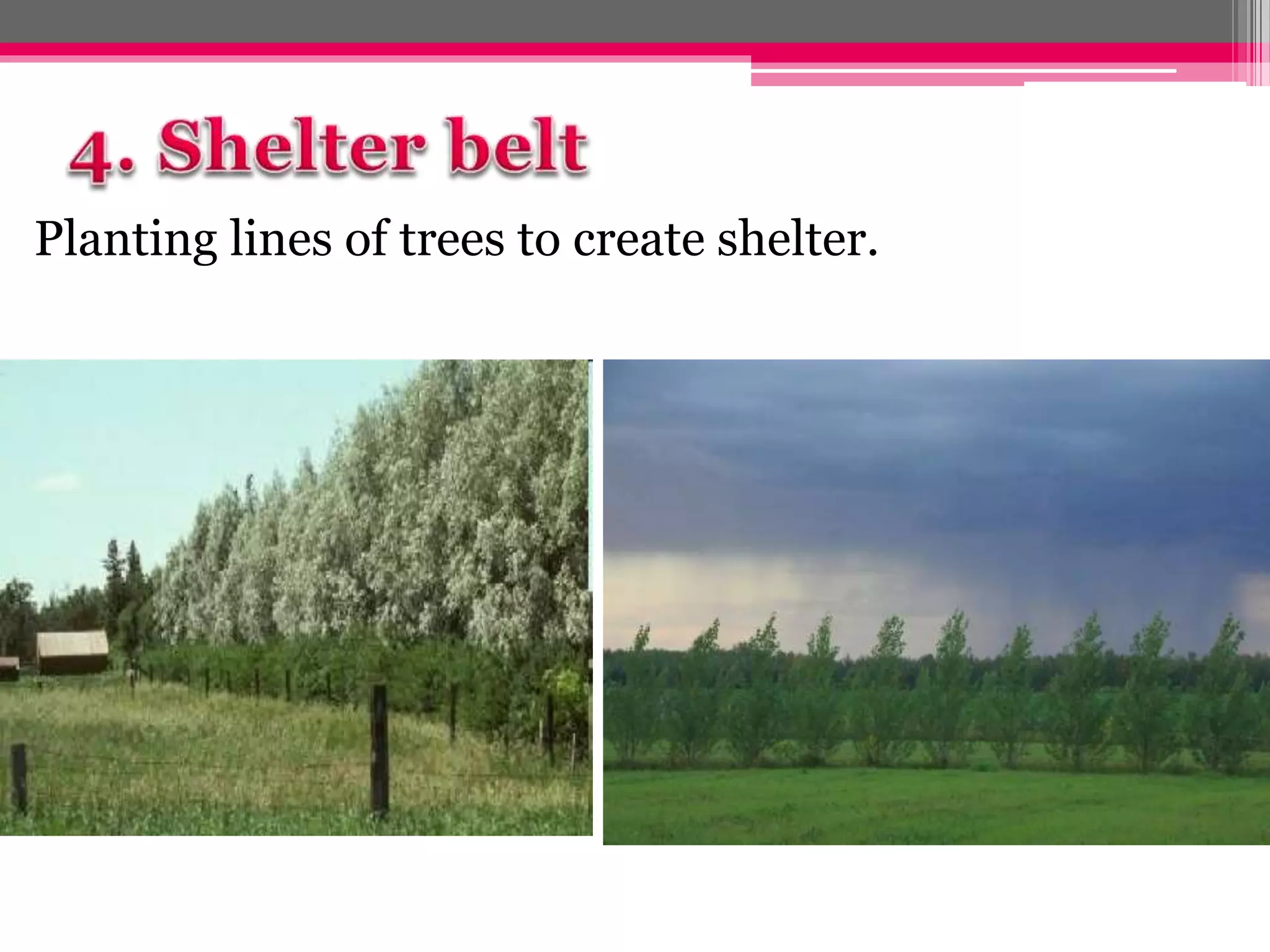
Planting lines of trees to create shelter.
DONE BY:

Resources and development class 10

  • 3.
    Human beings interact withnature through technology and create institutions to accelerate their economic development.
  • 9.
  • 12.
  • 13.
  • 14.
  • 15.
  • 19.
    a. Many resourcesgot depleted. E.g.: Forest b. Resources got accumulated in the hands of few people. The society is divided into rich and poor. c. Global warming, ozone layer depletion, environmental degradation are other problems.
  • 20.
    SUSTAINABLE DEVELOPMENT The economicdevelopment which does not damage the environment and at the same time takes care of the needs of the future generations is called sustainable development.
  • 21.
    is a techniqueor skill of proper utilization of resources. A) identification and listing of resources Surveying, mapping and the measurement of the qualities and the quantities of the resources are the important activities undertaken at this stage. B) planning for exploitation Develop a planning structure with suitable technology, skill and institutional setup. C) Match resource development plans with national development plans.
  • 22.
    It is necessaryfor the balanced development of India. 1) Some regions of India are rich in certain resources and poor in some other resources. E.g.: Rajasthan is poor in water resources but rich in solar and wind energy. 2) Some regions are self sufficient while other regions are very poor in important resources. Ex: Madhya Pradesh is rich in many resources but Ladakh is poor in resources. 3) Wastage of resources can be avoided by planning. 4) Environmental pollution can be reduced. 5) Over exploitation of resources can be avoided.
  • 23.
    Planned use ofresources in order to meet the present needs and to store a part for the future generations is called resource conservation. It is necessary because 1) Many resources are non-renewable and exhaustible. If we conserve them we can use them for a longer period of time. 2) Conservation of resources helps us to reduce wastage. It will help in economic progress. 3) Resource conservation helps us to protect the environment.
  • 24.
    According to Gandhiji,“There is enough for everybody’s need and not for anybody’s greed. Greedy and selfish individuals and the exploitative nature of modern technology are the root cause for resource depletion. He was against mass production and wanted to replace it with production by masses.
  • 25.
    Large scale soilerosion caused by running water and wind. •Dumping of waste materials from mining centers and industrial units. •Over irrigation leads to increase in salinity and alkalinity in the soil. •Over grazing by animals and deforestation by man. •Waste water from the industrial units pollute the lands. •Mineral processing like grinding of limestone for cement industry and calcite and soap stone for ceramic industry creates a lot of dust. This dust is deposited in the neighboring land.
  • 26.
  • 29.
    1) Climate: Climate decidesthe rate of weathering and the type of vegetation. 2) Topography: Topography of the land decides the accumulation of soil. 3) Nature of parent rock: It decides compositions and texture of the soil. 4)Vegetation: Vegetation decides the amount of humus available in the soil.
  • 34.
  • 37.
  • 38.
  • 42.
  • 45.
    •Removal of topsoil from one place to another by natural agencies is called soil erosion. •It is caused by running water and wind. •Deforestation, over grazing and unscientific agricultural practices are responsible for large scale soil erosion. •Two types: gully erosion and sheet erosion.
  • 46.
    The rain waterwhen moves down on an uneven land scoops away the soil and form deep channels called gullies. This type of erosion is called gully erosion. A land which is broken into many small parts by the gullies is called bad land. A bad land is unfit for cultivation and for other economic activities.
  • 48.
    Some times waterflows as a sheet over large areas down a slope. The water takes away the top soil. This type of erosion is called sheet erosion.
  • 49.
    Ploughing along thecontour lines can decelerate the flow of water down the slopes.
  • 50.
    Steps can becut out on the slopes making terrace. Terrace cultivation restricts soil erosion.
  • 51.
    Large fields aredivided into strips. Strips of grass are left to grow between the crops. This breaks up the force of the wind. This method is called strip cropping.
  • 52.
    Planting lines oftrees to create shelter.
  • 53.