
Chapter 1

Setting the Stage
A Multidimensional Approach
SW Steps
(The Planned Change Process)
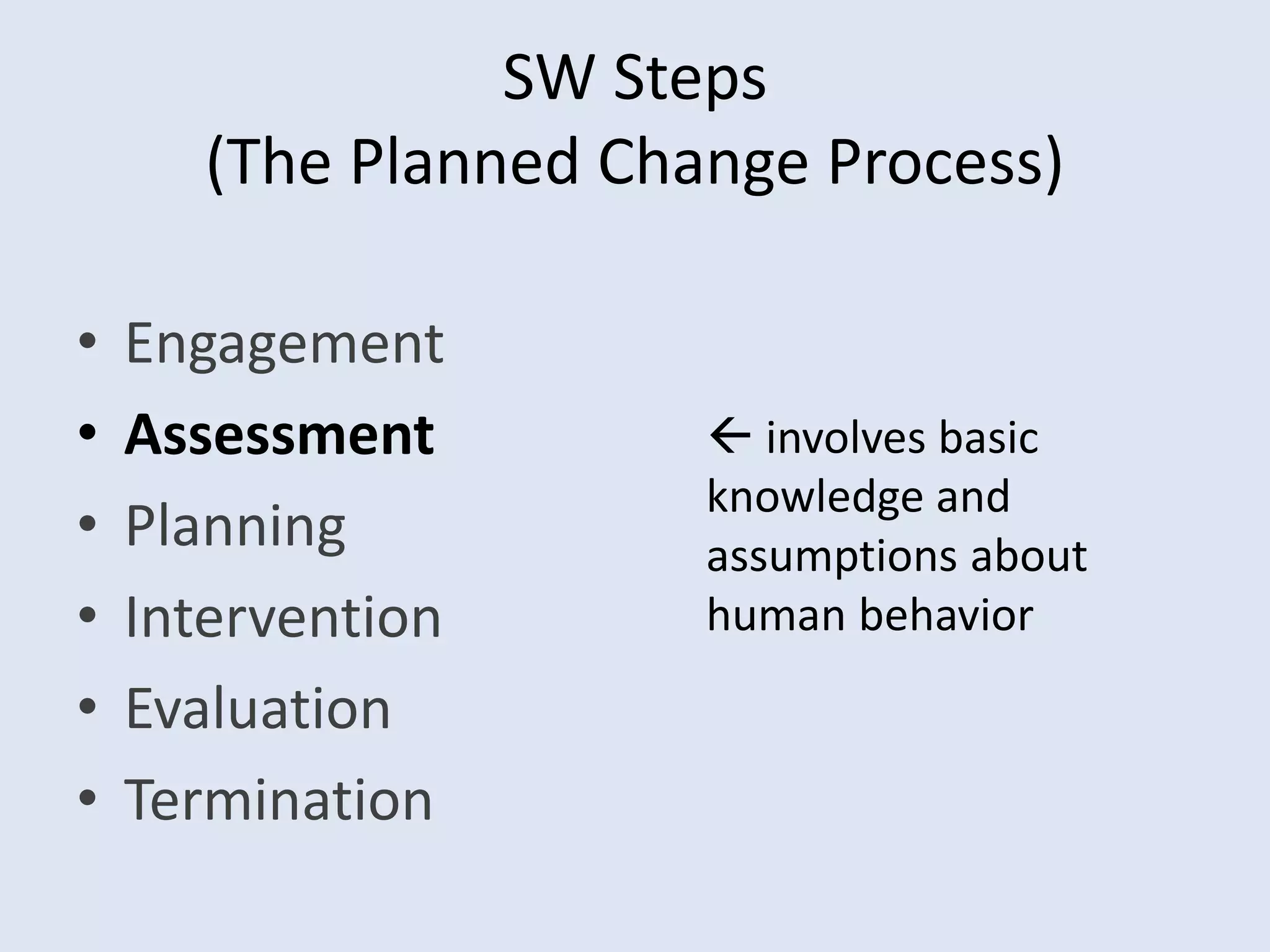
• Engagement
• Assessment
• Planning
• Intervention
• Evaluation
• Termination
 involves basic
knowledge and
assumptions about
human behavior
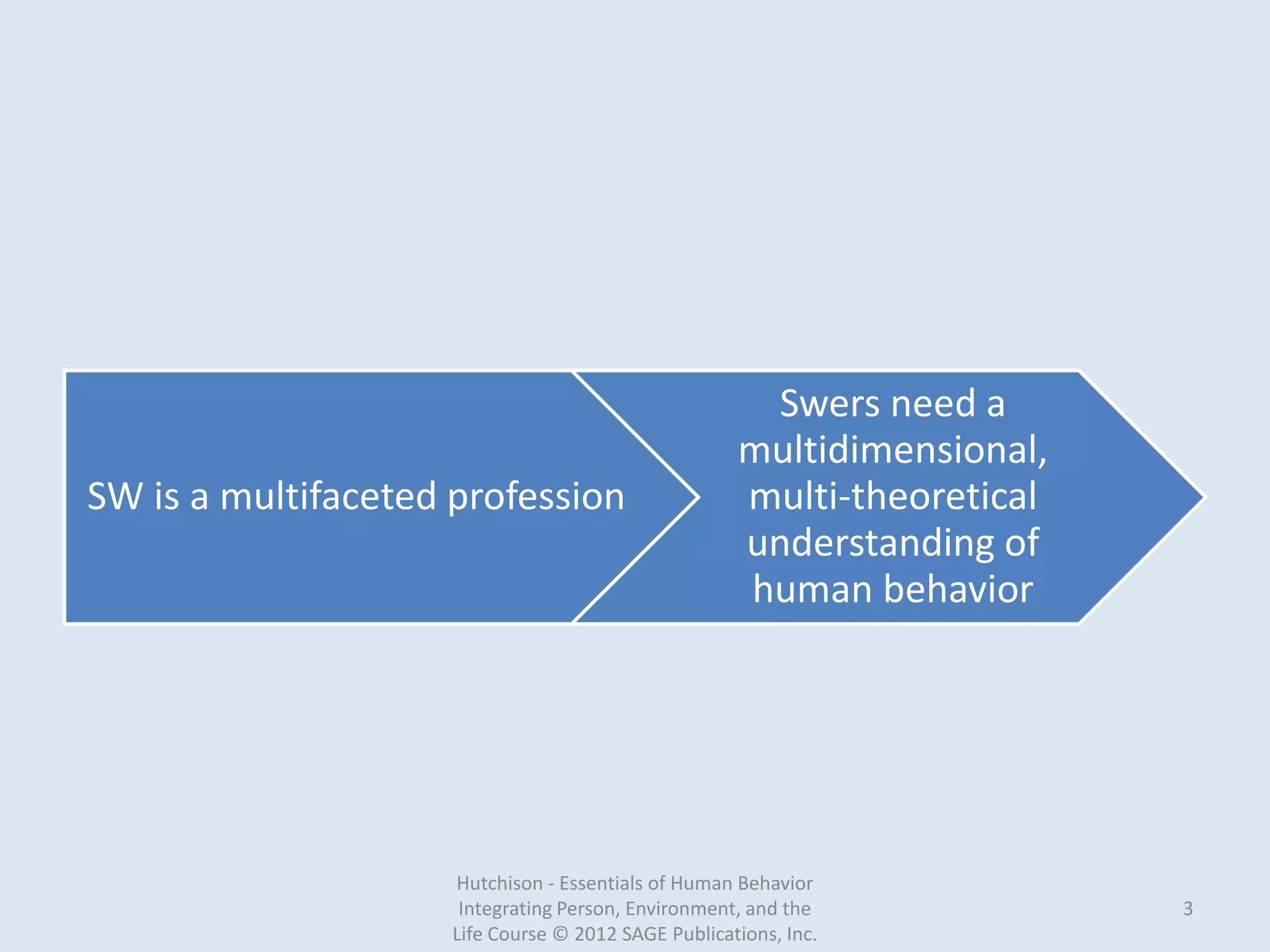
SW is a multifaceted profession
Swers need a
multidimensional,
multi-theoretical
understanding of
human behavior
Hutchison - Essentials of Human Behavior
Integrating Person, Environment, and the
Life Course © 2012 SAGE Publications, Inc.
3
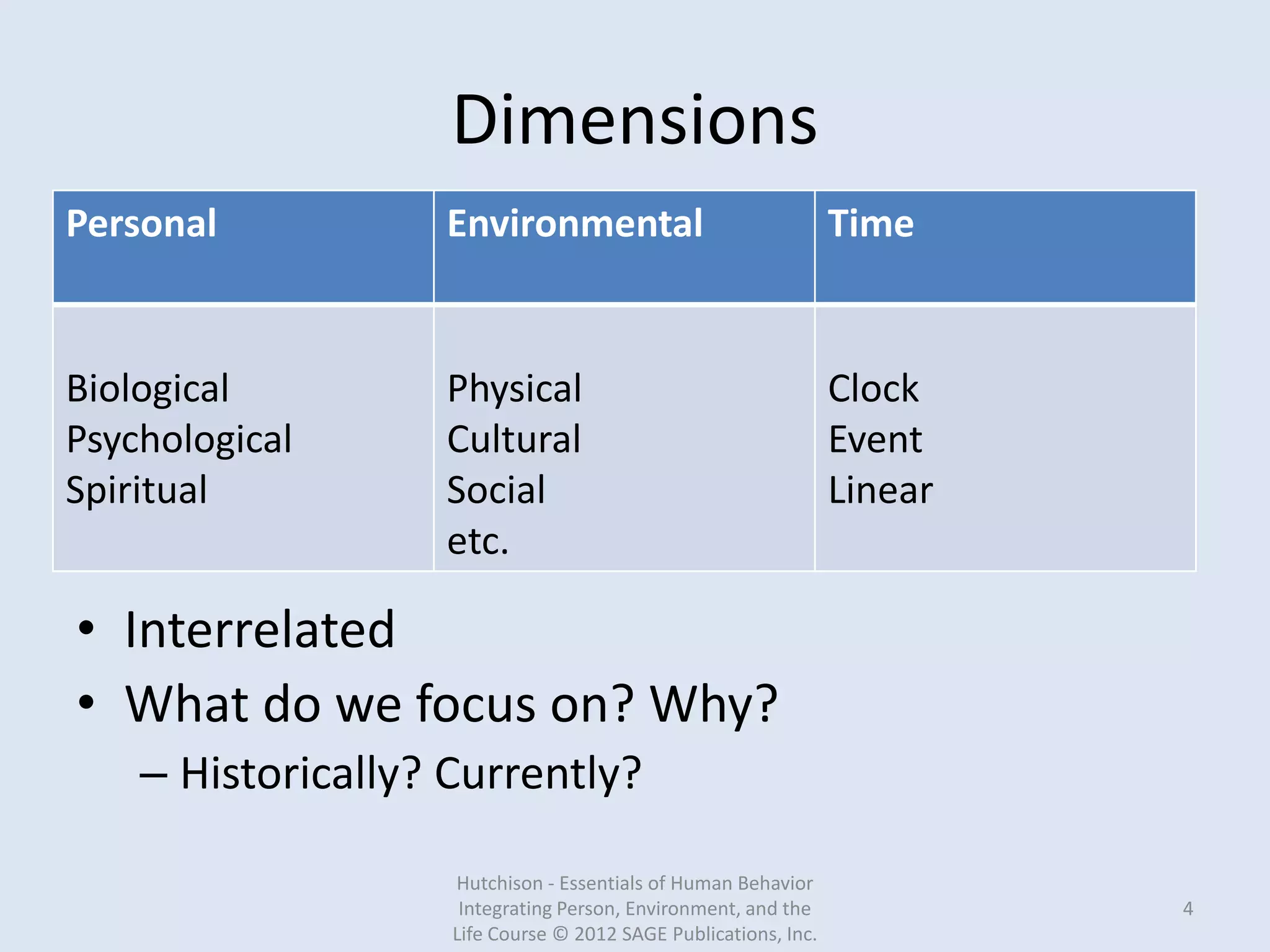
Dimensions
• Interrelated
• What do we focus on? Why?
– Historically? Currently?
Hutchison - Essentials of Human Behavior
Integrating Person, Environment, and the
Life Course © 2012 SAGE Publications, Inc.
4
Personal Environmental Time
Biological
Psychological
Spiritual
Physical
Cultural
Social
etc.
Clock
Event
Linear
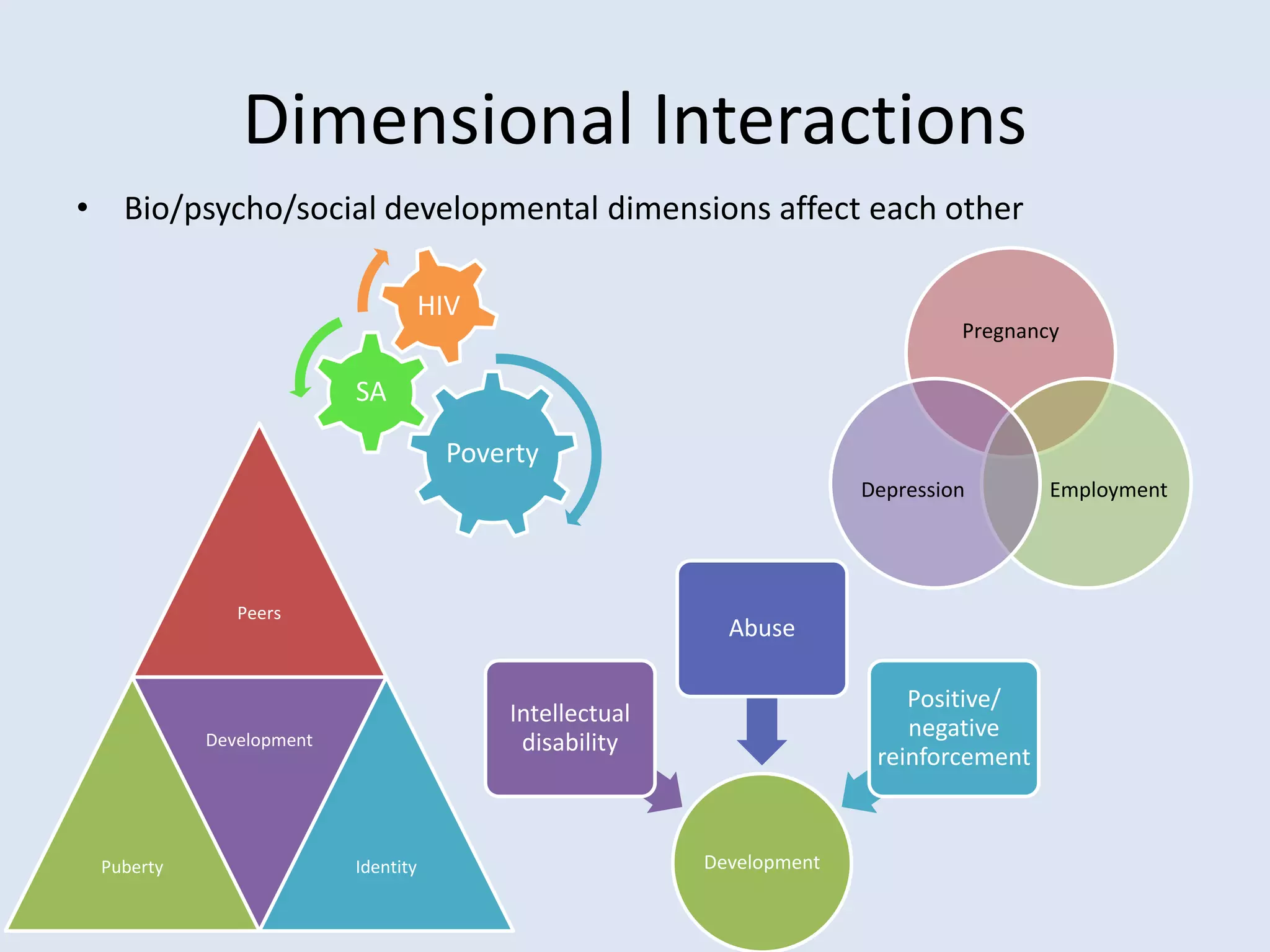
Dimensional Interactions
• Bio/psycho/social developmental dimensions affect each other
Poverty
SA
HIV
Pregnancy
EmploymentDepression
Development
Intellectual
disability
Abuse
Positive/
negative
reinforcement
Peers
Puberty
Development
Identity
Manisha’s Story
Hutchison - Essentials of Human Behavior
Integrating Person, Environment, and the
Life Course © 2012 SAGE Publications, Inc.
6
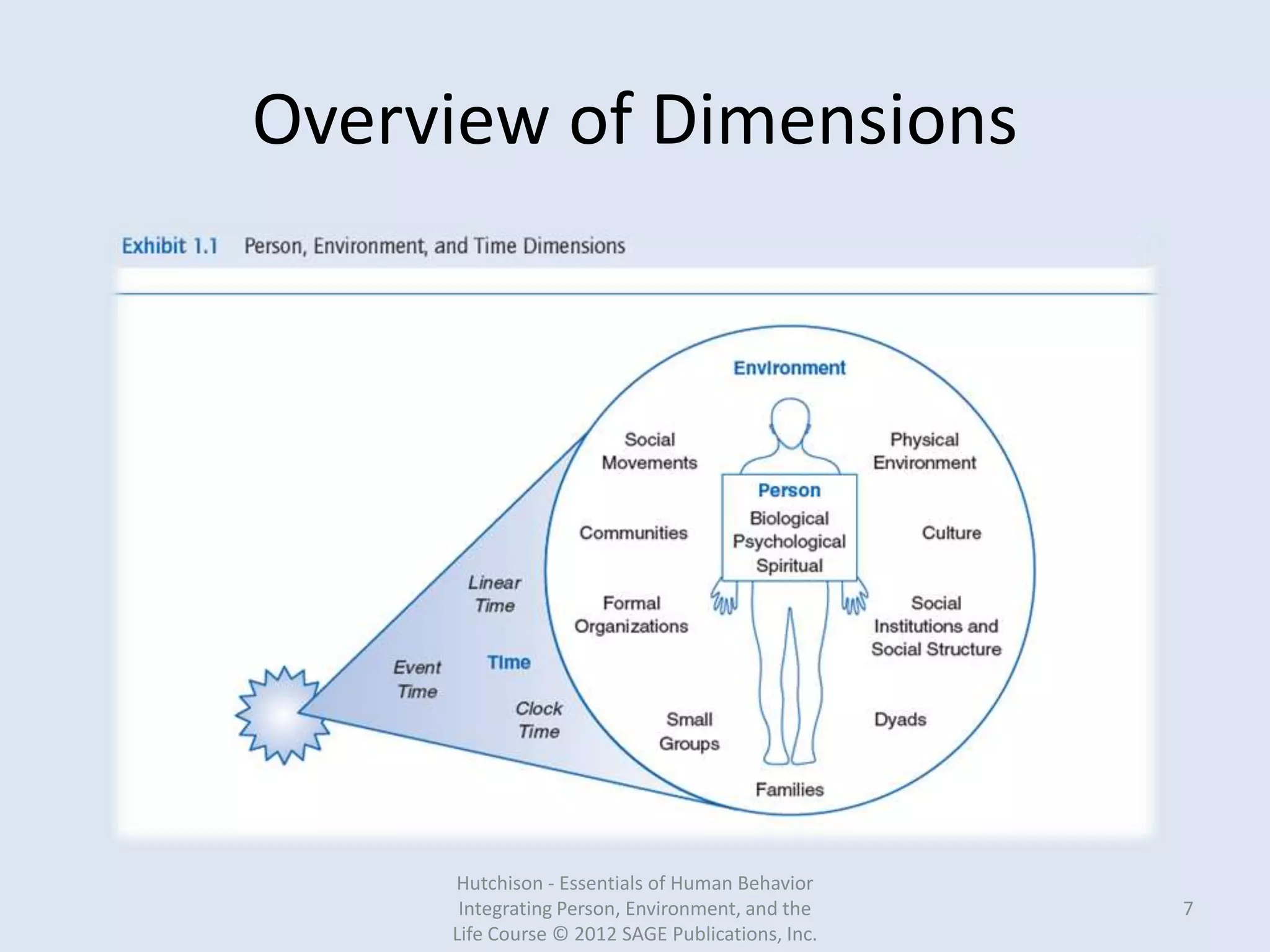
Overview of Dimensions
Hutchison - Essentials of Human Behavior
Integrating Person, Environment, and the
Life Course © 2012 SAGE Publications, Inc.
7
A Caveat
• We should know what we don’t know
• Acknowledge the complexity and mystery of humans
and the world in which we live
• Competence is important, but we should also be
sensitive to “overconfident assertions of certainty”
about others and their behaviors
(Karen Armstrong in “Twelve Steps to a Compassionate Life” 2010 p. 128)
Social Locations
• Where we fit in a system of social identities, such as:
ethnicity gender
social class sexual orientation
religion ability/disability
age race
• How our own particular social locations shape:
how we see the world
what we notice
how we interpret what we “see.”
Hutchison - Essentials of Human Behavior
Integrating Person, Environment, and the
Life Course © 2012 SAGE Publications, Inc.
9
Theory
• Helps organize and make sense of situations
• Gives us a framework for interpreting person
and environment and planning interventions
• Model - visual representation of the
relationships between concepts
• Paradigm - a way of seeing the world
• Perspective - an emphasis or a view
Hutchison - Essentials of Human Behavior
Integrating Person, Environment, and the
Life Course © 2012 SAGE Publications, Inc.
10
Evaluating Theory
• Coherence and conceptual clarity
• Testability and evidence of empirical support
• Comprehensiveness
• Consistency with social work’s emphasis on
diversity and power arrangements
• Usefulness for social work practice
Hutchison - Essentials of Human Behavior
Integrating Person, Environment, and the
Life Course © 2012 SAGE Publications, Inc.
11
This Semester…
• What affect can alcohol consumption by a mother have on a
fetus and an infant?
• What is the nature-nurture controversy?
• What language skills can we expect from a typically developing
9-year-old?
• What is the social work perspective on abortion?
• What did Carl Rogers have to say about people?
• How can we evaluate theory?
• What is intelligence?
• What is disproportionality?
• What does gang culture have to do with racial oppression?
• What are some possible outcomes of unplanned pregnancy in
adolescence?
• Are girls more self-critical of their appearance than boys?
This Semester…
• How do people develop morally?
• Is there a correlation between adolescent suicide rates
and ethnicity?
• How can we empower homeless youth?
• What is the theory of intersectionality all about?
• Is there a double-standard of aging?
• Why is HIV/AIDS out of control in Black America?
• What do some social theories have to say about poverty?
• Is there a “gay lifestyle?”
• How do we promote a wellness perspective in older
adulthood?
• What are some major problems faced by older people?
• And much more…

Ch 1 ppt Setting the Stage Multidimensional Approach of Generalist Practice

  • 1.
    Chapter 1  Setting theStage A Multidimensional Approach
  • 2.
    SW Steps (The PlannedChange Process) • Engagement • Assessment • Planning • Intervention • Evaluation • Termination  involves basic knowledge and assumptions about human behavior
  • 3.
    SW is amultifaceted profession Swers need a multidimensional, multi-theoretical understanding of human behavior Hutchison - Essentials of Human Behavior Integrating Person, Environment, and the Life Course © 2012 SAGE Publications, Inc. 3
  • 4.
    Dimensions • Interrelated • Whatdo we focus on? Why? – Historically? Currently? Hutchison - Essentials of Human Behavior Integrating Person, Environment, and the Life Course © 2012 SAGE Publications, Inc. 4 Personal Environmental Time Biological Psychological Spiritual Physical Cultural Social etc. Clock Event Linear
  • 5.
    Dimensional Interactions • Bio/psycho/socialdevelopmental dimensions affect each other Poverty SA HIV Pregnancy EmploymentDepression Development Intellectual disability Abuse Positive/ negative reinforcement Peers Puberty Development Identity
  • 6.
    Manisha’s Story Hutchison -Essentials of Human Behavior Integrating Person, Environment, and the Life Course © 2012 SAGE Publications, Inc. 6
  • 7.
    Overview of Dimensions Hutchison- Essentials of Human Behavior Integrating Person, Environment, and the Life Course © 2012 SAGE Publications, Inc. 7
  • 8.
    A Caveat • Weshould know what we don’t know • Acknowledge the complexity and mystery of humans and the world in which we live • Competence is important, but we should also be sensitive to “overconfident assertions of certainty” about others and their behaviors (Karen Armstrong in “Twelve Steps to a Compassionate Life” 2010 p. 128)
  • 9.
    Social Locations • Wherewe fit in a system of social identities, such as: ethnicity gender social class sexual orientation religion ability/disability age race • How our own particular social locations shape: how we see the world what we notice how we interpret what we “see.” Hutchison - Essentials of Human Behavior Integrating Person, Environment, and the Life Course © 2012 SAGE Publications, Inc. 9
  • 10.
    Theory • Helps organizeand make sense of situations • Gives us a framework for interpreting person and environment and planning interventions • Model - visual representation of the relationships between concepts • Paradigm - a way of seeing the world • Perspective - an emphasis or a view Hutchison - Essentials of Human Behavior Integrating Person, Environment, and the Life Course © 2012 SAGE Publications, Inc. 10
  • 11.
    Evaluating Theory • Coherenceand conceptual clarity • Testability and evidence of empirical support • Comprehensiveness • Consistency with social work’s emphasis on diversity and power arrangements • Usefulness for social work practice Hutchison - Essentials of Human Behavior Integrating Person, Environment, and the Life Course © 2012 SAGE Publications, Inc. 11
  • 12.
    This Semester… • Whataffect can alcohol consumption by a mother have on a fetus and an infant? • What is the nature-nurture controversy? • What language skills can we expect from a typically developing 9-year-old? • What is the social work perspective on abortion? • What did Carl Rogers have to say about people? • How can we evaluate theory? • What is intelligence? • What is disproportionality? • What does gang culture have to do with racial oppression? • What are some possible outcomes of unplanned pregnancy in adolescence? • Are girls more self-critical of their appearance than boys?
  • 13.
    This Semester… • Howdo people develop morally? • Is there a correlation between adolescent suicide rates and ethnicity? • How can we empower homeless youth? • What is the theory of intersectionality all about? • Is there a double-standard of aging? • Why is HIV/AIDS out of control in Black America? • What do some social theories have to say about poverty? • Is there a “gay lifestyle?” • How do we promote a wellness perspective in older adulthood? • What are some major problems faced by older people? • And much more…