Transition Theory

Schlossberg Waters and Goodman
             (1995)
An Overview of Schlossberg’s
          Transition Theory
• Transition: any event, or non-event that
  results in changed
  relationships, routines, assumptions, and roles
• If an individual does not recognise an event
  etc as a transition then it is not considered to
  be a transition but a ‘change’
• According to Schlossberg, it important to
  understand the meaning that a transition has
  for a particular individual
• To do this involves considering the
  1. type
  2. context
  3. impact of the transition
1. Type of transition

– anticipated - occur predictably
– unanticipated - not predictable or scheduled
– chronic “hassles” - pervasive and continuous
– non-event - expected but do not occur
2. Context
• Identify the relationship [or context] of the
  individual to the event or non-event resulting
  in changes
3. Impact of the transition
• Assess the impact that the transition has on the
  individual to determine the degree to which a
  transition alters daily life.
• Both positive and negative transitions, as perceived by
  the individual, produce stress; the impact of such stress
  is dependent on the ratio of the individual’s assets and
  liabilities
• Assets and Liabilities: The balance between recent
  positive and negative affective experiences that more
  effectively predicts the individuals subjective sense of
  well-being that either type of experience alone
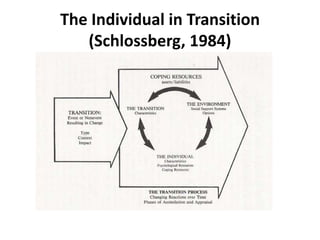
  (Schlossberg, 1984) – see diagram over
The Individual in Transition
   (Schlossberg, 1984)
The Individual in Transition: A
Detailed Look (Schlossberg, 1984)
Revised theory
• theory was revised in 1989 and 1995, the latter with
  the help of Waters and Goodman (1995)
• the new conceptualized theory: three components:
   – approaching change
   – taking stock - the 4 S’s: situation, self, support, and
     strategies (see next slide)
   – taking charge – moving in, moving through, and moving
     out
      • moving in - learn the ropes to become familiar with the
        rules, regulations, norms, and expectation of the new systems
      • moving through - survival mode
      • moving out – may experience feelings of grief event if the
        individual perceives the transition to be a positive one and self
        initiated
Coping with transitions –
    assets/libilities
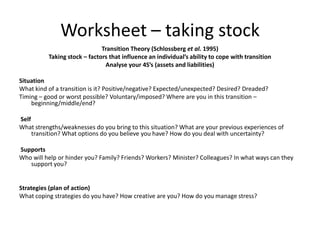
Worksheet – taking stock
                              Transition Theory (Schlossberg et al. 1995)
          Taking stock – factors that influence an individual’s ability to cope with transition
                               Analyse your 4S’s (assets and liabilities)

Situation
What kind of a transition is it? Positive/negative? Expected/unexpected? Desired? Dreaded?
Timing – good or worst possible? Voluntary/imposed? Where are you in this transition –
    beginning/middle/end?

Self
What strengths/weaknesses do you bring to this situation? What are your previous experiences of
     transition? What options do you believe you have? How do you deal with uncertainty?

Supports
Who will help or hinder you? Family? Friends? Workers? Minister? Colleagues? In what ways can they
   support you?


Strategies (plan of action)
What coping strategies do you have? How creative are you? How do you manage stress?

Schlossberg

  • 1.
  • 2.
    An Overview ofSchlossberg’s Transition Theory • Transition: any event, or non-event that results in changed relationships, routines, assumptions, and roles • If an individual does not recognise an event etc as a transition then it is not considered to be a transition but a ‘change’
  • 3.
    • According toSchlossberg, it important to understand the meaning that a transition has for a particular individual • To do this involves considering the 1. type 2. context 3. impact of the transition
  • 4.
    1. Type oftransition – anticipated - occur predictably – unanticipated - not predictable or scheduled – chronic “hassles” - pervasive and continuous – non-event - expected but do not occur
  • 5.
    2. Context • Identifythe relationship [or context] of the individual to the event or non-event resulting in changes
  • 6.
    3. Impact ofthe transition • Assess the impact that the transition has on the individual to determine the degree to which a transition alters daily life. • Both positive and negative transitions, as perceived by the individual, produce stress; the impact of such stress is dependent on the ratio of the individual’s assets and liabilities • Assets and Liabilities: The balance between recent positive and negative affective experiences that more effectively predicts the individuals subjective sense of well-being that either type of experience alone (Schlossberg, 1984) – see diagram over
  • 7.
    The Individual inTransition (Schlossberg, 1984)
  • 8.
    The Individual inTransition: A Detailed Look (Schlossberg, 1984)
  • 9.
    Revised theory • theorywas revised in 1989 and 1995, the latter with the help of Waters and Goodman (1995) • the new conceptualized theory: three components: – approaching change – taking stock - the 4 S’s: situation, self, support, and strategies (see next slide) – taking charge – moving in, moving through, and moving out • moving in - learn the ropes to become familiar with the rules, regulations, norms, and expectation of the new systems • moving through - survival mode • moving out – may experience feelings of grief event if the individual perceives the transition to be a positive one and self initiated
  • 10.
    Coping with transitions– assets/libilities
  • 11.
    Worksheet – takingstock Transition Theory (Schlossberg et al. 1995) Taking stock – factors that influence an individual’s ability to cope with transition Analyse your 4S’s (assets and liabilities) Situation What kind of a transition is it? Positive/negative? Expected/unexpected? Desired? Dreaded? Timing – good or worst possible? Voluntary/imposed? Where are you in this transition – beginning/middle/end? Self What strengths/weaknesses do you bring to this situation? What are your previous experiences of transition? What options do you believe you have? How do you deal with uncertainty? Supports Who will help or hinder you? Family? Friends? Workers? Minister? Colleagues? In what ways can they support you? Strategies (plan of action) What coping strategies do you have? How creative are you? How do you manage stress?