ANGEL ANTHONY R. CAMUA
BSED-BIOLOGICAL SCIENCE
VALUES
FORMATION
and YOU
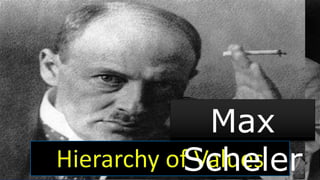
Max
Scheler
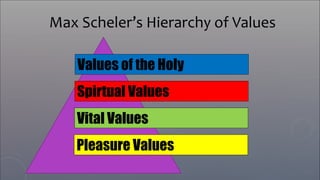
Max Scheler’s Hierarchy of Values
Values of the Holy
Spirtual Values
Vital Values
Pleasure Values
Sensual Feelings
Pleasure or Pain
Pleasant vs Unpleasant
Agreeable vs Disagreeable
BACK
Health
Well-being and
Feelings
BACK
Spiritual Acts of Prefering,
Loving, and Sharing
BACK
“Absolute Objects”
BACK
VALUES CLARIFICATION
To make students aware of their own personally held
values and of the way in which their values compare to
those of friends, adults, different groups in society, and
even other societies in other times. It is hoped that, as
this awareness increases, students will reconsider and
perhaps modify poorly founded values while, at the same
time, hold more confidently values which stand the test
of review and comparison.
PROCEDURES THAT ESTABLISH A CLIMATE
OF PSYCHOLOGICAL SAFETY
Nonjudgemental attitudes. Teachers must refrain from unnecessary
comments such as “That’s good,” or “That’s bad,” while responding
to a child’s idea.
Manifestations of concern. Teachers should show interest in the
students’ ideas by listening carefully and remembering what they
say. The student will feel flattered by this recognition.
Opportunities for sharing ideas. Teachers should encourage children
to share their ideas and feelings in many different situations during
the school day.
ARE YOU PROUD OF THAT?
DOES THAT MAKE YOU FEEL GOOD?
HOW DID YOU FEEL WHEN THAT HAPPENED?
DID YOU THINK OF ANY OTHER WAY TO DO IT?
DO YOU HAVE A REASON FOR DOING (FOR SAYING) THAT?
WOULD YOU DO THE SAME THING AGAIN?
HOW DO YOU KNOW IT’S RIGHT (OR GOOD)?”
WHAT WOULD HAPPEN IF YOUR IDEAS WORKED OUT?
DID YOU DO IT YOURSELF?
REFERENCES
• 1. Krol, R. (2004). The Issue of Value According to Max
Scheler and Nicolai Hartmann.
• 2. Dy, M. (1999). Max Sheler’s Ethics of Love and
Solidarity. Ateneo de Manila Publishing House.
• 3. Raths, L.E.,. Harmin, M., & Simon, S.B. Values and
Teaching (2nd ed.),. Columbus, OH: Charles E. Merrill,
1978)

Hierarchy of Values

  • 2.
    ANGEL ANTHONY R.CAMUA BSED-BIOLOGICAL SCIENCE VALUES FORMATION and YOU
  • 4.
  • 5.
    Max Scheler’s Hierarchyof Values Values of the Holy Spirtual Values Vital Values Pleasure Values
  • 6.
    Sensual Feelings Pleasure orPain Pleasant vs Unpleasant Agreeable vs Disagreeable BACK
  • 7.
  • 8.
    Spiritual Acts ofPrefering, Loving, and Sharing BACK
  • 9.
  • 12.
    VALUES CLARIFICATION To makestudents aware of their own personally held values and of the way in which their values compare to those of friends, adults, different groups in society, and even other societies in other times. It is hoped that, as this awareness increases, students will reconsider and perhaps modify poorly founded values while, at the same time, hold more confidently values which stand the test of review and comparison.
  • 13.
    PROCEDURES THAT ESTABLISHA CLIMATE OF PSYCHOLOGICAL SAFETY Nonjudgemental attitudes. Teachers must refrain from unnecessary comments such as “That’s good,” or “That’s bad,” while responding to a child’s idea. Manifestations of concern. Teachers should show interest in the students’ ideas by listening carefully and remembering what they say. The student will feel flattered by this recognition. Opportunities for sharing ideas. Teachers should encourage children to share their ideas and feelings in many different situations during the school day.
  • 14.
    ARE YOU PROUDOF THAT? DOES THAT MAKE YOU FEEL GOOD? HOW DID YOU FEEL WHEN THAT HAPPENED? DID YOU THINK OF ANY OTHER WAY TO DO IT? DO YOU HAVE A REASON FOR DOING (FOR SAYING) THAT? WOULD YOU DO THE SAME THING AGAIN? HOW DO YOU KNOW IT’S RIGHT (OR GOOD)?” WHAT WOULD HAPPEN IF YOUR IDEAS WORKED OUT? DID YOU DO IT YOURSELF?
  • 15.
    REFERENCES • 1. Krol,R. (2004). The Issue of Value According to Max Scheler and Nicolai Hartmann. • 2. Dy, M. (1999). Max Sheler’s Ethics of Love and Solidarity. Ateneo de Manila Publishing House. • 3. Raths, L.E.,. Harmin, M., & Simon, S.B. Values and Teaching (2nd ed.),. Columbus, OH: Charles E. Merrill, 1978)