HUMAN TEETH
Prepared : AHMED
AHBAYATI.
UG:1330089
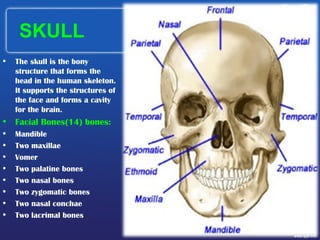
SKULL
• The skull is the bony
structure that forms the
head in the human skeleton.
It supports the structures of
the face and forms a cavity
for the brain.
• Facial Bones(14) bones:
• Mandible
• Two maxillae
• Vomer
• Two palatine bones
• Two nasal bones
• Two zygomatic bones
• Two nasal conchae
• Two lacrimal bones
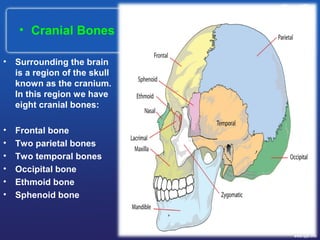
• Cranial Bones
• Surrounding the brain
is a region of the skull
known as the cranium.
In this region we have
eight cranial bones:
• Frontal bone
• Two parietal bones
• Two temporal bones
• Occipital bone
• Ethmoid bone
• Sphenoid bone
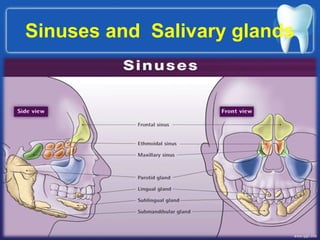
Sinuses and Salivary glands
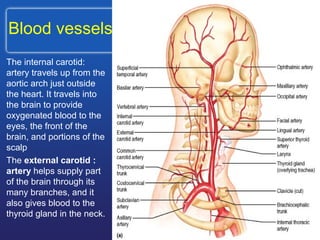
Blood vessels
The internal carotid:
artery travels up from the
aortic arch just outside
the heart. It travels into
the brain to provide
oxygenated blood to the
eyes, the front of the
brain, and portions of the
scalp
The external carotid :
artery helps supply part
of the brain through its
many branches, and it
also gives blood to the
thyroid gland in the neck.
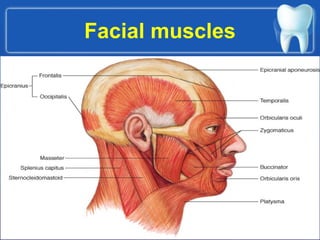
Facial muscles
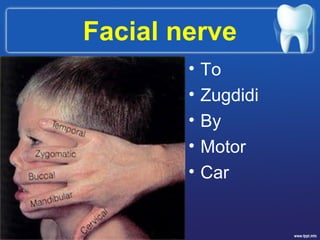
Facial nerve
• To
• Zugdidi
• By
• Motor
• Car
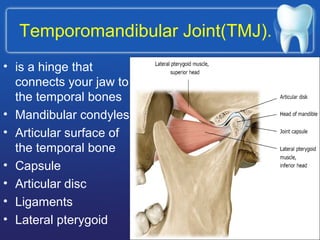
Temporomandibular Joint(TMJ).
• is a hinge that
connects your jaw to
the temporal bones
• Mandibular condyles
• Articular surface of
the temporal bone
• Capsule
• Articular disc
• Ligaments
• Lateral pterygoid
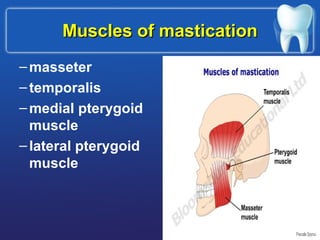
Muscles of masticationMuscles of mastication
–masseter
–temporalis
–medial pterygoid
muscle
–lateral pterygoid
muscle
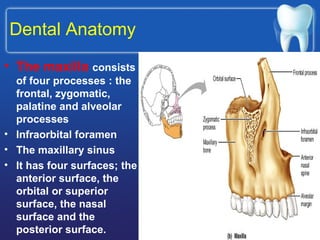
Dental Anatomy
• The maxilla consists
of four processes : the
frontal, zygomatic,
palatine and alveolar
processes
• Infraorbital foramen
• The maxillary sinus
• It has four surfaces; the
anterior surface, the
orbital or superior
surface, the nasal
surface and the
posterior surface.
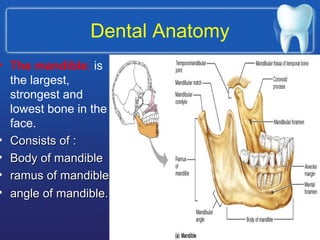
Dental Anatomy
• The mandible: is
the largest,
strongest and
lowest bone in the
face.
• Consists of :Consists of :
• Body of mandibleBody of mandible
• ramus of mandibleramus of mandible
• angle of mandibleangle of mandible..
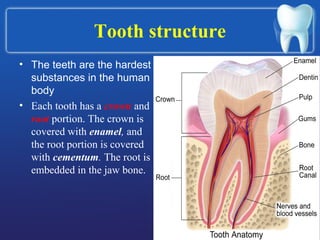
Tooth structure
• The teeth are the hardest
substances in the human
body
• Each tooth has a crown and
root portion. The crown is
covered with enamel, and
the root portion is covered
with cementum. The root is
embedded in the jaw bone.
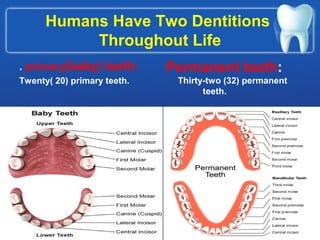
. primary(baby) teeth:
Twenty( 20) primary teeth.
Permanent teeth:
Thirty-two (32) permanent
teeth.
Humans Have Two Dentitions
Throughout Life
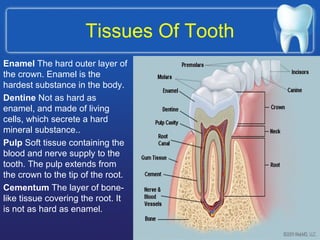
Tissues Of Tooth
Enamel The hard outer layer of
the crown. Enamel is the
hardest substance in the body.
Dentine Not as hard as
enamel, and made of living
cells, which secrete a hard
mineral substance..
Pulp Soft tissue containing the
blood and nerve supply to the
tooth. The pulp extends from
the crown to the tip of the root.
Cementum The layer of bone-
like tissue covering the root. It
is not as hard as enamel.
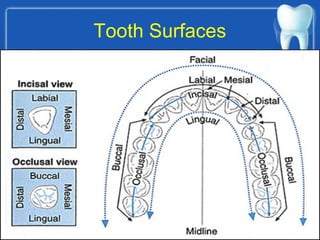
Tooth Surfaces
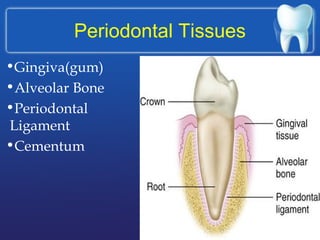
Periodontal Tissues
•Gingiva(gum)
•Alveolar Bone
•Periodontal
Ligament
•Cementum
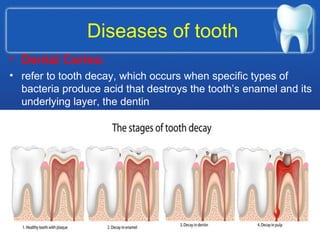
Diseases of tooth
• Dental Caries:
• refer to tooth decay, which occurs when specific types of
bacteria produce acid that destroys the tooth’s enamel and its
underlying layer, the dentin
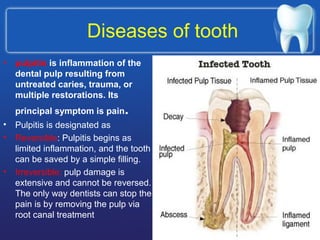
Diseases of tooth
• pulpitis is inflammation of the
dental pulp resulting from
untreated caries, trauma, or
multiple restorations. Its
principal symptom is pain.
• Pulpitis is designated as
• Reversible: Pulpitis begins as
limited inflammation, and the tooth
can be saved by a simple filling.
• Irreversible: pulp damage is
extensive and cannot be reversed.
The only way dentists can stop the
pain is by removing the pulp via
root canal treatment
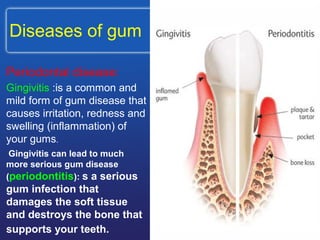
Diseases of gum
Periodontal disease:
Gingivitis :is a common and
mild form of gum disease that
causes irritation, redness and
swelling (inflammation) of
your gums.
Gingivitis can lead to much
more serious gum disease
(periodontitis): s a serious
gum infection that
damages the soft tissue
and destroys the bone that
supports your teeth.
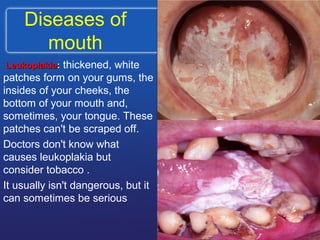
Diseases of
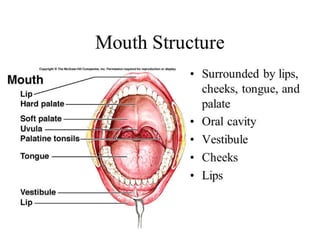
mouth
LeukoplakiaLeukoplakia:: thickened, white
patches form on your gums, the
insides of your cheeks, the
bottom of your mouth and,
sometimes, your tongue. These
patches can't be scraped off.
Doctors don't know what
causes leukoplakia but
consider tobacco .
It usually isn't dangerous, but it
can sometimes be serious
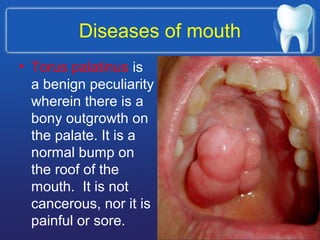
Diseases of mouth
• Torus palatinus is
a benign peculiarity
wherein there is a
bony outgrowth on
the palate. It is a
normal bump on
the roof of the
mouth. It is not
cancerous, nor it is
painful or sore.
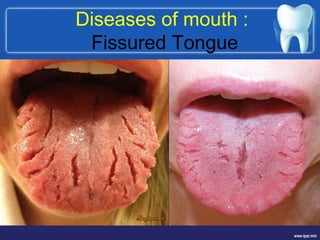
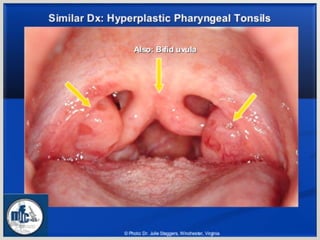
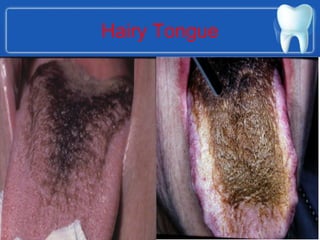
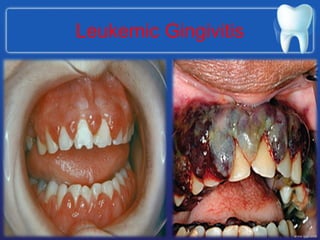
Diseases of mouth :
Fissured Tongue
Hairy Tongue
Leukemic Gingivitis
Skull and tooth

Skull and tooth

  • 1.
    HUMAN TEETH Prepared :AHMED AHBAYATI. UG:1330089
  • 2.
    SKULL • The skullis the bony structure that forms the head in the human skeleton. It supports the structures of the face and forms a cavity for the brain. • Facial Bones(14) bones: • Mandible • Two maxillae • Vomer • Two palatine bones • Two nasal bones • Two zygomatic bones • Two nasal conchae • Two lacrimal bones
  • 3.
    • Cranial Bones •Surrounding the brain is a region of the skull known as the cranium. In this region we have eight cranial bones: • Frontal bone • Two parietal bones • Two temporal bones • Occipital bone • Ethmoid bone • Sphenoid bone
  • 4.
  • 6.
    Blood vessels The internalcarotid: artery travels up from the aortic arch just outside the heart. It travels into the brain to provide oxygenated blood to the eyes, the front of the brain, and portions of the scalp The external carotid : artery helps supply part of the brain through its many branches, and it also gives blood to the thyroid gland in the neck.
  • 7.
  • 8.
    Facial nerve • To •Zugdidi • By • Motor • Car
  • 9.
    Temporomandibular Joint(TMJ). • isa hinge that connects your jaw to the temporal bones • Mandibular condyles • Articular surface of the temporal bone • Capsule • Articular disc • Ligaments • Lateral pterygoid
  • 10.
    Muscles of masticationMusclesof mastication –masseter –temporalis –medial pterygoid muscle –lateral pterygoid muscle
  • 11.
    Dental Anatomy • Themaxilla consists of four processes : the frontal, zygomatic, palatine and alveolar processes • Infraorbital foramen • The maxillary sinus • It has four surfaces; the anterior surface, the orbital or superior surface, the nasal surface and the posterior surface.
  • 12.
    Dental Anatomy • Themandible: is the largest, strongest and lowest bone in the face. • Consists of :Consists of : • Body of mandibleBody of mandible • ramus of mandibleramus of mandible • angle of mandibleangle of mandible..
  • 14.
    Tooth structure • Theteeth are the hardest substances in the human body • Each tooth has a crown and root portion. The crown is covered with enamel, and the root portion is covered with cementum. The root is embedded in the jaw bone.
  • 15.
    . primary(baby) teeth: Twenty(20) primary teeth. Permanent teeth: Thirty-two (32) permanent teeth. Humans Have Two Dentitions Throughout Life
  • 16.
    Tissues Of Tooth EnamelThe hard outer layer of the crown. Enamel is the hardest substance in the body. Dentine Not as hard as enamel, and made of living cells, which secrete a hard mineral substance.. Pulp Soft tissue containing the blood and nerve supply to the tooth. The pulp extends from the crown to the tip of the root. Cementum The layer of bone- like tissue covering the root. It is not as hard as enamel.
  • 17.
  • 18.
  • 19.
    Diseases of tooth •Dental Caries: • refer to tooth decay, which occurs when specific types of bacteria produce acid that destroys the tooth’s enamel and its underlying layer, the dentin
  • 20.
    Diseases of tooth •pulpitis is inflammation of the dental pulp resulting from untreated caries, trauma, or multiple restorations. Its principal symptom is pain. • Pulpitis is designated as • Reversible: Pulpitis begins as limited inflammation, and the tooth can be saved by a simple filling. • Irreversible: pulp damage is extensive and cannot be reversed. The only way dentists can stop the pain is by removing the pulp via root canal treatment
  • 21.
    Diseases of gum Periodontaldisease: Gingivitis :is a common and mild form of gum disease that causes irritation, redness and swelling (inflammation) of your gums. Gingivitis can lead to much more serious gum disease (periodontitis): s a serious gum infection that damages the soft tissue and destroys the bone that supports your teeth.
  • 22.
    Diseases of mouth LeukoplakiaLeukoplakia:: thickened,white patches form on your gums, the insides of your cheeks, the bottom of your mouth and, sometimes, your tongue. These patches can't be scraped off. Doctors don't know what causes leukoplakia but consider tobacco . It usually isn't dangerous, but it can sometimes be serious
  • 23.
    Diseases of mouth •Torus palatinus is a benign peculiarity wherein there is a bony outgrowth on the palate. It is a normal bump on the roof of the mouth. It is not cancerous, nor it is painful or sore.
  • 24.
    Diseases of mouth: Fissured Tongue
  • 26.
  • 27.