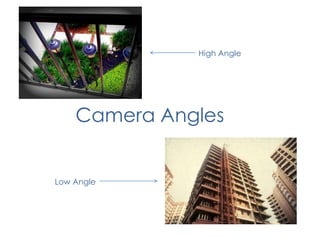
High Angle


    Camera Angles


Low Angle
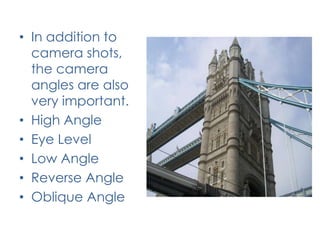
• In addition to
  camera shots,
  the camera
  angles are also
  very important.
• High Angle
• Eye Level
• Low Angle
• Reverse Angle
• Oblique Angle
High Angle & Eye Level Angle
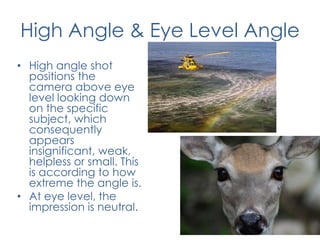
• High angle shot
  positions the
  camera above eye
  level looking down
  on the specific
  subject, which
  consequently
  appears
  insignificant, weak,
  helpless or small. This
  is according to how
  extreme the angle is.
• At eye level, the
  impression is neutral.
A Low Angle & Reverse Angle
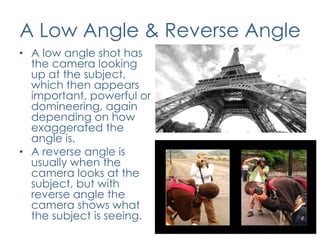
• A low angle shot has
  the camera looking
  up at the subject,
  which then appears
  important, powerful or
  domineering, again
  depending on how
  exaggerated the
  angle is.
• A reverse angle is
  usually when the
  camera looks at the
  subject, but with
  reverse angle the
  camera shows what
  the subject is seeing.
Oblique Angle
• The oblique angle is a shot by laterally
  tilting the camera frame and making the
  characters or objects look a skew.
Camera Angles
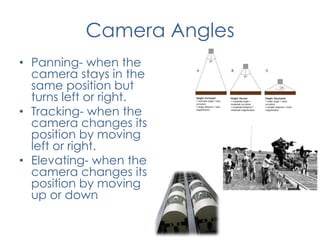
• Panning- when the
  camera stays in the
  same position but
  turns left or right.
• Tracking- when the
  camera changes its
  position by moving
  left or right.
• Elevating- when the
  camera changes its
  position by moving
  up or down
More Camera
    Angles
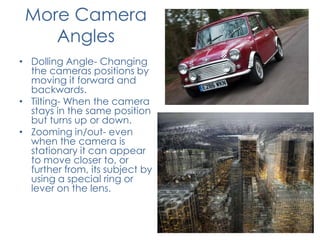
• Dolling Angle- Changing
  the cameras positions by
  moving it forward and
  backwards.
• Tilting- When the camera
  stays in the same position
  but turns up or down.
• Zooming in/out- even
  when the camera is
  stationary it can appear
  to move closer to, or
  further from, its subject by
  using a special ring or
  lever on the lens.

Camera angles

  • 1.
    High Angle Camera Angles Low Angle
  • 2.
    • In additionto camera shots, the camera angles are also very important. • High Angle • Eye Level • Low Angle • Reverse Angle • Oblique Angle
  • 3.
    High Angle &Eye Level Angle • High angle shot positions the camera above eye level looking down on the specific subject, which consequently appears insignificant, weak, helpless or small. This is according to how extreme the angle is. • At eye level, the impression is neutral.
  • 4.
    A Low Angle& Reverse Angle • A low angle shot has the camera looking up at the subject, which then appears important, powerful or domineering, again depending on how exaggerated the angle is. • A reverse angle is usually when the camera looks at the subject, but with reverse angle the camera shows what the subject is seeing.
  • 5.
    Oblique Angle • Theoblique angle is a shot by laterally tilting the camera frame and making the characters or objects look a skew.
  • 6.
    Camera Angles • Panning-when the camera stays in the same position but turns left or right. • Tracking- when the camera changes its position by moving left or right. • Elevating- when the camera changes its position by moving up or down
  • 7.
    More Camera Angles • Dolling Angle- Changing the cameras positions by moving it forward and backwards. • Tilting- When the camera stays in the same position but turns up or down. • Zooming in/out- even when the camera is stationary it can appear to move closer to, or further from, its subject by using a special ring or lever on the lens.