Camera LENSES
http://techxiz.blogspot.in/
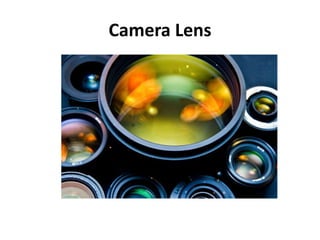
Camera Lens
What is camera lens?
• A camera lens (also known as
photographic lens or photographic objective)
is an optical lens or assembly of lenses used in
conjunction with a camera body and
mechanism to make images of objects either
on photographic film or on other media
capable of storing an image chemically or
electronically.
http://techxiz.blogspot.in/
History
• The invention of the camera in the early 19th
century led to an array of lens designs intended
for photography. The problems of photographic
lens design, creating a lens for a task that would
cover a large, flat image plane, were well known
even before the invention of photography due to
the development of lenses to work with the focal
plane of the camera obscura.
http://techxiz.blogspot.in/
There are four types of lenses
And they are:-
• Normal
• Wide angle
• Telephoto
• Zoom
http://techxiz.blogspot.in/
1.Normal Lens
• This lens is called “normal” because it has little if
any magnification compared to your eye
• This is the cheapest, and most often used lens
• It offers a very wide aperture (ie.- f1.8, f1.7, or
even f1.4
• This is the lens we have used up until this point
on the cameras in this class
• Has a focal length of 50mm
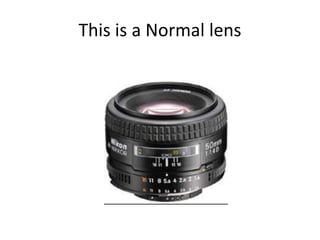
This is a Normal lens
2.Wide angle Lens
• Offers an increased angle of view.
• Allows you to take photos in an area
where space is limited.
• Offer a very good depth of field.
• Interesting effects,exaggerated sense of
perspective.
• Available in both rectilinear and fisheye
• Has a focal length of less than 50mm
(usually less than 35mm)
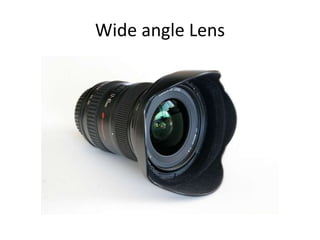
Wide angle Lens
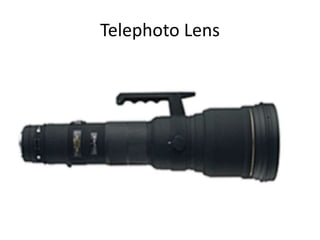
Telephoto Lens
• These lens range between 70 – 1000mm!
• They tend to give your photo a “flat” look
• You must use a very fast shutter speed with these
lenses over 200mm.
• These offer little depth of field.
• Allow you to get a photo without getting
too close to your subject.
• Larger lenses need a stand for the lens,
not the camera.
Telephoto Lens
Zoom Lens
• This lens has variable focal lengths
• Fewer lenses to carry
• You can do “cool” special effects with them.
• They tend not to have very wide maximum
apertures (ie f5.6).
http://techxiz.blogspot.in/

Camera lens

  • 1.
  • 2.
  • 3.
    What is cameralens? • A camera lens (also known as photographic lens or photographic objective) is an optical lens or assembly of lenses used in conjunction with a camera body and mechanism to make images of objects either on photographic film or on other media capable of storing an image chemically or electronically. http://techxiz.blogspot.in/
  • 4.
    History • The inventionof the camera in the early 19th century led to an array of lens designs intended for photography. The problems of photographic lens design, creating a lens for a task that would cover a large, flat image plane, were well known even before the invention of photography due to the development of lenses to work with the focal plane of the camera obscura. http://techxiz.blogspot.in/
  • 5.
    There are fourtypes of lenses And they are:- • Normal • Wide angle • Telephoto • Zoom http://techxiz.blogspot.in/
  • 6.
    1.Normal Lens • Thislens is called “normal” because it has little if any magnification compared to your eye • This is the cheapest, and most often used lens • It offers a very wide aperture (ie.- f1.8, f1.7, or even f1.4 • This is the lens we have used up until this point on the cameras in this class • Has a focal length of 50mm
  • 7.
    This is aNormal lens
  • 8.
    2.Wide angle Lens •Offers an increased angle of view. • Allows you to take photos in an area where space is limited. • Offer a very good depth of field. • Interesting effects,exaggerated sense of perspective. • Available in both rectilinear and fisheye • Has a focal length of less than 50mm (usually less than 35mm)
  • 9.
  • 10.
    Telephoto Lens • Theselens range between 70 – 1000mm! • They tend to give your photo a “flat” look • You must use a very fast shutter speed with these lenses over 200mm. • These offer little depth of field. • Allow you to get a photo without getting too close to your subject. • Larger lenses need a stand for the lens, not the camera.
  • 11.
  • 12.
    Zoom Lens • Thislens has variable focal lengths • Fewer lenses to carry • You can do “cool” special effects with them. • They tend not to have very wide maximum apertures (ie f5.6). http://techxiz.blogspot.in/