QI, EBP & Research: Knowing the DifferenceYvonne Wesley RN PhD FAANRBMC, Faculty Liaison2011
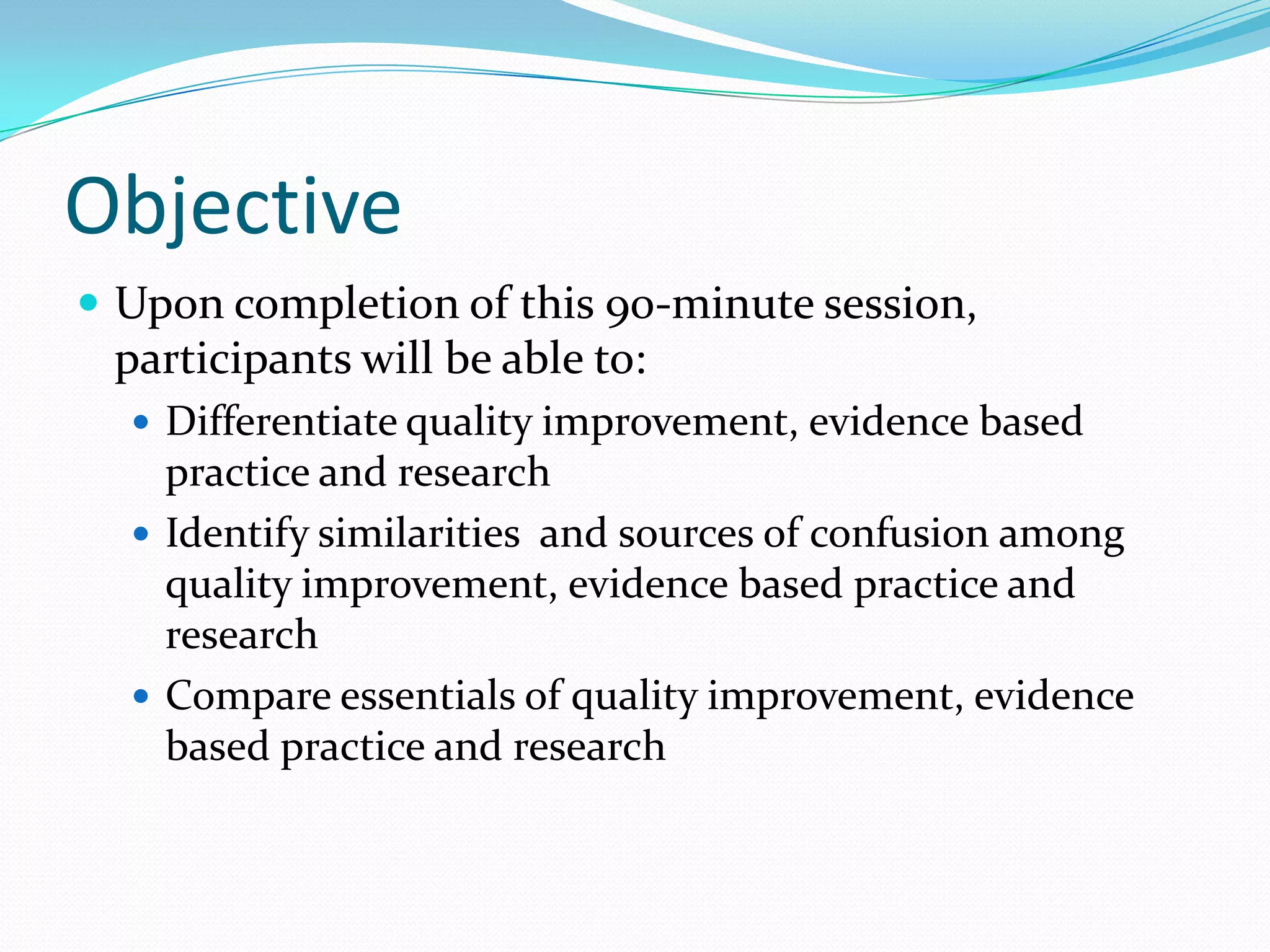
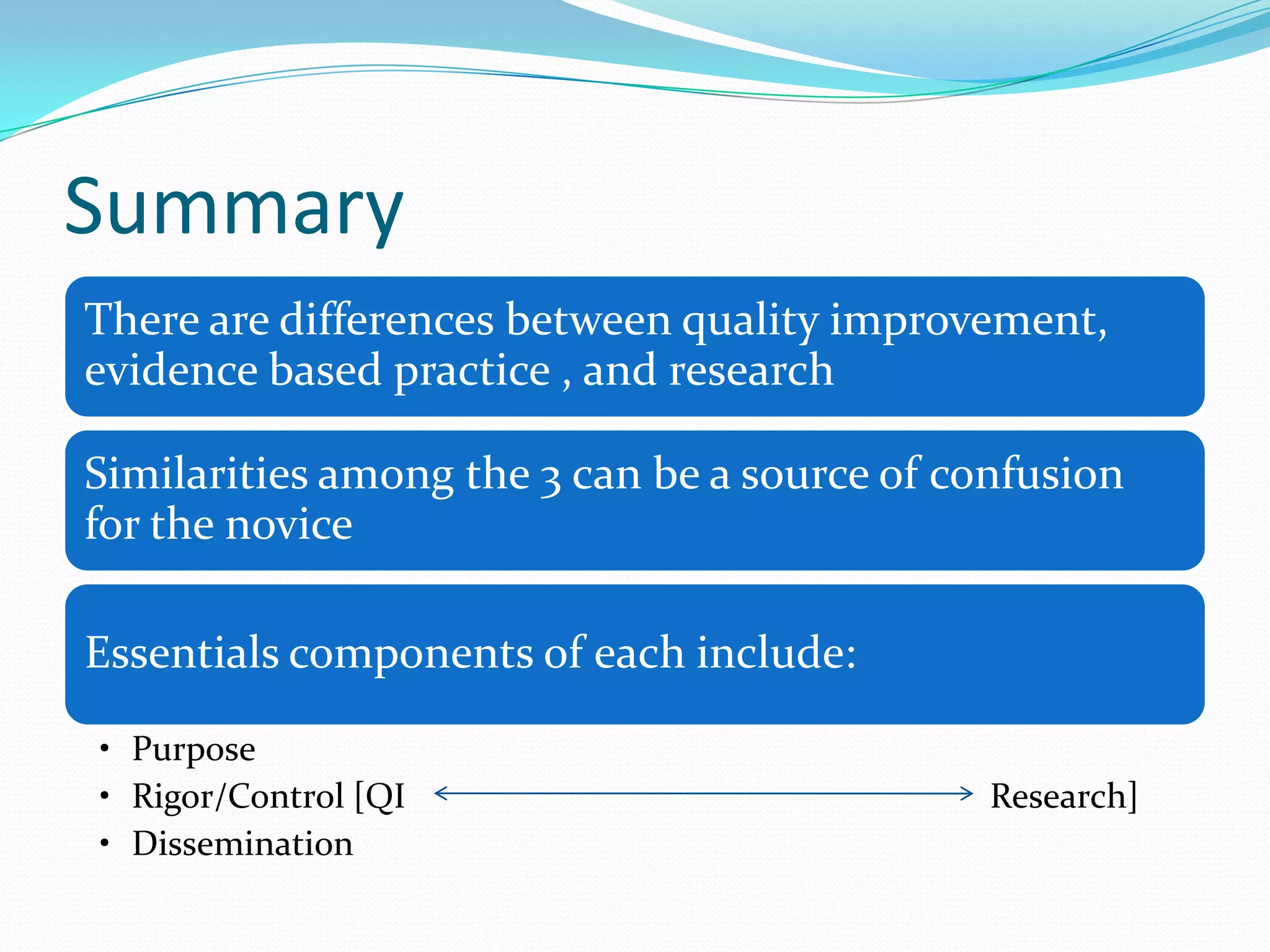
ObjectiveUpon completion of this 90-minute session, participants will be able to:Differentiate quality improvement, evidence based practice and researchIdentify similarities  and sources of confusion among quality improvement, evidence based practice and researchCompare essentials of quality improvement, evidence based practice and research
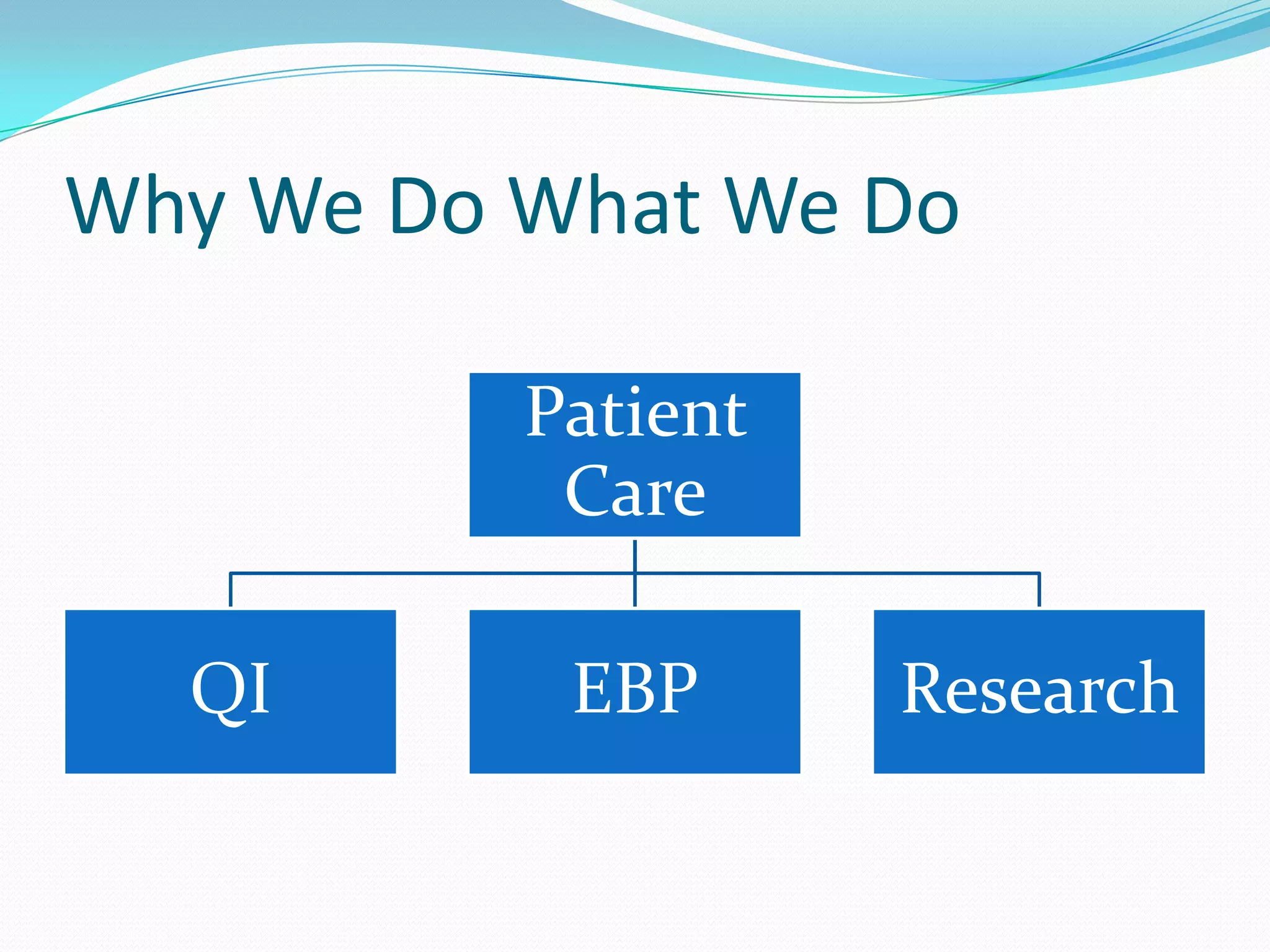
Why We Do What We Do
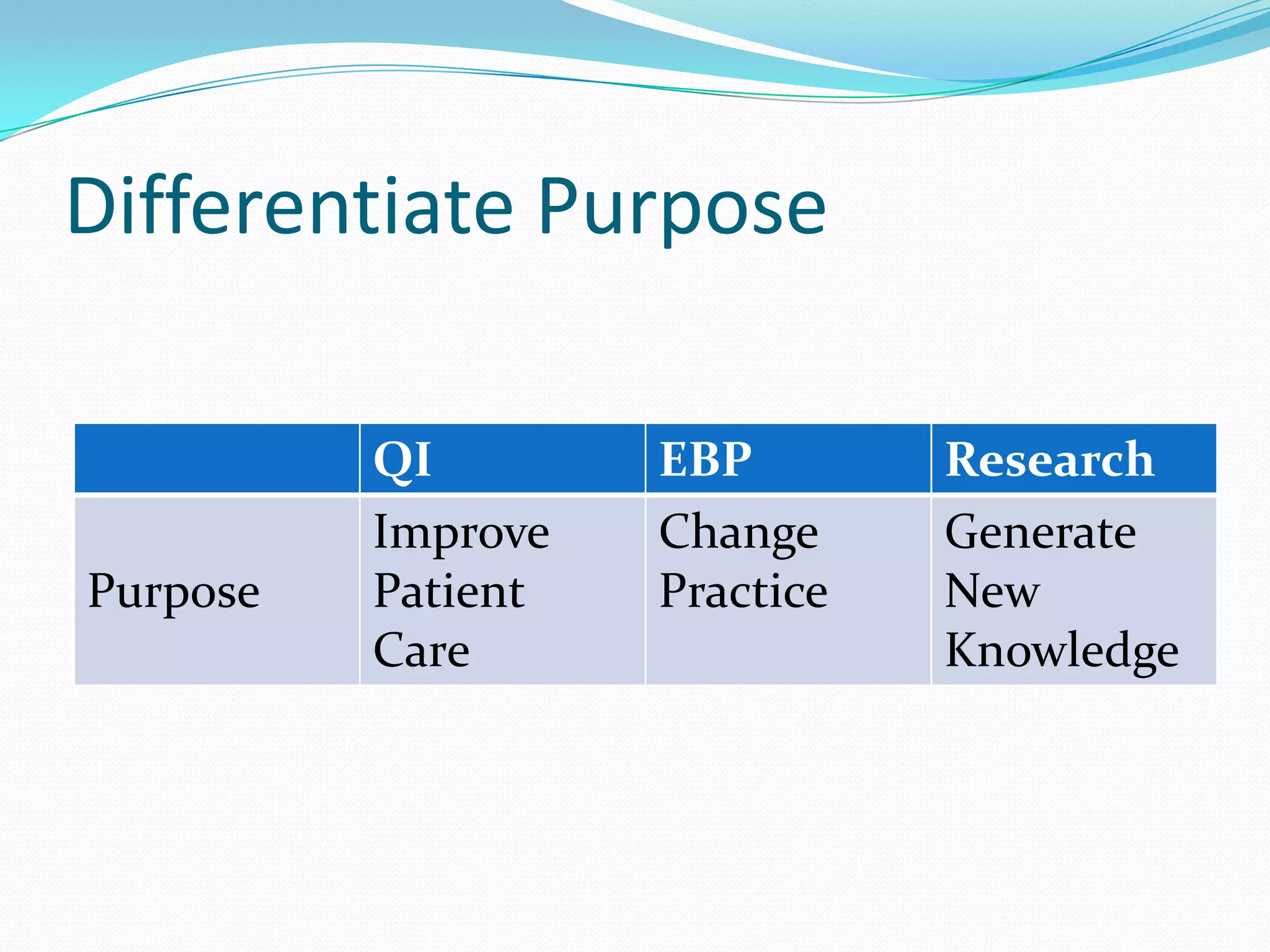
Differentiate Purpose
SimilaritiesScholarly ProcessMethodSample Data CollectionIRBResultsImplicationDissemination of Results
Sources of ConfusionHuman SubjectsAmount of risk or benefit to participantsConfidentiality/AnonymityGeneralizabilityAbility to get published.
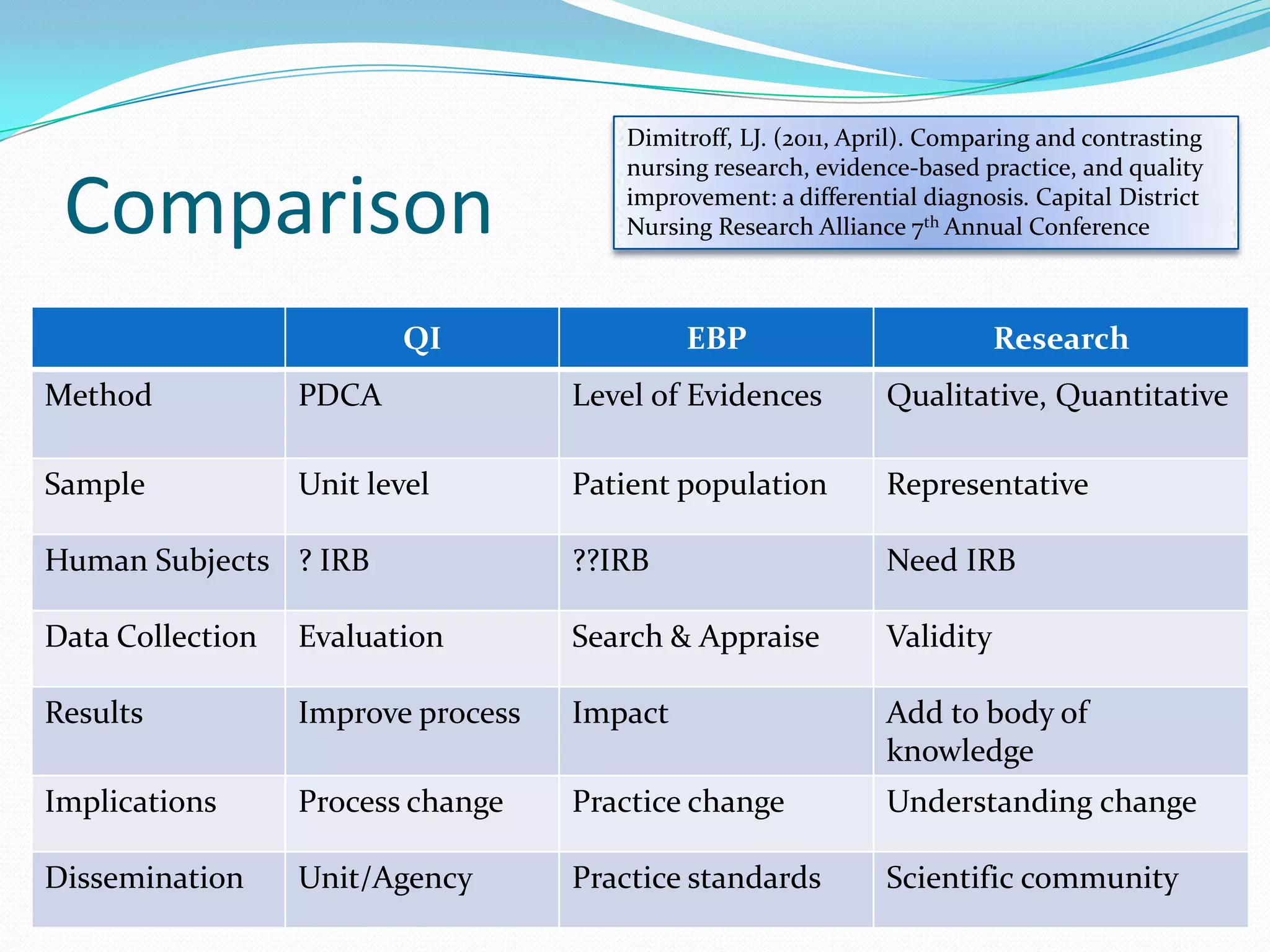
ComparisonDimitroff, LJ. (2011, April). Comparing and contrasting nursing research, evidence-based practice, and quality improvement: a differential diagnosis. Capital District Nursing Research Alliance 7th Annual Conference
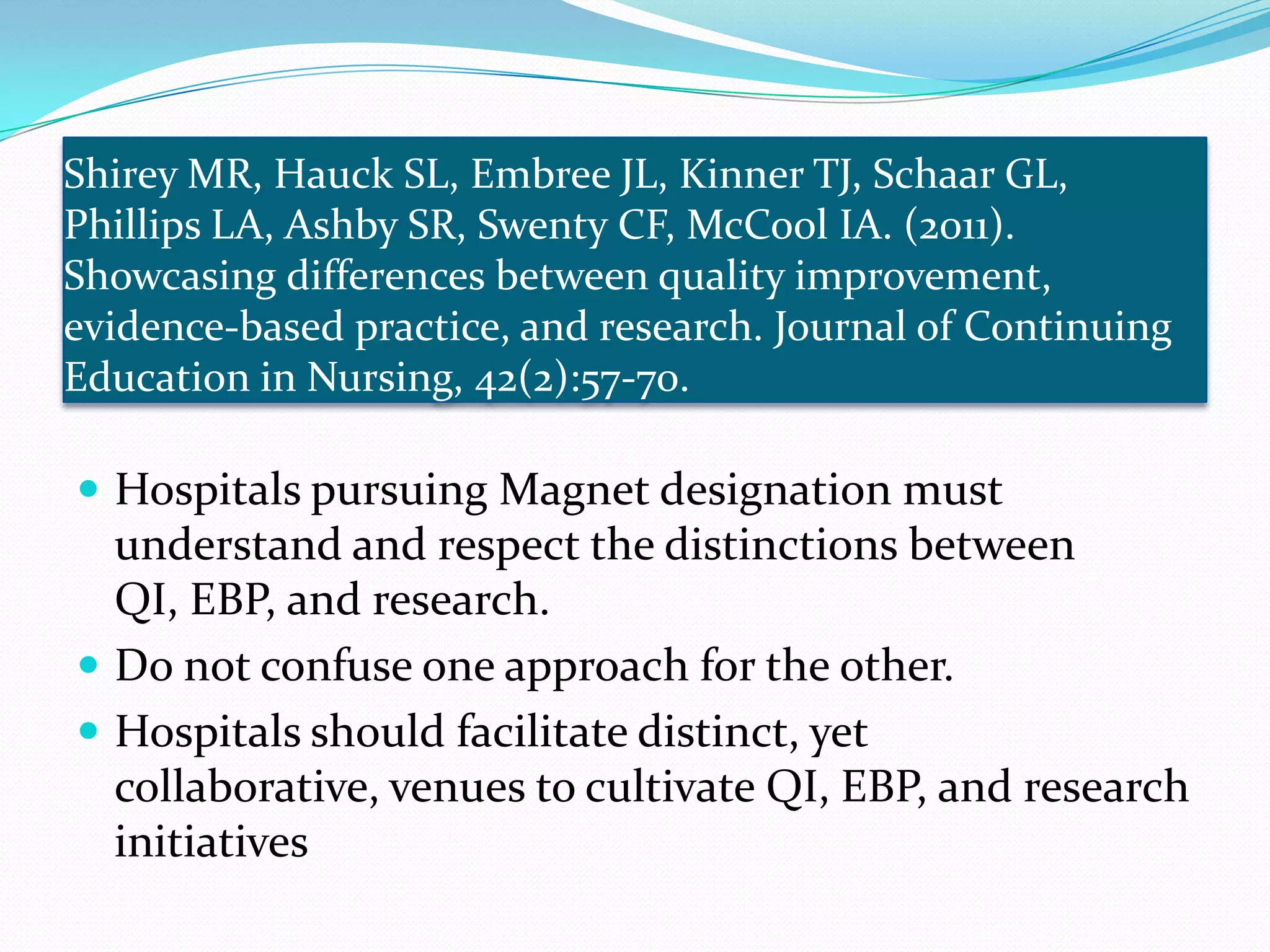
Shirey MR, Hauck SL, Embree JL, Kinner TJ, Schaar GL, Phillips LA, Ashby SR, Swenty CF, McCool IA. (2011). Showcasing differences between quality improvement, evidence-based practice, and research. Journal of Continuing Education in Nursing, 42(2):57-70. Hospitals pursuing Magnet designation must understand and respect the distinctions between QI, EBP, and research.Do not confuse one approach for the other. Hospitals should facilitate distinct, yet collaborative, venues to cultivate QI, EBP, and research initiatives
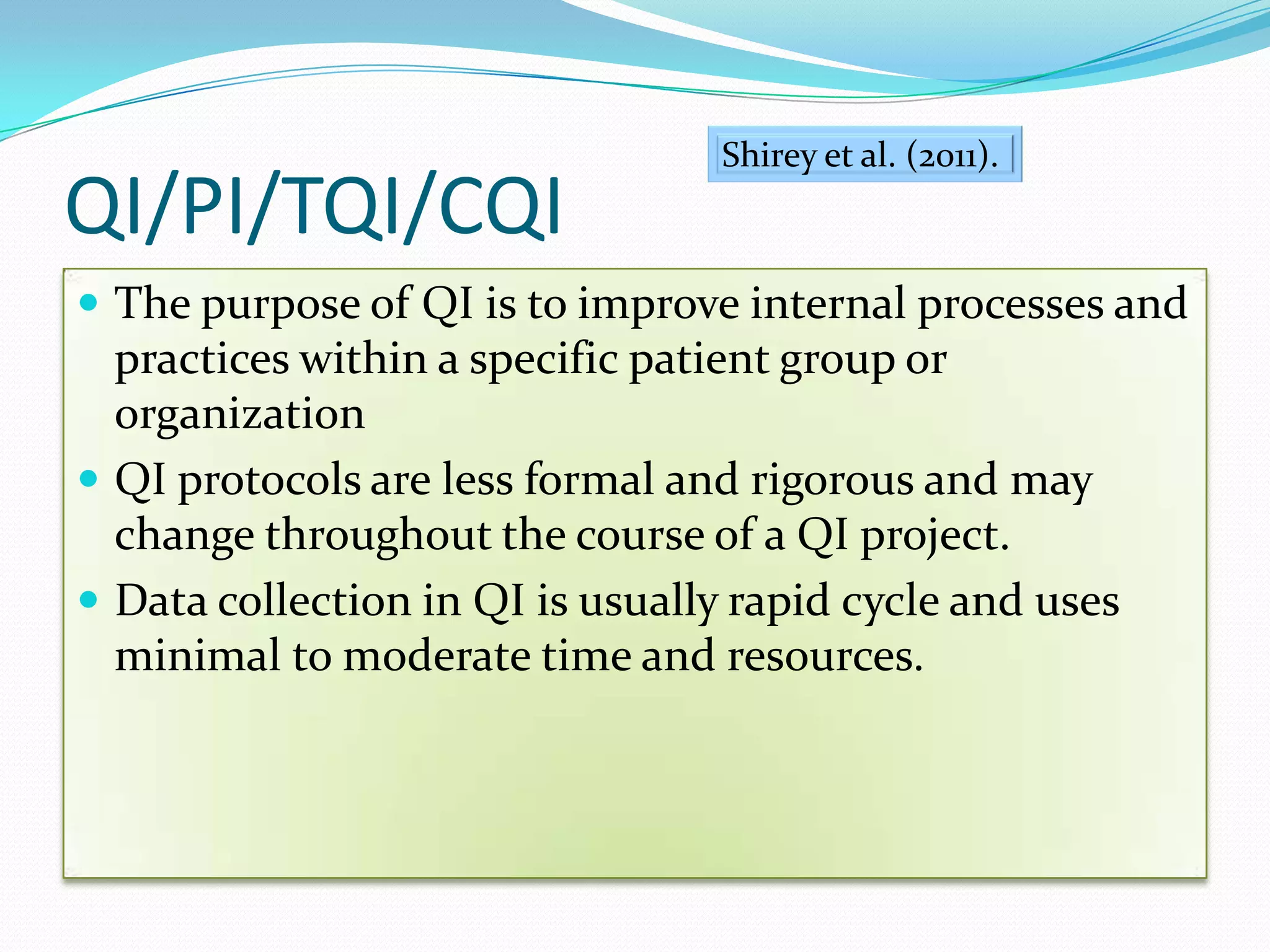
QI/PI/TQI/CQI The purpose of QI is to improve internal processes and practices within a specific patient group or organizationQI protocols are less formal and rigorous and may change throughout the course of a QI project.Data collection in QI is usually rapid cycle and uses minimal to moderate time and resources.Shirey et al. (2011).
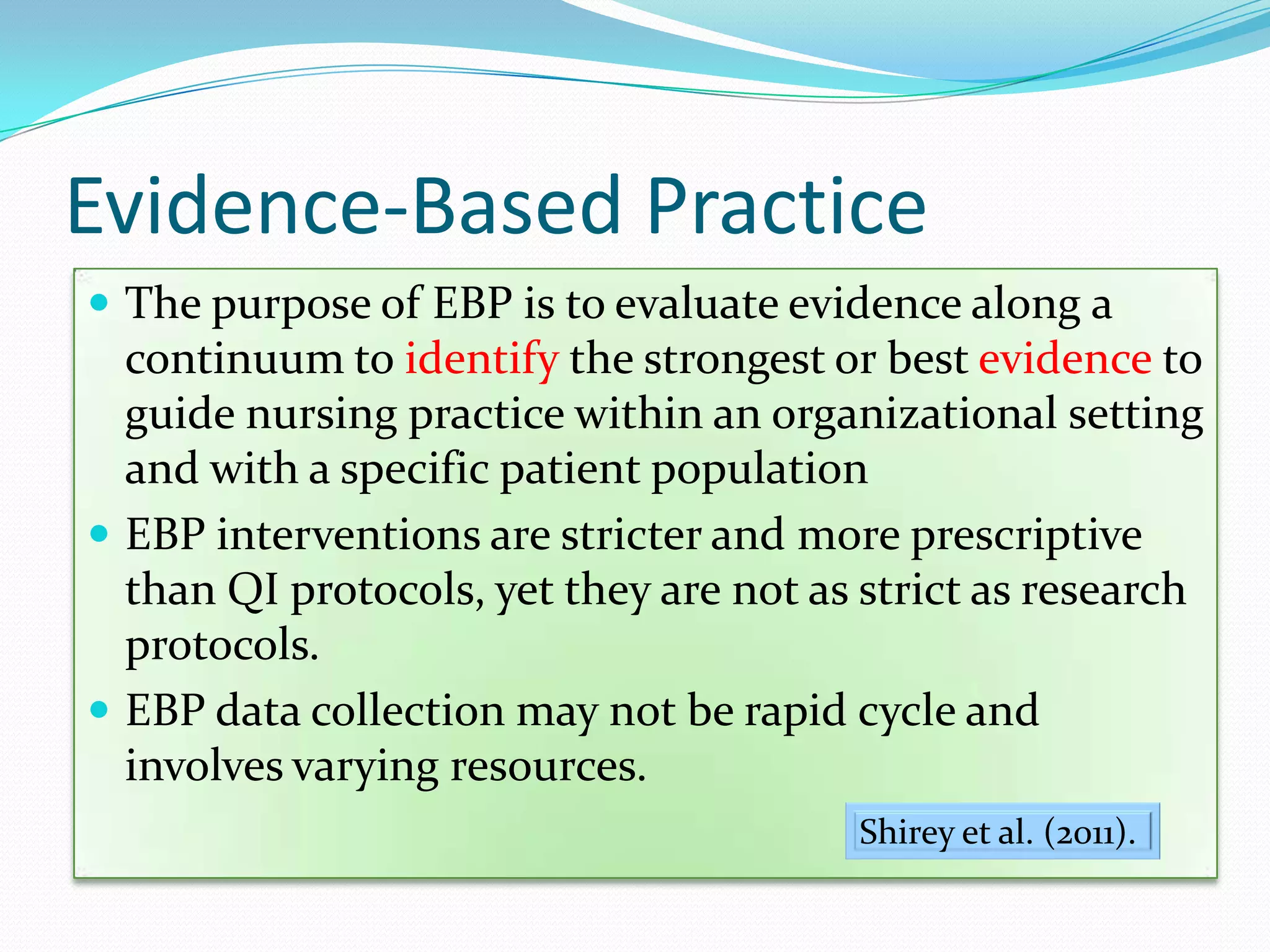
Evidence-Based PracticeThe purpose of EBP is to evaluate evidence along a continuum to identify the strongest or best evidence to guide nursing practice within an organizational setting and with a specific patient populationEBP interventions are stricter and more prescriptive than QI protocols, yet they are not as strict as research protocols.EBP data collection may not be rapid cycle and involves varying resources.Shirey et al. (2011).
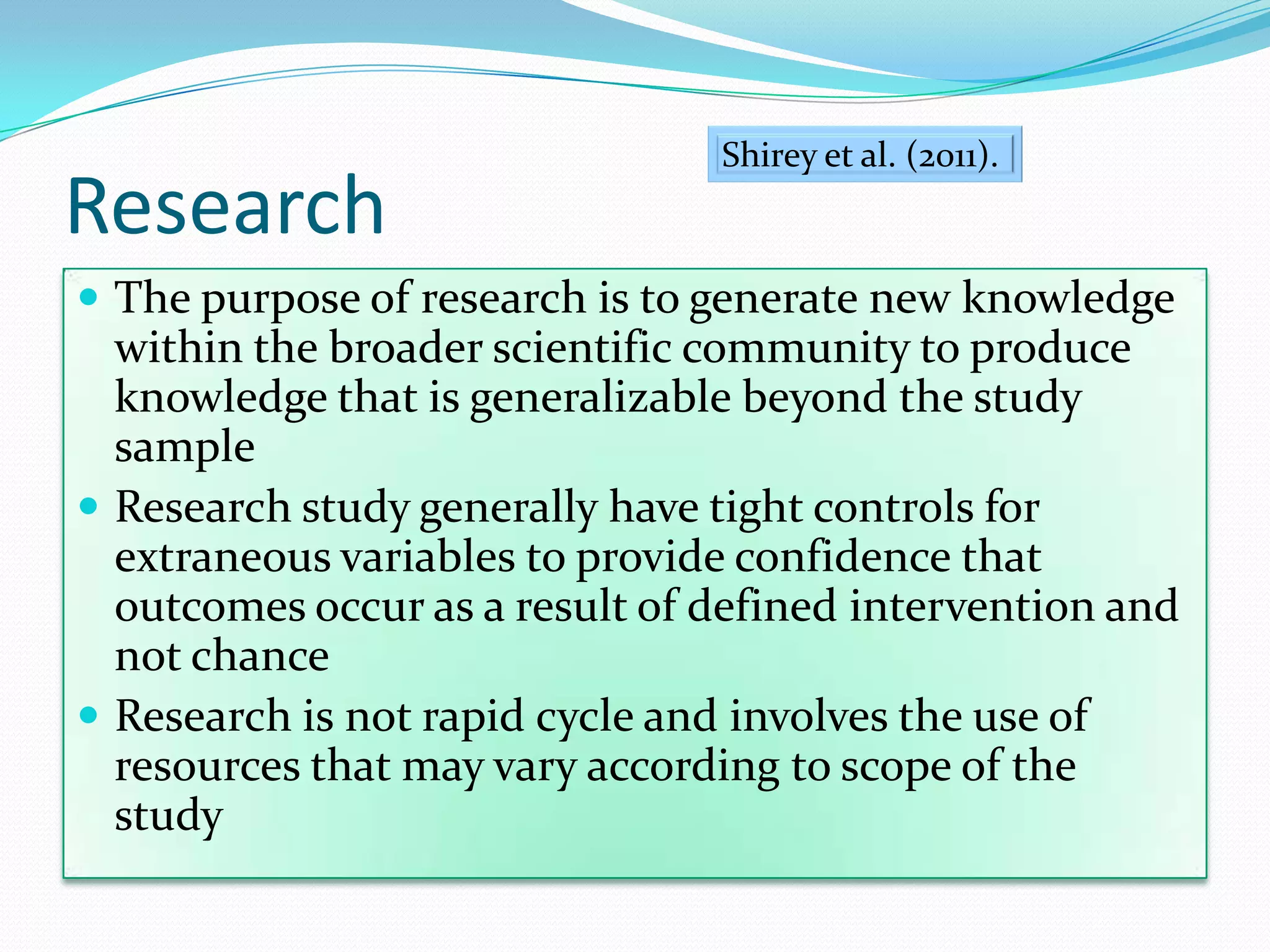
ResearchThe purpose of research is to generate new knowledge within the broader scientific community to produce knowledge that is generalizable beyond the study sampleResearch study generally have tight controls for extraneous variables to provide confidence that  outcomes occur as a result of defined intervention and not chanceResearch is not rapid cycle and involves the use of resources that may vary according to scope of the studyShirey et al. (2011).
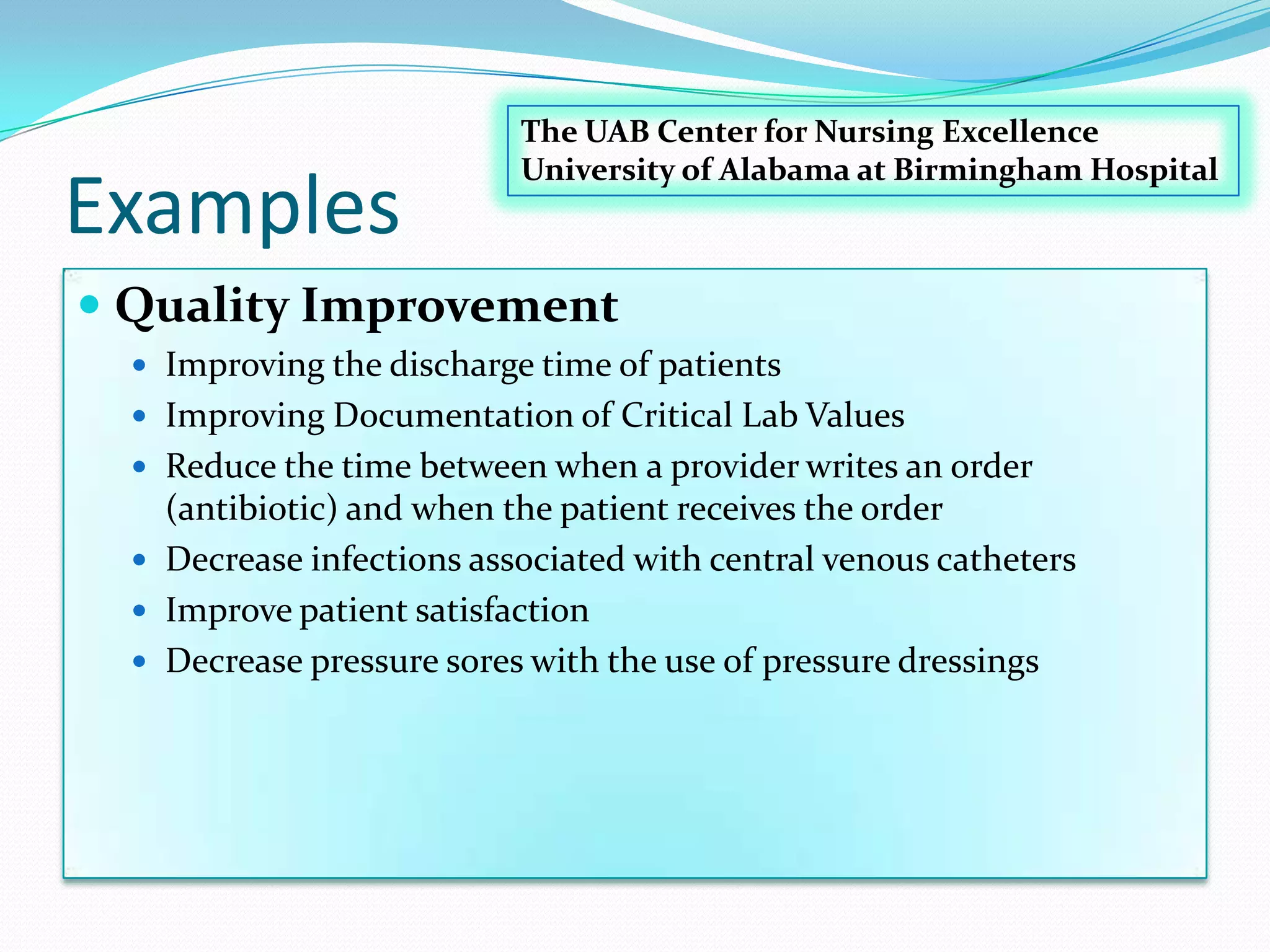
ExamplesQuality Improvement Improving the discharge time of patients Improving Documentation of Critical Lab Values Reduce the time between when a provider writes an order (antibiotic) and when the patient receives the order Decrease infections associated with central venous catheters Improve patient satisfaction Decrease pressure sores with the use of pressure dressings The UAB Center for Nursing ExcellenceUniversity of Alabama at Birmingham Hospital
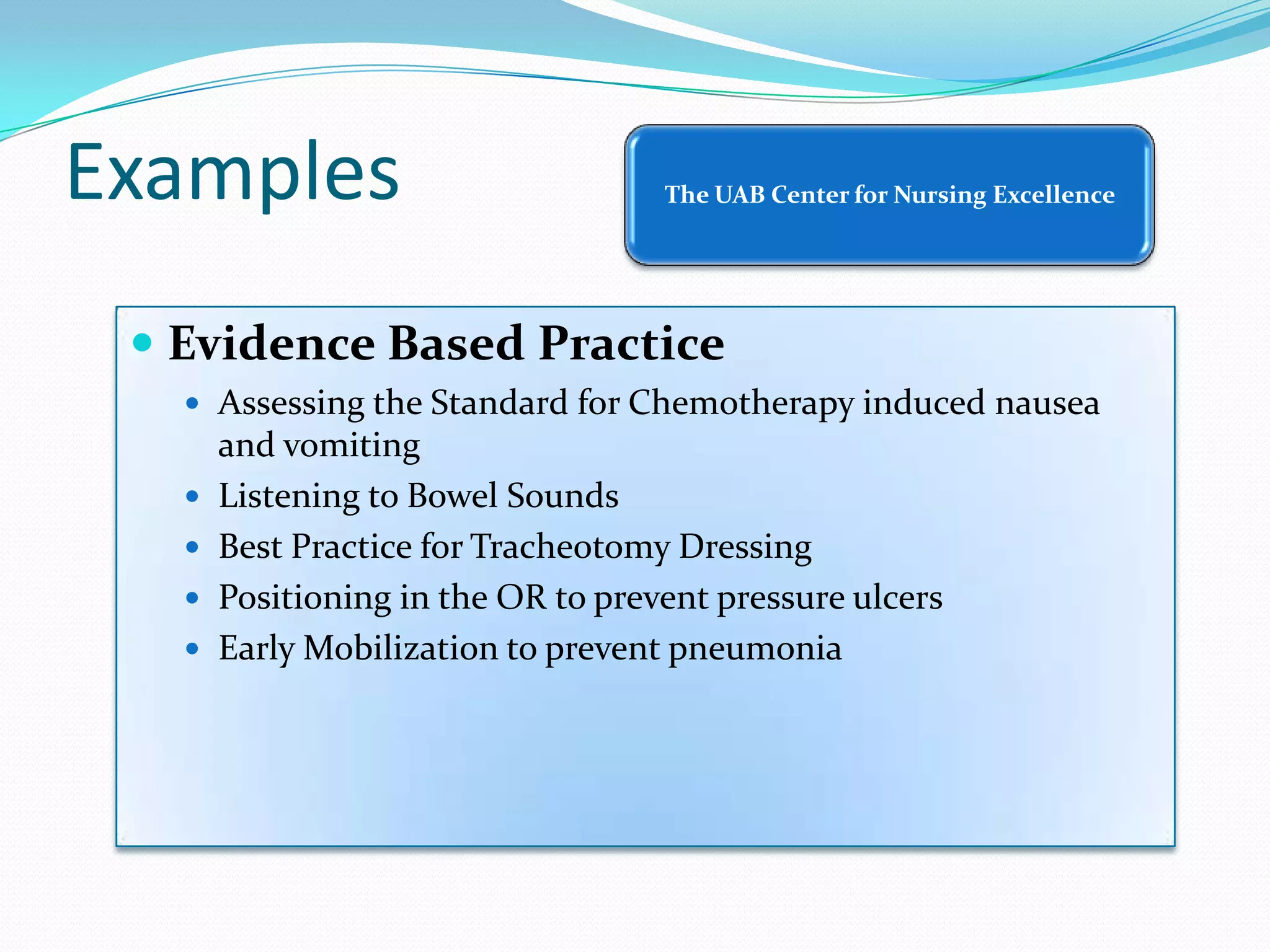
ExamplesEvidence Based Practice Assessing the Standard for Chemotherapy induced nausea and vomiting Listening to Bowel Sounds Best Practice for Tracheotomy Dressing Positioning in the OR to prevent pressure ulcers Early Mobilization to prevent pneumonia
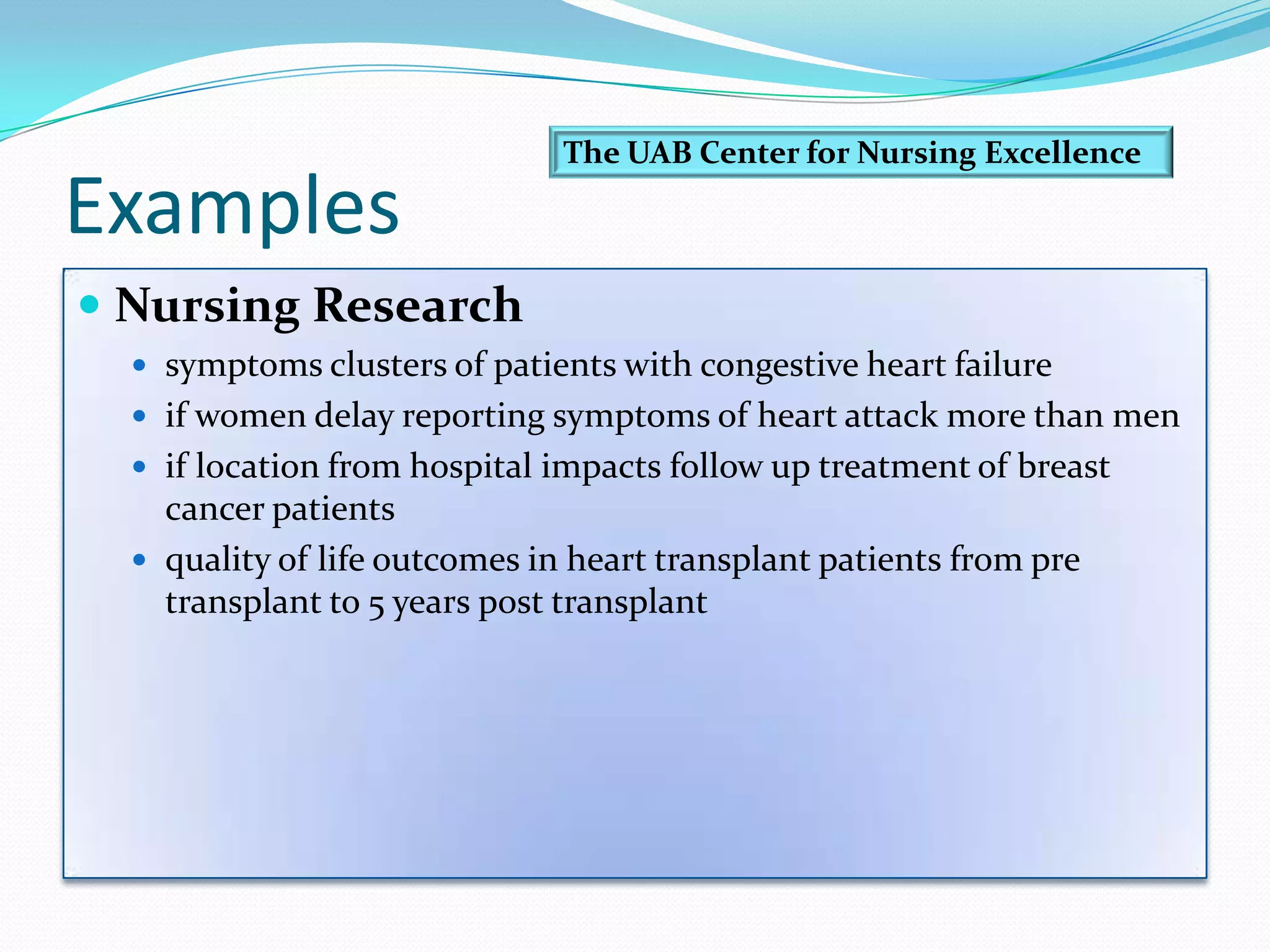
ExamplesNursing Research symptoms clusters of patients with congestive heart failure if women delay reporting symptoms of heart attack more than men if location from hospital impacts follow up treatment of breast cancer patients quality of life outcomes in heart transplant patients from pre transplant to 5 years post transplant The UAB Center for Nursing Excellence
Summary
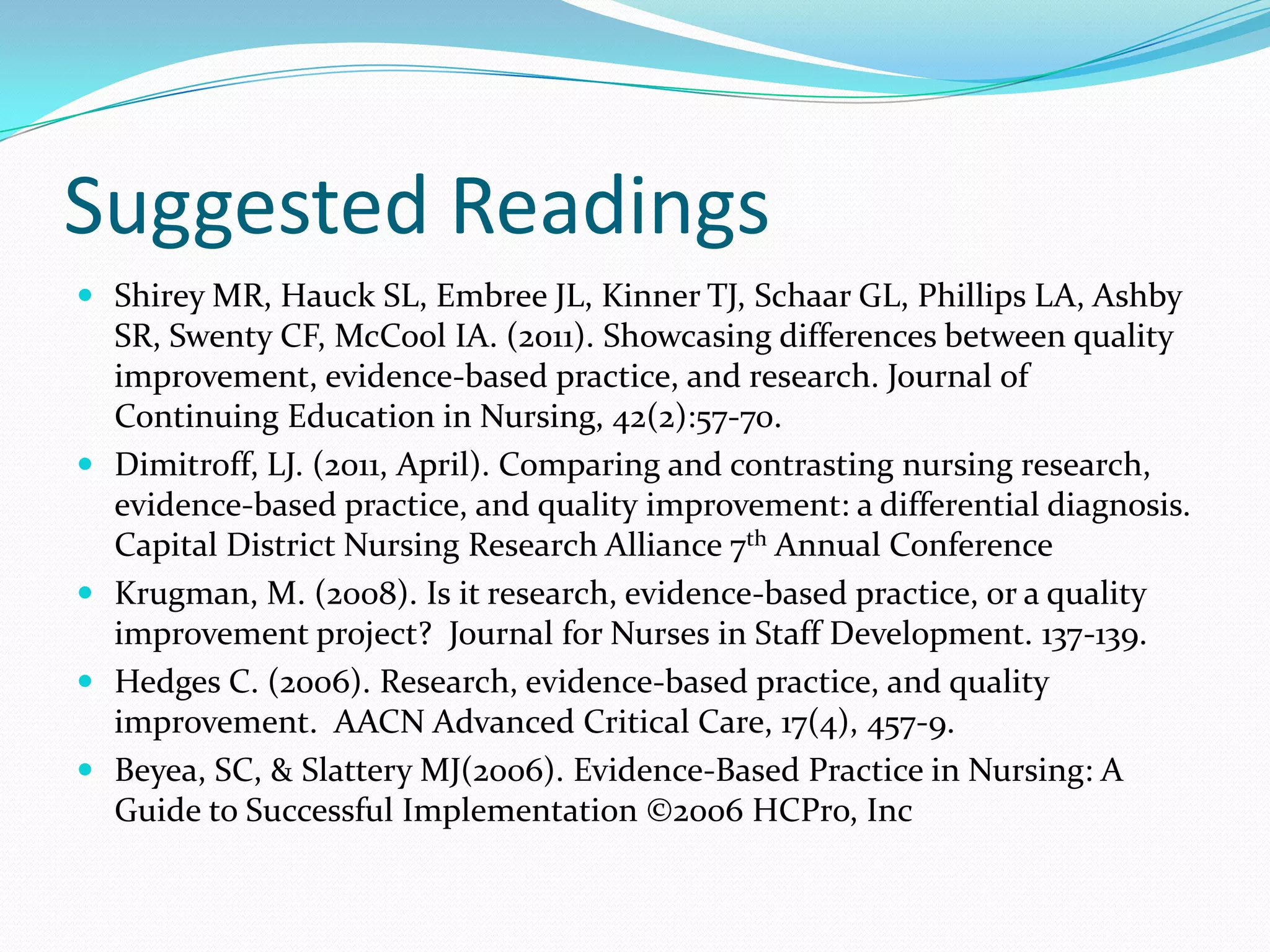
Suggested ReadingsShirey MR, Hauck SL, Embree JL, Kinner TJ, Schaar GL, Phillips LA, Ashby SR, Swenty CF, McCool IA. (2011). Showcasing differences between quality improvement, evidence-based practice, and research. Journal of Continuing Education in Nursing, 42(2):57-70. Dimitroff, LJ. (2011, April). Comparing and contrasting nursing research, evidence-based practice, and quality improvement: a differential diagnosis. Capital District Nursing Research Alliance 7th Annual ConferenceKrugman, M. (2008). Is it research, evidence-based practice, or a quality improvement project?  Journal for Nurses in Staff Development. 137-139.Hedges C. (2006). Research, evidence-based practice, and quality improvement.  AACN Advanced Critical Care, 17(4), 457-9.Beyea, SC, & Slattery MJ(2006). Evidence-Based Practice in Nursing: A Guide to Successful Implementation ©2006 HCPro, Inc

Difference between QI, EBP & Research

  • 1.
    QI, EBP &Research: Knowing the DifferenceYvonne Wesley RN PhD FAANRBMC, Faculty Liaison2011
  • 2.
    ObjectiveUpon completion ofthis 90-minute session, participants will be able to:Differentiate quality improvement, evidence based practice and researchIdentify similarities and sources of confusion among quality improvement, evidence based practice and researchCompare essentials of quality improvement, evidence based practice and research
  • 3.
    Why We DoWhat We Do
  • 4.
  • 5.
    SimilaritiesScholarly ProcessMethodSample DataCollectionIRBResultsImplicationDissemination of Results
  • 6.
    Sources of ConfusionHumanSubjectsAmount of risk or benefit to participantsConfidentiality/AnonymityGeneralizabilityAbility to get published.
  • 7.
    ComparisonDimitroff, LJ. (2011,April). Comparing and contrasting nursing research, evidence-based practice, and quality improvement: a differential diagnosis. Capital District Nursing Research Alliance 7th Annual Conference
  • 8.
    Shirey MR, HauckSL, Embree JL, Kinner TJ, Schaar GL, Phillips LA, Ashby SR, Swenty CF, McCool IA. (2011). Showcasing differences between quality improvement, evidence-based practice, and research. Journal of Continuing Education in Nursing, 42(2):57-70. Hospitals pursuing Magnet designation must understand and respect the distinctions between QI, EBP, and research.Do not confuse one approach for the other. Hospitals should facilitate distinct, yet collaborative, venues to cultivate QI, EBP, and research initiatives
  • 9.
    QI/PI/TQI/CQI The purposeof QI is to improve internal processes and practices within a specific patient group or organizationQI protocols are less formal and rigorous and may change throughout the course of a QI project.Data collection in QI is usually rapid cycle and uses minimal to moderate time and resources.Shirey et al. (2011).
  • 10.
    Evidence-Based PracticeThe purposeof EBP is to evaluate evidence along a continuum to identify the strongest or best evidence to guide nursing practice within an organizational setting and with a specific patient populationEBP interventions are stricter and more prescriptive than QI protocols, yet they are not as strict as research protocols.EBP data collection may not be rapid cycle and involves varying resources.Shirey et al. (2011).
  • 11.
    ResearchThe purpose ofresearch is to generate new knowledge within the broader scientific community to produce knowledge that is generalizable beyond the study sampleResearch study generally have tight controls for extraneous variables to provide confidence that outcomes occur as a result of defined intervention and not chanceResearch is not rapid cycle and involves the use of resources that may vary according to scope of the studyShirey et al. (2011).
  • 12.
    ExamplesQuality Improvement Improvingthe discharge time of patients Improving Documentation of Critical Lab Values Reduce the time between when a provider writes an order (antibiotic) and when the patient receives the order Decrease infections associated with central venous catheters Improve patient satisfaction Decrease pressure sores with the use of pressure dressings The UAB Center for Nursing ExcellenceUniversity of Alabama at Birmingham Hospital
  • 13.
    ExamplesEvidence Based PracticeAssessing the Standard for Chemotherapy induced nausea and vomiting Listening to Bowel Sounds Best Practice for Tracheotomy Dressing Positioning in the OR to prevent pressure ulcers Early Mobilization to prevent pneumonia
  • 14.
    ExamplesNursing Research symptomsclusters of patients with congestive heart failure if women delay reporting symptoms of heart attack more than men if location from hospital impacts follow up treatment of breast cancer patients quality of life outcomes in heart transplant patients from pre transplant to 5 years post transplant The UAB Center for Nursing Excellence
  • 15.
  • 16.
    Suggested ReadingsShirey MR,Hauck SL, Embree JL, Kinner TJ, Schaar GL, Phillips LA, Ashby SR, Swenty CF, McCool IA. (2011). Showcasing differences between quality improvement, evidence-based practice, and research. Journal of Continuing Education in Nursing, 42(2):57-70. Dimitroff, LJ. (2011, April). Comparing and contrasting nursing research, evidence-based practice, and quality improvement: a differential diagnosis. Capital District Nursing Research Alliance 7th Annual ConferenceKrugman, M. (2008). Is it research, evidence-based practice, or a quality improvement project? Journal for Nurses in Staff Development. 137-139.Hedges C. (2006). Research, evidence-based practice, and quality improvement. AACN Advanced Critical Care, 17(4), 457-9.Beyea, SC, & Slattery MJ(2006). Evidence-Based Practice in Nursing: A Guide to Successful Implementation ©2006 HCPro, Inc