Types of Characters
Primary
Characters
A primary character is
a main character in
literature. There can
be one or even a
couple of primary
characters in a novel.
They are essential to
the plot of the literary
work.
Protagonist
The story is shaped around
the protagonist. He is the
one trying to achieve a goal
in the story.
The protagonist is often the
main character, but doesn’t
necessarily have to be.
Usually the reader
sympathizes with the
protagonist.
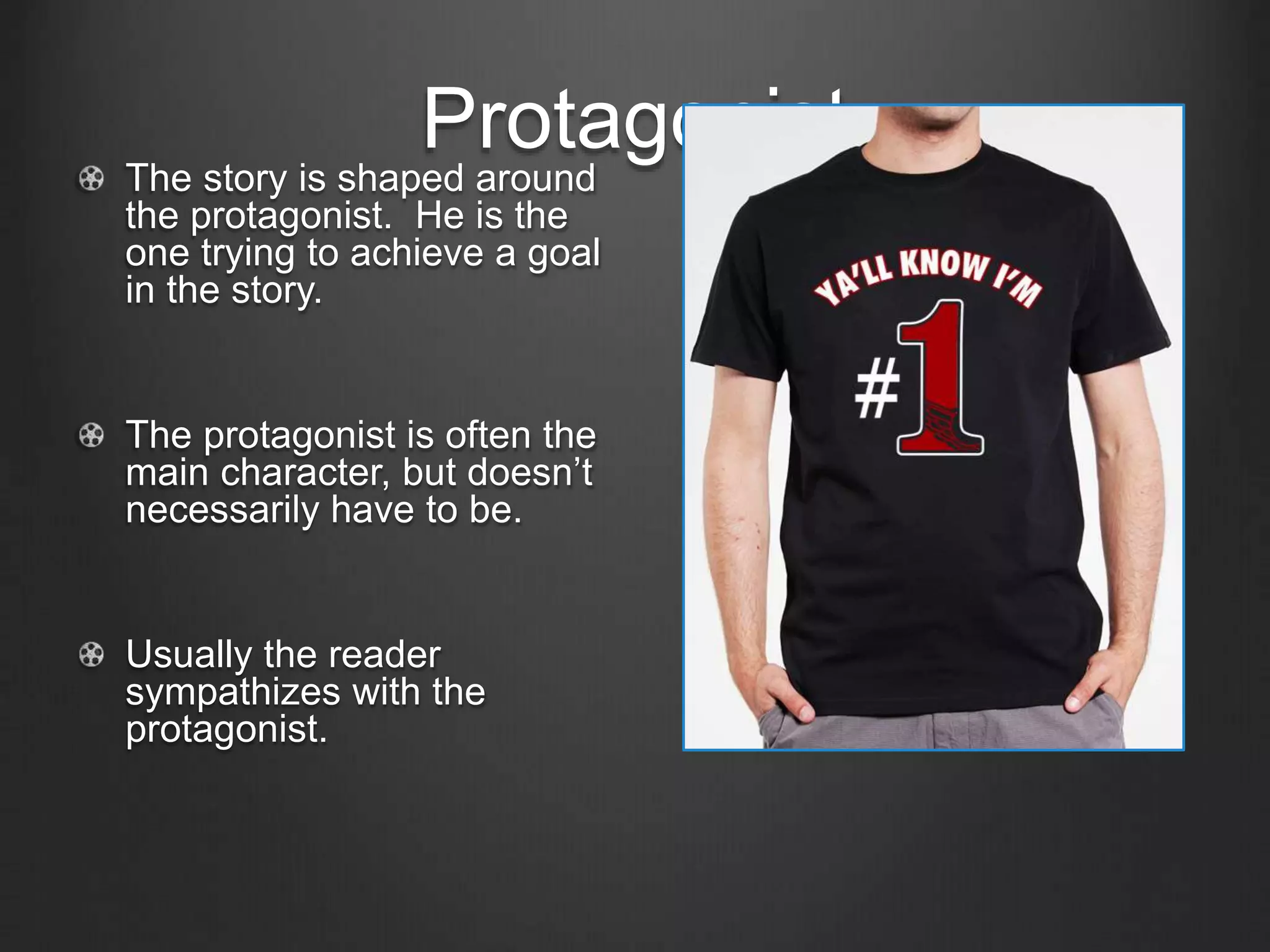
Examples of protagonists:
Protagonist
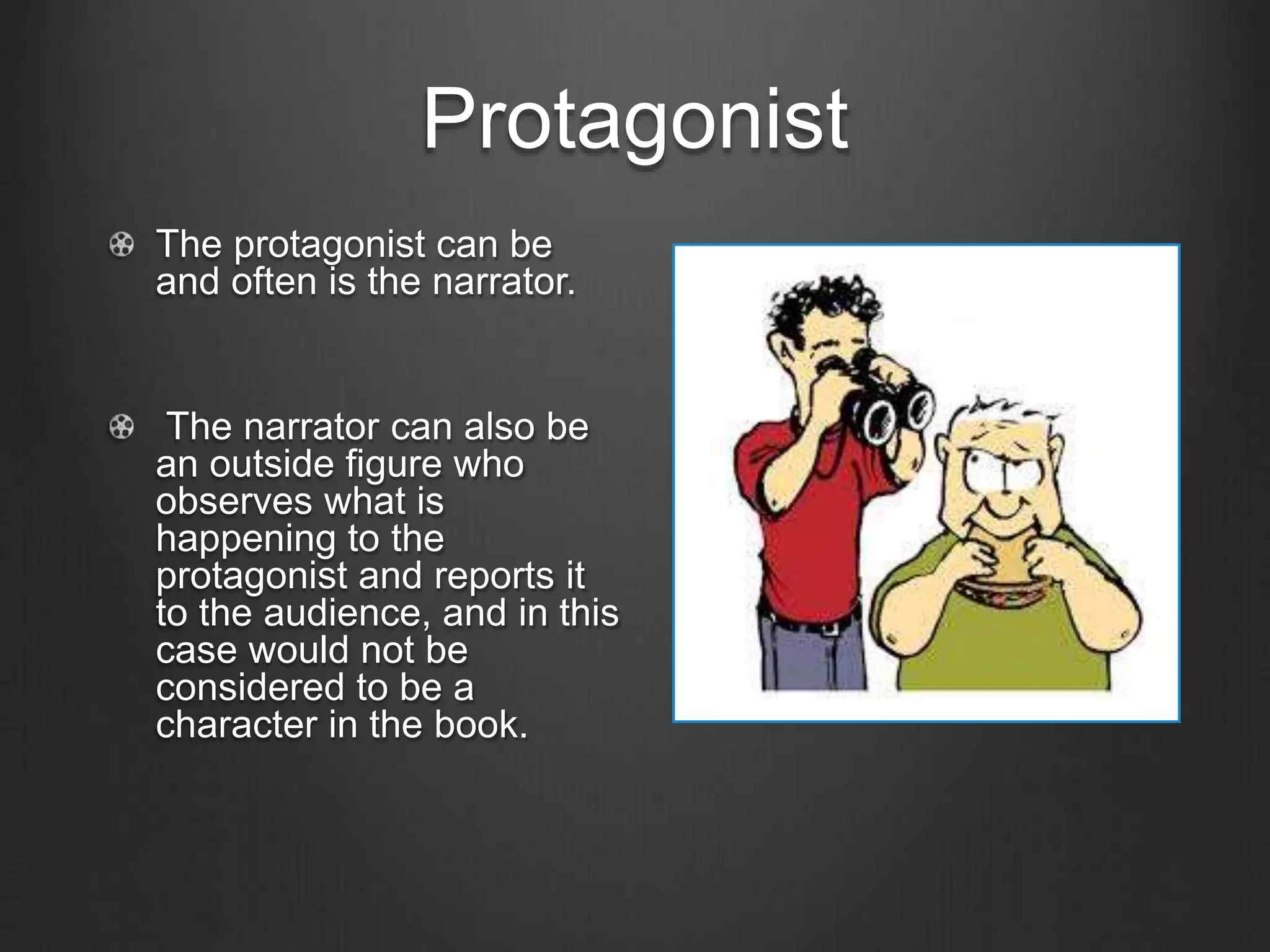
The protagonist can be
and often is the narrator.
The narrator can also be
an outside figure who
observes what is
happening to the
protagonist and reports it
to the audience, and in this
case would not be
considered to be a
character in the book.
Protagonist
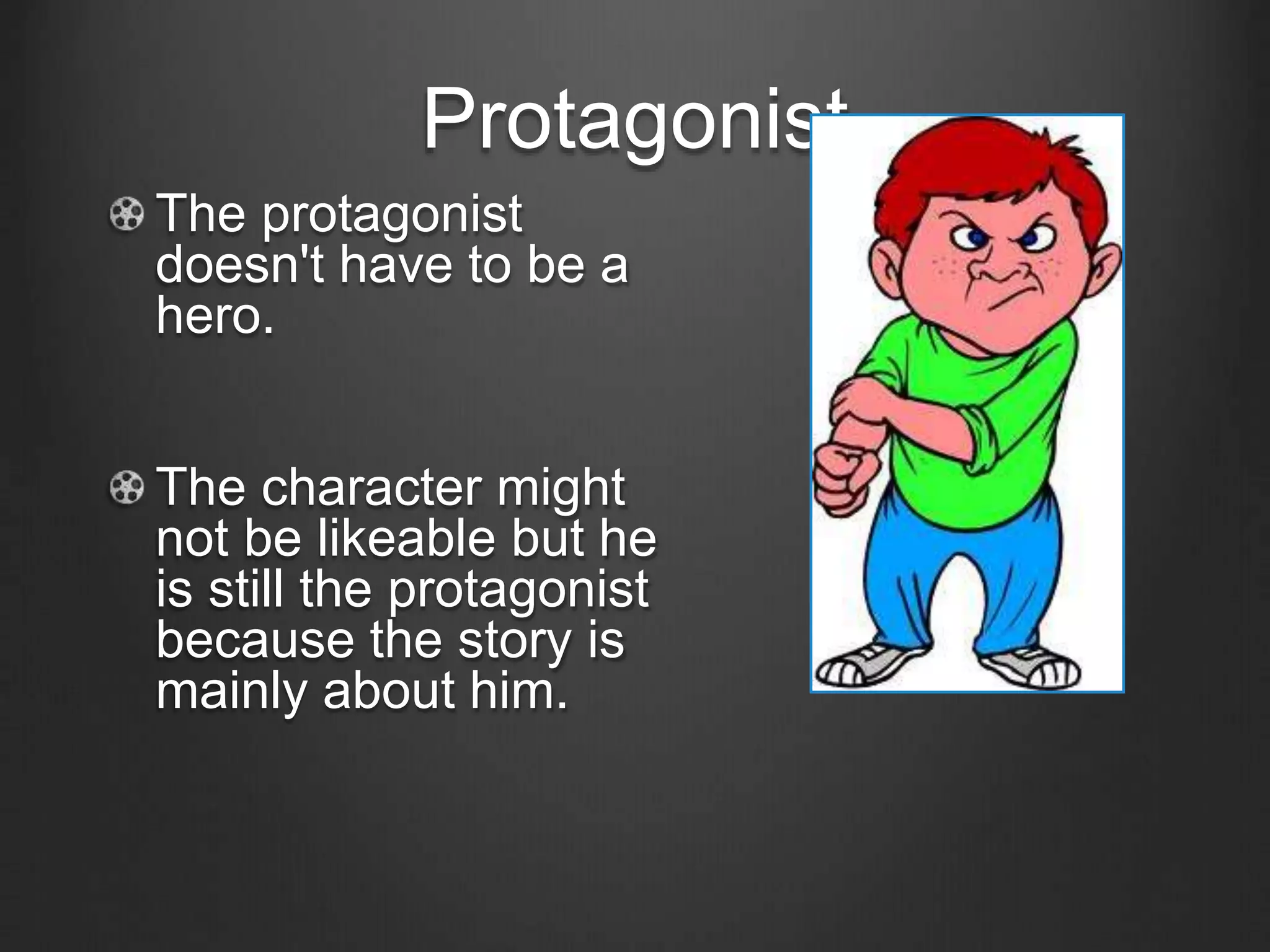
The protagonist
doesn't have to be a
hero.
The character might
not be likeable but he
is still the protagonist
because the story is
mainly about him.
Example: Protagonists don’t
have to be likeable
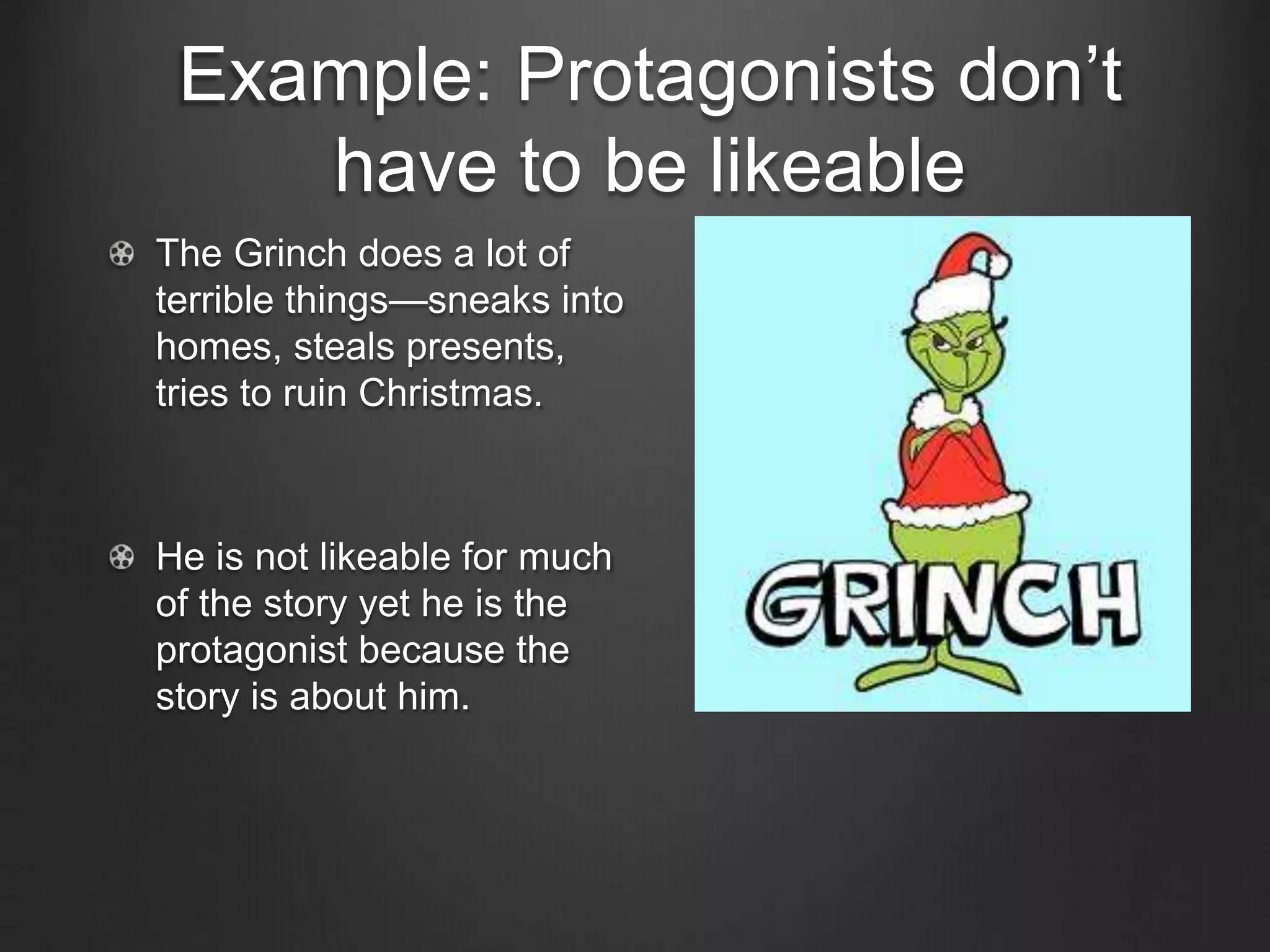
The Grinch does a lot of
terrible things—sneaks into
homes, steals presents,
tries to ruin Christmas.
He is not likeable for much
of the story yet he is the
protagonist because the
story is about him.
antagonist
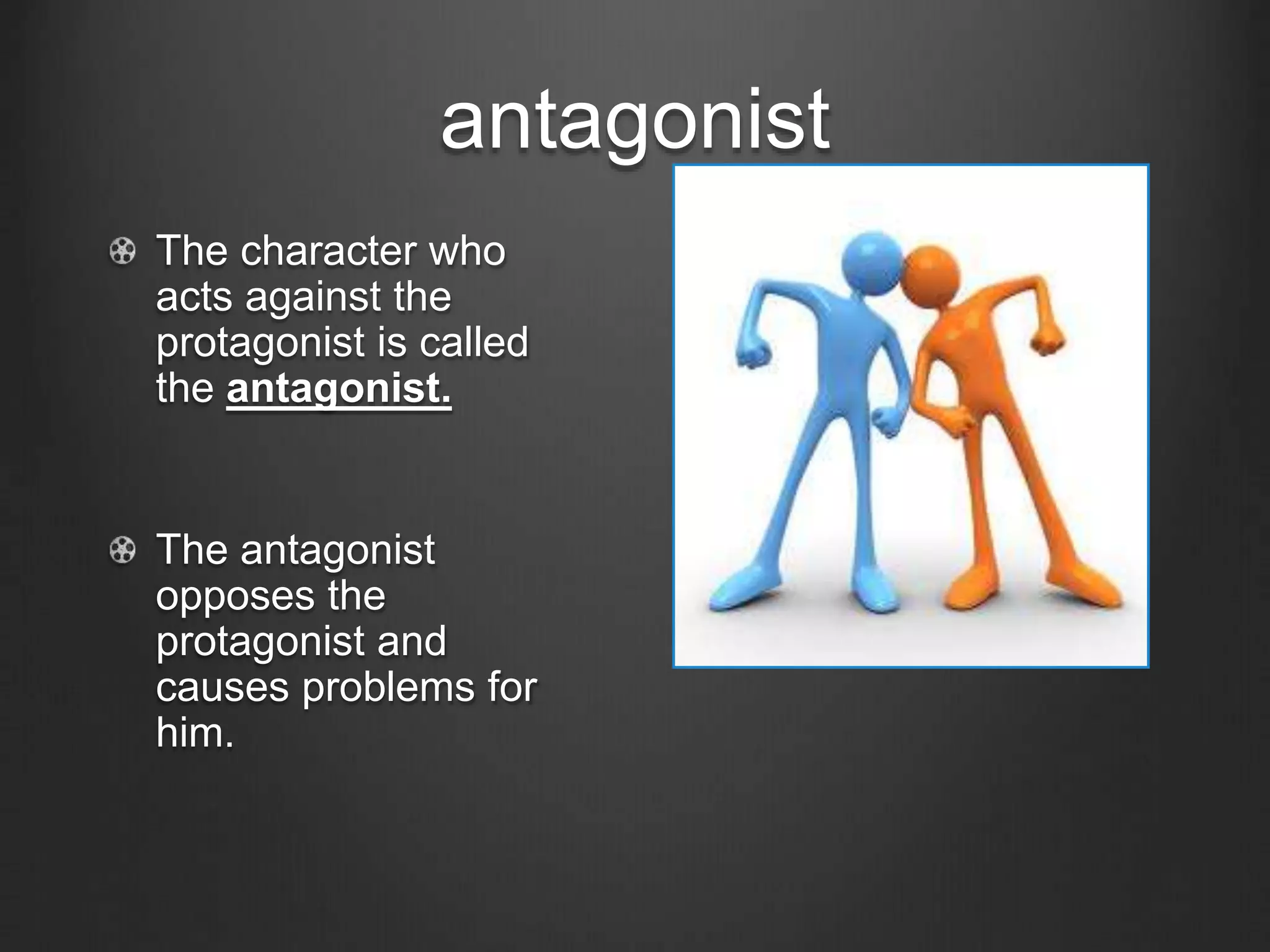
The character who
acts against the
protagonist is called
the antagonist.
The antagonist
opposes the
protagonist and
causes problems for
him.
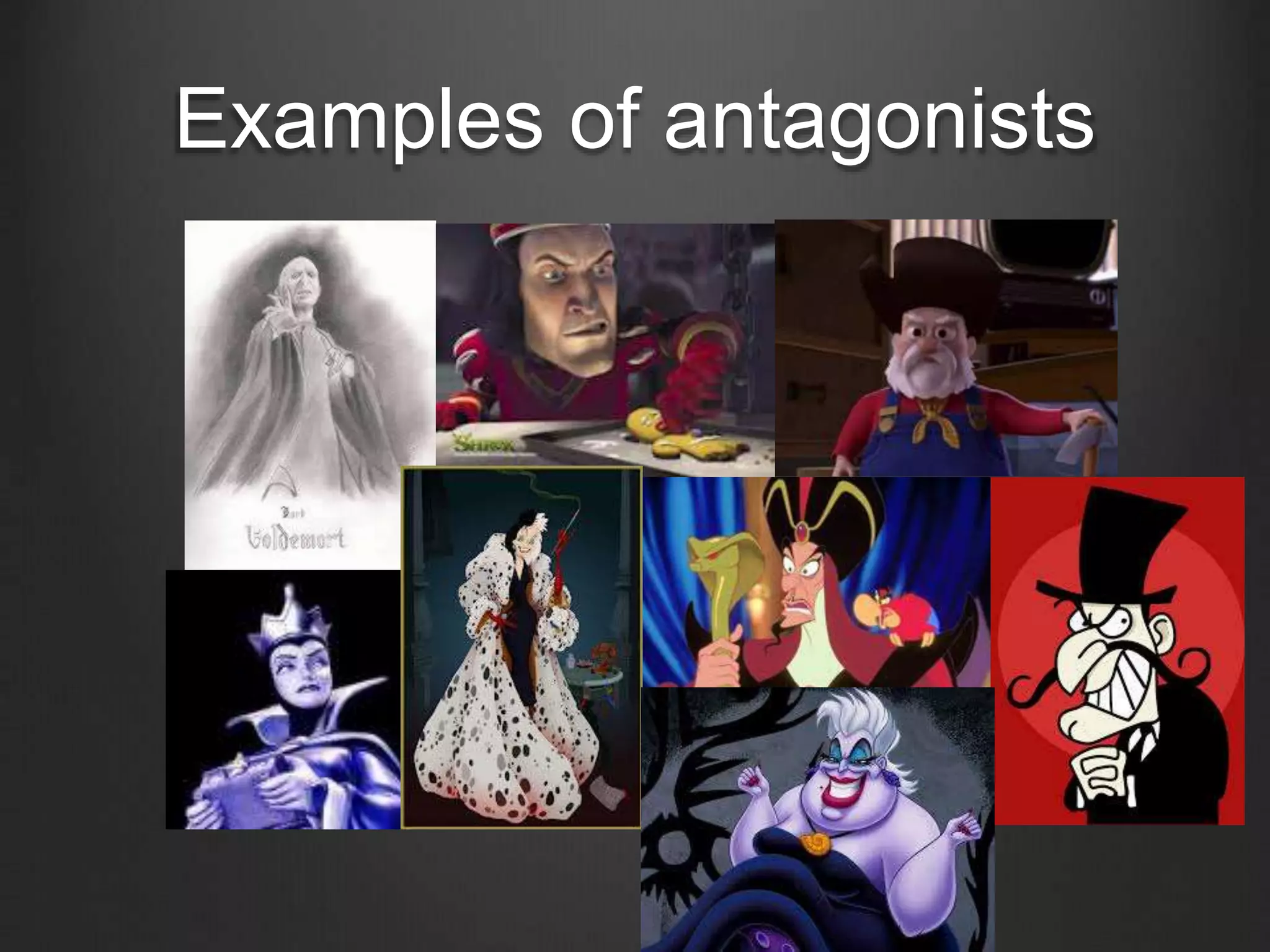
Examples of antagonists
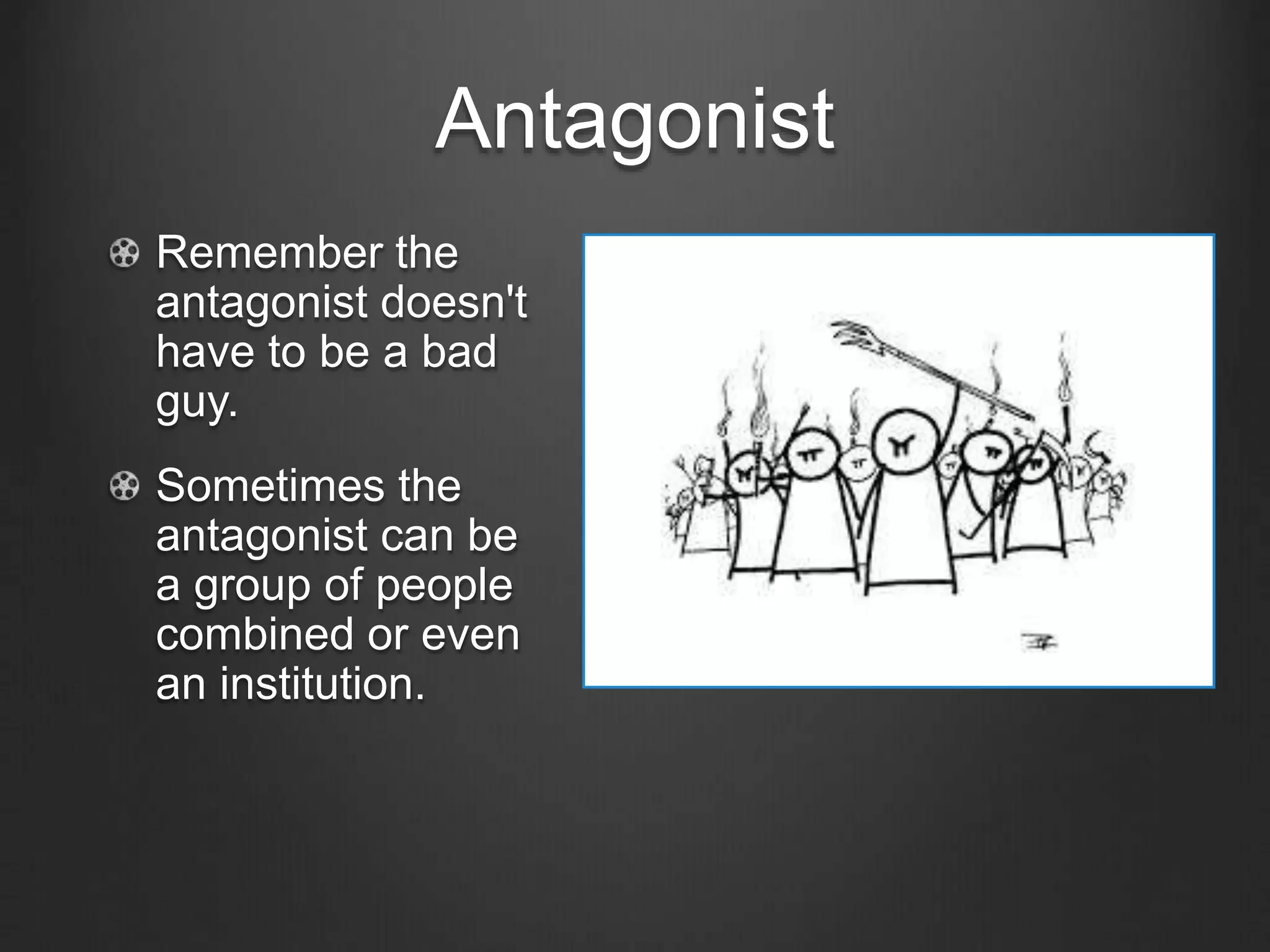
Antagonist
Remember the
antagonist doesn't
have to be a bad
guy.
Sometimes the
antagonist can be
a group of people
combined or even
an institution.
Secondary characters
In a novel, you are also introduced to many secondary or
minor characters.
These characters still play a role in the development of the
story and have a purpose, but their role is smaller than the
major characters. Some examples of a secondary
character’s purpose:
Give background information
Showcase the main character’s personality through their
interactions
Help the character solve the conflict
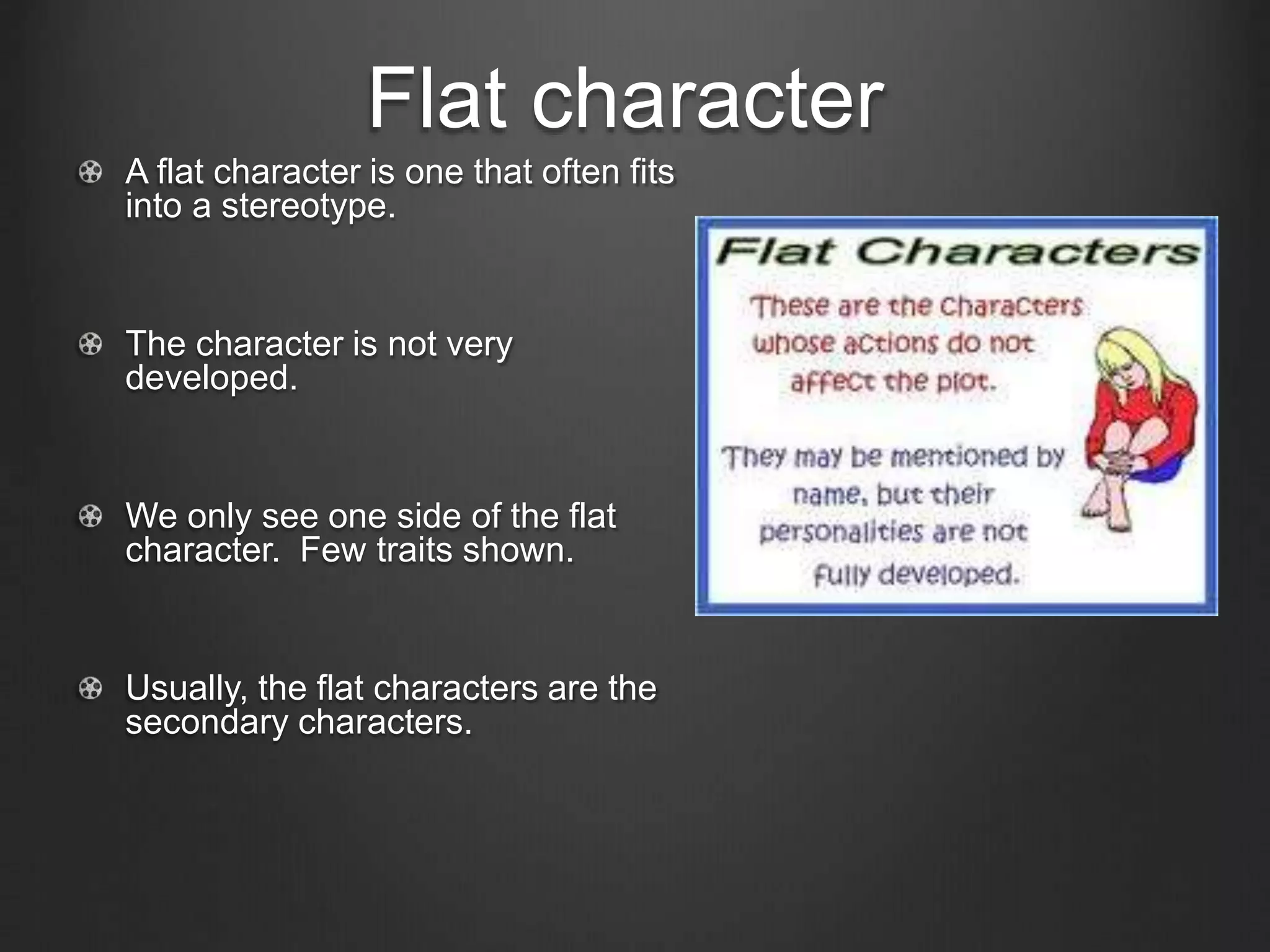
Flat character
A flat character is one that often fits
into a stereotype.
The character is not very
developed.
We only see one side of the flat
character. Few traits shown.
Usually, the flat characters are the
secondary characters.
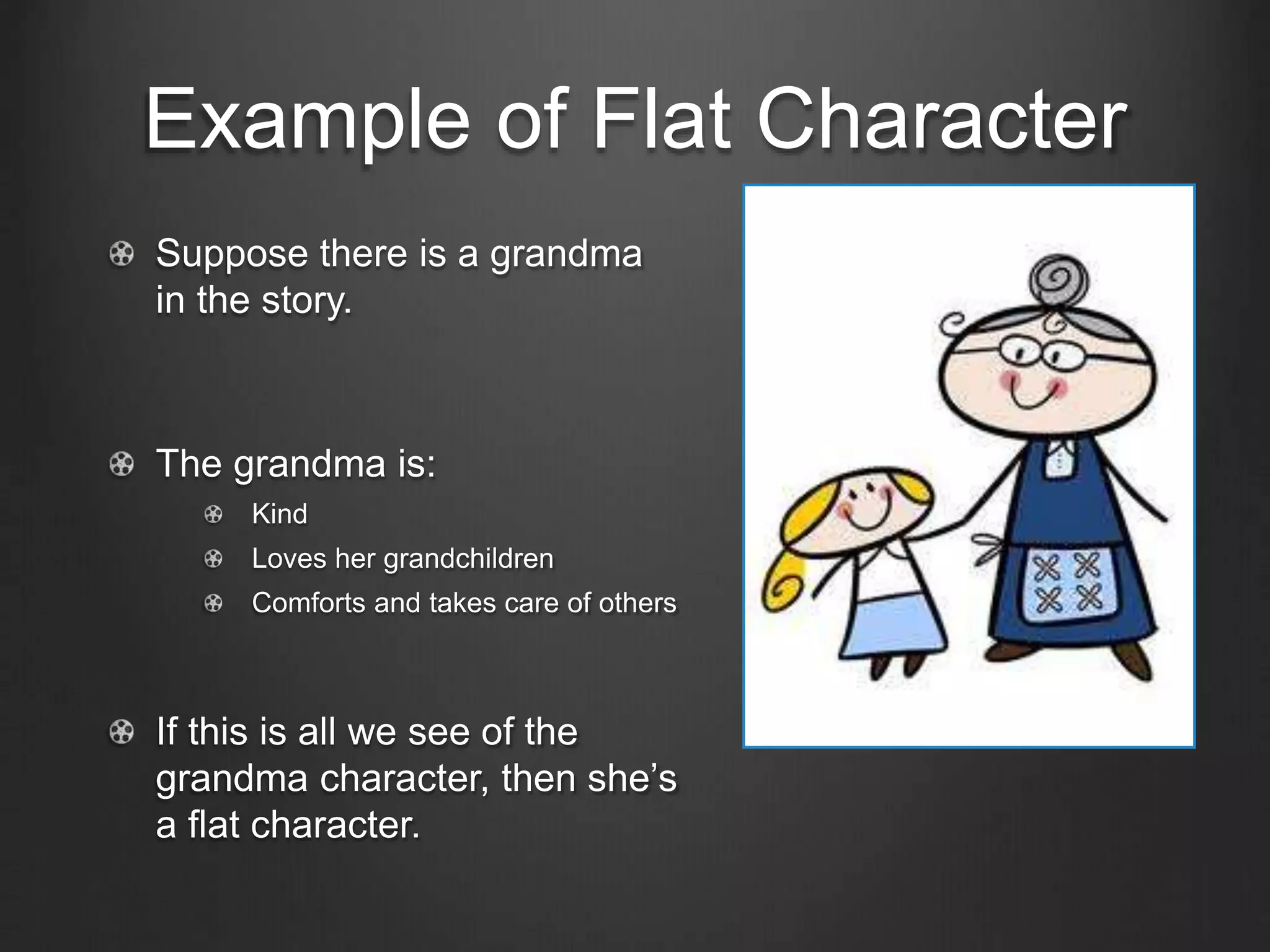
Example of Flat Character
Suppose there is a grandma
in the story.
The grandma is:
Kind
Loves her grandchildren
Comforts and takes care of others
If this is all we see of the
grandma character, then she’s
a flat character.
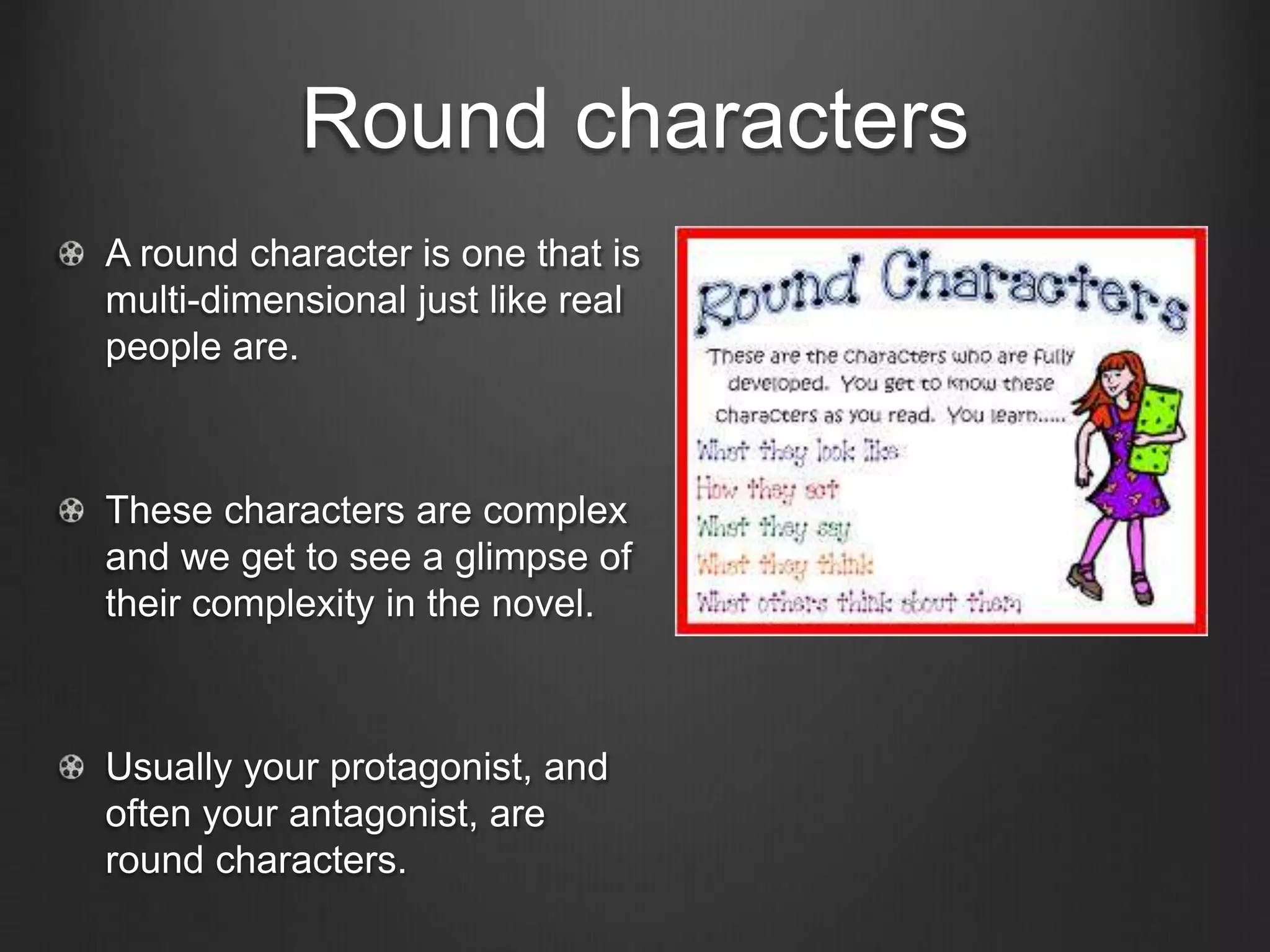
Round characters
A round character is one that is
multi-dimensional just like real
people are.
These characters are complex
and we get to see a glimpse of
their complexity in the novel.
Usually your protagonist, and
often your antagonist, are
round characters.
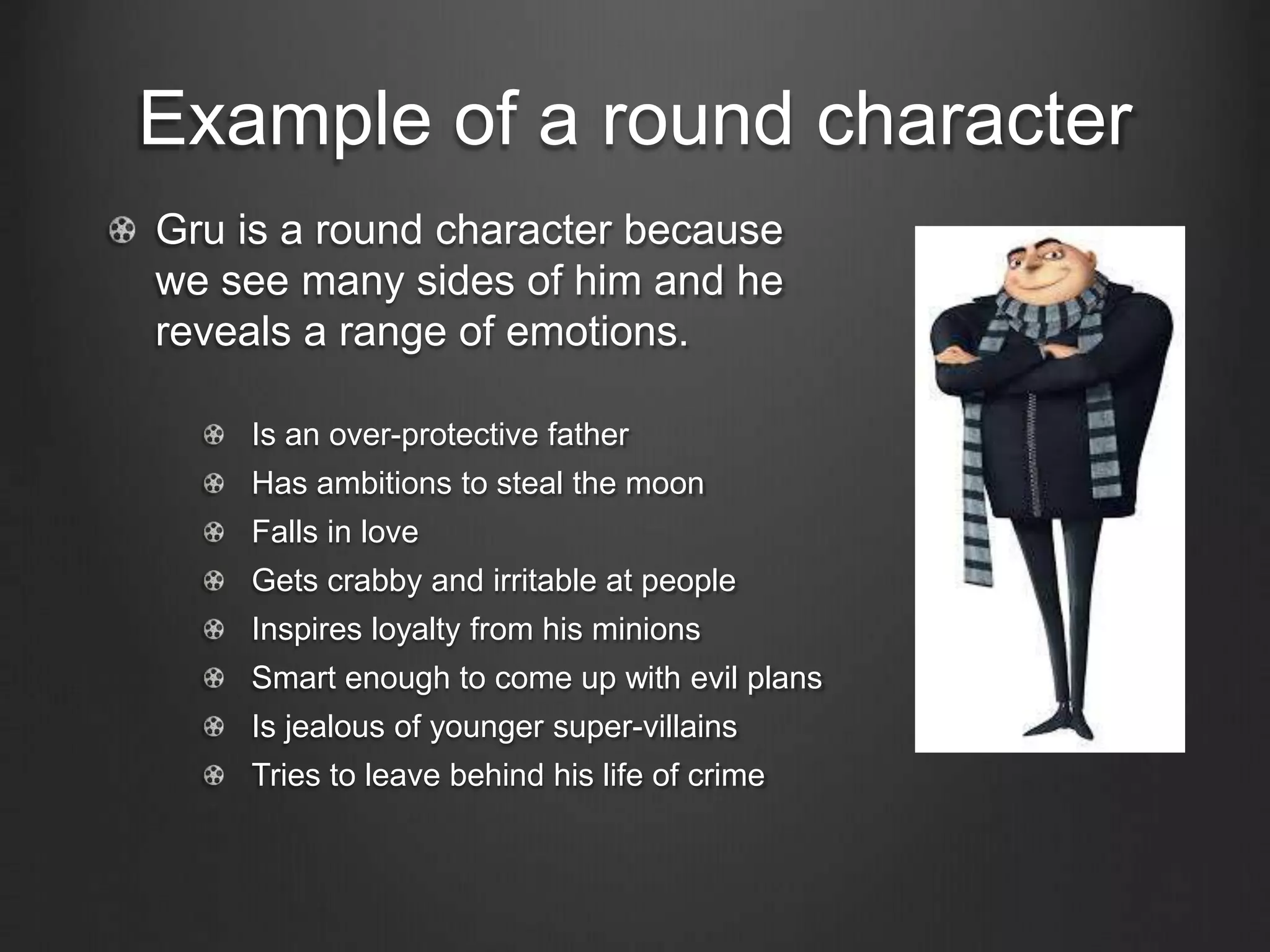
Example of a round character
Gru is a round character because
we see many sides of him and he
reveals a range of emotions.
Is an over-protective father
Has ambitions to steal the moon
Falls in love
Gets crabby and irritable at people
Inspires loyalty from his minions
Smart enough to come up with evil plans
Is jealous of younger super-villains
Tries to leave behind his life of crime
Static characters
A static character doesn't change.
Character is exactly the same at end of the
novel as he was at the beginning of the
novel.
This may be because he is a flat character
or he just doesn't learn from his experiences.
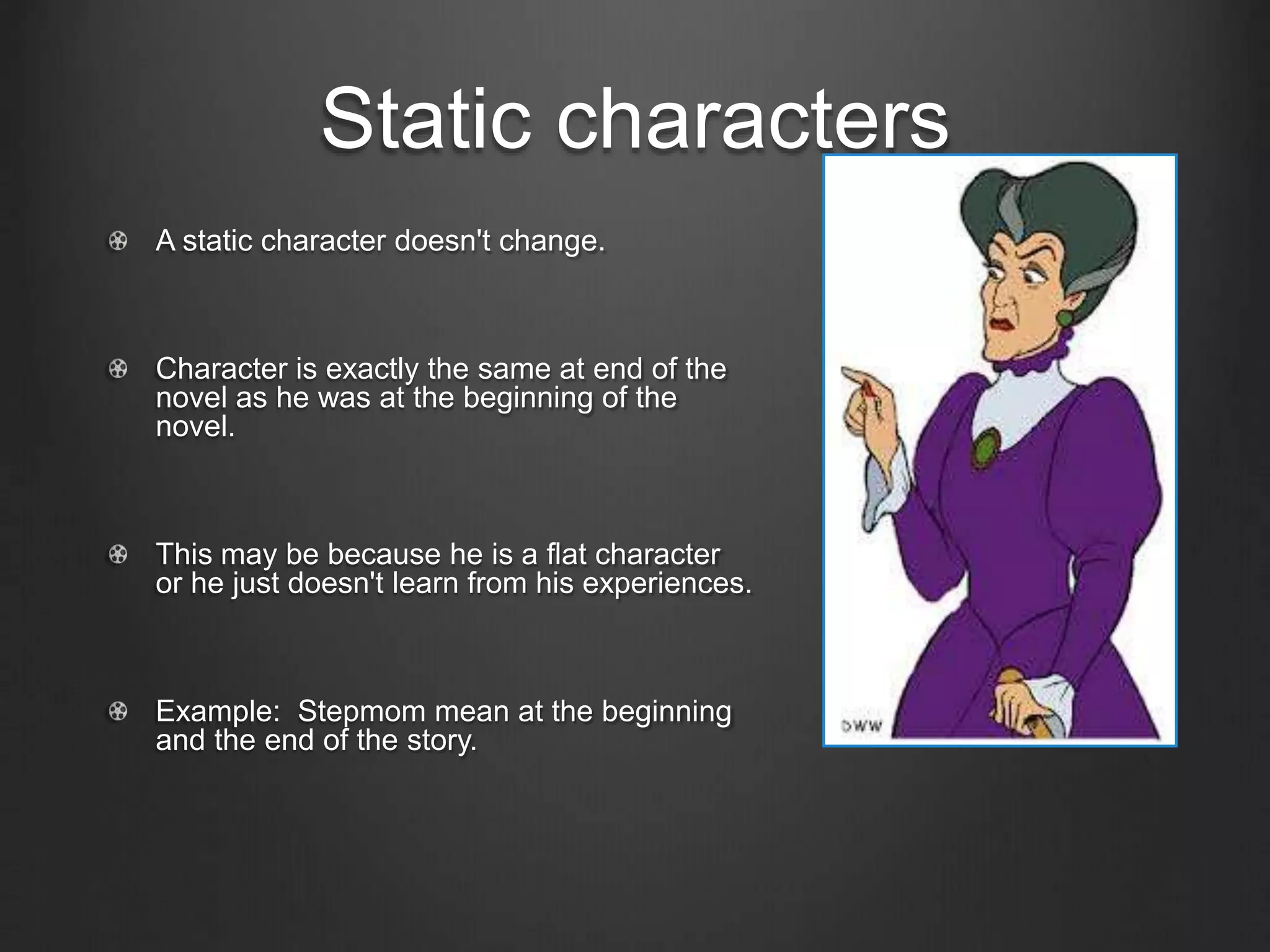
Example: Stepmom mean at the beginning
and the end of the story.
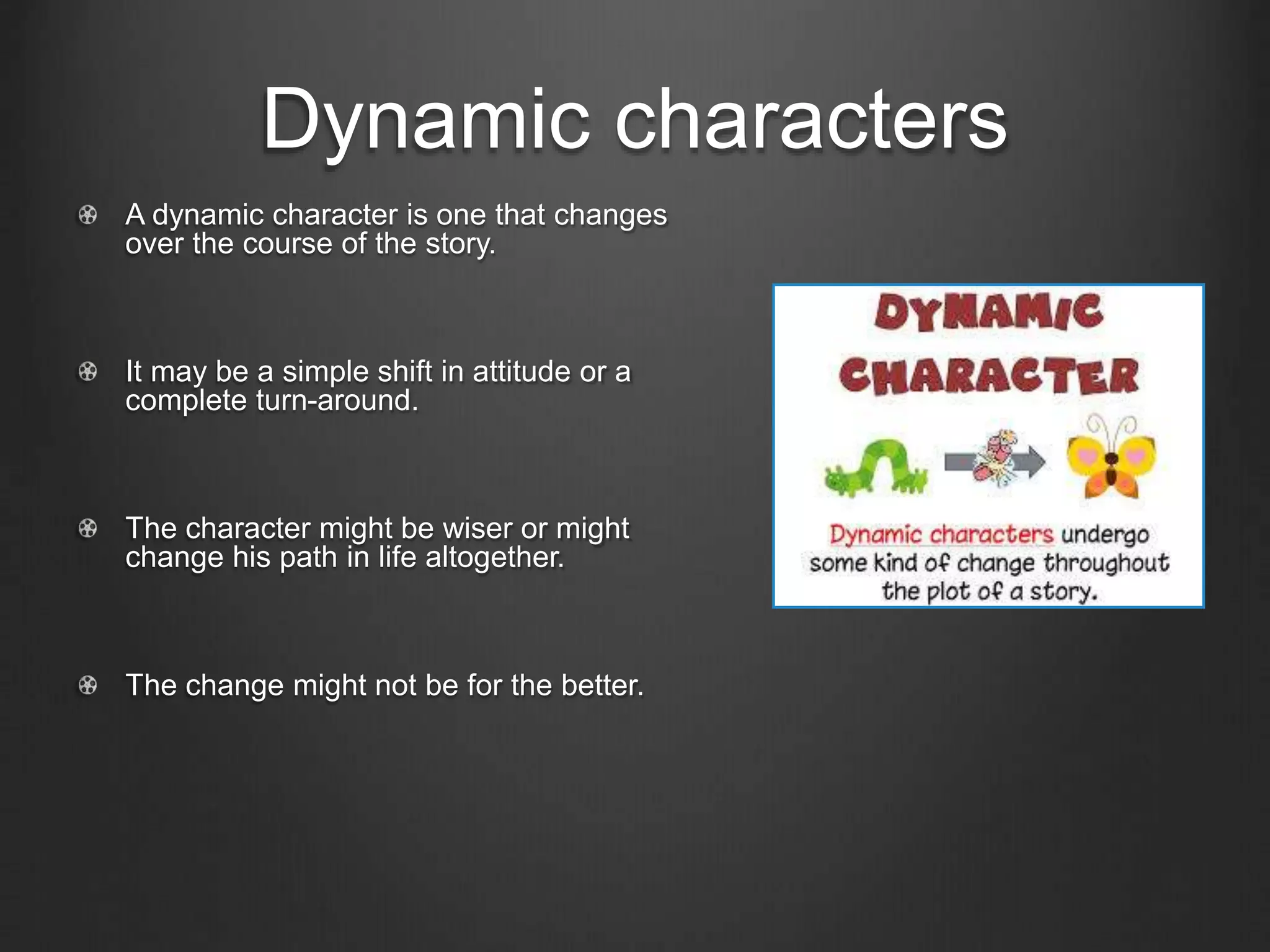
Dynamic characters
A dynamic character is one that changes
over the course of the story.
It may be a simple shift in attitude or a
complete turn-around.
The character might be wiser or might
change his path in life altogether.
The change might not be for the better.
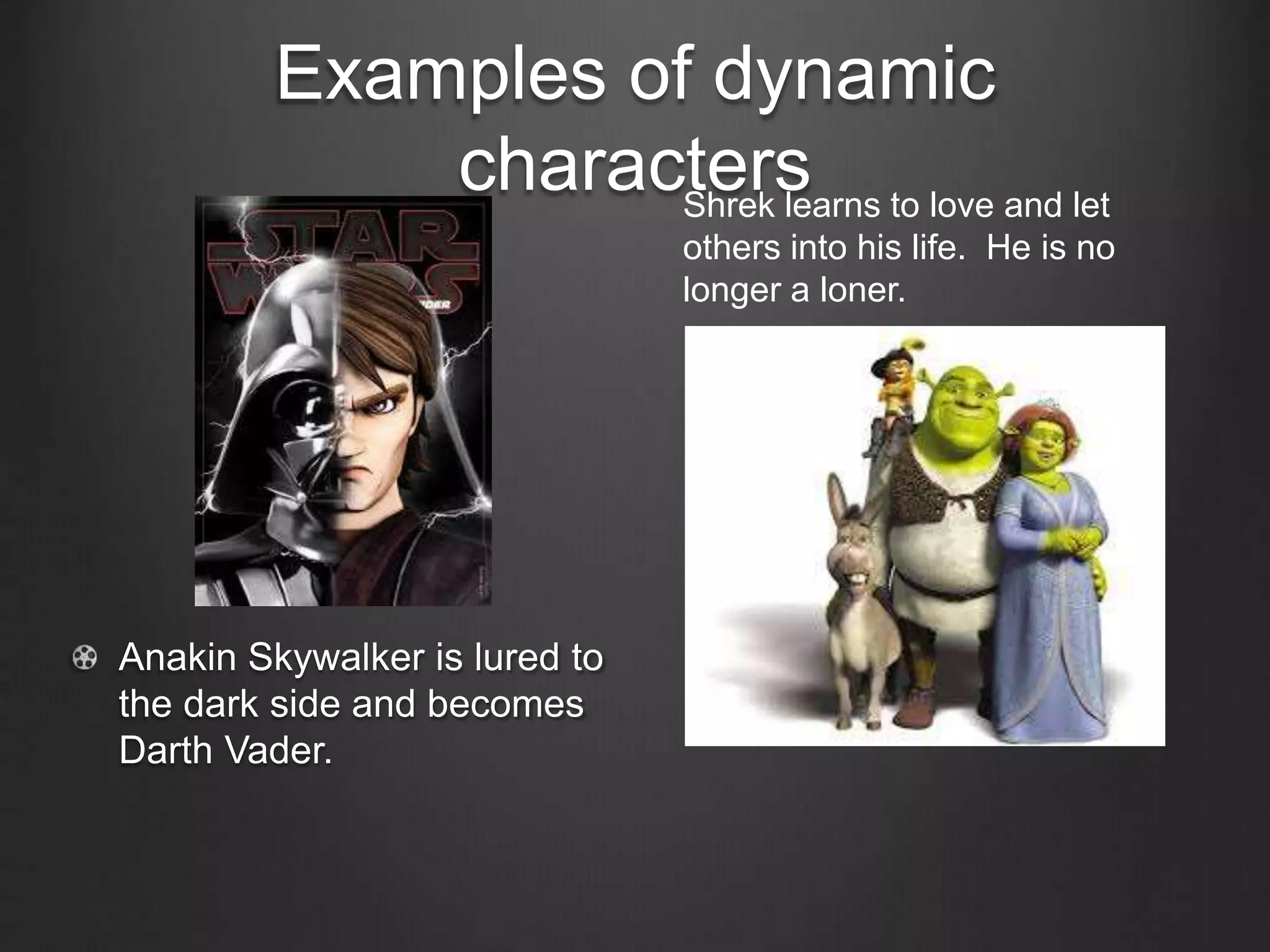
Examples of dynamic
characters
Anakin Skywalker is lured to
the dark side and becomes
Darth Vader.
Shrek learns to love and let
others into his life. He is no
longer a loner.
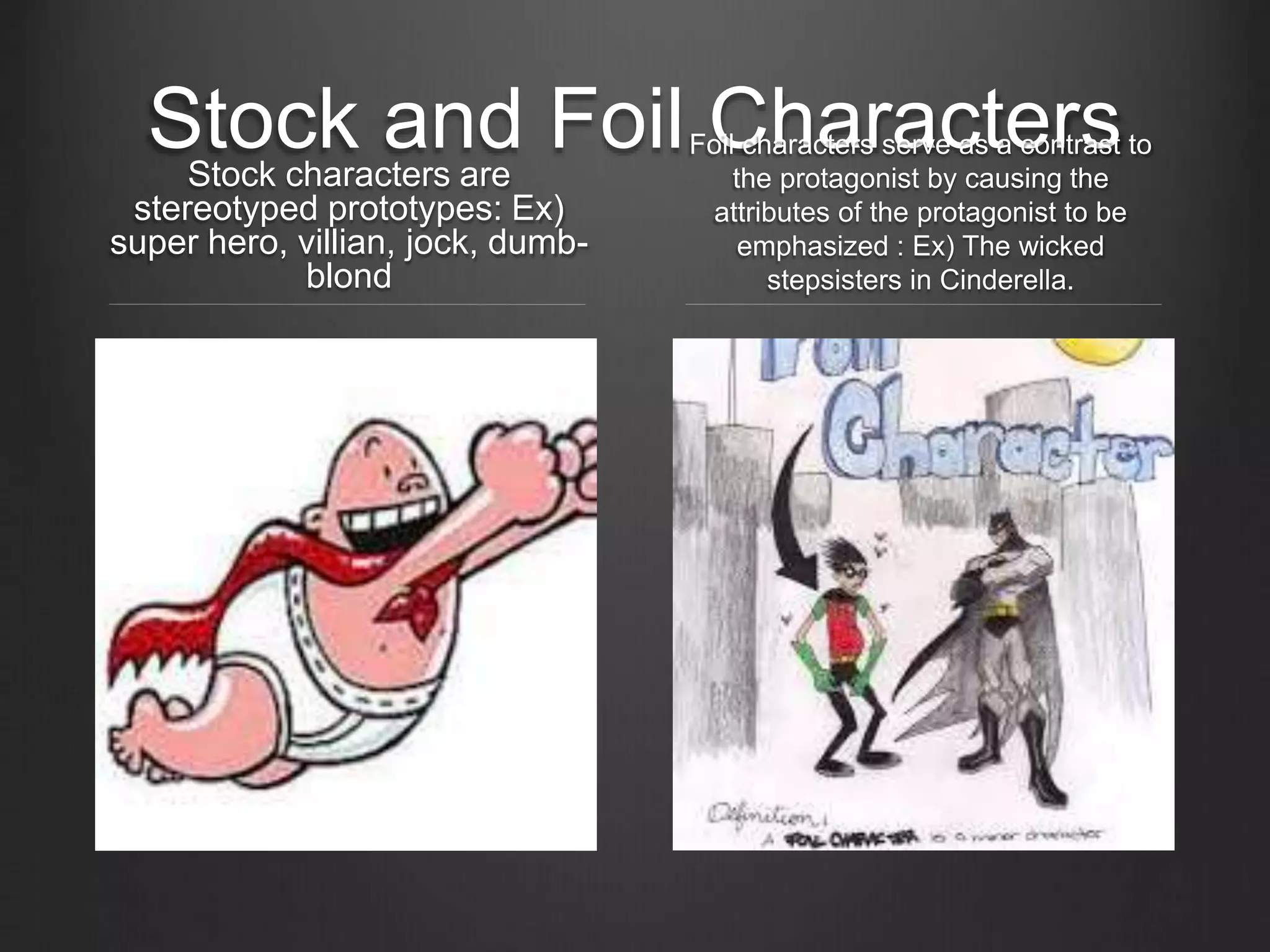
Stock and Foil CharactersStock characters are
stereotyped prototypes: Ex)
super hero, villian, jock, dumb-
blond
Foil characters serve as a contrast to
the protagonist by causing the
attributes of the protagonist to be
emphasized : Ex) The wicked
stepsisters in Cinderella.
Summary of characters
Protagonist—the story revolves around the character.
Antagonist—the character who acts against the protagonist.
Flat Character—one who is not very developed.
Round Character—one who is mutli-dimensional and complex.
Static Character—one who stays the same throughout the story.
Dynamic Character—one who changes over the course of the
story.
Stock character- a character the represents an obvious
stereotype
Foil character- a character as serves as a contrast to the
protagonist, causing the attributes of the main character to be
emphasized.

Types of Characters

  • 1.
  • 2.
    Primary Characters A primary characteris a main character in literature. There can be one or even a couple of primary characters in a novel. They are essential to the plot of the literary work.
  • 3.
    Protagonist The story isshaped around the protagonist. He is the one trying to achieve a goal in the story. The protagonist is often the main character, but doesn’t necessarily have to be. Usually the reader sympathizes with the protagonist.
  • 4.
  • 5.
    Protagonist The protagonist canbe and often is the narrator. The narrator can also be an outside figure who observes what is happening to the protagonist and reports it to the audience, and in this case would not be considered to be a character in the book.
  • 6.
    Protagonist The protagonist doesn't haveto be a hero. The character might not be likeable but he is still the protagonist because the story is mainly about him.
  • 7.
    Example: Protagonists don’t haveto be likeable The Grinch does a lot of terrible things—sneaks into homes, steals presents, tries to ruin Christmas. He is not likeable for much of the story yet he is the protagonist because the story is about him.
  • 8.
    antagonist The character who actsagainst the protagonist is called the antagonist. The antagonist opposes the protagonist and causes problems for him.
  • 9.
  • 10.
    Antagonist Remember the antagonist doesn't haveto be a bad guy. Sometimes the antagonist can be a group of people combined or even an institution.
  • 11.
    Secondary characters In anovel, you are also introduced to many secondary or minor characters. These characters still play a role in the development of the story and have a purpose, but their role is smaller than the major characters. Some examples of a secondary character’s purpose: Give background information Showcase the main character’s personality through their interactions Help the character solve the conflict
  • 12.
    Flat character A flatcharacter is one that often fits into a stereotype. The character is not very developed. We only see one side of the flat character. Few traits shown. Usually, the flat characters are the secondary characters.
  • 13.
    Example of FlatCharacter Suppose there is a grandma in the story. The grandma is: Kind Loves her grandchildren Comforts and takes care of others If this is all we see of the grandma character, then she’s a flat character.
  • 14.
    Round characters A roundcharacter is one that is multi-dimensional just like real people are. These characters are complex and we get to see a glimpse of their complexity in the novel. Usually your protagonist, and often your antagonist, are round characters.
  • 15.
    Example of around character Gru is a round character because we see many sides of him and he reveals a range of emotions. Is an over-protective father Has ambitions to steal the moon Falls in love Gets crabby and irritable at people Inspires loyalty from his minions Smart enough to come up with evil plans Is jealous of younger super-villains Tries to leave behind his life of crime
  • 16.
    Static characters A staticcharacter doesn't change. Character is exactly the same at end of the novel as he was at the beginning of the novel. This may be because he is a flat character or he just doesn't learn from his experiences. Example: Stepmom mean at the beginning and the end of the story.
  • 17.
    Dynamic characters A dynamiccharacter is one that changes over the course of the story. It may be a simple shift in attitude or a complete turn-around. The character might be wiser or might change his path in life altogether. The change might not be for the better.
  • 18.
    Examples of dynamic characters AnakinSkywalker is lured to the dark side and becomes Darth Vader. Shrek learns to love and let others into his life. He is no longer a loner.
  • 19.
    Stock and FoilCharactersStock characters are stereotyped prototypes: Ex) super hero, villian, jock, dumb- blond Foil characters serve as a contrast to the protagonist by causing the attributes of the protagonist to be emphasized : Ex) The wicked stepsisters in Cinderella.
  • 20.
    Summary of characters Protagonist—thestory revolves around the character. Antagonist—the character who acts against the protagonist. Flat Character—one who is not very developed. Round Character—one who is mutli-dimensional and complex. Static Character—one who stays the same throughout the story. Dynamic Character—one who changes over the course of the story. Stock character- a character the represents an obvious stereotype Foil character- a character as serves as a contrast to the protagonist, causing the attributes of the main character to be emphasized.