DEVELOPING YOUR
ANALYTICAL SKILLS

By Tony Obregon
March 12, 2012
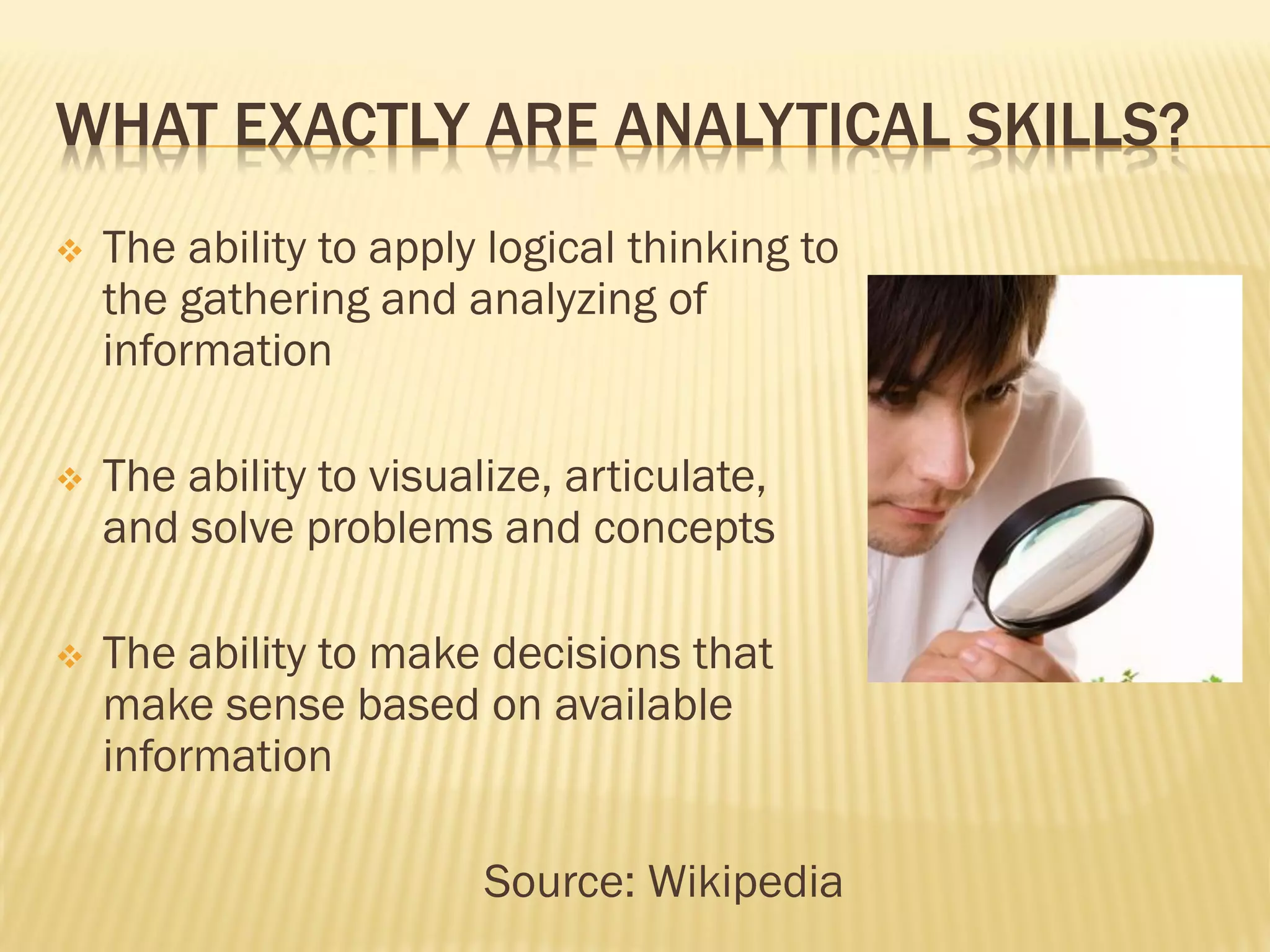
WHAT EXACTLY ARE ANALYTICAL SKILLS?
   The ability to apply logical thinking to
    the gathering and analyzing of
    information

   The ability to visualize, articulate,
    and solve problems and concepts

   The ability to make decisions that
    make sense based on available
    information

                        Source: Wikipedia
WHY ANALYZE INFORMATION?
   The political decisions we make can change the
    course of legislation locally, regionally and globally
   The economic decisions we make impact how we
    live and the future of companies and markets
   The personal decisions we make affect the
    relationships you have with family, friends and co-
    workers
   The business decisions we make can enhance the
    quality of our work and even open doors to new
    opportunities
5 TIPS TO BETTER ANALYTICAL SKILLS

 1.   Ask the right questions
 2.   Realize what you don’t know
 3.   Make no assumptions
 4.   Don’t take what you see at face value
 5.   Turn information into knowledge
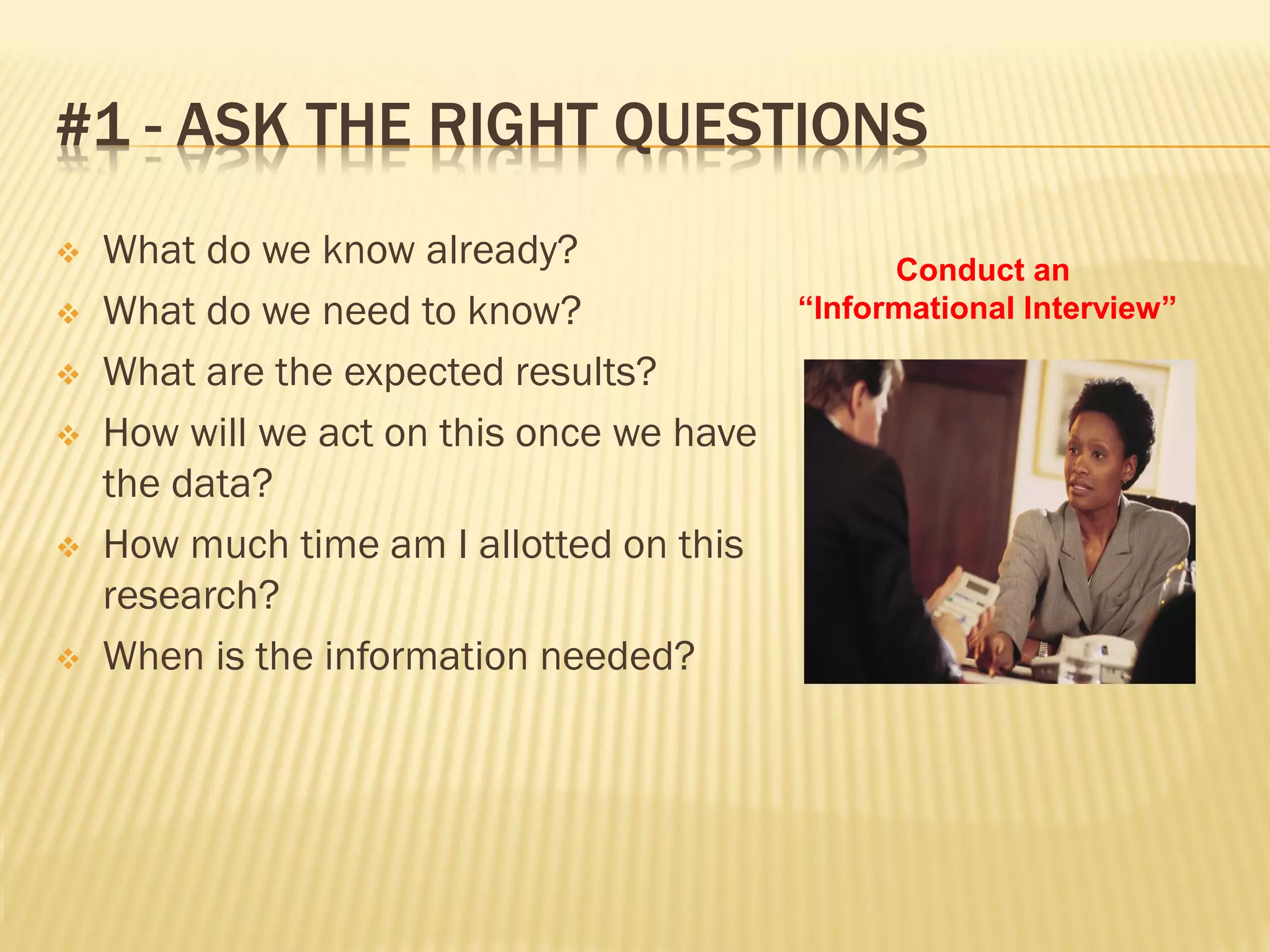
#1 - ASK THE RIGHT QUESTIONS
   What do we know already?                     Conduct an
   What do we need to know?               “Informational Interview”

   What are the expected results?
   How will we act on this once we have
    the data?
   How much time am I allotted on this
    research?
   When is the information needed?
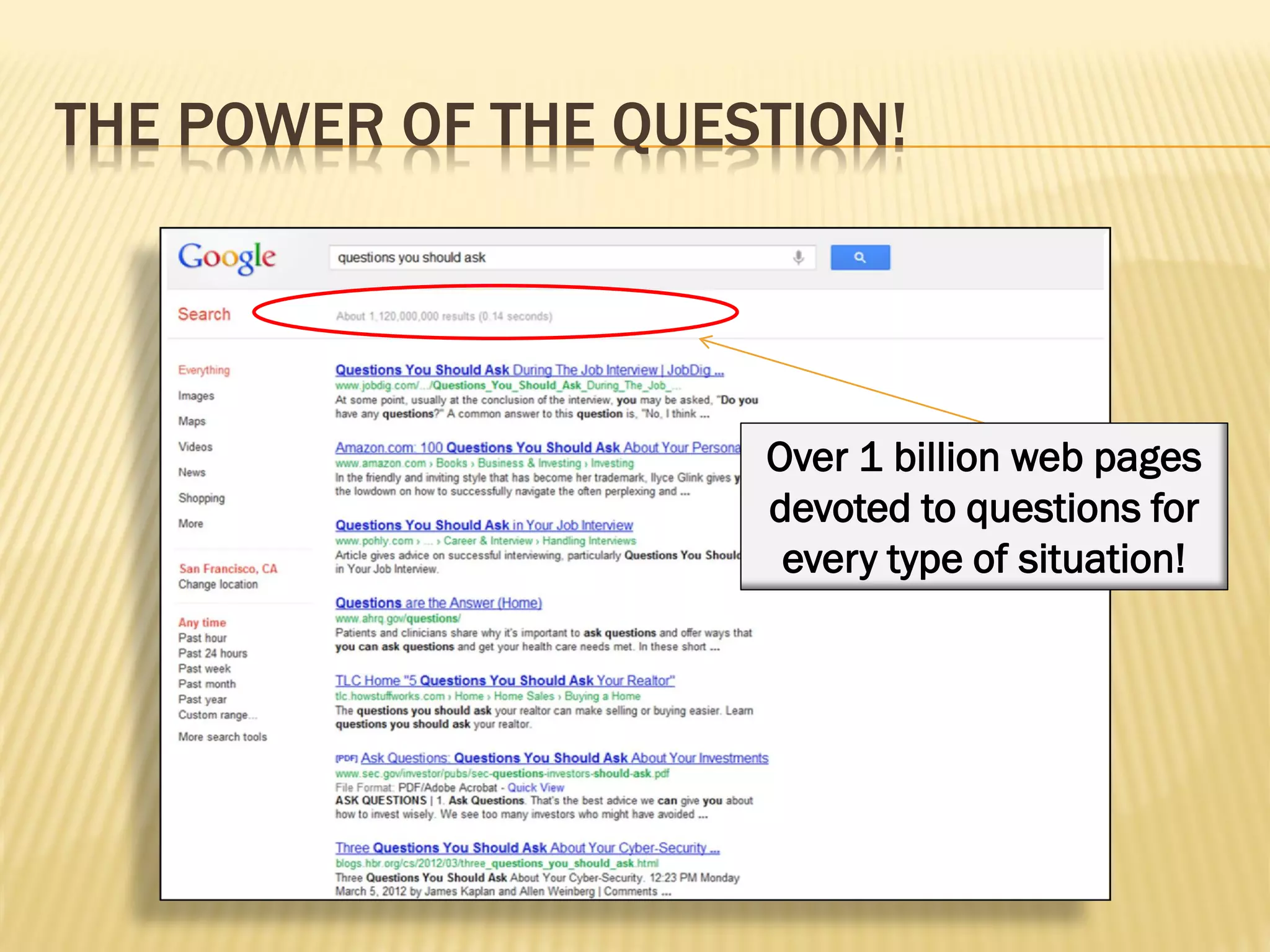
THE POWER OF THE QUESTION!


                     Over 1 billion web pages
                     devoted to questions for
                      every type of situation!
The most critical question is...


           HOW
will the information will be used
        by the requestor?
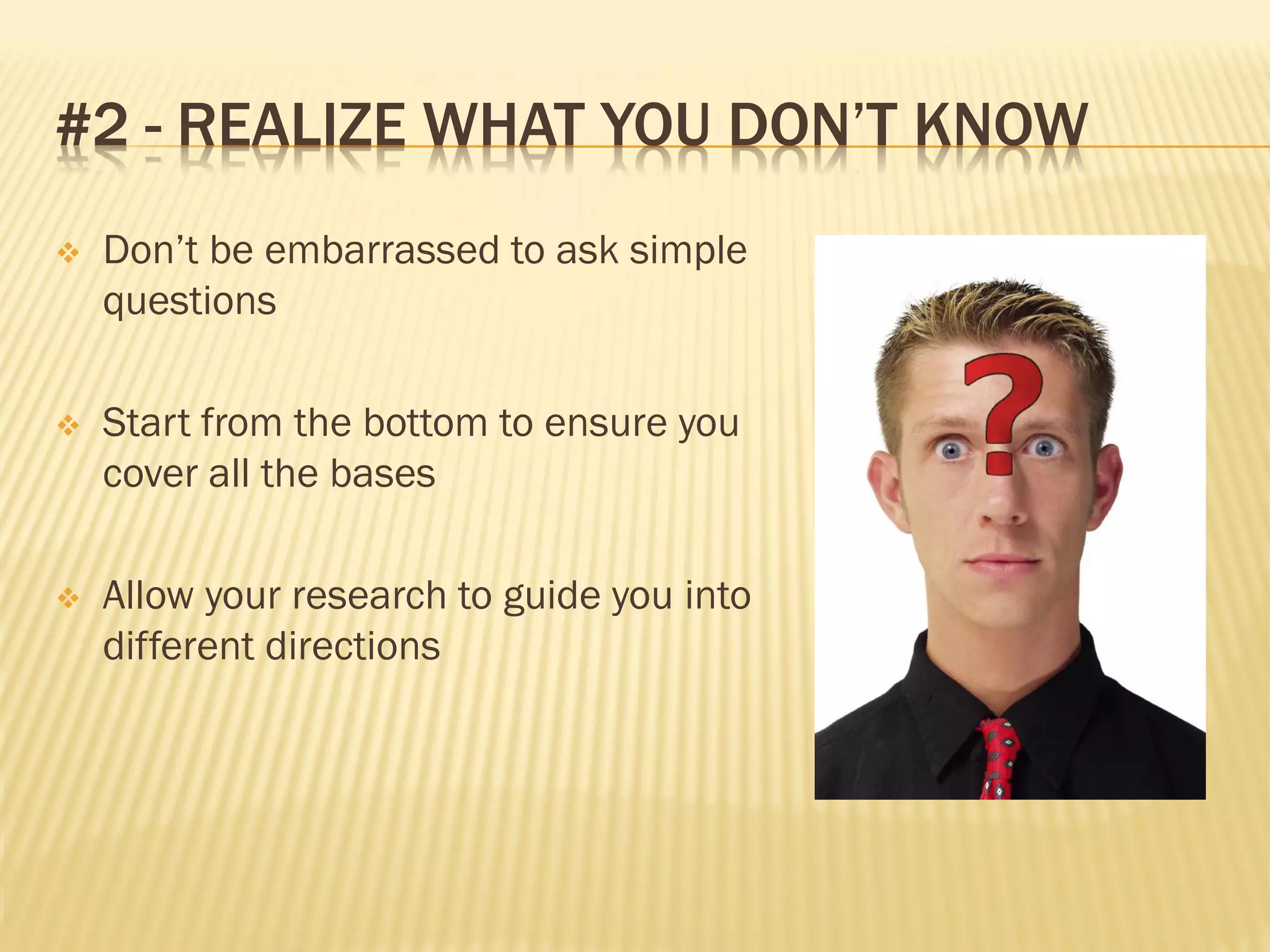
#2 - REALIZE WHAT YOU DON’T KNOW
   Don’t be embarrassed to ask simple
    questions

   Start from the bottom to ensure you
    cover all the bases

   Allow your research to guide you into
    different directions
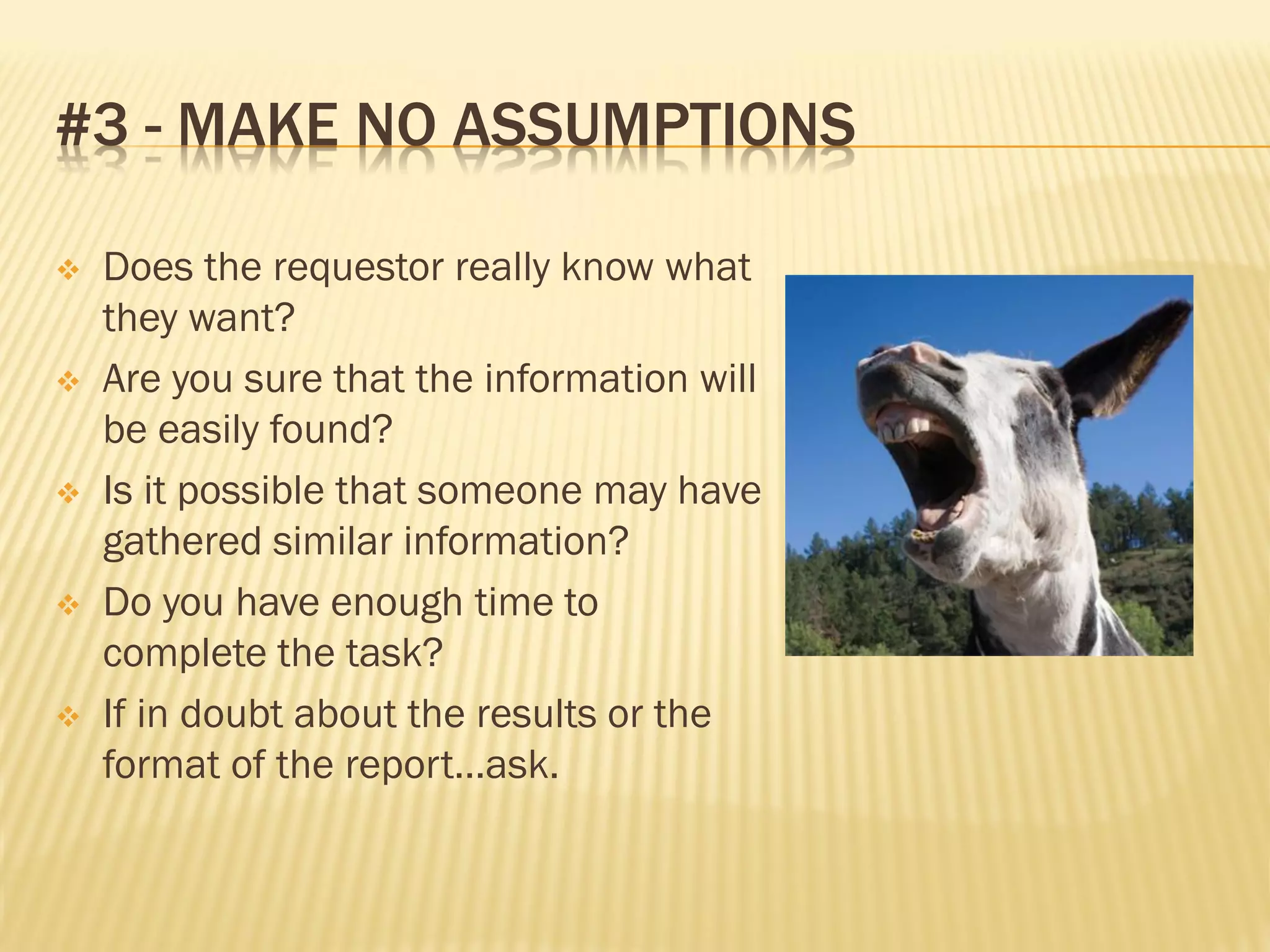
#3 - MAKE NO ASSUMPTIONS

   Does the requestor really know what
    they want?
   Are you sure that the information will
    be easily found?
   Is it possible that someone may have
    gathered similar information?
   Do you have enough time to
    complete the task?
   If in doubt about the results or the
    format of the report…ask.
#4 - DON’T TAKE THINGS AT FACE VALUE
   Errors occur by both man and
    machine
   Cross-reference statistics and
    research when possible
   Look deeper to determine the real
    value in the information
   Validate sources to ensure their
    credibility, especially those online
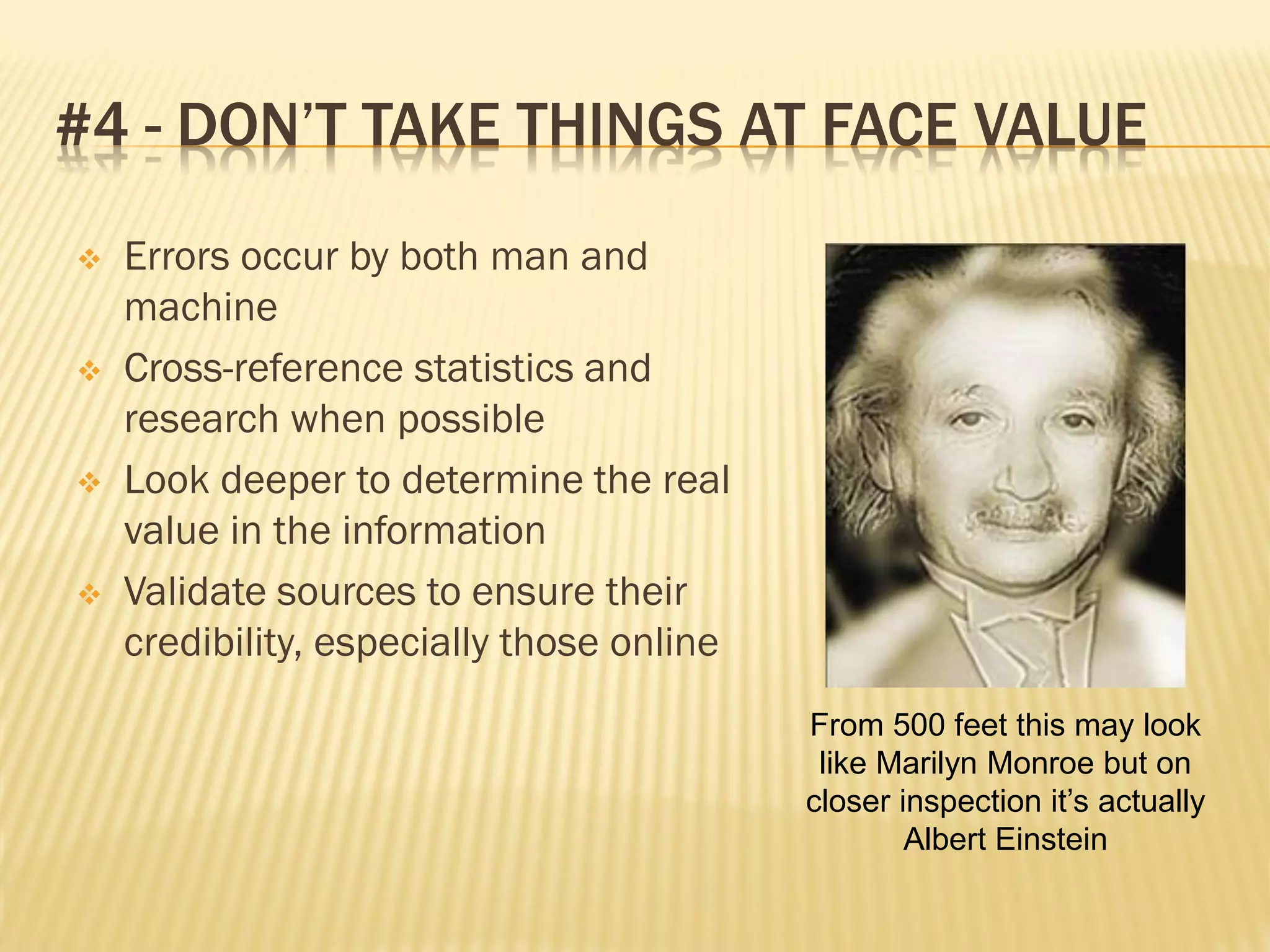
                                           From 500 feet this may look
                                            like Marilyn Monroe but on
                                           closer inspection it’s actually
                                                   Albert Einstein
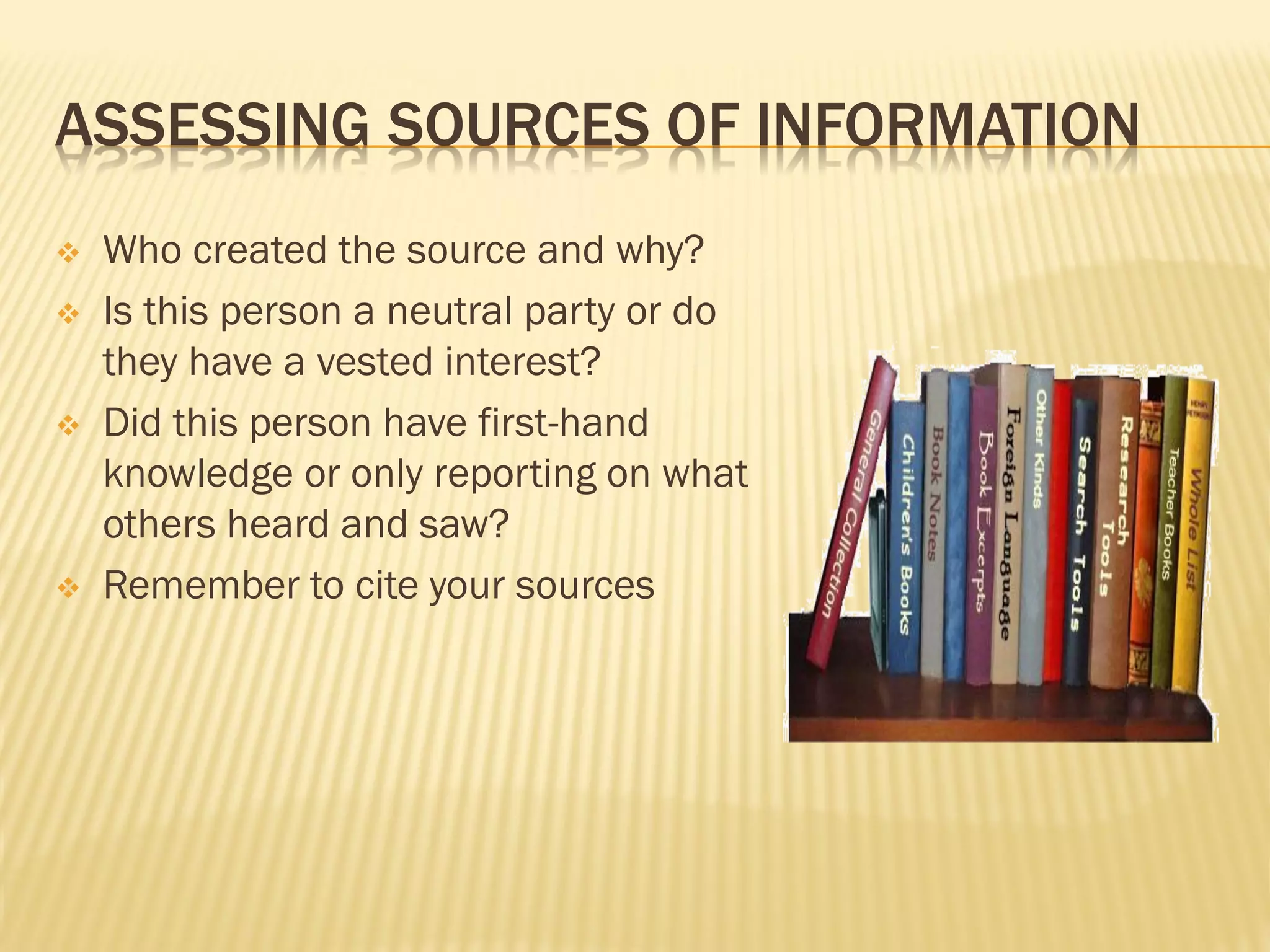
ASSESSING SOURCES OF INFORMATION
   Who created the source and why?
   Is this person a neutral party or do
    they have a vested interest?
   Did this person have first-hand
    knowledge or only reporting on what
    others heard and saw?
   Remember to cite your sources
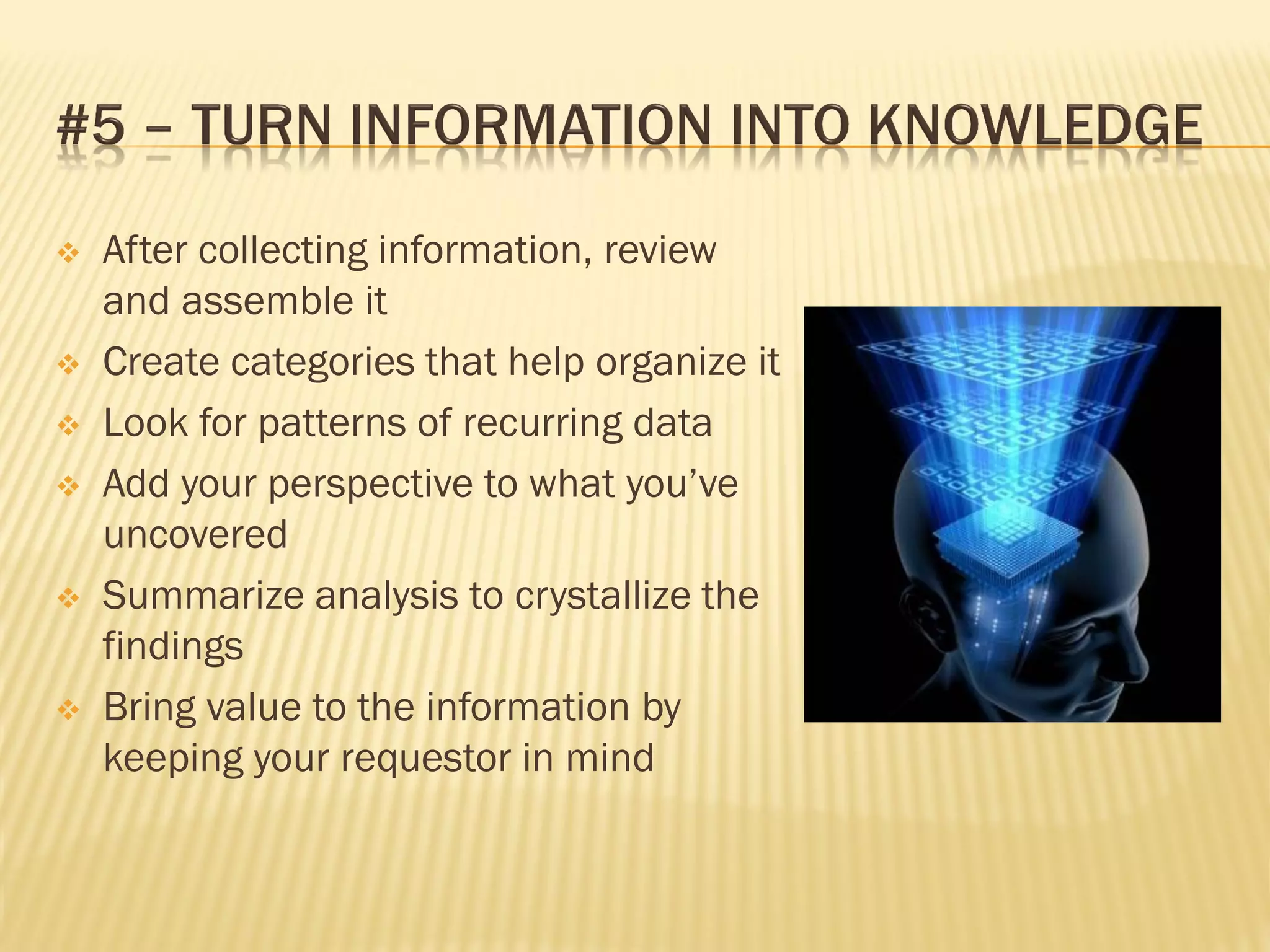
   After collecting information, review
    and assemble it
   Create categories that help organize it
   Look for patterns of recurring data
   Add your perspective to what you’ve
    uncovered
   Summarize analysis to crystallize the
    findings
   Bring value to the information by
    keeping your requestor in mind
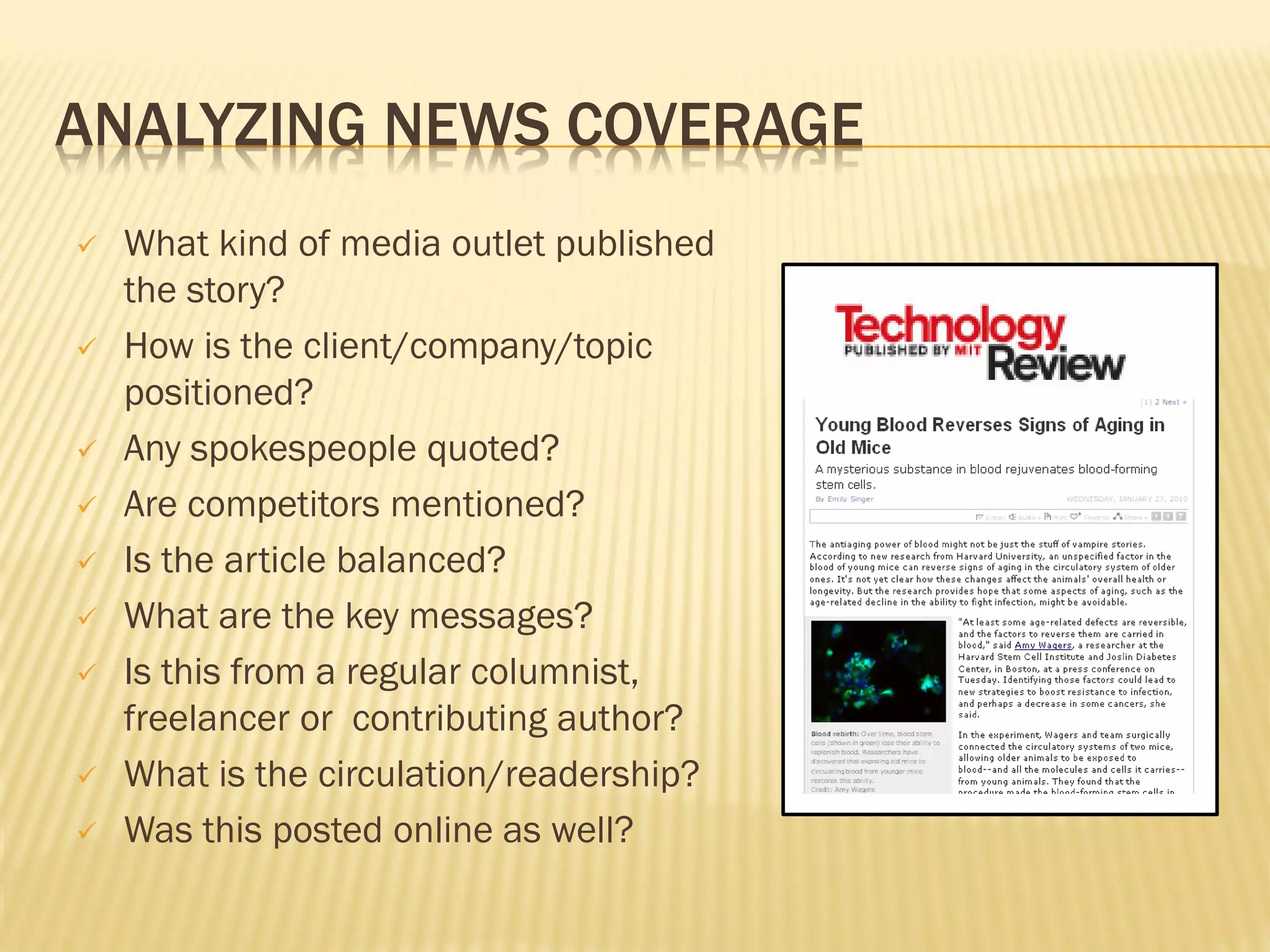
ANALYZING NEWS COVERAGE
   What kind of media outlet published
    the story?
   How is the client/company/topic
    positioned?
   Any spokespeople quoted?
   Are competitors mentioned?
   Is the article balanced?
   What are the key messages?
   Is this from a regular columnist,
    freelancer or contributing author?
   What is the circulation/readership?
   Was this posted online as well?
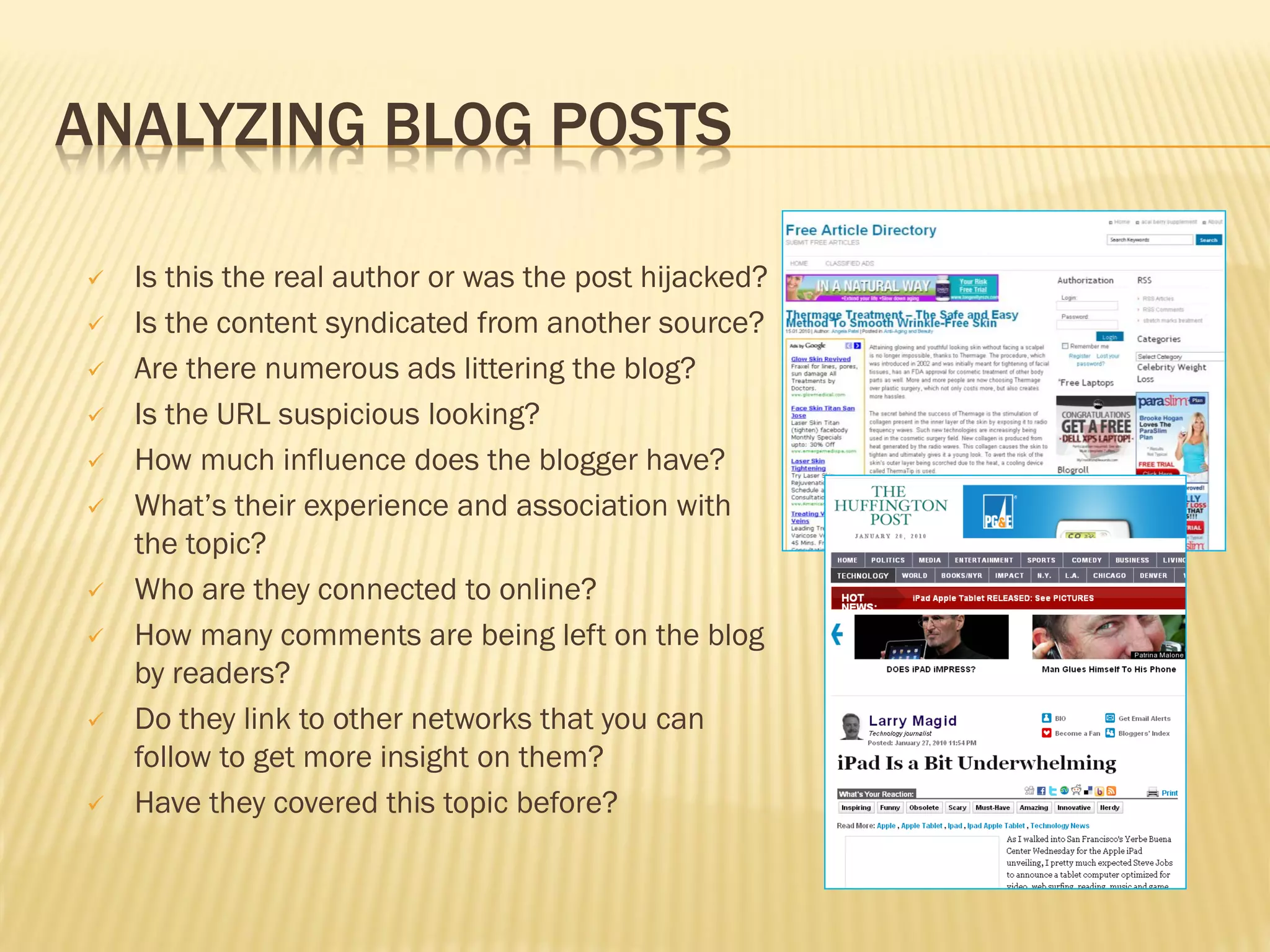
ANALYZING BLOG POSTS

   Is this the real author or was the post hijacked?
   Is the content syndicated from another source?
   Are there numerous ads littering the blog?
   Is the URL suspicious looking?
   How much influence does the blogger have?
   What’s their experience and association with
    the topic?
   Who are they connected to online?
   How many comments are being left on the blog
    by readers?
   Do they link to other networks that you can
    follow to get more insight on them?
   Have they covered this topic before?
ANALYTICAL QUIZ


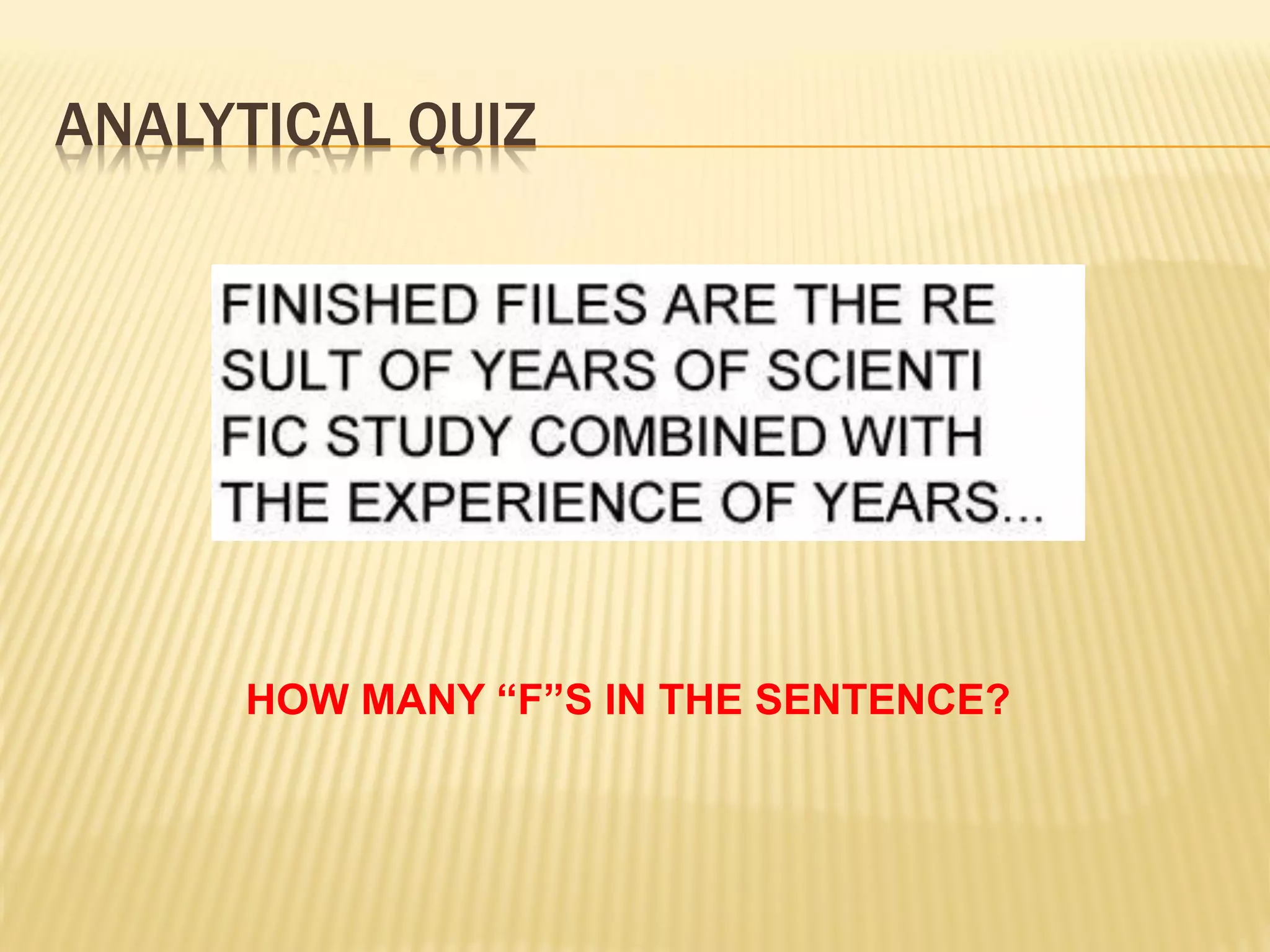
     HOW MANY “F”S IN THE SENTENCE?
ANALYTICAL QUIZ


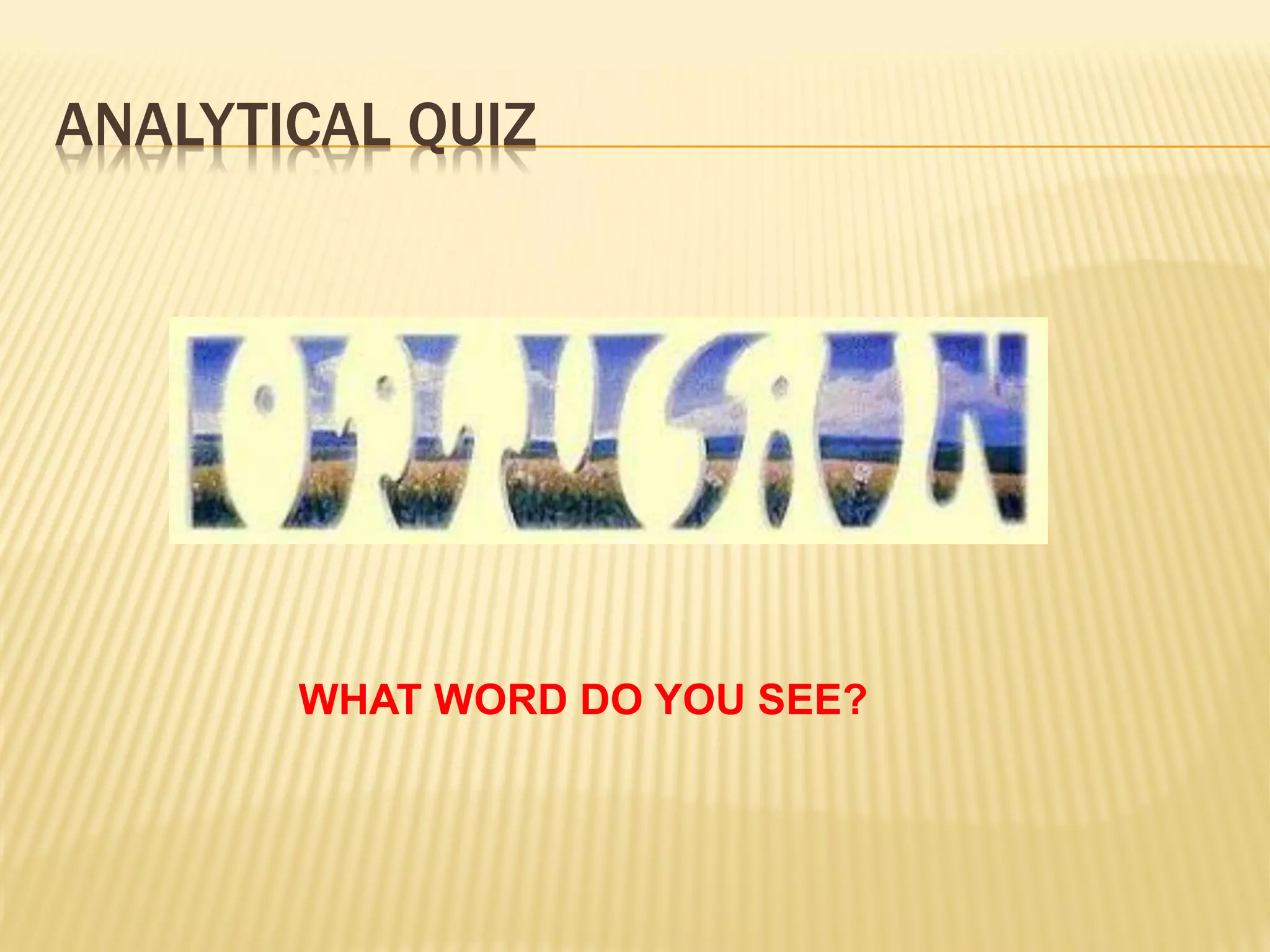
       WHAT WORD DO YOU SEE?
ANALYTICAL QUIZ


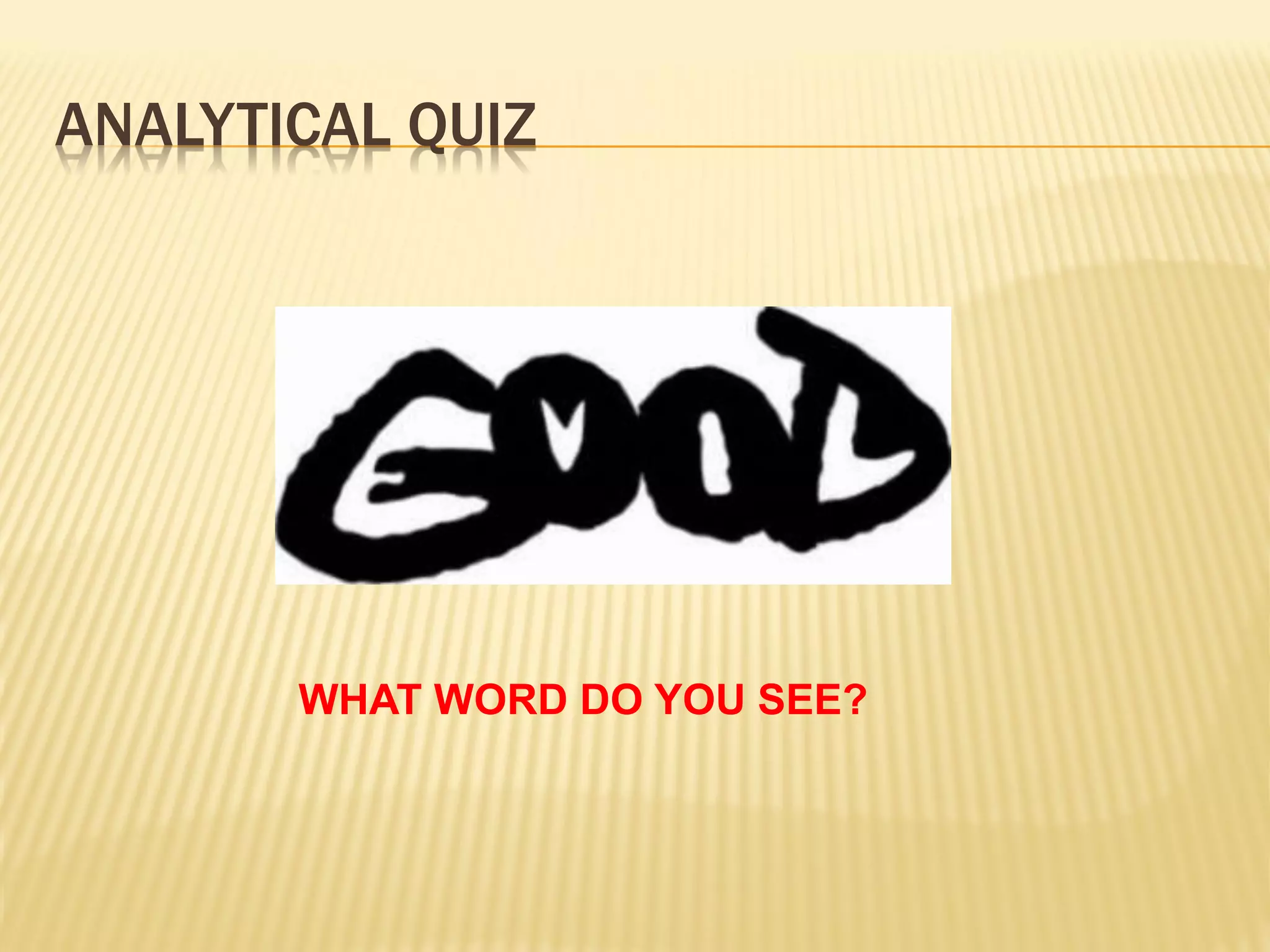
       WHAT WORD DO YOU SEE?
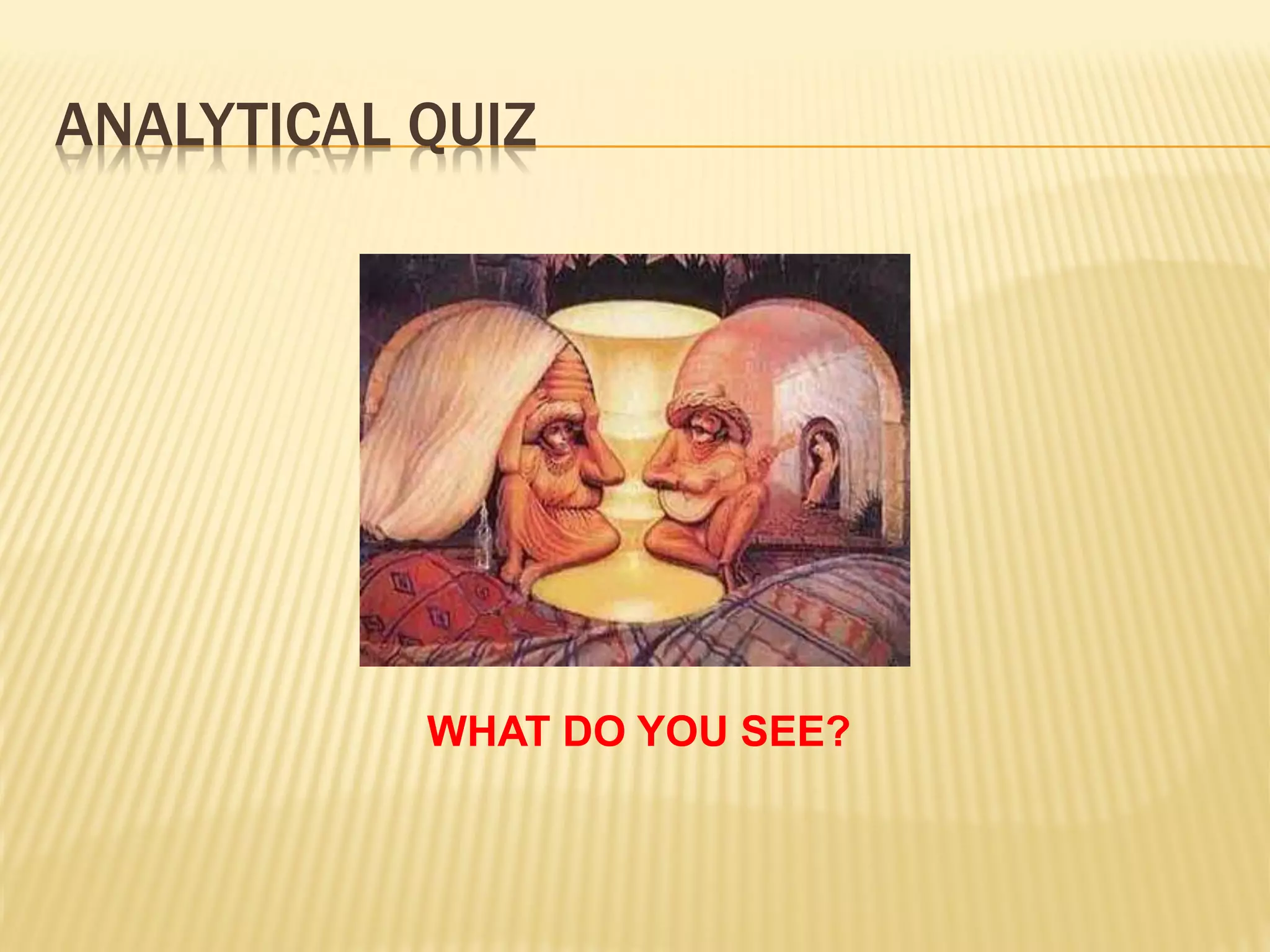
ANALYTICAL QUIZ


           WHAT DO YOU SEE?
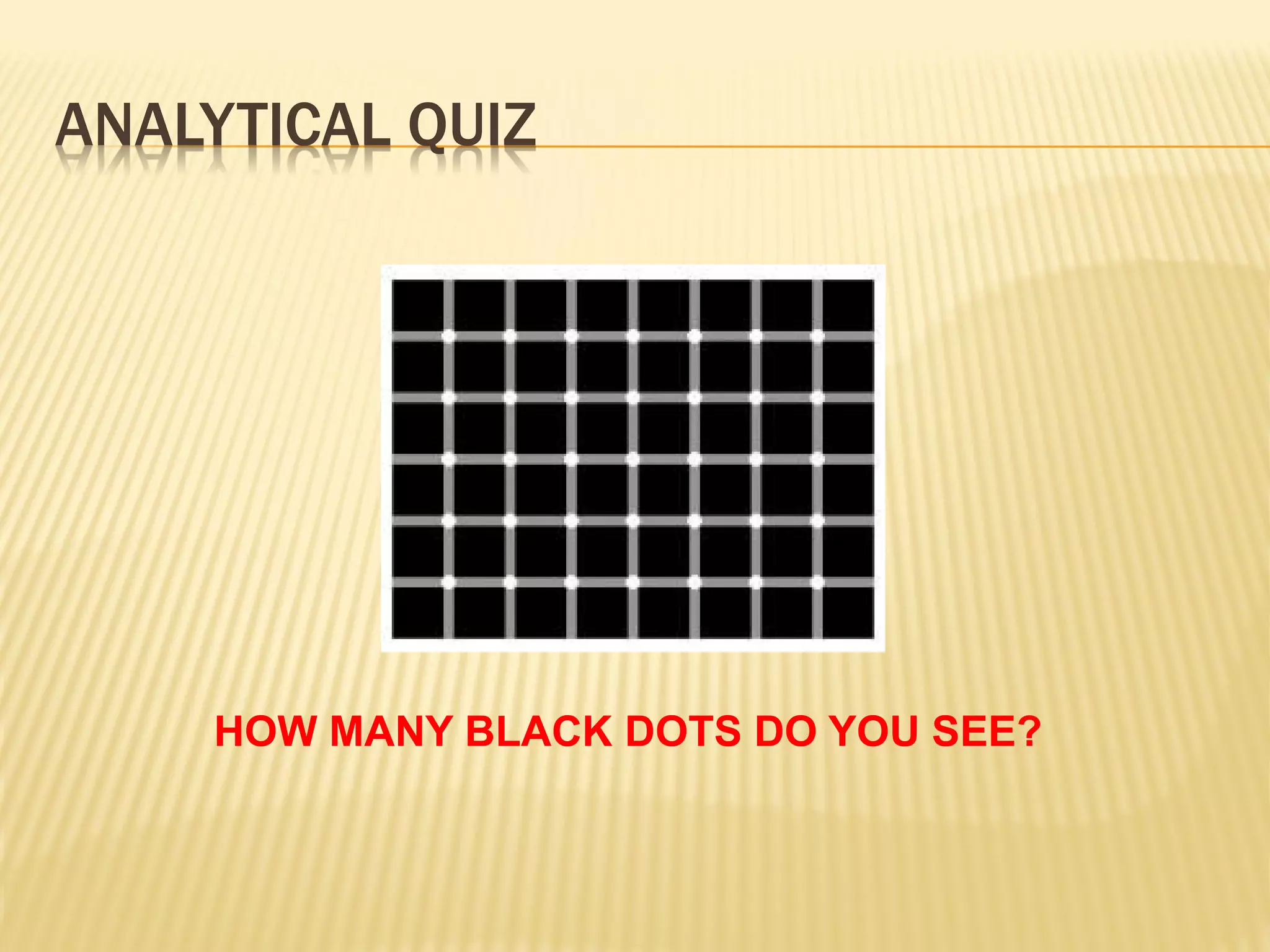
ANALYTICAL QUIZ


    HOW MANY BLACK DOTS DO YOU SEE?
THE END


www.tonyobregon.com

Developing your analytical skills

  • 1.
    DEVELOPING YOUR ANALYTICAL SKILLS ByTony Obregon March 12, 2012
  • 2.
    WHAT EXACTLY AREANALYTICAL SKILLS?  The ability to apply logical thinking to the gathering and analyzing of information  The ability to visualize, articulate, and solve problems and concepts  The ability to make decisions that make sense based on available information Source: Wikipedia
  • 3.
    WHY ANALYZE INFORMATION?  The political decisions we make can change the course of legislation locally, regionally and globally  The economic decisions we make impact how we live and the future of companies and markets  The personal decisions we make affect the relationships you have with family, friends and co- workers  The business decisions we make can enhance the quality of our work and even open doors to new opportunities
  • 4.
    5 TIPS TOBETTER ANALYTICAL SKILLS 1. Ask the right questions 2. Realize what you don’t know 3. Make no assumptions 4. Don’t take what you see at face value 5. Turn information into knowledge
  • 5.
    #1 - ASKTHE RIGHT QUESTIONS  What do we know already? Conduct an  What do we need to know? “Informational Interview”  What are the expected results?  How will we act on this once we have the data?  How much time am I allotted on this research?  When is the information needed?
  • 6.
    THE POWER OFTHE QUESTION! Over 1 billion web pages devoted to questions for every type of situation!
  • 7.
    The most criticalquestion is... HOW will the information will be used by the requestor?
  • 8.
    #2 - REALIZEWHAT YOU DON’T KNOW  Don’t be embarrassed to ask simple questions  Start from the bottom to ensure you cover all the bases  Allow your research to guide you into different directions
  • 9.
    #3 - MAKENO ASSUMPTIONS  Does the requestor really know what they want?  Are you sure that the information will be easily found?  Is it possible that someone may have gathered similar information?  Do you have enough time to complete the task?  If in doubt about the results or the format of the report…ask.
  • 10.
    #4 - DON’TTAKE THINGS AT FACE VALUE  Errors occur by both man and machine  Cross-reference statistics and research when possible  Look deeper to determine the real value in the information  Validate sources to ensure their credibility, especially those online From 500 feet this may look like Marilyn Monroe but on closer inspection it’s actually Albert Einstein
  • 11.
    ASSESSING SOURCES OFINFORMATION  Who created the source and why?  Is this person a neutral party or do they have a vested interest?  Did this person have first-hand knowledge or only reporting on what others heard and saw?  Remember to cite your sources
  • 12.
    After collecting information, review and assemble it  Create categories that help organize it  Look for patterns of recurring data  Add your perspective to what you’ve uncovered  Summarize analysis to crystallize the findings  Bring value to the information by keeping your requestor in mind
  • 13.
    ANALYZING NEWS COVERAGE  What kind of media outlet published the story?  How is the client/company/topic positioned?  Any spokespeople quoted?  Are competitors mentioned?  Is the article balanced?  What are the key messages?  Is this from a regular columnist, freelancer or contributing author?  What is the circulation/readership?  Was this posted online as well?
  • 14.
    ANALYZING BLOG POSTS  Is this the real author or was the post hijacked?  Is the content syndicated from another source?  Are there numerous ads littering the blog?  Is the URL suspicious looking?  How much influence does the blogger have?  What’s their experience and association with the topic?  Who are they connected to online?  How many comments are being left on the blog by readers?  Do they link to other networks that you can follow to get more insight on them?  Have they covered this topic before?
  • 15.
    ANALYTICAL QUIZ HOW MANY “F”S IN THE SENTENCE?
  • 16.
    ANALYTICAL QUIZ WHAT WORD DO YOU SEE?
  • 17.
    ANALYTICAL QUIZ WHAT WORD DO YOU SEE?
  • 18.
    ANALYTICAL QUIZ WHAT DO YOU SEE?
  • 19.
    ANALYTICAL QUIZ HOW MANY BLACK DOTS DO YOU SEE?
  • 20.