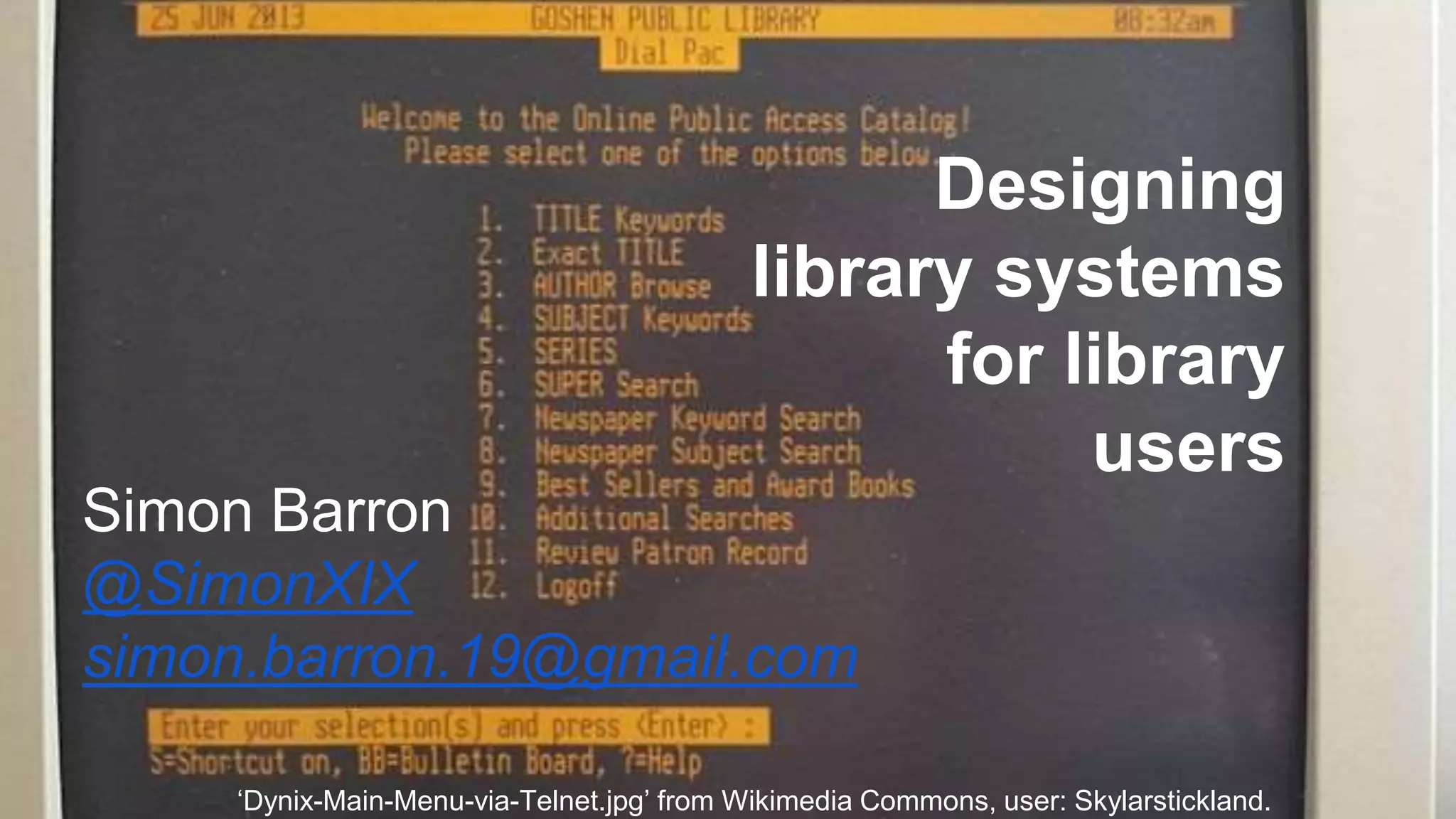




Designing
library systems
for library
users
Simon Barron
@SimonXIX
simon.barron.19@gmail.com
‘Dynix-Main-Menu-via-Telnet.jpg’ from Wikimedia Commons, user: Skylarstickland.
‘Citation needed’ from Flickr user: futureatlas.com
“…there is little to no evidence about the
consideration of user needs and
perspectives in the literature about the
development of the early Online Public
Access Catalogues (OPACS).”
Christensen, A., 2013. ‘Next-generation
catalogues: what do users think?’ In:
Chambers, S., ed., 2013. Catalogue 2.0: the
future of the library catalogue. London: Facet
Publishing, p. 2.
'Day 174: Amazing Push-Button Shushing Action!' by Flickr user: Laura Taylor.
Simon’s remarks do not
reflect the views of
either SOAS or the
University of London.
DISCLAIMER:
Though they really should. ‘exclamation mark’ by Flickr user: Leo Reynolds.
‘Citation needed’ from Flickr user: futureatlas.com
User eXperience
1.0
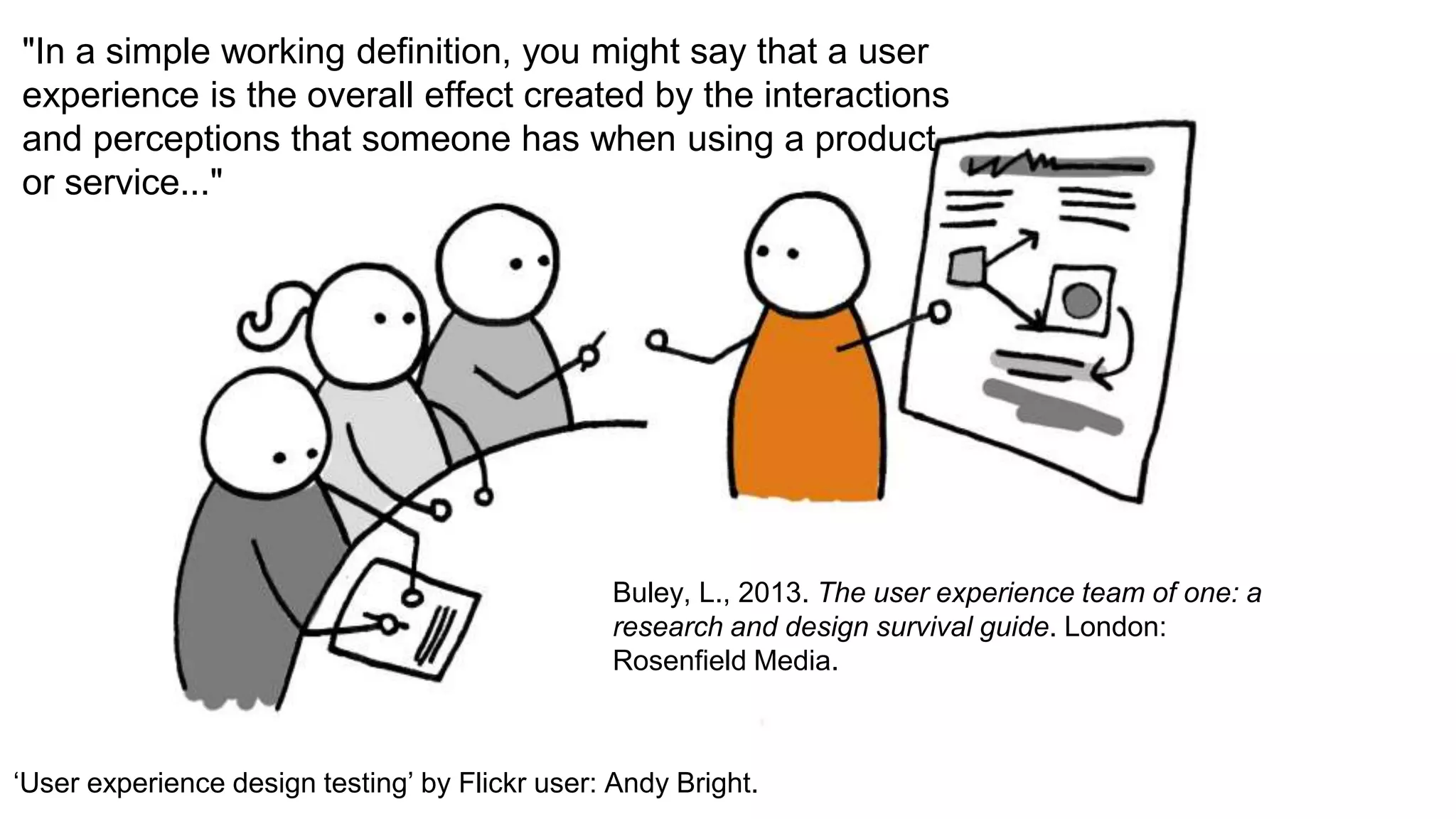
"In a simple working definition, you might say that a user
experience is the overall effect created by the interactions
and perceptions that someone has when using a product
or service..."
Buley, L., 2013. The user experience team of one: a
research and design survival guide. London:
Rosenfield Media.
‘User experience design testing’ by Flickr user: Andy Bright.
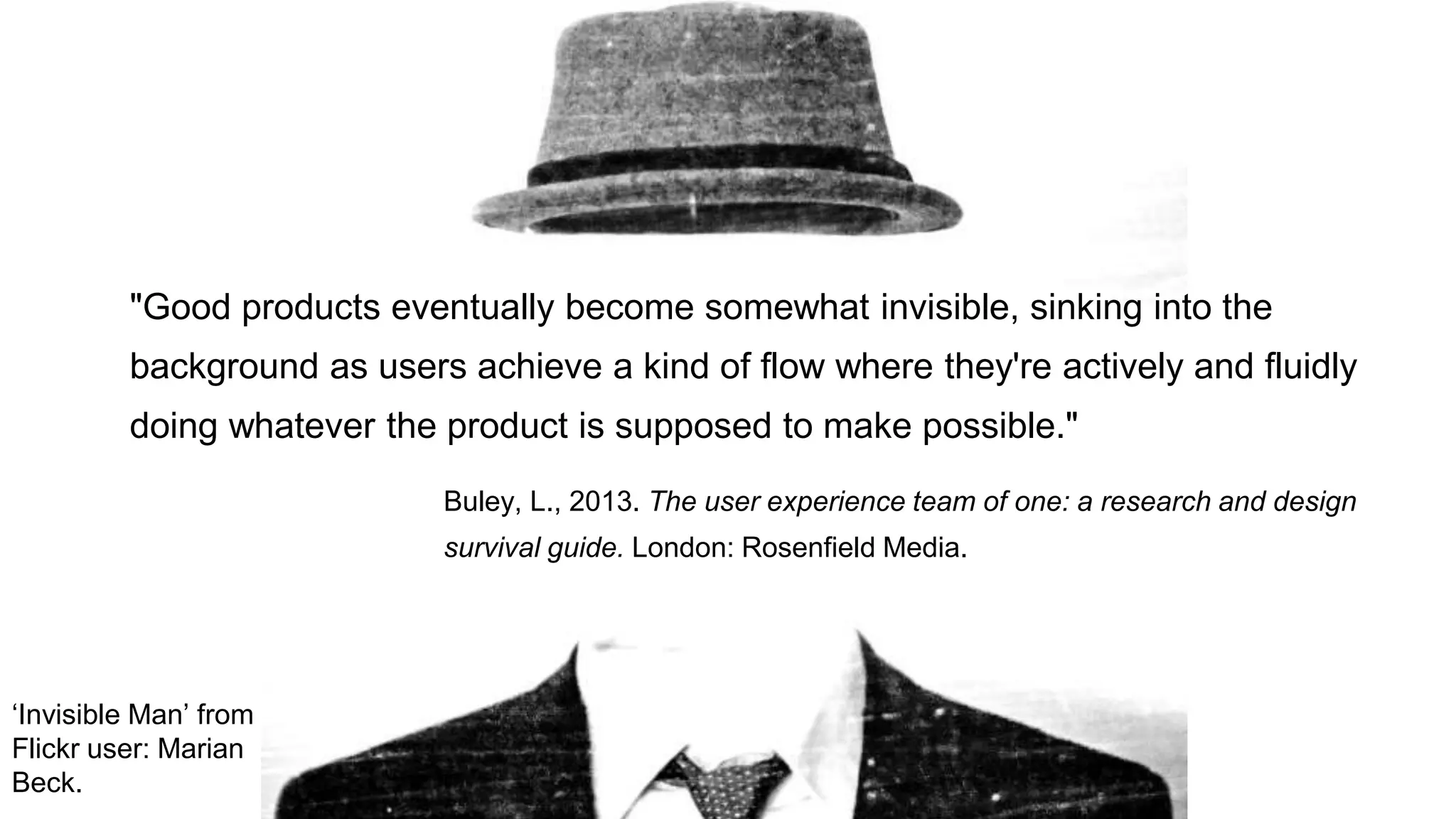
"Good products eventually become somewhat invisible, sinking into the
background as users achieve a kind of flow where they're actively and fluidly
doing whatever the product is supposed to make possible."
Buley, L., 2013. The user experience team of one: a research and design
survival guide. London: Rosenfield Media.
‘Invisible Man’ from
Flickr user: Marian
Beck.
‘running faucet’ from Flickr user: Steve Johnson
Mihaly Csikszentmihalyi
mee-hy cheek-sent-mə-hy-ee
Csikszentmihalyi, M., 2008.
Flow: the psychology of
optimal experience. Harper
Perennial.
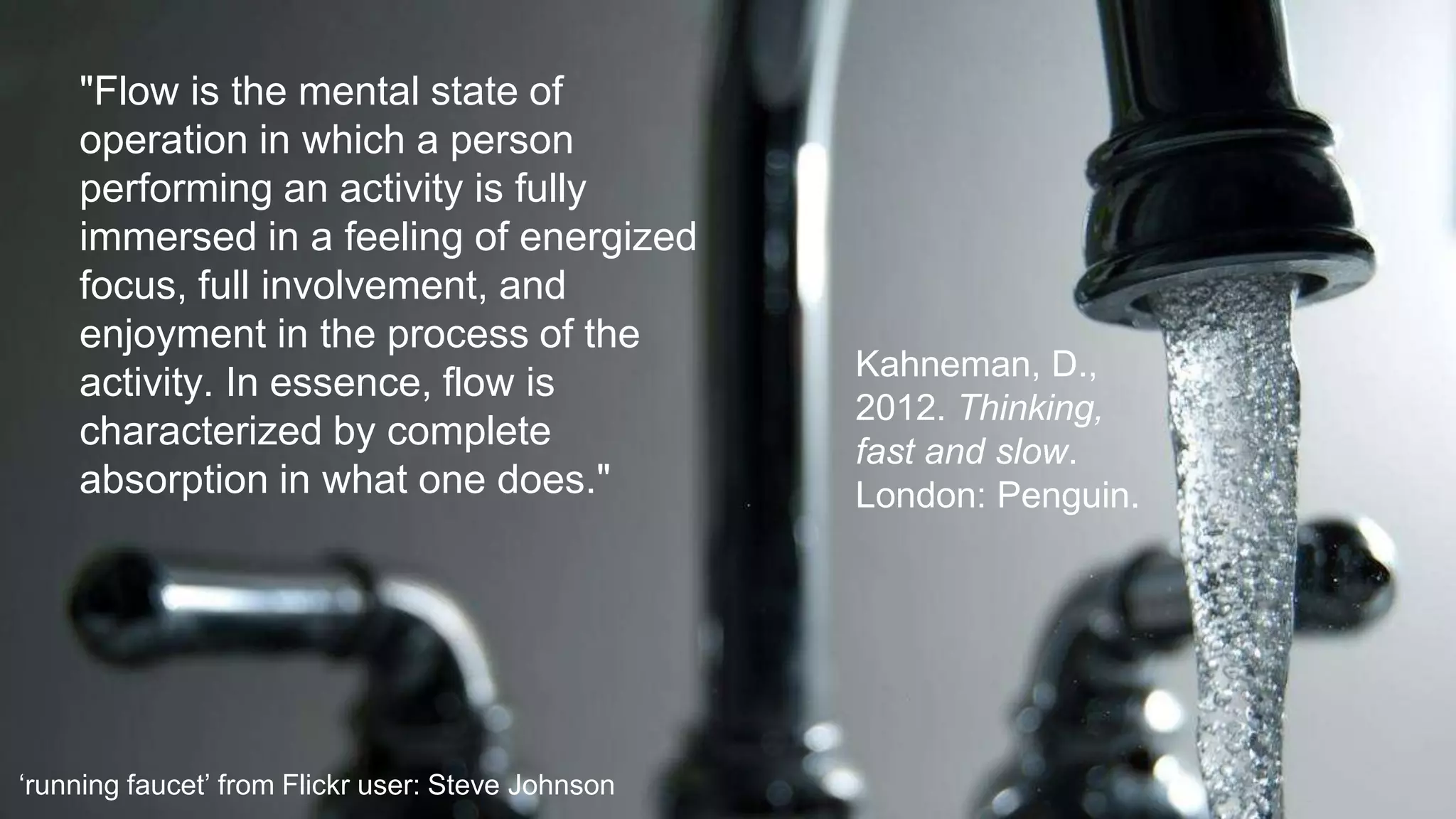
"Flow is the mental state of
operation in which a person
performing an activity is fully
immersed in a feeling of energized
focus, full involvement, and
enjoyment in the process of the
activity. In essence, flow is
characterized by complete
absorption in what one does."
Kahneman, D.,
2012. Thinking,
fast and slow.
London: Penguin.
‘running faucet’ from Flickr user: Steve Johnson
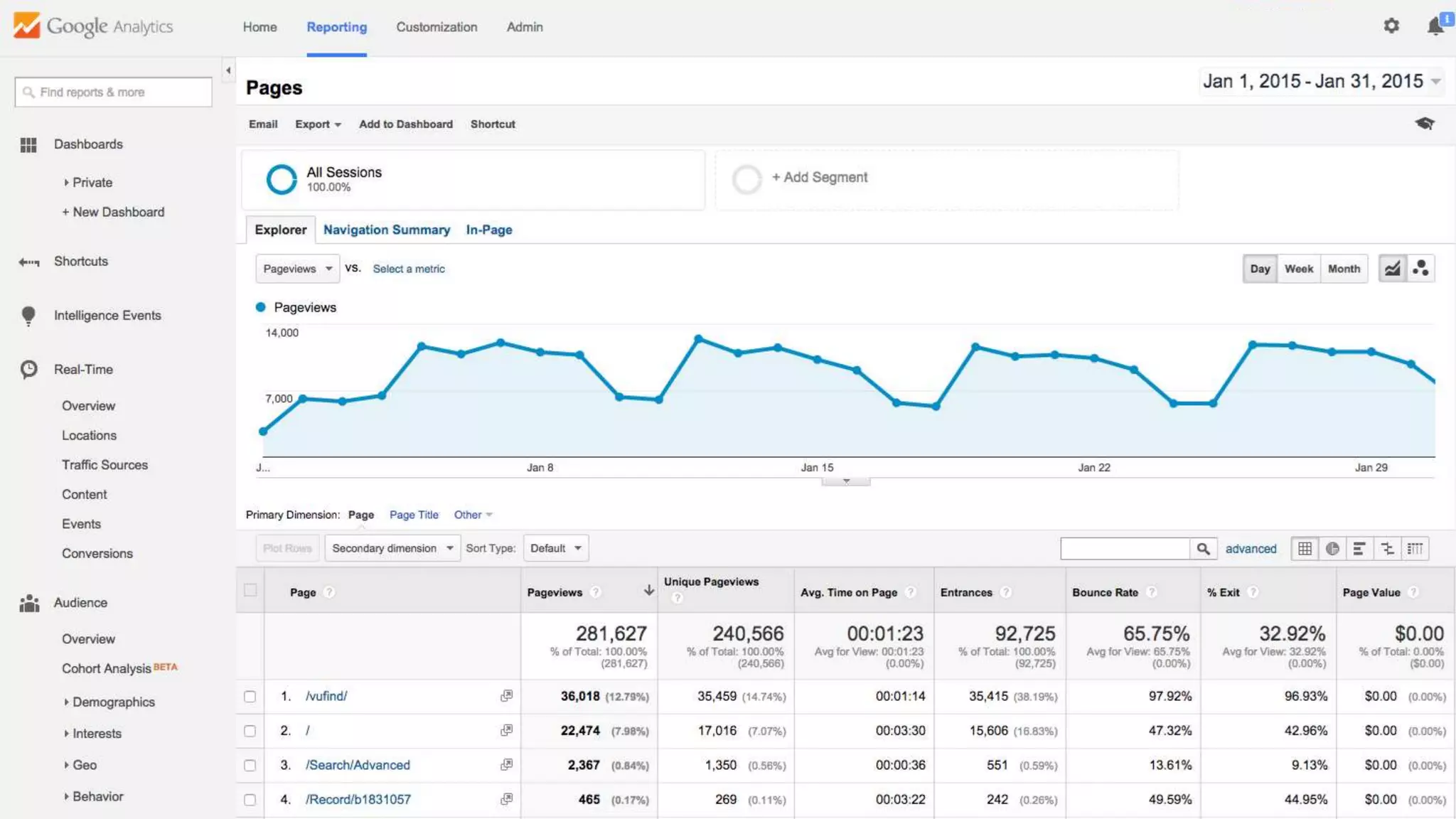
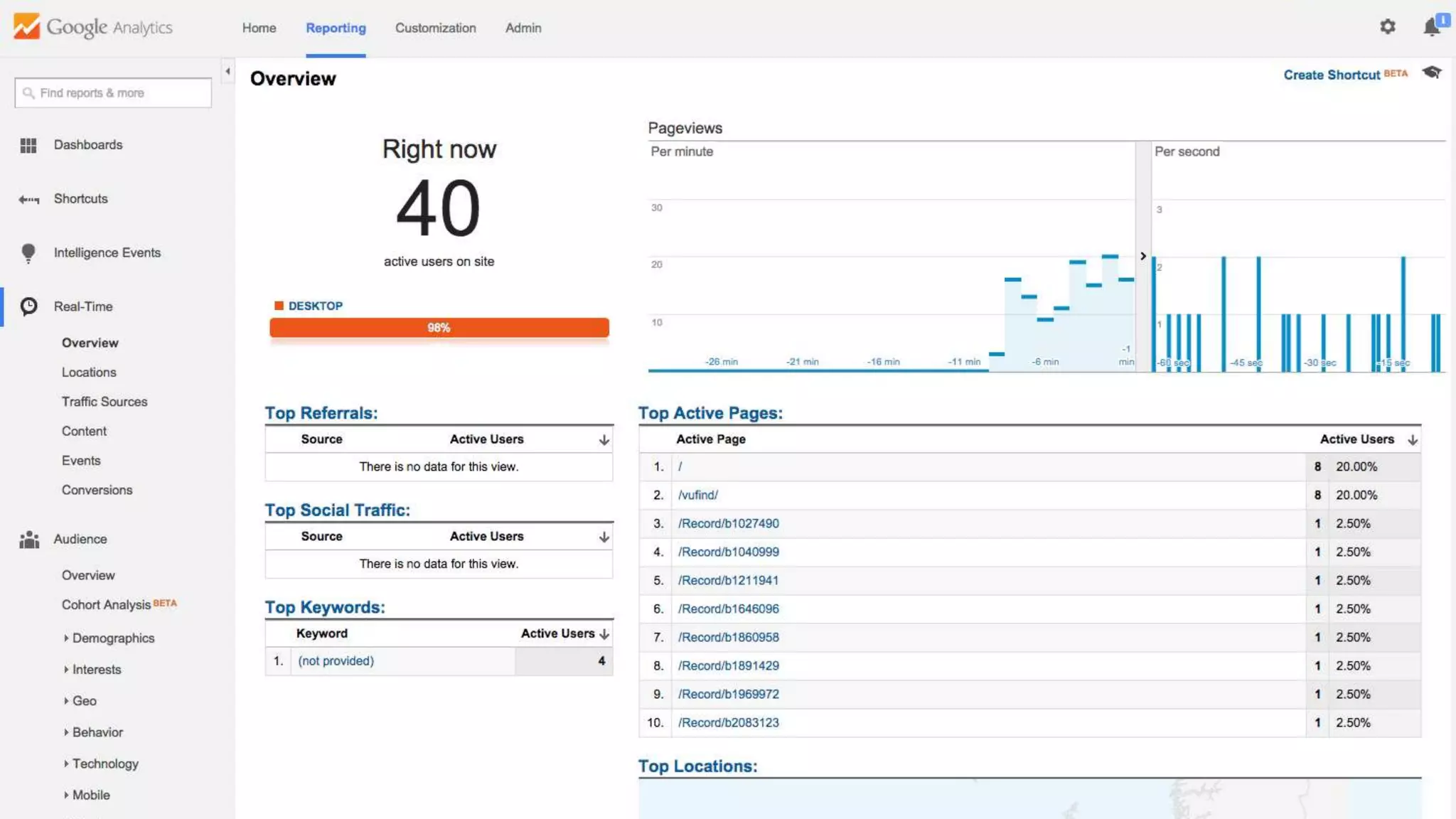
The VuFind
Project
2.0
The VuFind
Project
2.0
(which has a VuFind work package)
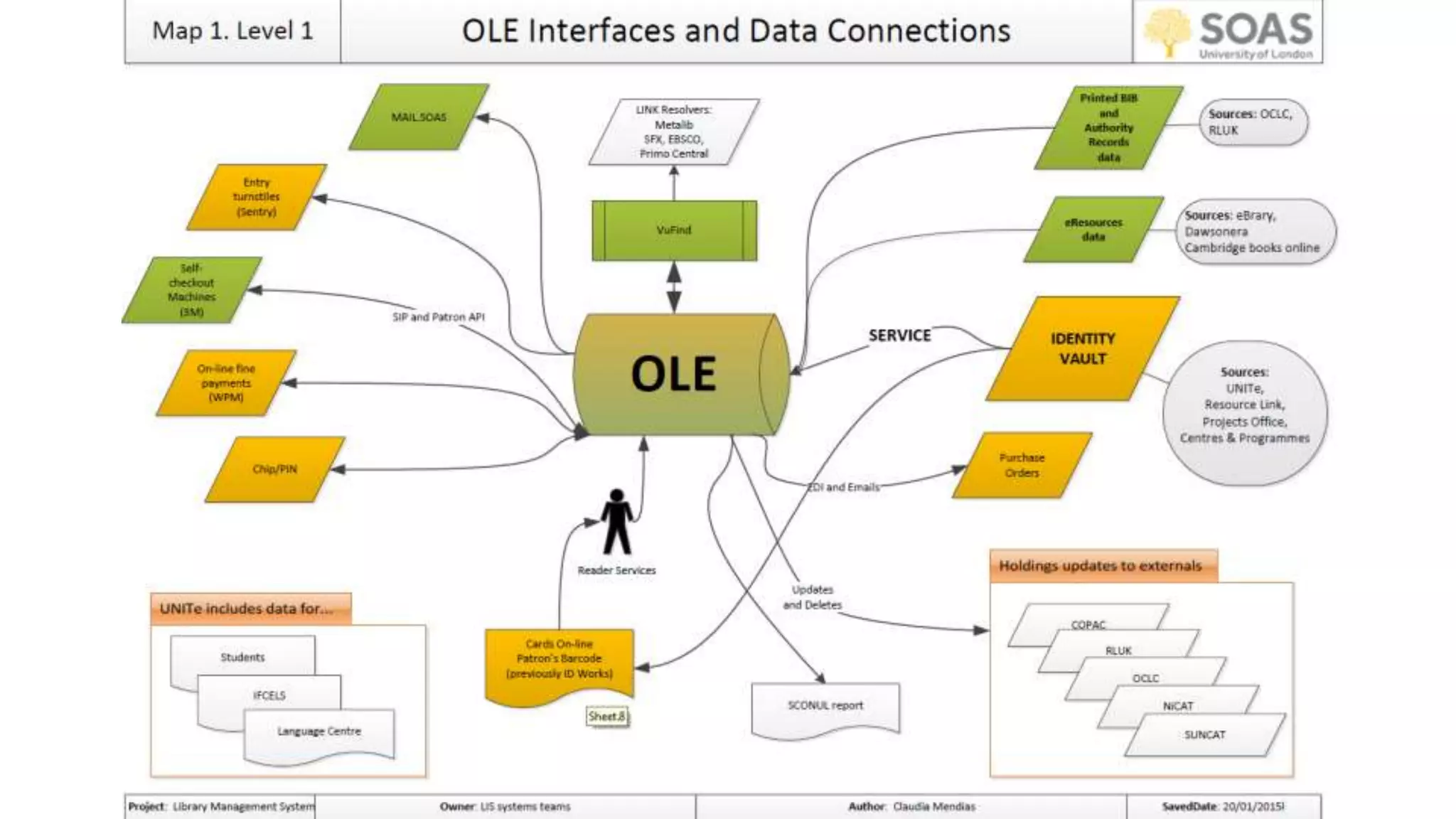
Courtesy of the Kuali Foundation.
VuFind logo designed by Ben Wiens. Provided by vufind.org.
UX:
Research
3.0
"... [S]tudying user behavior can enhance the development and
testing of library systems. Our findings suggest that people prefer
easy-to-use, familiar systems with a simple interface design.”
Connaway, L. S., Lanclos, D. M., and Hood, E. M., 2013. ““I always stick with the first thing that comes
up on Google. . .” Where People Go for Information, What They Use, and Why” on Educause review,
6th December 2013 <http://www.educause.edu/ero/article/i-always-stick-first-thing-comes-google-
where-people-go-information-what-they-use-and-why>
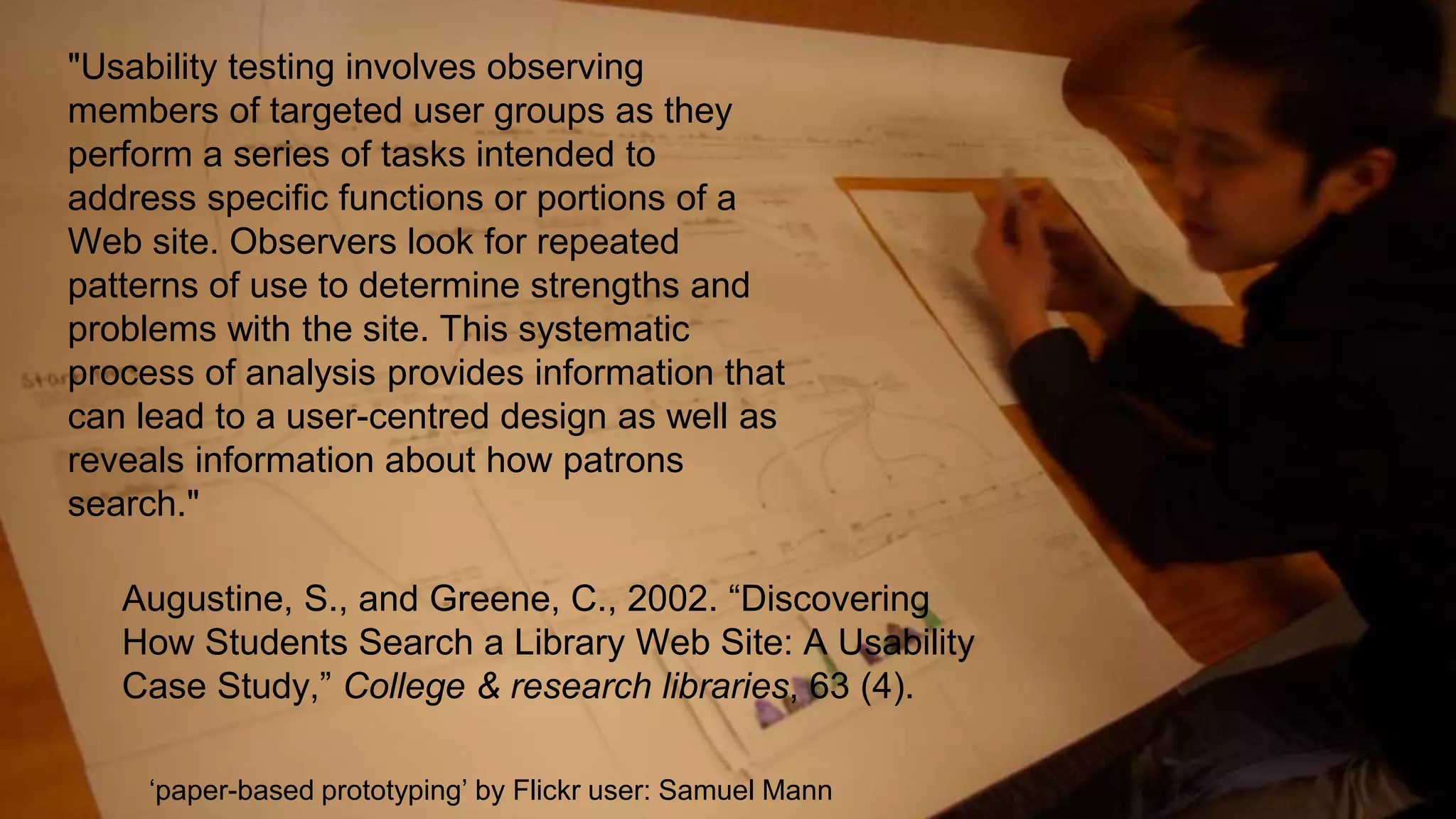
"Usability testing involves observing
members of targeted user groups as they
perform a series of tasks intended to
address specific functions or portions of a
Web site. Observers look for repeated
patterns of use to determine strengths and
problems with the site. This systematic
process of analysis provides information that
can lead to a user-centred design as well as
reveals information about how patrons
search."
Augustine, S., and Greene, C., 2002. “Discovering
How Students Search a Library Web Site: A Usability
Case Study,” College & research libraries, 63 (4).
‘paper-based prototyping’ by Flickr user: Samuel Mann
“The final goal is to grasp the native’s point of view,
his relation to life, to realise his vision of the world.”
Malinowski, B., 1922. Argonauts of the Western Pacific: An account of
native enterprise and adventure in the Archipelagoes of Melanesian New
Guinea. London: Routledge and Kegan Paul., p. 25.000
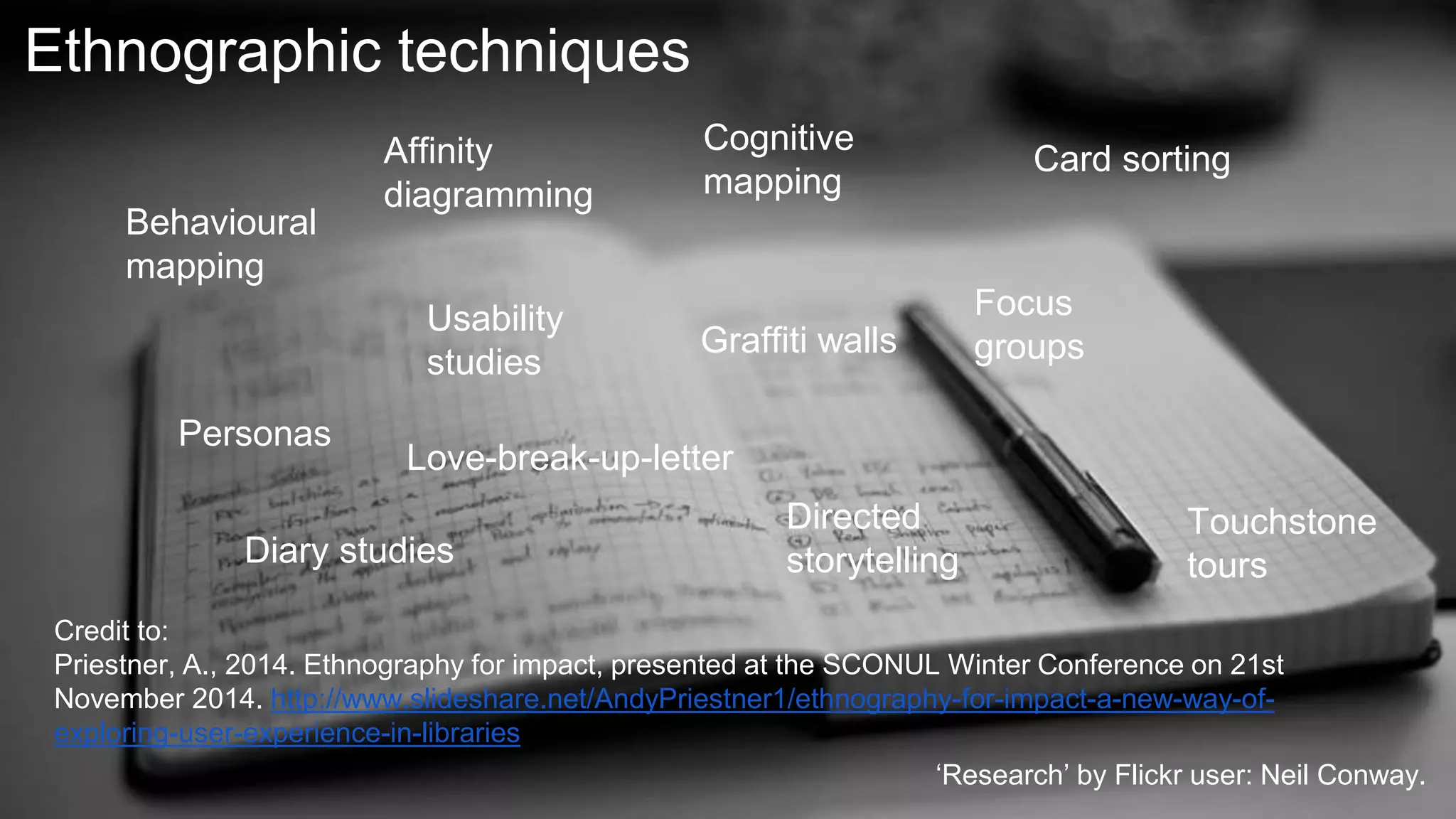
Ethnographic techniques
Credit to:
Priestner, A., 2014. Ethnography for impact, presented at the SCONUL Winter Conference on 21st
November 2014. http://www.slideshare.net/AndyPriestner1/ethnography-for-impact-a-new-way-of-
exploring-user-experience-in-libraries
Behavioural
mapping
Cognitive
mapping
Diary studies
Usability
studies
Focus
groups
Affinity
diagramming
Card sorting
Directed
storytelling
Touchstone
tours
Love-break-up-letter
Graffiti walls
Personas
‘Research’ by Flickr user: Neil Conway.
UX:
Design
4.0
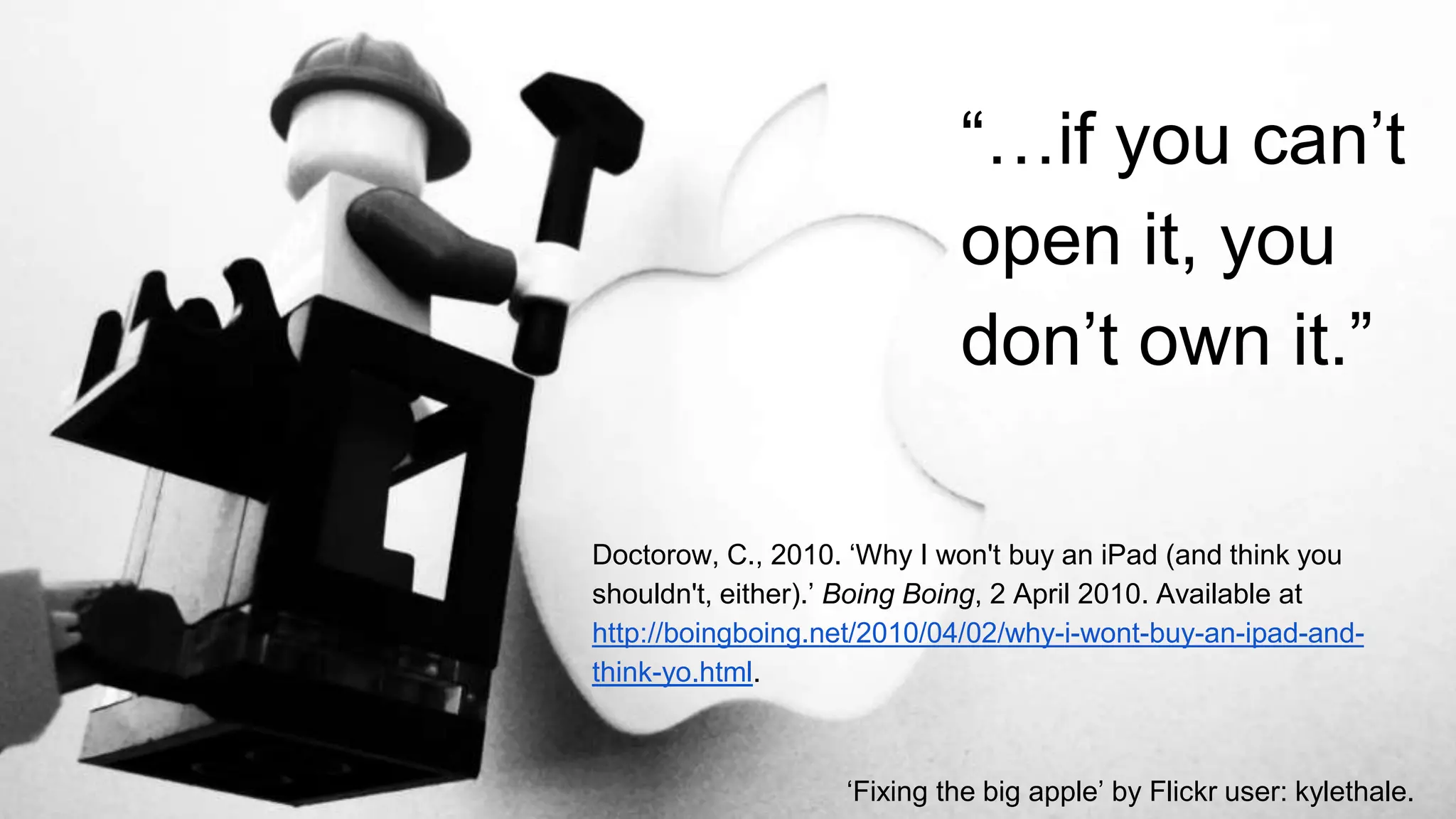
“…if you can’t
open it, you
don’t own it.”
Doctorow, C., 2010. ‘Why I won't buy an iPad (and think you
shouldn't, either).’ Boing Boing, 2 April 2010. Available at
http://boingboing.net/2010/04/02/why-i-wont-buy-an-ipad-and-
think-yo.html.
‘Fixing the big apple’ by Flickr user: kylethale.
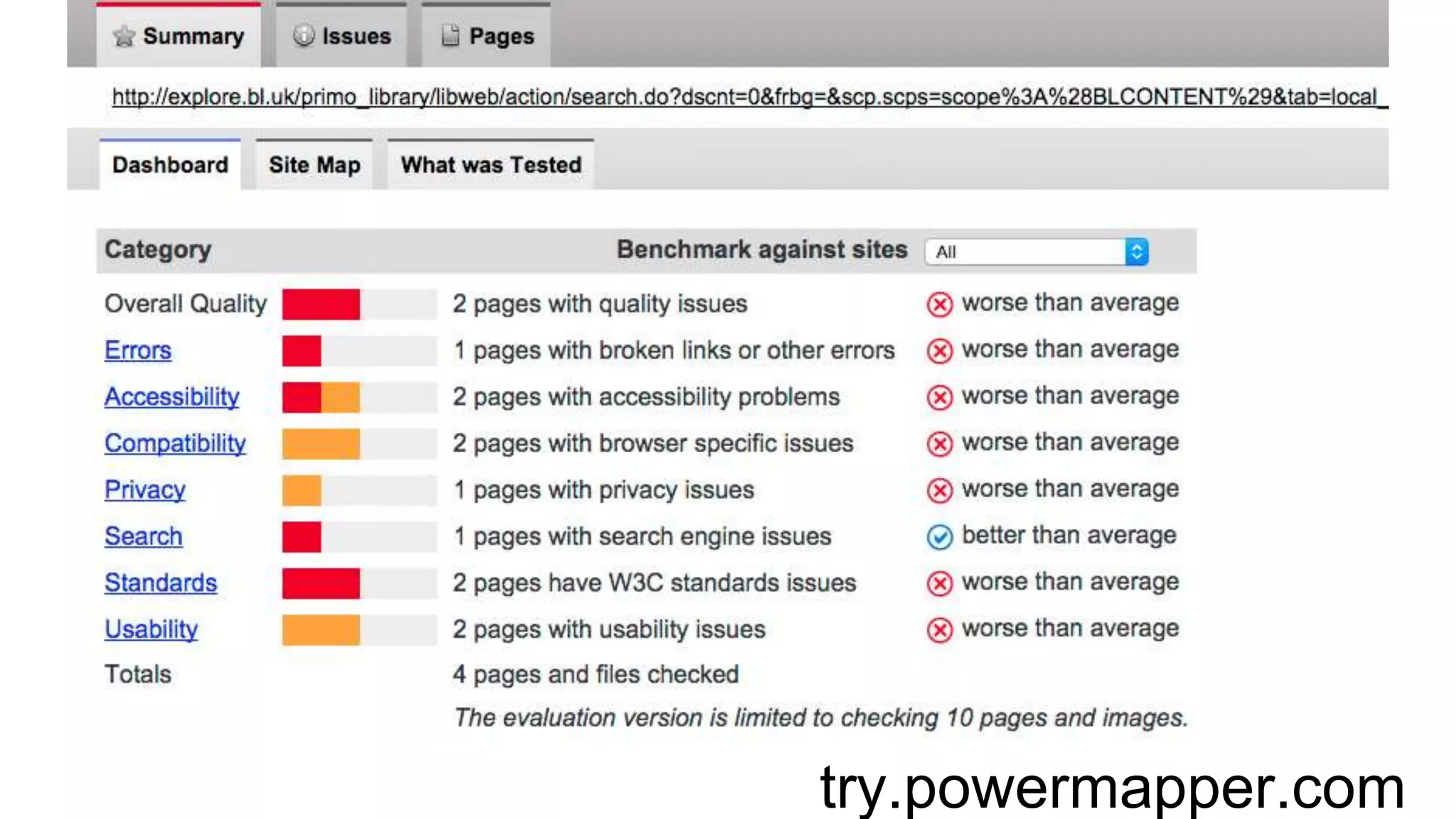
try.powermapper.com
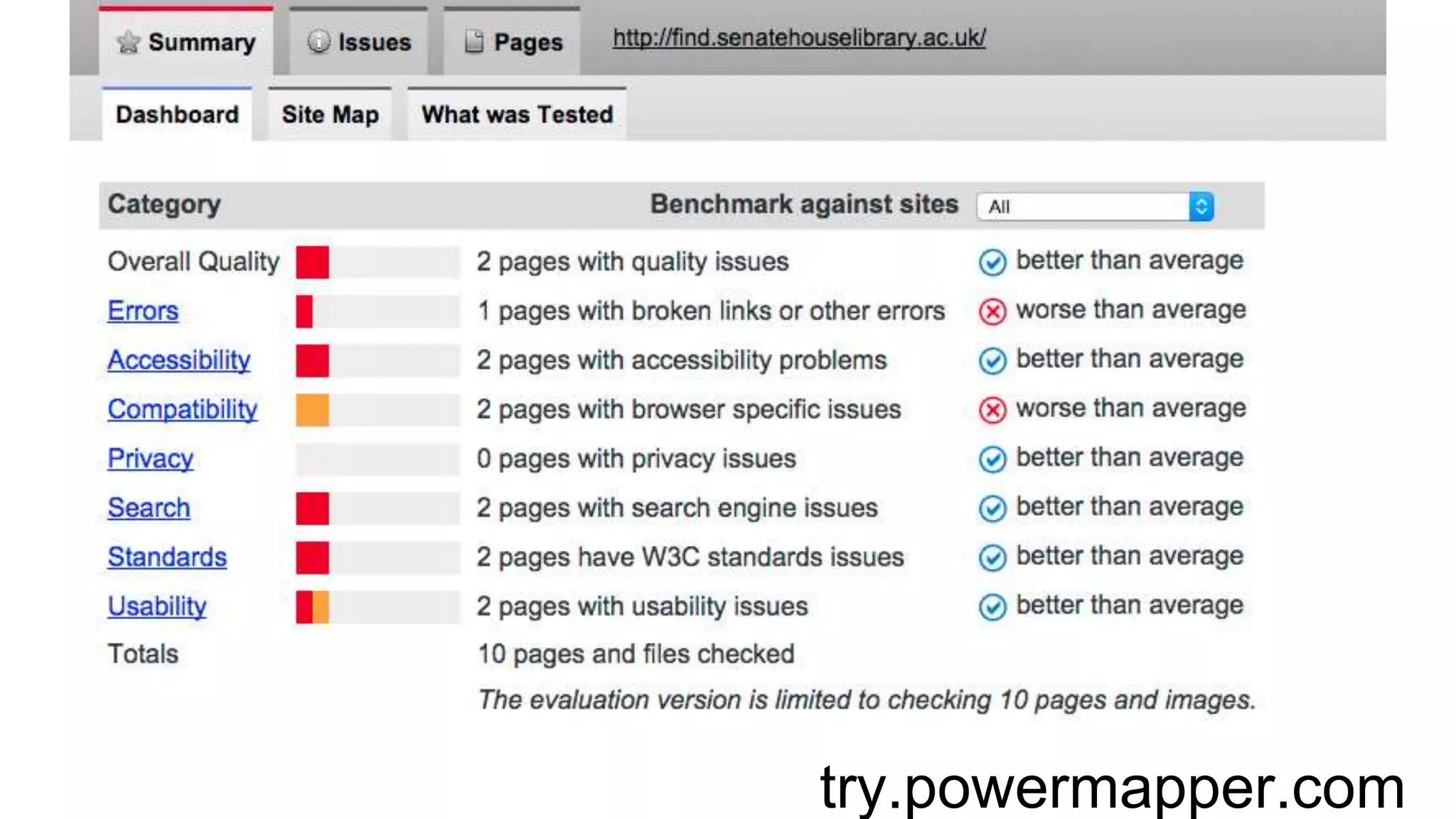
try.powermapper.com
End
bits
5.0
Further reading:
Buley, L., 2013. The user experience team of
one: a research and design survival guide.
London: Rosenfield Media.
#UKANTHROLIB
https://ukanthrolib.wordpress.com
Weave: Journal of Library
User Experience
@WeaveUX
http://weaveux.org/
Krug, S., 2009. Rocket surgery made easy: the
do-it-yourself guide to finding and fixing
usability problems. New Riders.
Norman, D. A., 2013. The design of
everyday things. Cambridge: MIT
Press.
‘Paper Sheets 3’ from Flickr user: Dan Taylr
A non-exhaustive list of people who know more than me
about this stuff:
Donna Lanclos:
@donnalanclos
www.donnalanclos.com
Andy Priestner:
@PriestLib
Meg Westbury:
@MegWestbury
Georgina Cronin:
@senorcthulhu
https://cardiesandtweed.wordpress.com/
Matthew Reidsma:
@mreidsma
http://matthew.reidsrow.com/
‘MST3K window sticker’ from Flickr user: Adam Norwood

Designing library systems for library users

  • 1.
    Designing library systems for library users SimonBarron @SimonXIX simon.barron.19@gmail.com ‘Dynix-Main-Menu-via-Telnet.jpg’ from Wikimedia Commons, user: Skylarstickland.
  • 2.
    ‘Citation needed’ fromFlickr user: futureatlas.com
  • 3.
    ‘Citation needed’ fromFlickr user: futureatlas.com “…there is little to no evidence about the consideration of user needs and perspectives in the literature about the development of the early Online Public Access Catalogues (OPACS).” Christensen, A., 2013. ‘Next-generation catalogues: what do users think?’ In: Chambers, S., ed., 2013. Catalogue 2.0: the future of the library catalogue. London: Facet Publishing, p. 2. 'Day 174: Amazing Push-Button Shushing Action!' by Flickr user: Laura Taylor.
  • 4.
    Simon’s remarks donot reflect the views of either SOAS or the University of London. DISCLAIMER: Though they really should. ‘exclamation mark’ by Flickr user: Leo Reynolds.
  • 5.
    ‘Citation needed’ fromFlickr user: futureatlas.com User eXperience 1.0
  • 6.
    "In a simpleworking definition, you might say that a user experience is the overall effect created by the interactions and perceptions that someone has when using a product or service..." Buley, L., 2013. The user experience team of one: a research and design survival guide. London: Rosenfield Media. ‘User experience design testing’ by Flickr user: Andy Bright.
  • 7.
    "Good products eventuallybecome somewhat invisible, sinking into the background as users achieve a kind of flow where they're actively and fluidly doing whatever the product is supposed to make possible." Buley, L., 2013. The user experience team of one: a research and design survival guide. London: Rosenfield Media. ‘Invisible Man’ from Flickr user: Marian Beck.
  • 9.
    ‘running faucet’ fromFlickr user: Steve Johnson Mihaly Csikszentmihalyi mee-hy cheek-sent-mə-hy-ee Csikszentmihalyi, M., 2008. Flow: the psychology of optimal experience. Harper Perennial.
  • 10.
    "Flow is themental state of operation in which a person performing an activity is fully immersed in a feeling of energized focus, full involvement, and enjoyment in the process of the activity. In essence, flow is characterized by complete absorption in what one does." Kahneman, D., 2012. Thinking, fast and slow. London: Penguin. ‘running faucet’ from Flickr user: Steve Johnson
  • 11.
  • 12.
    The VuFind Project 2.0 (which hasa VuFind work package)
  • 13.
    Courtesy of theKuali Foundation.
  • 15.
    VuFind logo designedby Ben Wiens. Provided by vufind.org.
  • 18.
  • 19.
    "... [S]tudying userbehavior can enhance the development and testing of library systems. Our findings suggest that people prefer easy-to-use, familiar systems with a simple interface design.” Connaway, L. S., Lanclos, D. M., and Hood, E. M., 2013. ““I always stick with the first thing that comes up on Google. . .” Where People Go for Information, What They Use, and Why” on Educause review, 6th December 2013 <http://www.educause.edu/ero/article/i-always-stick-first-thing-comes-google- where-people-go-information-what-they-use-and-why>
  • 22.
    "Usability testing involvesobserving members of targeted user groups as they perform a series of tasks intended to address specific functions or portions of a Web site. Observers look for repeated patterns of use to determine strengths and problems with the site. This systematic process of analysis provides information that can lead to a user-centred design as well as reveals information about how patrons search." Augustine, S., and Greene, C., 2002. “Discovering How Students Search a Library Web Site: A Usability Case Study,” College & research libraries, 63 (4). ‘paper-based prototyping’ by Flickr user: Samuel Mann
  • 23.
    “The final goalis to grasp the native’s point of view, his relation to life, to realise his vision of the world.” Malinowski, B., 1922. Argonauts of the Western Pacific: An account of native enterprise and adventure in the Archipelagoes of Melanesian New Guinea. London: Routledge and Kegan Paul., p. 25.000
  • 24.
    Ethnographic techniques Credit to: Priestner,A., 2014. Ethnography for impact, presented at the SCONUL Winter Conference on 21st November 2014. http://www.slideshare.net/AndyPriestner1/ethnography-for-impact-a-new-way-of- exploring-user-experience-in-libraries Behavioural mapping Cognitive mapping Diary studies Usability studies Focus groups Affinity diagramming Card sorting Directed storytelling Touchstone tours Love-break-up-letter Graffiti walls Personas ‘Research’ by Flickr user: Neil Conway.
  • 25.
  • 26.
    “…if you can’t openit, you don’t own it.” Doctorow, C., 2010. ‘Why I won't buy an iPad (and think you shouldn't, either).’ Boing Boing, 2 April 2010. Available at http://boingboing.net/2010/04/02/why-i-wont-buy-an-ipad-and- think-yo.html. ‘Fixing the big apple’ by Flickr user: kylethale.
  • 48.
  • 49.
  • 54.
  • 55.
    Further reading: Buley, L.,2013. The user experience team of one: a research and design survival guide. London: Rosenfield Media. #UKANTHROLIB https://ukanthrolib.wordpress.com Weave: Journal of Library User Experience @WeaveUX http://weaveux.org/ Krug, S., 2009. Rocket surgery made easy: the do-it-yourself guide to finding and fixing usability problems. New Riders. Norman, D. A., 2013. The design of everyday things. Cambridge: MIT Press. ‘Paper Sheets 3’ from Flickr user: Dan Taylr
  • 56.
    A non-exhaustive listof people who know more than me about this stuff: Donna Lanclos: @donnalanclos www.donnalanclos.com Andy Priestner: @PriestLib Meg Westbury: @MegWestbury Georgina Cronin: @senorcthulhu https://cardiesandtweed.wordpress.com/ Matthew Reidsma: @mreidsma http://matthew.reidsrow.com/ ‘MST3K window sticker’ from Flickr user: Adam Norwood