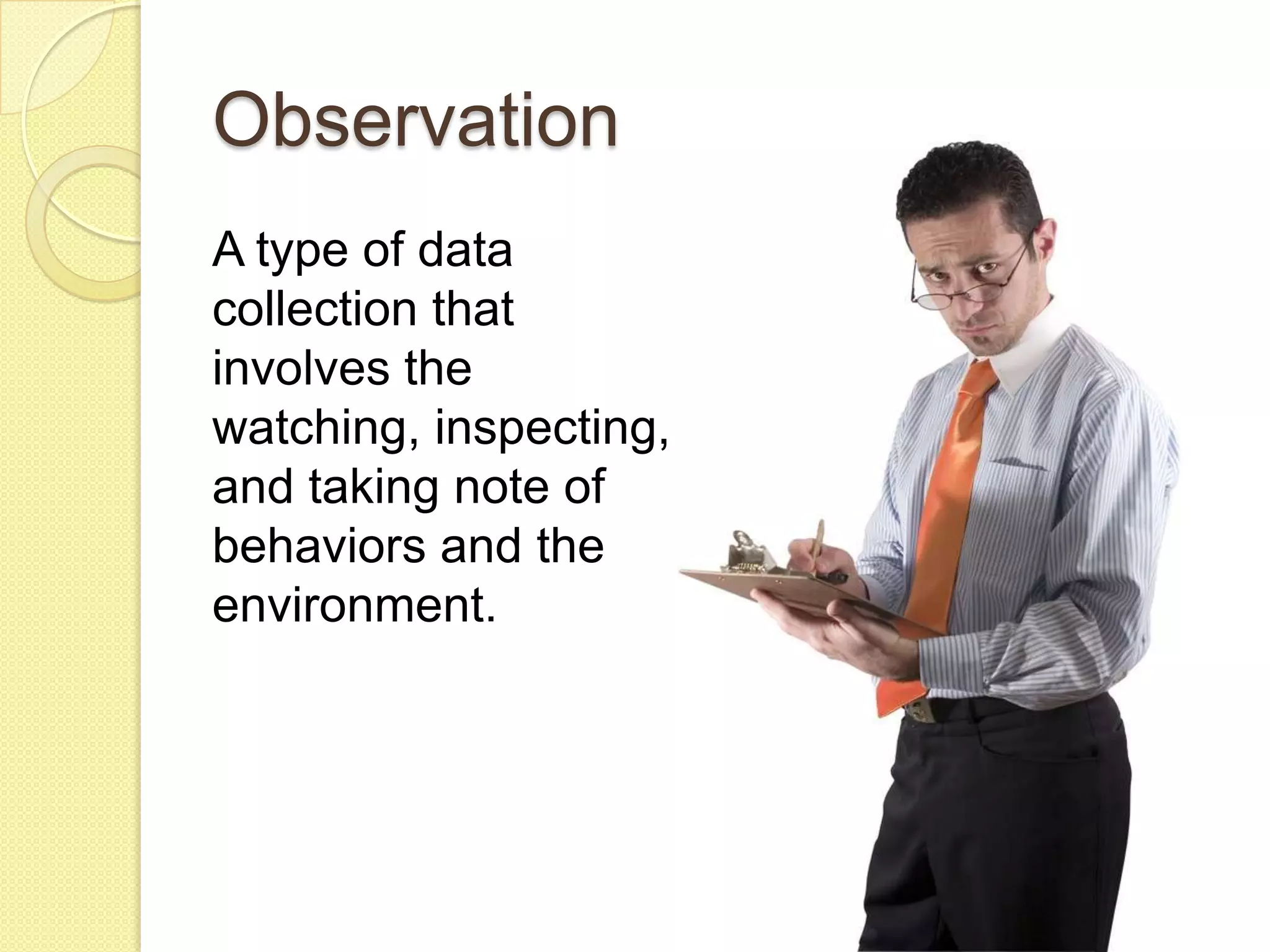
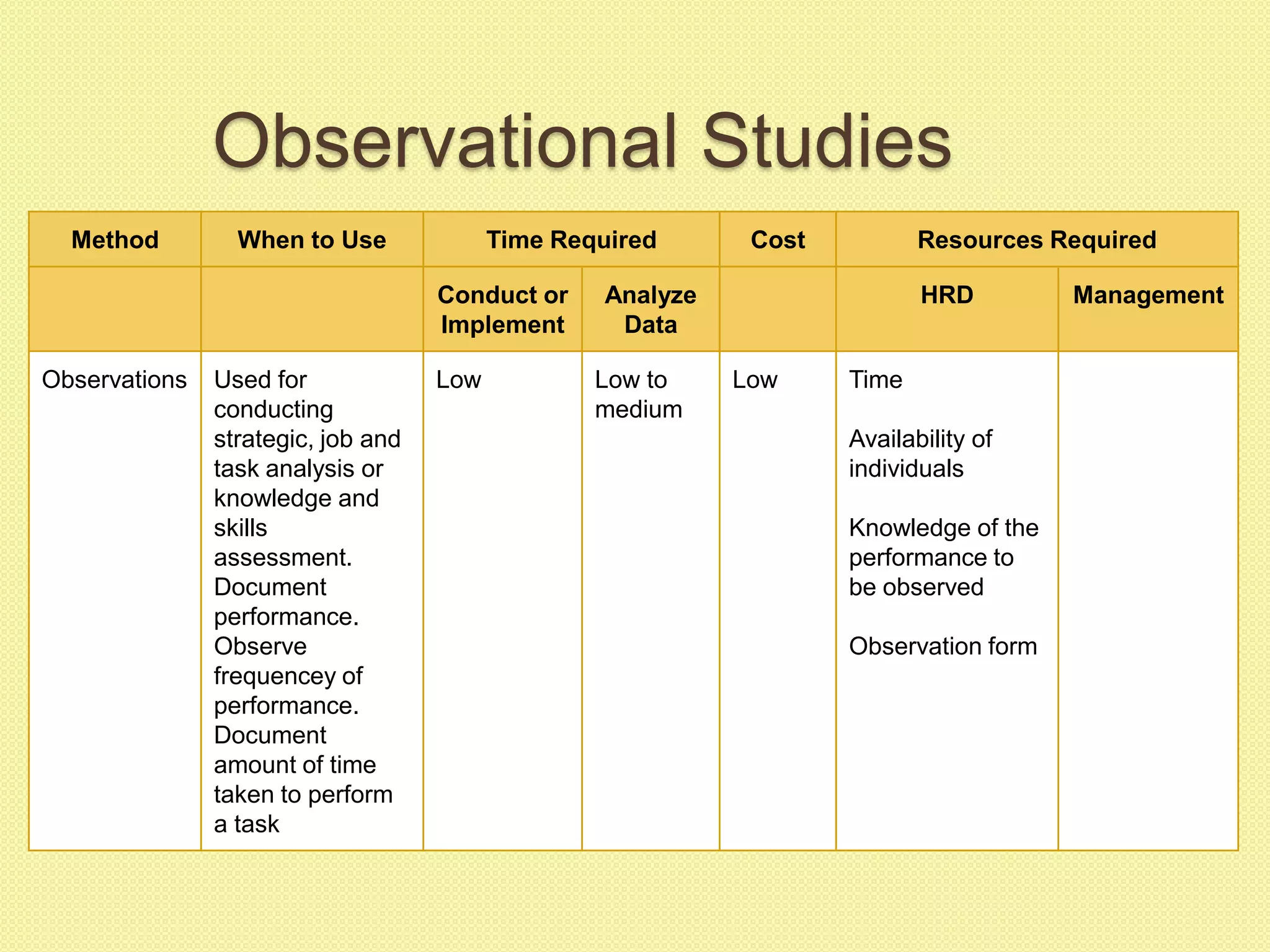
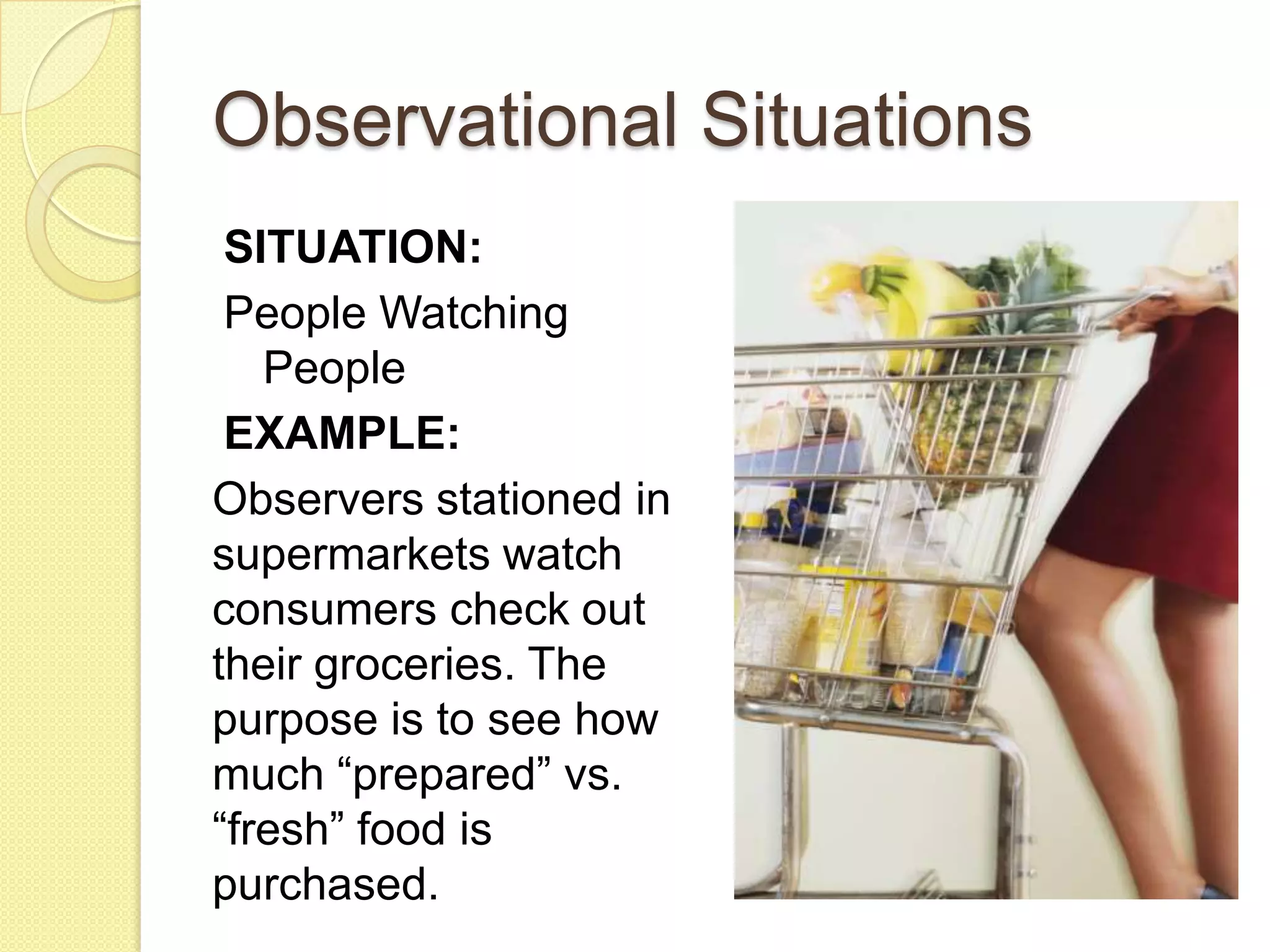
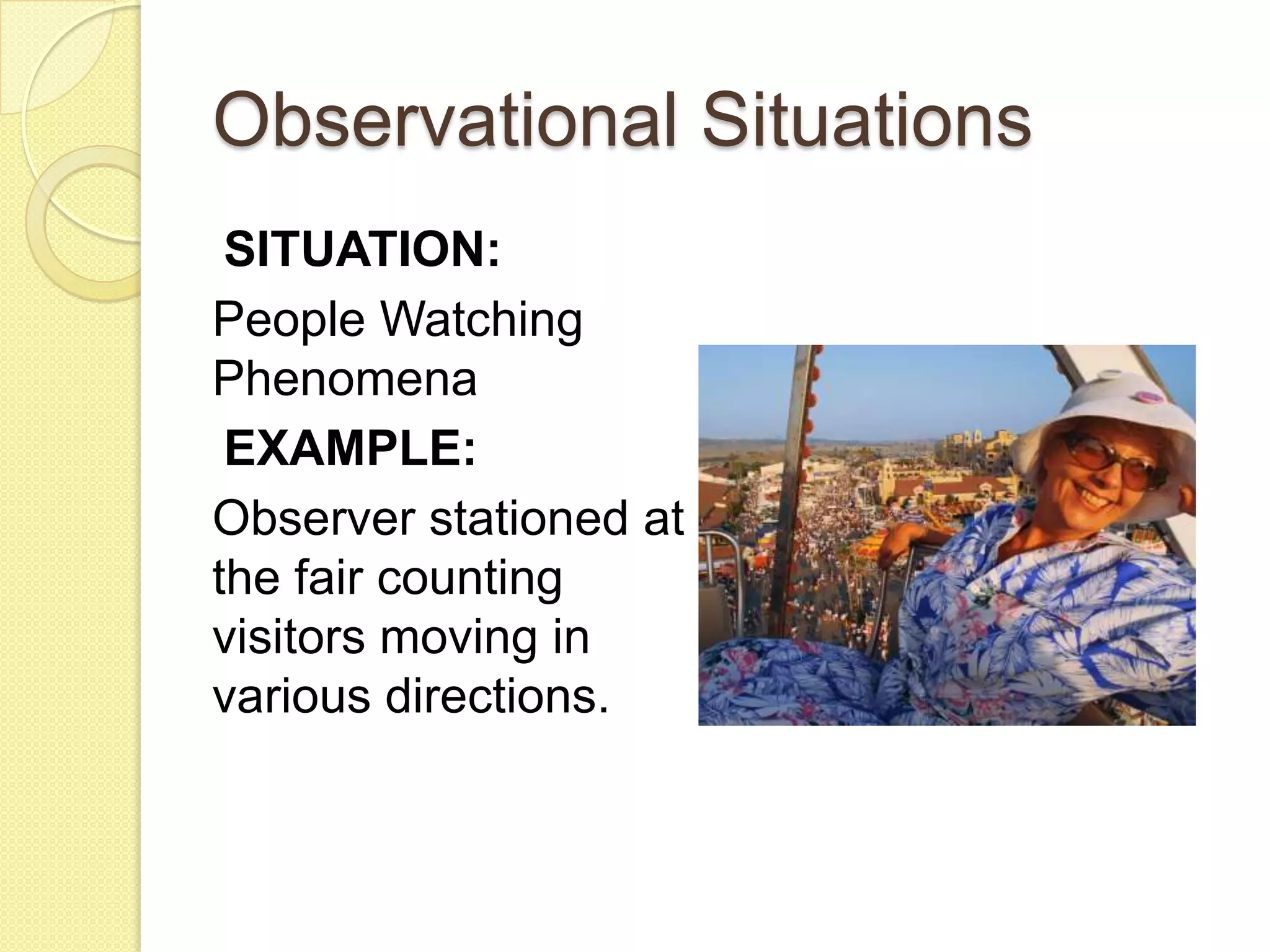
This document introduces observational studies and provides examples. It defines observation as watching, inspecting, and taking note of behaviors and environments. There are two main types of observational studies: qualitative or unstructured observations which do not require hypotheses and rely on observer skills, and quantitative or structured observations which require hypotheses and trained observers to count predetermined behaviors. Examples of observational situations discussed include observing people in supermarkets and at fairs. Tips for unobtrusive observation are also provided.